I had a debilitating headache playing Titanium Court.
This is entirely my fault, and if Titanium Court had a voice, it would have impishly suggested that the headache was of my own doing, too. You see, the game is not a thing that can be easily put down and, as I’ve spent hours whittling away at it, I’ve learned that it’s also an genre-bending experience that defies explanations. Perhaps the simplest way to talk about Titanium Court is to refer to it as a match three game, but slathered with a generous serving of surreal humor, roguelike loops, and the narrative structure of visual novels.
Titanium Court begins with a faux ceremonial introduction of a play, the scene embellished with theater drapery. And following a rousing applause, this eventually gives way to scene setting; you were somehow just wandering about in the woods when your surroundings start to wobble. They turn into tiles, and you’re directed to match similar ones in groups of threes until a castle materializes. You walked into the building, and to your surprise, were quickly coronated as faerie queen. It’s all very nonsensical, and you’re left wondering what to make of all of it. Yet the theatrical frame remains embedded, a persistent reminder that you’re swimming in surreality, and you’ll never quite shake the odd feeling that everything that’s taking place around you is a confusing, practical joke that you’re not in on.

So while figuring out the eccentricities of this reality, you’ll spend a lot of time matching tiles. This is the crux of Titanium Court; through matching threes, you’re collecting resources, navigating the ever-shifting lands, and defending the castle against enemy incursions and environmental hazards. That’s because the Titanium Court is waging perpetual war against an enemy faction, and you must engage in this pointless routine somehow, every single morning. This isn’t a criticism per se, since the pointlessness is openly acknowledged by your own court. No one really understands why the war happens, but it simply does. For now, you shrug and go along with the shenanigans.
Nonetheless, you must match. Tile-matching happens during high tide, and each tile broadly represents a certain type of resource that is vital for your war efforts. Matching field tiles, for instance, allow you to collect food, whereas forest tiles are for wood, river tiles for water, and hills for stone. These, however, aren’t the only tiles on the battleground, with enemy castles also visible on the map. Castles can be matched to clear them away, which is a crucial move to consider, since more castles mean more enemy units will be deployed at the end of the high tide.
Low tide beckons when you’ve used up your turns, and this is when you can deploy your troops, which will consume resources. The different terrains, too, can inhibit enemy movement. For instance, soldiers typically cannot cross rivers, and hills will slow them down. Hence, there’s some amount of strategizing involved here, as you decide whether to focus your efforts on resource gathering, minimizing enemy presence, or simply moving your castle to a corner of the battlefield that enemies cannot reach.
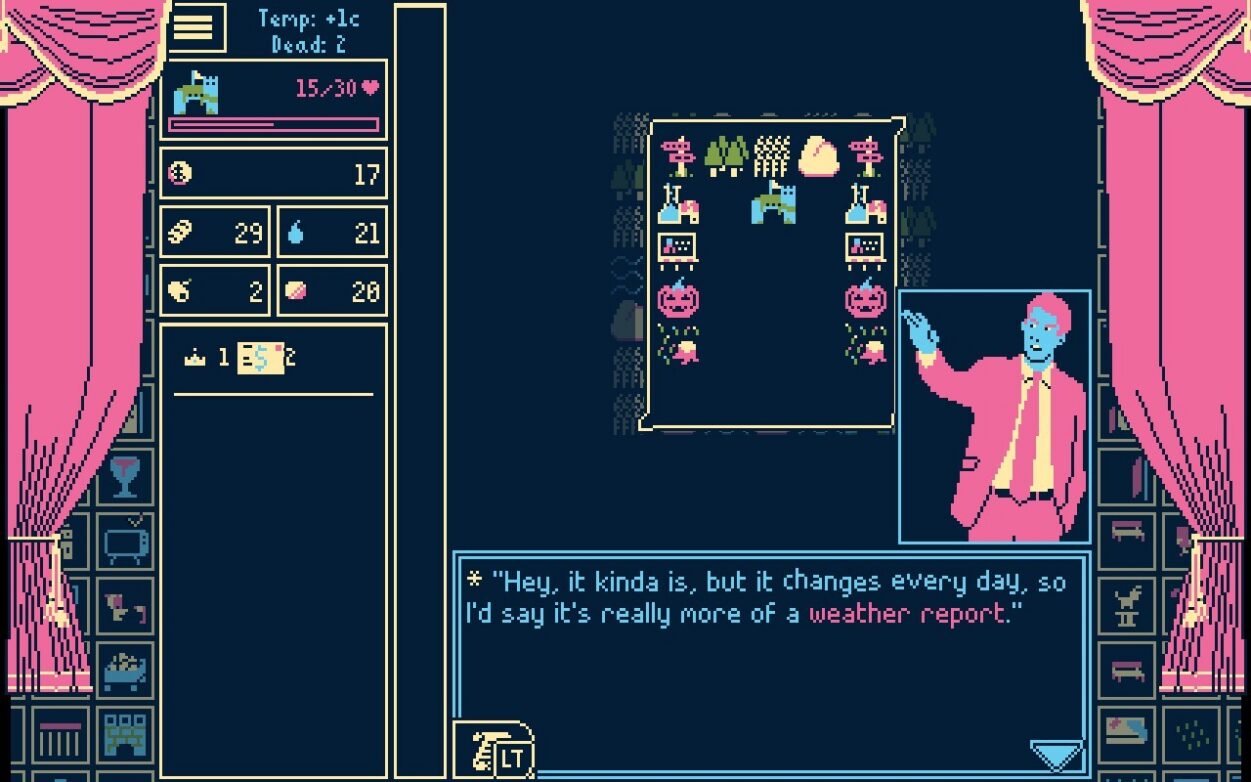
This is largely the blueprint of the match three puzzles, but Titanium Court does tweak the segment slightly, making them a bit more complex the more you traverse the battleground. You can perform what your faeries refer to as “miracles”; that is, you can spend more time in high tide by earning time back, and that is done by matching more than just three tiles, or clearing multiple tiles in quick succession. There are more varieties of enemy troops, such as birds that can fly over rivers, knights who take a more defensive role and remain at their castles, and fast-moving scamps. Then there are amenities that you can visit, such as shops for purchasing buffs, hospitals that can bolster your castle’s health, and buildings called the M.A.R.K.E.T, owned by a cult-like organization that lets you trade your sources for precious coin. These are typically affixed to resource tiles, which adds another layer of strategizing since these can disappear if you accidentally match them – until they return, of course, as you clear more tiles.
Other structures, such as signboards, billboards, a football field filled with eggs (they may also not be eggs), and even a public-speaking booth, also make an appearance. Most will imbue the match three puzzles with mini challenges, but some are simply there for you to marvel over. A dead end sign, for instance, will inspire a conversation among the faeries about the short-lived mortality of the human race. Even your castle can morph into a different form, which alters the type of troops you deploy and the way you earn coin. One of my favourites is the “Youth”, which portrays the recklessness and disenchantment of adolescence through pyromania. Essentially, you just set a lot of shit on fire: fields, woods, enemies, football fields, and even your own castle. It’s exhilarating.
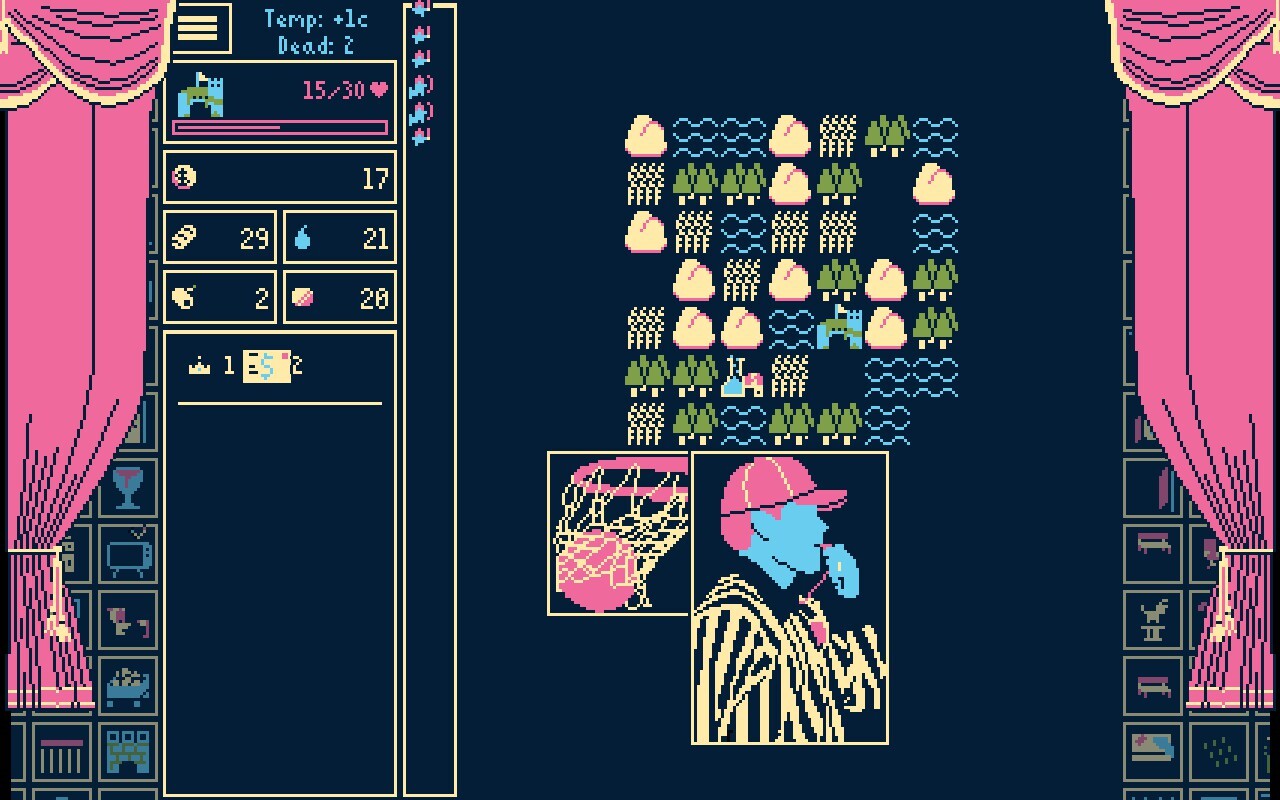
All this strategizing adds significant depth to the match three puzzle, a genre that’s probably most associated with free-to-play mobile games. If you’ve ever spent a day online, you’ll know what those are: they’re games like Royal Match, Merge Mansion and all their derivatives, rife with microtransactions and so, so much bizarro ads you can’t look away from. For all the flak these games may attract, match three puzzles can be immensely enjoyable because they’re so soothing and low stakes, a gaming morsel you can snack on in between sessions of intense, adrenaline-fuelled games and the drudgery of daily life. Titanium Court scratches this particular itch exceptionally well, and this was the cause of the splitting headache I mentioned at the start: I simply cannot put the game down. For days, my brain has been consumed by squares and tiles. In fact, I suspect Titanium Court may have unveiled the secret to keeping eyes glued to a screen in near perpetuity: turning a match three puzzles into a tactical experience.
(At this point, I should point out that yes, match three puzzles are more than just these mobile games; I’ve also played titles like Puzzle Bobble and Bejewelled way too often in my youth. But it’s hard to deny that the face of match three games in recent years is the tile-based puzzles you see on your mobile phones – but that’s another conversation for a separate article, perhaps.)
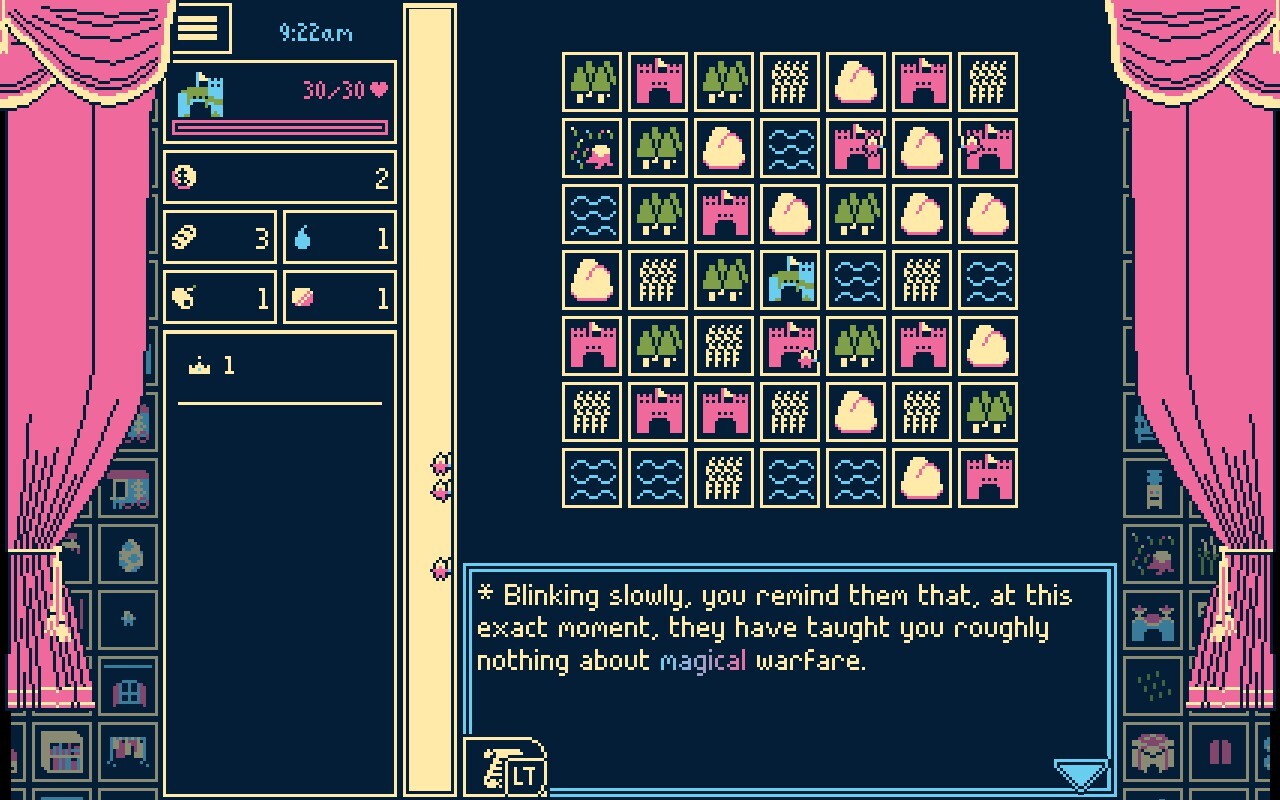
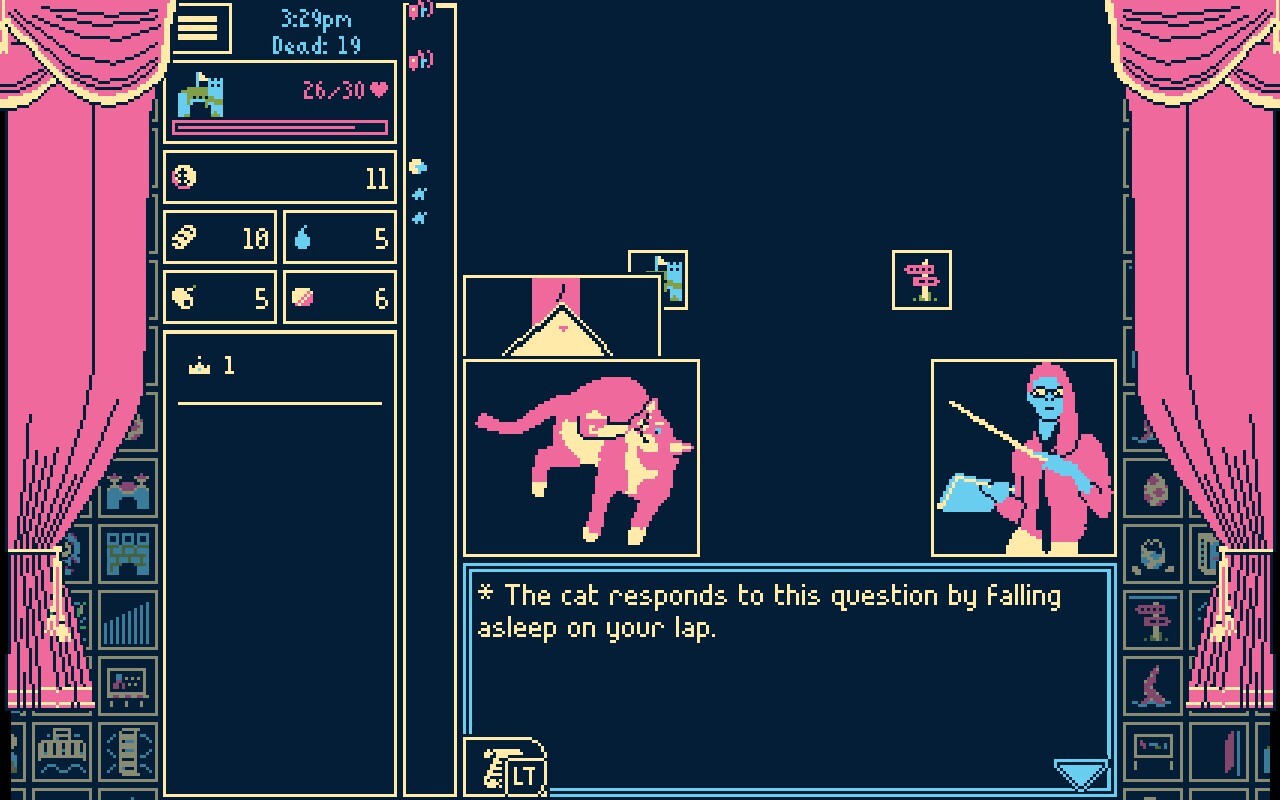
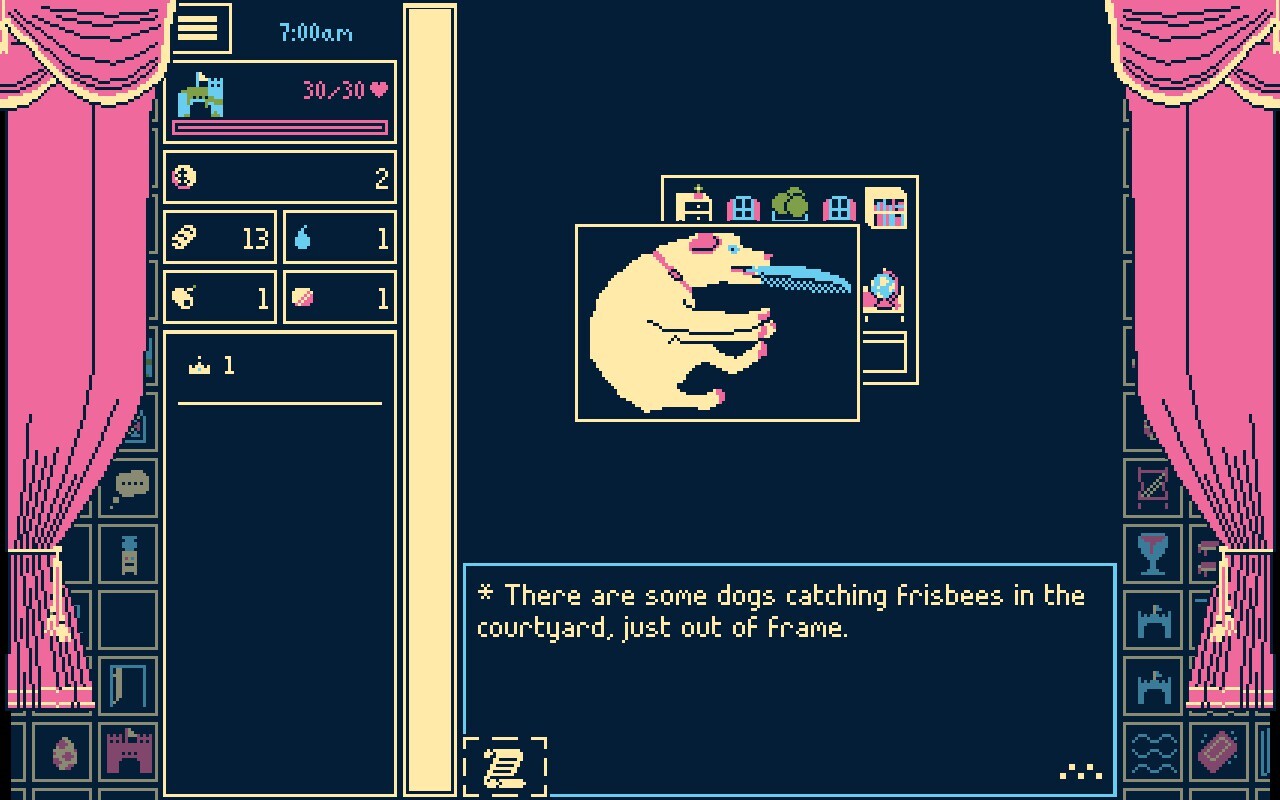
On the other hand, so much of Titanium Court is consumed by match three rounds that the puzzling can feel almost mechanically exhausting, even repetitive. The truth is that despite the sheer ubiquity of these puzzles, they aren’t the main draw of Titanium Court; its whimsical, ludicrous world is. Titanium Court is absurdly well-written and hilarious, as it has plenty of parallels to the literary nonsense of Alice in Wonderland. You’re in an utterly confusing world that you clearly don’t belong in, and its denizens – the faeries – routinely and gently mock our mortal rituals and obsessions: cars, sports, smashing guitars (although I share their perplexity over our inexplicable love for guitar destruction). Bizarre moments, like the appearance of a massive jar that the faeries beseech you to approach with trepidation, or a dragon that looks like a sock puppet, and who may be romantically interested in you, are commonplace. These events are largely illogical and ambiguous, but endlessly beguiling. There’s even a man that you are chasing, White Rabbit-style, through this madcap world, who’s insistent on not answering any of your questions.
There’s perhaps a point beneath Titanium Court’s oddity. Maybe it wants you to examine the very fabric of the game itself through the distancing lens of its theatrical farce. Maybe it wants to break fourth walls, accepted conventions and social norms by inviting you to think about its deeply illogical reality. Or maybe it means absolutely nothing at all, and developer AP Thomson is just having a good ol’ time watching all of us trying to make meaning out of this whole affair. After all, when author Lewis Carroll was asked about the meaning of his nonsense poetry “The Hunting of the Snark”, he purportedly wrote, “I’m very much afraid I didn’t mean anything but nonsense.” As for me, I haven’t quite figured out what Titanium Court is about yet, since I still have to work through the headache. But maybe you will, after you’ve given the game a go.