Rather than conjure up fantastical worlds as settings for role-playing games, the Expeditions series has long found dramatic intrigue in the distant past of our own planet. Where past entries explore the history of the Spanish conquistadors, eighth-century Vikings, and late-Republic Romans, Expeditions: Samurai looks to the tumultuous landscape of 17th century Japan, with the game’s first act available in Early Access.
Set in 1600, Samurai opens with a crew of European privateers on a mission to establish trade with Japan. The player-created protagonist, Flynn, hails from England and is personally devoted to the success of their crew’s assignment, because pulling off the coup of a new revenue source for their home country will also grant them a pardon for their criminal past.
Of course, everything goes wrong immediately. Not only is the crew starving and on the verge of mutiny when the story opens, but their ship is attacked by Portuguese sailors off the coast of Japan. The group’s ambassador and captain are killed, and Flynn left in charge of the survivors once they’ve washed up ashore on the unfamiliar Japanese terrain, battered and hungry.
The game’s plot takes direct cues from the history of William Adams, an English navigator, also known as Miura Anjin, who traveled to Japan as part of a Dutch trading expedition, ultimately becoming a samurai in service to the Tokugawa shogunate. As proven by the success of his story’s fictionalized adaptation into the James Clavell’s novel Shogun – and the popularity, across decades, of two different television miniseries based on the book – Adams’ life offers a captivating entry point for the complexities of the period.
Flynn and their crew are outsiders in Japan. They know very little of the culture and politics of the land (though, conveniently enough, Flynn can speak to Japanese characters without issue) and their gradual understanding of their surroundings allows Samurai to naturally introduce the major players of its setting without tedious exposition or an overreliance on blocks of text from codex entries.
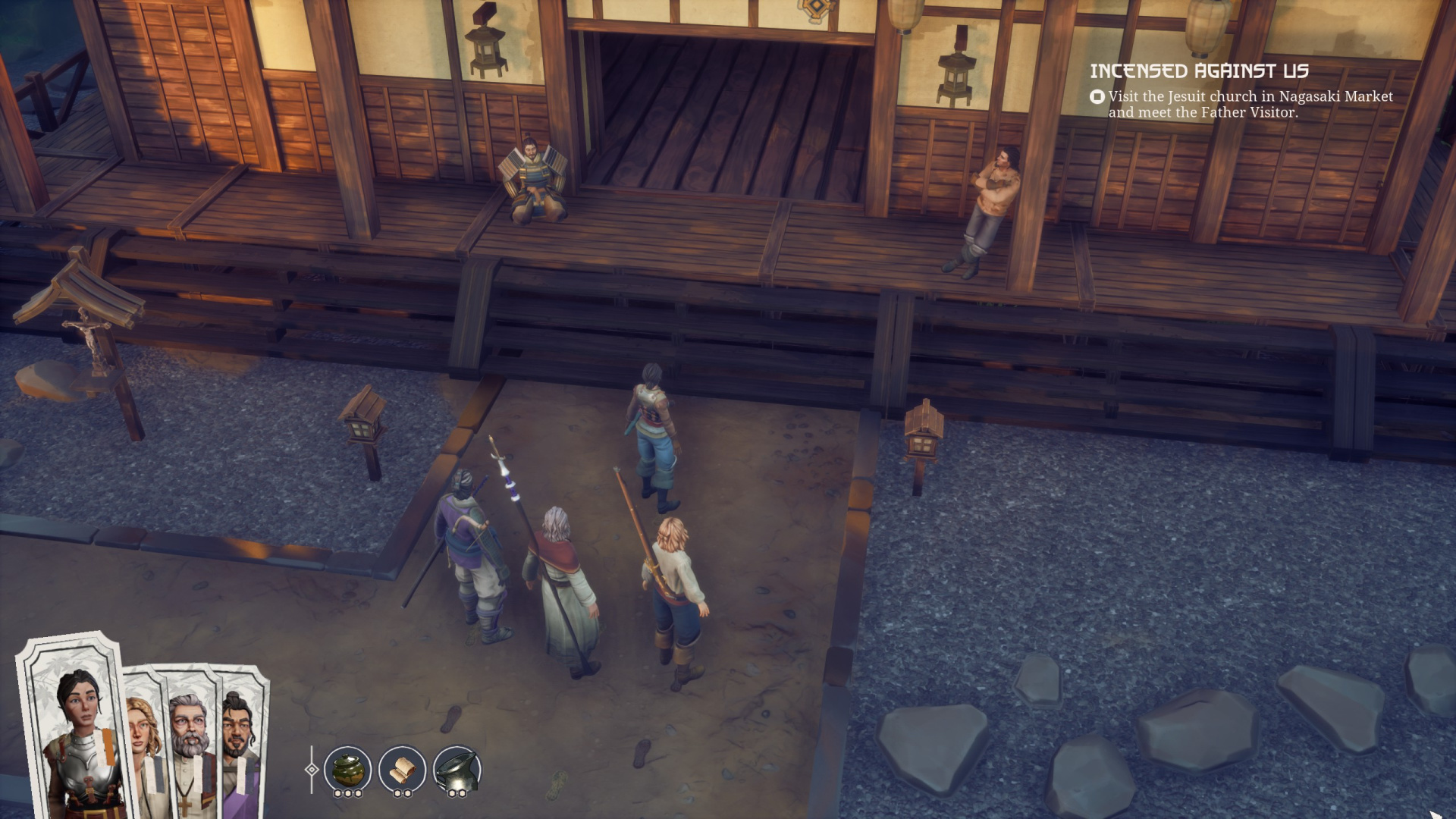
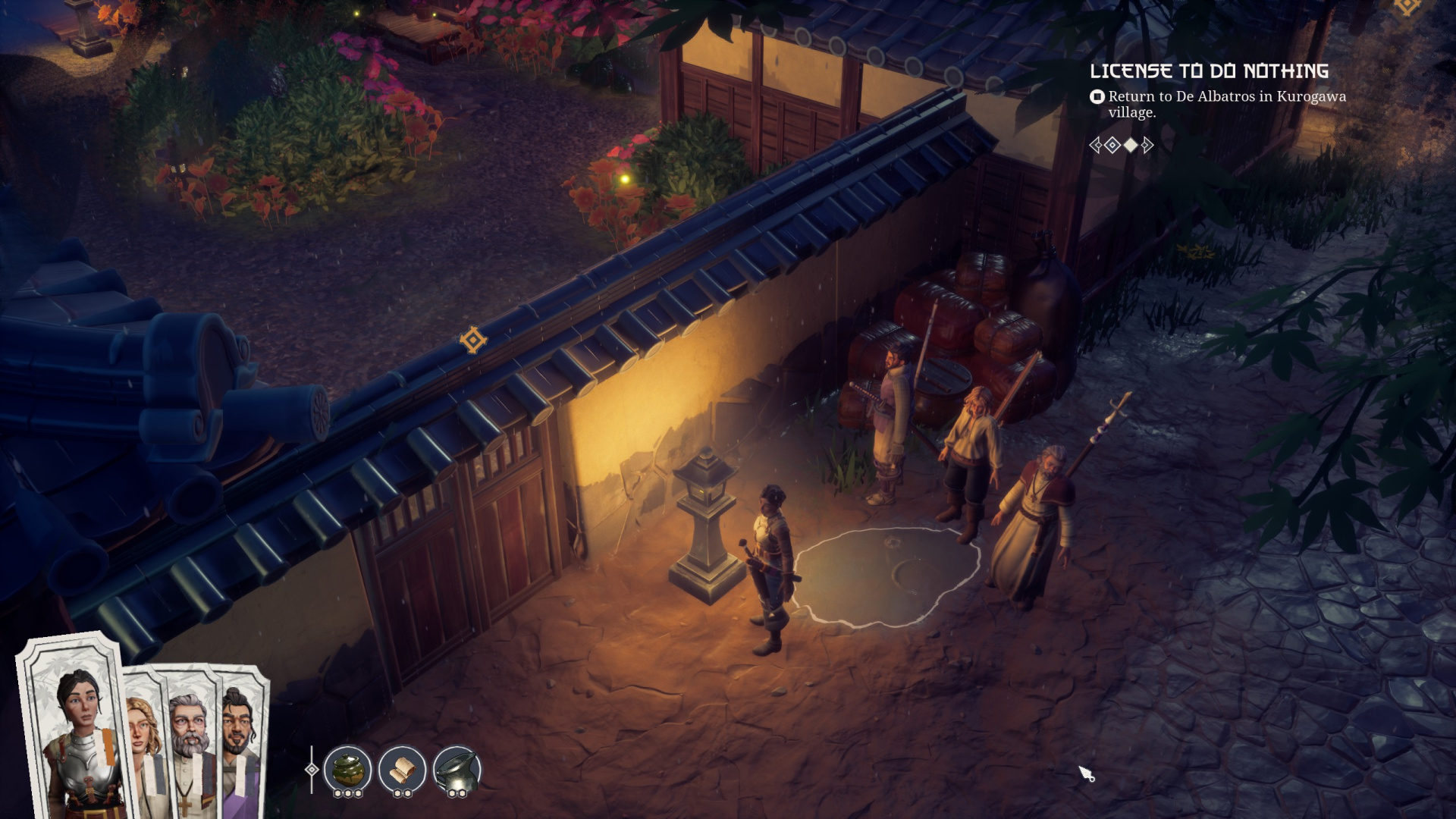
There are easily understood and very high stakes from the get-go. At first, Flynn simply wants to survive, and to do so, needs to make arrangements with local officials just to get access to food and other essential supplies for their crew. Gradually, as they set out across the Nagasaki area on various errands, they learn what the Portuguese and Spanish are doing in the region, the varying attitudes toward foreign influence held by the population, and come to grips with the unsteady political landscape of the country.
This plot set-up is a solid choice. It allows Samurai to delve fully into the rich history of its setting by using Flynn’s growing familiarity with the world around them as an introduction. At the same time, the plot couples elemental human drama with a look at more complicated matters, like the competing power bases of rival lords or the growing tension between foreign and indigenous religious practices. It’s all handled well enough that it’s easy to forgive how dry the cast is – or at least the characters found so far in the opening section included in this initial Early Access release. Even though Flynn and the other characters she meets are broadly drawn archetypes who function more as plot mechanisms than real personalities, the story they star in is propulsive enough to make up for it.
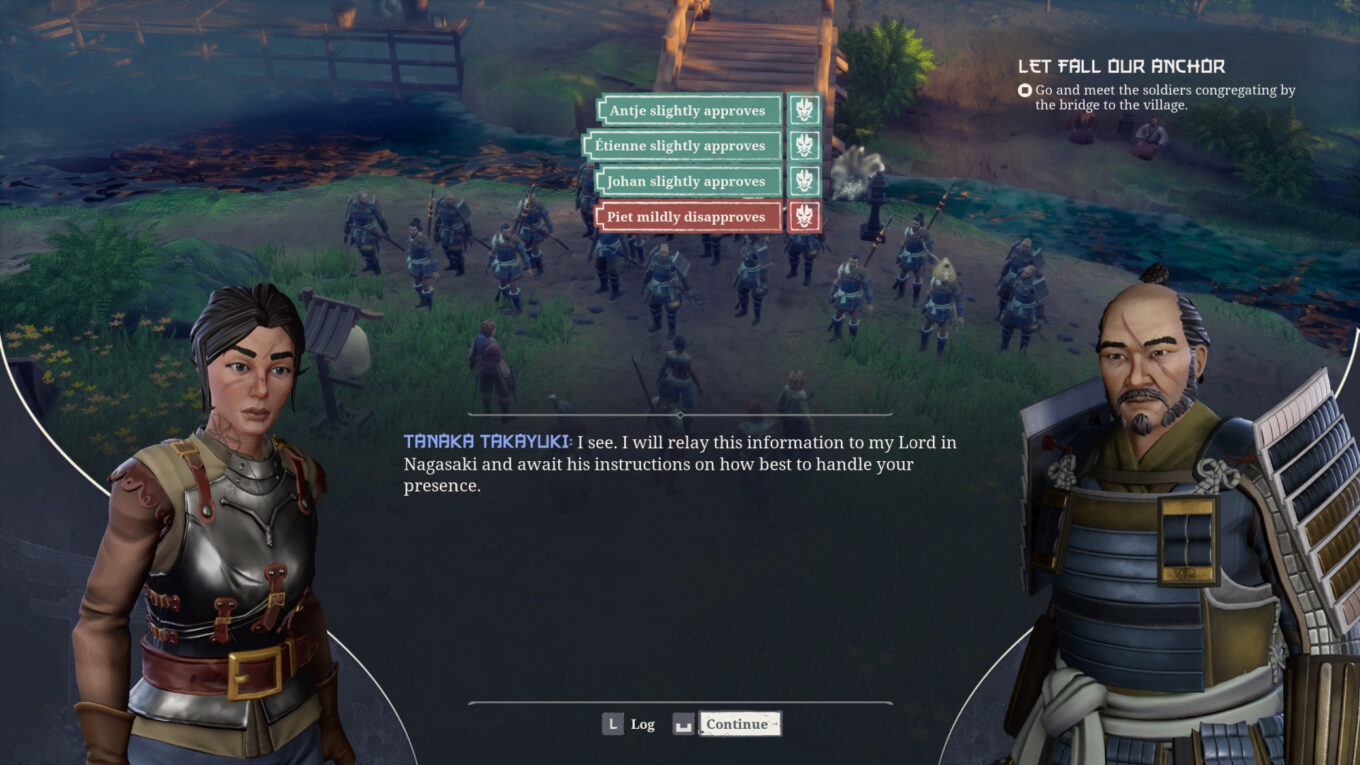
It’s harder to overlook the uneven tone of the dialogue between these characters. Given how much of the game involves Flynn chatting with merchants, priests, crewmates, and samurai, it’s unfortunate that none of their conversations are very entertaining. Most of the talk relates specifically to the task at hand, with Flynn’s questions about a companion’s personal background answered in dry, matter-of-fact spurts of biography.
Worse are the potential responses that Flynn is offered from a dropdown menu. These are typical role-play options, meant to help the player characterize their version of the protagonist as warm and respectful, say, or xenophobic and dismissive. In practice, choosing one or the other often means defining the character as either sensible or completely out of their mind.
As mentioned above, the first act of the game sees Flynn guiding their crew through an existentially dire situation. Their survival depends on acclimating to a new land and gaining some allies among the population. In light of this, opting for outright insults – calling local customs absurd, replying rudely to a powerful figure, or rejecting the offer of a skilled warrior to join your crew by stating “I already have enough Japanese nonsense to deal with” – over polite diplomacy doesn’t seem as much role-playing as picking between a binary of broad ‘good’ and ‘evil’ traits.
The game’s tone, in general, is just as rocky. The writing often whips between deadly seriousness and goofy irreverence – sometimes within the same conversation. At one moment, Flynn can be listening to the story of local Christians having been crucified, their corpses left defiled and rotting as a warning to would-be converts; at another, soon after, they might be cracking wise in dialogue with a priest having a crisis of conscience.
In its best moments, Samurai presents legitimately difficult choices to make, with Flynn balancing the various perspectives of their crew in situations without clear solutions. Is it better to risk the lives of your only allies by attacking bandits for weapons or risk offense by stealing your equipment back from the local official who confiscated it? Should the crew’s priest be allowed to grieve by retrieving a relic made from his colleague’s corpse or would it be wiser to respect the Christian owner of that holy body part by leaving it where it is?
In story beats like these, there’s much more nuance, believable conflict, and opportunity for shaping Flynn’s personality than in blunt dialogue choices split too cleanly between respecting or insulting other characters without cause.
The amount of talking Flynn has to do is tempered by regular bouts of combat. There are systems in place to mitigate how quickly this can happen, with specific missions designed with peaceful sneaking or murderous stealth in mind. Flynn and their party of companions each have an assigned class and unlockable skills that influence their capabilities in combat, but they also possess various attributes that govern traits like their ability to pick locks, break barriers, spot useful objects in the surrounding area, or, importantly, govern their ability to launch a surprise attack.
The stealth is rudimentary – avoid enemy notice by staying clear of glowing sightlines or by making noise while running – and, because it works best when individually selecting characters to move across the battlefield from a pop-up menu, a bit too laborious and fiddly to be enjoyable. There’s some satisfaction to be had in skulking around to clear an area ahead of a potential battle, avoiding patrol routes or sneaking up behind an enemy to clobber them out of commission, one by one. But there’s more enjoyment to be found in open combat.
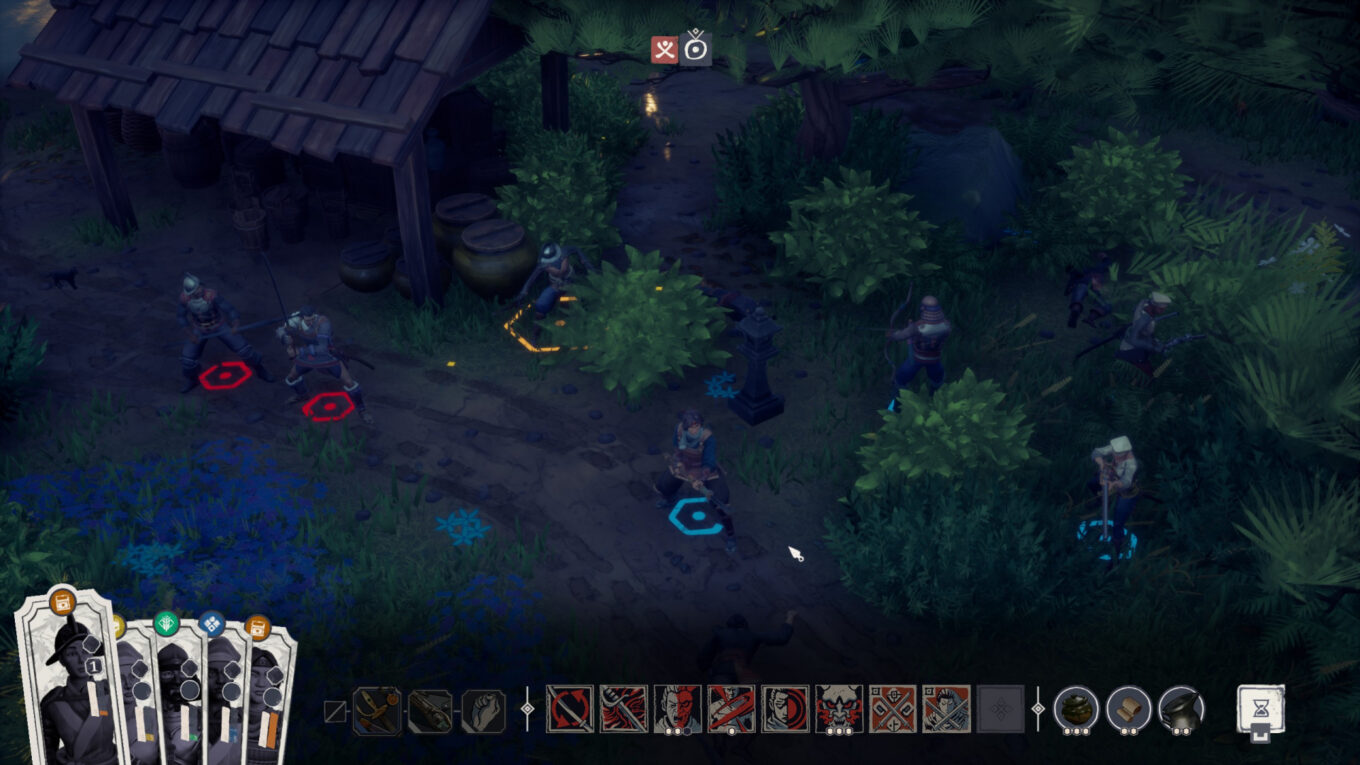
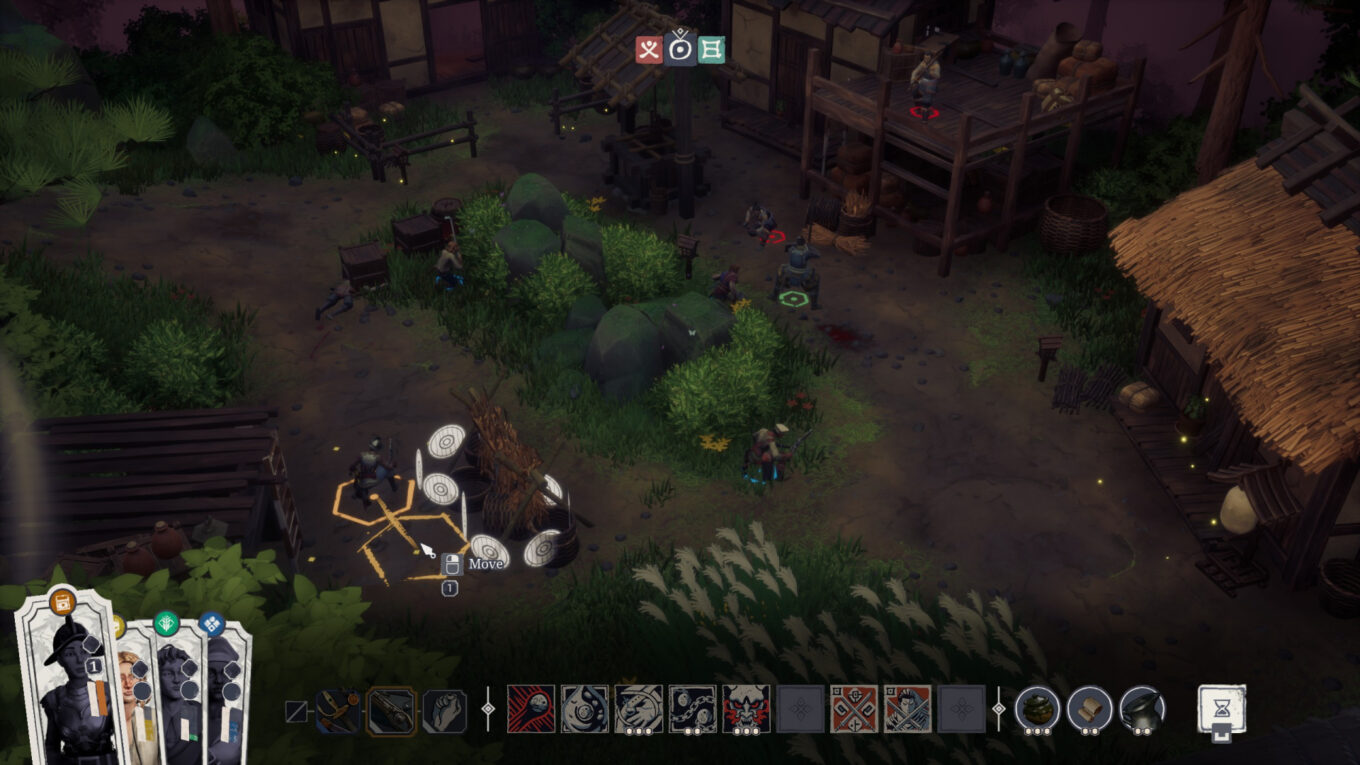
Expeditions: Samurai is turn-based, with every character confined to a limited number of movements or combat actions per round. The expected range of abilities, whether ranged or melee, available across the various character classes is vast without being overwhelming, and the inclusion of battle-augmenting features like flanking, map positioning, and group coordination offer enough variables to make the fights a consistent pleasure.
In the game’s first act on normal difficulty, Samurai doesn’t present tough enough challenges to demand as much creative tactical thinking as its systems allow for, but replaying the fights currently available shows a welcome flexibility of combat and character-building. As the characters continue to level up and unlock new skills over the course of the full game, what already works here in a simpler form should only get more compelling.
The Early Access version cuts off at the end of the game’s first act, right about when Samurai begins to establish a sense of rhythm between exploration, dialogue, and combat. What’s currently available feels like an extended tutorial, with the wider stakes of its story only hinted at by the time a splash screen cuts the unfolding plot short with information on the game’s roadmap for future updates.
There’s bound to be higher drama as the game progresses its plot, which seems to be moving toward the introduction of Tokugawa Ieyasu, founder of the shogunate that would remain in power until the 19th century, and the famous Battle of Sekigahara that sealed his ascent.
From what its opening shows, Expeditions: Samurai is well equipped to portray the political maneuvering and accompanying bloodshed that characterize this era, though it will need a more assured narrative tone and colourful approach to character writing to get the most out of the story it’s begun to tell.
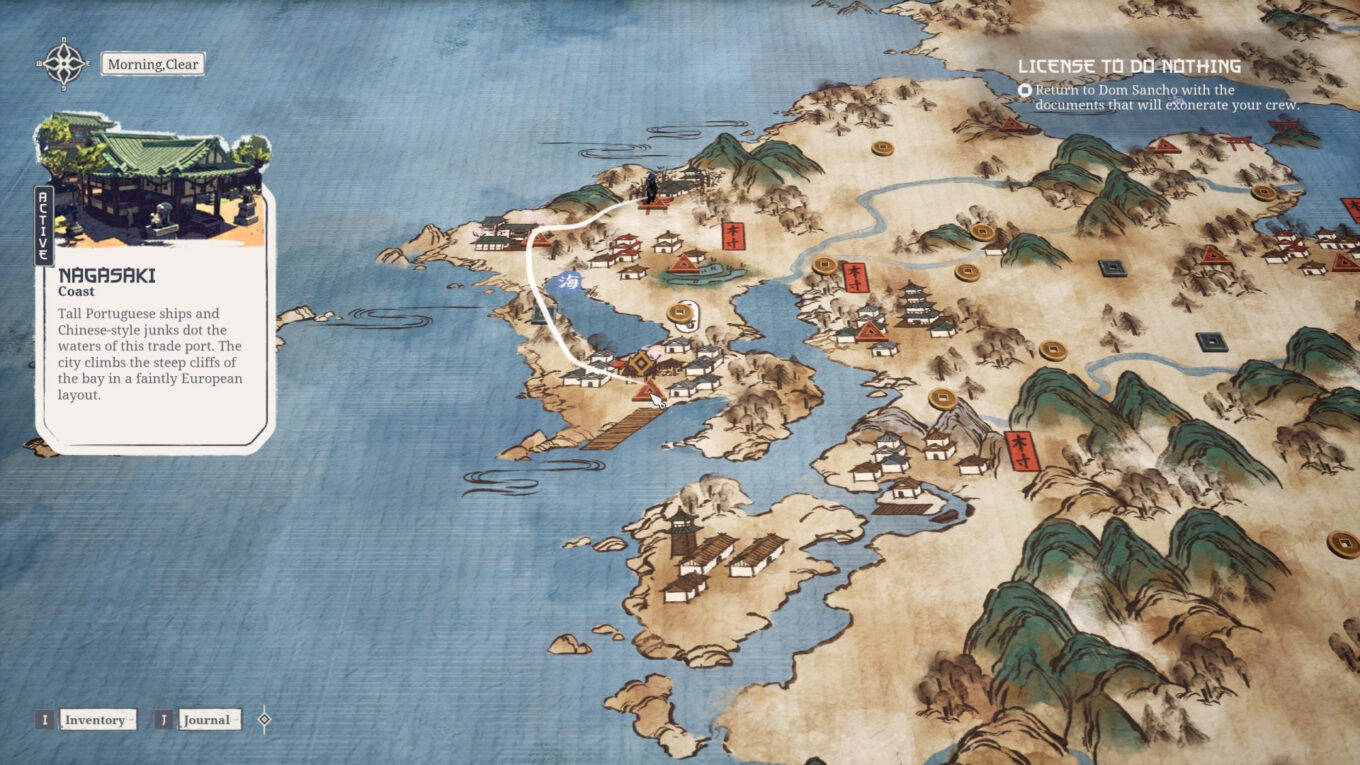
Even with this in mind, the sprawling map of Japan that pops up when travelling between towns, with far-off cities promised as new locations to explore, with new plot points and fights to encounter within, is enticing enough to want to continue onward.