One of my YouTube guilty pleasures, among many distracting rabbit holes down which my idling brain will happily plunge, is yacht tours. I’ll never be able to afford one of these ridiculous things, nor do I particularly want to, but for whatever reason I find oddly specific gratification in taking in their clever packaging – the way the cabins are squeezed in between bulkheads, whether the galley is at the back and open to the cockpit or forward and below deck, whether the furniture is built-in or free standing… I’m also really fun at parties.
It’s a fascination that’s spilled over into the games I play, and makes me a particularly discerning customer when it comes to boat design. I love exploring them and taking in the details, whether it’s the business-first utilitarianism of The Last Caretaker’s customisable trawler, a creaky leaky galleon in Sea of Thieves, or the steampunk submersible that serves as your mobile base in Far: Changing Tides. Now I can add the boat that you wake up on in Tides of Tomorrow, shortly after nearly drowning, to that list. A little modified fishing vessel, it has a cute galley/cabin combo down below, a raked windshield, and even a lowered bathing platform at the back.
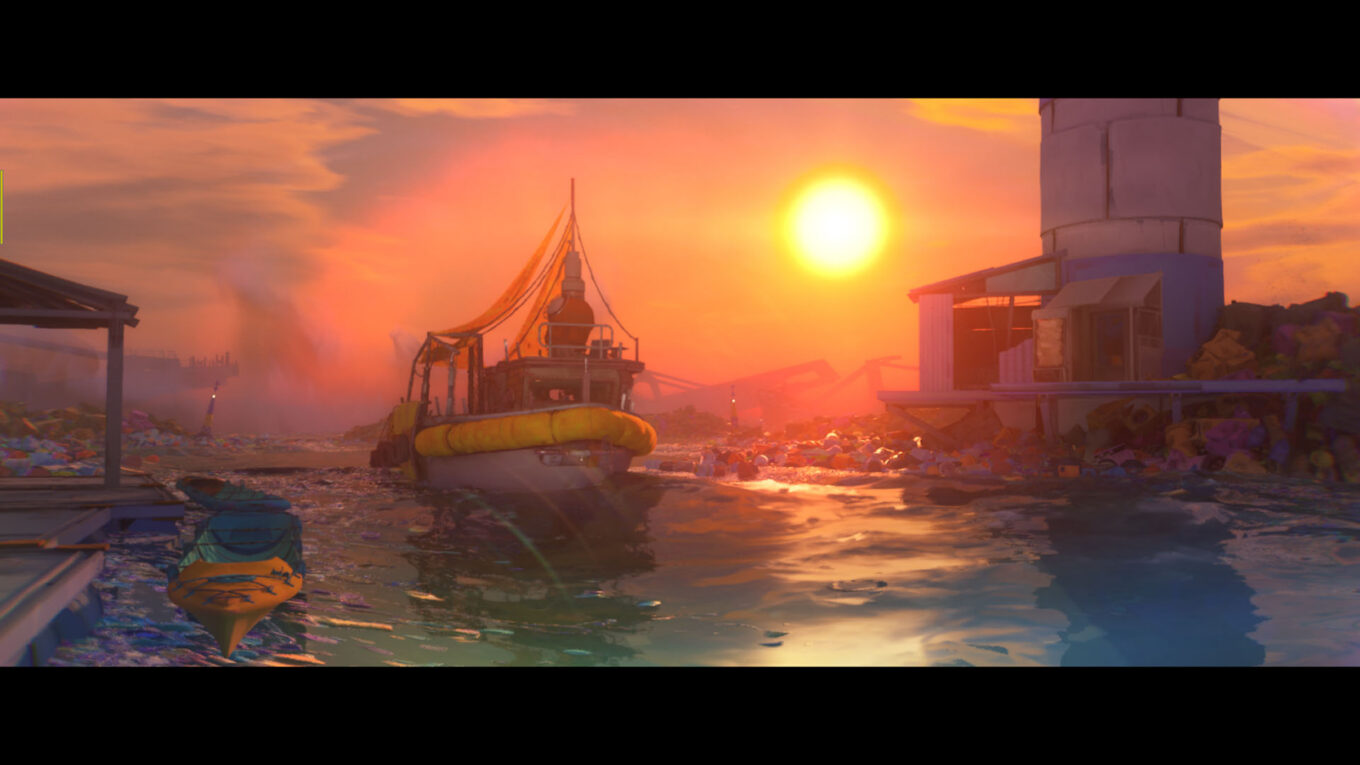
Not that you’d want to swim in these waters. It’s detritus soup out there, every wave crested by bobbing conglomerations of crap and birefringent corpses that float like rotting kelp. The world has fallen to the “ever-flood”, an apocalyptic event which left only pockets of society holed up in floating junk towns and absolutely riddled with a microplastics-induced degenerative disease called plastemia. Thankfully, they’ve been spared the indignity of witnessing Kevin Costner merrily drinking his own urine, but not the irony of my appreciation for the craft in this game coming from watching videos of the products bought by the kinds of superrich people who will likely bring about this scenario for real (yes, that includes you, Gabe…).
The version of the game I’m testing is an extension of the demo that was released late last year, in which the owner of the aforementioned natty fishing boat, Nahe (who, in the intervening months, has gained some tattoos and jewellery, and feels a little more detailed overall), explains that I’m a Tidewalker, quite important actually, and possessed of a supernatural connection to others of my kind. Oh, and that I’m going to die from a pretty severe case of plastemia if I don’t keep chugging back a medicine called Ozen (more symptomatic treatment than cure) which happens to be in very short supply.
So begins a prophesied quest to rid the world of this malady, the plastics which brought it about, and (rather grandly) sin. The most interesting part of the first demo was the branching narrative mechanic, which significantly builds on Digixart’s previous efforts in Road 96 by adjusting your experience based on both your own decisions, and those of other players. This latest build reveals a little more of how that will work, and it’s unlike anything I have ever played.
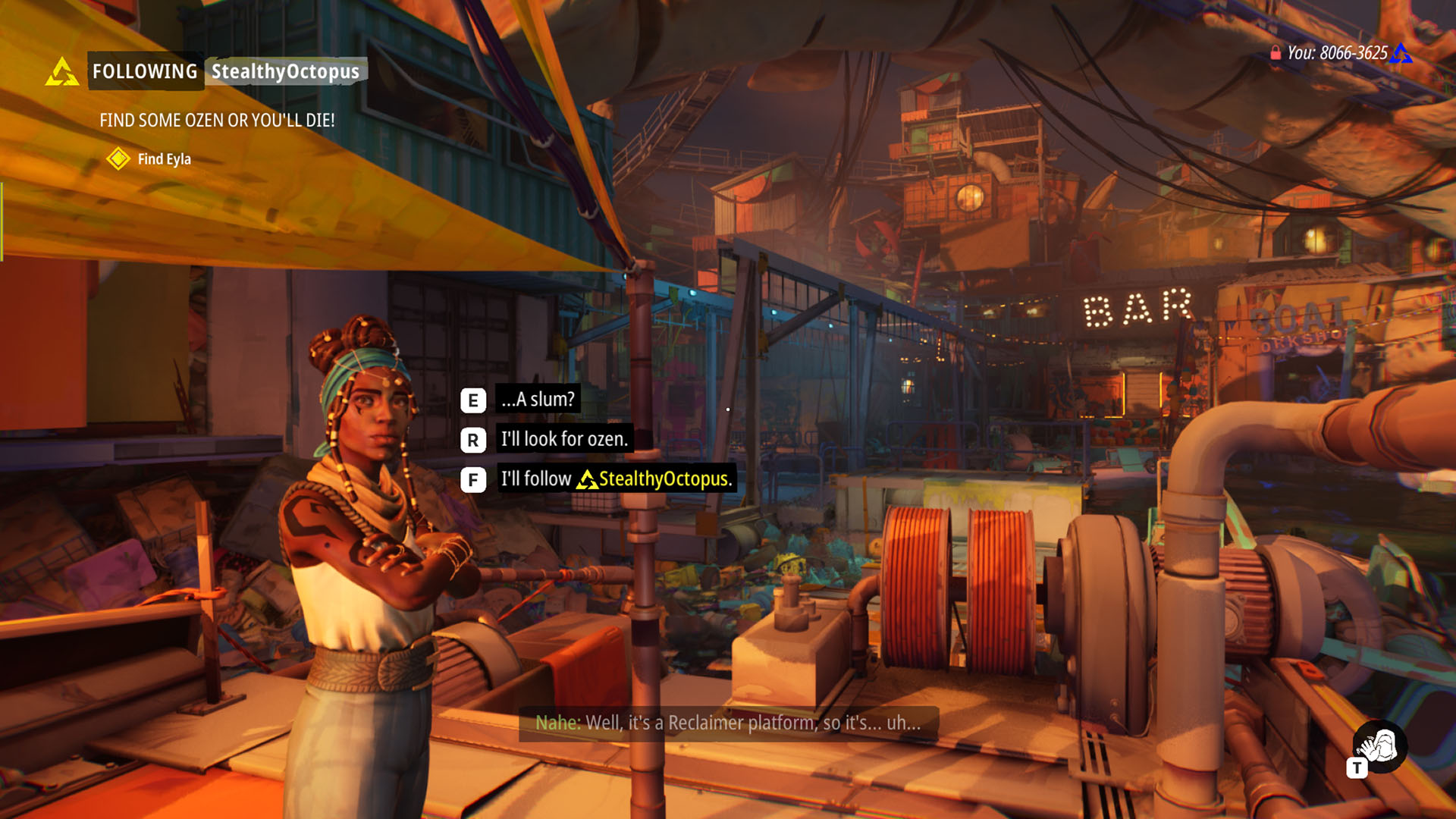
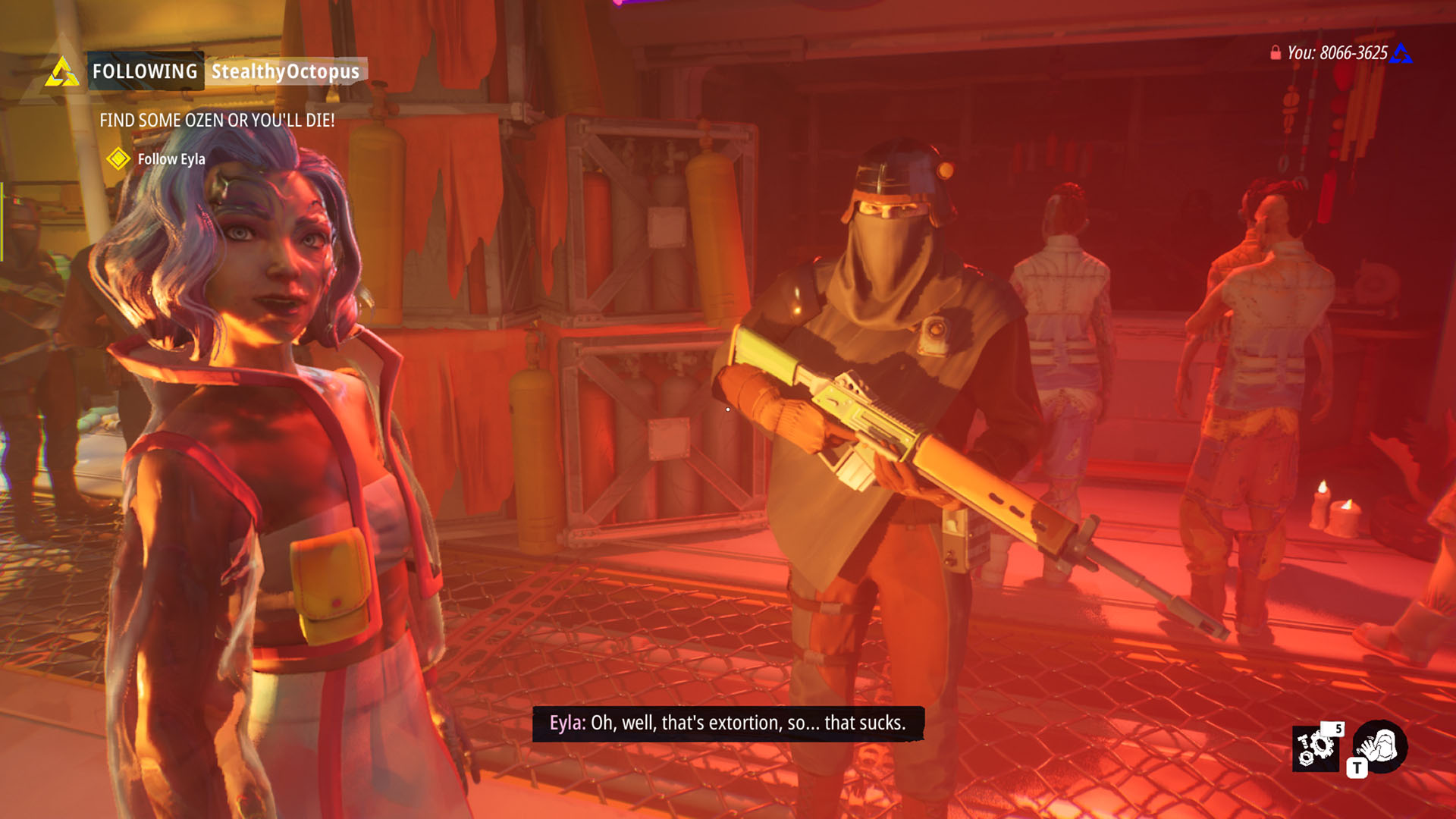
Well, maybe not anything. There are shades of the Souls series’ asynchronous playfulness here, but the potential impact other players can have on your world is more profound. For example, prior to my arrival at Marketland, the player I had chosen to follow (you can only follow one person at a time, but can change between levels) had caused a right old ruckus, triggering a lock down and destroying a bridge. But they also managed to convince local Ozen-hoarding crimelord Obin to reduce his security detail. As a result, by the time I arrive the chaos has passed and I’m able to walk around freely – except for crossing that damn bridge, which I must repair using precious scrap (the game’s currency). This means, however, that the next player to come through won’t have this problem.
Using my Tides of Time power, I can see previous players’ actions, learn how certain interactions went down, choose to copy or change tack based on the presented outcome, and even benefit from items left behind in stash chests. Not that the bridge-wrecking ingrate who was here before me bothered to share – all my chests are empty, so I leave some stuff there for the next player instead. Because I’m, y’know, nice.

Every action you take feeds into your reputation, revealing you to be particularly cooperative or more of a troublemaker (in my case, a little from column A, a little from column B). Alongside this, you will also discover your particular priorities – are you more of a survivalist out for yourself, a philanthropic humanity type who believes that a rising Tidewalker lifts all boats, or a misanthropic naturalist who’s just about done with the damage our species has wrought on the world?
As the game progresses, all of this begins to stack up in interesting ways – later I’m asked to guess whether a password has been changed based on the opinion I’ve formed of a different player. Did they go with the one revealed in a Tides of Time vision, or did they change it just to mess with me? Unlike with the person I was following before, the chests I find in the wake of this new Tidewalker are bountiful, plus they’ve contributed to building a cairn (if you like cairns, you’ll love this…) and have made a number of other constructive choices. With this in mind, I put my faith in them and trust that they’re a cooperative sort, and when that trust is revealed to be well placed my opinion of humanity (and my own faculties) receives a little real-world boost. Not many games can make you feel this way.
The ongoing choice of whether or not to collaborate, often at a personal cost (players, for instance, can donate some scrap to merchants which will be pooled, eventually providing a sizeable discount to one lucky player down the line) serves as a fitting analogy for the choices we currently face regarding our own environment. Make meaningful changes now for the sake of future generations, or keep building bigger yachts and enjoy what little time we have left. But despite the social conscience at its heart, the game never seeks to lecture and instead leans into a playful, anarchic, and often very funny tone. This is echoed in Digixart’s choice of colour palette too, opting to eschew the usual dowdy dystopia browns and beiges in favour of a vivid aesthetic that’s more Fortnite than Fallout. The ocean may be filled with rubbish, but those bottles and boxes look like jewels encrusting the beleaguered coral reefs.
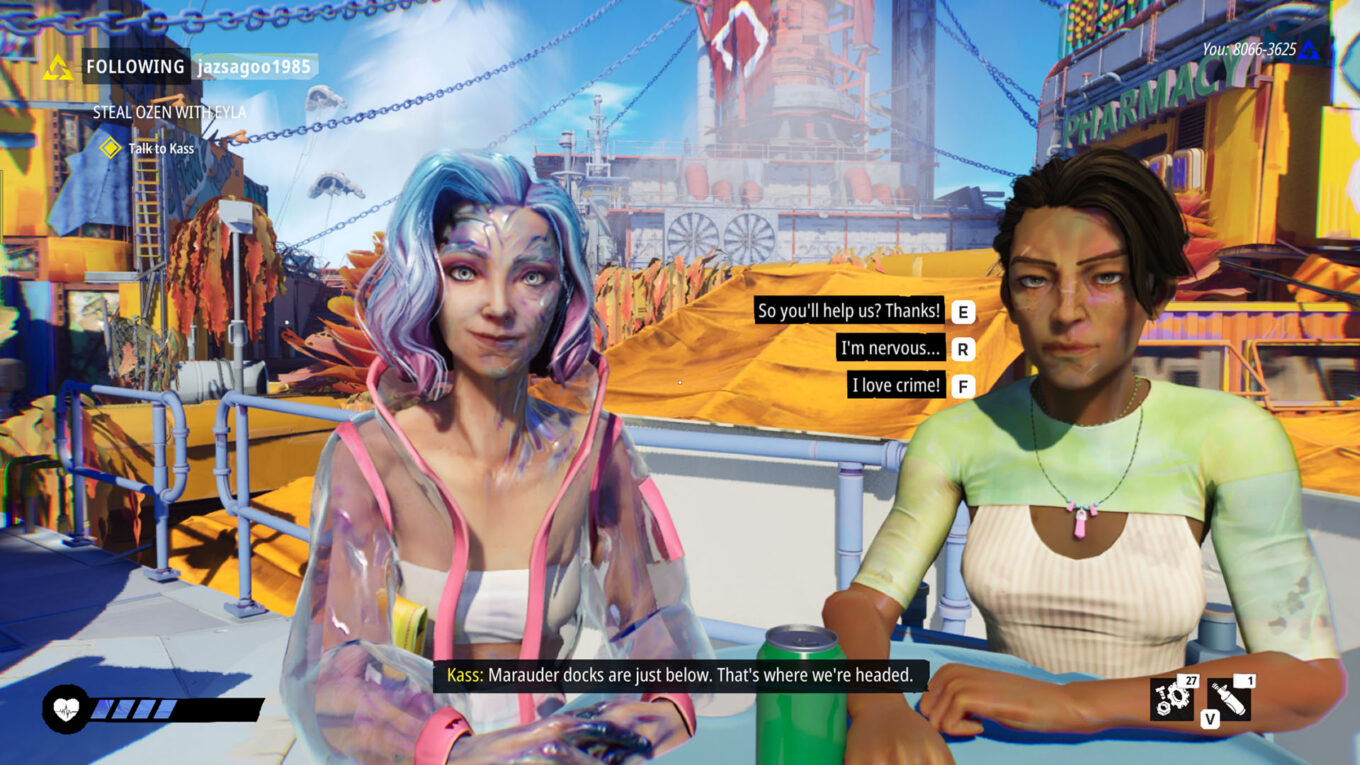
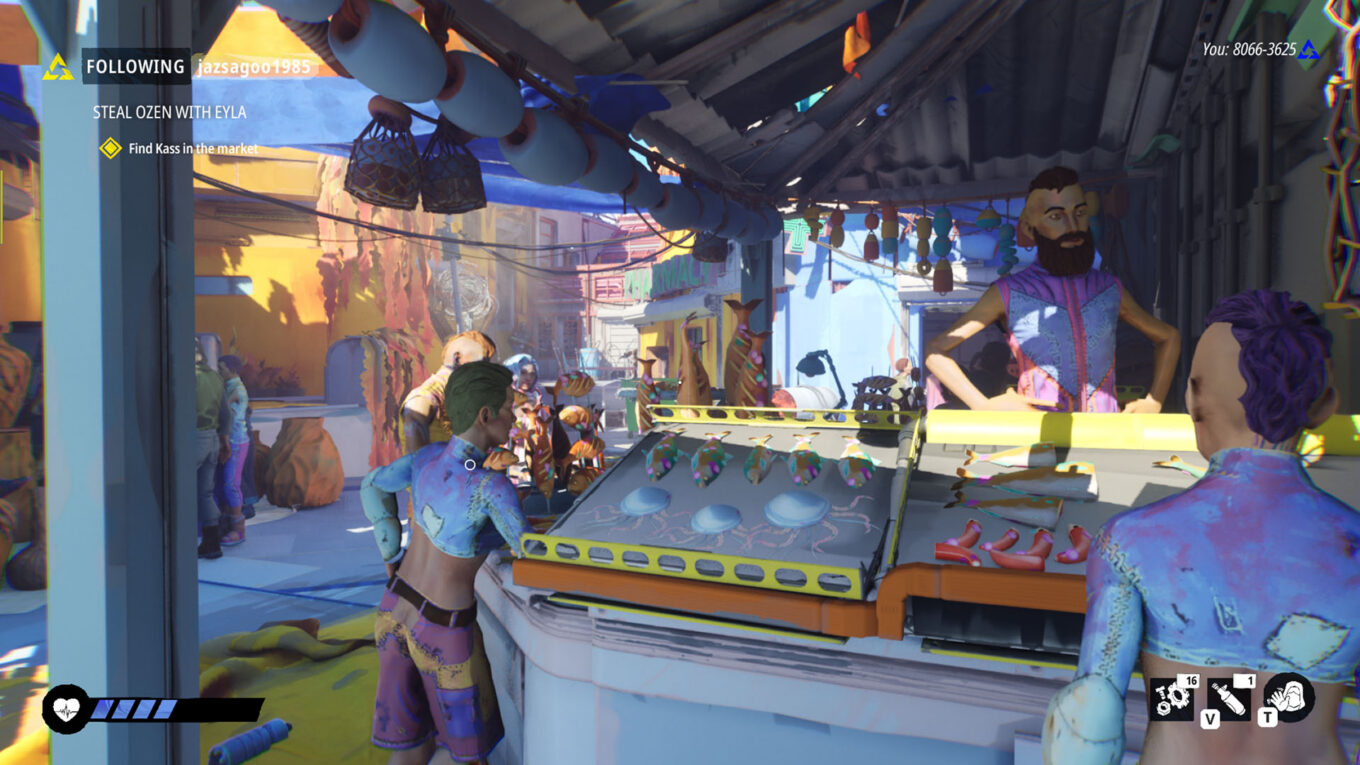
Ironically, though, the game Tides of Tomorrow most readily brings to mind is id Software’s fantastic dusty wasteland shooter, Rage. That game had astonishing-looking, and oh-so-solid-feeling characters which the Avalanche sequel (and, frankly, every game since) failed to match. But Tides of Tomorrow convincingly picks up the mantle and then goes further by imbuing them with some actual personality. There are tangential similarities structurally, too, in that you have an upgradeable vehicle (here a little speedboat, of course) and travel between more focused levels using it. No sign yet of wingstick beheadings, however.
That travel manifests as brief trips on the open ocean, cutting through the filthy flotsam after using a telescope to choose your next destination. You can pick a main-quest level and move the story along, or partake in a variety of ocean events which include storm escapes, boat battles, or simply visiting a merchant ship out on the waves. One encounter I play tasks me with avoiding incoming fire as I try to save four trussed-up giant mereid fish from a trawler, then board the now stricken vessel and nab as much loot as I can before it sinks.
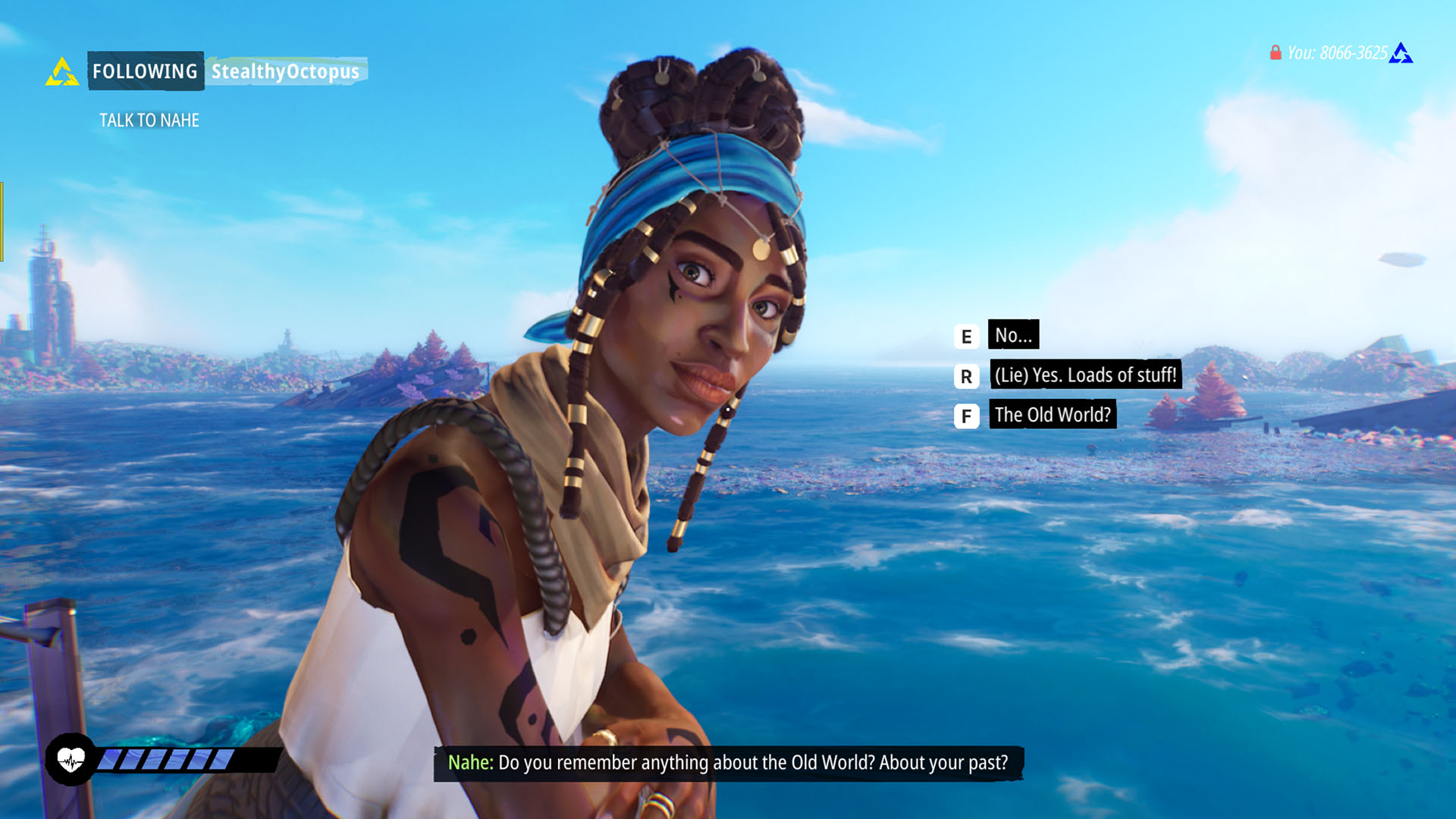

Another more peaceful encounter is with a merchant who claims to have run out of Ozen, but who is revealed to be a liar when I sneak into his ship and steal all his scrap and the medicine he’s hiding below the counter. He isn’t best pleased about this, perhaps reasonably, and informs me that he will be much more wary of future tidewalkers. Sounds like a ‘them’ problem, to me.
Your boat is easy enough to control, but I’d prefer a greater sense of weight – right now it feels a bit light against the waves. There are a few bugs to iron out, too, such as the one which causes a man to confidently sit down perpendicularly to the bench he is aiming for (that’s some impressive core strength), and a rather more frustrating hiccup that catapults me into a restricted area each time I try to jump a fence, resulting in the armed guards gunning me down.
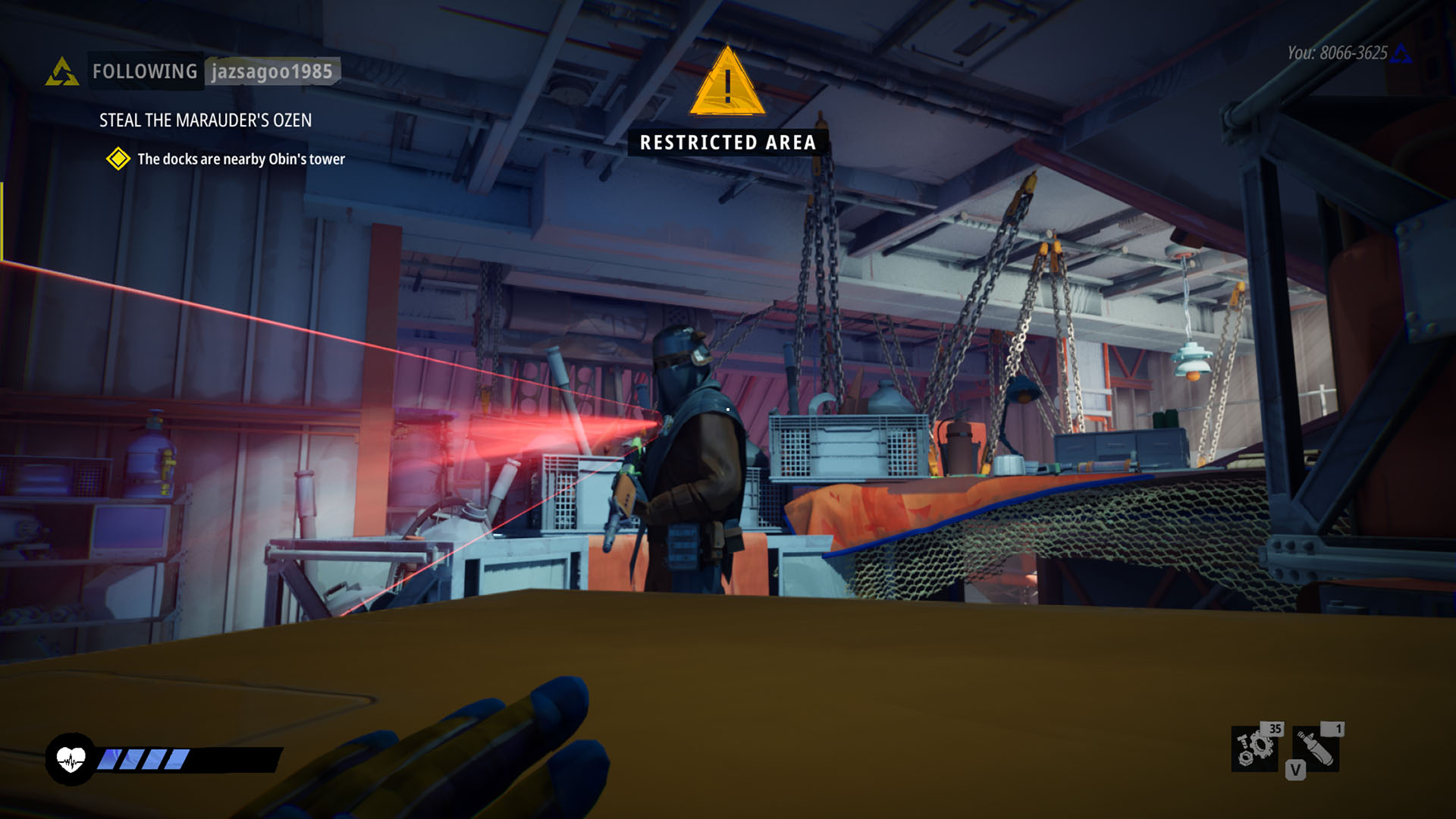
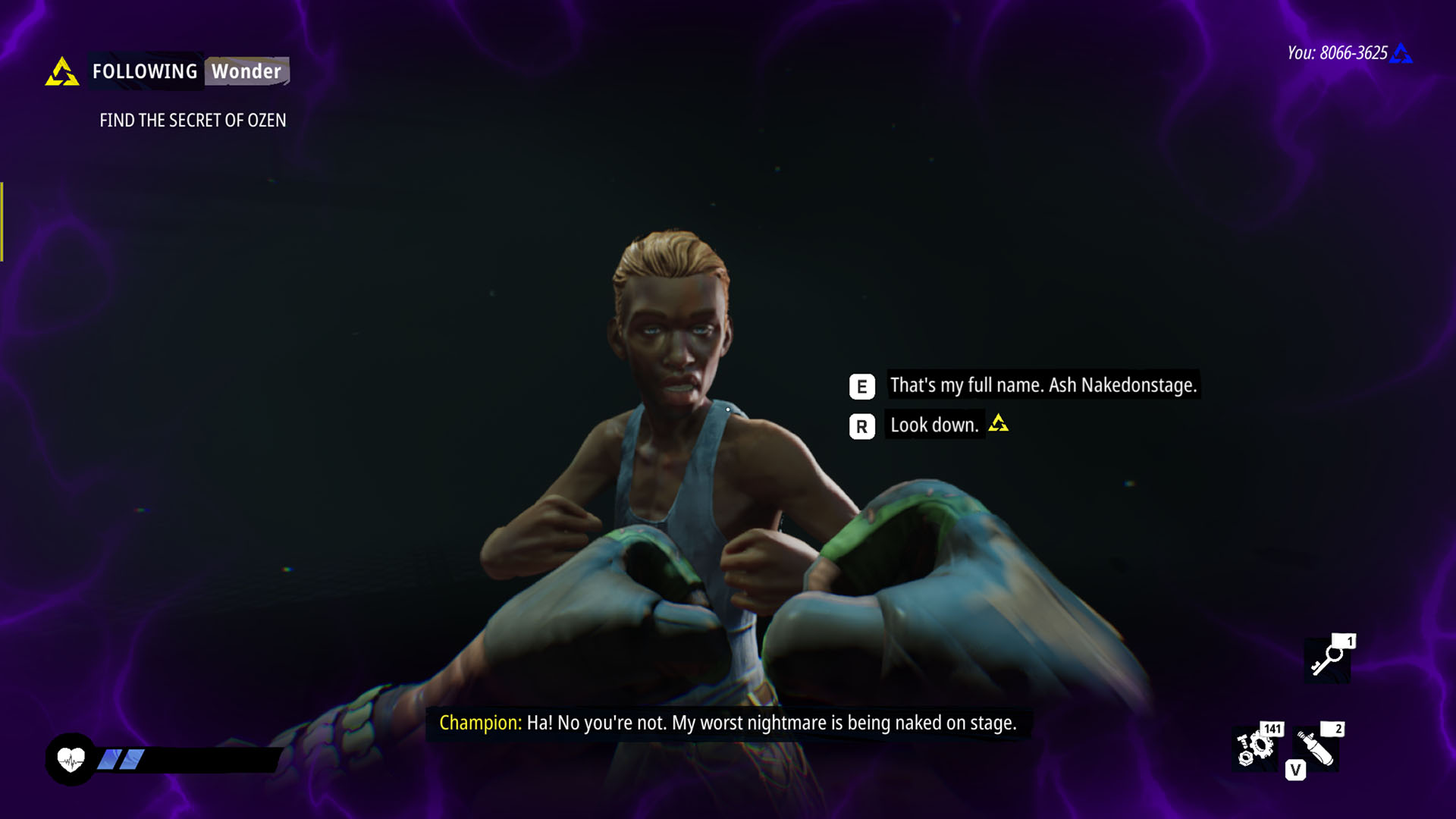
When working as intended, however, the game’s stealth sections are satisfying, if a little lightweight, and the ability to jump while crouched is a thoughtful design touch which maintains flow. And while we’re on quality-of-life wins, let’s give a quick nod to Tide of Tomorrow’s conversations, too, which allow you to look around and even walk away whenever you like, never locking you in place. NPCs react convincingly if you do rudely leave, and it all makes for a much greater sense of immersion – every game developer who still insists on intermittently nailing your feet to the ground should take note.
Tides of Tomorrow is bursting with ideas and personality, and appears to successfully strike that rare balance of feeling like a triple-A release while also retaining a singular, indie-dev sensibility (another point of comparison with Rage, in fact). The relatively short portion of the game in this build makes it difficult to assess how deep the cause-and-effect systems will run, and the fact that all of my choice bars were more or less even at the end of my playthrough casts some doubt over how meaningful these decisions will turn out to be. But what is here promises much, and if Digixart can deliver on even a portion of the vision that it has set out, Tides of Tomorrow could be very special indeed.