
Grand strategy games the likes of Total War and Crusader Kings are about advancing national interests (and petty squabbles) through a sophisticated, extensive mix of military tactics, diplomacy and shady deals-making. These are experiences that let you sculpt international affairs after examining, very intensely, a litany of stats and how these affect other numbers, with a hard, tangible figure attached to abstract, intangible concepts like trustworthiness and political ideologies. You’ll try to follow and manipulate these variables while plotting your best-laid plans, from directing your armies towards ambushes, to waging proxy wars by whispering threats and smuggling bribes to other empires.
But here’s a thing that happened in 9 Kings, a game that most definitely does not fall in the realm of grand strategy. After building a vault that would generate gold pieces every year, I’ve enacted a royal decree – all by pressing a single button, rather than considering a spreadsheet of numbers – that lets me trap my army of mercenaries into eternal servitude. This means once recruited they can never leave, which leaves me with even more funds to invite a staggering number of mercenaries. And when battle commenced, they were commandeered to reduce an opposing force into mush, the miniscule figures of both armies grinded into little crimson blobs of blood. Once the skirmish was over in mere seconds, my battalion was miraculously replenished to its full strength, ready for their next combat. Were they revived, perhaps? I can never know, nor was I compelled to find out anyway. Instead, there’s greater satisfaction in watching these miniature troops reduce one another into vibrant piles of pixels.
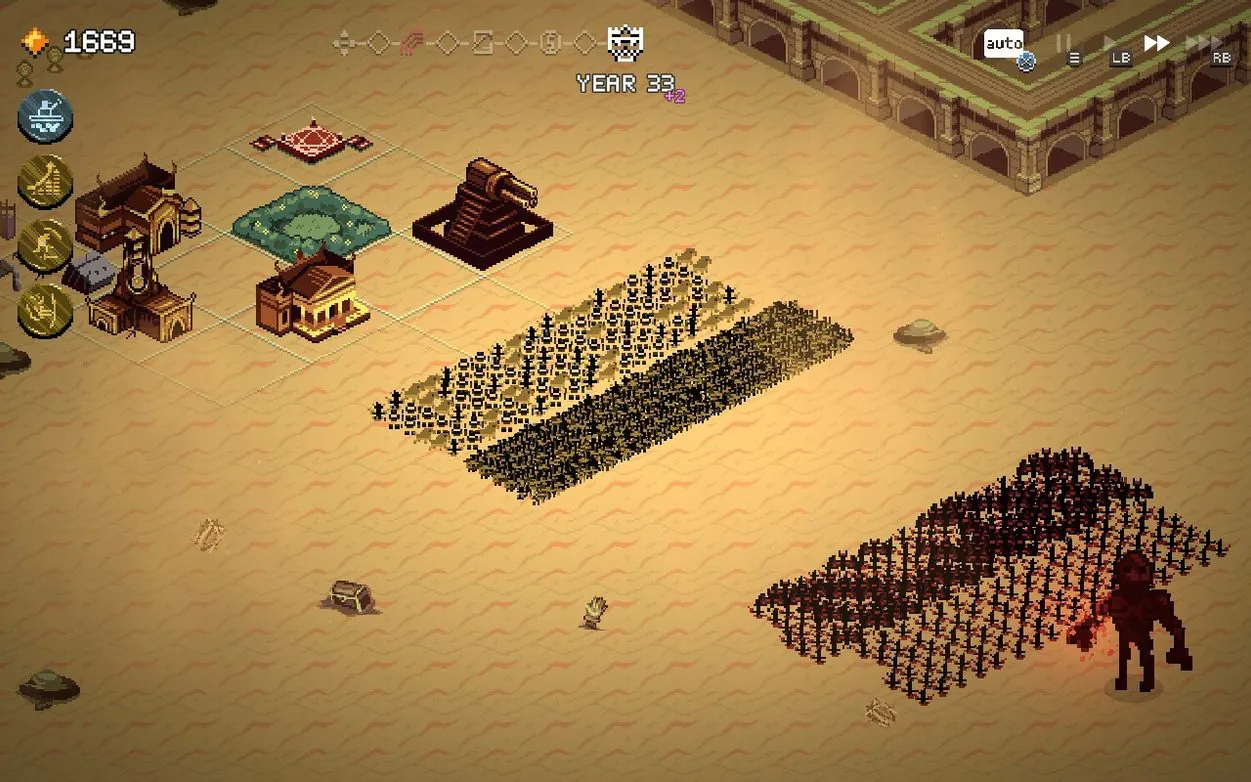
9 Kings is when a grand strategy game is reduced to its barest components: build empire, fight armies, last forever. You begin with an empty plot of nine squares on a grid, and building your first building – your grand ol’ castle – on one of the squares. The point is to defend the castle from attacks; once an enemy reaches the castle, you lose a life. Each turn is defined by a year, and during this round you can choose to build more buildings, hire more troops, both of which will occupy a single square on the grid. Alternatively, you can also select an upgrade for your buildings or troops. All these options are represented by a deck of cards, and there’s a sizable variety of buildings, troops and upgrades to choose from. And when the battle begins, you can watch your wee little army rampage towards their enemies, and listen to their anguished, high-pitch squeals of defeat.
Winning this scuffle brings you loot that you can plunder from your enemies’ desecrated bodies (or rather, adding one out of three cards to your hand), which you can use to bolster your kingdom. You simply repeat this routine for, say, 33 years — or, in other words, 33 turns. It’s a little like a city builder, but with infrastructure management comprising of selecting which snazzy building you want in your kingdom. There’s none of that high-stakes politicking of grand strategy games; 9 Kings is super chill, and it’s really just about seeing little pixel dudes being pitted against each other.
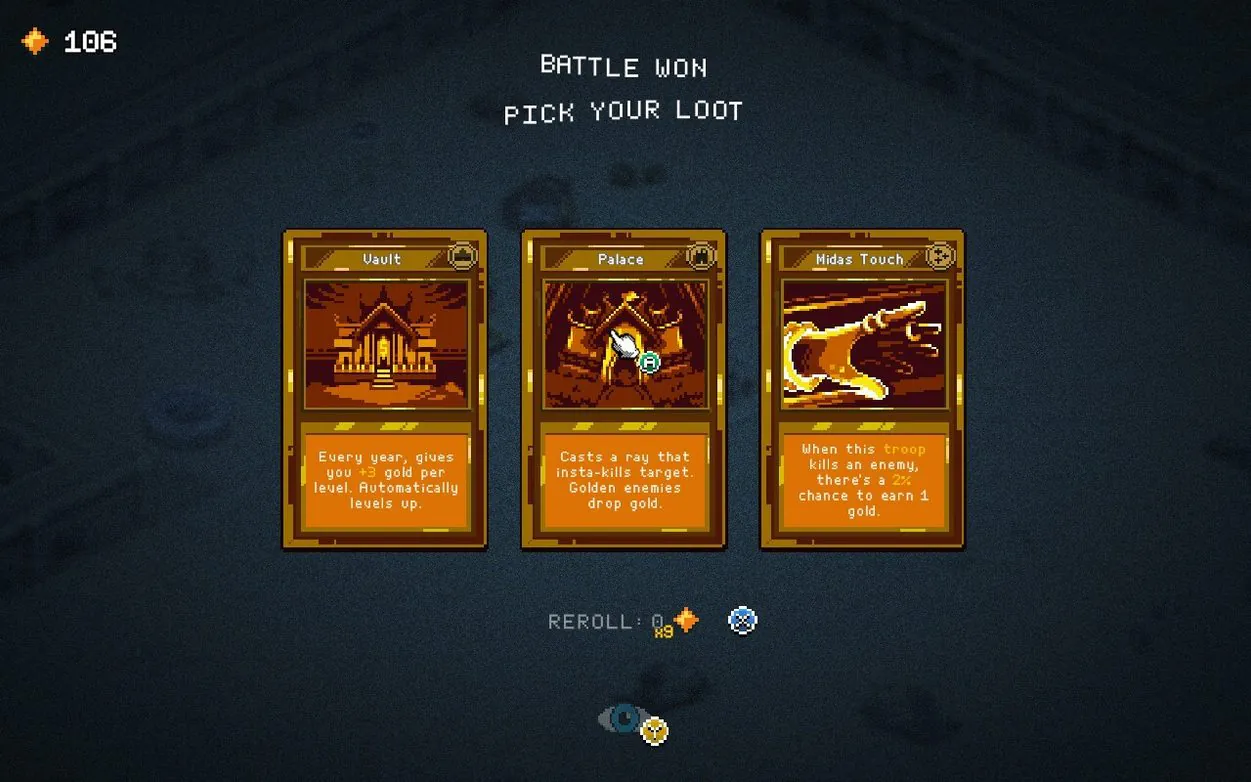
That’s not to say that there isn’t more to the game. 9 Kings may be low-stakes, but there are also important considerations when building your kingdom. For instance, buildings can range from towers that deals damage to enemy troops, like a scout tower that shoots arrows, to a structure that grants stat bonuses or upgrades, such as a farm that adds an additional unit to your troops in an adjacent square. Troops, too, can be melee, ranged or magic units, or even a mix of these classes.
At the beginning, your default monarch is the King of Nothing, which rules a medieval-themed empire that offers troops in the form of regular soldiers, archers and paladins. Other kingdoms, which you can eventually unlock the more victories you secure, include the King of Spells, which count magic-wielding infantry like warlocks and wizards in their ranks, and the King of Blood, which you can imagine rules over the bloodthirsty forces of hell like imps, ghosts and meat golems. But these units aren’t just glorified palette swaps, with these troops’ qualities rendering each faction distinct from one another. The aforementioned King of Blood commands extremely dispensable units that die fast, move quickly and deal explosive damage for their carnage, whereas the King of Stone makes heavy use of buildings, with slow-moving troops that complement these structures’ features.
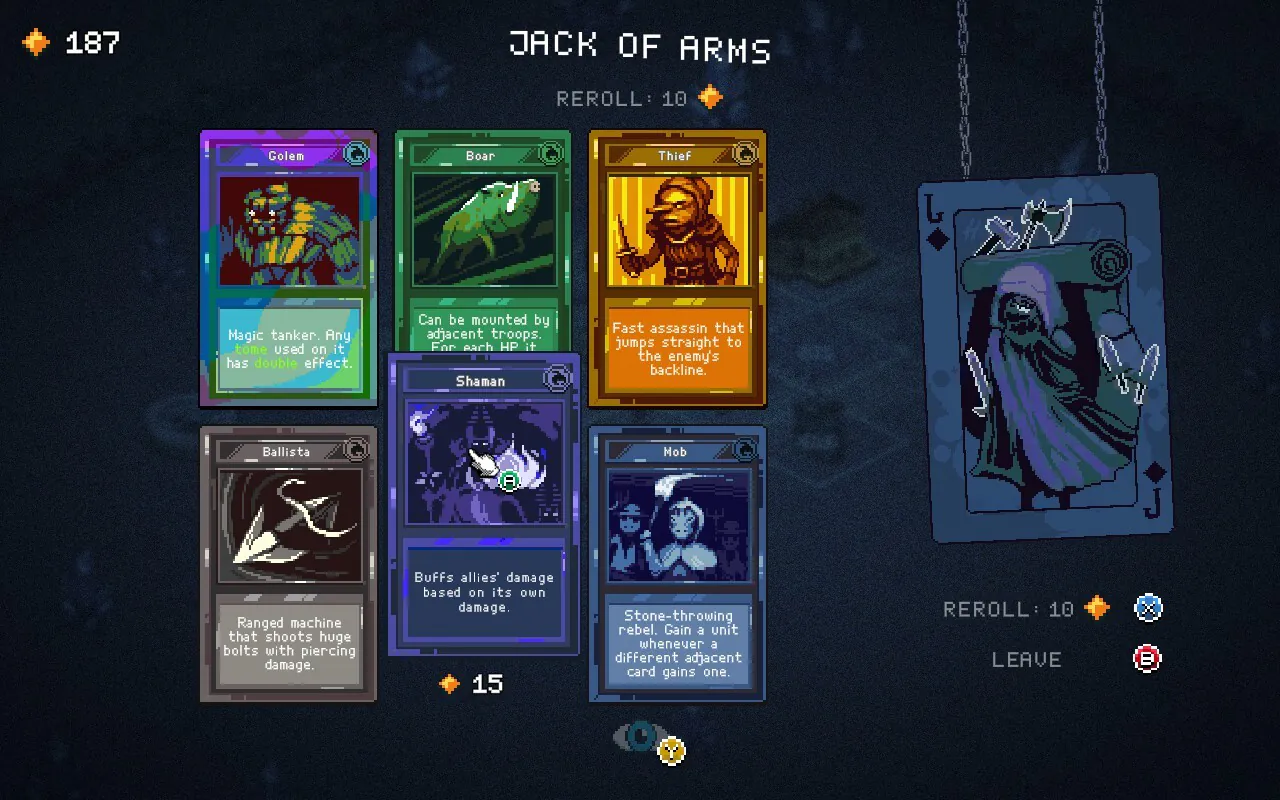
But 9 Kings isn’t content with you waging war against just a few kingdoms, and at several times you’ll be asked to choose which kings you want to incite a war against. When victorious, this lets you add cards from their kingdoms into your hand as spoils of war, on top of your own faction cards, allowing you to modify your strategy mid-battles. You can also make peace with other kingdoms, so their faction-specific cards will no longer be added to your hand. At the same time, the placement of every building and troops on your plot can be of strategic importance, and this adds yet another pleasing amount of planning to your warfare — not that much, but just enough to tickle your brains.
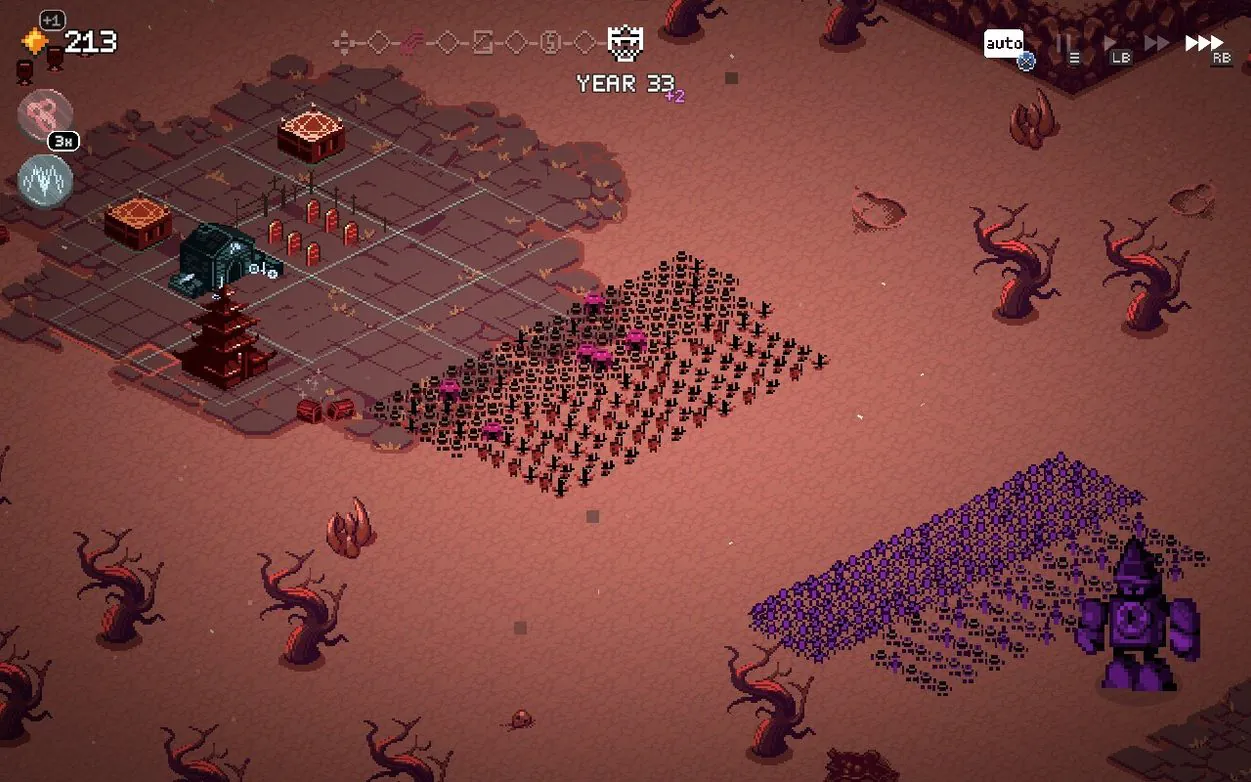
Meanwhile, other features make skirmishes a little more thrilling as the game ratchets up in difficulty. Blessings, a boon seemingly granted by the world’s omnipotent gods, offer bonuses on specific squares after nine years. These can, say, increase the building or the troops’ damage or health if that particular square is occupied. Royal decrees deliver more bonuses for strengthening your kingdom, be it increasing attack speed or expanding the effect of enchantments and upgrades.
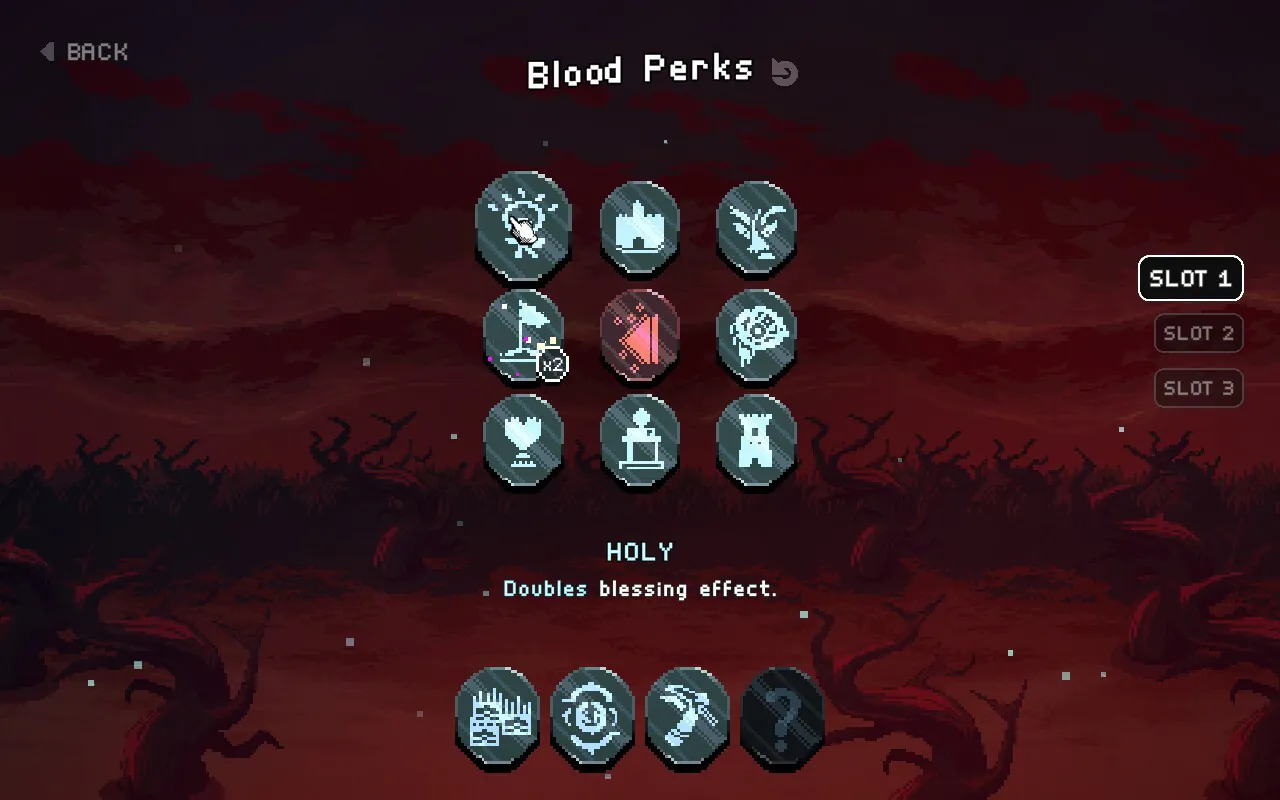
Then there are perks, which can be chosen before a run, so you begin the game with certain advantages like defensive towers already being built on a plot. This segment is also a mini puzzle, and you can even place perks in a certain order on a three-by-three grid to multiply its effects. These gifts are very heartily received, but what makes going through 9 Kings so gratifying is that they don’t necessarily make battles easier, especially on higher difficulty levels. And if you’re itching for a greater challenge, 9 Kings has a multiplayer component that lets you pit your kingdom against another player in ranked challenges. Win more, rank higher, and earn your bragging rights. There’s also a “quest” mode that lets you defeat other kingdoms, but with certain conditions, like only fighting with boar troops.
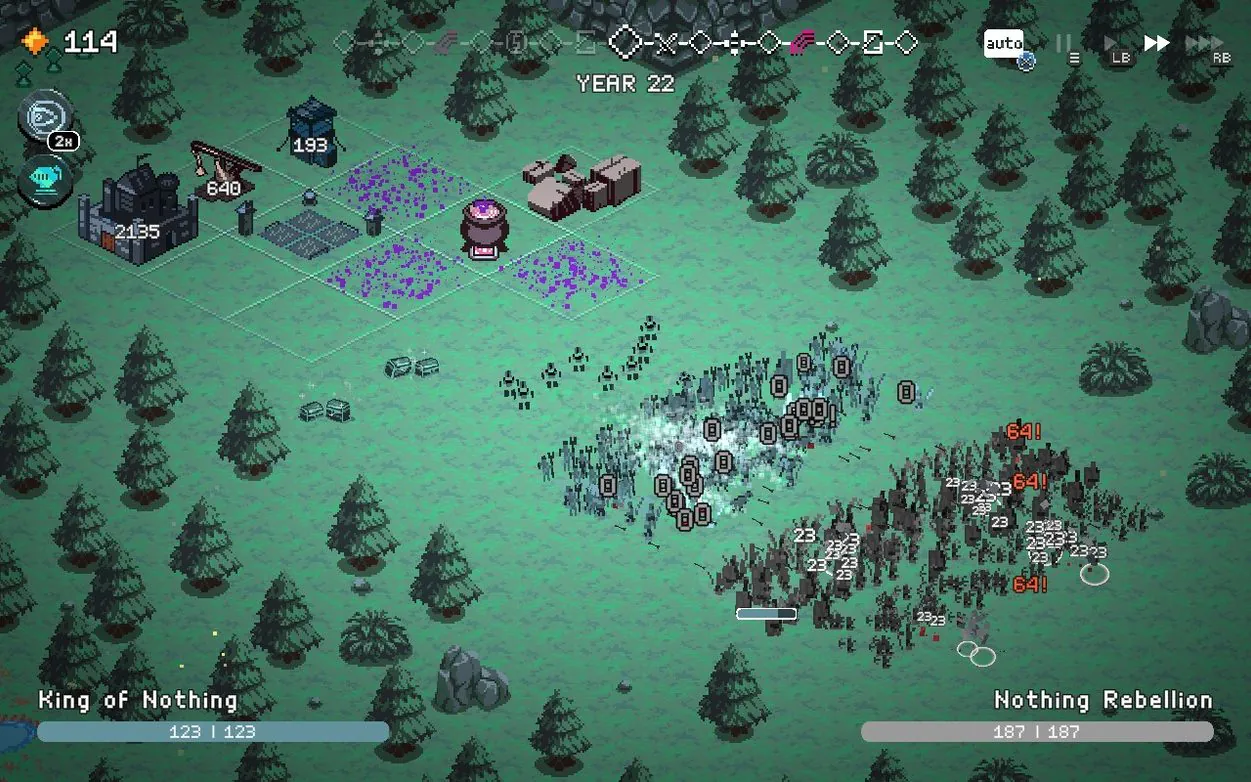
By removing the byzantine rules of grand strategy games, 9 Kings distills the intoxicating cadence of wargames into brief, adrenaline-fueled clashes. This pleasing routine is about optimising your cycles every round, and the only resource you’ll manage is gold. With no stone, wood, or food to juggle, choices are pretty much limited to thinking about your preferred manner of eviscerating enemy troops, and transforming them into smouldering ashes. Would you like to raze your enemies to the ground through as the King of Nature, and direct elvish archers, woodland beasts and poisonous spores against your foes? Or would you prefer to bend capitalism to your will as the King of Greed, and overwhelm your adversaries with a powerful army of mercenaries and thieves who would do your bidding for as long as you have gold?
The fact that your armies are reduced to mere stick figures on screen that enact hyper-exaggerated, kaleidoscopic battle scenes means that you’re simply supposed to revel in the exhilarating spirit of not-so-hard-won conquests, without contemplating the human cost and verisimilitude of bloodshed. It’s all fantasy and not very realistic, which is why 9 Kings is very easy to pick up, easier to obsess over, and very, very fun.