
What a difficult game Annihilated is. Nor for any mechanical challenge, per se (though it flirts with those). Rather, Death Kumiai’s visual novel masquerading as a reaction-based deck-building roguelite finds difficulty in a wealth of genres and ideas that float, almost freeform, in desperate need of wrangling.
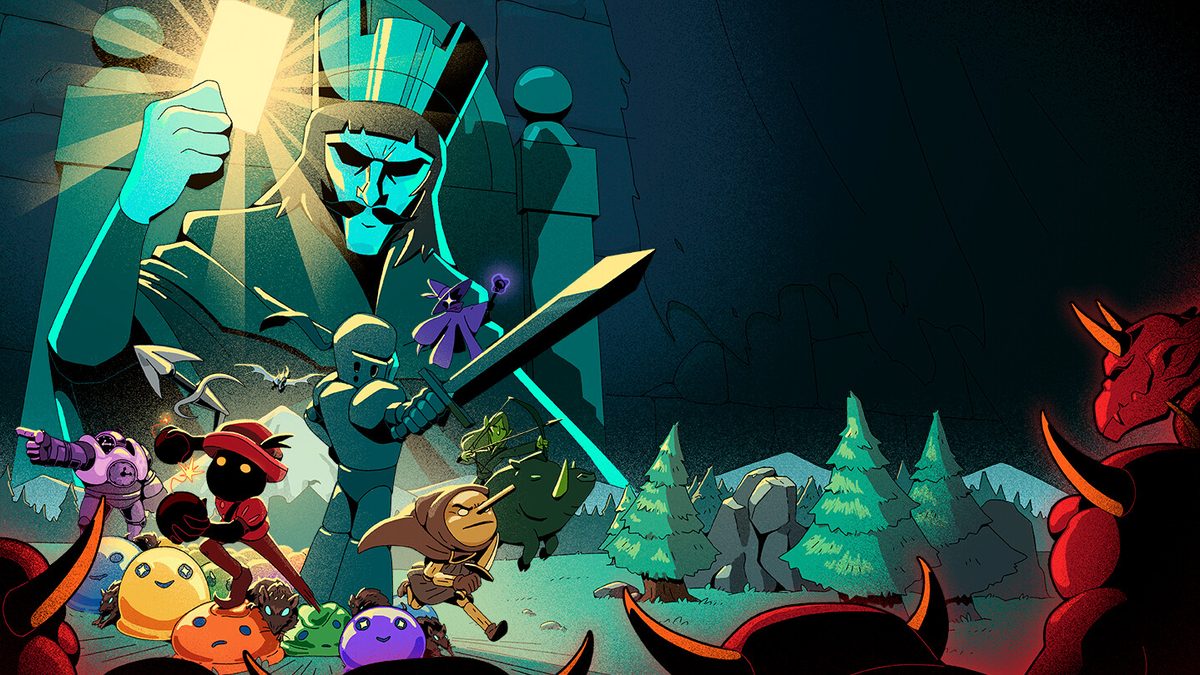
The title refers to the party of adventurers you discover hunkered in the depths of a dungeon in which you, too, are trapped. Their archetypes have been stripped from them by the same curse that cages you, to the point they become unremarkable. There’s a hero without a voice to lead, a mage lacking magic, a warrior placed in the body of a doll, and a priest without faith. It makes them, in the game’s parlance, “annihilated.”
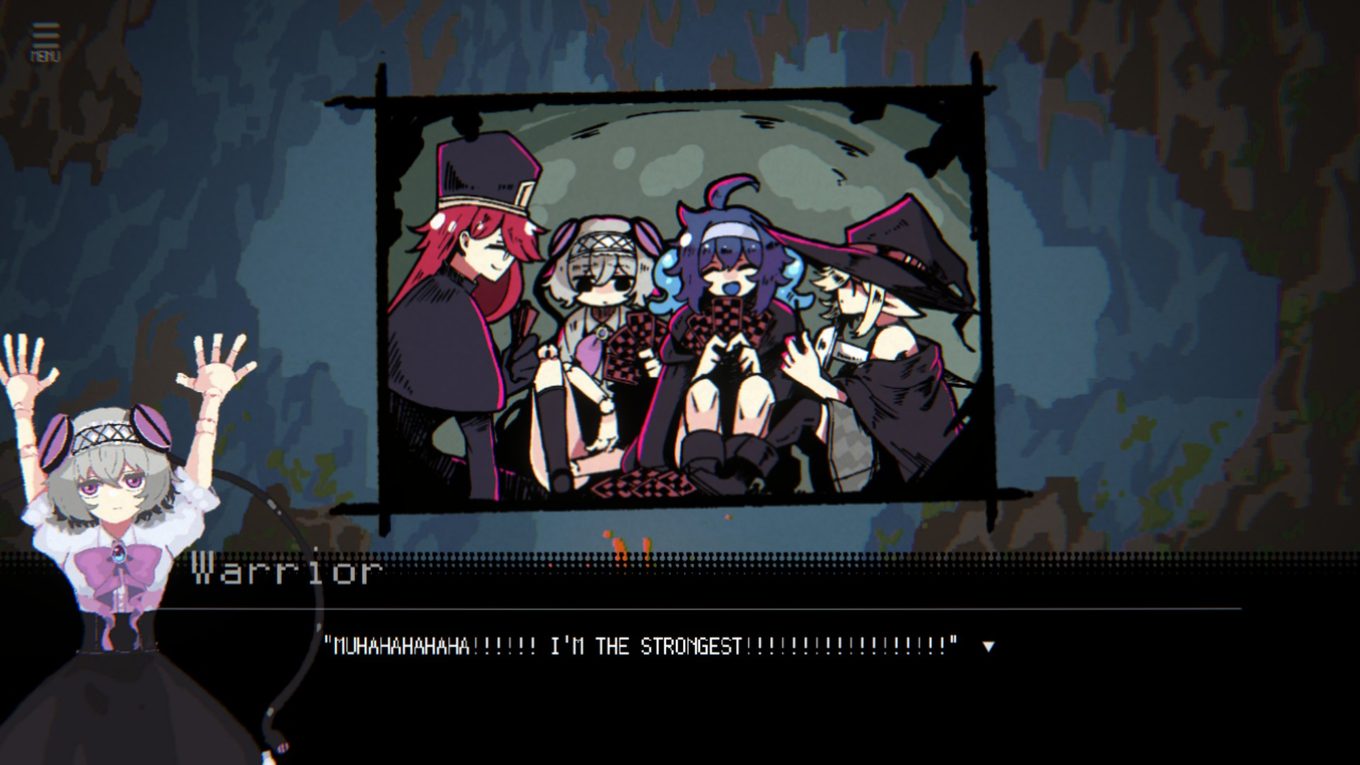
Annihilated purports to offer stark choices on the road to helping these people escape. You, a similarly mysterious and generic adventurer, must choose who to take with you and who to leave behind. Those choices are, as is often the case in video games, more illusion than interaction: in a narrative adventure that offers sparks of curiosity but is too heavy, too repetitive, to find its feet.
Annihilated shares much with another 2026 dungeon crawler, Lootbound, in that there is something interesting to be found within; only it’s obscured by a lack of focus. In that review, I noted, with sympathy, the industry pressures that can dilute a concept. The more genres a game hits, goes the cynical stance of many publishers, the more likely it is to appeal to a larger audience. Nevermind that the opposite is often the result.
I feel the same sympathies for Annihilated – albeit with a pinch of salt. There are industry pressures, for sure. Not least that visual novels, which enjoyed something of a moment in 2023, are now a harder sell by dint of the platform censorship that makes a genre driven by adult themes less visible. Yet, even within those constraints, Annihilated could have excelled with a steadier hand.
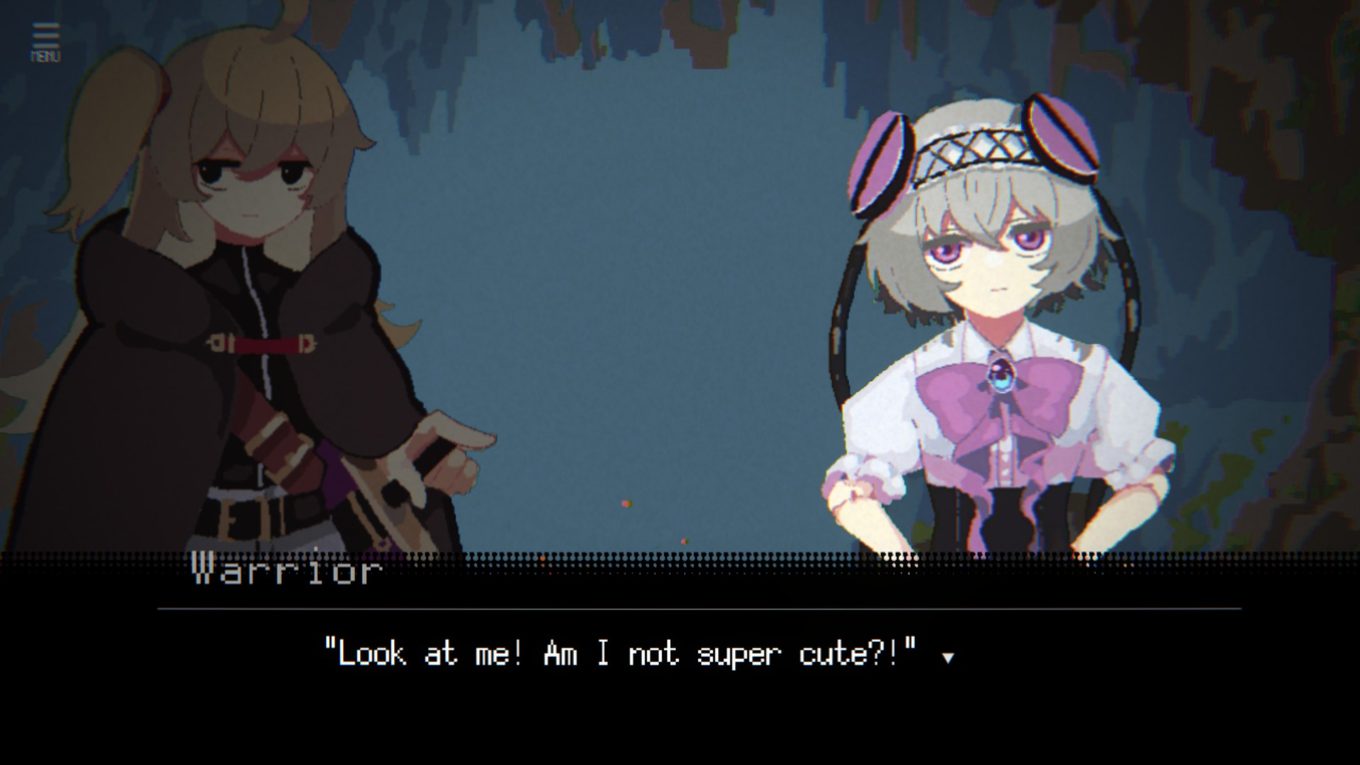
Instead, a desire to cram mechanics alongside the usual suite of visual novel staples has diverted too much attention from tightening its narrative. Whereas Lootbound was shorn of structure and consequence in focussing on its loot-based loop, Annihilated finds itself weighed down by a trope-heavy story that’s two-or-three substantial edits from finding its rhythm. As other mechanics take priority, one can understand how that happens. But even within the pretense of a genre stew it’s a cardinal sin for a visual novel.
Yet, within those distractions we find Annihilated’s most arresting quality. Venturing into the dungeon, you travel along flowcharts: the paths of which deliver you to enemies, events, and encounters. The latter two are rolls of the dice, based on the stats shared between you and your chosen companion, that will see you dodge arrows and dispel illusions to reach weapons and items.
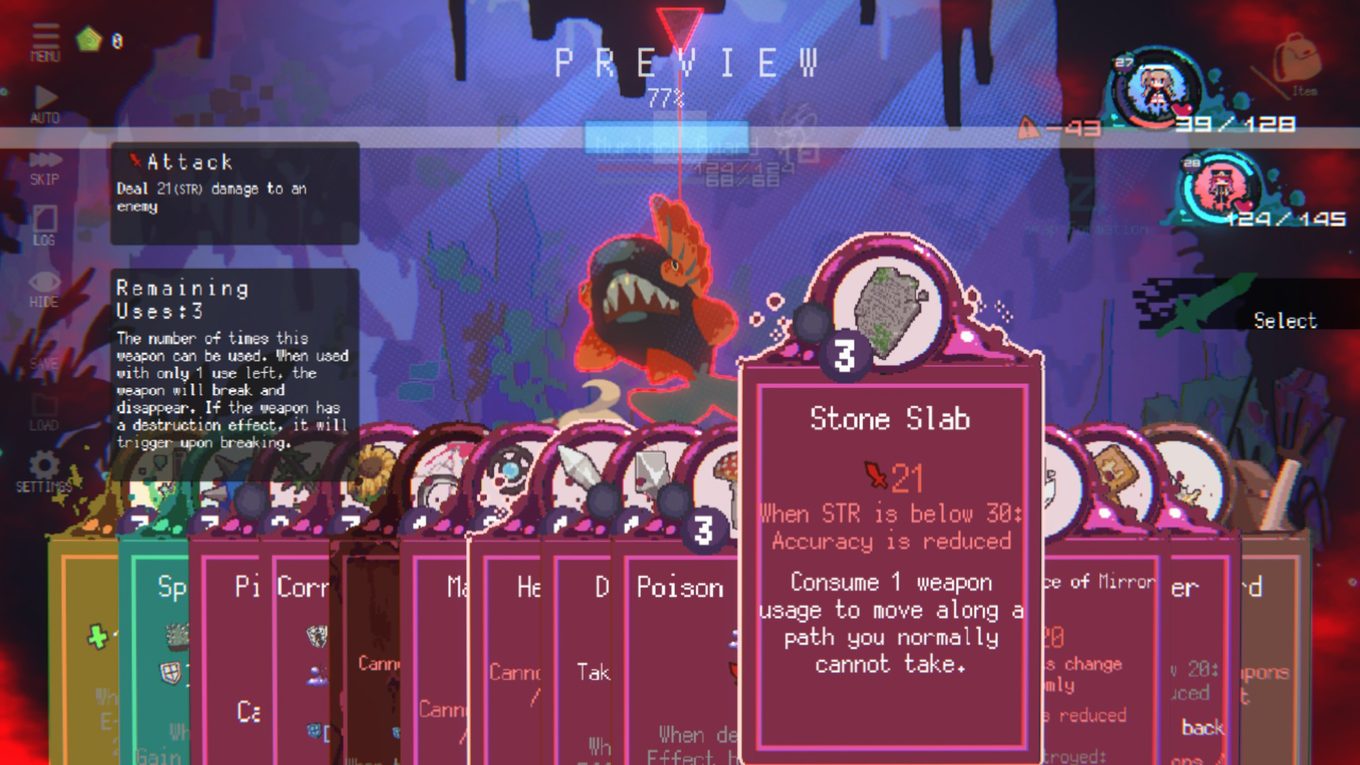
Equipment that drops into a growing deck of cards from which you select ways to attack the monsters you encounter. Each attack brings up a meter on which you must time inputs to land attacks. It’s deceptively simple at first. But as you progress, the meter becomes harder to navigate; more elements are added that allow you to hit more than one enemy or steal their weapons. It’s a delightful way to introduce and then intensify turn-based combat in a way that avoids feeling like old-hat.
It’s also Annihilated at its most intuitive. There’s plenty of explanation and information on your screen at any one time, but in a UI that is so cluttered – and in places, so small – as to be unreadable. Combined with localisation that remains uneven since the game’s demo, there’s little guidance in what your attacks can or, indeed, will do.
That inscrutability isn’t always a headache. Despite a lack of information about what “curse” is, it is quickly apparent it’s a resource that allows you to heal and upgrade at bonfires, but also manifest weapons upon death to take on your next run. Working that out came easy mostly because death does too.
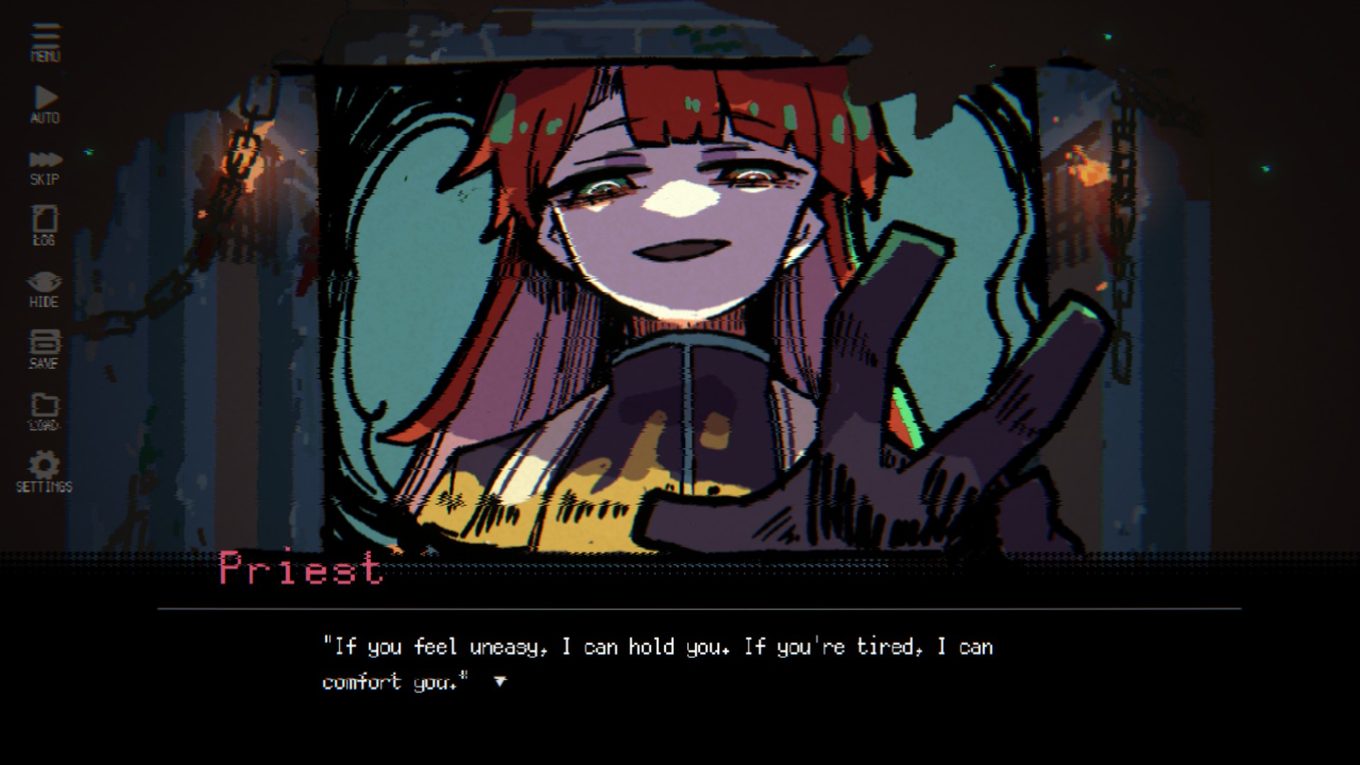
On my first run, journeying with the Hero, the first death lumped me with the Priest instead. The Priest made the run slightly easier due to healing magic and a habit of resurrecting me, but they also make the narrative denser. The Mage was more interesting during a second playthrough: less useful (she really has no magic) but less predictable, too. It was a refreshing change from the Priest’s constant monologuing.
Both runs were replete with failures. That does mean getting trapped in cycles over which you have little control, in a broader loop that’s less about learning and mastering systems than hoping for good luck. Which is where Annihilated gets bogged down, and even its initially pleasant combat system grows old.
Annihilated wants to be a roguelite – the cycles, restarts, upgrades – but it’s also a visual novel that depends on leading you down predetermined paths. It’s an ostensibly incompatible combination: a genre that thrives on randomness couched in another defined by structure. It takes a deft hand to intermingle the two and Annihilated does not have it.
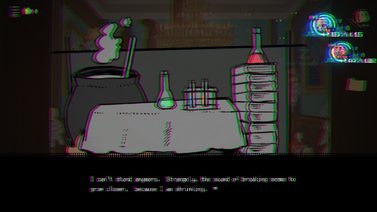
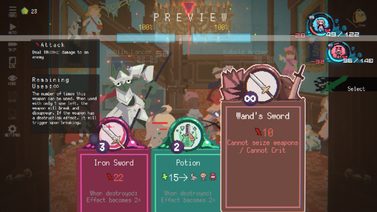
Instead, its gameplay hinges on keeping narrative to the end of sections, in which you must simply fight until you level up enough or encounter enough luck to move on. It makes for the sensation of doing the same thing over and over, with little sense of reward or joy at breaking through as you don’t feel you had anything to do with it. All in service of reaching lengthy reading sections.
Shaky ancillary mechanics, repetitive gameplay, even loose writing: none of these are unusual in visual novels. Though, the best in the genre avoid them. Yet, of all the difficulties in Annihilated, it’s the difficulty in simply reading it that represents the most baffling decision.
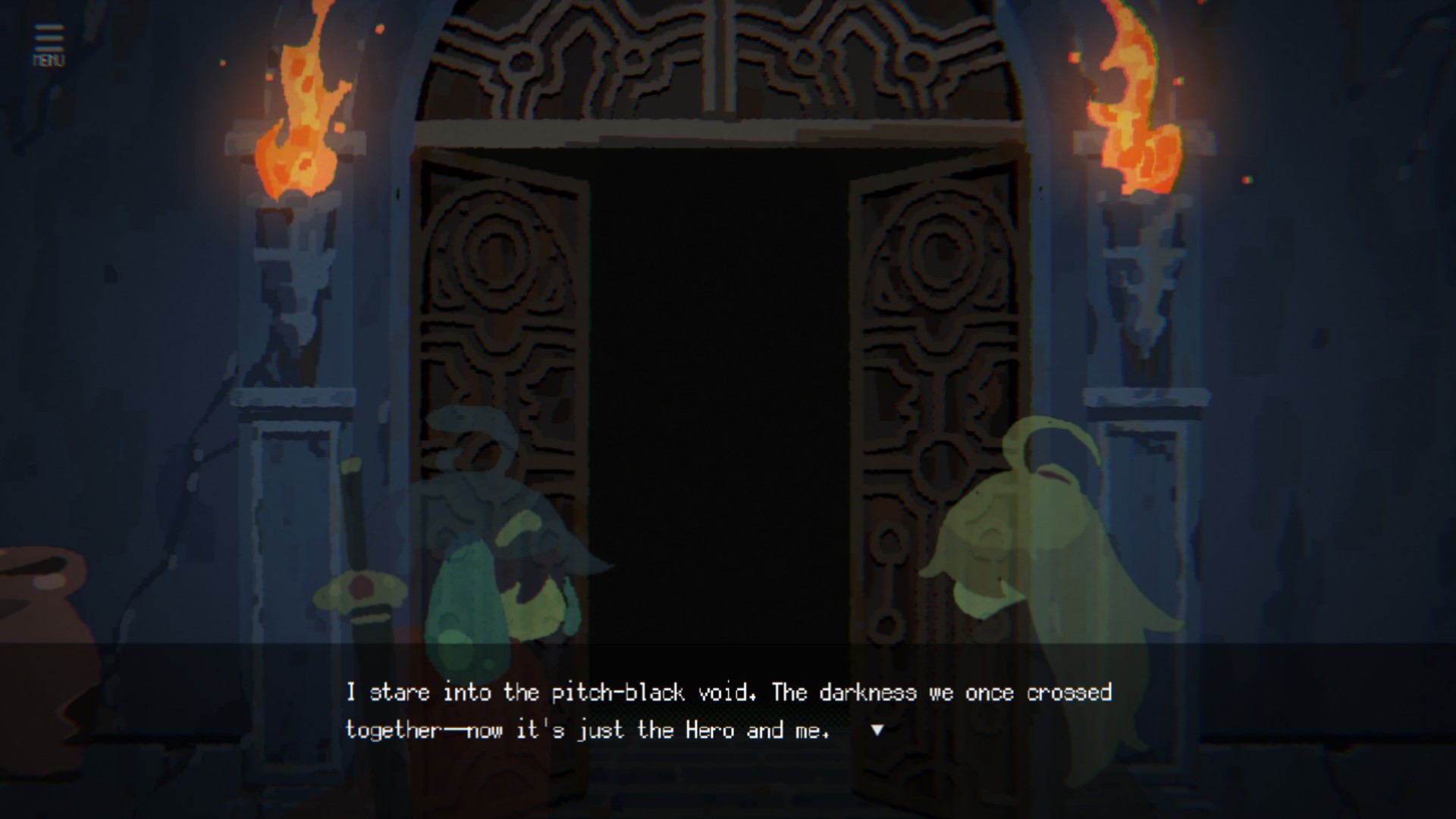
Text in annihilated is typeset in a thin, pixelated font with little character variation that is a reading nightmare long before Death Kumiai starts layering effects and filters over it. Something that happens often to create glitchy, compressed, even blurry text that the game still expects you to read.
It makes reading an already lengthy narrative game much more challenging. Not that all of that is a typesetting issue. Characters have an unerring habit of voicing the same thought multiple times in succession, with only slight variations: as if A/B testing their thoughts. It only adds to the loose nature of the writing that pulls it away from more accomplished visual novels that are tighter, more direct, and have more punch.
Annihilated is passive by comparison. You are not in the head of a protagonist – though the game offers plenty of internalisation – but rather having the story told to you by its characters. You can fight, clear an area, and you will have what has just happened, what is about to happen, and an extended history of what happened before you got there elucidated to you at length. No subtext, no world-building, only text.
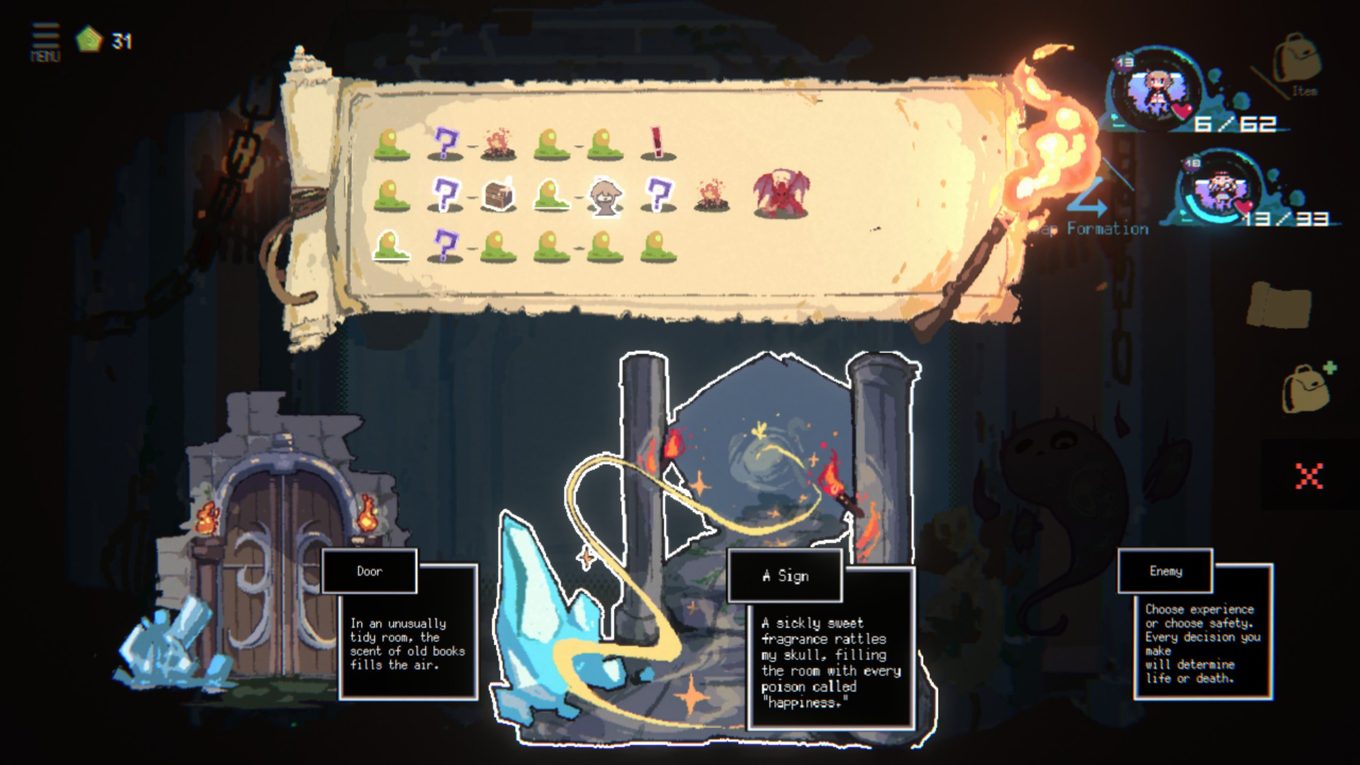
In a game caught on a singular mystery (what curse has trapped adventurers in the dungeon and how to dispel it?) it makes for a curious writing decision, given everyone but you appear to know exactly how the world works and yet have no idea how to bend that to getting out. But then, visual novels are often more about offering characters to which to latch rather than robust storytelling. Annihilated has moments of that (we support the warrior’s quest to become an i-doll) but even here it gets lost in its telling.
If repetitive design weighs Annihilated down, it’s a lack of narrative nous that sinks it: taking a game with ideas and spirit and labouring it with every mistake a visual novel needs to avoid. The most damning of which is placing you, the player, on the periphery of someone else’s story. It tries to hide that behind mechanics that feel more interactive, but as they grow old so too does the facade of player control slip.