
I find myself traversing a barren wasteland where Mad Max would feel thoroughly at home. Only, I have a train and that train is of utmost importance to my mission. The Atlantic Ocean has dried up and as the ground shrivels into cough-inducing mounds of dust, I find myself in incredibly hostile lands.
But it’s not only the terrain that threatens to kill me, it’s the wildlife too. I’m told if I’ve got ammo, gear and a pulse then I’m fit for the job. But, what’s being asked of me? Well, I must defend the train, delivering cargo along a deadly and dastardly route. If it crawls, buzzes or bites then I’m to kill it. And so, I should build my defense promptly, protect the train and its cargo, and ultimately deliver it – without getting myself killed in the process.
Australia Did It (omitting the rest of its lengthy name, voted for by the community, for brevity) wants me to build a strategy for each station battle, but it also wants me to defend my train between each station. Aptly named and differentiated between Station and Journey mode, I have to build a crew using the Cindermint (MINT) currency that I earn by killing enemies to protect the train and myself from execution.
The beginning of my journey brings me a choice – Gravy Train or Locomotive. Gravy Train is considered an easy difficulty, giving me a little extra MINT for starters and a boost for each kill. The Locomotive poses more of a challenge, stripping away all of these extras.

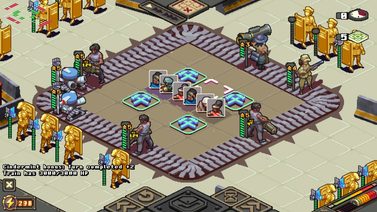
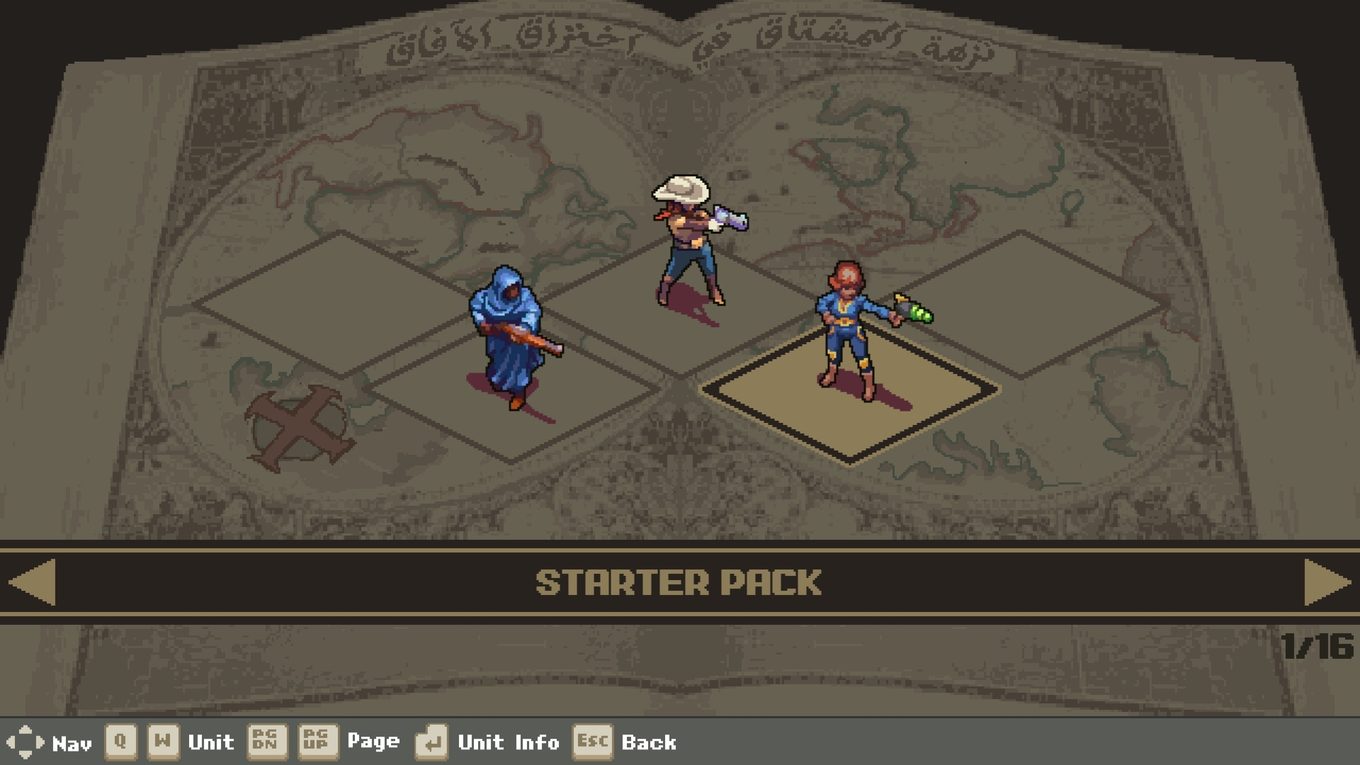
Every 5 MINT will earn me the opportunity to build out my turn-based tower defense, spawning one of the starter pack choices – Radshot, Gunslinger or Nomad – from any of the four build tiles located at the station. From there, it’s a web of merged units to boost stats and create killing machines. I can (and absolutely should) combine level 2 units together for direct and complex merges and level 4-5 units for advanced, chaos, control and destruction merges.
And quite honestly, the more you merge, the more fun you’ll have creating OP chains that will be truly devastating to your enemies (as long as you earn enough MINT to pull it off). Each merge comes with its own cost, but also unlocks abilities that will deal out massive damage, ample defence and impressive range. Evolve and kill the monstrous enemies or, well, die myself in a hail of bullets.
But what I quickly learned during my time with Australia Did It is that wrong moves equal devastating consequences. If you don’t reasonably defend your station, you’ll find yourself back at the very beginning of the route, thrown stations back in your mission. Only after you tackle each station will you find yourself at the delivery point. Fortunately, Australia Did It is a touch forgiving, allowing you to use the undo button at your pleasure, making mistakes or mis-clicks of far less upsetting consequence.
But, once you pass all these stations and reach delivery, things only get worse for you. In a level akin to a boss battle, you’re forced to defend yourself against waves of enemies that, in my experience, turn golden making them much harder to defeat. Only, when I finally reached this point after several failed attempts coming up against Mech Ants, Doom Wheels and Sappers, and blaming myself for my route choice and defense strategy, I found myself at a standstill.
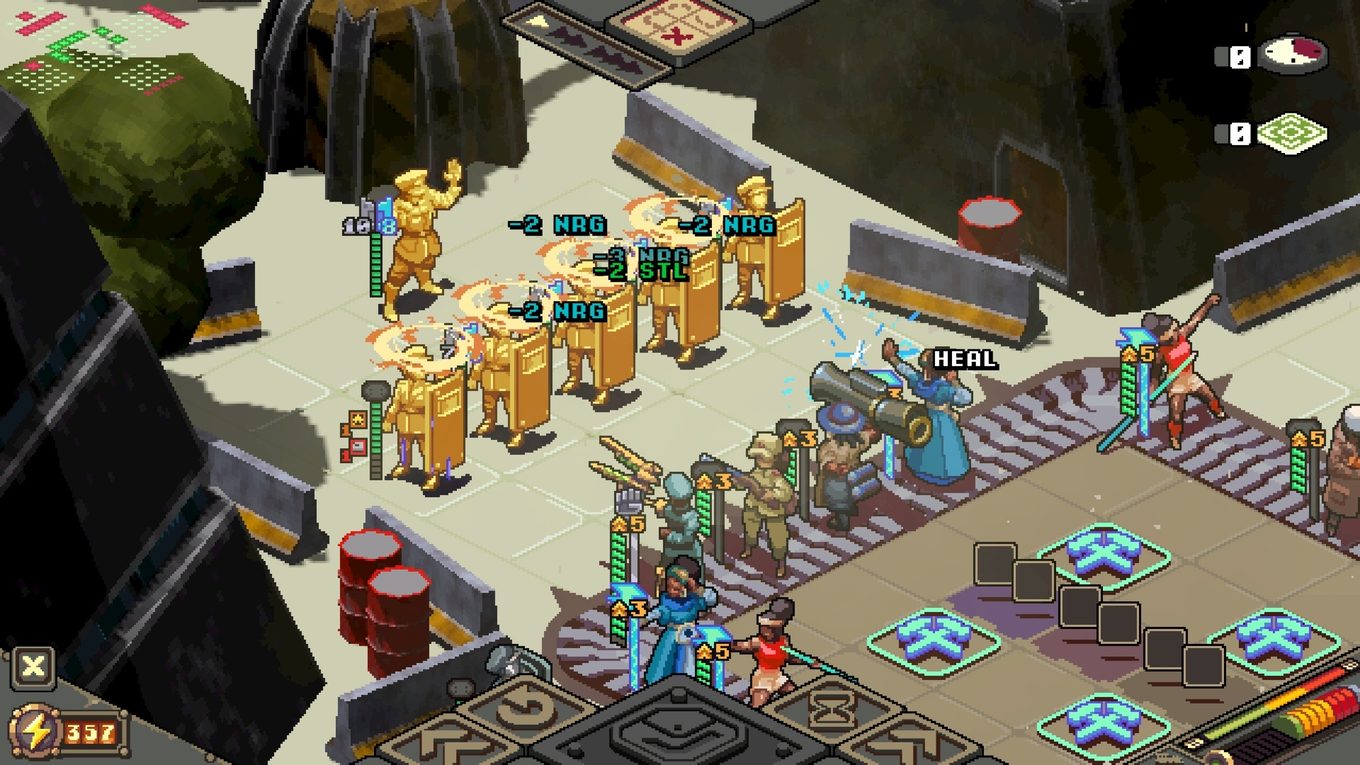
Of course, the developers have a lovely Discord that I hopped into to ask the question, am I doing something wrong? Turns out I wasn’t, but that only led me to waves and waves of enemies that I was unable to move on from. The ‘Deliver’ button wouldn’t trigger even after 20 rounds of survival and so I found myself in a turn-based limbo.
At one point, I even fully-stocked my train with my entire defense line hoping that would trigger something. Only it didn’t and then I had no chain defending my station. Fortunately, this standstill offered me an entirely unique opportunity. What I’d actually created for myself was a Cindermint farm that meant I could explore the merges of Australia Did It to a much fuller extent – and what a lot of fun I had.
Up until this point, I’d found the run to the drop-off addictive, but I also felt like I’d merely scratched the surface of merge capability. I’d found a defense build that worked for me, holding the line with Static Javelins and Massive Railguns, healing my warriors with Telepath and shredding up my enemies with the Guitarist. Little did I know the absolute synergy of a defense I could build with Danger Close, Air Raider and Minigunners, totally obliterating the opposition, sending them backwards and retreating with what I only hoped were silent screams.
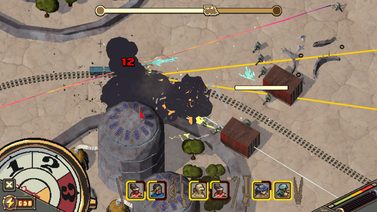

Farming MINT in this stalled final round meant I could experiment with the game’s different defense and damage types, of which there are a few. You need units with different attack types to effectively counter different enemy defenses and that means variation. It also means you need to think about how you merge with merged units inheriting the damage type. It’s a lot to unpack and, to be honest, it gave me a bit of a headache. But, the handy Compendium will at least remind you what you did in order to achieve a certain merge.
The merges you make aren’t the only thing that matter when learning to build a solid defense though. Like other turn-based strategies, it also relies on momentum and meaningful positioning. In Australia Did It, you need to use the tracks as a belt mechanism that’ll move your units around one-by-one. Only you’re limited to how many moves you can make. With escalating threats, you need to use it wisely.

You can’t win Australia Did It, the devs says, only survive. What you’ve got to do is board your train and depart before it all goes Pete Tong. Protecting the cargo is your ultimate and only goal, so if you lose half your defense in the hurry to get outta dodge before it eliminates the lot of you, then so be it.
Because what Australia Did It asks you to do is defend, but also consider the consequences of your next move in a wider frame of mind. Not only do you hold the line until it’s time to go, but you are wholly responsible for making sure your defense locks into the six spaces in your cargo train before it departs the station. This in itself can be devastating in two ways; when you can’t get your defense in a cabin in time or when you just don’t have enough space.
Fortunately, you’re in charge of calling the departure button which gives you two turns to execute your tactics. Call it, defend the station as long as possible, and then hop into those seats. Leave a unit (or two) behind as tributes to protect the rest, so if enemies are knocking at your tracks, you’ll be out of there before they can annihilate you.
What I love about this mechanic is its pace. While you can, of course, hold out at a station for longer to build up your MINT and carry out more merges while you’re in terminus, Australia Did It will recommend a departure time at every stop. And, more often than not, I realised I should be listening to it. If you hold out longer than recommended, you are rewarded with an extra Metacard (a unit boost at each stop), but you have to weigh up the consequences for the reward.
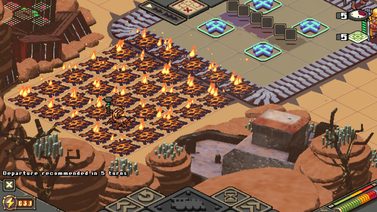
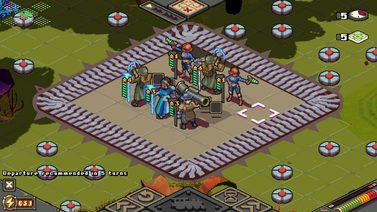
Every station on your train route offers a different experience. While one may offer to heal your train, another may tell you that it’s a minefield which can be good and bad news for your defensive line. Station health matters when you’re making a stop, train health matters when you’re making a journey between stops.
Ultimately though, because I couldn’t progress in the game, things started to feel a little repetitive. Sure, the enemies are volatile and erratic, posing different threats that are ever-growing, I easily began to learn their strategies quickly (aided by right-clicking them to learn their skillset).
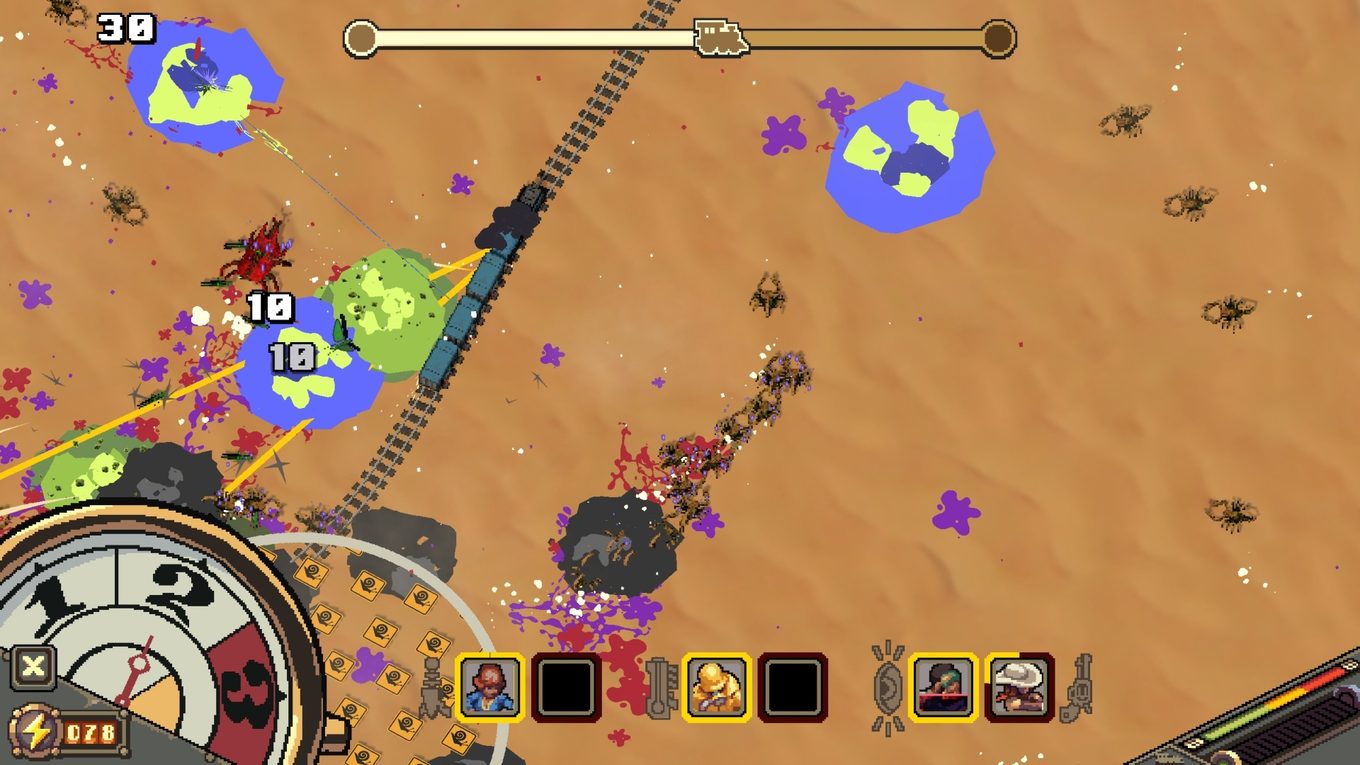
Yes, the pace changes between station defense and journey mode, earning superfuel to super charge your train and obliterate the enemies before going back to your turn-based waves of enemies, but I didn’t get to experience it to its full extent.
So, as I offload my defensive team at another station hoping to pass that ‘Deliver’ stalemate, I hear the ominous notes that remind me of White Lotus and wonder what more lies ahead. I’ve already unlocked all the merges, thanks to my MINT farm, but I’m still eager to play more. For me, it’s certainly a turn-based strategy game that’s on the right tracks.