
On the last occasion I spent any quality time with a sapient amnesiac whale, it was plummeting to its death alongside a bowl of petunias, frantically trying to make sense of its sudden existence. Things didn’t go brilliantly for that ill-fated cetacea, but Kewa’s prospects seem a little better. Partly because Kewa is a planet-sized space whale mooching about in zero gravity, but mostly because they’ve had the good fortune to end up with an environmentally conscious crew of explorers, known as Peeps, who have committed to building a civilization on their back.
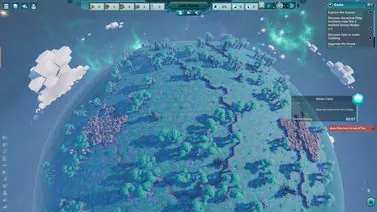
By extending waterways, irrigating the compacted land that has collected around their body, and activating various nodes across the surface, the Peeps can gradually help to restore Kewa’s memories and perhaps even find a way back to their home star system.
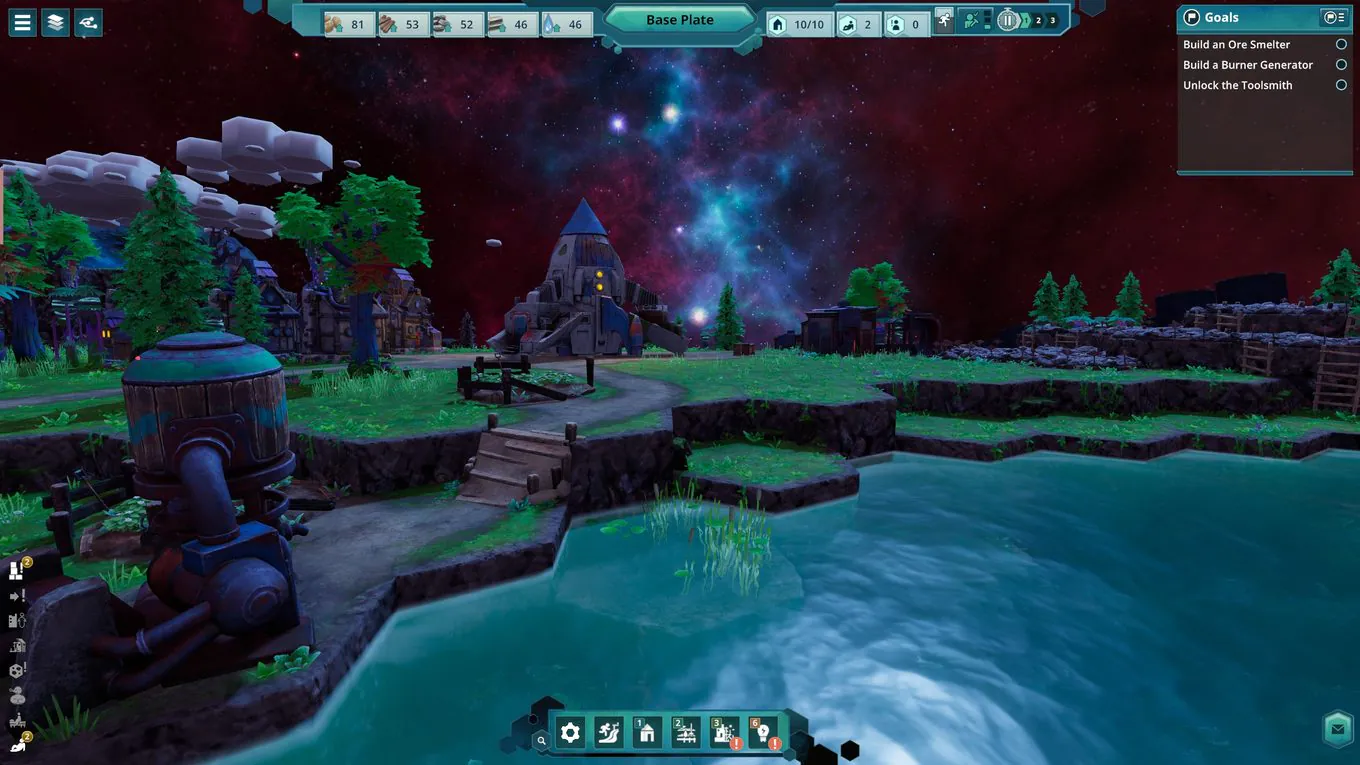
A follow-up to 2021’s Before We Leave, Beyond These Stars sees Balancing Monkey Games gently expanding the scope and rejigging some core mechanics, without disrupting the first game’s slow, peaceful building ethos. As such, there are plenty of elements that will feel familiar to returning players. The world is laid out on a hex grid again, and expansion is focused on supply-line management and building-adjacency bonuses rather than conquest. The burbling Peeps are back and just as charming as ever, and managing your impact on the environment is key – in this respect, you are, yet again, your greatest enemy.
Power stations burn fuel and emit pollution and waste products which need to be stored (and, once you’ve researched the relevant technology, recycled). Leave particulates unmanaged for too long and the surrounding area will become heavily polluted, and eventually even toxic. This will result in your Peeps getting sick and, quite understandably, refusing to show up to work, but it also hurts Kewa. Nearby forests will slowly reduce the amount of pollution in an area, but as your energy and production needs increase, you’ll also need to build cleaning facilities that scrub tiles. Toxic tiles are another matter, one that will require the production of cleaning chemicals; but what are you going to do with all the green goop that’s amassed as a byproduct?
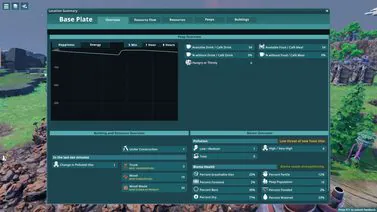
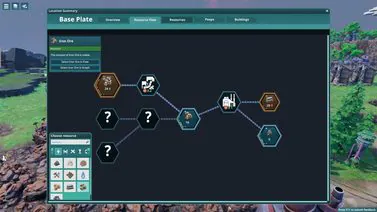
This central tension sits at the heart of every process in Beyond These Stars, which sees your logistics network repeatedly balloon and bottleneck. A new technology unlocks something useful, but also some type of waste which needs to be stored until you can find a use for it. Then, when you do, that waste suddenly becomes a vital part of your manufacturing strategy, while some new unwanted product takes its place as the next problem. This need to manage material is even true of basic landscaping, as any pit or channel you excavate will gift you tonnes of debris that must sit in your warehouse until you have a pit or channel (or, of course, some artful terraforming project) that needs to be filled.
Creating new land is only the start: you’ll need to apply fertiliser (produced from wood and food waste) to turn the barren ground green, then decide whether to plant more trees or extend your town. If you do want trees, which expand the bubble of breathable atmosphere in which you have to build, then you’ll also need water. That requires channels deep enough to carry it, generating yet more debris to store or redistribute.
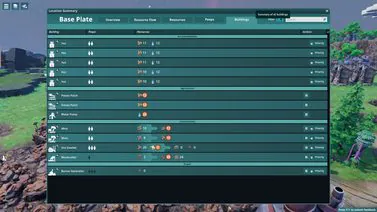
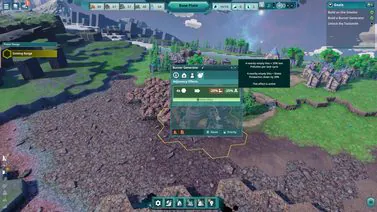
It all sounds like a lot to manage, but in practice the processes themselves are simple enough to stay on top of. Your Peeps will do all of the legwork automatically, and you only need to worry about switching processes on and off, and placing buildings in an efficient manner. The woodburner, for example, can run on wood waste, wood, or planks, and you can choose to run with one or all of them, ensuring supply-chain flexibility but also allowing you to specify when a particular resource is in short supply or needed elsewhere. You can pause buildings, too, limiting your pollution when your inventory requirements are satisfied.
If a Peep has a long commute, they might end up missing part or all of their shift, so it’s important to place housing carefully as well as warehouses to distribute food and water so that the Peeps can quickly grab a meal during their breaks. This will keep their energy and happiness levels up, but as in Before We Leave, the consequence of not doing so is simply slower production rather than anything more severe. But while you’re not going to face civil unrest, there is satisfaction in making everything run as smoothly as possible anyway.
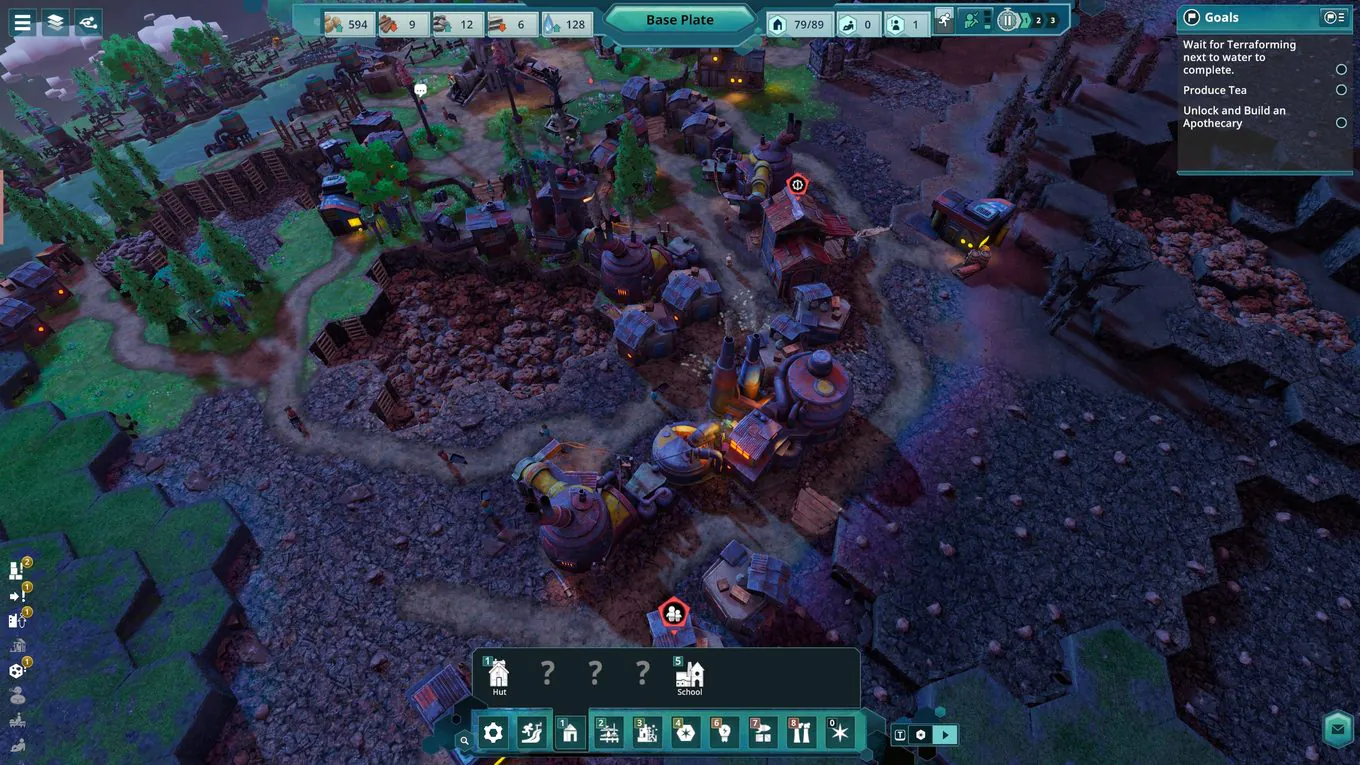
Buildings and technology blend rustic charm with just a dash of chunky sci-fi, and they look absolutely great. In fact, the architecture is reminiscent of Outer Wilds, a comparison strengthened by the melancholic acoustic soundtrack. But as your settlements expand, it becomes increasingly difficult to differentiate them, especially as packing everything close together is advantageous when it comes to power distribution, pollution minimisation, and adjacency bonuses. It’s a problem carried over from the previous game, and a shame that the team hasn’t been able to strike a better balance between aesthetic consistency and readability.
A more positive carry-over from Before We Leave is space travel. Just because you’re on a whale’s back doesn’t mean you can’t expand your frontiers. This time, however, you can ask Kewa to travel between star systems, surfing them at warp speed through the cosmos. Travelling uses up energy, but Kewa will replenish themselves by eating rocks in debris fields and the occasional meteorite. Great for them, but not so good for you as pieces rain down on your town and damage buildings – another entertaining risk/reward supply issue to contend with.
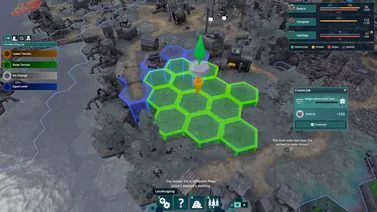
Temperature also plays a key role as you explore. Things remain temperate while close to a star, but venture into deeper space and things get chilly quickly. Agriculture will slow, and Peeps will leave work early if not dressed appropriately. At the other end of the scale, Kewa may decide to leave a location if they get too hot. And you’ll have to manage their general wellbeing, too: Kewa determines the route to your chosen destination, and their happiness level will dictate how accommodating they are to your society’s needs when plotting the course. Put them in a strop and you can expect a rougher journey.
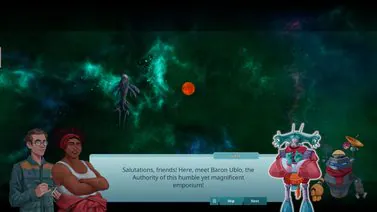
Irrespective of whether you have a grumpy or gregarious whale to deal with, exploring will add to your galaxy map and help to fill in Kewa’s missing memories. There are new planets to settle, aliens with whom to trade, and signs of ancient Peep civilisations that beg to be investigated, while building and automating ships expands your logistics network as you push deeper into the galaxy.
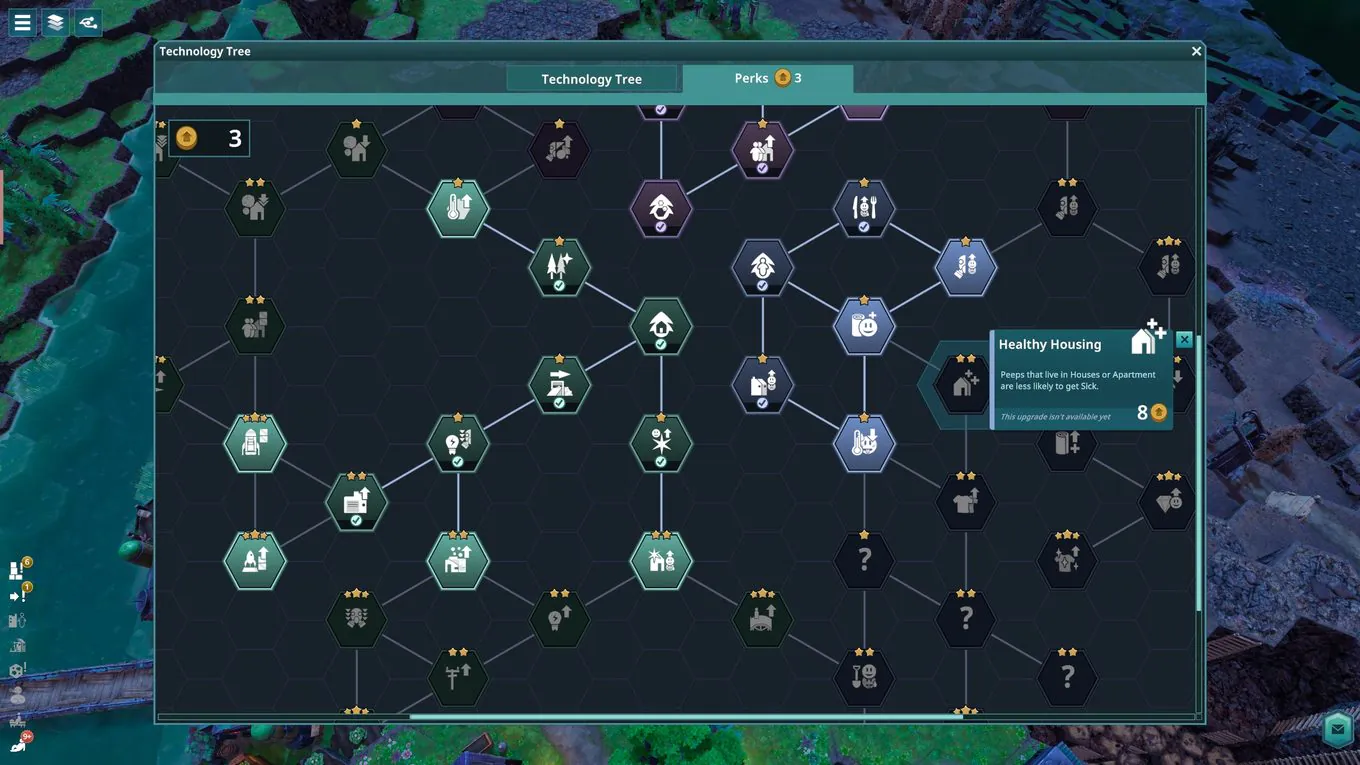
Beyond These Stars is a pleasing expansion of Before We Leave’s premise that’s polished enough to feel meaningfully improved, even if that same structure occasionally weighs it down. The series’ heavy focus on environmentalism and handling of logistics feels very different to other games in the city builder genre, and if you approach this game as you would its peers, it’s very easy to get bogged down in waste micromanagement. Switch into a greener headspace, however, and you’ll quickly get into the flow of only making as much as you need, and moving existing buildings to new locations rather than using up more resources to build brand new ones.
In that way, Beyond These Stars and its predecessor encourage you to refine and optimise your settlements in ways that most expansion-focused games don’t. There are irritations: the issue with parsing building types; the fact that you have to lay a road to a location before being able to build anything there; and that it can sometimes be difficult to diagnose, or easy to miss, production bottlenecks. But the game never punishes you too severely for missteps, instead encouraging you to revel in relaxed town-planning.
Pausing the game to spend a while planning out a whole new neighbourhood before setting your industrious Peeps in motion and watching it all come together is enormously satisfying. And the simple pleasure that can be found in such small things contrasts effectively with the game’s wonderfully complex logistics and galactic scale.