I dream of trains. A recurring anxiety dream has me alight in Peterborough (which, I suppose, makes it a nightmare) only for the train from which I departed to disappear. Minutes of frantic searching later, it’s clear there are no other transport options. I am stranded; alone, trapped – in Peterborough. Years of the same dream has informed a love-hate relationship with trains driven by the delight of rattling along at 50mph and the profound anxiety surrounding the logistics of actually catching one.
Had my dreams only been more like Denshattack!, Undercoders’ cacophonous collision of pop culture and digital Japonisme, which sees you drive trains like Tony Hawk rides skateboards. A game that will have you wondering if colour even existed before Denshattack!’s trains started drifting, grinding, and kickflipping their way around Japan. It’s a blazing experience — set against one of gaming’s most blistering soundtracks. If my dreams were remotely as pulsating and vibrant as this, you’d never get me off trains.
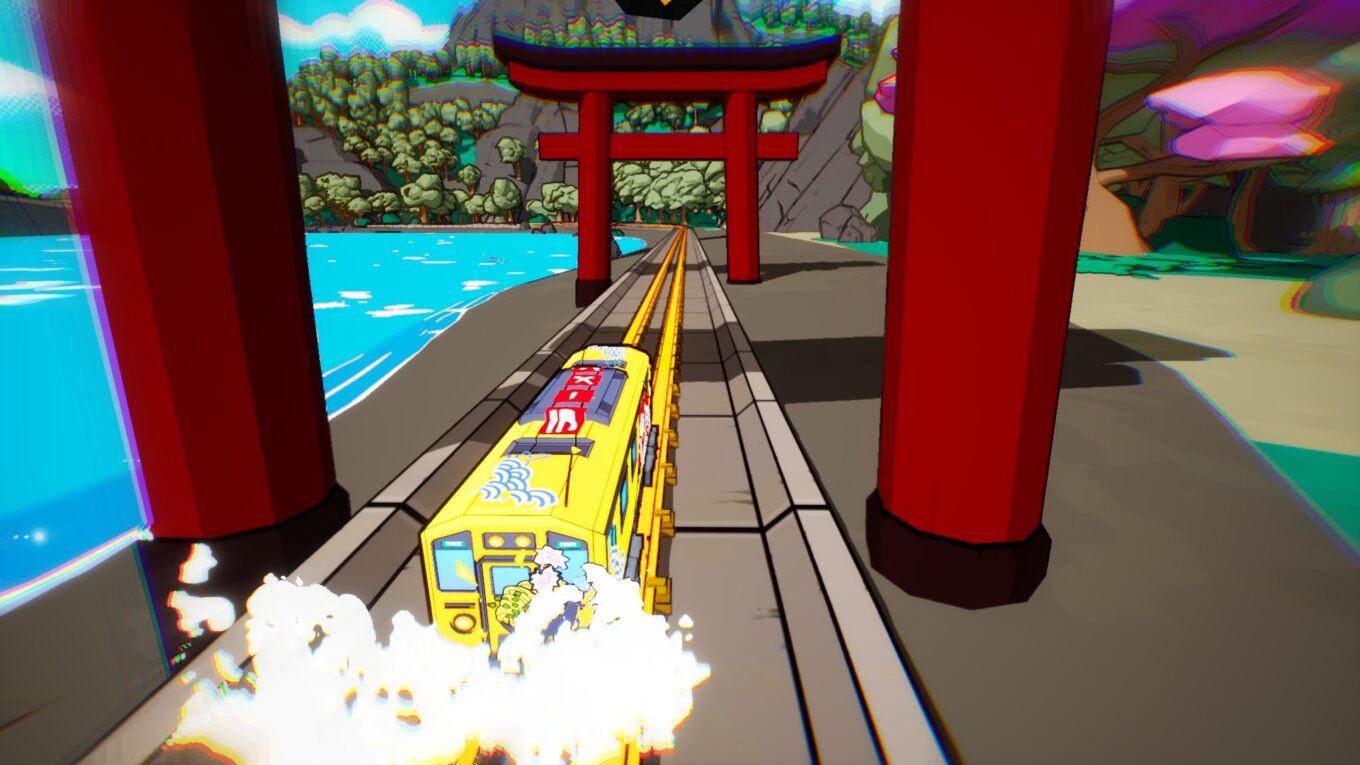
Denshattack! casts you as Emi Araki, a fast-food delivery driver who uses her train car to catapult sushi at customers. We encounter her on a fateful delivery to photographer Fernando, who, marvelling at her skills with a locomotive, asks if she’s a “denshattacker.” In a world in which you can 540 a commuter train, it shouldn’t come as a surprise – to players but also, frankly, Emi – that an underground subculture has devoted itself to racing them.
A trend that unfolds across a Japan rendered from a surprisingly sincere and studied adoration of its subcultures, bolstered by the Spanish developers’ collaboration with an array of established Japanese talent including Takenobu Mitsuyoshi, Lotus Juice, and Alice Peralta. Many influences will be immediately obvious. Denshattack!’s gameplay loop echoes Jet Set Radio and boasts a cel shaded retrofuturist rendition of Japan that would be at home in the Persona series. The influence of which is also apparent in Denshattack!’s dynamic, yet well-organised, menus.
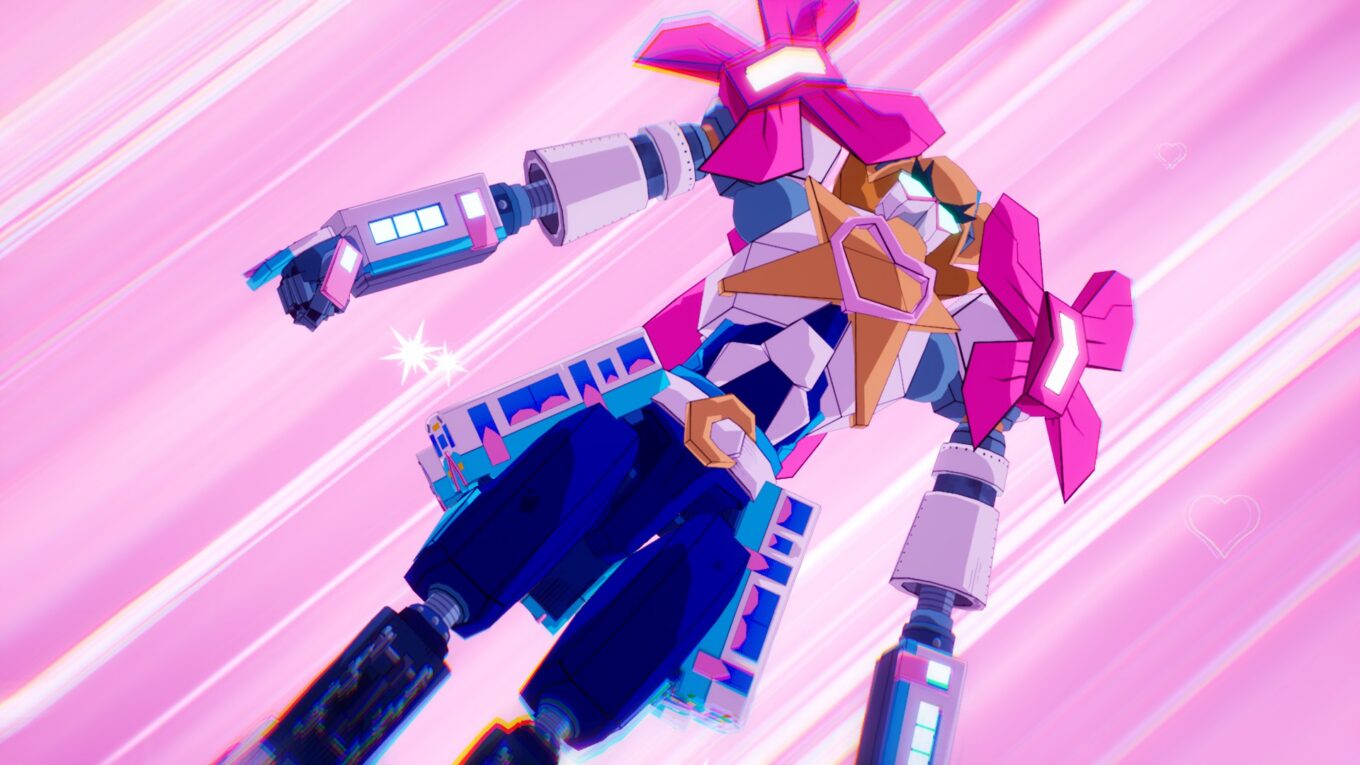
Others are deeper cuts, such as an earnest homage to the oft-misunderstood Gyaru subculture. All wrapped in the packaging of rockabilly gangsters barring your way, a Shin-chan lookalike who becomes your greatest cheerleader, and trains that morph into anime mecha.
That should make it clear just how much is going on in Denshattack! even before it bombards you with persistent bursts of colour and movement that will overwhelm. The decision to bookend each stage with light visual novel scenes, then, is a sensible one. They do form, in writing particularly, Denshattack!’s weakest link. Though, that’s barely a criticism when the real reason we’re here is to flip a train car.
Slower moments do, however, arrest the breakneck speed of Denshattack! enough to afford room to observe its beautiful world. Which, during gameplay, often devolves into an indecipherable, if audaciously colourful, blur. That’s to be expected given the pace of the game. But Undercoders understands that part of the joy of train travel is staring at the scenery outside.
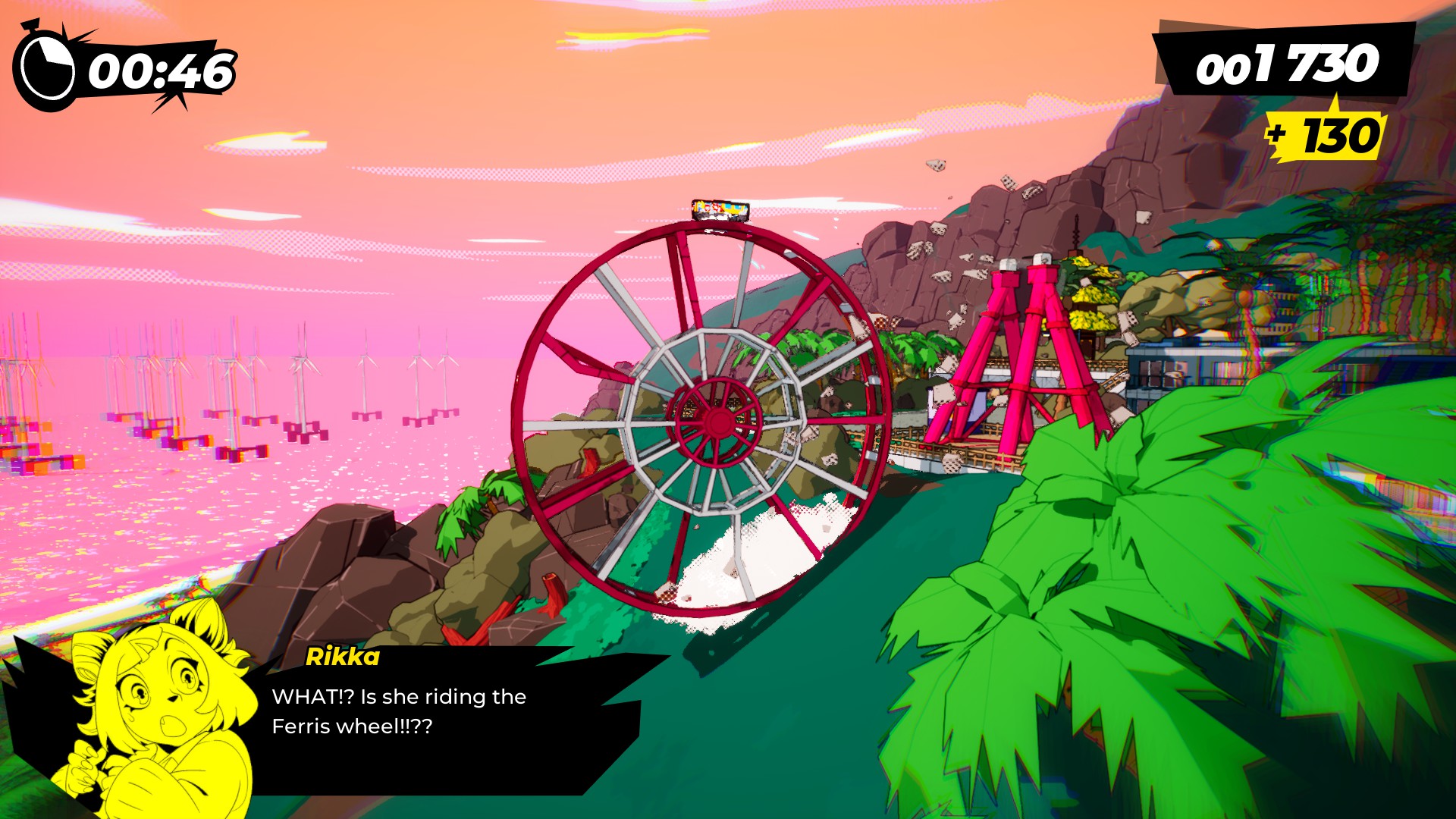
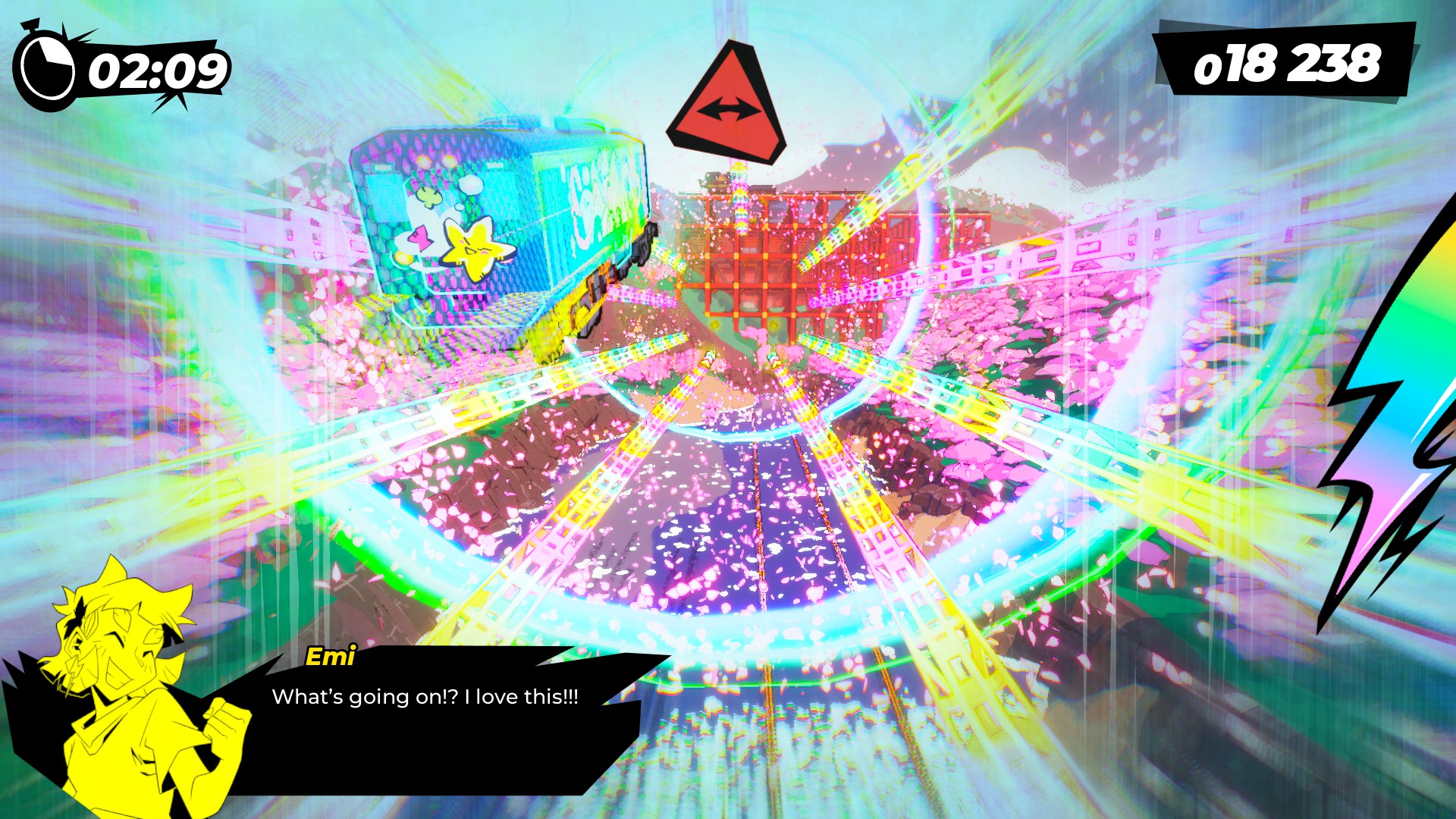
Emi’s quest to become the ne plus ultra of denshattacking unfolds across nine regions, split into an array of levels which range from straight races to more open sandboxes in which you must complete specific objectives. These might be breaking some radio towers, knocking down signals with tricks, or picking up items scattered along the tracks.
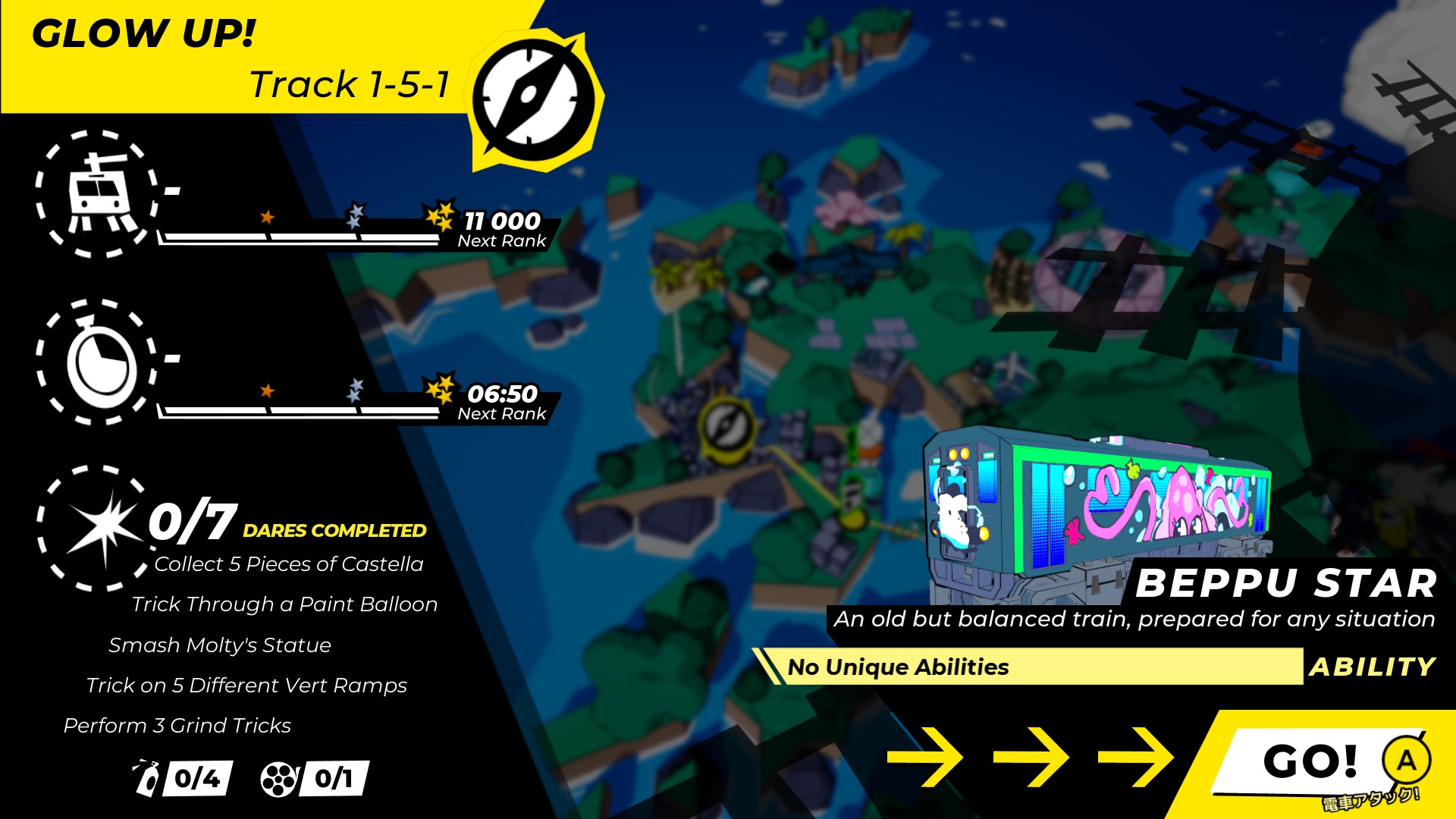
“Dares” have a similar structure, and also include challenges like completing a certain number of tricks during a specific sequence or finishing a track without derailing. They’re optional but, along with your score and the time you take, inform your final grade — represented by a medal.
That’s a mechanism that will be familiar to seasoned campaigners in Sonic Adventure 2 or Star Wars: Rogue Squadron. The desire to reach higher grades, especially on stages with which you particularly gel, is a strong one; and one that will keep you returning long after you’ve seen much of what Denshattack! has to offer. Be warned, however, that moving from bronze to silver, let alone gold, is tough.
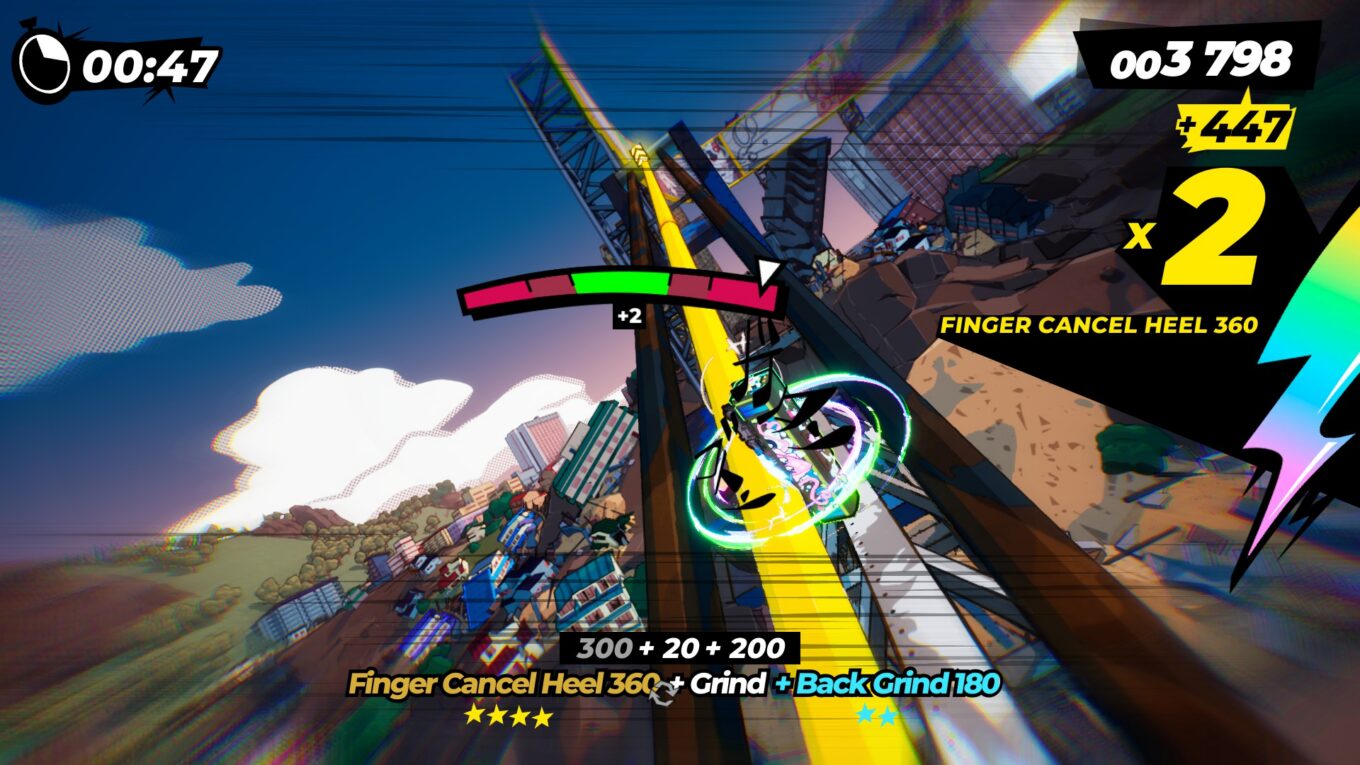
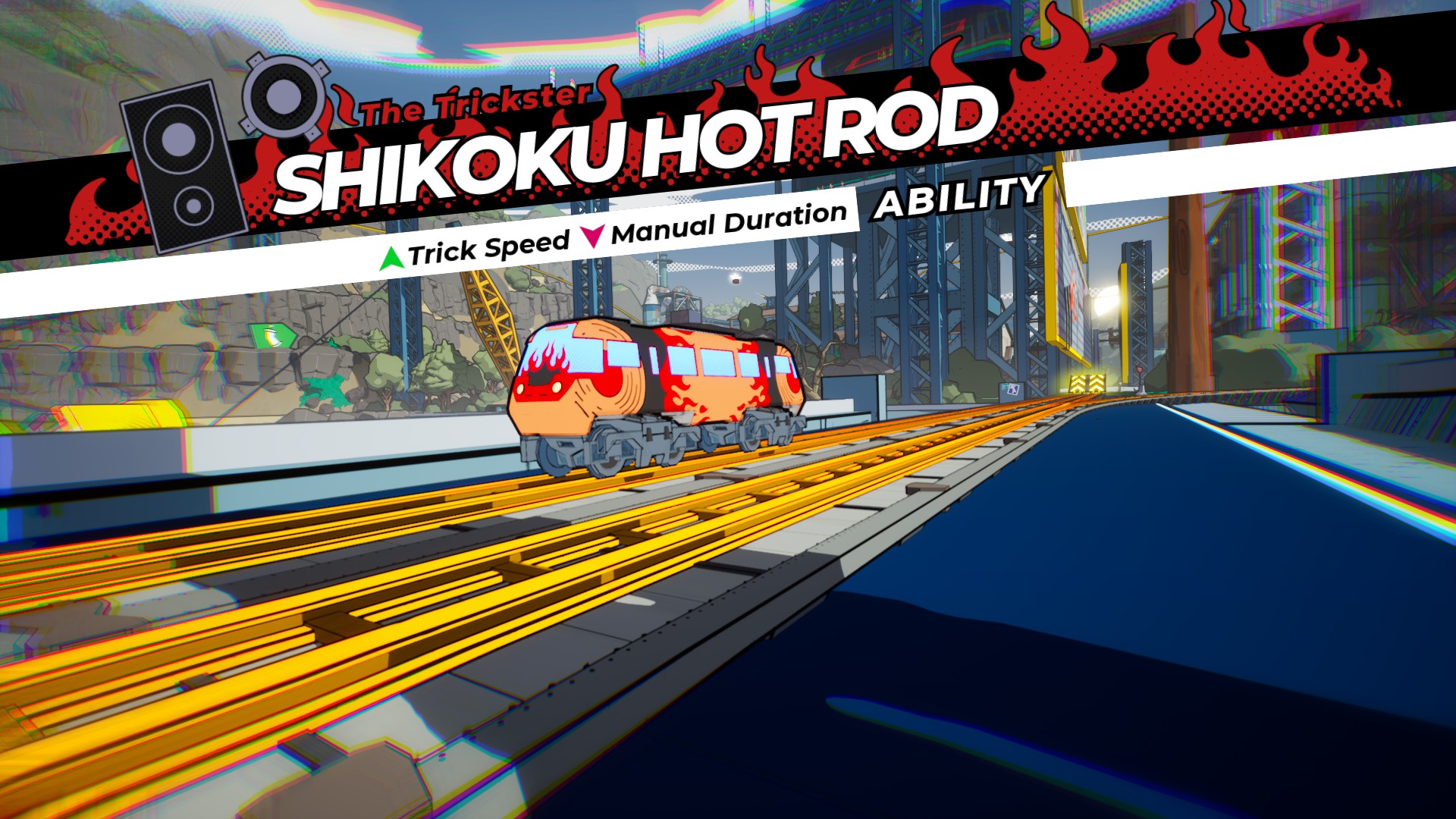
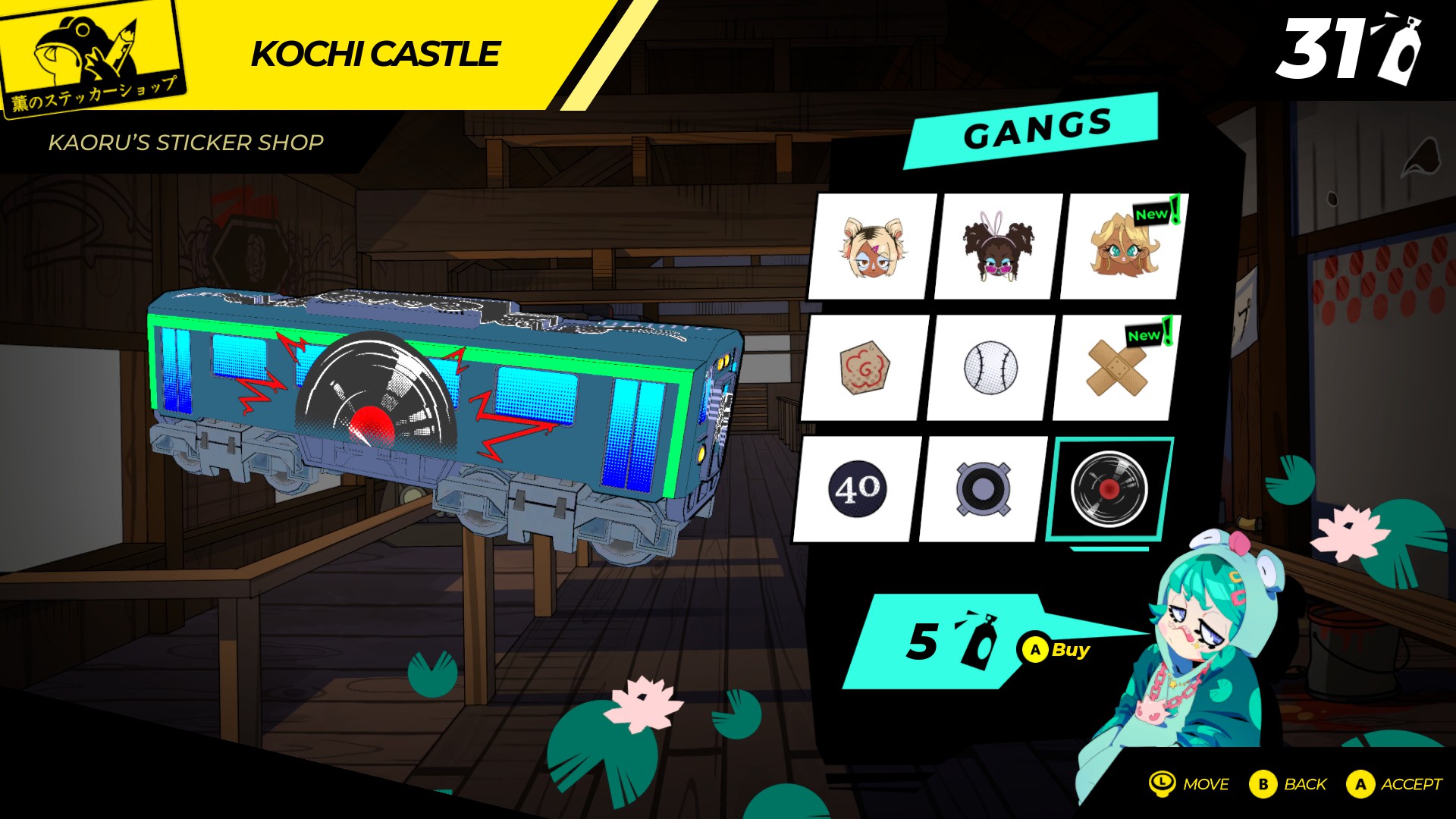
Sweetening the deal is the ability to buy train cars that offer an edge to specific playstyles. Your initial locomotive offers no advantages or drawbacks. I gravitated, however, towards a car that increased the speed of my tricks but reduced the time I could spend in a manual. That allowed me to rack up more points for the trade-off of not being able to trigger bonuses as fast — which open new, high-scoring routes through levels. Every train car can be customised with stickers and colour schemes unlocked across the game’s regions.
Score, however, is not the only grind that Denshattack! demands. That’s because Denshattack! persistently asks you to grind on thin rails, but also because it is a game to be learned. You can sight read through levels well enough initially. To truly get to grips with Denshattack!’s flow, you must be anticipating rather than reacting. That’s true for many on-rails (a pun that loses its relevance the wackier Denshattack! gets) and rhythm games. But Denshattack! overwhelms you with mechanics and demands for more inputs, and never really stops.
This is especially true as it teaches you to drift around corners (one of many nods to Densha de D), ridge along walls, loop halfpipes, and so much more. Denshattack! introduces a new mode of movement at least once per region (though its initial region drowns in tutorials) and builds its levels from that mechanic. Mechanics that often pile more functions onto single inputs.
For instance, the left trigger – playing on keyboard is not advised – is your brake, it’s also what you hold to drift, and how you leave the track. Though, you will also leave the track by jumping with the right trigger. A set of inputs I mixed up more than I care to admit.
Moving to adjacent rails or surfaces is aided by a nudge of the joystick. That could be more consistent and responsive. Often, I found myself trying to move to a nearby surface, particularly walls, and no matter how much I pushed the stick it didn’t work. When it did, it felt more like luck. This has been an issue in games that ask you to move side-to-side on rails for years, and Denshattack! hasn’t solved it.
None of these mechanics are optional. You do not slow down and ruin a good run by missing a drift or by becoming imbalanced on rails — you fail. Penalties for this are slight. But Denshattack! does understand what many games — including recent Sonic titles, with which Denshattack! also shares DNA beyond composer on multiple Sonic titles, Tee Lopes — do not: that these games are not about speed, but momentum.
It makes the decision for Denshattack! to frequently halt momentum entirely both strange and jarring. Instead of dropping a beat, the game’s rhythm simply stops and restarts; which feels discordant with Denshattack!’s fundamental feel.
That is mitigated by the fact that fail states are not tied to precision so much as failing to input anything at all. You do not derail around a curve because you didn’t drift well, but because you didn’t drift. Similarly, approaching obstacles are signposted — literally, signs appear in the top quadrant of the screen – and time does slow briefly to allow more room to recall and react.
Though, that could be better organised. Those signals do draw your eye away from both your train and the action. Undercoders appears to understand the issues with that as meters for drifting and balancing appear on, or near, your train.
For many players, those issues have a simple solution. One just needs to practice and better absorb Denshattack!’s many mechanics. Other players – particularly when asked to perform as many tricks as possible in succession – may find that Denshattack! is a wake-up call that their hands can’t Tony Hawk like they used to.
You can rewatch tutorials and read a “tricktionary” to refresh on tricks (if randomly twiddling the control stick isn’t your jam). That does relieve some of the weight cognitive labour of mastering Denshattack!’s tricks.
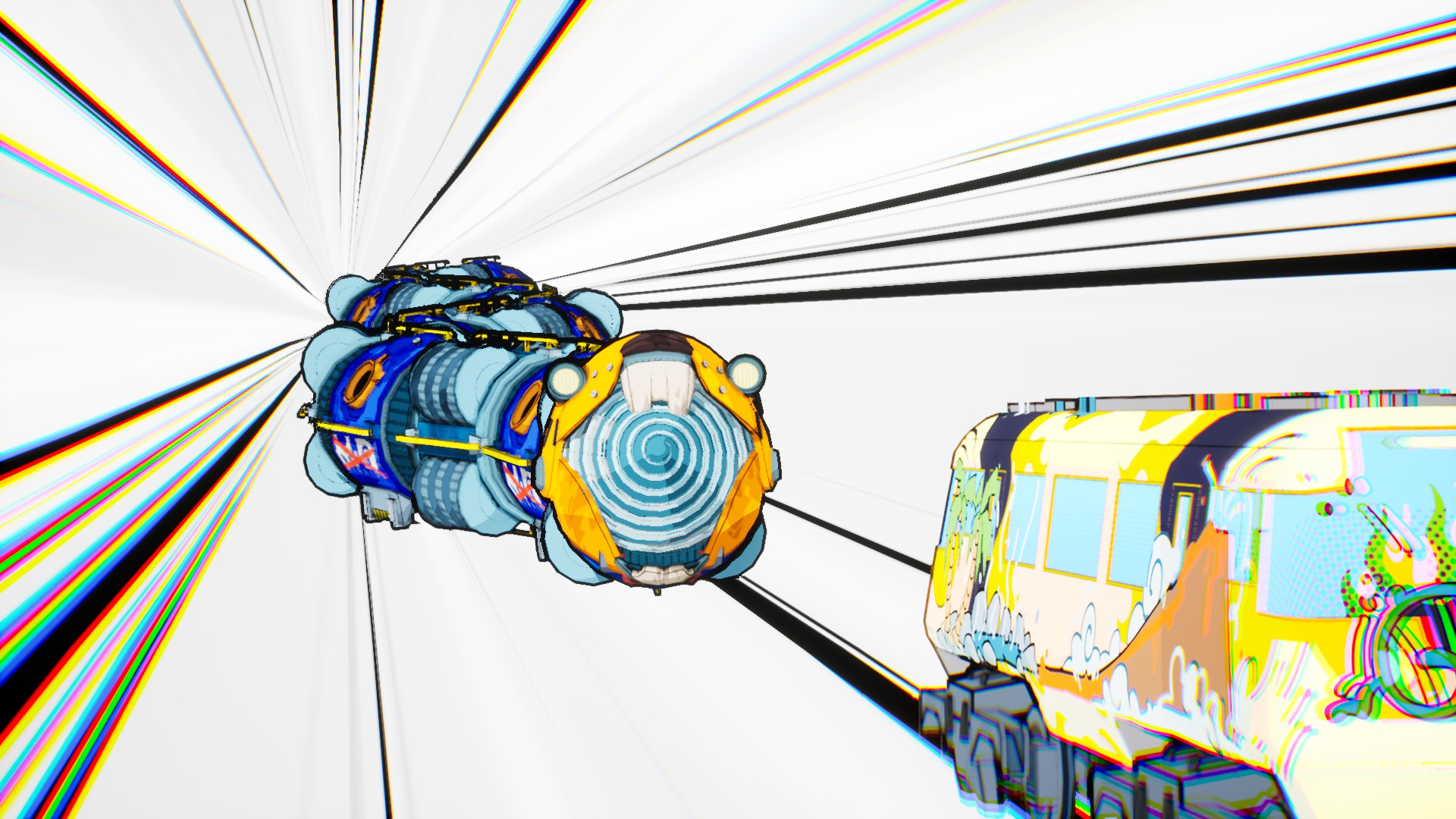
Which is good, because doing so is the way to make Denshattack! truly click. Something that happened most often for me during the game’s exhilarating and more choreographed boss fights. These bring together everything you’ve learned so far in fast-paced rhythm sections in which you chase giant robots firing baseballs from cannons (among other opponents),
Misgivings about Denshattack!’s rougher edges melt away as you string together what you thought were impossible strings of jumps, drifts, and tricks to be replaced by rare gaming euphoria. Denshattack! has faults, minor though they feel in these moments, but when you and it harmonise: there’s nothing else like it in gaming. Between its booming soundtrack, arresting art direction, studied reference, and ability to make you feel cool when you know you are not, Denshattack! is built with so much love that it’s impossible not to love back.