The central friction of What Surrounds Us – Florent Martinais’ beguiling if diminishing puzzler – is, appropriately for its art direction, the feeling of going round in circles. Plunged into a maze constructed from vibrant rings and circles, mileage will vary on how you become lost within it. Whether that’s due to difficulty tracking progress through visually similar screens or losing yourself in an abstract world that gently takes shape as you traverse it.
You play as a circle of your own, a ring patterned like an orange slice that can tumble over adjacent peach-coloured hoops that, also appropriately, surround you. This, to discover routes across ocean-like voids bordered by walls of solid orbs that hide their own secret avenues.
It’s a surprisingly sprawling world for so short a game. Inviting, too. Though, direction is limited. Literally — What Surrounds Us restricts movement to diagonal and horizontal, despite a four-axis control scheme (which isn’t changed by using a controller’s joystick). But it is also up to you what route you initially take across its pink and red world. It will shepherd you onto an intended path and other colours later invade to undermine much of the game’s early charm, but What Surrounds Us rarely offers discouragement from pushing on.
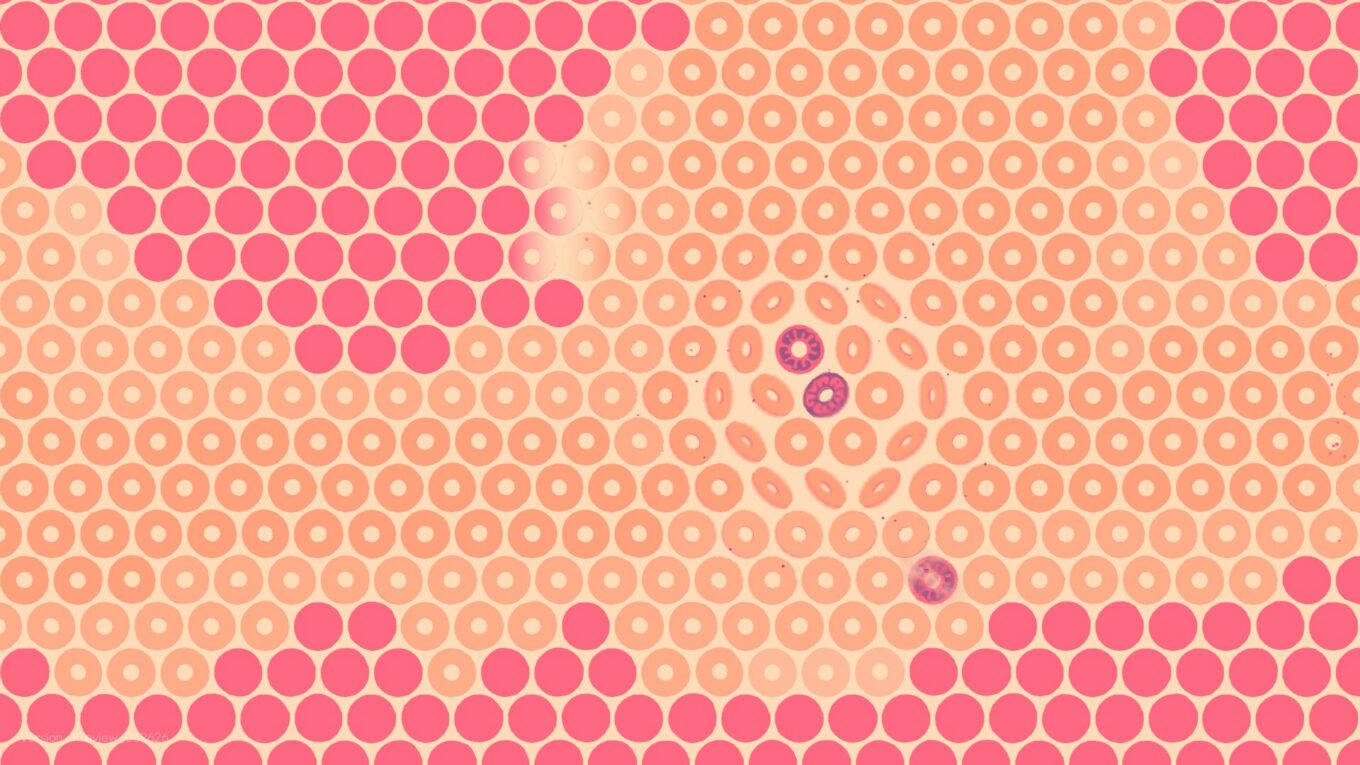
Your primary method of interacting with that world is through resonance. Tapping “E” projects a wave of energy that can drive objects away and communicate with others. Something What Surrounds Us reinforces by zooming into circles that introduce new mechanics the first time you encounter them. For instance, the game shows you that resonating with rings with similar patterns to your own can extend the range of your wave to reach far-off objects.
Other demonstrations are less clear. Introduced to marbled orbs that block progress, the camera simply lingers on them for a few seconds without any demonstration of what they do. That may be intentional or may be one of a handful of bugs I encountered – one of which cut my playthrough short close to its end, when a cutscene trigger never resolved, blocking progress. An inconsistency that is part of why it took so long for me to intuit that the white orb left behind when two wandering rings touch is a weapon. One with which you may destroy or temporarily disable enemies.
The introduction of which is also unfortunate. It comes at the right time, after you’ve already grown comfortable with the world and its loop may need shaking up. But having What Surrounds Us’ compelling first biome — there are three in total — interrupted by the sudden appearance of star-marked circles intent on consuming you feels discordant with the game’s initial allure.
What Surrounds Us is far from alone in that. Many developers conjure interesting worlds but prove unwilling to simply let players exist within them. But with a beginning that is strong enough to do without them, the addition of unnecessary peril feels less like an error of judgement than a failure of nerve.
Perhaps that’s part of the DNA in a game that plays like a pared back, formalist study of the earliest entries in The Legend of Zelda series. The flow of gameplay, the distribution of secrets, and puzzles utilising the environment all make it easy to start seeing the solid circles that hem you in the forests and mountains that also border Hyrule.
What Surrounds US does not capture the magic of The Legend of Zelda. But that Martinais has constructed a world that resonates so closely with it, without presenting a tepid facsimile masquerading as homage like other games, is testament to the consideration behind What Surrounds Us’ abstract art direction and world design.
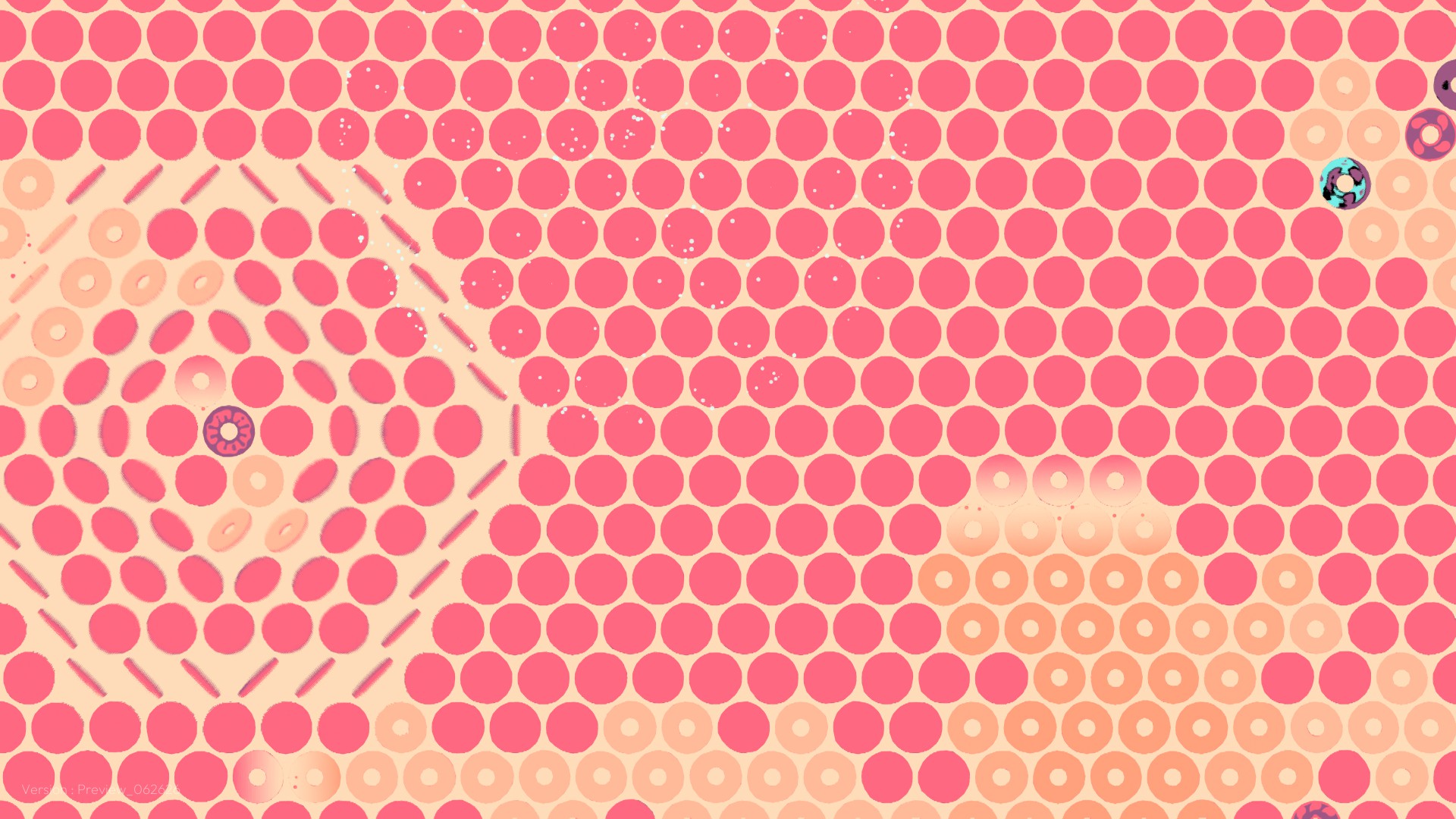
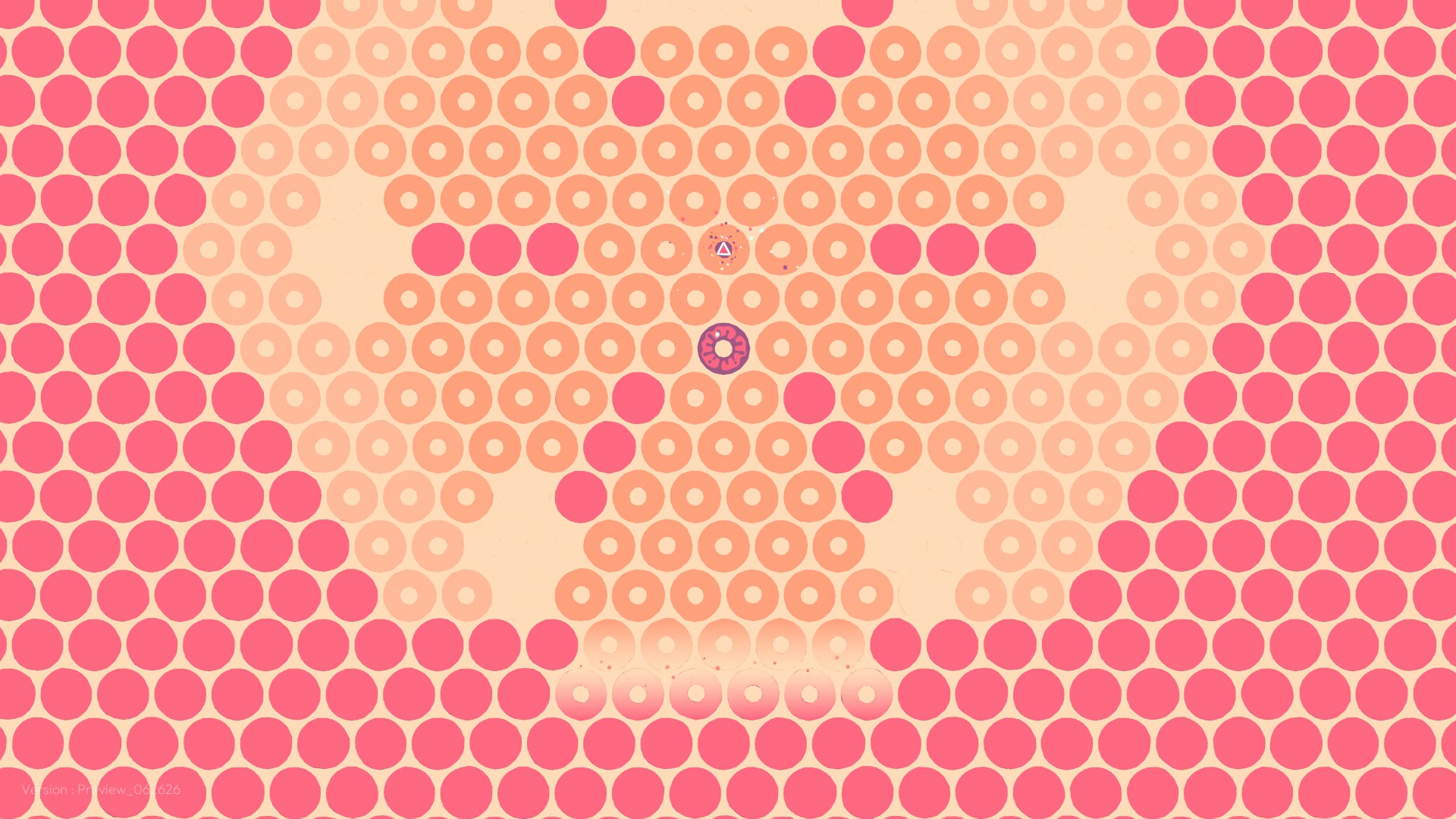
Martinais’ shrewd observations about two-dimensional, top-down adventures quickly become overly studied, however. A fascination with circles ends up too limiting. Rather than the dramatic shifts in scenery that signal new adventures elsewhere – and the panic and excitement that comes with it – What Surrounds Us greets you with new colour schemes. Both less cohesive and harder to parse than the first.
Perhaps a change of shape may have been too jarring. But one wonders whether shifting to triangles to imply barren mountains in the second “desolate” biome and something more evocative for its “lush” area might have offered a more startling change. As it is, you start to feel caged by the circular forms as the game shifts to more linear design. The transition to which is made too literal by your path back to the more compelling starting area being blocked once you leave.
In a limited narrative, it is effective in a way. It’s unsettling to be cut off from the more comfortable initial biome as you venture into a sickening world. But that diegetic discomfort quickly shifts to an external frustration with persistent changes in design.
Puzzles in What Surrounds’ Us starting area follow a simple, established structure. You traverse a screen, often by interacting with objects in the environment, and unlock a shortcut back at puzzle’s end. In one joyous example, you must wend your way around a half-shaded ring that temporarily raises landmass. Picking your way towards what shreds of ground remain when it disappears is not difficult, requires the ideal amount of cognitive labour, and is satisfying to complete. It’s a welcome moment of focus after growing to love the first biome through a persistent, yet pleasing, lack of direction.
Early into the second biome, this loop and satisfaction disappears. This is driven, in part, by what appears to be the only upgrade in the game (unless there is another, oddly placed, at the very end which the game did not let me see). This adds the ability to dash across gaps and What Surrounds Us comes to rely upon that, rather than its more compelling concept of resonance, for most puzzles that follow.
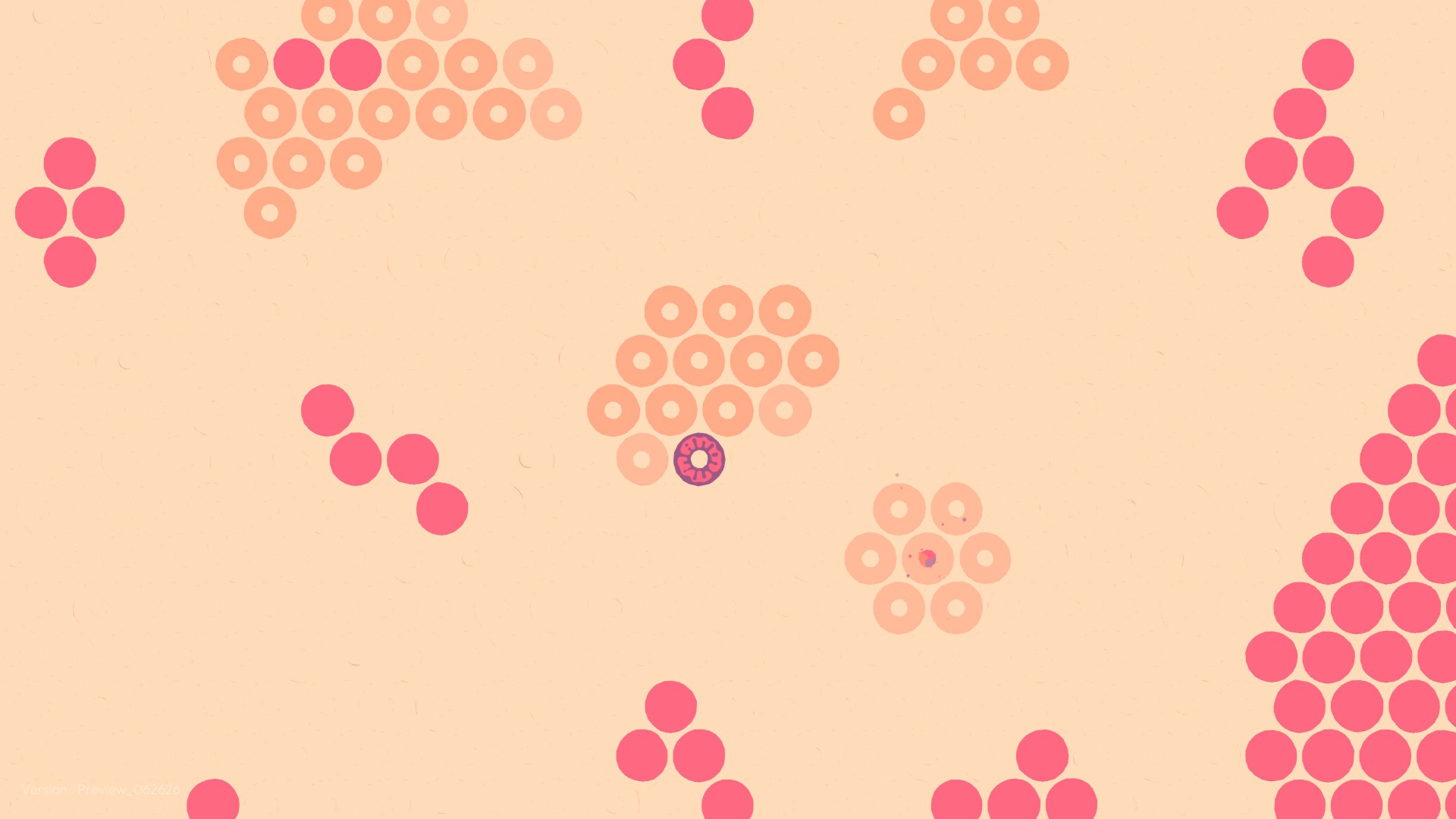
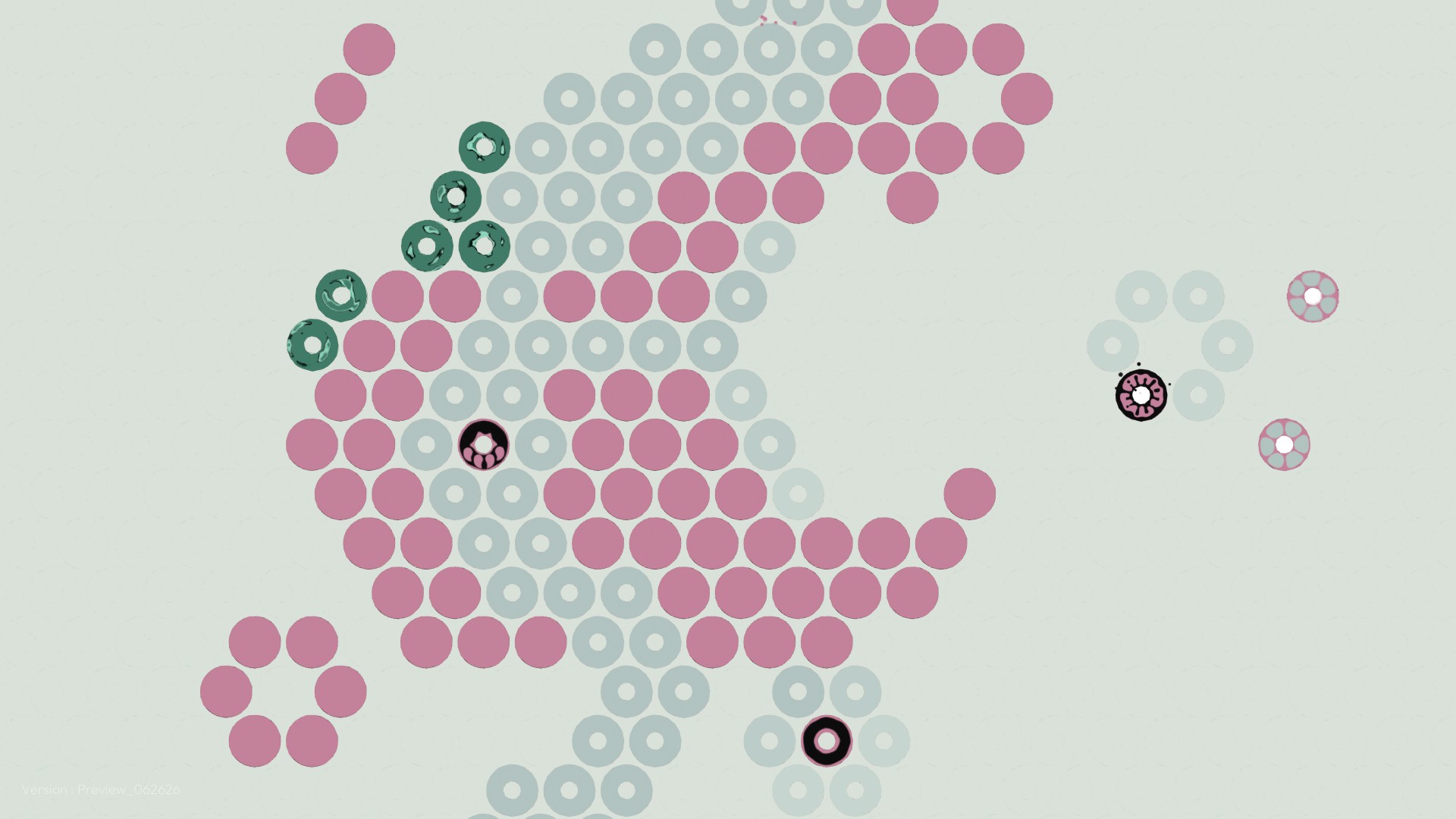
Too often, that revolves around waiting for an object to fall into place between landmasses, jumping to it, and then to the other side. What Surrounds Us’ unintuitive controls, in which movement can often feel inconsistent despite how much tight manoeuvring is required in later puzzles, make these repeated jumps especially grating. Few later puzzles resolve with opening a new route back. Instead, What Surrounds Us forces you to retrace those puzzles in reverse, including its most frustrating areas, as loops are abandoned for dead ends. Which also means that a more permissive early world in which one can search for other puzzles when stuck transitions into one that offers few, if any, alternatives.
All of these puzzles either lead to new paths or collectibles (and sometimes both). The temptation to turn back from collectibles hidden behind frustrating sequences must be resisted, however, as – in a jarring move – those collectibles become a finite resource in the game’s final biome.
That is the quandary of What Surrounds Us. Its first biome is a joy. One reinforced by the maze that keeps you looping in circles and watching its world form in defiance of its visual deconstruction. It sets up a considered and vibrant landscape that never replicates. As soon as one reaches what follows, they are locked in. I spent much of the rest of my playthrough wishing for the pleasing confusion of its beginning.
The lack of consideration that haunts the final two biomes is foreshadowed, however, within the menus of What Surrounds Us. But for global colourblind filters – the deployment of which has been shown to actively hinder colourblind players, particularly in a game with such uniformly shaped elements – and turning off controller vibration, the game offers no accessibility options.
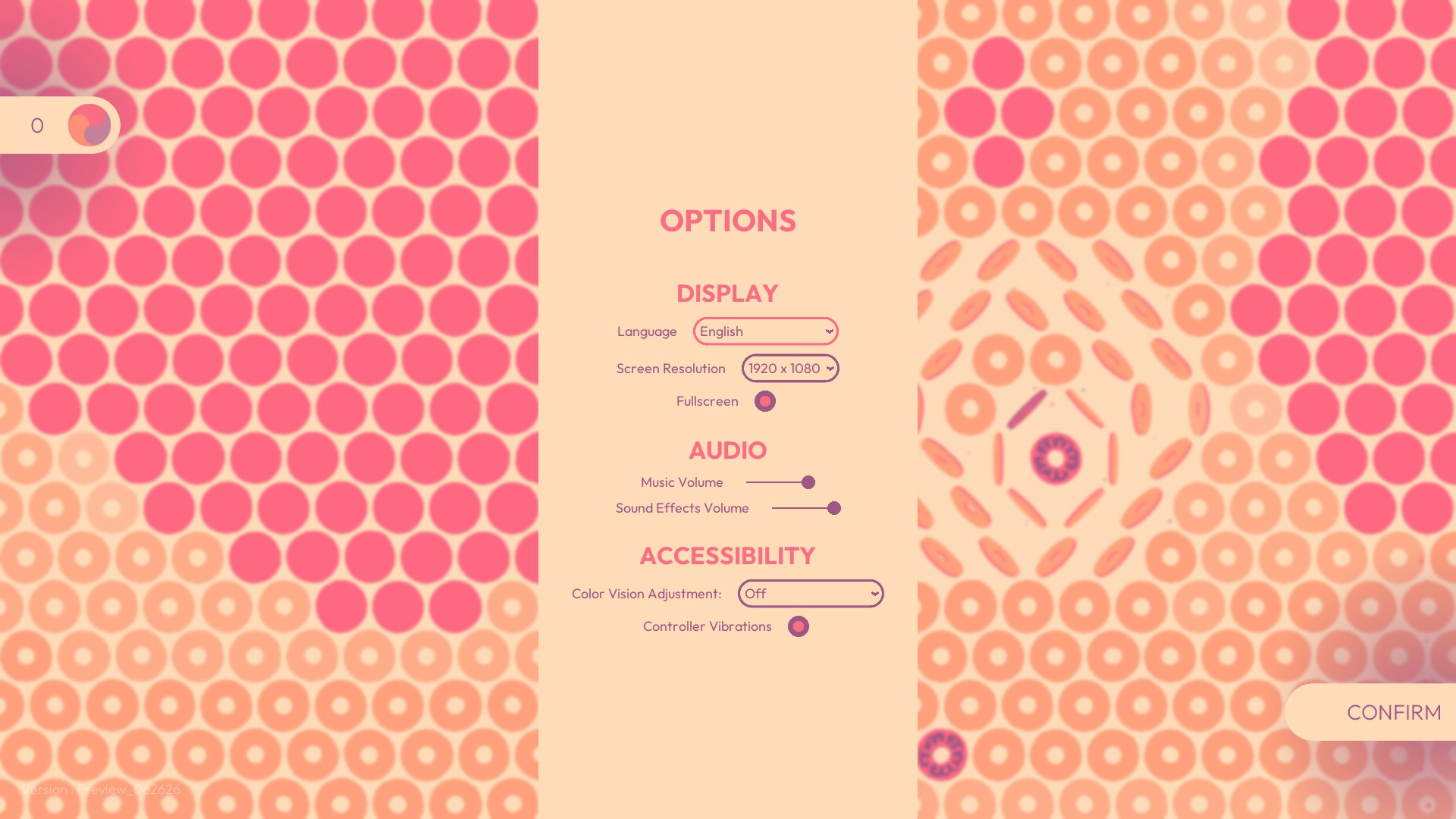
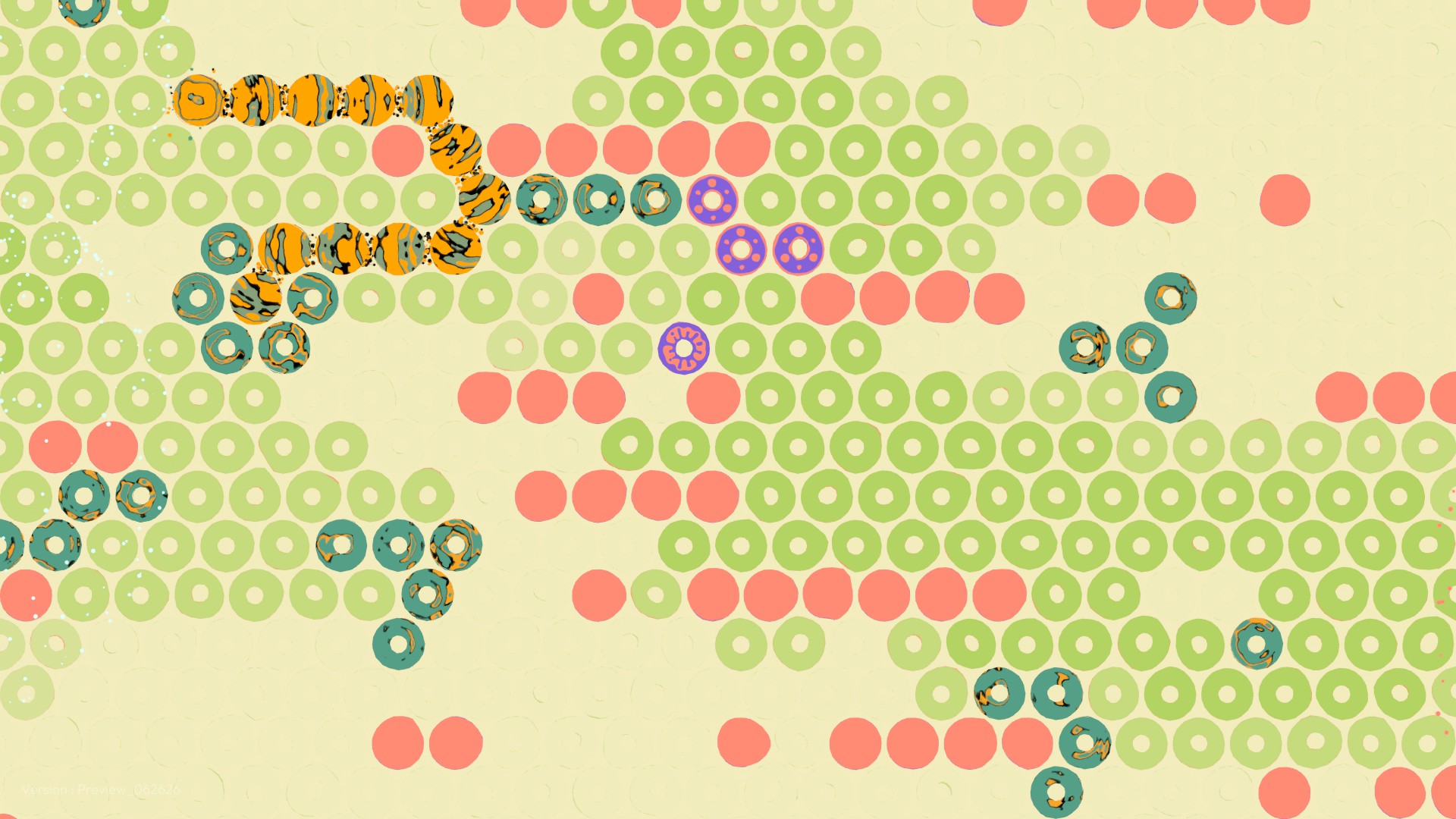
When taking a step back and looking at What Surrounds Us holistically, outside its seductive initial biome, it not only becomes clear that the game is top-heavy in its level of consideration. It also becomes increasingly difficult to justify its “cosy” categorisation. A lack of intuitive connection between its visuals and controls, technical issues, and inconsistency across the design of its biomes combine to mean that What Surrounds Us is rarely as relaxing or undemanding as its adopted genre suggests.
Yet that beginning is so beguiling and speaks of so much potential that it at once almost paves over the game’s later cracks but also serves as a constant reminder of what’s missing. The allure of returning to it is enough – was enough for me – to ensure that What Surrounds Us rarely leaves you without encouragement to push forward, whether that’s a literal return or the hope of a late-game return to form. But it never rediscovers its footing. An insecurity that refuses to let the world breathe, and increasingly loose world and puzzle design, stops What Surrounds Us from becoming something as special as its beginning promises.