
Video games are perpetually being adapted to tabletop, board, and card trading games. From Cyberpunk 2077 to The Darkest Dungeon and Slay The Spire. Novel ideas are iterated and repurposed to be played by people around a table, at a bar, or a friend’s house. Yet, the opposite is also true. Even though tabletop games have been influential to the medium for decades, this Frosthaven game attempts to digitize and capture the very essence of the real-life material experience.
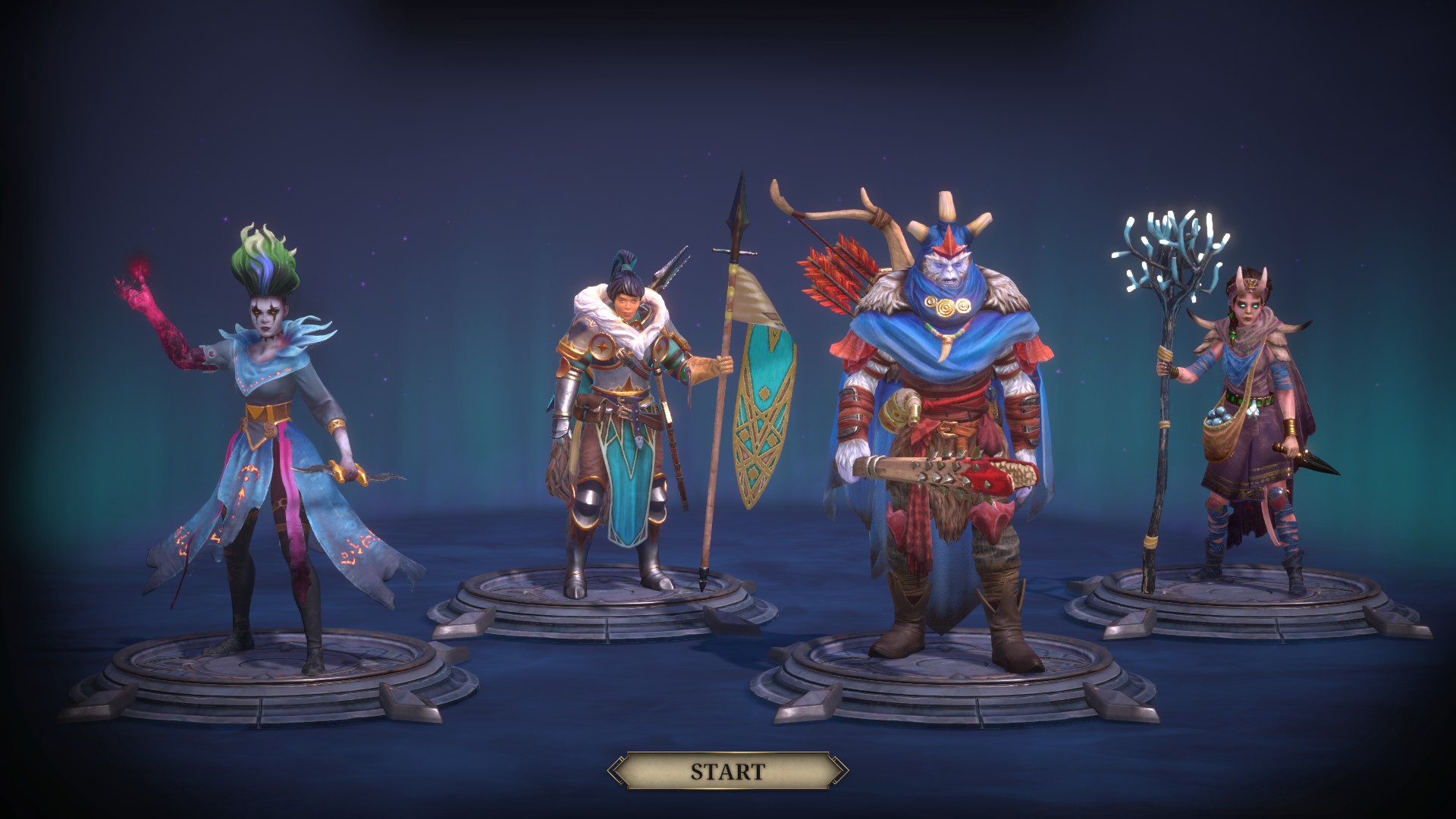
Developed by Snapshot Games Inc. and published by Arc Games, Frosthaven is, in essence, a fantasy tactical RPG that can be played both solo and with up to three people online. Yet, everything from characters to rules in and out of combat is dictated by its cardboard-infused counterpart. Gloomhaven, to which Frosthaven is a sequel in anything but official label, also had its own digital adaptation back in 2021.
Even though both games were tackled by different development teams, they share a similar foundation. If you’re knowledgeable about the board game, you’ll likely feel right at home. If you’re a newcomer like me, however, the onboarding process and experience as a whole may leave you disoriented very fast.
This adaptation of Frosthaven entered early access back in July of last year. After multiple sizable updates and a myriad of tweaks, the 1.0 version is finally upon us. This last major update adds the final hero to the roster, all of the remaining content up to the final chapter of the story, an opening cinematic, a fully implemented codex, house rules, and new building functionality.
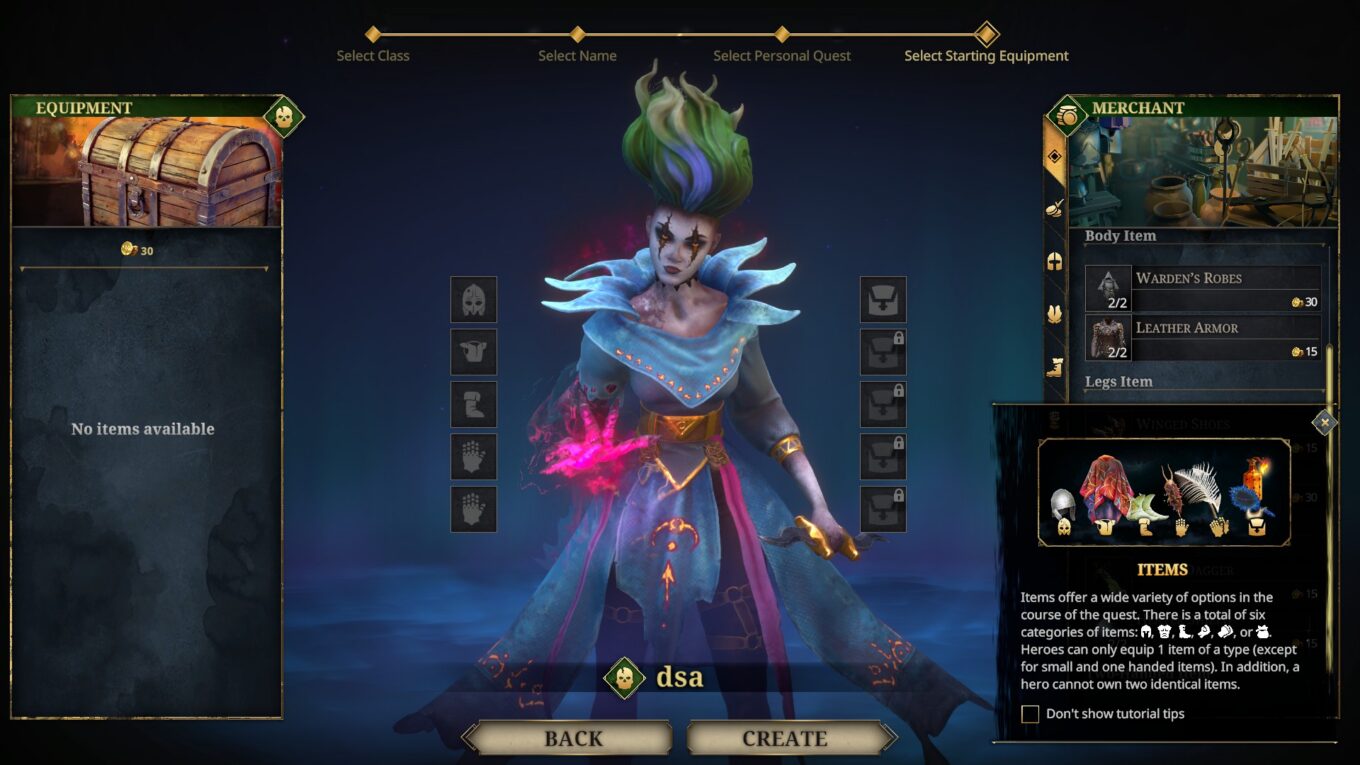
Booting up the game gives you several options. You have the training grounds, which covers the basics of how Frosthaven works. Road to Frosthaven, which serves as a prequel adventure about the events leading to the campaign, and said main campaign, which is where the bulk of the experience is. From there, you get to create your characters, with parties allowing up to four at a time, either controlled by just one person in single player or multiple people online. There are six starting classes, and you increase the roster by progressing through the campaign. Don’t expect your usual archetypes here – each class is wildly different from each other, making for a promising entryway to the experience as a whole.
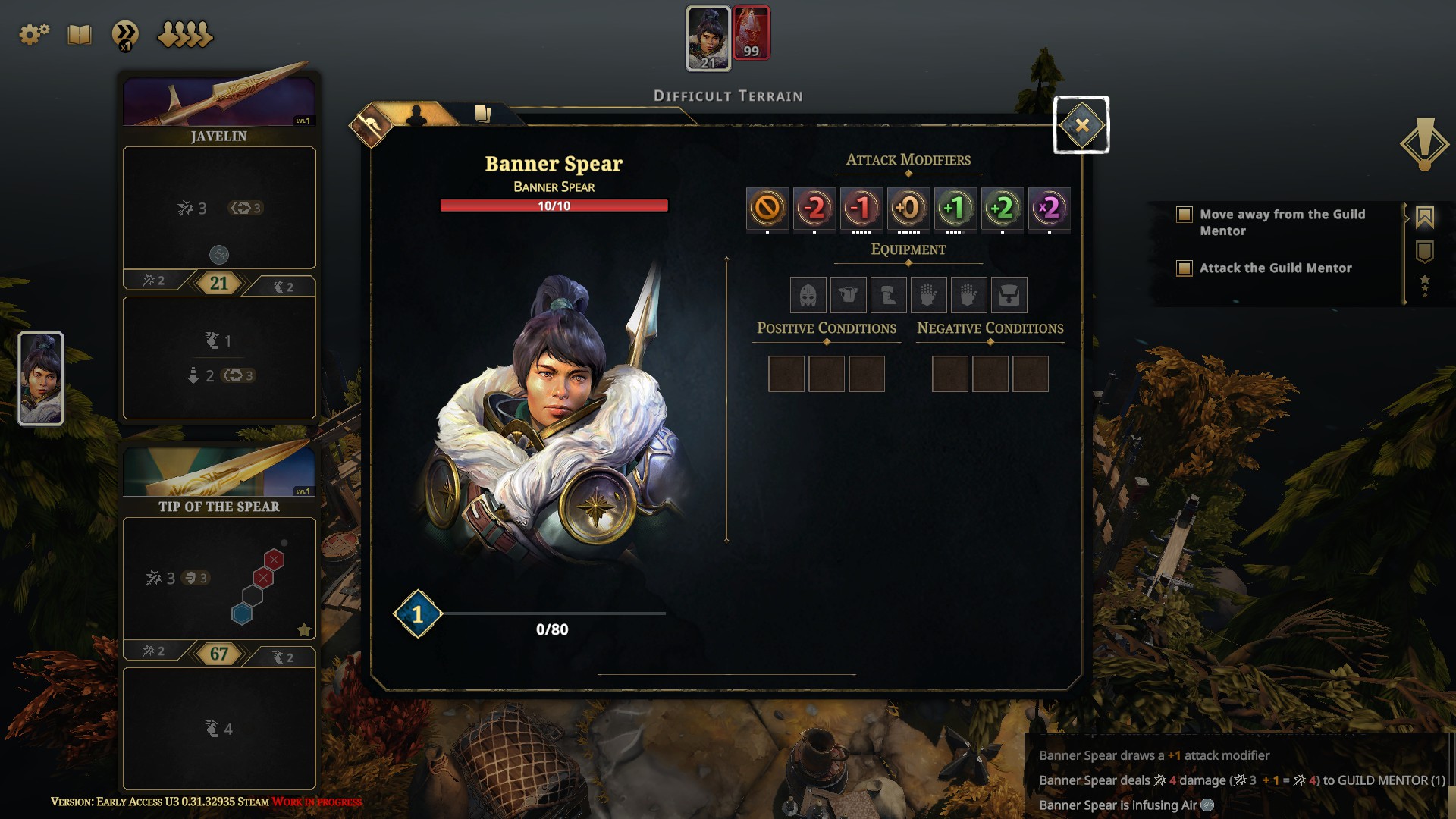
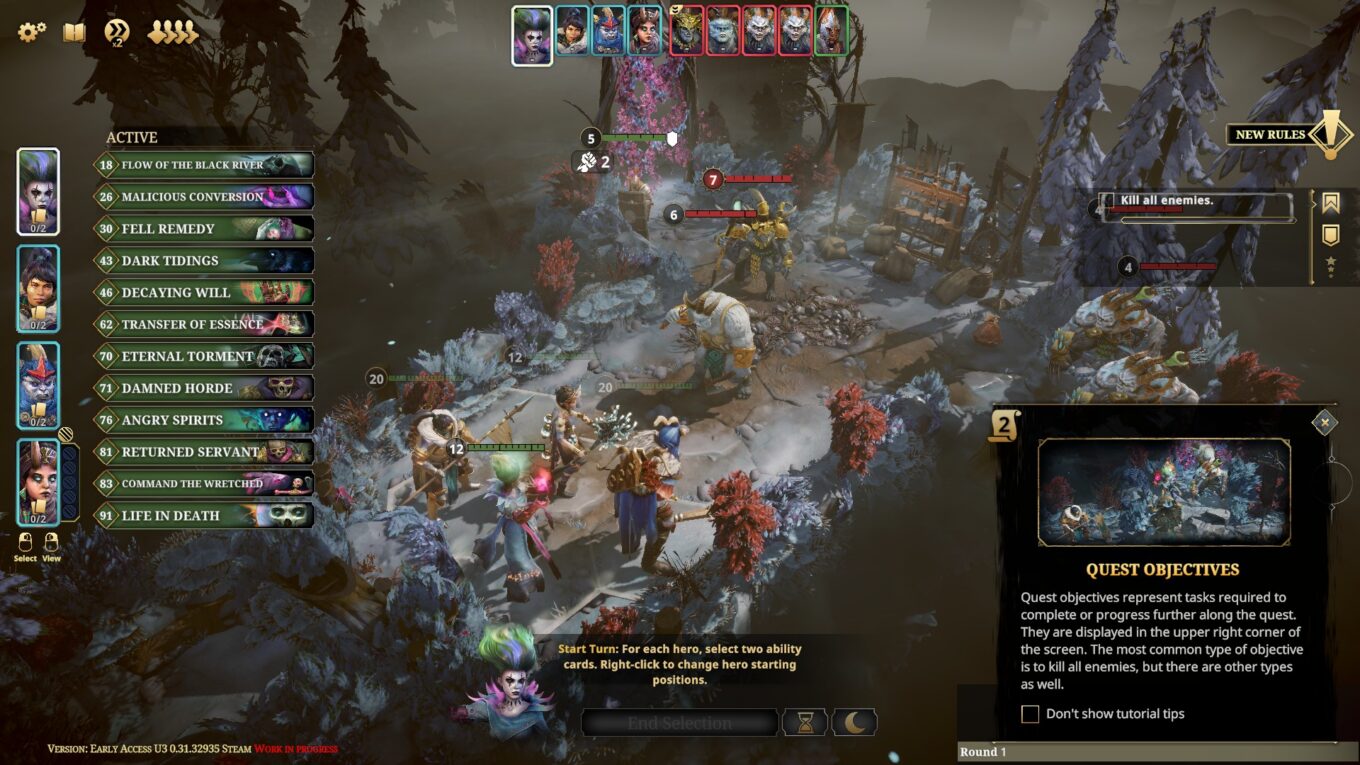
That’s where the tutorial comes in. This first introduction does what it says on the tin, explaining nothing but the very basics of the experience. This is fine and all, but the issue comes with the classes and their extensive card selection. Each class has its unique skill set and abilities, which are all tied to cards – turns are dictated by picking two cards, each with its own initiative. The attached number then decides when that character will be able to play said cards. From the get-go, the mechanics take some time to learn. Each card has two sides. Normally, the top section tends to be an attack or a spell, while the bottom section is usually related to movement on the grid, healing, and so on. Yet, it’s not uncommon for some cards to be their own affair altogether, proving wildly different from the rest.
Frosthaven is quite transparent in this regard, and you can take all the time in the world to learn what each stat, attack, and ability do. Yet, I wished there were dedicated tutorials for each one of the classes, or at least more advanced guidance about all of the smaller intricacies that you don’t commonly see in other games. Even a character that seemingly doesn’t do anything other than wield a javelin can be quite overwhelming to learn properly.
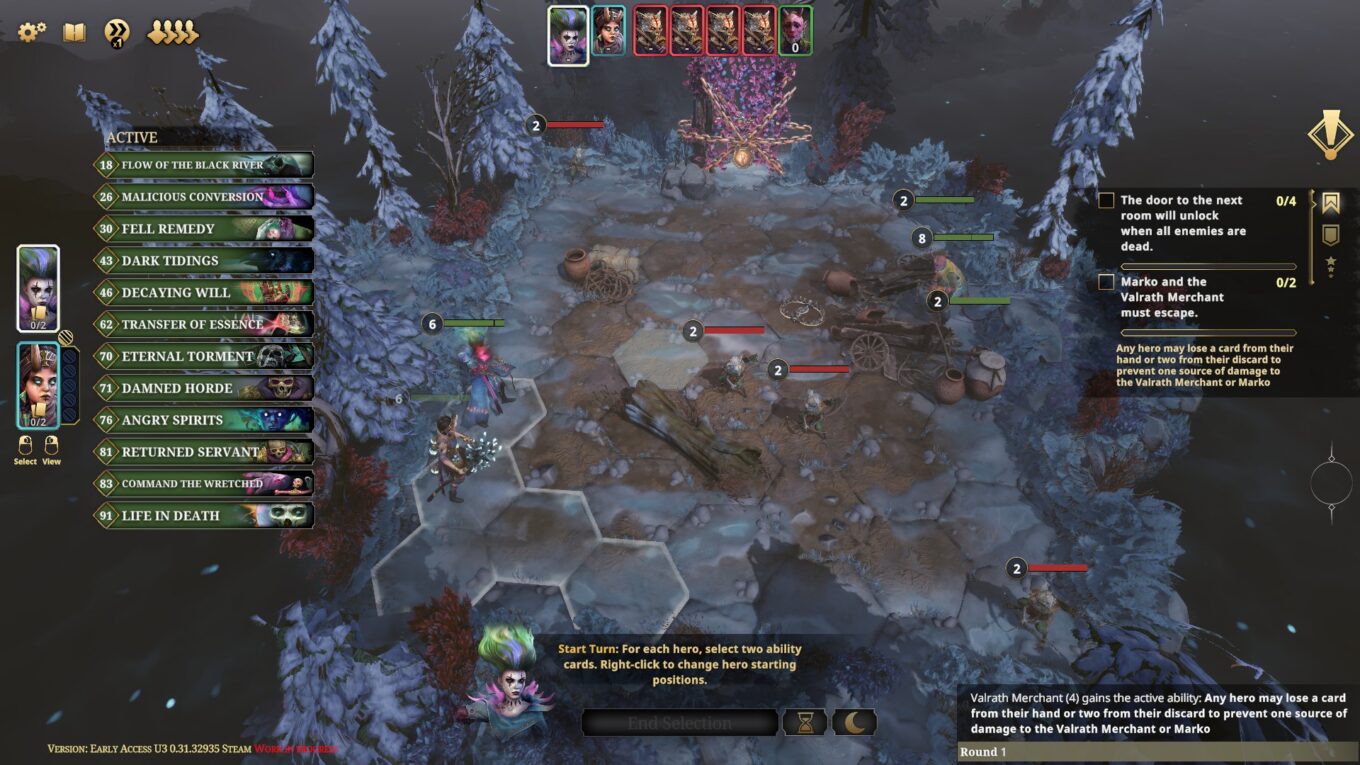
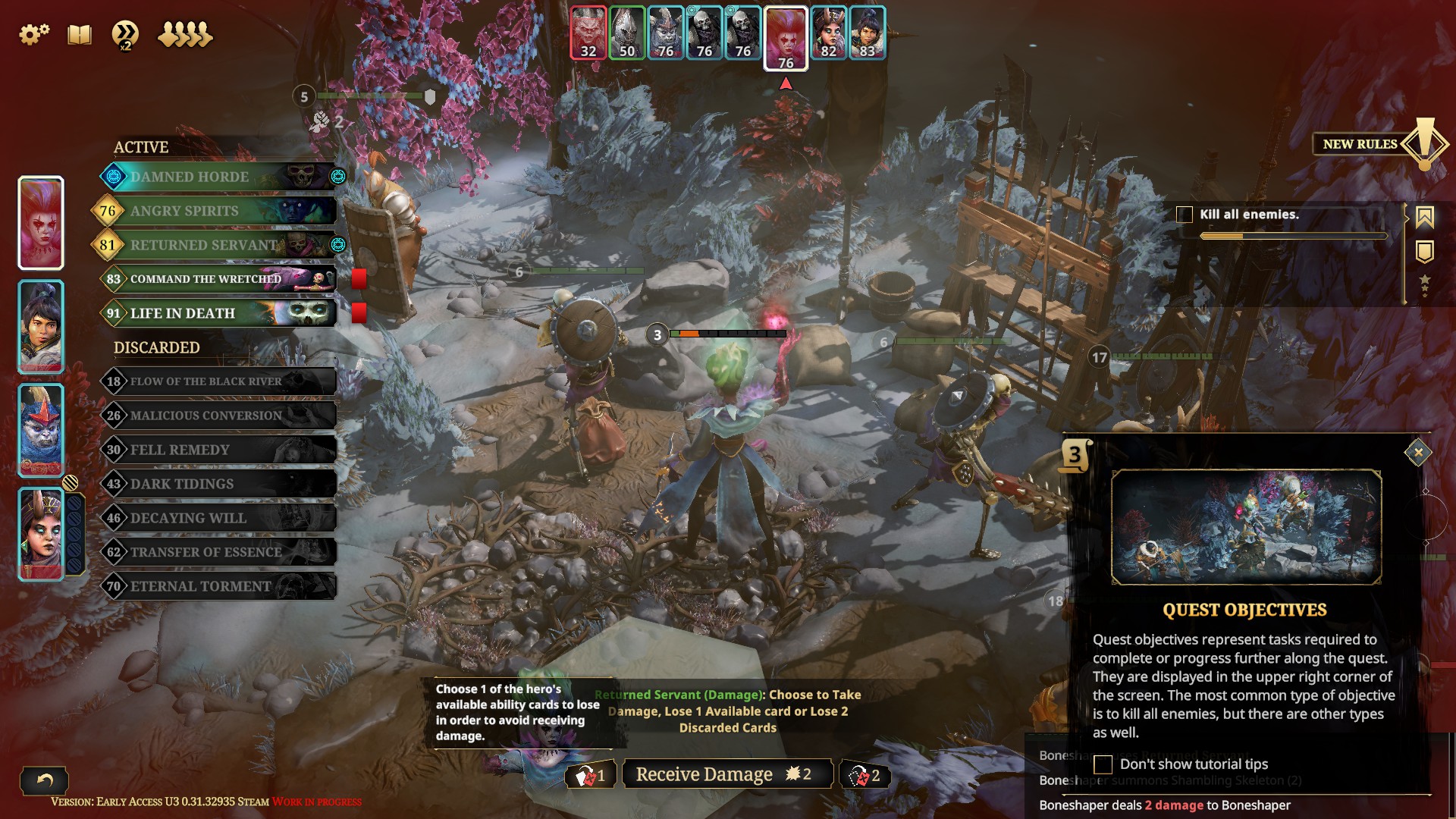
The lack of proper tutorials does have a domino effect, as combat is the bread and butter of the game. When cards aren’t being super obtuse, it is an entertaining endeavor. Enemies won’t mince their attacks even in the lower difficulties, and it’s up to you how to carry each encounter. Whenever a character receives damage, you can opt to either take it as is or opt for two alternatives involving your cards: losing one of your current active cards in your deck, or losing two previously discarded cards. It’s in moments like this that I began to understand the appeal of learning a new set of rules tied to Frosthaven.
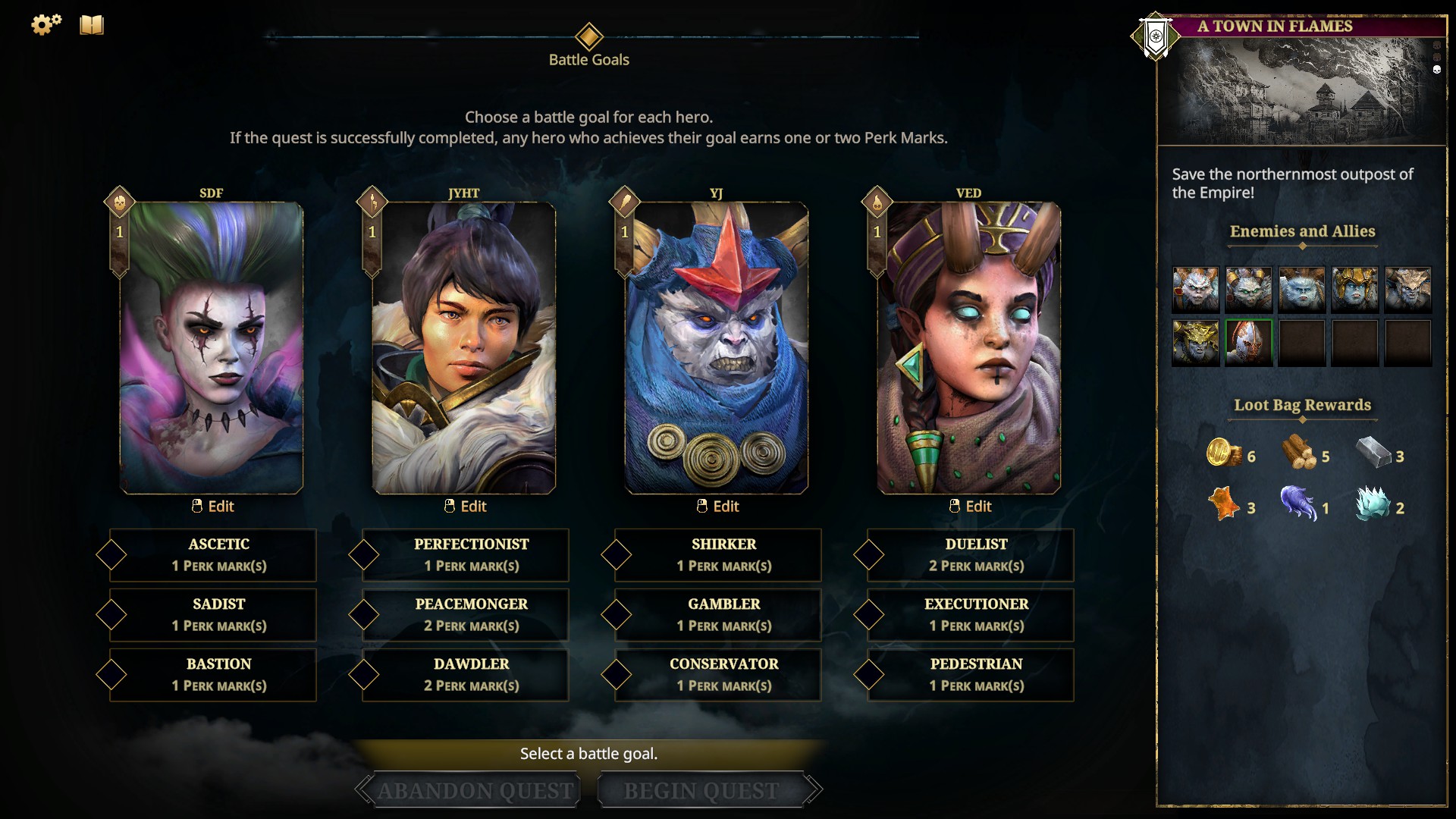
And there’s no shortage of standout mechanics like this. You get to build your own outpost, which leads to unlocking features, serving as an interesting way of tackling progression through the campaign. During party selection, you get to choose a battle goal for each character, which are optional objectives that will be rewarded if completed – and these are in addition to personal quests, which are far more involved and tantalizing tasks.
Yet, the core of the experience can be hard to grow acclimated to. Even if it’s possible to learn more about the cards and the overall gameplay loop, the UI can be quite cumbersome to parse through, with some actions not registering. In some odd instances, I wasn’t able to progress, forcing me to reload my previous save.
The presentation itself has nice touches at times – playing the campaign, for example, has you listening to a narrator that accompanies cutscenes, guiding you throughout the adventure as you move from one quest to the next. But when it comes to how it visually represents information, and the way in which you have to follow multiple steps to tackle simple actions does get tiresome fast.
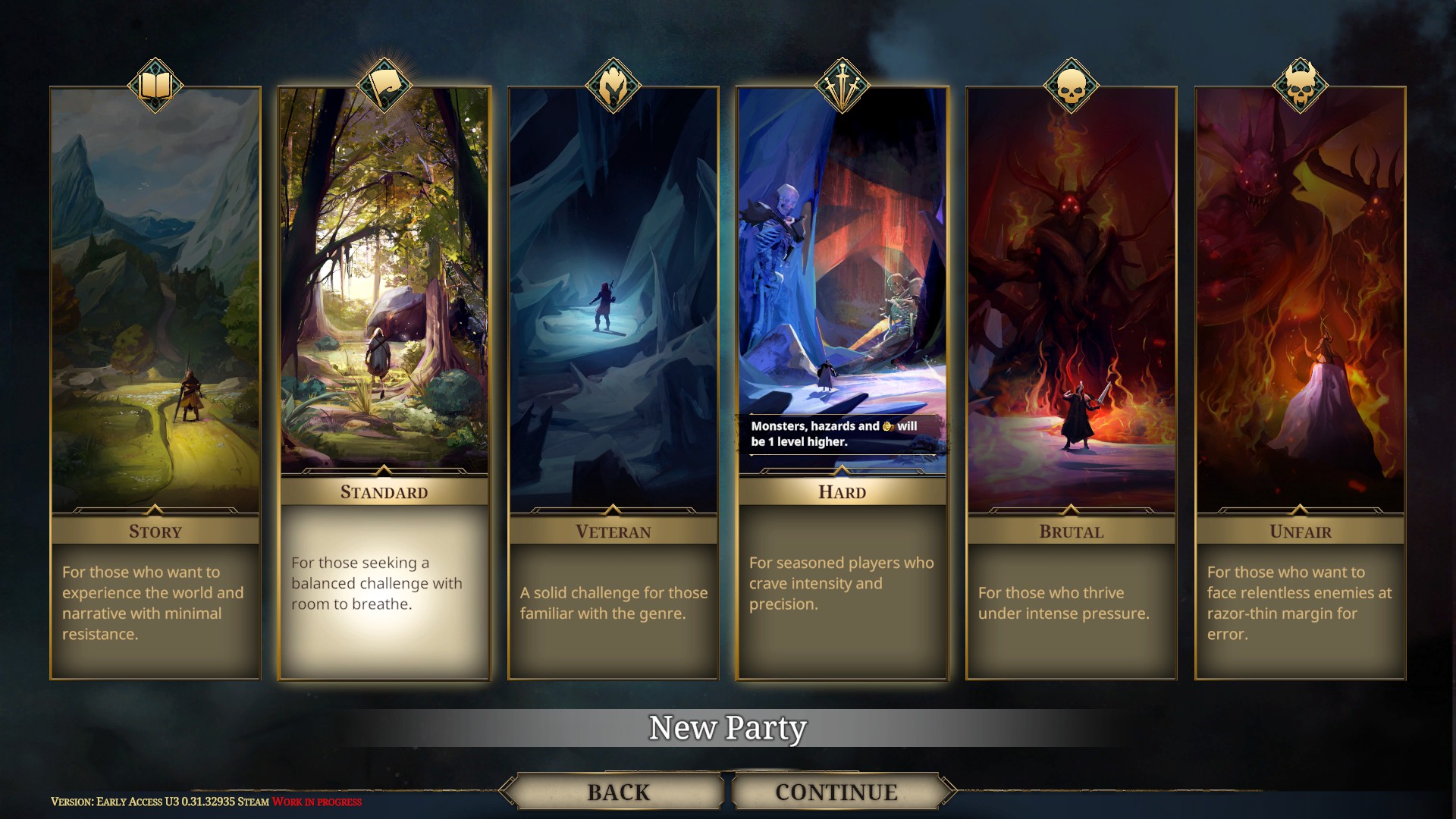
There’s also something to be said about combat and overall pacing, which feel oddly unbalanced. For example, the prequel adventure and the main campaign begin with quests that immediately take you into combat. That’s fair of course. The problem is that you immediately follow up with a bigger encounter right after. It’s not uncommon to be facing, say, eight enemies at a time, all while wrangling different turn initiatives, two NPCs in enemy lines that you have to protect as part of the quest, and your own characters that need to make it through alive.
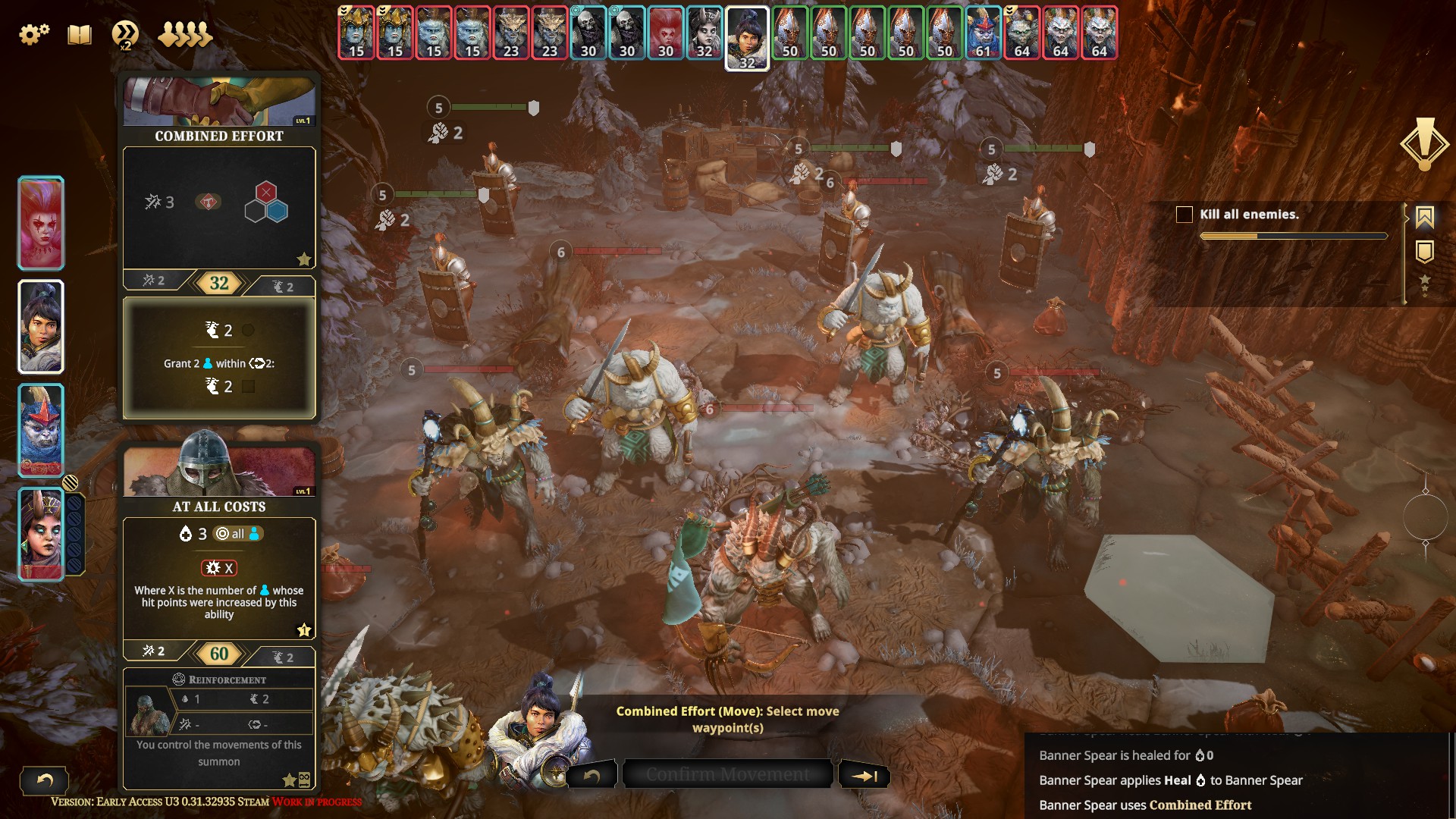
Sure, I was able to overcome these challenges, but it all felt deliberately daunting rather than offering a suitable challenge for what was essentially the very start of the game. Once more, unless you’re already familiar with the cards and classes of Frosthaven, it can be a very, very steep learning curve. Fights can take a long time, and all of the limitations in place aren’t exactly helpful. Cards, for example, get depleted after use, and you will eventually run out of them, forcing you to put your character on either a short or long rest. Again, since you’re required to pick two cards, this is an unavoidable step. Successful strategies are satisfying, but it also means that a bad turn can really cost you time and effort that is arduous to recover from later on.
Gloomhaven and Frosthaven are distinct board games. Yet, when it comes to turn-based tactical RPGs, there’s no shortage of options out there. Recommending this latest adaptation in 2026 isn’t as easy as it could be. The appeal of board games is to physically sit around with friends and share long sessions together. Even with the option of multiplayer, there’s a charm that gets lost in translation. It’s nice that a multiplayer option exists, especially for players who may be thousands of miles apart, and there’s a unique appeal in seeing the board game come to life. There’s lots to love in Frosthaven, but how far you get will depend on how patient you can be about adapting your inherent RPG video game habits to this experience.