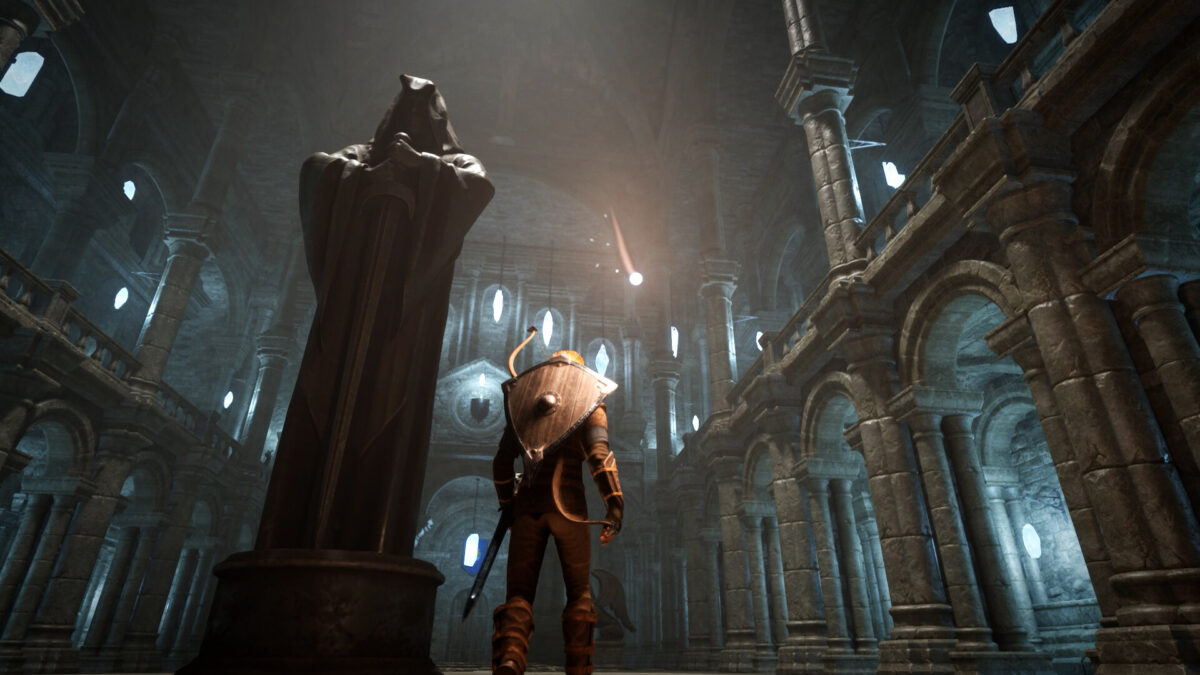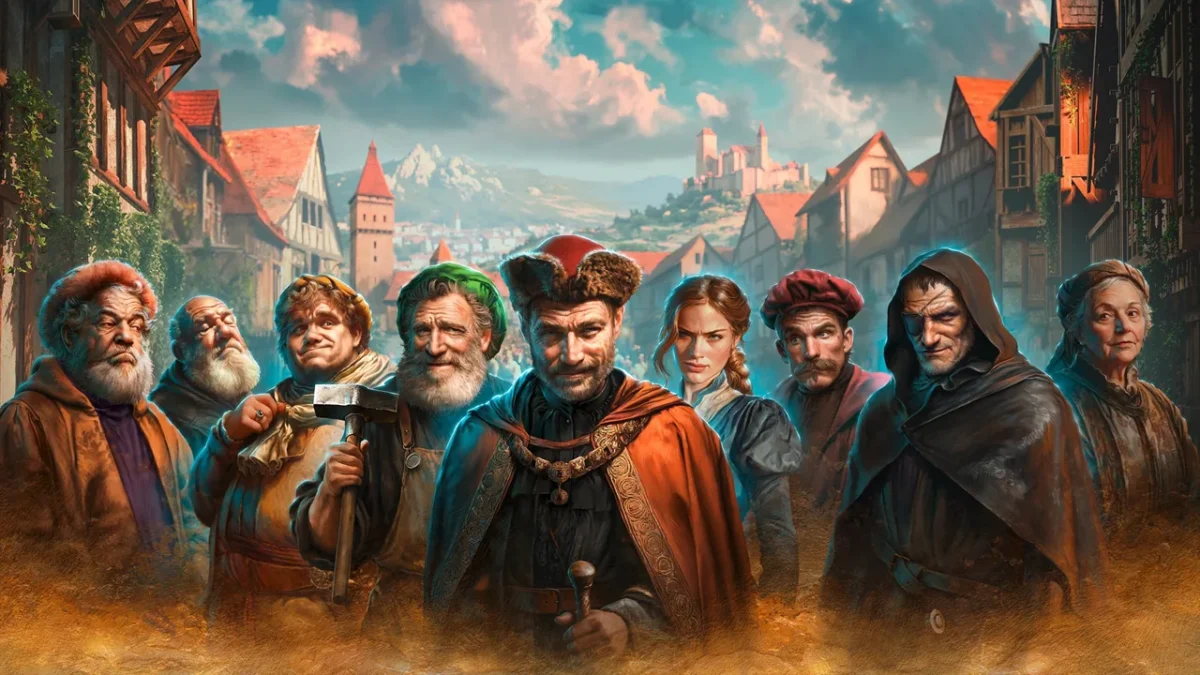
The fundamental appeal of Gothic is as evident as it is prickly. As an unnamed Hero, the player character is a mud stain on the boot of powers beyond him. At the game’s start, he is lowered into a penal colony through a magical barrier which prevents all its inhabitants from leaving. Like many others within the colony’s various camps, he harbors ambitions of escape, but, at least at first, departure is totally impossible. The everyday critters within the colonies can kill him within two or three blows. He has no combat training, no grand heroic history behind him, just his will to survive, his conniving, and his humility in the face of horrible odds.
For much of the early game, Gothic focuses on doing busy work for disagreeable men. No factions are noble, none can boast genuine aid, all of them use you. But what other options do you have when you are a prisoner with nothing? You get power eventually in Gothic, but it is far less immediate than other RPGs, especially 15 years post-Skyrim. So, Gothic is janky, slow, and frustrating. Even in this remade form, it lacks many of the quality-of-life features that come standard with other RPGs of its ilk. Through all that, really because of it, Gothic stands out and remains an incredibly satisfying journey.
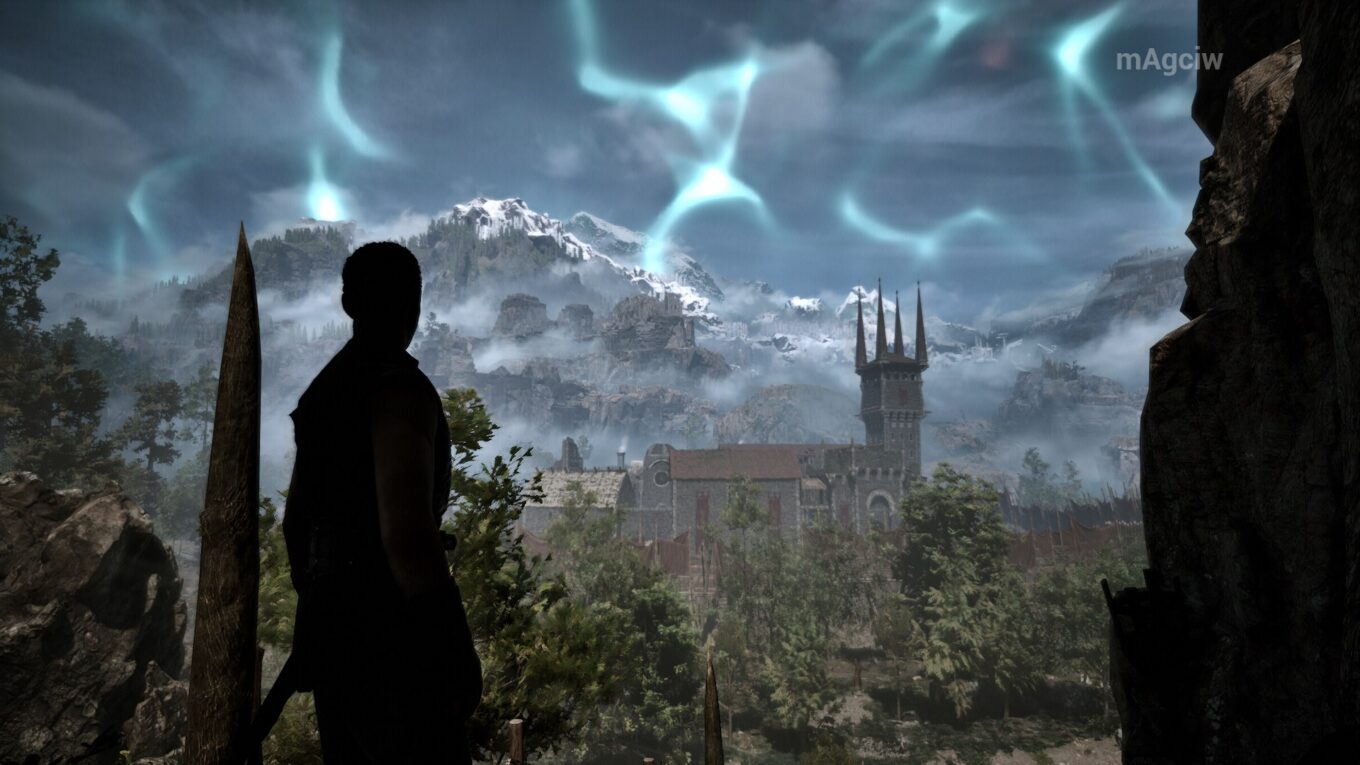
Gothic comes out of a long-standing, but waning, tradition in computer role-playing games: the simulation. Tabletop games like Dungeons & Dragons come out of medieval simulationist war games. Though the rules of early editions of DnD are often contradictory, yet they are often focused on the nuts and bolts of fighting. Things like item weight and the exact meter length of a polearm mattered. Many dungeons were designed around realistic details. Questions like why the goblins had taken over an old tomb or where they got food from were sources of inspiration and criticism. Bioware has long abandoned this kind of design, but Baldur’s Gate fans may remember how much of the first game revolved around the iron supply chain. In both premise and practice, Gothic pulls from this tradition.
This simulationist instinct is perhaps best showcased by Gothic’s bare and cutting approach to classic RPG elements. Level-ups only increase health and skill points. To learn anything else, including merely raising your strength or dexterity, you’ll have to pay someone to teach you. Unlike many other RPGs, but similar to the Elder Scrolls, there are no classes or archetypes. You are free to learn any skills you choose and each has its own tiers of progression. Skills like lock picking, for example, are not tied to a specific stat. What makes this system so beguiling is its economics.
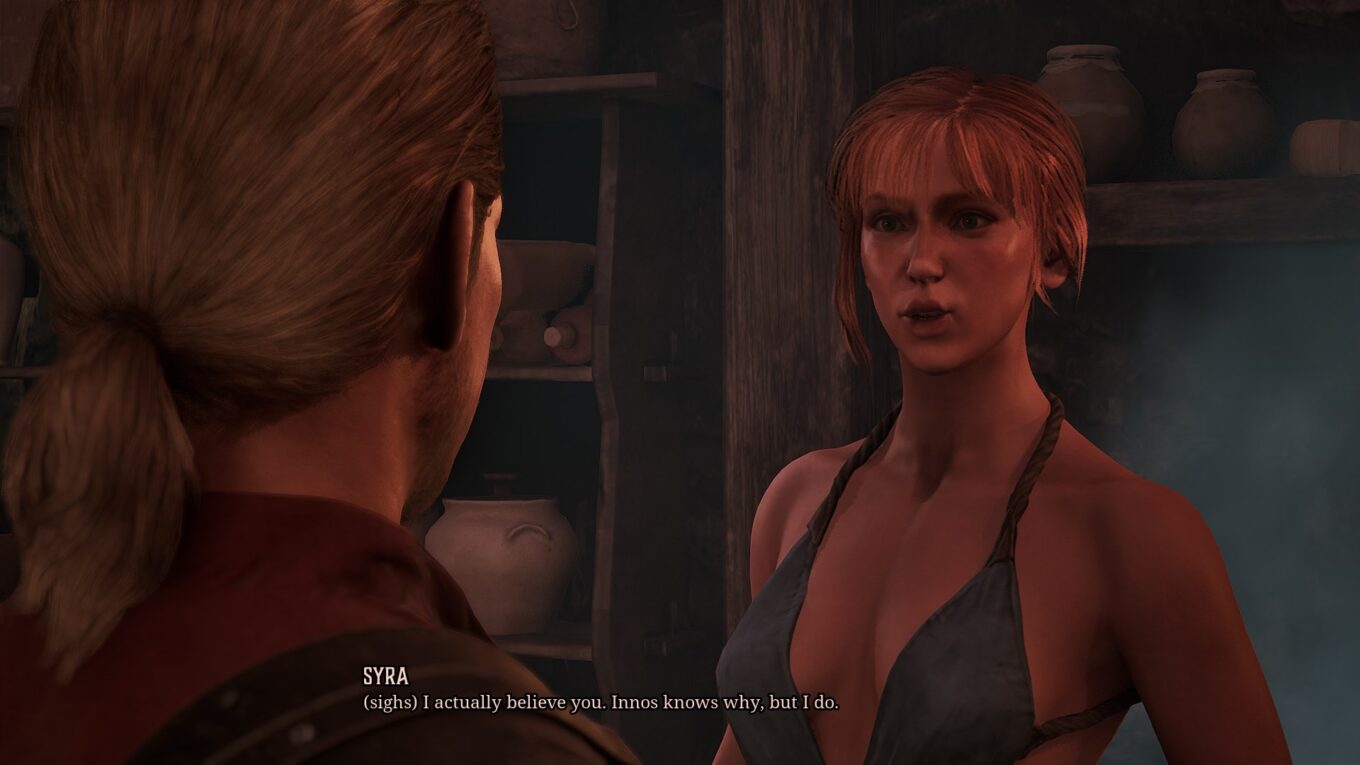
The game’s penal colony setting is the kingdom’s most plentiful source of magical ore. The barrier, gone awry as soon as it was put up, prevented anyone from getting out, even the mages and soldiers in the king’s employ. In short order, the prisoners took over and continued to ship ore to the king in exchange for goods. I summarize all this to emphasize that the game’s focus is economic. Every faction’s camp is stratified along access to ore or occultist knowledge. Selling too much of any item to any one trader will lower that item’s value with that trader. Learning trades and skills is expensive and for most of the early game, you are performing favors without pay. So, most of the decisions around making your character stronger are also decisions around money. Do you purchase a skill in skinning animals or pick pocketing, in the hopes of making extra cash? Or do you spend that on an armor upgrade or a new magic spell in an effort to increase your survivability? These decisions are often agonizing, because you have so little to work with.
Gothic’s simulation is complete enough that it is a pleasure to tangle through. Visiting each camp and deciding If you wanted, you could play as an ordinary prisoner. Hunting animals and mining for ore to earn nuggets and trade with the local traders. Gothic’s simulation is, of course, selective. Nothing in its world will change without your input. But teasing through its pieces unveils a scale that is dazzling to behold.

Most of this remake’s changes have to do with reworking the game’s visuals, though there are new quests and new areas to explore. It is worth mentioning that I have only basic familiarity with the original Gothic, so there may be nuances that I’ve missed. But to my eye, the game maintains Gothic’ basic feel well. The new character designs are essentially realistic expansions of the original’s. Everything is appropriately dirty and ground. Yet, I cannot say that Gothic offers anything beautiful or strange.
The defining fantasy RPGs of the last few years are FromSoftware’s work on Dark Souls and Elden Ring, games which are also dirty and dark, but manage real grandeur. In fairness, it is not as if Gothic had a particularly unique look. These are both games characterized by a kind of grime. Everything is muddy or mud-plastered. Everyone’s eyes are glazed over and all their voices are gruff. Most of Gothic’s characters, even ones that seem powerful at the game’s beginning, are relatively normal people. There are gods and terrible magics, but they are mundane in a way. For example, one of the game’s silly touches is that the easiest way to replenish magic early on is to smoke weed. Straying too far into stylization might risk making something that doesn’t feel like Gothic. Still, I can’t help feeling that the visual imagination of these games is ultimately meager.
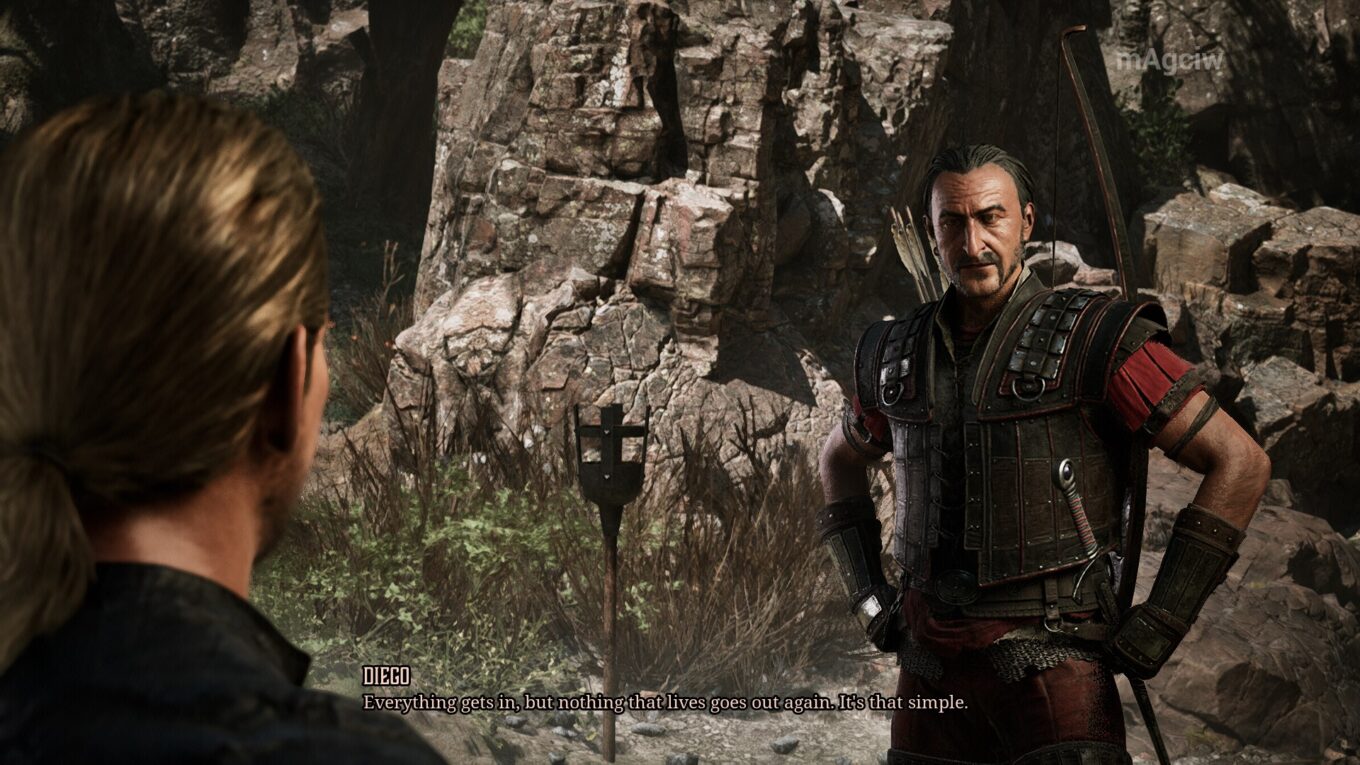
The game’s realistic look spells other problems for its design. Gothic 1 remake is excessively detailed. It admirably sticks to the almost UI-less elements of the original game. However, the original game’s world was much more barren. It was easy to see points of interest or to find items. In this remake, it can be hard to tell what you can interact with and what you can’t. You can loot this wildflower, but this one is just part of the scenery. I’m not asking for the game to implement obvious signposts or waypoints. It would certainly be less for doing so. But the game is not designed around its fidelity, making it often difficult to navigate or read.
Additionally, I faced a multitude of technical issues. Textures sometimes failed to load in. My computer is aging a little, so problems may have something to do with my own setup (though I will say that Resident Evil 9 and Marathon run fantastic and look great). Though, judging by Steam reviews, I’m not the only player to face serious technical problems. Additionally, some issues, such as an entire camp turning hostile on me for no apparent reason, probably can not be explained through issues with my setup. You may want to check your specs and wait for an update or two before purchasing.
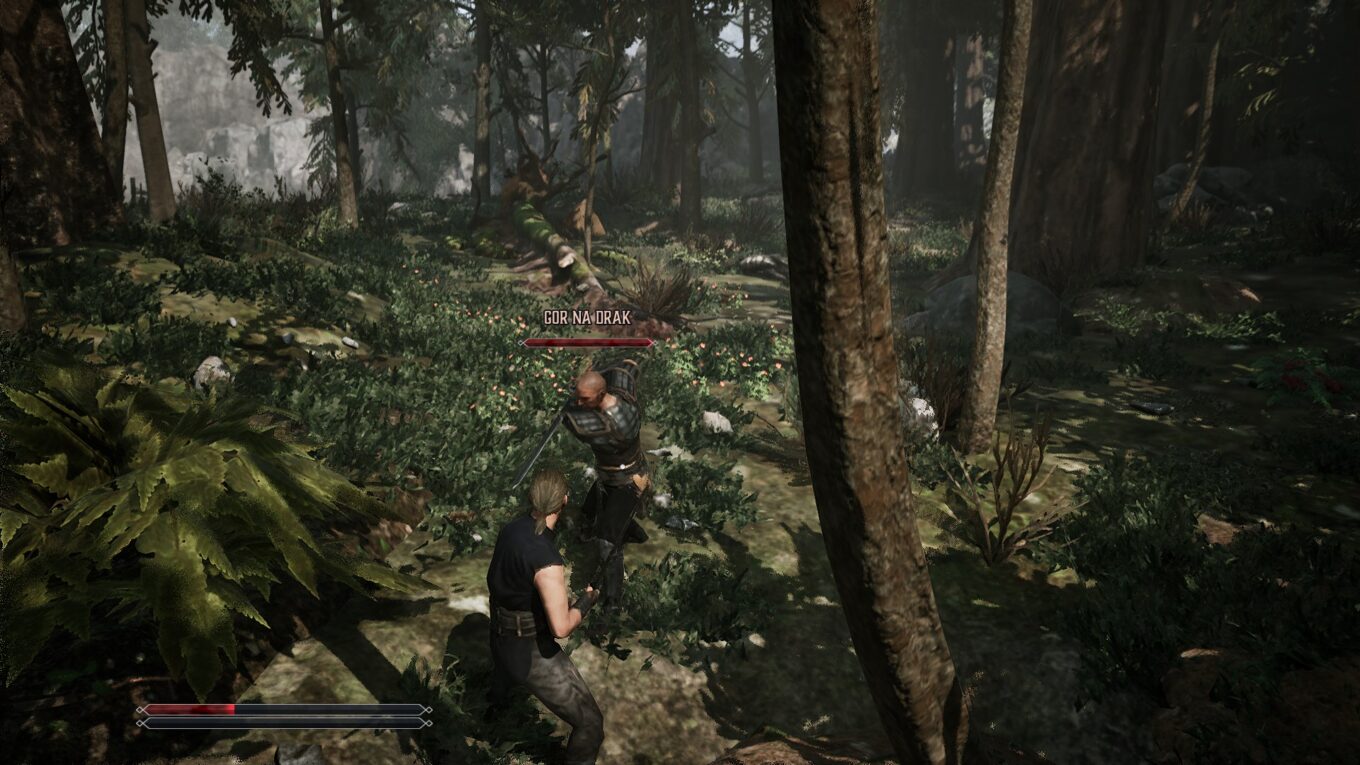
It’s refreshing to find that a souped-up remake of a classic RPG that largely sticks to the original’s idiosyncrasies. It’s also lovely that updated ports of every one of the original Gothic games are set to release later this year. More publishers should make original versions accessible alongside remakes. While admittedly roughshod, even ramshackle, Gothic 1 Remake felt impressive.
It is very easy to imagine a Gothic that emerged compromised and settled. Even years after release and with modernizing changes, it still feels strange and even brave. While this version does have some unwelcome additions (I could go without the main character’s comments on everything). It largely has reverence for the original’s vision and wants to offer a new way to experience it. As a first-time player, I was entranced.