One moment in The Guild 1 Remake: Europa 1410 stands out to me. A moment so meaningless, I’m not certain it isn’t a quirk of performance issues that have crept into Europa 1410 as it’s moved into Early Access. It’s loading a save. The screen starts black; stays black uncomfortably long enough to feel like a glitch. Then it brightens, ever so slowly as if the sun is only peeking over the hills. If it is a bug it should remain. What a pleasing touch. One of many small, breathing moments that make Europa 1410 feel alive.
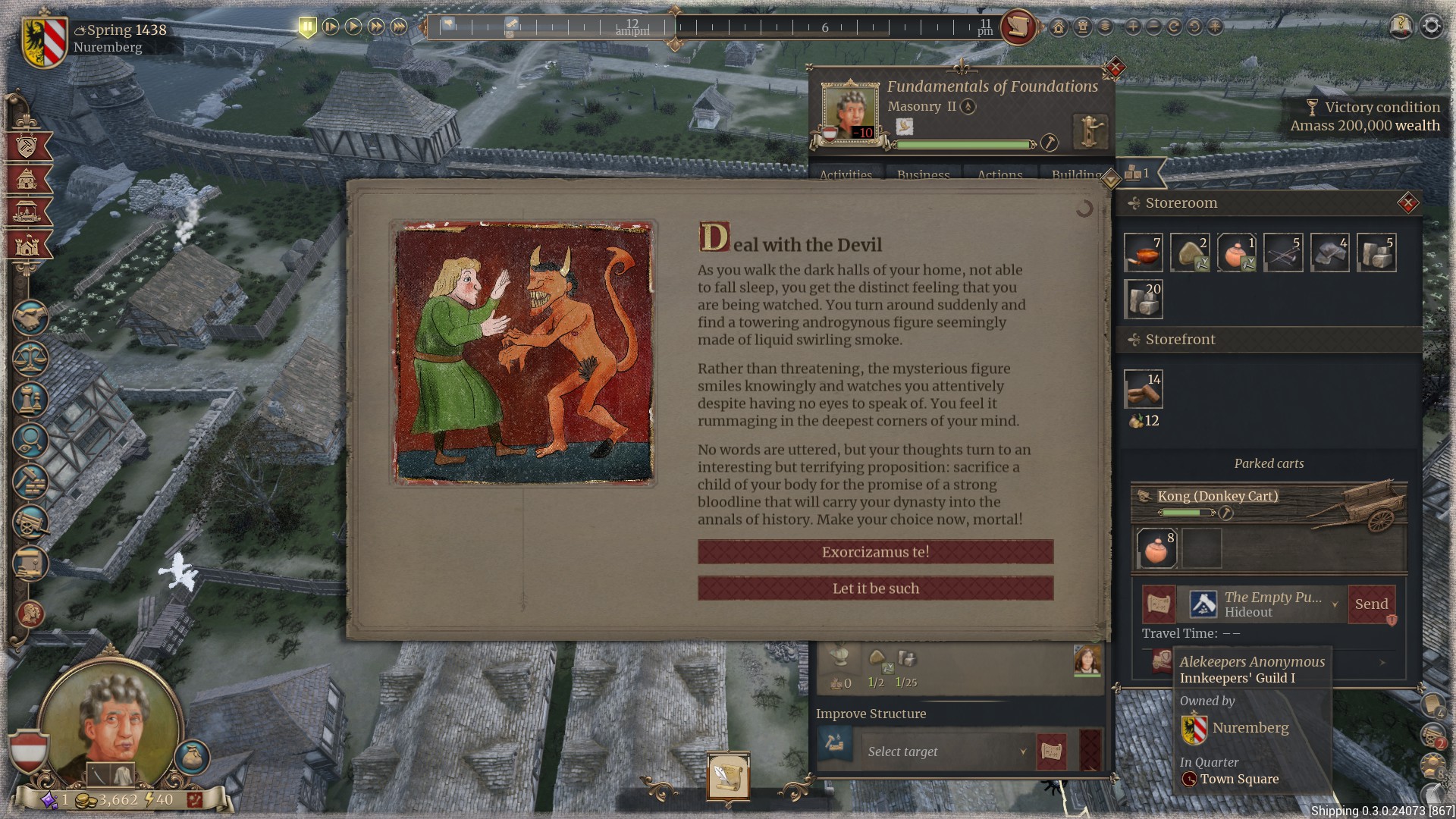
I could list dozens, but another saw me accosted by a supernatural being who offered a Faustian bargain: a strong family at the cost of one of my children. I didn’t hesitate. I had five. Europa 1410 made me do that and, in the sprawl of its complex web of micromanagement, made it seem so small, like I was coldly managing a resource, and yet so profound to my character’s legacy.
I live for moments like these. Too often video games – especially management simulators like this – devolve into asking us to press their buttons and make sure they work. They offer numbers and meters, only to degress into automation for the sake of productivity. Europa 1410 understands that productivity is a veneer: play – cosy or otherwise – is about creativity rather than simply getting things done.
Perhaps that’s down to resurrecting the spirit of a game from 2002: a sparser, more permissive development industry. Or maybe it’s just me because, as I noted in my preview of its demo, I am a sicko for a good menu. And, oh boy, does Europa 1410 give you menus.
Gone is some of the historical context I previously found so appealing. Though, that may be a quirk of how the game’s more expansive Early Access world spaces out in-game events. But the core of infinitesimal micromanagement remains the same. You’ll scroll menus over menus over menus, without always knowing where the pile begins and ends.
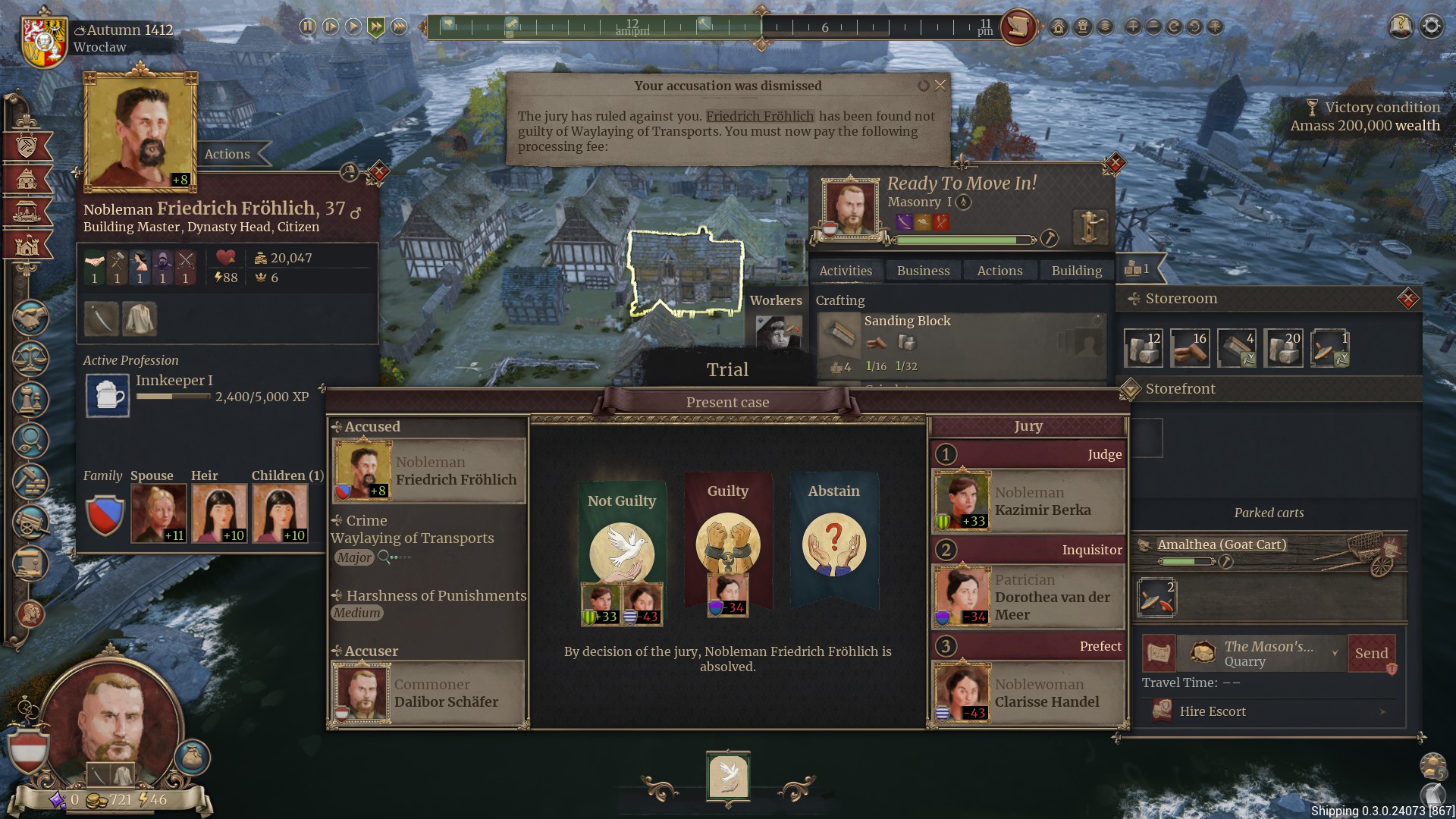
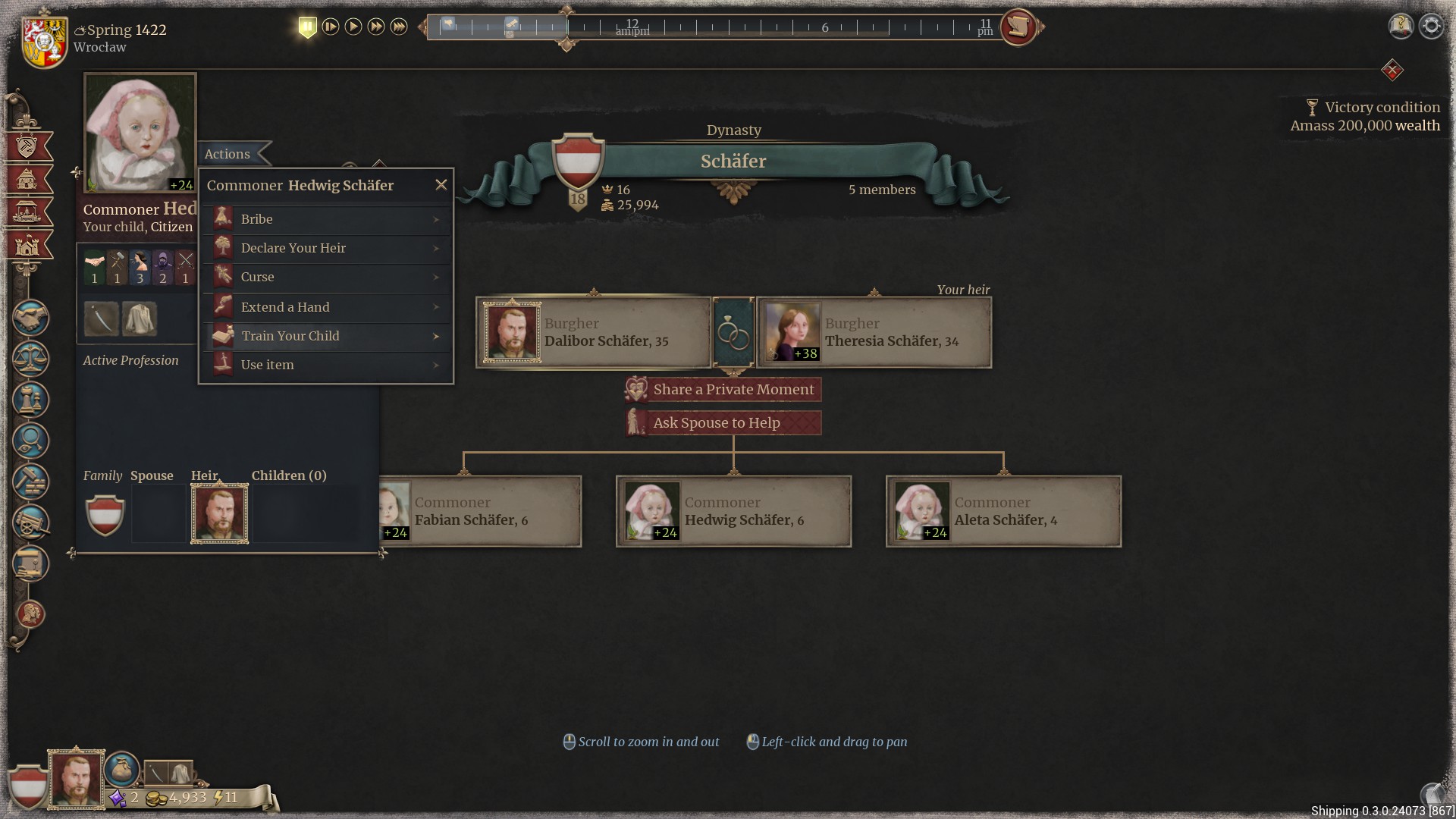
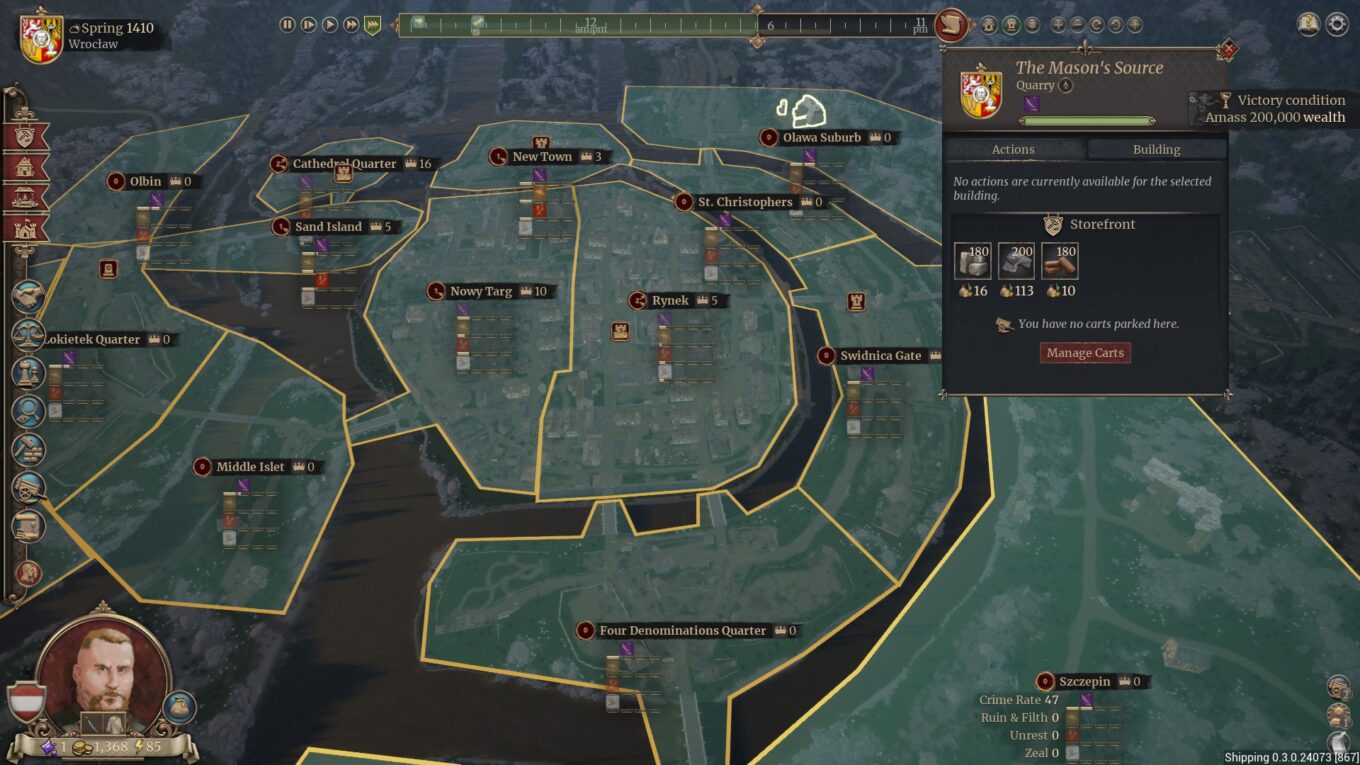
Menus with which you build and manage your financial dynasty and engage with local and national tumult in 15th century Bohemia. Alongside: you scheme, build influence in office, make a family, undermine your rivals, and lose it all through a series of bad decisions and unfortunately timed robberies. As teased in the demo, we now have access to more locales in which to thrive and flounder with Nuremberg, Graz, and Wrocław, joining Kuttenberg.
Those cities don’t offer much in terms of gameplay variance outside of rearranging municipal layouts. They’re more about providing different-sized maps for multiplayer. But it is a welcome change of scenery given how much time I spent within the confines of the game’s 20-turn demo. If, however, the prospect of haunting a hundred menus (probably more) is daunting, Europa 1410 also offers a tutorial contained in the smaller town of Herle.
Much like the demo, Europa 1410’s tutorial is a game in itself. All it changes is offering you pointed objectives and breathing room to pursue them. Not all those objectives are as scrutable as you might expect from a tutorial. For instance, gaining new titles is a major goal and yet I did not understand until launching into the main game that it was tied to wealth.
That said, part of that occasional illegibility is because the guardrails on Europa 1410’s tutorial are very low (and I do wonder whether this is not another interesting game mode in disguise). You can, if you’re so inclined, hang around and experience much of what Europa 1410 has to offer from this runway without taking off. I, however, am something of a tutorial ignorer – I missed Fallout 76’s tutorial missions until I had 100 hours in the game – and Europa 1410 is more than happy to let you work things out by yourself, aided by another menu of reference materials.
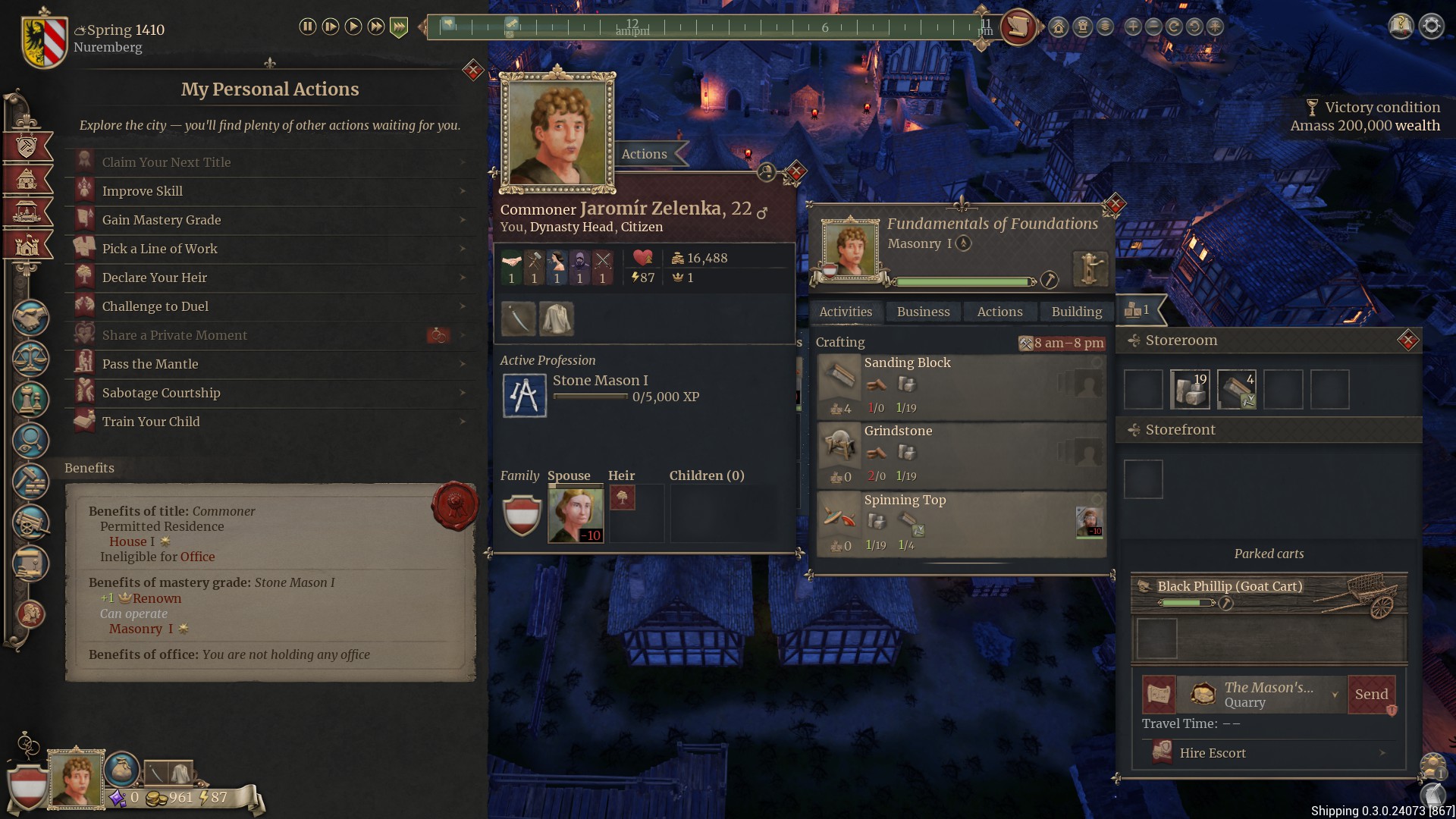
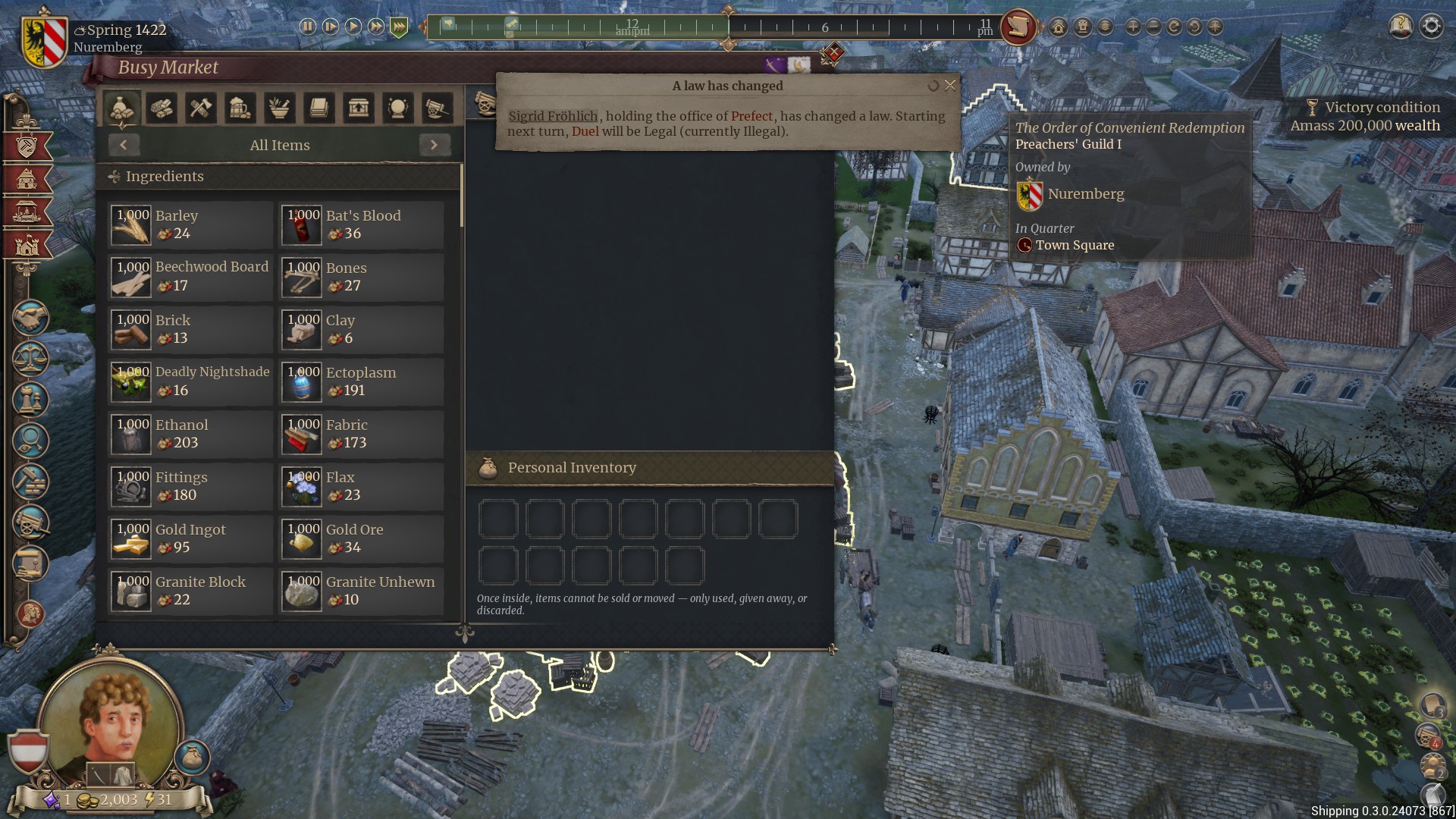
Whether I’d recommend that: I’m not sure. I delight in puzzling a world out but as I opened my first stonemasonry I recognised that more familiarity couldn’t hurt. I was quickly struggling with the mounting costs of maintaining my properties and while more balance may be needed in those costs, it was clear that the game’s systems had grown by an impressive degree since the demo.
Perhaps that’s somewhat true to life – I am of a generation that will never get to be homeowners, what do I know? But as my workers started hitting themselves with hammers every few minutes, video game frustration did replace the awe I felt at Europa 1410’s increasing scope. Especially as it grew clear that the “small repairs” I’d been dutifully conducting barely counted towards holding my workshop together (a small icon elsewhere actually responsible for repairs).
Effusive in my praise as I remain about Europa 1410, these were the moments that reminded me that this is, in fact, a video game. They’re less diegetic; less spontaneous. They are necessary for interaction, but in the current balance they’re foregrounded both by their sudden impact and, at times, absurd frequency. Granted, in the case of repairs I may have missed a tutorial tooltip – by not playing the tutorial all the way through. But I did encounter too many incidents that held me up.
Primarily, these were the game’s “random” events. Some remain delightful: offering choices such as whether to help a beggar who may influence later events or picking up a random bag of gold and being stabbed for the trouble. Others felt more punitive in their lack of balance.
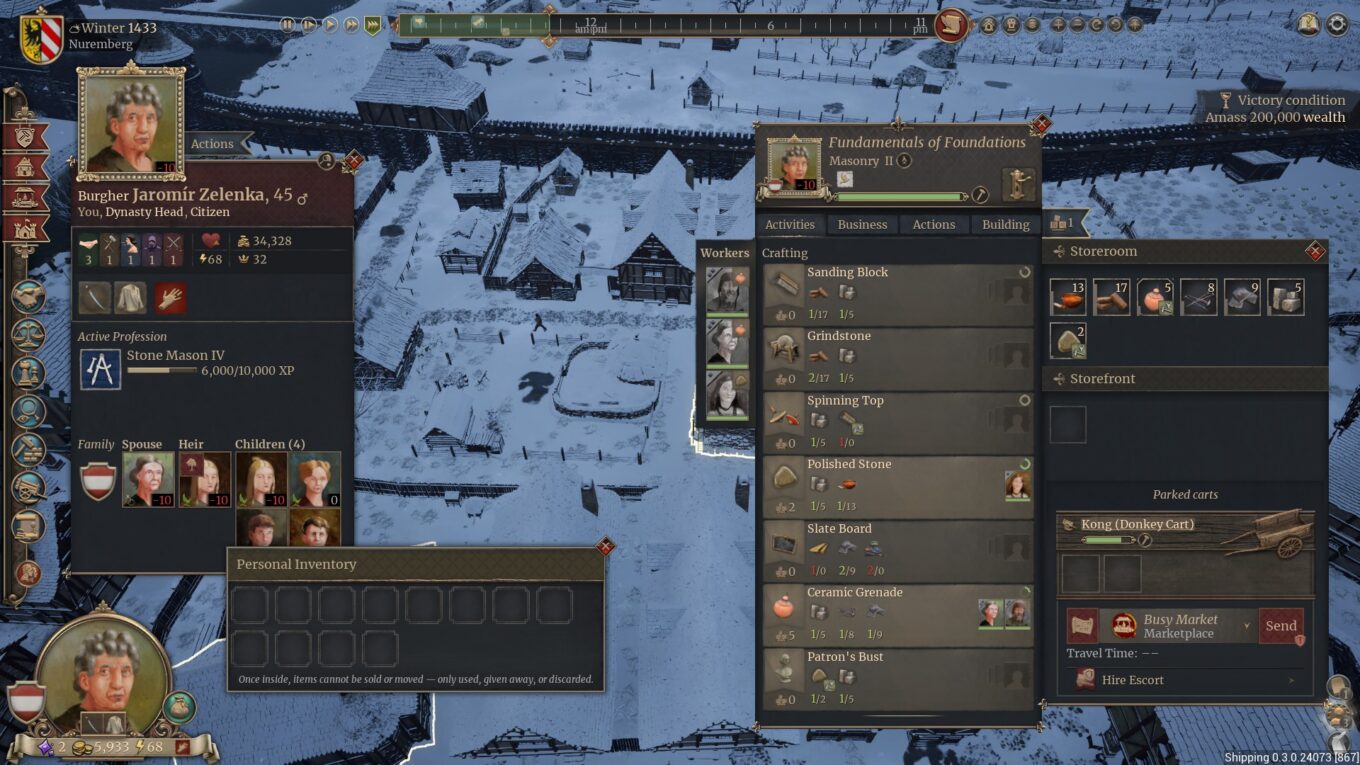
The major thrust of Europa 1410 is managing your finances and the chief way to progress through the early game is crafting and selling items within your trade. You can sell them in-store or you can load them into a cart and send them to market. Both attract brigands.
That’s not a problem. It adds to the living feeling of Europa 1410. What is an issue is that those robbers waylay your carts every single time you send it out laden. It’s predictable and takes away the spontaneity of Europa 1410 at its best.
The suggestion is you should hire an escort but no matter how strong that escort – and how much cash you expend on it – you always lose stock. Sure, without an escort you lose everything, but limiting that loss doesn’t limit the sense of wasted time. With a tweak to the chance of it happening that would be fine: it’s part of the job. As things stand, that it happens every time and with no way to prepare yourself – on one occasion, I was immediately waylaid the moment my escort’s 24-hour contract ran out – changes the event from something frictive to unpleasant.
Perhaps the real issue here is that these less balanced elements wrest control from you in a game which offers you a surprising, and welcome, amount of autonomy over your experience. The marvel of Europa 1410 is being able to find, even create, small surprising moments. In a game teeming with life, the predictable and unbalanced impact of its supposedly random events feels markedly robotic. Something more at home in simulation games of far less creativity and scope.
That may be solved as the game further refines and expands. There is balancing required in several spots that one might expect as the game travels through Early Access, including in performance which has suffered in Europa 1410’s growth: the end of turns, particularly, feels jittery.
How it grows otherwise, I’m not sure. More customisation is teased in the starting menu but it’s a testament to how much Europa 1410 already stuffs into its gameplay – I’ve rarely encountered a more complete-feeling Early Access title – that it’s hard to see how it branches further.
As it launches into Early Access however, it remains a complex, ambitious, and sprawling experience that demands to be learned and invested in. Or it is for me. It may be different for others and that’s what I love about it. In an industry of cold, often robotic, games, Europa 1410 exemplifies how video games – all media, really –can morph into something different for each person that engages with them. It also really does have so many menus it should be illegal.