Even if you never played Soul Reaver, you’ve probably seen its introduction. Between the pioneering CGI, mythopoetic themes of hubris and betrayal, and a score that oozes ceremonial menace, it’s become iconic. “What’s Legacy of Kain?” asks your friend. Ah, well. That’s easy. It’s about time travelling vampires and fate and destiny and monologues Kain’s actor likes to describe as “bad Shakespeare” (complimentary) and magic swords and block puzzles. “Yes, ok. But what’s Legacy Of Kain like?” they say. And that’s even easier. You just show them the Soul Reaver intro.
Or you might just want to play them Legacy Of Kain: Ascendance’s soundtrack, because it’s phenomenal. It doesn’t simply imitate or remix Soul Reaver theme Ozar Midrashim’s motifs, but picks them apart; assembles a palette from that assonant clash of industrial and classical sounds and moods, and paints a modern Nosgoth that feels authentic to its past. As new vampire character Elaleth, you’ll glide on wings through frozen battlefields, carving a bloody path through Sarafan mobs and uttering grisly, cocky one-liners as that soundtrack swells and chugs and booms like a billion wailing purgatorial bastards. In moments like this, Ascendance doesn’t merely feel like it understands the Legacy of Kain series in some detached, fandom wiki sense – it feels like it belongs to it.
The game opens with Elaleth cast through a portal to a wintery Nosgoth in an age where human civilisation still thrived. You quickly learn she’s been cursed to endlessly drift through time by the time streamer himself, Moebius. Elaleth wears an amulet through which she communicates with a man named Ky’set’syk – a hooded, magician-like figure with one human eye and another that burns with bright green fire. He’s working with Elaleth to contain Moebius’s curse long enough for her to get the revenge she seeks on her Sarafan brother. Off you pop, then.
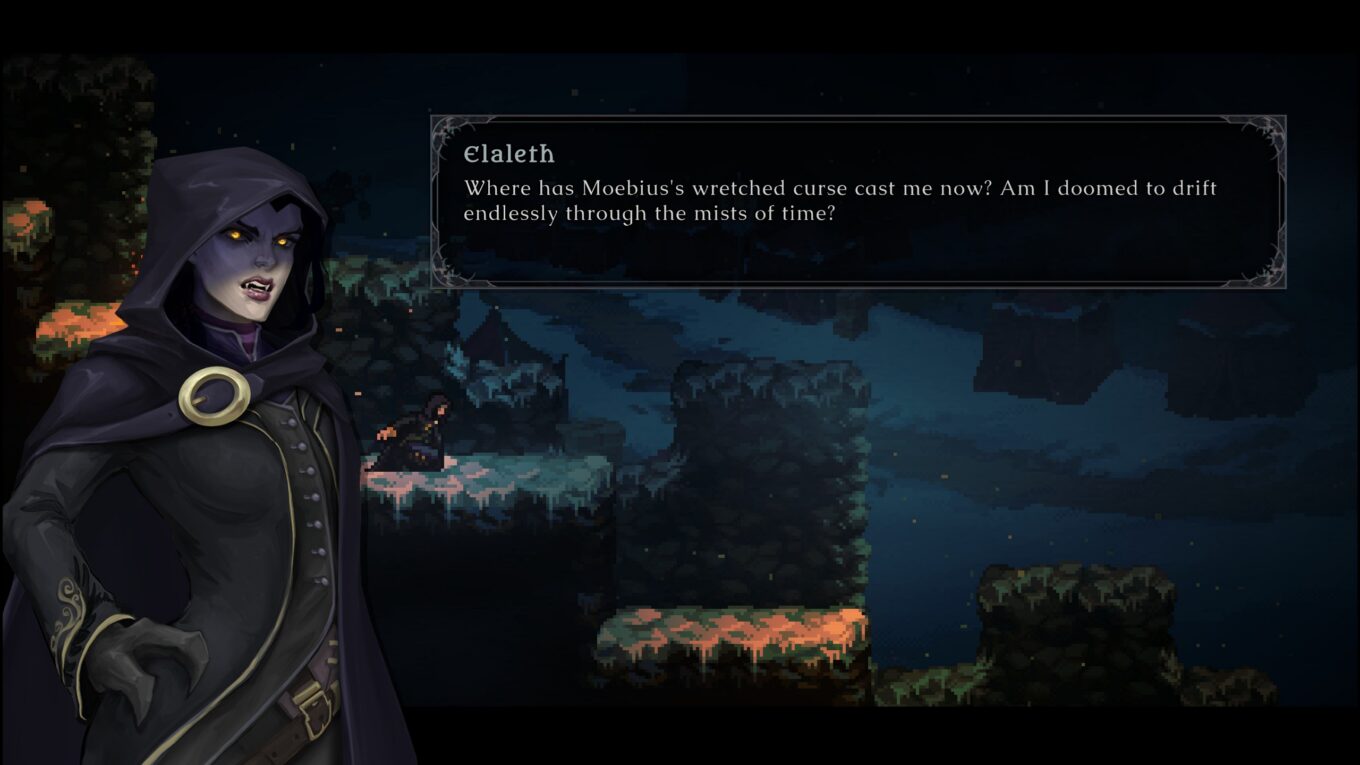
You’ll play as Elaleth the most, with diversions as Raziel, and a few sequences as Kain. Fights are based around slashes, dodges, and a parry you can follow up with a chunky swipe. Elaleth also gets a pair of wings for navigation and a flying dropkick, Raziel gets ye olde incendiary grenades, and Kain gets to use the Soul Reaver to kill anyone who so much as breathes in his direction with a few swipes. Combat is functional, though not especially thrilling, mainly filling the role it’s always had in this series: something to do between story beats.
Between its selection of slightly irritating enemies and slightly more irritating flame traps, playing Ascendance feels closest to a 2D take on the original Blood Omen. I’d love to see this interpretation expanded into full-on metroidvania in the future to fully capture the exploration that’s always felt integral to the series, but Ascendance’s presentation already punches above its weight for such a modest and tentative project.
Whichever direction Ascendance ended up going in, it would have invariably found itself stuck in the unenviable position of trying to recapture the feel of Amy Hennig’s writing for the original tetralogy (not you, Blood Omen 2). Having Kain, Raziel, Moebius and Ariel’s actors return picks up some slack, but not all of it. Most successful is Kain. His essence is fully captured in the writing (with some caveats I’ll touch on shortly), and Simon Templeman is as haughty and Shakespearean as ever. Michael Bell’s performance as Raziel sounds like what it is – a talented 87 year old veteran doing an impression of a role he hasn’t reprised for twenty years. Moebius and Ariel are spot on, though their dialogue naturally lacks some of the poetry in Hennig’s prose.
Less successful are the lore snippets found on hidden scrolls, which seem to confuse Hennig’s talent for conveying complicated ideas in florid but sharp, memorable writing with archaic clunkiness. “Certain entries arise before the moments they recount, drawn forth by unseen eddies that compel recurrence”. It can all get a bit, well, “compelled un-reluctantly to make a concoction of chocolate”
There are also some retcons, mostly new action scenes spliced into established events to add gameplay variety. These scenes are largely successful, but they’re not the only example of the thorny ground Ascendance treads, attempting a new tale set between established events that doesn’t bring the series’ timeline forward in any real sense.
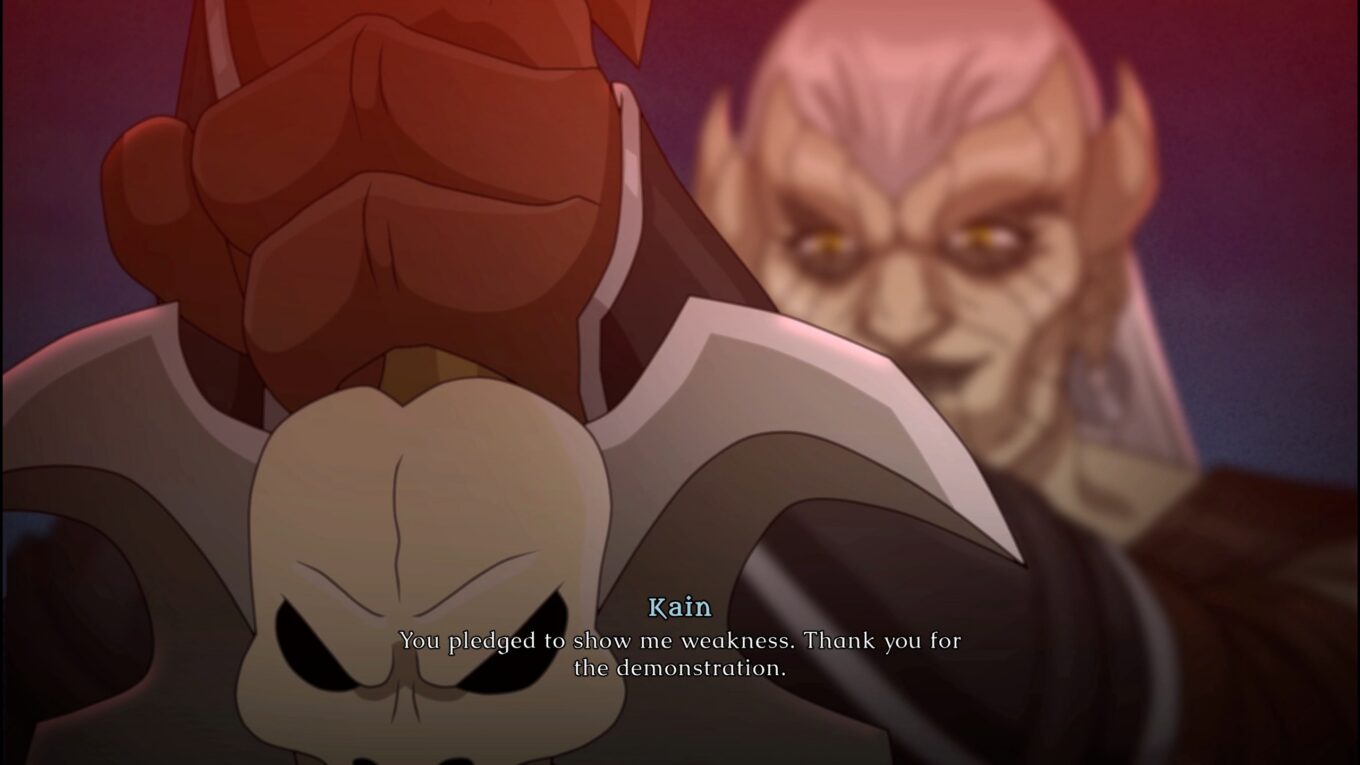
But I’ve now reached the point where I can’t really talk about the game effectively without drawing on some specific examples. So, spoilers from this point onward. If you don’t fancy reading on, I finished Ascendance in one sitting of about four or five hours, and my TLDR here is that I’m about equal parts excited and concerned about the series’ future. Some parts of Ascendance show an incredibly astute understanding of Legacy of Kain’s world, atmosphere, characters; others are baffling in how clumsy they are. The music is, once again, absolutely peak. Have fun/I’m sorry that happened to you.
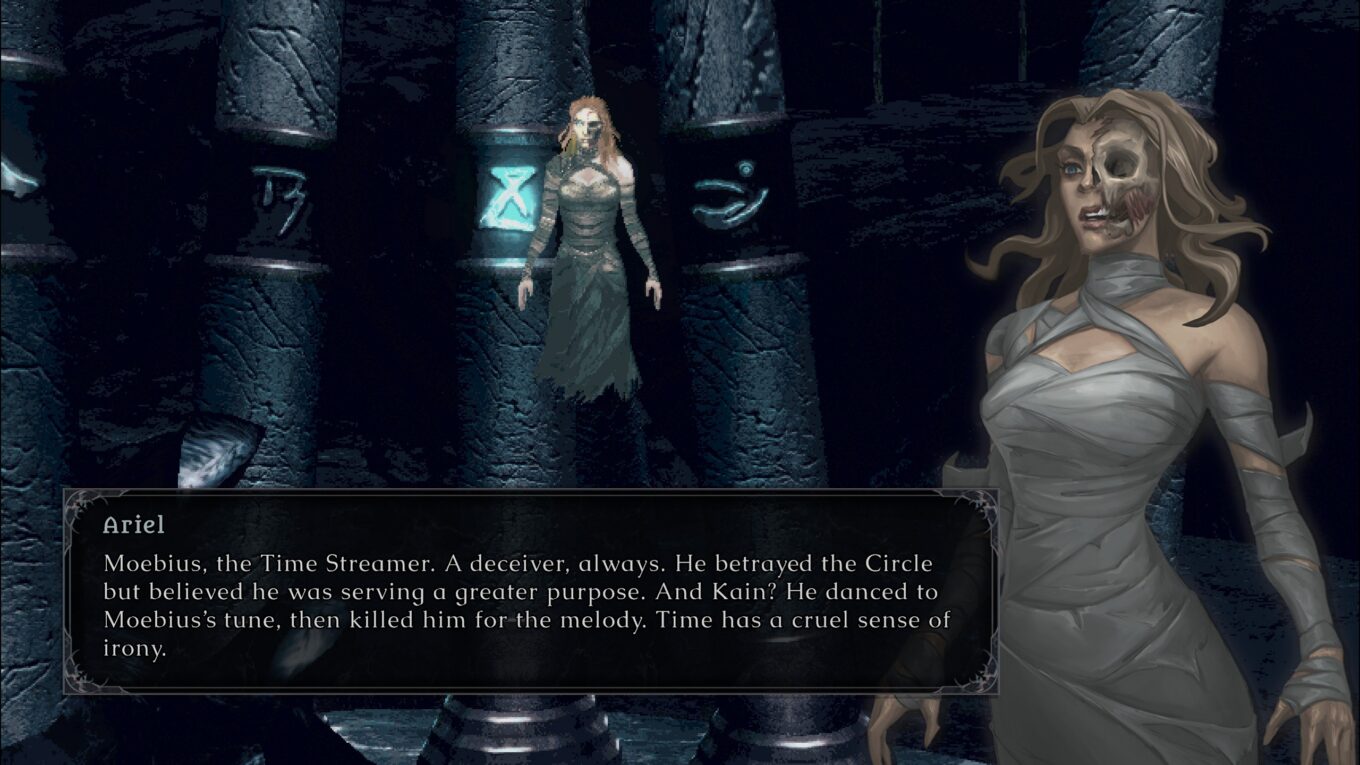
There’s another scene in Soul Reaver, not quite as effective as that intro, but pretty close. About half way through the game, wraith Raziel chances upon a hidden tomb that once contained the remains of a vampire-hunting order of zealot knights named the Sarafan. He reads the names of his vampiric brothers etched upon the tombs, then reads his own. It’s a moment of powerful, painful irony. In an instant, everything Raziel has been taught about the brutality of the Sarafan and the moral supremacy of his master’s empire is called into question. Raziel’s flesh has already been stripped away, and now his sense of self is shattered.
Anyway, Ascendance decides that Raziel was already told all that by Elaleth, fails to account for his surprise in Soul Reaver with even a cursory bit of lampshading, then does absolutely nothing with it. It’s not even treated as an especially noteworthy revelation, as if the writers simply forgot Soul Reaver’s crypt scene completely. I’d bring up that lovely Kain quote about how history abhors a paradox, but that wording feels far too grand for something this sloppy.
There’s a fairly well-documented phenomena with prequel films where they’ll provide answers to questions no-one was asking in the first place. The Star Wars film Solo, for example, is lousy with this stuff: here’s how Han got his second name. Here’s how he got his gun. I’m not sure if this has a name, but I think of them as ‘reveals with revelation’. It’s a consequence, I think, of writing that wants to feel significant and relevant but doesn’t have the option of actually changing much, so relies on providing inconsequential connections to already established events.
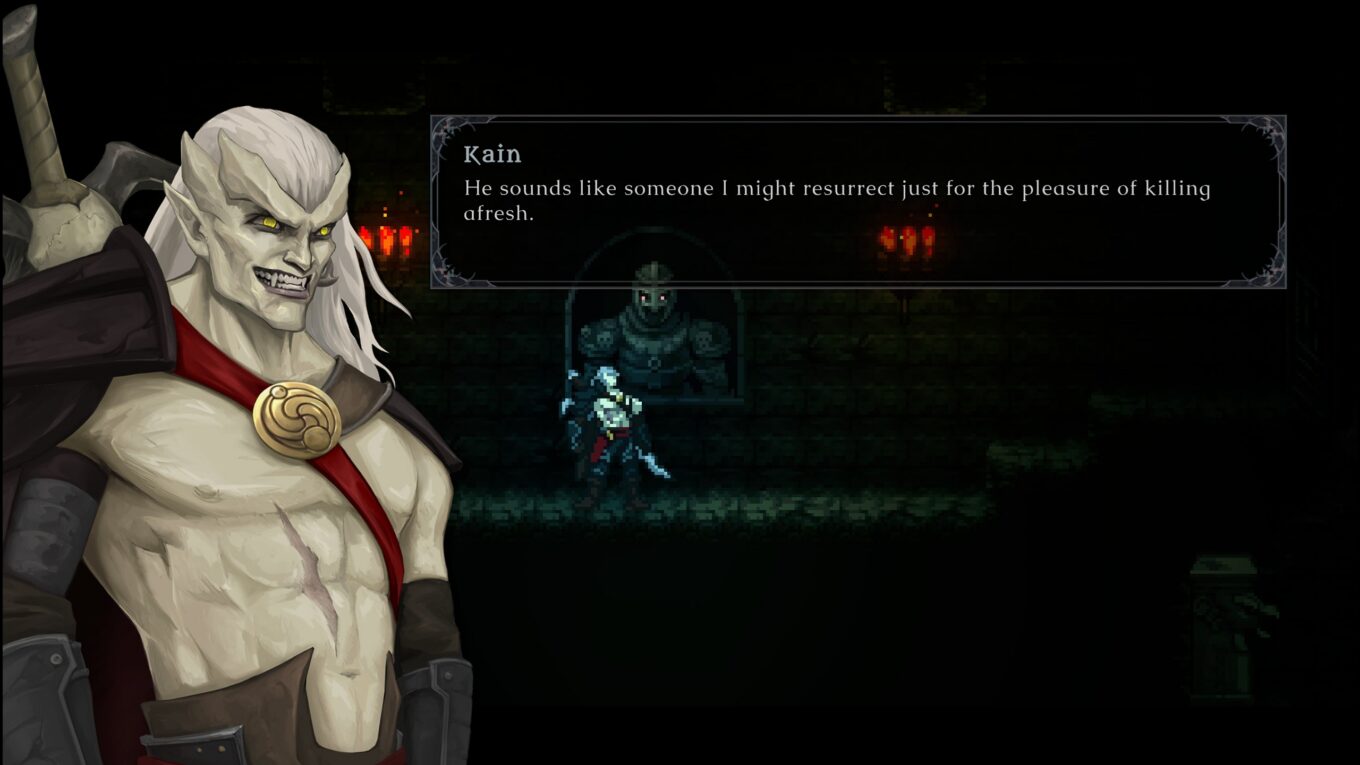
Remember when Kain resurrected the Sarafan? That was Elaleth’s idea. Raziel’s wings? He grew them because of something Elaleth did. Raziel showing Kain those wings? Elaleth convinced to him to do it. It’s not that these reveals don’t makes sense in context, but why gild the lily? Adding yet another shadowy puppeteer to the background of a tale already famously over-reliant on them feels like a cheap ploy to sell a new character’s significance, and Elaleth fits well enough in this saga without it. It muddies the trajectory of other characters in the process, too. There’s real whiplash watching Kain revert from the weary wisdom of Defiance-era monologues to easily manipulated callow arrogance as soon as Elaleth decides she needs him to do something.
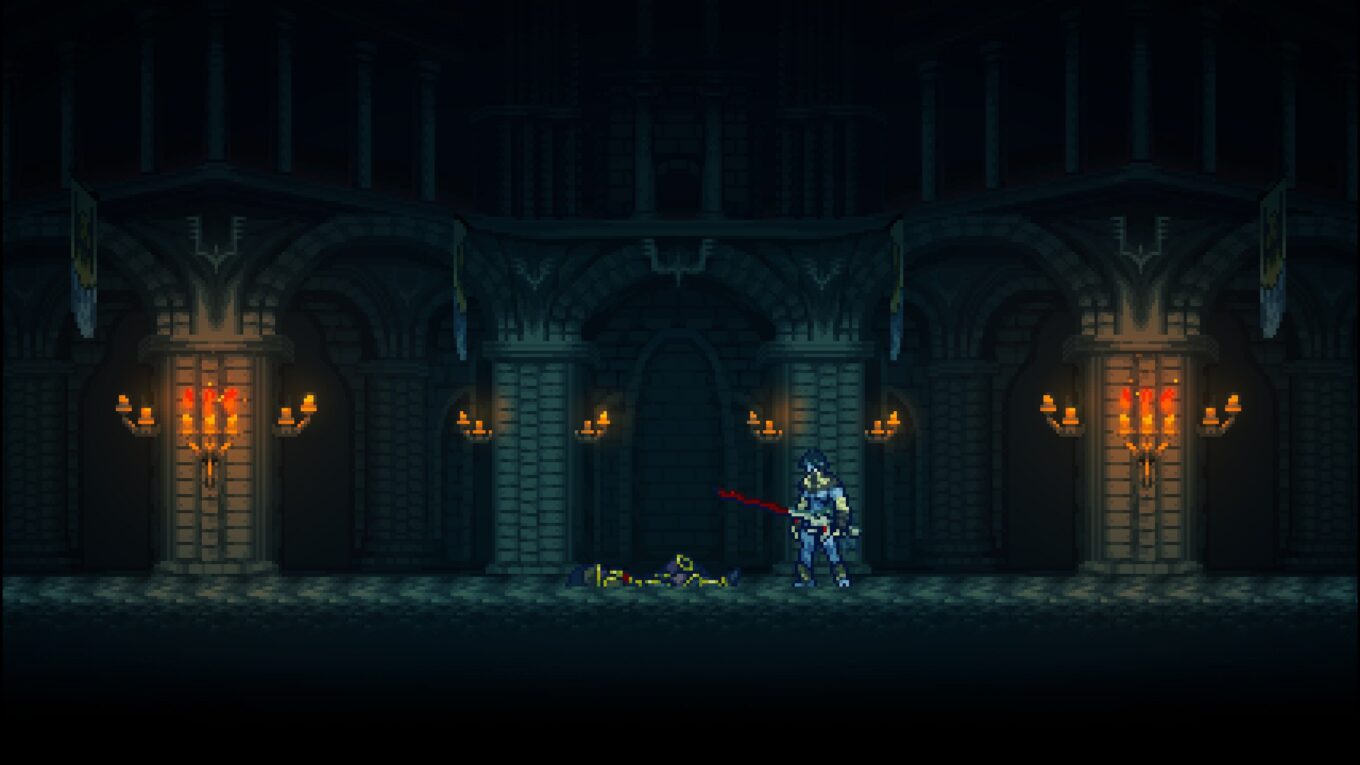
Right. There’s a level shortly after Raziel gets his wings that sees him flying across the crimson wasteland that is Nosgoth under Kain’s rule, filled with pride, eager to show his surrogate father his new toys. It’s an incredibly poignant scene, knowing the tragedy he’s about the suffer. The sort of scene that was worth waiting twenty years for. Then, after Kain tears Raziel’s wings from his back, Ascendance decides he needs to have a quick punch-up with all his brothers before getting into the abyss, as if what Soul Reaver’s introduction really needed was a hype boss fight. This is all about twenty minutes of play, all told, but it’s the perfect illustration of Ascendance as a whole. It’s fitting, I suppose, for the first new Legacy Of Kain game in two decades to leave me just as uncertain about the series’ future as I was before playing it.