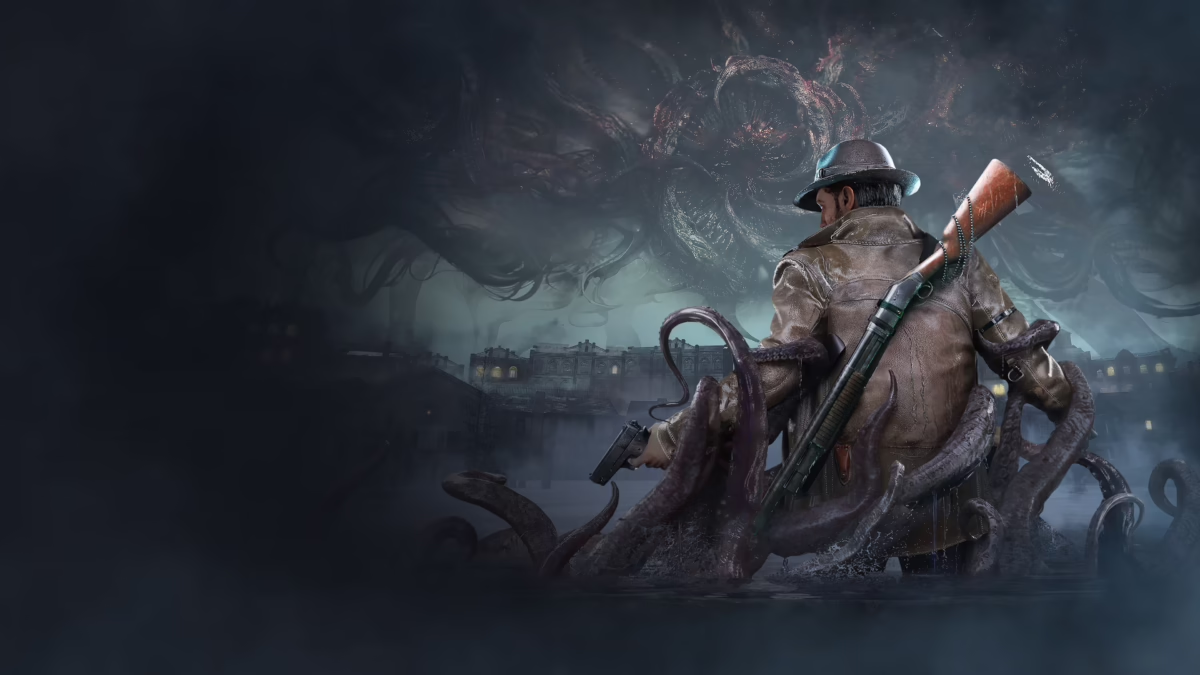
The first Mortal Shell came out at an intriguing time for soulslikes. It introduced a novel twist to the genre, taking somewhat of a cue from Sekiro: Shadows Die Twice. Basically, once your character dies, it’s only their so-called shell that gets killed. The husk-looking creature underneath the armor can continue to fight on, basically gaining a second wind. Yet, everything else surrounding the game lacked novelty and a strong personality to stand out among the increasingly crowded space of studios taking the genre for a spin.
Now, six years later (yes, it’s been that long), the genre has been through a series of transformations. The likes of Lies of P made a long lasting impact, raising the bar for everybody else, and games like Lords of the Fallen, while far from pushing the standard, also introduced new ideas and then centered the experiences around them. And of course, FromSoftware released Elden Ring, completely altering our appreciation of open-world games and what’s expected of them moving forward.
Mortal Shell II brings back its novel mechanic and takes it to an absurd level. The same can be said about, well, pretty much everything else, from visual fidelity to the number of mechanics intersecting with each other and how it tackles its overall structure, opening the doors to an open-world game. It’s a bold amalgamation of ideas, but one that is missing cohesion and a strong backbone.
Your adventure starts with an introduction to the Harbinger. A mysterious character once descended upon the land you inhabit and was greeted by extreme devotion, with her colossal body being turned into temples and towers. Simultaneously, she left behind ovals, which are strange-looking eggs that have been thought lost. That’s where you come in, tasked with scouring an expansive map in order to retrieve these artifacts.
The Harbinger alone can only withstand so much damage, which is where the shells come in. There’s a total of eight in the game, and most of them need to be manually found in the open world. Depending on which one you’re using, Mortal Shell II can feel like a different game altogether. As it turns out, each shell has different abilities – anything from a grappling hook of sorts that pulls you toward enemies and electrocutes them to a stealth-based attack that impacts an enemy’s stance so you can deplete the rest faster and do a special move against them, similar to breaking someone’s posture in Sekiro.
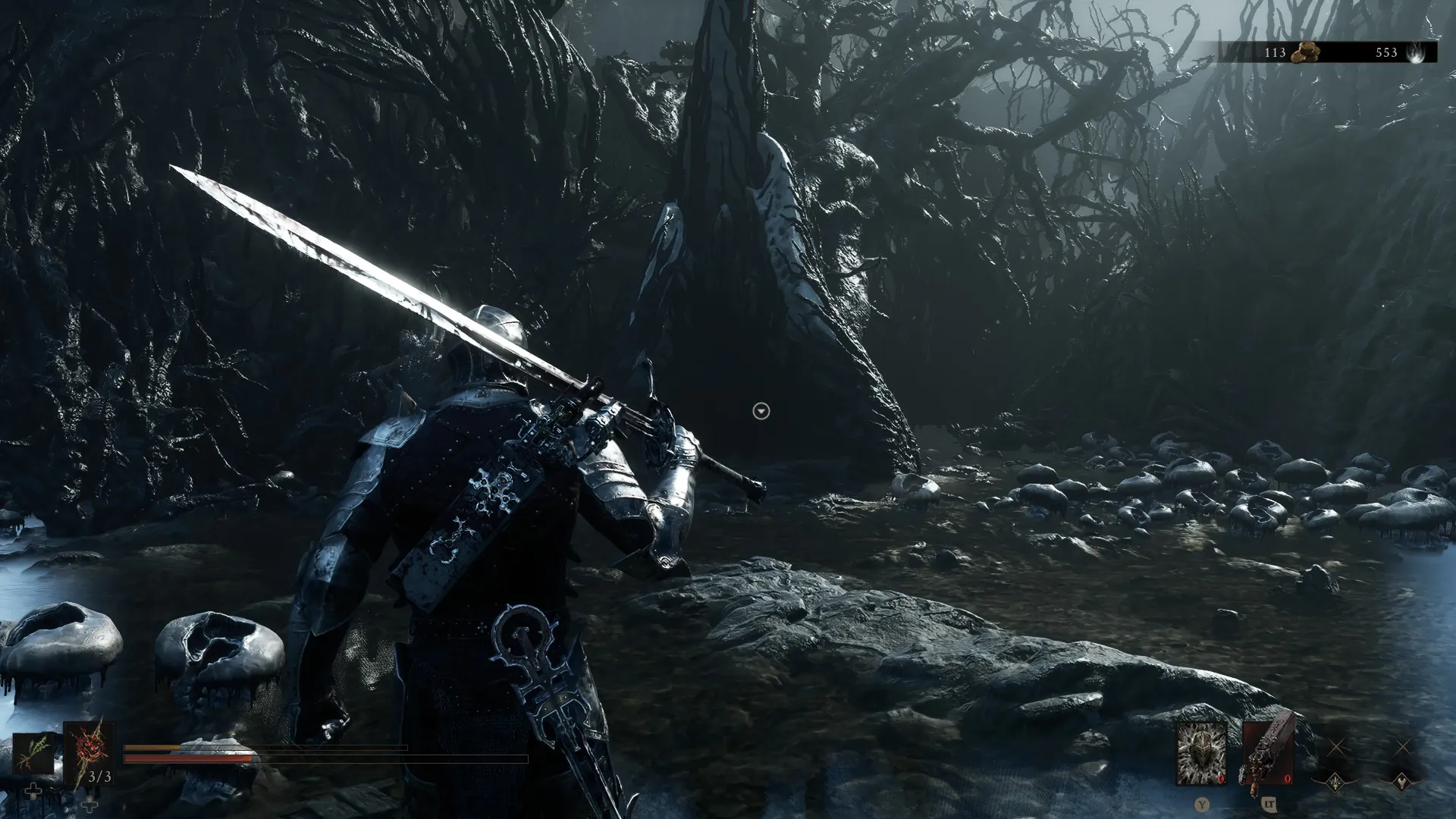
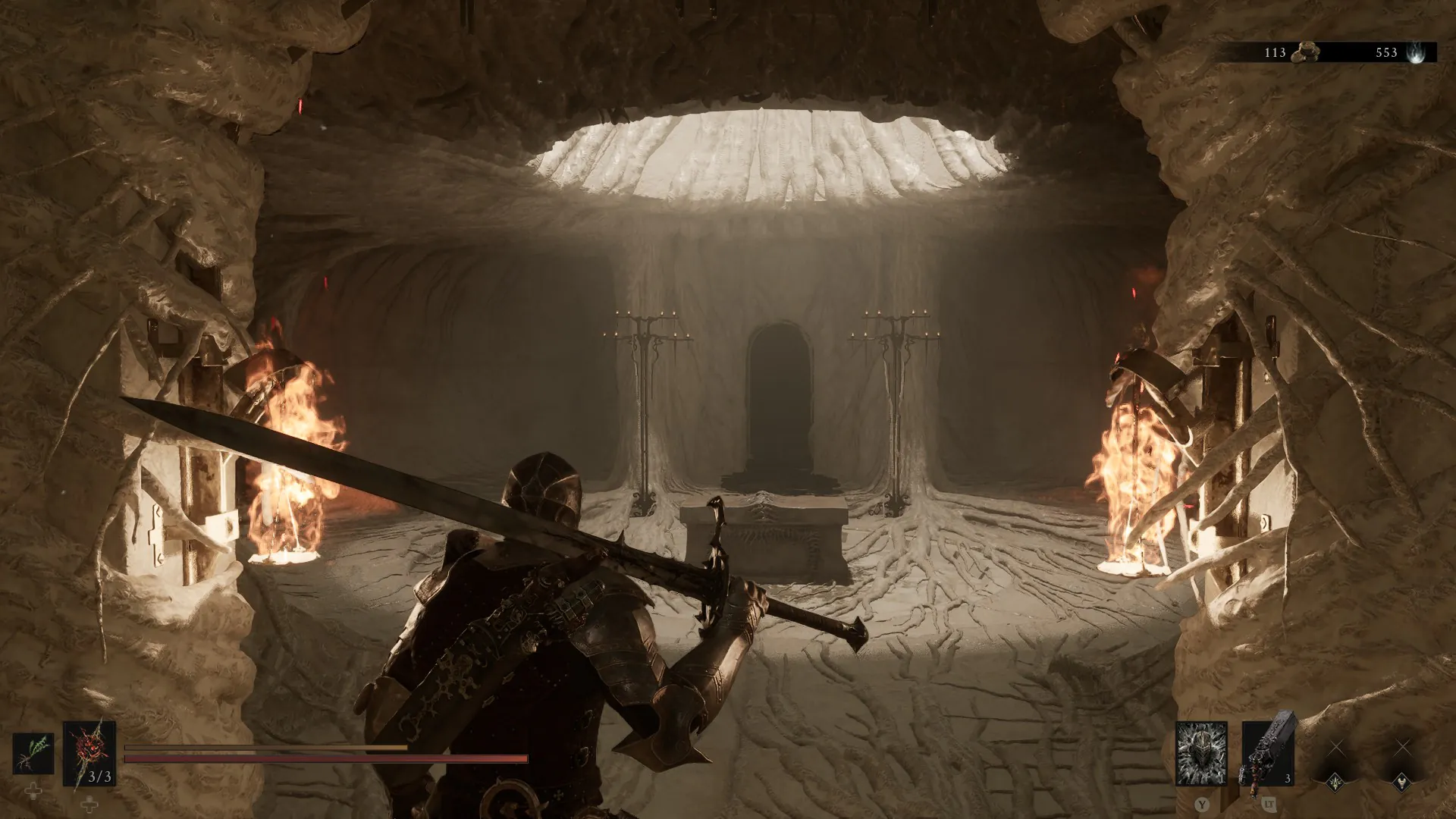
Moreover, each shell is a character in their own right. They all have skill trees where you can upgrade their innate capabilities, and by meeting certain thresholds, you also gain access to lost memories of their past lives, which often intersect with characters you encounter in the story. It’s an ambitious proposition, considering that the Harbinger can also be leveled up, and you can upgrade weapons, and also have access to a large assortment of items all meant to help you on your journey and affect the way you approach combat. During the first few hours, getting overwhelmed was part of the experience.
The striking presentation helped to pave the way. As far as soulslikes go, Mortal Shell II boasts an ambitious degree of fidelity. It also has voice acting for almost all interactions, and quite strong cutscenes to boot. Yet, my first steps into it were far from perfect. I got stuck in the very first fight, with tutorial messages still being on screen, which already soured the experience. Sure, bugs in a pre-release build can always happen, but I kept encountering bumps along the road that interrupted any semblance of immersion and momentum during my travels. The camera being stuck facing a wall because an enemy cornered me against it while I had lock-on activated, making it so I couldn’t see anything and wasn’t sure when to dodge or where to move, enemies falling down bridges and cliffs before I could get close to them, and inconsistency in parry timing all plagued the experience.
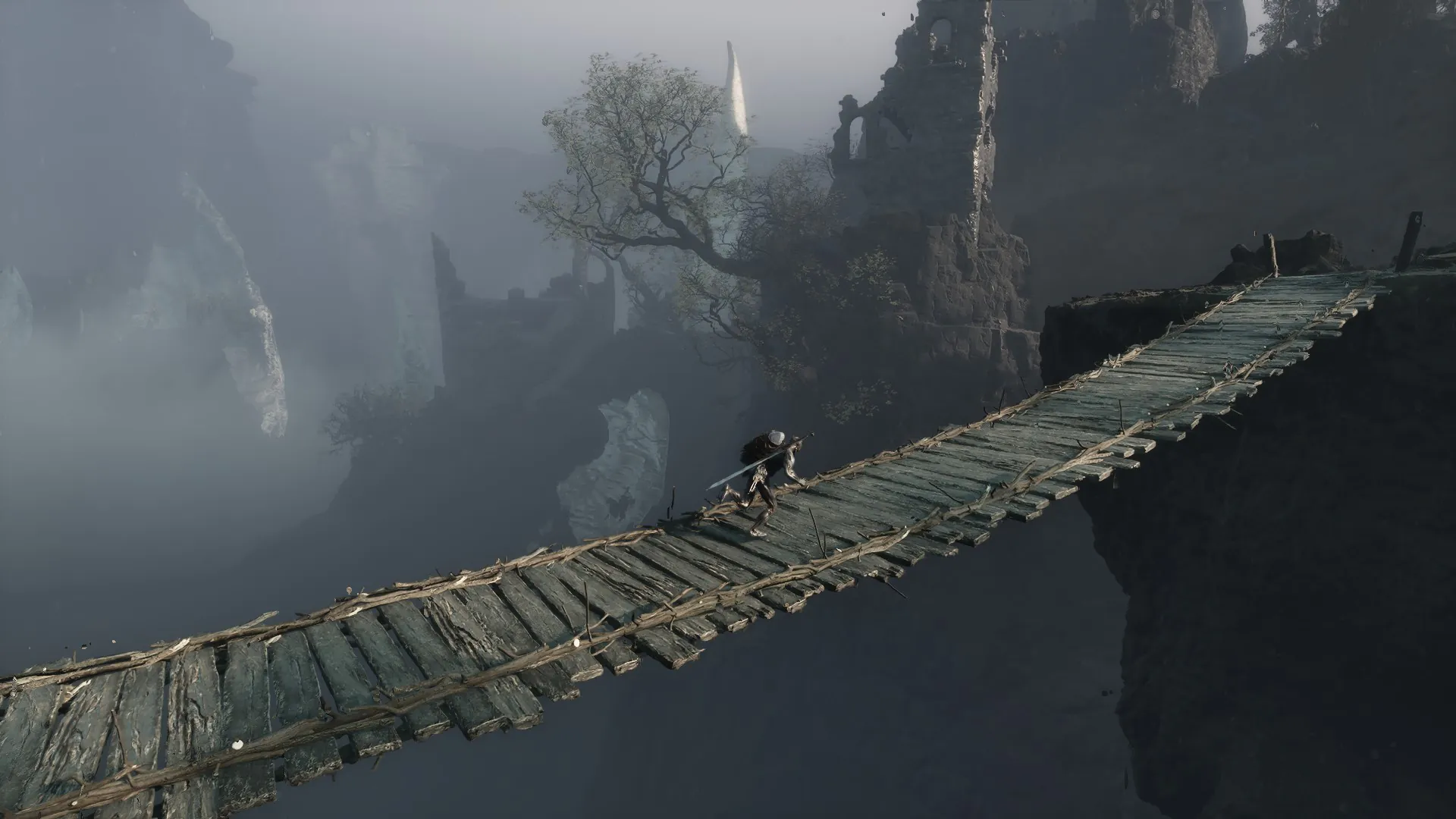
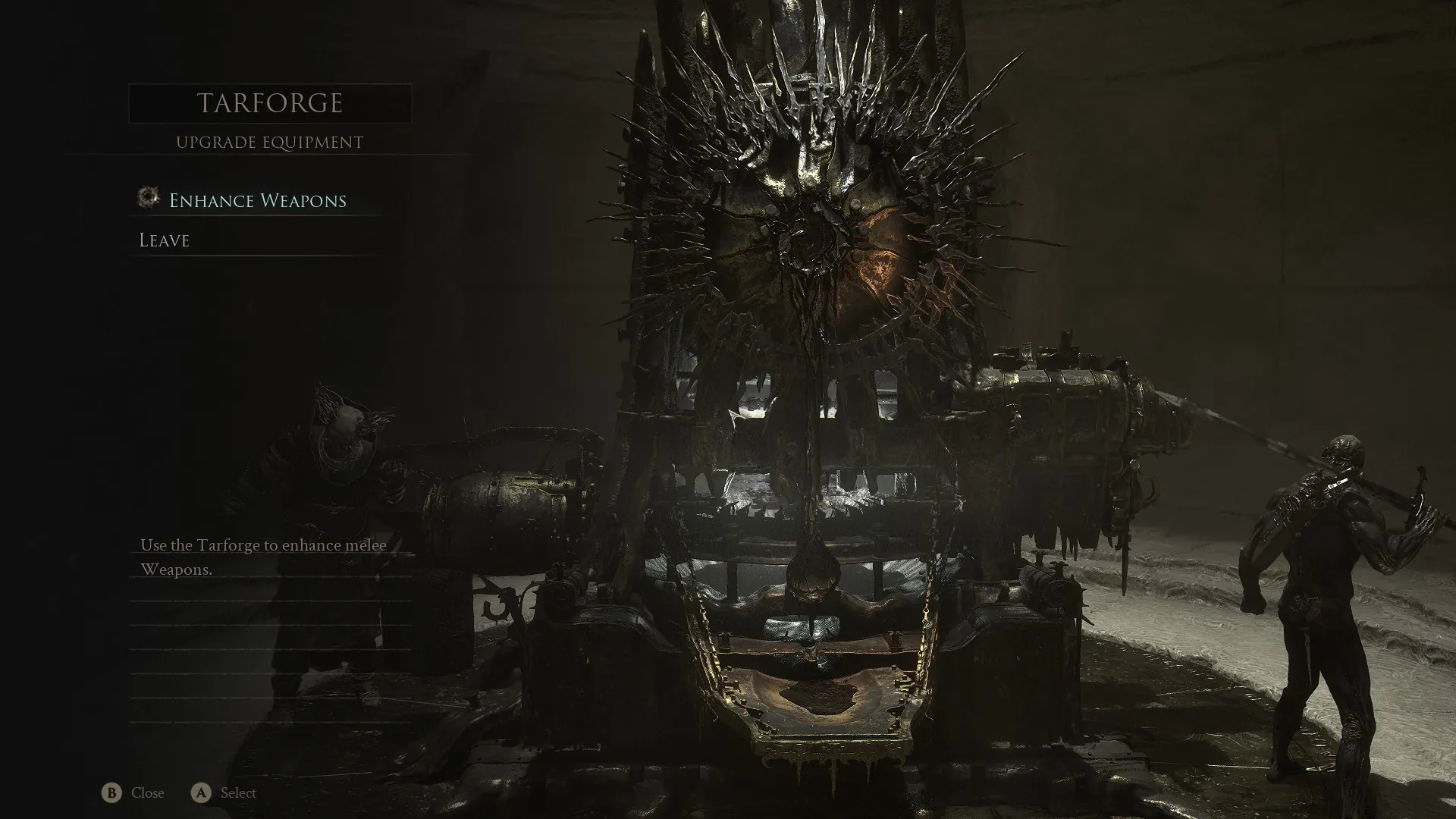
My frustrations also extend to clear design decisions that are constantly conflicting. The open-world structure should prove to be an incentive for you to explore as much as you can, and to opt for different routes in case some of the challenges you’re encountering feel too hard to overcome. This is what made Elden Ring so enticing – whether you were stuck on a boss or a specific area, you could simply turn back, go level up, and return later stronger. This largely applies to Mortal Shell II, but balance seems to be all over the place. Sometimes there’s simply too much ground between one beacon and the next (the game’s equivalent to bonfires) to rest and recover your health, or too many enemies being thrown at you at once. Some paths present enemies that will kill you in one hit, either disabling your shell or defeating the Harbinger in one swift movement, and there’s no rhyme or reason about why this happens. You can only tell by throwing yourself into the fray once, and chances are that you’ll have to make a run for it to grab the game’s souls equivalent currency afterward while doing the utmost to avoid getting killed again.
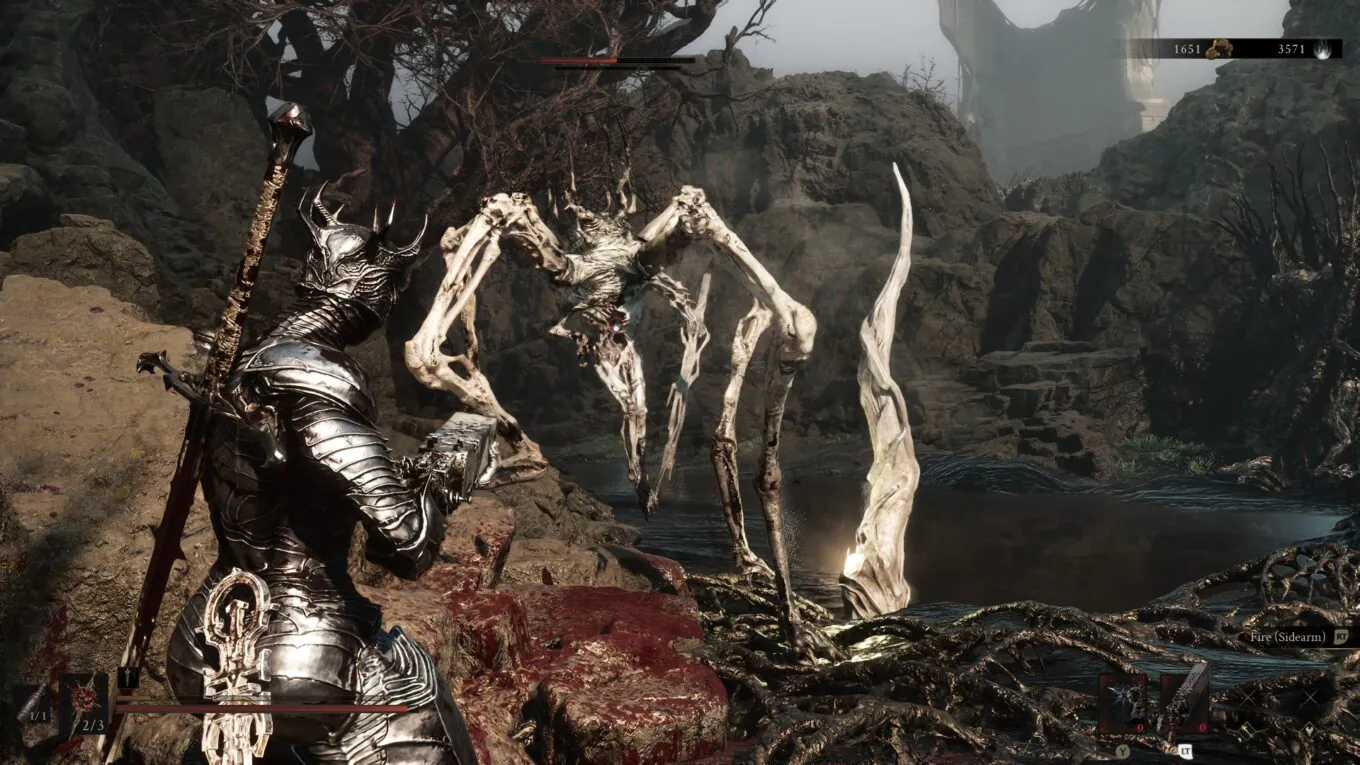
In most cases, you can beeline to the next beacon by literally swerving all enemies in your way, but this should be the complete opposite of what a soulslike should encourage. To make matters worse, you can tell that the development team attempted to add the usual traps and moments where you’re taken by surprise by attacks you couldn’t possibly predict due to coming from outside your line of sight. Yet, these are presented in an egregious way. I can’t tell you how many bear and wire traps I had to endure. The problem is that they never felt like a “gotcha” moment that, while annoying, made for a memorable moment. They were simply obtrusive for the sake of it.
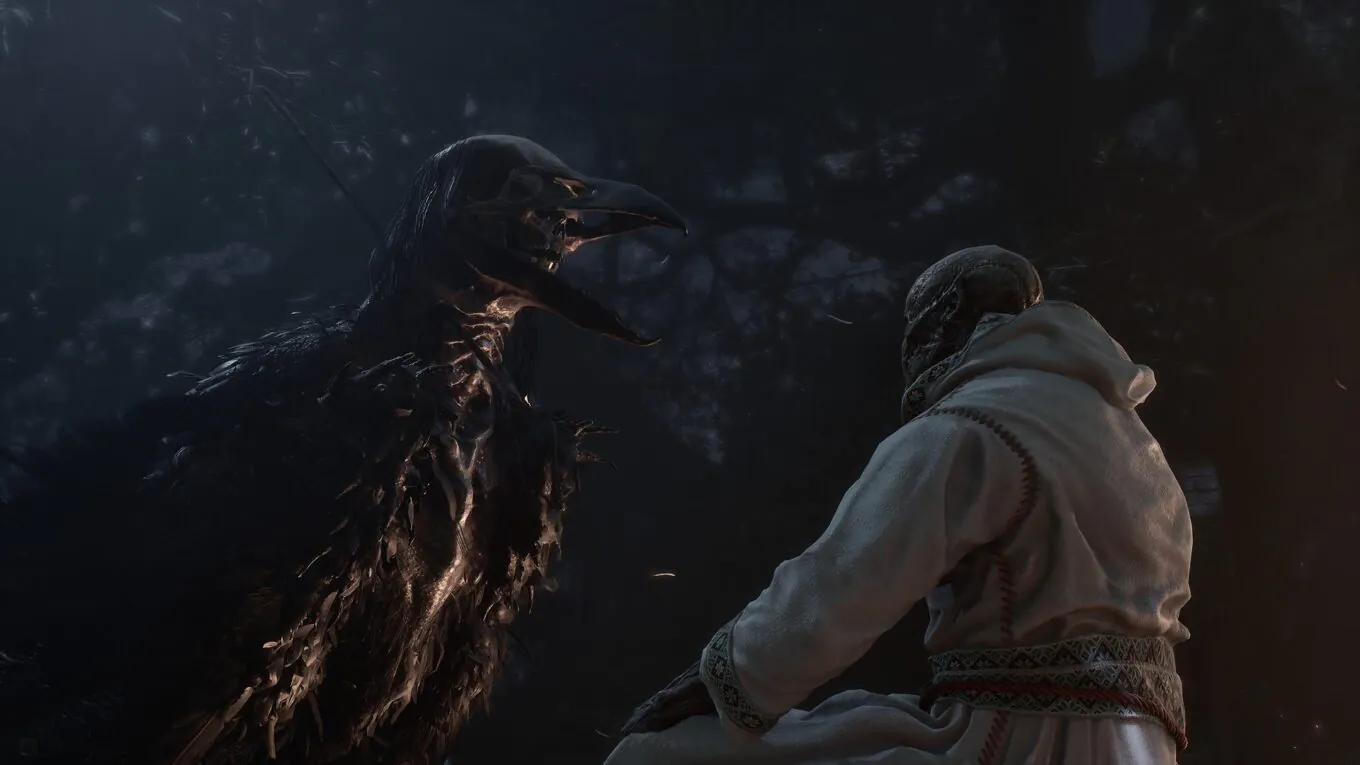
Then there’s the concept of the open-world as a whole. Unsurprisingly, you don’t get access to the whole map from the get-go. The way it works is, from the main hub at the center of the main region, you get to select one of your already-discovered beacons and jump to it. From there, you must find a companion crow that gives you excerpts of the map, in a similar fashion to Cornifer in Hollow Knight. Even if you’re actively exploring a part of the map that is under the fog of war, you won’t clear said fog without getting the corresponding map first. This is neat in concept, especially since one of the shopkeepers in the hub has maps up for sale that pinpoint general locations of weapons, serving as guides to incentivize exploration into uncharted territory. Yet, the world feels unnecessarily large at times.
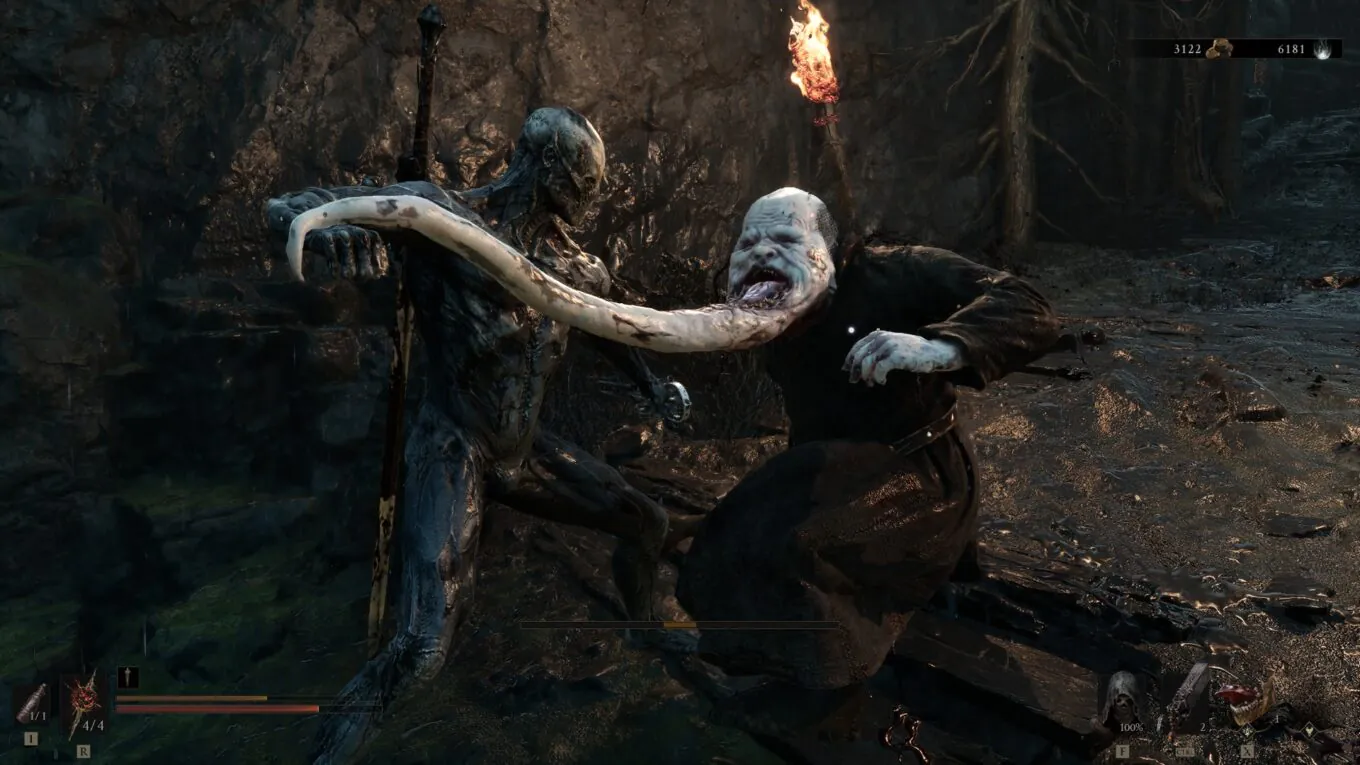
You’ll also encounter repeating enemies. I would never expect a game studio to have unique enemies every five steps, and asset flip is part of the charm of soulslikes as a whole. Yet, encountering the same enemy variants, or different enemies with similar attack sets, made them seem like more of a reskin, as well as minibosses becoming regular foes almost immediately after beating them felt like visible cracks in the overall open-world concept. The sheer number of areas to pass through, as well as an array of optional dungeons seemingly everywhere, proved exhausting very fast. When you add in an unnecessary number of enemies and traps in between each checkpoint, it all feels a bit too much all the time.
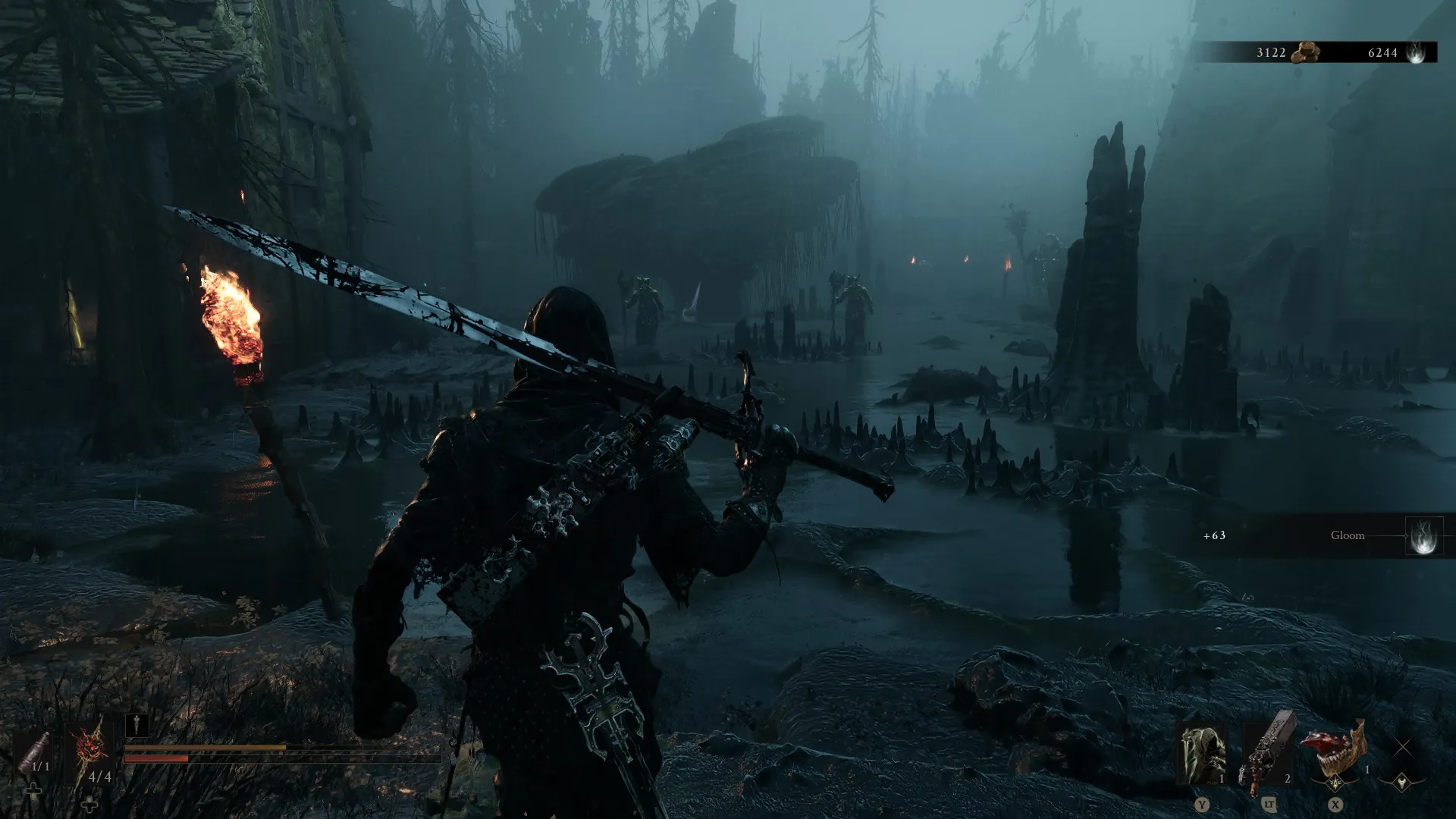
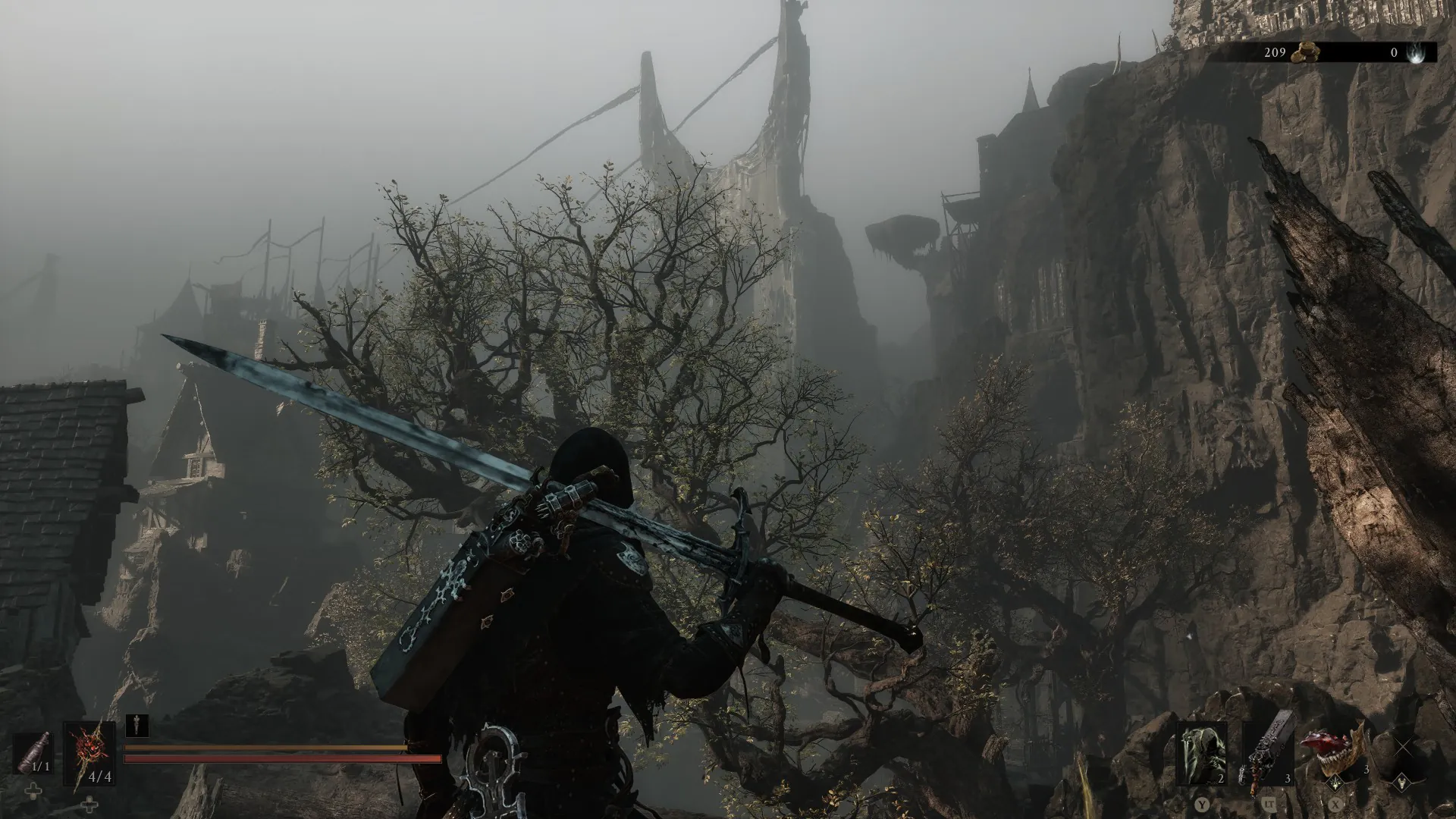
Perhaps there is a case to be made that the constant challenge in Mortal Shell II is also by design, encouraging you to respond with violence at every turn. At times, fights can be quite satisfying, and enemy designs do show strong personality that can be pleasantly surprising. Yet, the moments before and after carry so much frustration, and a needless amount of baggage, that reaching the parts that make the experience stand out is an arduous endeavor – and not in a way the genre is known for.