Every time I go to an arcade that features classic fighting game cabinets, my eyes are dead set on finding Marvel vs. Capcom 2. The closest I always get is X-Men vs Street Fighter, which is great on its own terms, but doesn’t quite match the roster, the style, and of course, the music of its much more popular distant sibling. Yet, when I saw the reveal trailer of Marvel Tōkon: Fighting Souls, there was a similar spark and enthusiasm rekindled in my eyes.
After spending the last couple of days fighting through the nights and evenings with friends and strangers alike, while also spending time with its offline offerings, I can safely say that Marvel Tōkon feels and looks unlike any other fighting game I’ve played in the past. Developer Arc System Works didn’t opt for trying to wholly satisfy a classic audience that would inevitably come out of the woodwork excited to battle with Marvel characters again. It also tries its best not to follow the course of other modern fighting games too closely.
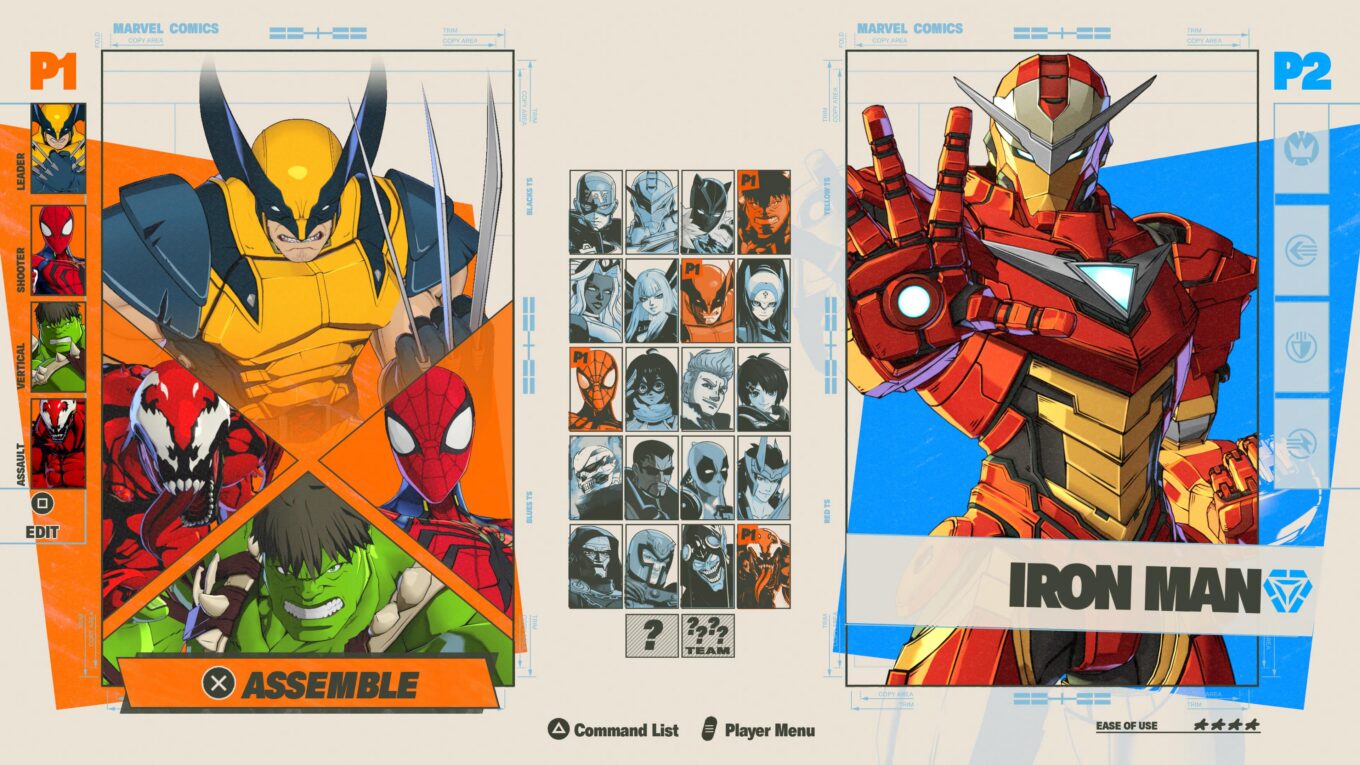
The result is an often uneven amalgamation of ideas that nonetheless exude charm, and when everything comes together, especially against the right rival, Marvel Tōkon doesn’t just show promise, but confidence.
Marvel Tōkon is born from a simple yet compelling premise, which is just what you need for a fighting game. The Champion, an exuberant character who has destroyed worlds in search of worthy opponents to contest him, has his eyes set on planet Earth. Captain America, Storm, Spider-Man, and Doctor Doom serve as ambassadors of sorts, with quite a few other characters chiming in. The likes of Blade, Peni Parker, Carnage, and Deadpool are all part of the fray.
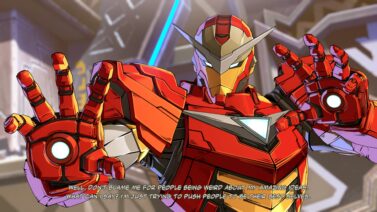
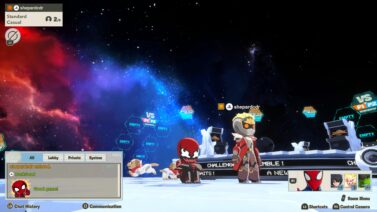
You can experience the story through episode mode, which, as the name indicates, is quite story-driven, presenting comic-book style cutscenes mixed in with fights, representing all the canon teams in the game, each of them consisting of four characters. This is far from the only single player mode, however: there’s a time attack mode that also tracks your high score, a survival type challenge that feels akin to a roguelite, where you pick up bonuses after each successful wave of encounters, all culminating in “boss fights” with overpowered characters, and the classic versus mode. You also have Arcadia Rumble, which is a party mode that uses chibi avatars. which also involves fights in between. Add in a robust series of character lessons and the mandatory training mode, and you have quite a bit to contend with.
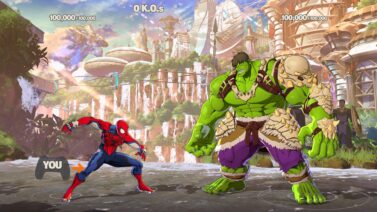
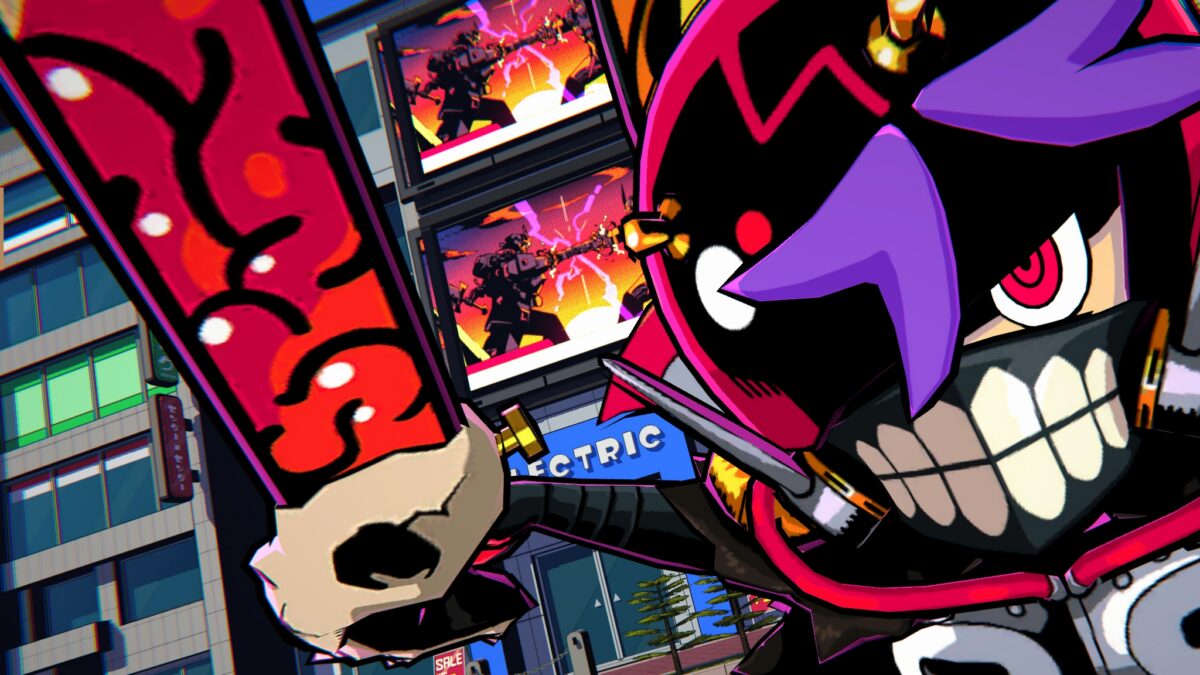
The ambitious selection is on par with the very concept of Marvel Tōkon, as it introduces itself as a 4 versus 4 tag-team fighting game. You’re always assembling a team of four, and all smackdowns you take part in end up becoming a visual and technical showcase of pure chaos. When it comes to controlling your main character, gameplay is fairly straightforward. In fact, it’s quite welcoming for people who aren’t that savvy with the genre, with auto-combos being integrated into the control scheme. Unlike modes like Modern controls in Street Fighter 6, auto-combos in Marvel Tōkon are enabled by default. Simply put, if you manage to land a successful hit on your opponent and you’re pressing the right button sequence (which mostly revolves around continuing to press the same unique attack button), your character will flow like the wind as they do a combo for you. Obviously, manual, traditional combos are still a thing, but it definitely lowers the barrier of entry, especially when you’re only starting out and haven’t found your favorite character yet. Or rather, I should say characters, plural.
The tag feature during combat has a plethora of use cases. You can change to any of the three characters; you can tag them in to extend your combo, help you on a parry, or do special attacks on one while you continue to attack or reposition yourself, and much more. While doing the introductory tutorial, I got quickly overwhelmed by the amount of variety and scenarios in which you can make use of your entire team, and not just the “leader” that you play as at the beginning of each match. There’s a careful balance here during matches, which is appreciated, as you start with just one teammate and you need to unlock the other two either by forcing a stage transition by pushing your opponent to either side of the screen, or by losing a round. As a result, players aren’t immediately charging against their opponent with up to eight characters on screen simultaneously. But when this does happen, it’s a spectacle that can be a bit too distracting for the eyes until you sit down and start learning and re-learning how everything works. Suddenly, and after enough practice, it all starts to make a bit more sense.
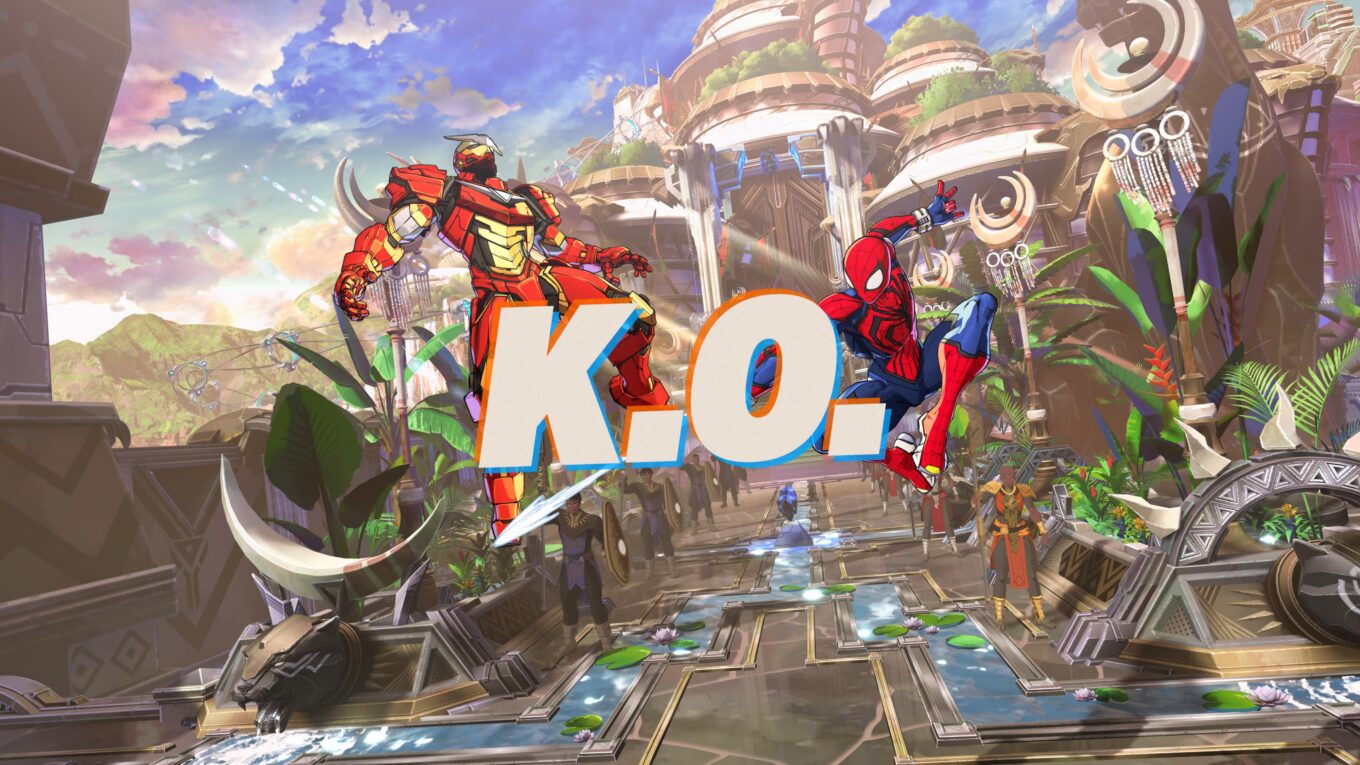
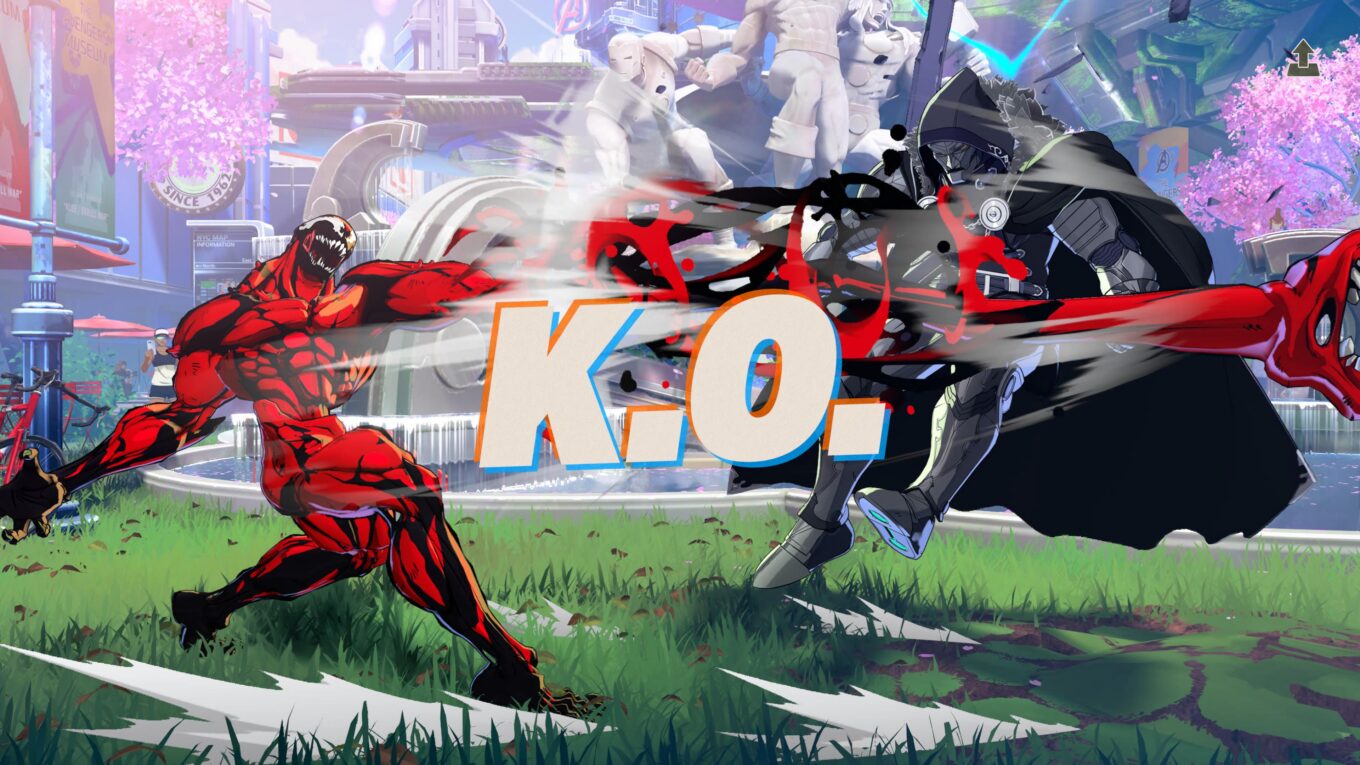
It’s an intriguing moment in time to be doing a review of Marvel Tōkon, with players all around the world still learning about best character combinations, when to use tags, and how to implement strategies against specific opposite teams. It took me days to realize that I’m always more comfortable with Carnage as the lead character on my team, especially when paired up with Magneto and Green Goblin, who both have excellent individual attacks when tagged. Yet, I still haven’t figured out who makes for a good fourth character, and I admittedly haven’t got used to switching between characters that much. It’s an intriguing balance to strike, and one that contains so many possibilities – you not only have to be good at one character, but potential at four of them. This increases your toolset, sure, but all characters share the same health bar, which adds to the overall risk/reward sentiment.

Don’t ask me which characters I’m having trouble fighting against, though, as the list is ever-growing. In the right hands, the likes of Doctor Doom and Danger can be colossal challenges to contend with. But so is a Spider-Man that knows what they’re doing. Online matches in Marvel Tōkon always have a degree of challenge involved, but there’s a particular satisfaction in finding a rival that seems perfect for you on a skill level.
That was the case for a Blade I encountered this past weekend. We ended up doing nine matches in a row, and by the end my wrist was sore and continued to hurt long into the night. But it was one of the most satisfying experiences I’ve had in a fighting game, and video games in general, in a long, long time. The close calls, the second-guessing hesitation fueled by adrenaline that seemed to penetrate the screen, the moments in which we showed the other person that we had picked up on a movement or specific strategy and had learned to counter it just by sheer pattern recognition. It was exhilarating in the best ways, and helped to prove just how much potential there is already in place.
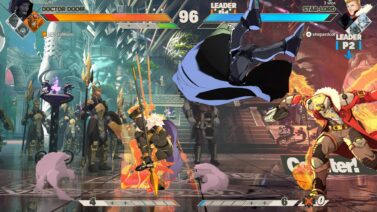
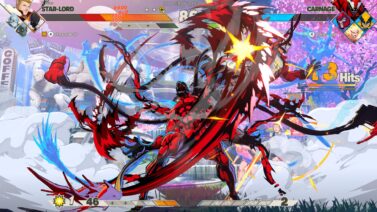
Marvel Tōkon isn’t without its issues, however. As mentioned, while the absurdity of having so many characters on screen is fun to witness, legibility is an issue – considering this is by design, it can be a problem at times. There are also PC-specific issues that can vary wildly depending on your specs. I played Marvel Tōkon on a Lenovo laptop running a RTX 5070, AMD Ryzen 9 9955HX, and 32GB of RAM. Overall, I didn’t have many issues maintaining 60 FPS, but I did notice some stuttering at times. Playing online can be somewhat of a mixed experience, especially with users who aren’t running the game on a beefy PC, as the lag can get in the way. Arc System Works is aware of these issues, as well as others that were reported at launch, such as high CPU usage and sudden performance and frame rate drops. Some of these problems are being actively addressed, but the PC version is lagging behind the PlayStation 5 one right out of the box (the latter of which I also spent time with separately). Plus, you’ll have to sign in to PlayStation Network to play online, which means that servers are subject to PSN not being down or experiencing issues. You can, however, play offline modes if you so choose.
Looking ahead, I’m excited to see how Marvel Tōkon continues to evolve. Its roster of characters will continue to grow, which is always an enticing prospect, especially with Arc already having demonstrated that it’s unafraid of throwing the oddball pick. And sure, I’ll also be paying close attention to how the fighting game community approaches its potential. But I’m invested in how the game will feel in a week, a month, or even six months from now. I’m invested in finding out whether I’ll be able to find another rival at my level willing to sit down and press rematch over and over until one of us lets exhaustion win. I don’t imagine that I’ll be keeping an eye out for it in an arcade anytime soon. But the sight of an X-Men vs Capcom cabinet will surely make me want to rush back home and boot up the game, if only to play a few more matches with friends into the long hours of a Friday night.