
At first glance, Songs of Glimmerwick is a cosy and bewitching RPG where casting musical spells is essential practice. It’s got the vibes of Stardew Valley and Fields of Mistria, but if you swirled it up tenderly in a cauldron with a big ol’ dose of Harry Potter. When I previewed the demo build earlier this year, I thought my magical flute was pretty much the makings of the songs of Glimmerwick. Having now spent days in every season of the game’s sprawling calendar, I can firmly say that the music of this enchanting world is actually so much more.
But, before I get into how I felt nestled in the midst of a West End show at some points of Eastshade Studios’ newest title, it’s important to explain how I ended up at the Etchery School of Magic and Melody. I’m a new student arriving on the isles entirely alone. In some respects, it mirrored my own journey to university, except there were a lot less spells (none, in fact) and a lot more WKD.
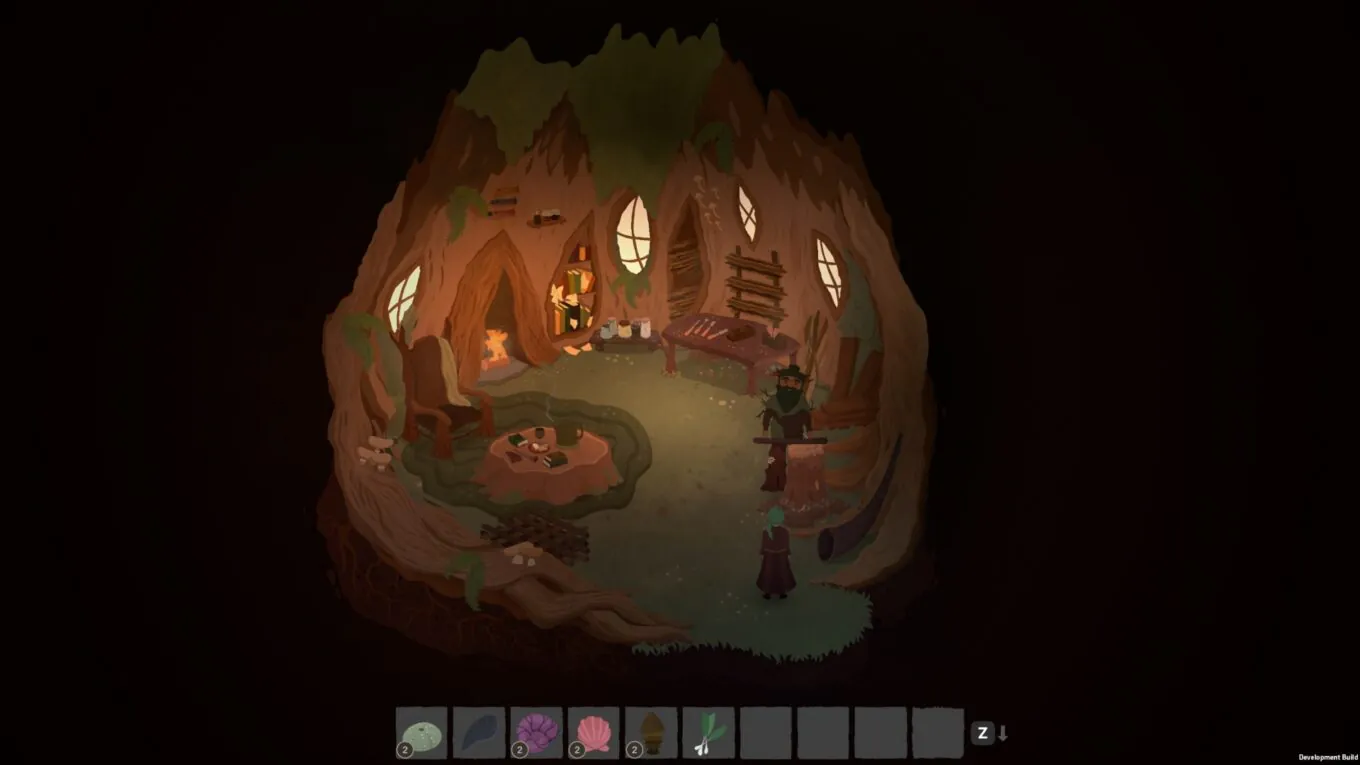
Anyway… I’m part of a cohort that still wants to harness the magic of music in a world that’s been stricken by a strange curse called the Silence. Whilst it ended years ago, there are still places across the land that dabble in being entirely mute, but not at the Etchery and certainly not with my fantastical flute in hand.
I’m taught about all of this by a narrator with the most velvety of voices, enthralling me with tales of tantalising tunes and an upset universe. And as I’m enlisted into the academy, I’m handed a calendar of classes with teachings in potions, herbotany and music, as well as a dorm room with an eccentric roomie, a common room full of cats and chats, seasonal events, and an ever-expanding list of quests. It’s a cosy gamers’ dream to be so busy.
But, while RPGs like this have become accustomed to the perpetual day cycle with hours passing and suns rising and setting, Songs of Glimmerwick does things a little differently. To make this game even sweeter, the developers freeze time for calendar events, meaning you’ve got as much or as little time as you want to do, well, whatever you want.
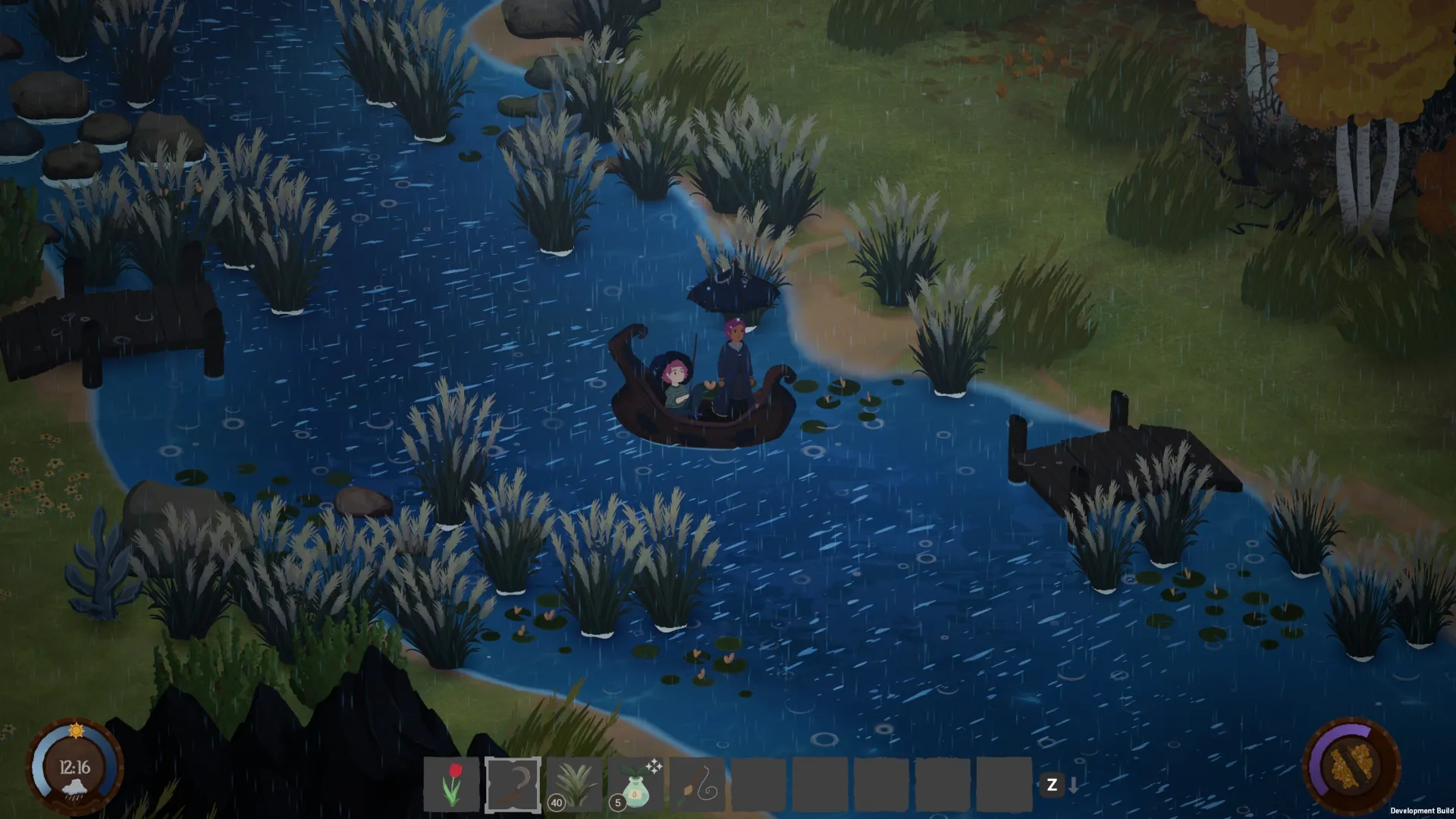
There’s no passing out at bedtime, no rushing to class, no rushing to anything really, which makes completing quests and attending to your busy schedule a rather delightful experience, rather than anything even closely surmounting to anxiety or stress. The only stress I sometimes felt was deciding what outfit to wear or hair colour to don for my day of classes (On Wednesdays, we wear pink, right?).
My first couple of hours were a repeat of my time with the demo, swiftly reminding me of the whimsy and beauty of Songs of Glimmerwick’s sprawling landscapes. It’s hard to compare its art design to anything I’ve played recently, breaking the mould from the 16-bit farming sims or 90s-inspired Harvest Moon aesthetics. Instead, and I’ll try not to show my age too acutely, it made me think of the stillness and nature-infused art style of Amanita Design’s Samorost series if it was made into a beautifully illustrated storybook for kids (and adults).
Part of this wondrous design is the university’s garden that I’m instructed to attend to as part of an enforced job I must hold during my time studying. Thank goodness, too, because a lot of Songs of Glimmerwick’s quests will lead you to lean into the crops and flora you can tend to. And to grow these crops, you’ll learn many-a-spell in a Guitar Hero-esque practice screen. Master a spell and you’ll even be rewarded with quick-casting, eliminating the need to play the tune every time you need to employ the magic.
In fact, pretty much everything you do in Songs of Glimmerwick, unsurprisingly, asks you to practice a song, master it, and play it out to use its powers. And as I played through hours of Songs of Glimmerwick, I realised its true strength, altering landscapes, quieting curses and even producing rain clouds that make watering your crops so much easier.
But, the true magic of Songs of Glimmerwick isn’t simply in the songs you play yourself. While I thought my flute was going to take first chair in the orchestra of Songs of Glimmerwick’s symphony, I was sorely mistaken – and utterly happy to be proven wrong.
The music of Songs of Glimmerwick is, in fact, intrinsic in so many ways. As I walked across the world of Glimmerwick, I noted the change in its soft strings and willowy winds as I moved from Wisk to sea. I joined the university band and attended local performances at the Cup and Kettle (something that is entirely optional).
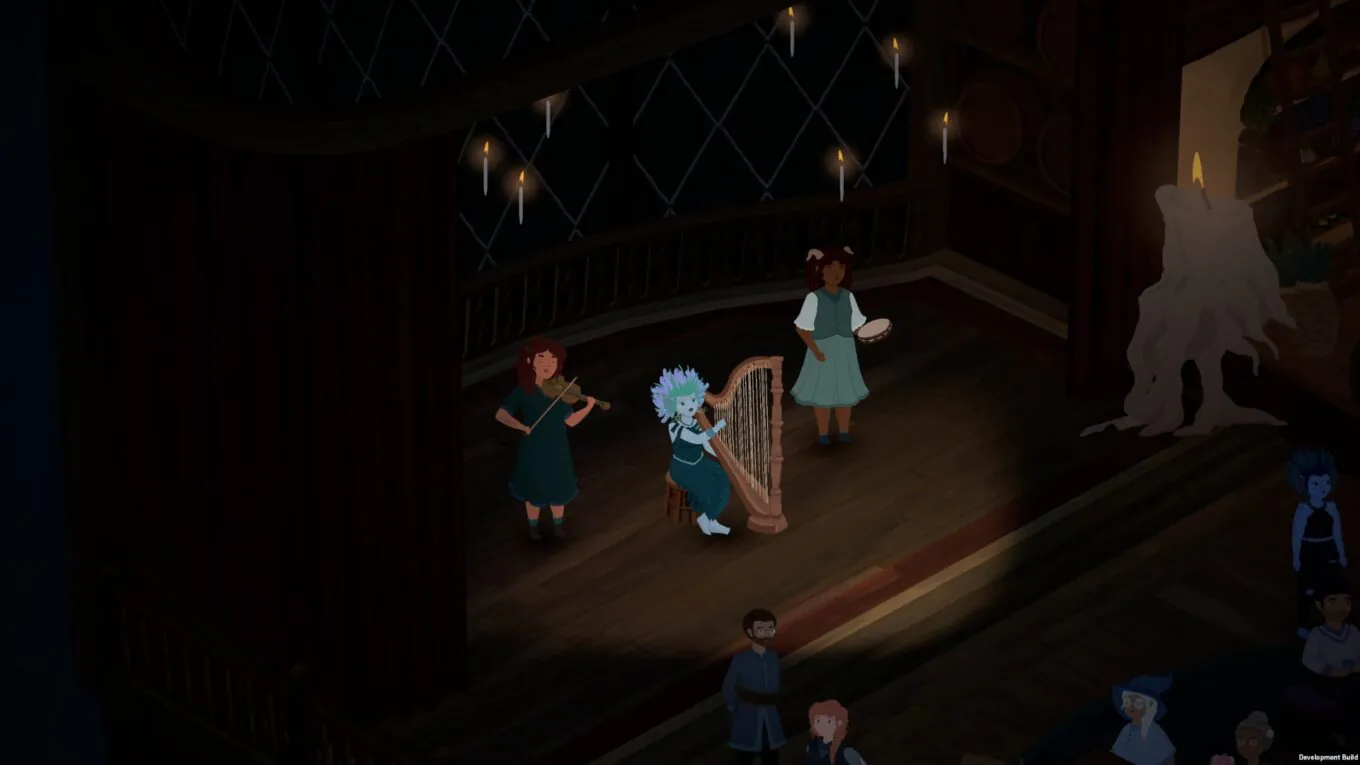
The occasional singing was so good that I felt like they should’ve been charging me gold petals (Glimmerwick’s currency) to attend. I could go on about how lovely the voice acting is, but it’s my real pleasure to speak on how the vocals of Glimmerwick’s soundtrack is even more magical. When the night descends though, so does the music, but Eastshade Studios thought of this too, replacing it with the environmental ambience of crickets chirping and babbling brooks.
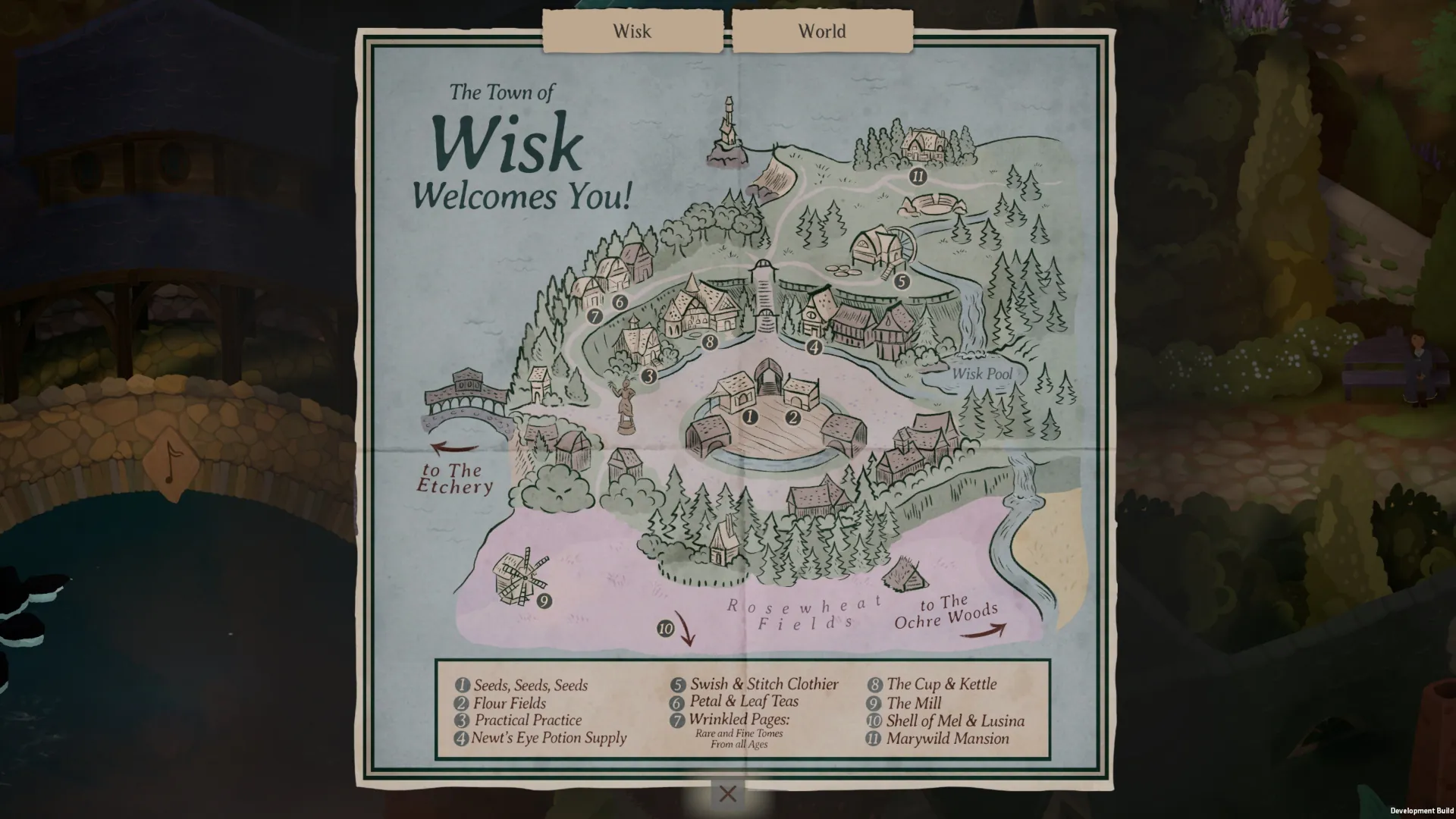
The citizens of Glimmerwick are as enchanting as the music. As I wandered through the town of Wisk, I met shopkeepers, artists, citizens and mysterious creatures, expanding as I crossed the world to new areas, solving quests along the way. From my very first moments in Songs of Glimmerwick, I was meeting with the poetically spoken Bristlecone, a master in flute-making and a bug-like charmer called Rose.
And in the halls of the Etchery, I met students with their own personalities, some of which would offer me the opportunity to play Forests & Fairies with them during a dark night at the local pub. But, while they’ll engage in conversation with each other and with you, you’ll also unlock topics of conversation that can lend themselves to your quests. So, being curious isn’t only friendly, it’s also lucrative.
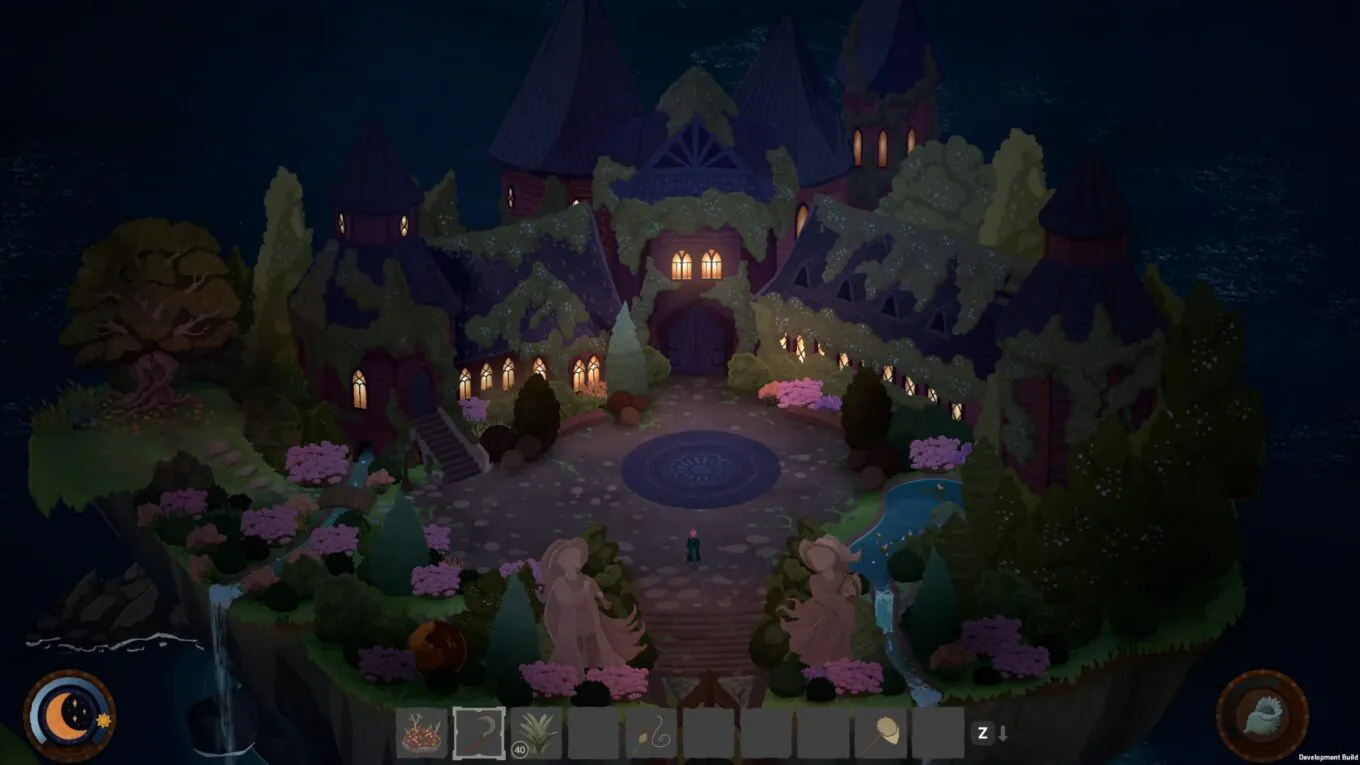
While you’ll lean on residents for answers, you’ll also have to search far and wide to complete your quests and that requires a lot of to-ing and fro-ing. The lack of efficient fast travel (aside from one ghostly deal and a magical rope) saw me walking across the bridge from Etchery to Wisk more times than I care to mention. You can drink a coffee or finally unlock a speed perk in the abilities menu much later in the game, but, ultimately, you’re going to have to walk a lot. Fortunately, it’s made a much sweeter offering by the delightful surroundings and ever-changing music.
I also wish there were more places to put my stuff. With homework to complete and quests to fulfill, I found myself full to the brim with inventory, unsure what to hold onto and what to drop down the well or sell to the shopkeepers. Hermoinie’s endlessly spacious handbag surely wouldn’t have gone a-miss. Alas, you’ll have to wait much further into the game, like the speed at which you walk, to unlock a little more space to hoard your wares.
This inventory issue is made a little harder by the progression in which Songs of Glimmerwick’s quests unfold. While some will be easily achievable, others ended up sitting in my list until much later in the game, which made it a little hard to know which ones to prioritise. At times, it felt like I was missing something, until it was revealed that I didn’t actually know what I needed to know yet, especially when it came to the spells I’d learn along the way.
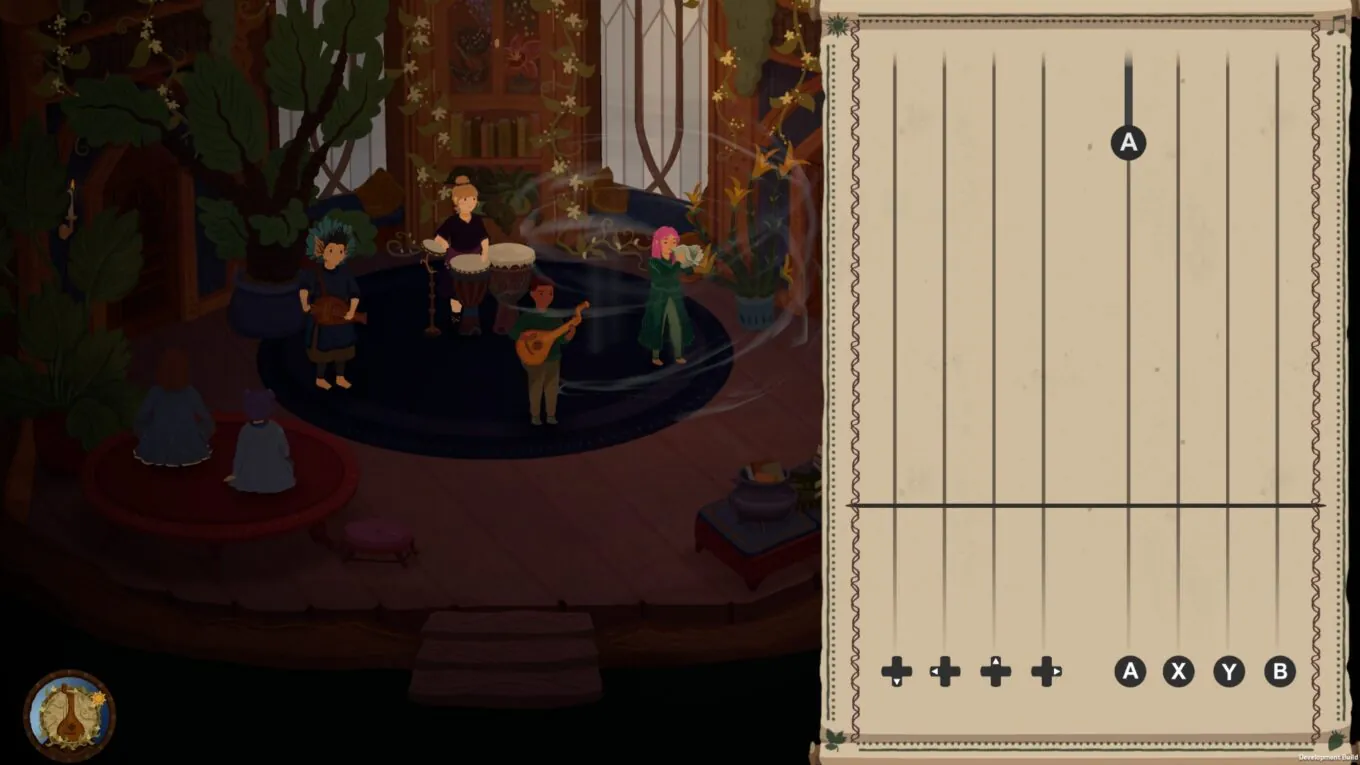
And the pace at the beginning limited me to a few songs on my flute for gardening purposes, yet what unravelled as I put more hours into the game was a much wealthier offering than was initially propositioned. It’s a stick around see experience, which is fortunately an easy wait considering how beautiful it looks and sounds. Sure, you can busy yourself with crop growing, but there’s many delights just waiting to be untangled.
Eastshade Studios is careful not to call this a farming sim though, because it’s so much more than that. The adventure lies in your exploration, the expansion of the people you meet and the magic hidden within the trees and the land’s most mythical creatures. It feels like you’re dancing along the pages of a storybook, and by the end of it, you’ll feel like you truly became part of the tale.