
Within 15 minutes of booting up Retro Space, two things happened that defined my experience with it. The first audio log I picked up was a crew member on the ship Aurora 5 complaining of strange noises, mechanical failures, and a growing sense of dread, typical fare for a game in the lineage of System Shock. He wrapped the audio log with, “I should making scary audio logs, they freak me the fuck out.” I groaned to myself; already beginning to write a scathing review in my head. But then, something actually funny happened. I hid underneath a turret to whack it over and over again with a wrench. I blew up the turret, but my moment of triumph lasted less than a second, as the turret’s burning remains landed on my head and set me on fire. After a moment of flailing about, I perished. When the front menu loaded, I realized I had not saved. I would have to play the last 30 minutes over again. It is this dual impression that defined my time with Retro Space. On one hand, the game is a relentless, unfunny satire of other games like it. On the other hand, it is a sharp and clever mechanical follow-up in the lineage of BioShock and Dishonored that manages to be fun and hilarious.
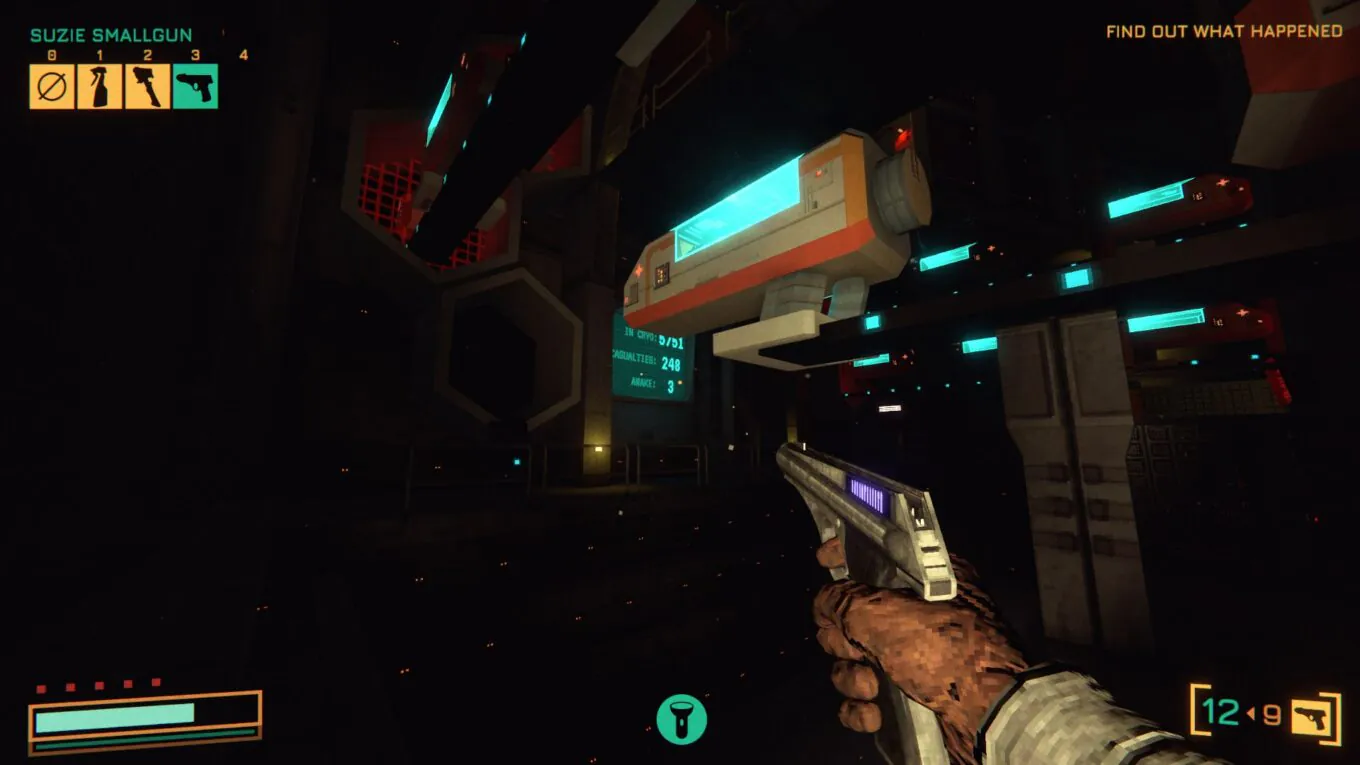
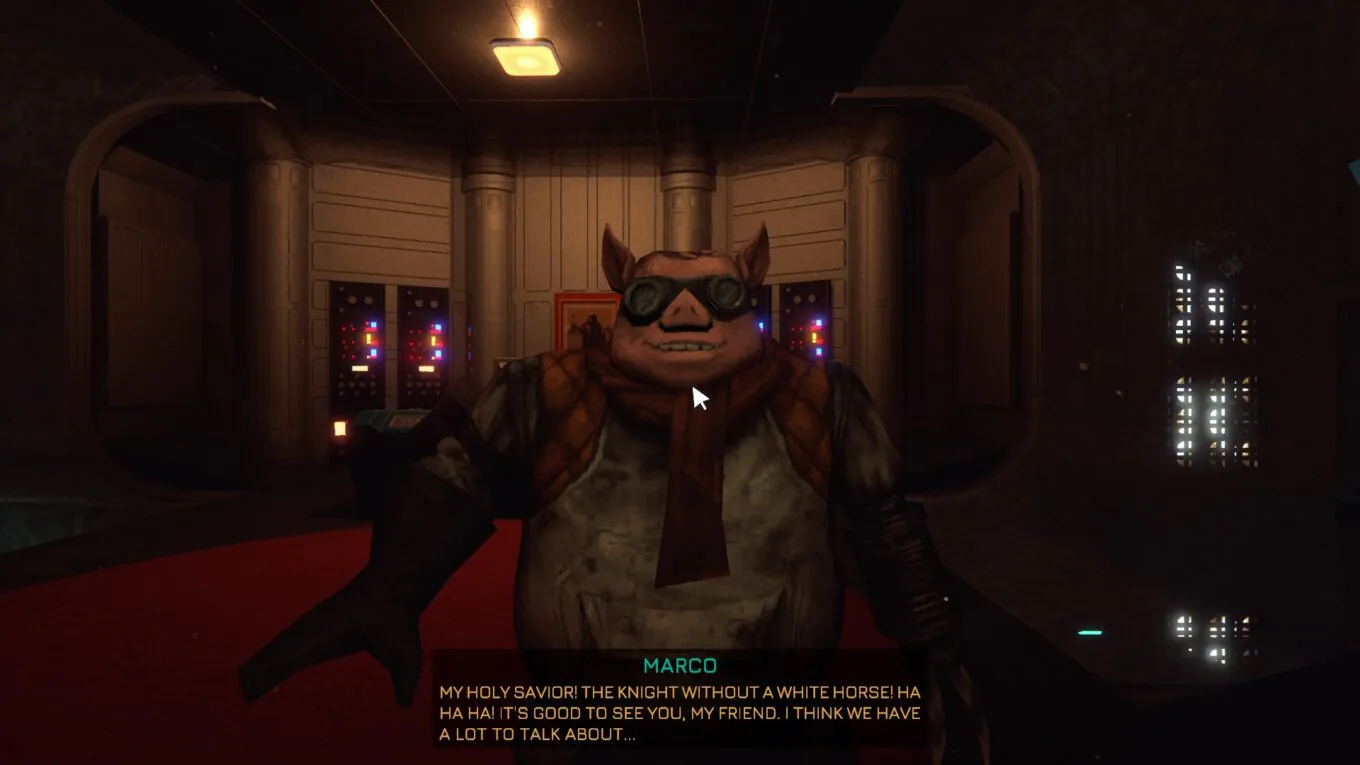
As you might expect, the protagonist of Retro Space wakes up with no memory. He was a (seemingly) ordinary citizen of Aurora 5, one of a fleet of colony ships which left a dying earth to settle a distant world. But, something went wrong. The ship collided with a black hole and has been caught between dimensions, flitting between an apocalyptic present and an even more decayed future. At first, armed only with a power wrench and the scraps he can find, a “Dr. Nebula” orders him around. But he finds more tools, ways to rewrite his genetic code to turn himself into a living weapon, and additional allies, which give him a freedom he was never intended to have. In essence, Retro Space is a familiar framework. It’s set in a harsh, normally unliveable environment. You play as a nameless nobody whom someone or something has sinister plans for. There’s even a scary lady AI who is more than she appears. Its charm, though, comes from the ways it innovates.
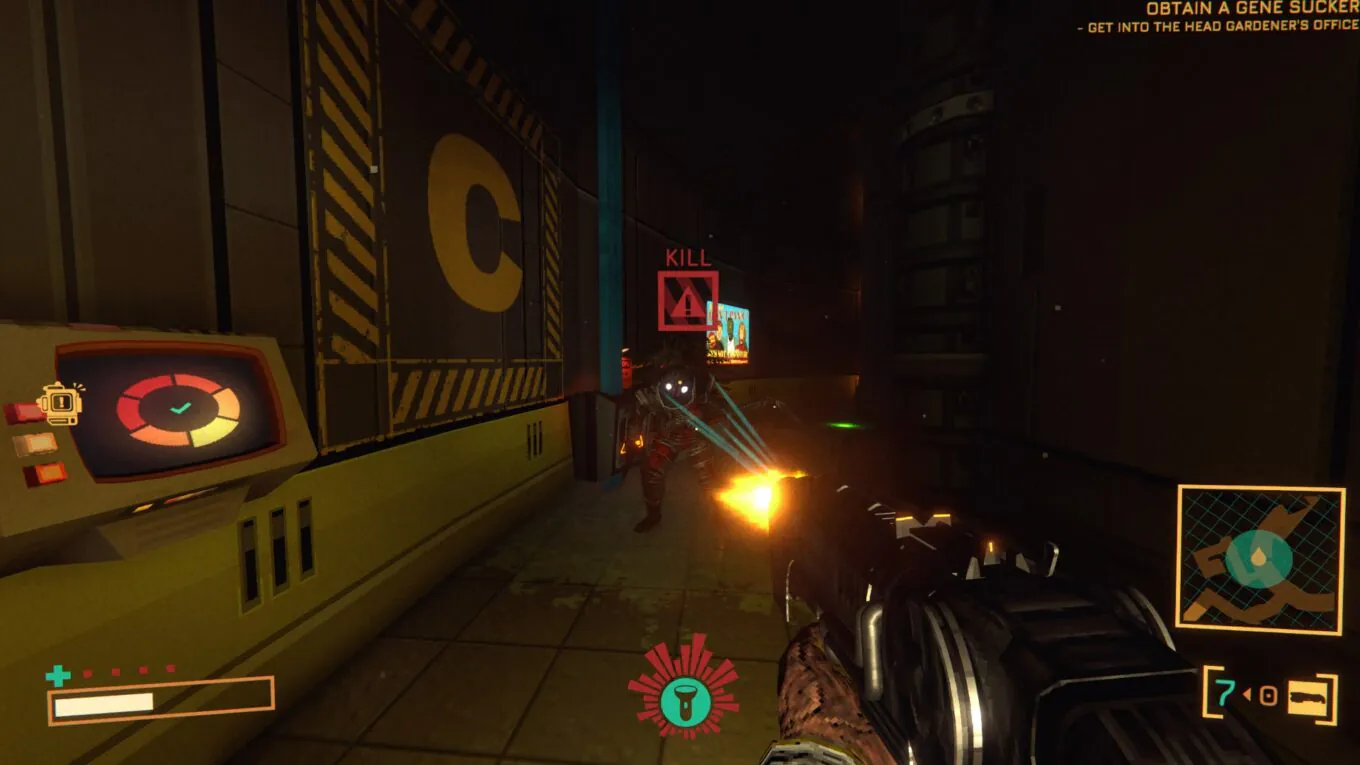
While Bioshock was an attempt to narrow the immersive sim into an accessible, console-driven adventure, Retro Space tries to explode Bioshock until it becomes something closer to its roots. It is a first-person shooter, with shotguns, pistols, and laser beams. But on top of that basic framework. There are lots of miniature systems which can have big effects. One of the first times you get in the game is a spray bottle, which you can use to remove (or place) water, acid, and oil puddles. You can stack boxes to gain higher ground or block entrances. You can use a fire extinguisher to put out fires… or to propel yourself across dangerous heights. The “mutamods”, supernatural abilities based on animals, let you heal by standing in light, detect enemies through walls, or just toughen you up against enemy attacks. In essence, the game signposts a lot of different ways to play. The game is not endlessly flexible nor is it as robust as something like Dishonored. But the game nails the most important thing: giving you lots of ways to do something clever OR do something stupid.
As the game goes on, that possibility space widens. You recruit allies which will sell you bonuses and new abilities, at the cost of the various things you can pick up throughout the ship. With money, you can purchase items from the vending machines scattered around the ship. Scraps lets you make individual weapons more powerful and grants you new tricks. With genetic material, you can upgrade the mutations you have. This gives Retro Space a typical arc, but a satisfying one. Relentless robot foes and flammable plant ones serve as enemies that twist the game just enough that you have to adjust how you’ve been playing.
Like Bioshock or System Shock 2, you can’t really die in Retro Space. Instead, you respawn in a “Heal-o-Dome” located elsewhere and will have to make your way back to your last location. Historically, this is one of my least favorite mechanical ideas in Bioshock. That game’s wandering bosses (the Big Daddies) are one of its most exciting ideas, but the respawning removes all the tension of those fights. One could simply wrench every Big Daddy to death at essentially no cost. Retro Space is smart enough to make respawns far more costly. For one, you lose some of the genetic currency on a respawn. But you also gain some sort of defect. You might make loud sounds at random times, by sneezing or swearing, for example. Only by making your way back to your previous body (or paying a fee at a Heal-o-Dome) can you eliminate the debuff. However, on the normal difficulty setting, I died rarely enough that quirks largely didn’t affect me. I was usually able to make my way back to my last body without fuss. Making death not just inconvenient but complicated is a smart idea. I hope that higher difficulty settings might make this more consequential.
Aesthetically, Retro Space borrows from its influences in concept, if not in presentation. Like Bioshock, it is a science fiction period piece, though it accelerates the retro future into the 1970s, rather than the 1930s or 40s. Unlike Bioshock though, the choice does feel a little arbitrary. The leader of Bioshock’s fictional city, Andrew Ryan, much like his inspiration point Ayn Rand, was a Russian Jew who fled to the US in the wake of the communist revolution. Bioshock’s aesthetic is woven into this exact time. Besides superficialities, Retro Space has little comment on its touchstones. It’s set in the space 1970s because of novelty alone.
Tonally, the game doesn’t take after Bioshock or Dishonored, but runs with the satire of The Outer Worlds or Fallout. Think, for example, of Dark Souls or Death Stranding. These are games that have an absurdist edge, yet are often very serious. Death Stranding takes its gonzo narrative of uniting America through mpreg baby internet as serious as extinction. Dodging out of the way of one trap only to roll right into another in Dark Souls or lining up the perfect ramp to motorcycle over a ravine, only to crash on the other side and damage all your packages in Death Stranding is perennially hilarious. But, crucially, those games trust you to laugh at them, without needing to interject and say how funny it is. I’m not saying that games cannot be written to be funny. Just that it is very hard to do and very easy to fail. When Retro Space leans on its systems colliding with each other, it can be funny. When it is trying to be funny, it fails.
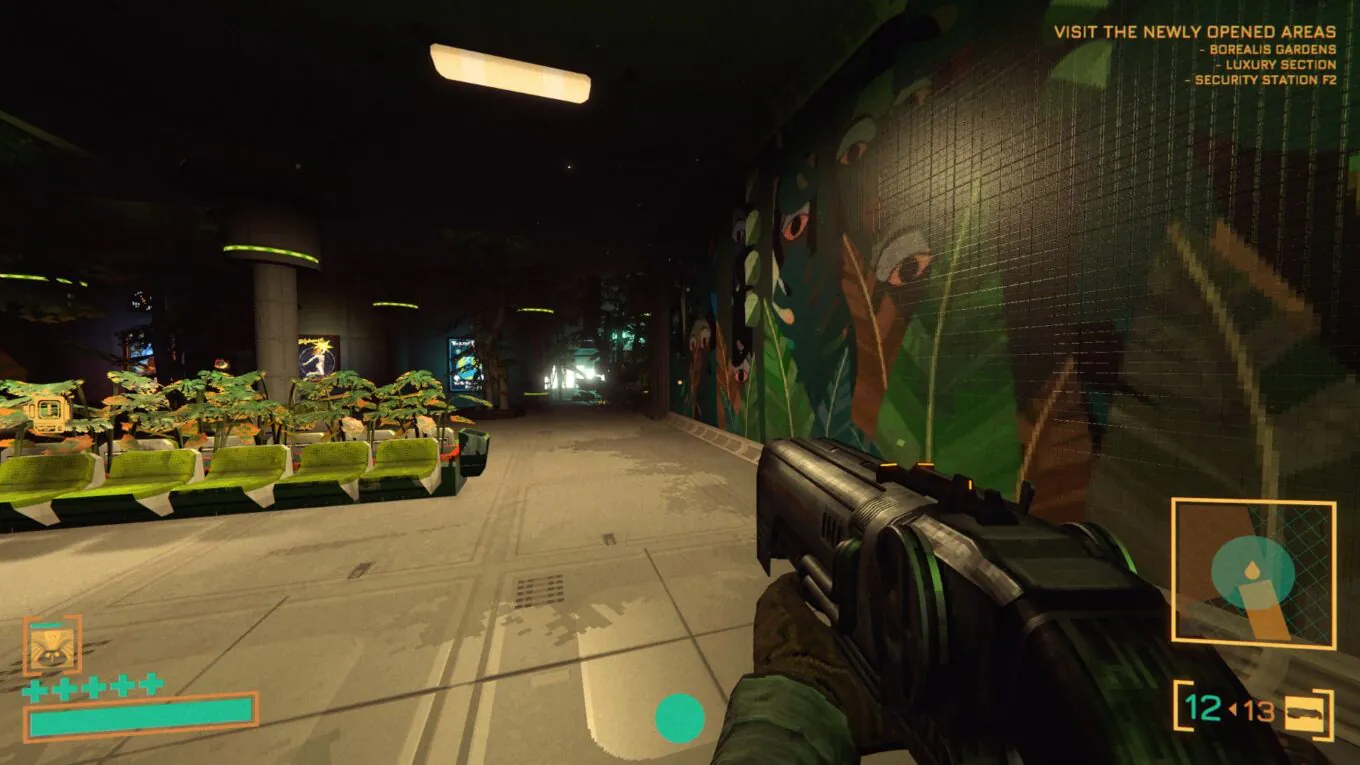
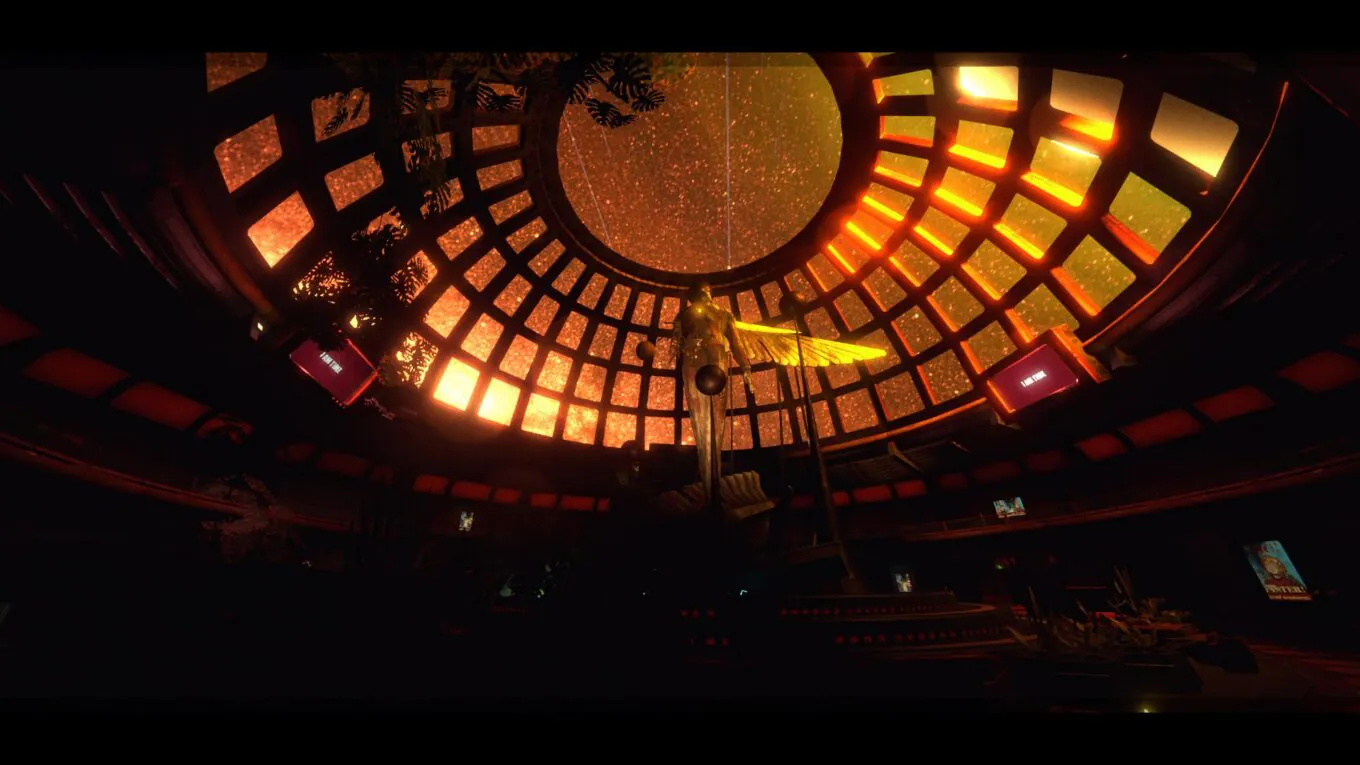
In fact, Retro Space’s tone is so unserious that it collides strangely with its more novel ideas. It is almost as if developers The Wild Gentlemen feel that its aesthetic cannot hold anything more serious than metapuns and beer pong jokes. Granted, Retro Space’s cute, blocky look cannot render detailed facial expressions. The game largely forgoes cutscenes entirely. Bioshock Infinite, a bad game which nevertheless fooled a great many people, leans on state-of-the-art AI routines and shockingly detailed animations to sell its narrative. Retro Space can’t do that. However, that does not mean one could not take it seriously. Retro Space is plenty capable of awe. Its lighting is gloomy and intoxicating. It is often very beautiful. Anything capable of beauty is capable of force, but Retro Space trusts itself less than it deserves.
In some ways, it is hard to recommend Retro Space over its colleagues. System Shock 2, Dishonored, Thief, these are all games that have been picked apart over decades of play. They are still inventive and beautiful and influential. It is hard to say that you should play Prey (2017) over Retro Space. It is also a System Shock successor set on a massive spaceship, with corporate satire and interlocking systems. But its corporate satire is tragic, sprawling, and human. It’s a game with teeth and courage, whereas Retro Space cannot count those among its virtues. But if you have already picked those games to pieces and want a new world to take pliers and scalpel to, Retro Space is a competent and fun iteration.