It’s inherently difficult to preview a roguelike game. Limited playtime works against everything that makes the genre so appealing, including the slow, addictive iteration of building your character’s abilities, unearthing meaningful lore and overcoming obstacles run-after-run.
Getting hands-on with Vaewolf is kind of like going on Naked Attraction and having to make a decision just after the first parts are unveiled; what we’ve got here is exciting, but it’s difficult to know what lies beyond the blocker.
Vaewolf is massively inspired by Hades, which is really the new being inspired by Dark Souls. Supergiant’s iconic title is essentially a genre in itself; it looms over the pretenders that often do the same thing but worse – an issue Vaewolf developers Milky Tea largely aim to overcome by implementing a combat system that lets you change physical form on the fly.

The main character is a triple threat; an elf whose devastating start to life saw a deadly pack of shapeshifting Viking werewolves rip through the flesh and bone of his Icelandic village. They took everything – aside from a final smidgen of life that kept him breathing.
He grows stronger, and most importantly for the game, is now cursed to howl at the moon like the raiders who left him for dead to pillage England. The titular Vaewolf seeks revenge. Even in his hairier state he is deemed too weak to take on the hordes, resulting in his adoptive father Valtyr bestowing the powers of a vampire upon him. And thus, the elf-were-pire is born. It’s a fun premise that translates well to Vaewolf’s ultimate task of hunting down Bloodaxe, the leader of the viking forces.
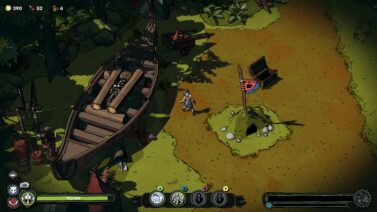
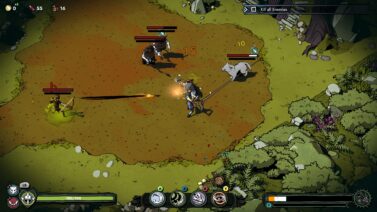
I had the opportunity to play through the first biome, Eskdale Forest, which is based on the real-world area of the same name in England’s Lake District. It does a great job of flaunting the game’s vibrancy. Cel-shaded graphics pop with warm, crackling fires. Lush greens run through the foliage and deep purples welcome the night, providing a beautiful backdrop to the violence. The Norsemen are embedded into Cumbria; their pyres readied and cairns stacked as you start your tour of vengeance.
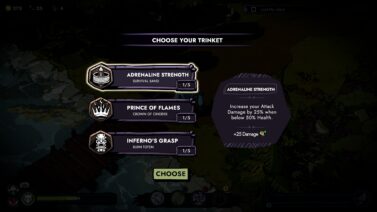
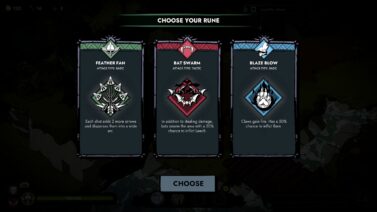
Roguelike combat typically develops two-fold as you etch out a temporary build on each run, and then permanent unlocks back at base. My access halted after the first boss, so the chance to craft much of a play style was pretty restricted to just picking up a few runes (combat augments) and trinkets (passive boosts) along the route to the first major showdown, which comes against the Three Witches of Copeland.
Combat is entertaining, if a little stiff. I have no idea if a double dash upgrade will be added into the full game, but it certainly needs it. However, being able to switch between elf, werewolf and vampire at will is a really smart touch that offers plenty of solutions to slaying the beasts in front of you.
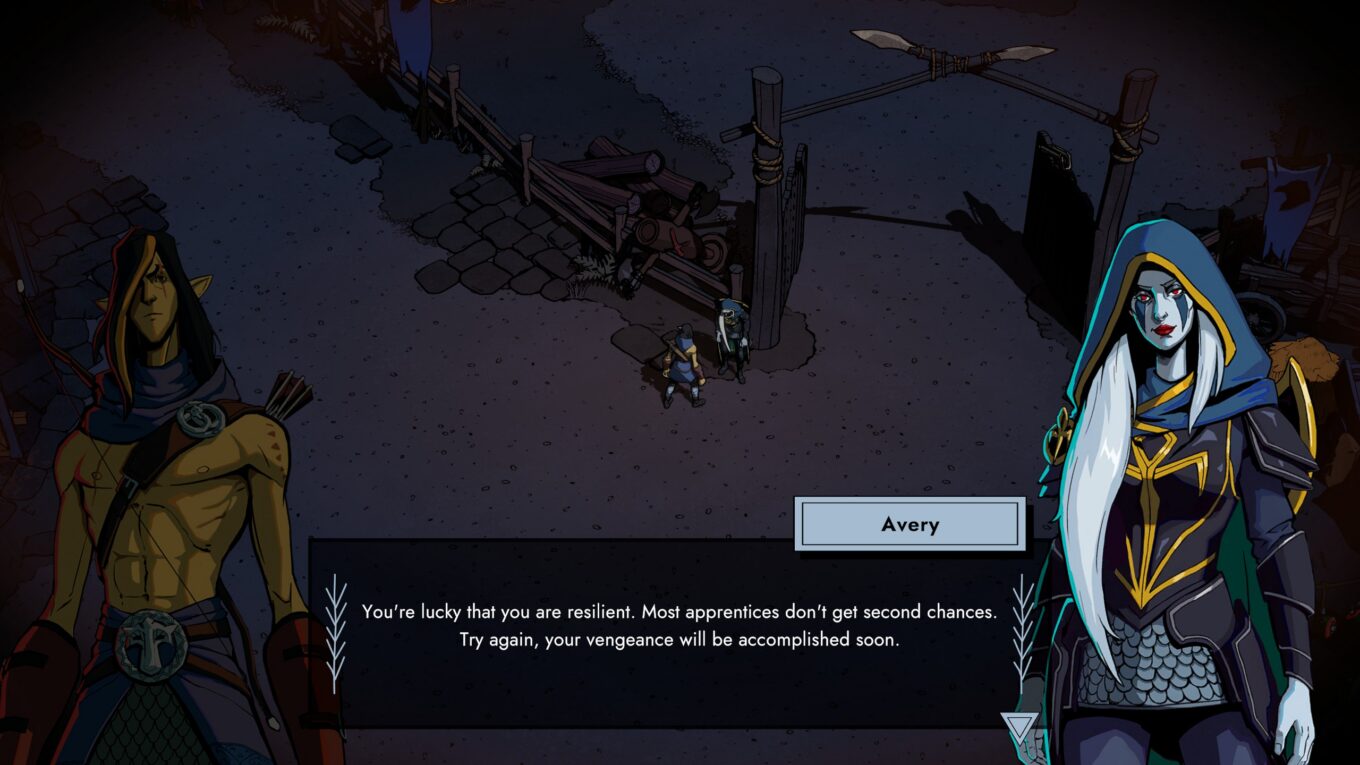
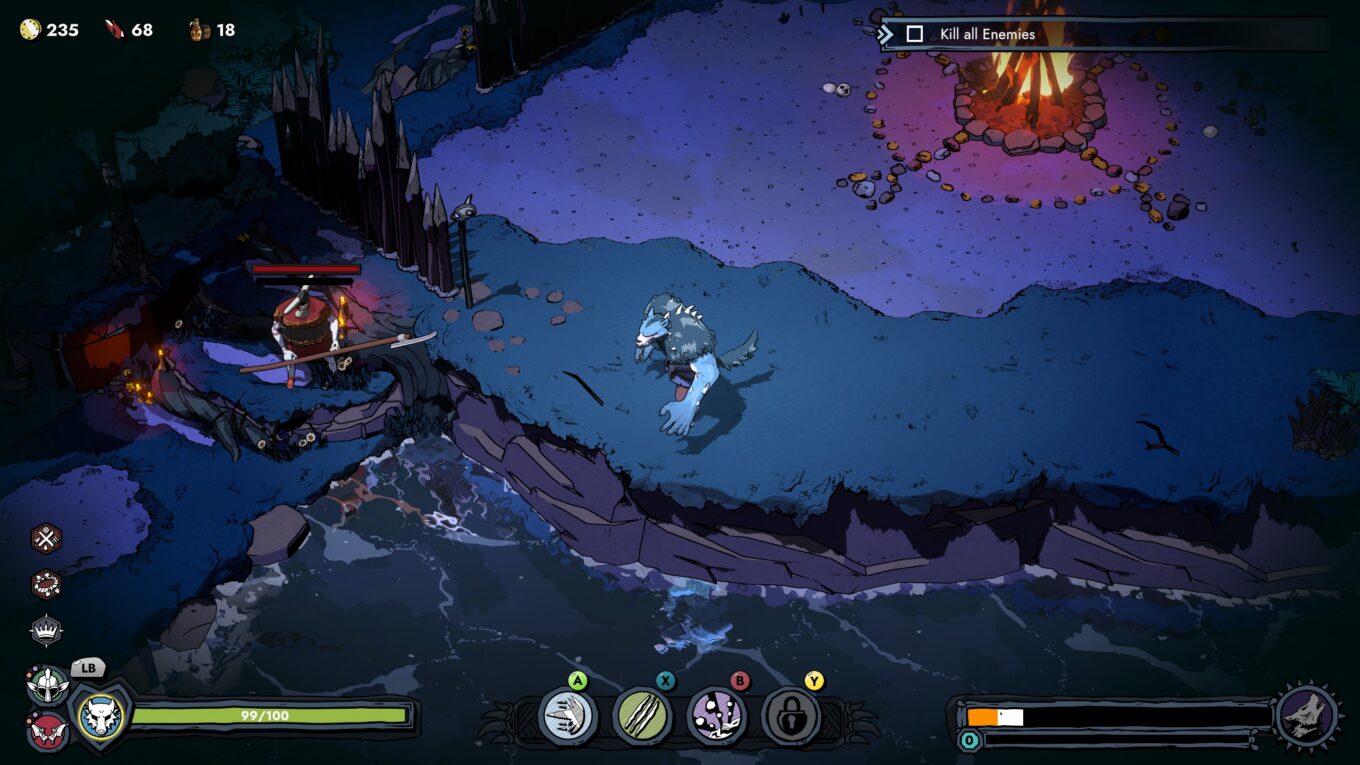
The default elven form plays as a long-range bowman, allowing you to eliminate enemies from afar without putting yourself in danger. Switching to the werewolf acts as the exact opposite, as the giant blue furball hulks around the map at speed, ferociously swiping at anything in its path.
It felt like I dished out and took more damage in this state when compared to the other two, with the melee style offering the risk-reward of leaving yourself open while unleashing hell. In the early stages, the werewolf quickly solves the issues of shielded enemies, who might as well be holding up a white flag before getting battered.
The vampire works as the in-between, with the starting whip useful for slapping enemies at decent range, and a secondary attack that lets you drop targeted damage on the map. That move is one of those directly ripped from Hades, alongside the elf’s orbit carve, which summons blades that arc around you at speed. You’ll have the chance to unlock new weapons after one run, with lots of charge and spin attacks on show in this preview.
The act of shapeshifting is surprisingly tactical. Each form has powerful moves on cooldown that continue to tick away no matter which body you inhabit. Time also slows considerably as you bring up the options to shift, providing a little respite in small arenas that can get hectic either through the number of enemies or minor visibility issues when you blend into the setting.
I didn’t quite feel the effect of the Wrath system, which rewards dishing out damage with rage and more powerful attacks, but I’m looking forward to seeing how it plays across a full run. Similarly, being able to grab powerups for all three forms didn’t impact things too much in the single biome. This will likely open up a number of exciting builds in the finished game, even if the early enemies felt a little slow to fight back.
This is where the cynic in me needs to speak up a little bit. Hades works so well because each of your foes – even the fodder in Tartarus – have personality or a unique attack pattern. In Vaewolf’s opening, one Viking generally feels like another between each room. Even the first boss, which that cynic would suggest evokes dulled versions of The Furies or Hecate from the Hades games, already lack much excitement after quickly repeating dialogue.
Similarly, back at Ravenglass, where you’ll be resurrected if you die, there isn’t a great deal for the cast to chat about just yet. Hopefully the full release will flesh the supporting characters out, because there’s potential in those who offer your upgrades and services in exchange for the materials collected in battle. A kidnapped Viking who lets you wail on him in the training arena is an early highlight and an NPC I hope the studio can deliver on across the full game.
A few bugs ran throughout this build that will also need some attention. A couple of enemies got stuck outside the closed off arena walls at one point, meaning I couldn’t progress until I realised I could hit them at a particular angle with the elf’s bow. A treasure chest also appeared to be floating in a tree, a visual quirk that kept repeating itself.
Although the game ran well for the most part, playing in full screen made the framerate choppier than a wolf’s arse after munching through too much unwashed Viking meat. That kind of issue isn’t a massive problem at this point, and after working through that opening area multiple times, I’m excited to see what else Vaewolf has in store for those who love getting into the nitty-gritty of a genre that tends to reward the effort you put in.
It should be acknowledged that the difficulty of previewing a roguelike certainly works both ways. Vaewolf is reminiscent of Hades on first impressions, no doubt about it, but it has a greater chance to differentiate itself with more content.
There’s already plenty to like here from a studio that appears to be improving with every project. The objective now is to build on the potential ahead of release in 2027, where we’ll finally get the answer to whether or not Vaewolf can stand on its own six feet.