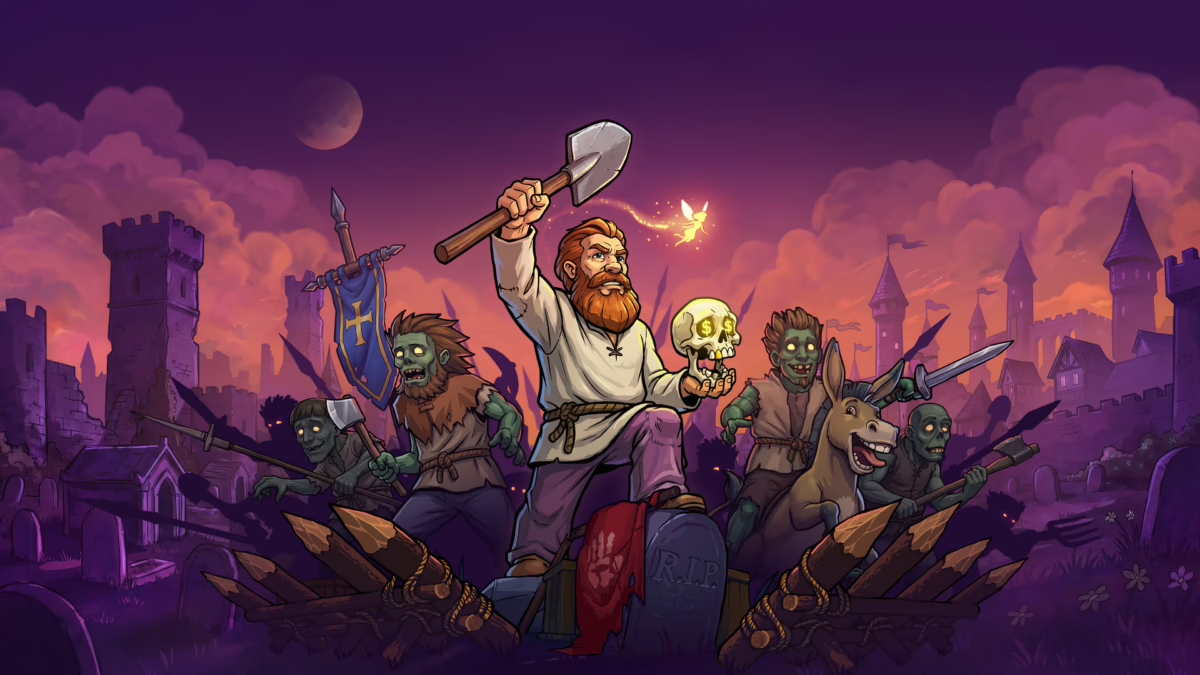
Don’t let its vague name and its Mortal Kombat-ish character design fool you, Blood Reaver lifts the design of Call of Duty’s classic Zombies mode wholesale. Like that storied co-op wave-based gorefest, you start with naught but a little pistol and must kill enemies to earn points, which you can spend on new weapons and to unlock new parts of the map. With each wave, the enemy threat grows more fearsome, testing your prowess until, eventually, you succumb to the horde. Blood Reaver’s enemies may be demons, but they shamble like the living dead. For better and worse, you’ve heard this song before.
However, at least right now, there aren’t celebrity cameos, open world extraction, or really any of the gonzo things that Call of Duty Zombies modes have implemented or experimented with over almost two decades of iteration. At its base, Blood Reaver has a “back-to-basics” flavor, which serves it well. And those basics are well put together. Early guns feel cheap, while more expensive ones resound with each shot. The guns aren’t only more powerful in practical terms, they feel more powerful. The heads of demons explode in crimson with every headshot and mowing down a horde with a well-timed volley will result in satisfying screams and stumbling bodies. These kinaesthetic details will surely continue to get refined over early access, but the guns feel good to fire right now. That is no small feat.
In addition to the guns, you start the game with abilities, like grenades and limited-time infinite ammo, which you earn by killing enemies. You can spend points at shrines scattered across the map, which offer boosts like extra lives or more health. Dropping a hefty sum at the Blood Infuser, a massive snake statue at a central hub of the map, will upgrade whatever weapon you are holding. With each wave, the demon hordes become harder to kill, but if you spend your points right, you can outlast them. Every one of these basic mechanics has an equivalent in Call of Duty. Blood Reaver even borrows the chalk weapon outlines and random weapon boxes from Zombies.
As of its early access launch, Blood Reaver has only one map: Final Stand. However, it is a large, interconnected one, with oodles of individual mechanics. Part of the fun of this kind of game is learning the map, knowing where you can buy certain guns or specific upgrades, and charting your way to the most effective path. Even over a few hours, I did not manage to reach its depths, dying to bosses or to the ever-more powerful zombie hordes. Yet, with each run, I improved. Part of the game is plain iteration, much like the roguelikes which have exploded in popularity since Call of Duty Zombies original debut in 2008’s World at War. You start from zero each time you begin an attempt. Yet, the knowledge you’ve gained sticks with you.
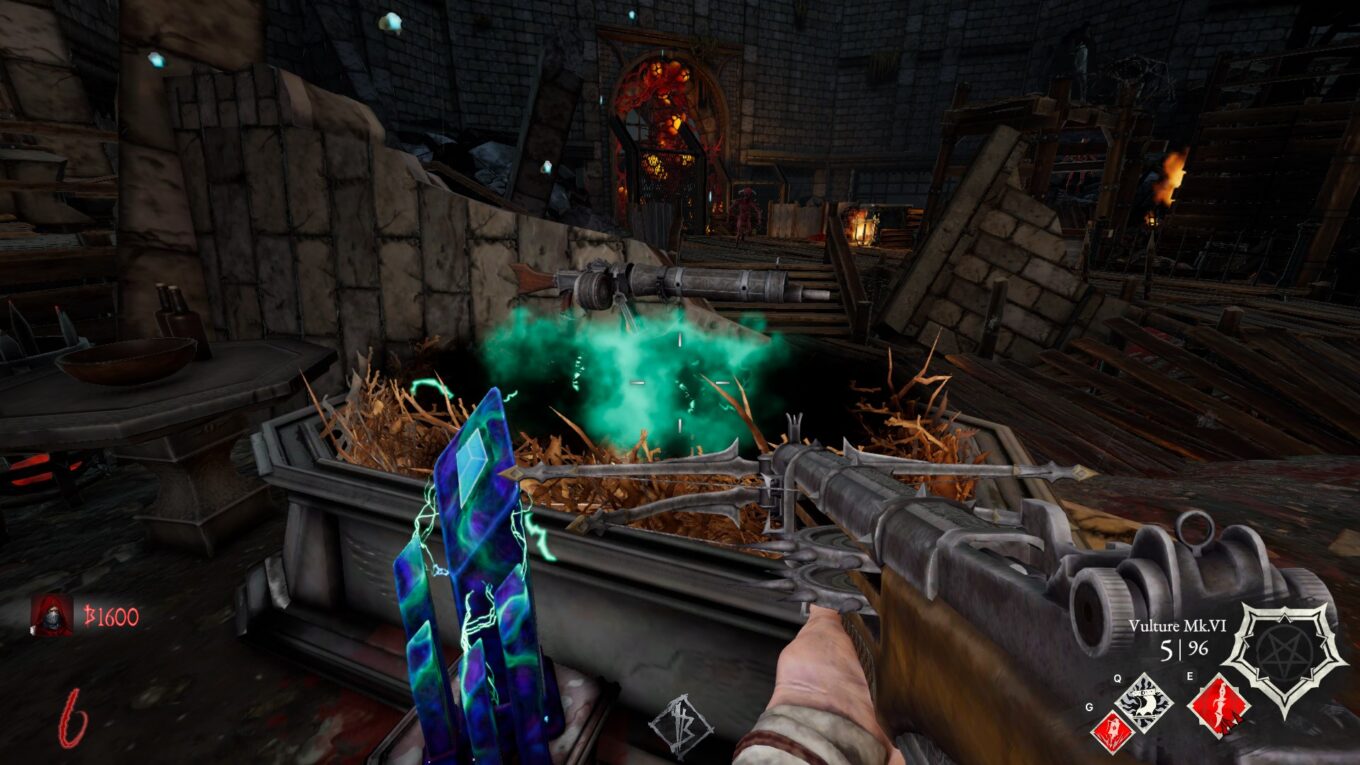
This process can be frustrating. Blood Reaver does not explicitly state what most of the items scattered around the map do. So the only way to discover that is to buy them. Spending money on a useless weapon or discovering too late that a different upgrade would have served you better is a sad realization. Yet, from run to run, this can become satisfying. Every early attempt teaches you something that you can bring to the next. And should Blood Reaver prove popular enough, it will be easy to find tips on wikis and Discord servers. Even so, you should prepare yourself for some trial and error.
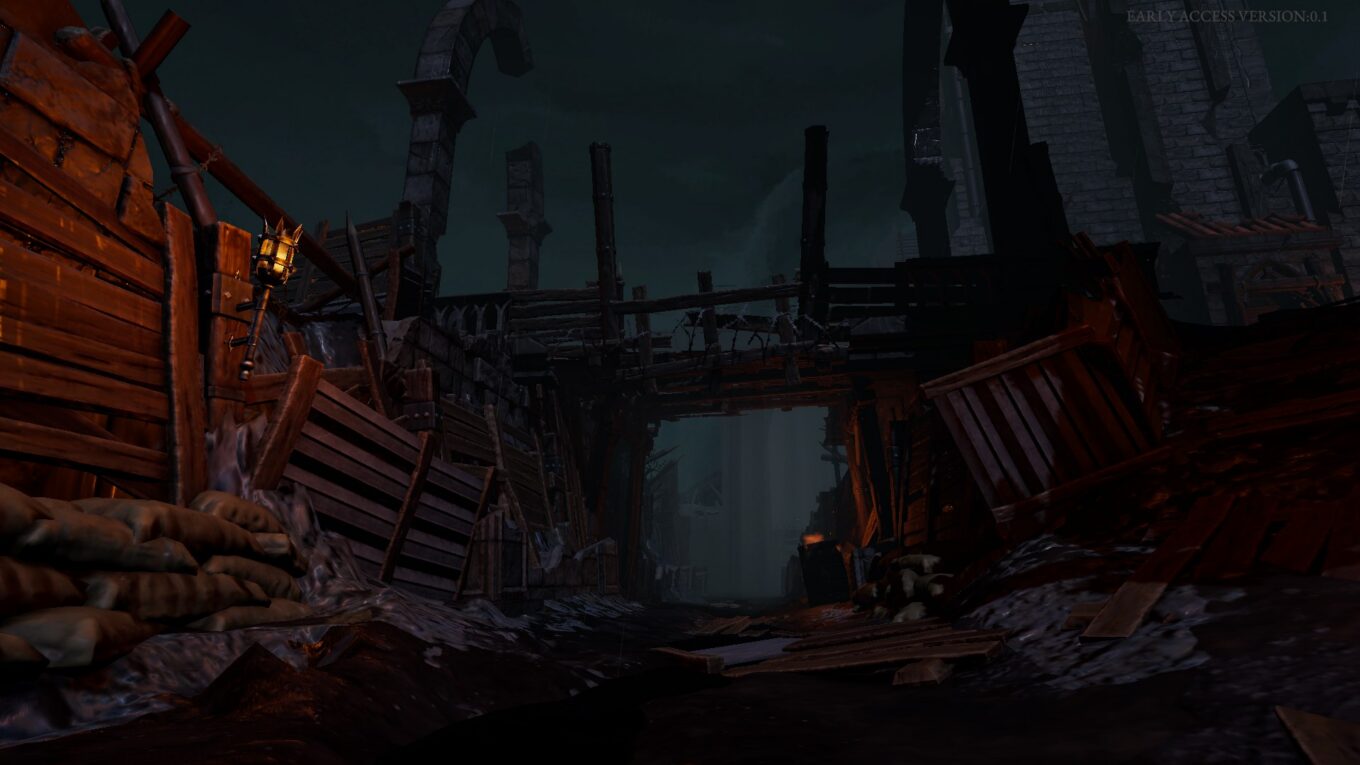
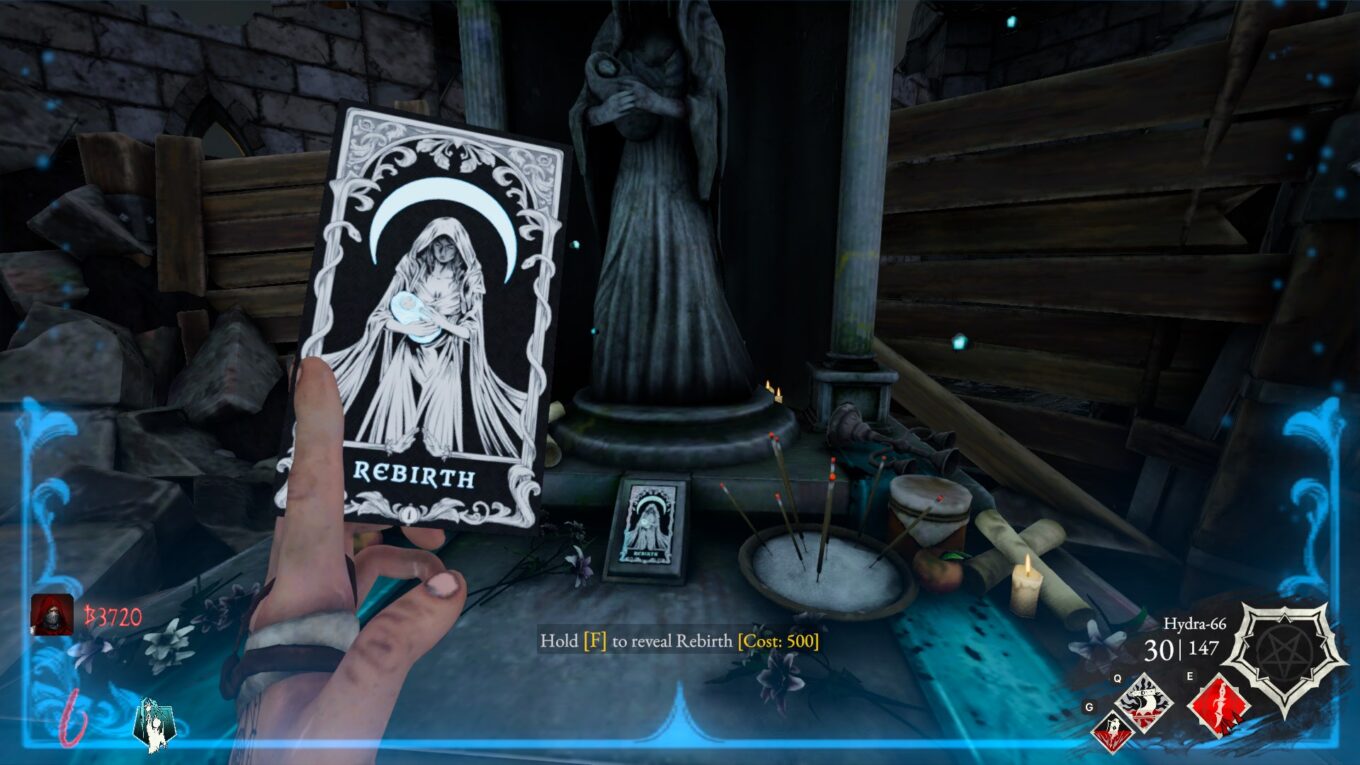
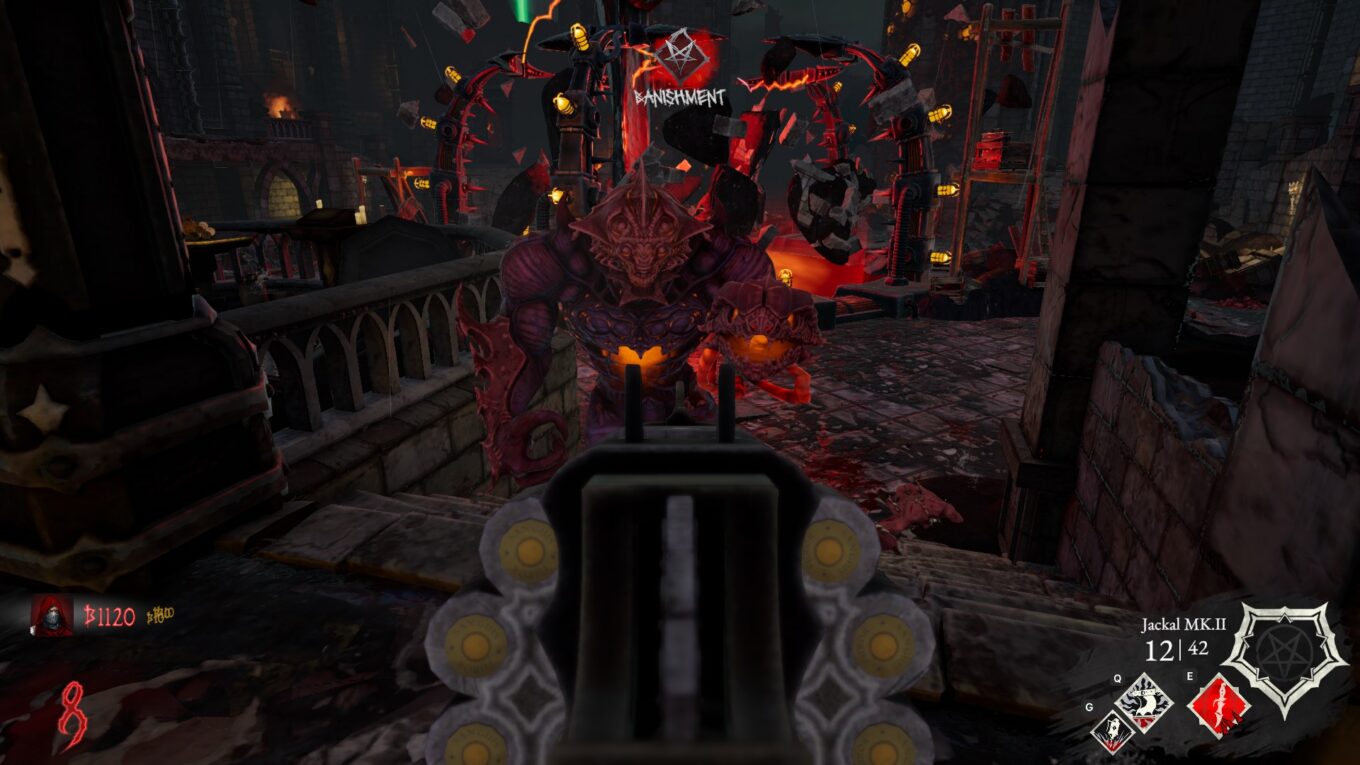
In terms of look, Blood Reaver does try to chart new ground away from its obvious inspiration. For one, at least on Final Stand, the aesthetic takes after WW1 (rather than the Nazi Zombies, which were the original mode’s namesake), with choked trenches and curled barbed wire, woven between stone cathedral ruins. Blood Reaver’s enemies, bright red demon spawn, are more Doom (2016) than any of the zombies that Call of Duty has dreamed up over the years. The weapons themselves also have a gothic flair, decorated with glowing eyeballs and black spikes. Other elements have a pseudo-mystical flair. The shrines around the map have associated tarot cards. The figures they represent range from cloaked saintly women to buff huntresses.
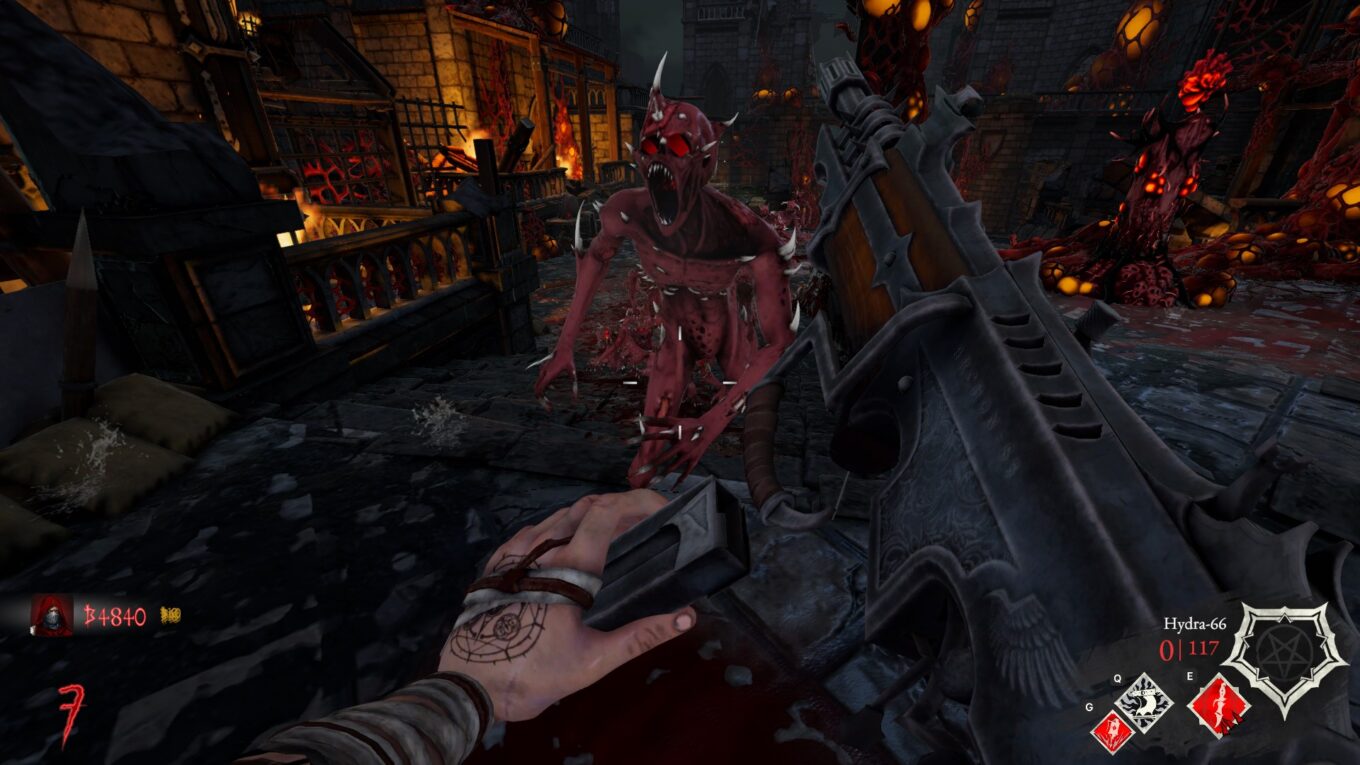
Yet all of these aesthetic flourishes will be familiar to anyone who has played a supernatural-tinged shooter in the past 20 years. The look is serviceable in that it communicates exactly what Blood Reaver has in store, but thereby it cannot shock or awe. The explosion of blood at a headshot or the flesh pustules which decorate some of its locations are visuals which you would expect from any horror game themed around hell. The look takes almost purely from other video games, lacking in the slightest detours to other mediums. This matters more than you might think, even for a game that trades primarily on blood-soaked thrills. The Black Ops map Kino der Toten is a classic in part because of the novelty of its movie theater setting. Resident Evil 4, one of Blood Reaver’s distant inspirations, is full of memorable locations: from the squalid village that opens the game to the monumental baroque manor that hosts some of its best setpieces. Great horror games, whether narratively-dense single player works or chaotic multiplayer horde modes, offer cool shit to look at. Blood Reaver can only offer up leftovers.
Blood Reaver’s aesthetic shortcomings reflect its deeper problem: Every positive thing about it is also found in its inspirations. The intention is explicit imitation, nothing more or less. This is by no means unique to Blood Reaver, though it is especially guilty of it. A massive chunk of the indie market, from hobbyist devs to publisher-backed studios, is predicated on mimicking the past. Perhaps there is something noble in reclaiming the Zombies design from the ever-churning machine of yearly Call of Duty releases, in making it something more intimate and singular (not to mention cheaper). Whatever Blood Reaver’s potential success it, by definition, will foster a smaller community than its inspirations. That scale is charming rather than limiting. The game won’t need massive player counts to continue on its path, only an audience dedicated enough to keep it alive.
But that is no real compensation for Blood Reaver’s unoriginality. Even Zombies itself, a remix of Resident Evil’s Mercenaries mode and Gears of War’s Horde mode, had a few things to call its own. Blood Reaver is such an imitation that it is hard to ground it in anything other than what it stills from. If you are weary of modern Call of Duty, and yearn for the days of Black Ops 1 and 2, you may find a lot to enjoy in Blood Reaver. But it’s not as if those Zombies modes are impossible to play now. What does Blood Reaver offer that you cannot find anywhere else? They say great art steals, but it is a multifaceted theft – a series of robberies, rather than concentrated plunder – which results in art that lasts. Right now, Blood Reaver has no distinct identity. Surely there are people who want Zombies detached from the Call of Duty ecosystem. But don’t you long for something more?