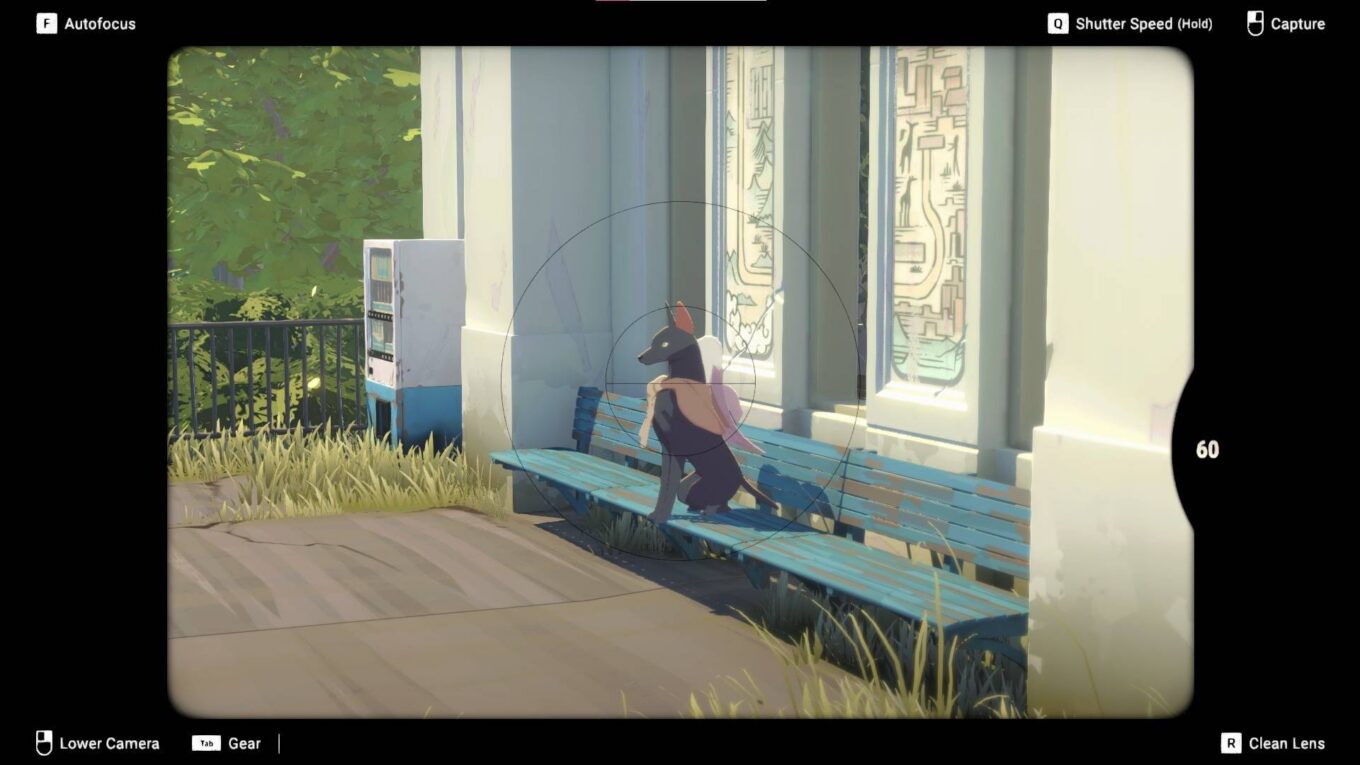
You wander through dilapidated buildings and along forest paths as you wind your way up the mountainside through thickening fog. Click. You see a carved wooden statue of a man crying; a crumbling train station with a dog sitting, waiting; a half-familiar cinema playing an old flick. Click. You remember a first love left on a train platform, a fight with a friend, an overheard argument between parents. Click. Your grandpa told you there were spirits in this forest, a god at the mountain’s peak. Click. Will replaying your past mistakes in your mind fix them? Click. Or does it just prolong the pain? Click. You lift your grandpa’s camera anyway. Click. To remember. Click. You can’t change the past. Click. But you can remember it. Click.
You’re handed a film camera by a talking stag and let loose in the Dusklands, a mythic mirror image of the Japanese mountainside where you – a 40-year-old man called Eugene – spent your childhood. Having stumbled upon a translucent child in this post-apocalyptic unreality, you must help them find a being known as the Seer before they fade out of existence completely. But your journey explores Eugene’s own past as much as it does the semi-familiar environment around you. Click.

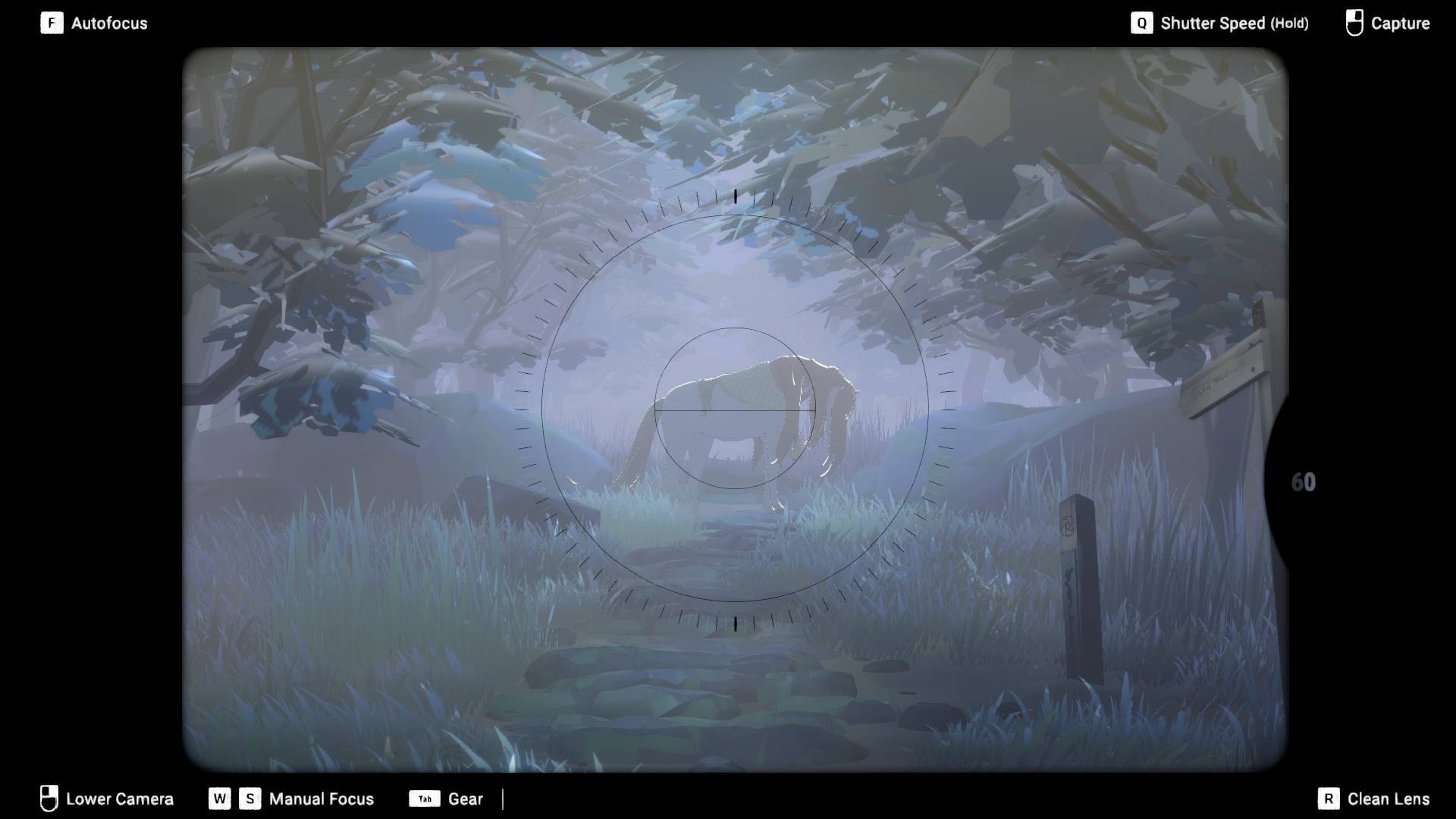
Opus: Prism Peak isn’t really a photography game. It’s a game about photography. You stare through a viewfinder, snap the shutter, and take in the game’s stunning vistas through your lens, but the quality of photos doesn’t matter. You can screw on a filter to give your pics a sepia tone, but the game doesn’t care if the only thing in frame is the subject’s earlobe or an obscured corner of the ancient mural you’re trying to capture. As long as you’ve set your ISO dial to a right-ish setting and you’re pointed in roughly the right direction, your photo is good enough.
When quality isn’t incentivised, you focus on quantity. This analogue camera is imbued with spirit magic and therefore freed from the constraints of traditional rolls of film. Your journal automatically sorts the important snaps from the redundant, allowing you to freely discard your portraits that don’t advance the narrative or unlock a new bonus. As soon as you figure this out and start snapping every potentially important prop and asset, the act of photography loses some of its power. Click. Click. Click.
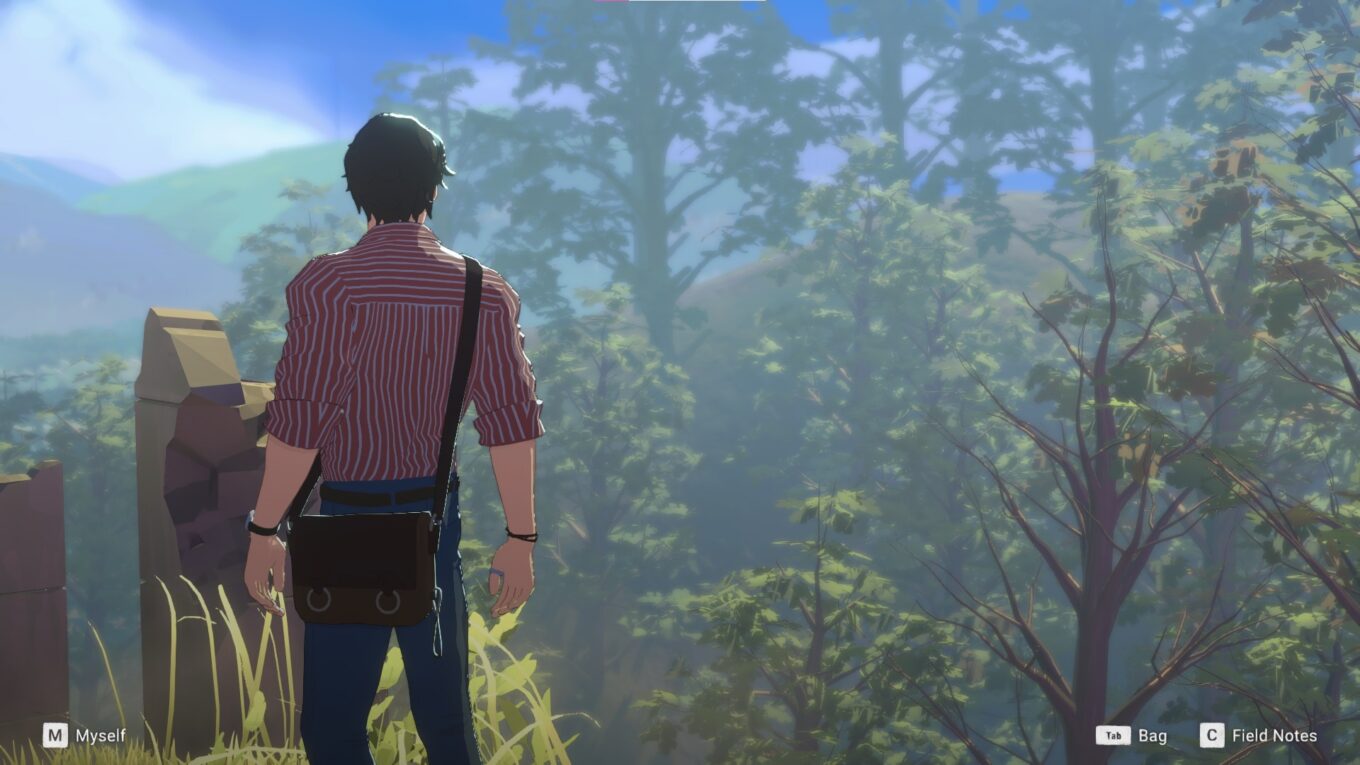
The act of taking a photo leaves something to be desired, too. There is no tactile click when the shutter closes – click – nor rumble as you focus. The latter is almost entirely automatic. Considering that taking pictures is the primary mechanic through which you engage with the story, the act itself leaves you wanting. Click.
You’re lost. You’re trying to remember something. It has to do with a horse you’ve met. The horse is important to you, or the non-horse version of her was in the real world. You take photos of her, of her surroundings, of a butterfly on a grave, in the vague hope of recalling her importance. Click. Eventually, the puzzle piece fits the gap in your hippocampus. You realise that Opus: Prism Peak is a memory game.
Eugene’s ward doesn’t even remember her own name when you meet her. The characters that help you find the Seer are personified animals who embody key figures in your life. The pictures you take help you remember your relationship to them as Eugene unpacks his past trauma. Click. The ruins of an empty train platform in the Dusklands will trigger a flashback cutscene of a bad breakup, a talking weasel is a scorned friend. Click, click.
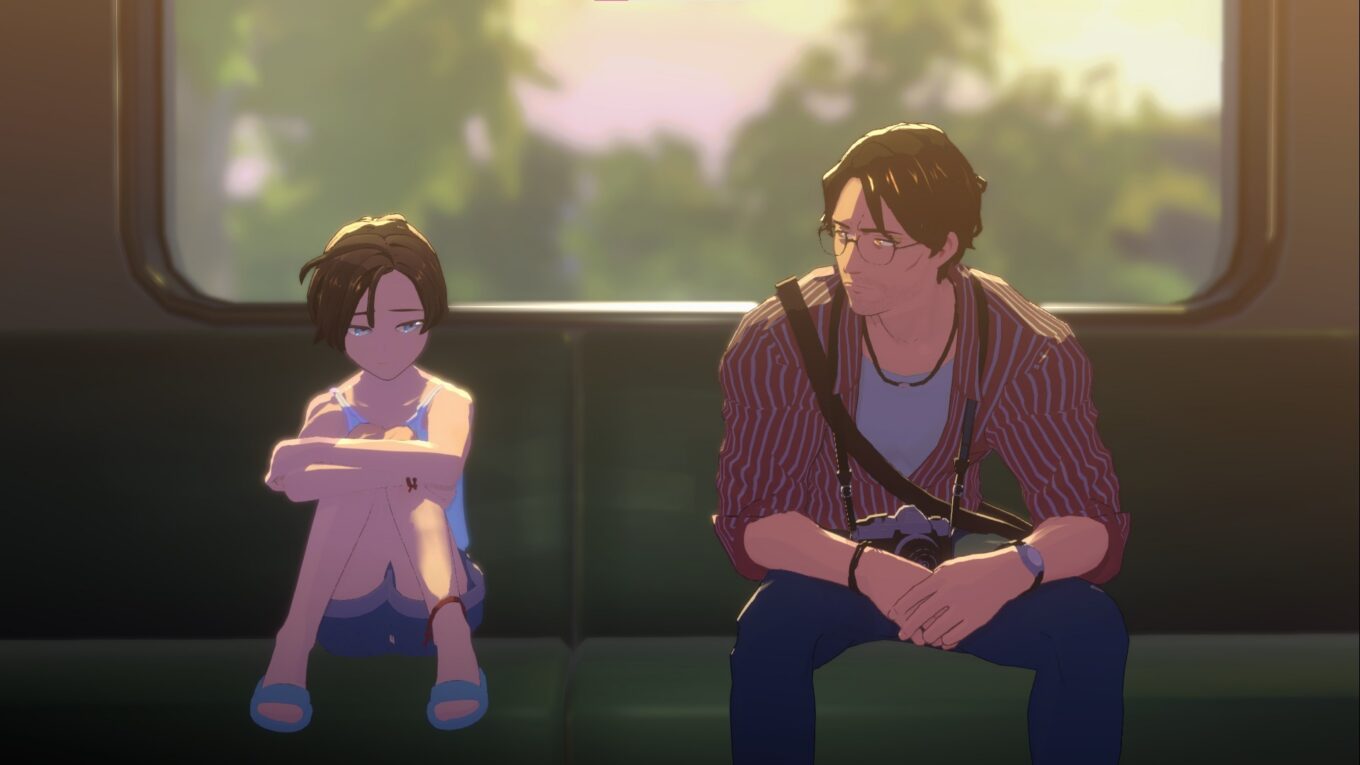
Memory is folded into every mechanic. Sometimes you’ll have to remember a character’s name soon after meeting them, despite it being written in glyph-like symbols. Other times you’ll have to fill in your journal, recalling conversations from flashbacks in order to piece together Eugene’s messy life and the even messier situation he now finds himself in. Your progress is never halted by these memory tests, but they offer a way to fill in more of Eugene’s life thus far, and are as compelling as his plight to reach the foggy peak ahead. Click.
Layering the narrative between pages of the journal way forces you to interact with the story, to listen to your friends: the same lesson Eugene is learning. Few games stick their mechanics into their narrative scrapbook so cleverly, and the very act of journaling, of testing your attention span and emotional intelligence, immerses you in Eugene’s story more than any amount of photorealistic reflections could ever.
However, the journal itself is tedious. You’re standing in a city populated by fading ghosts. You’re trying to track down old friends, colleagues, and help them to reconvene before it’s too late, before your ward moves from translucent to fully transparent. But any urgency is immediately undercut because, first, you need to unlock some memories, some upgrades for your camera, some more pages for your photo album. Arbitrary upgrades unlocked through dull busywork.
Taking photos unlocks journal entries. Click. Watching cutscenes allows you to fill in those journal entries. Showing the correct picture (click) to carved animal totems at fire shrines unlocks, you guessed it, more journal entries. While they serve an interesting narrative purpose, you have to navigate far too many menus to unlock them. Talk to a totem at a fireplace. Find the correct photo from your album or, worse, find the appropriate subject and take a new photo. Click. Unlock a piece of ash. Find the ash in your inventory. Read the flashback, text over a smoky background. Check your journal. Read the corresponding journal entry. Repeat multiple times per totem. Click. Click.
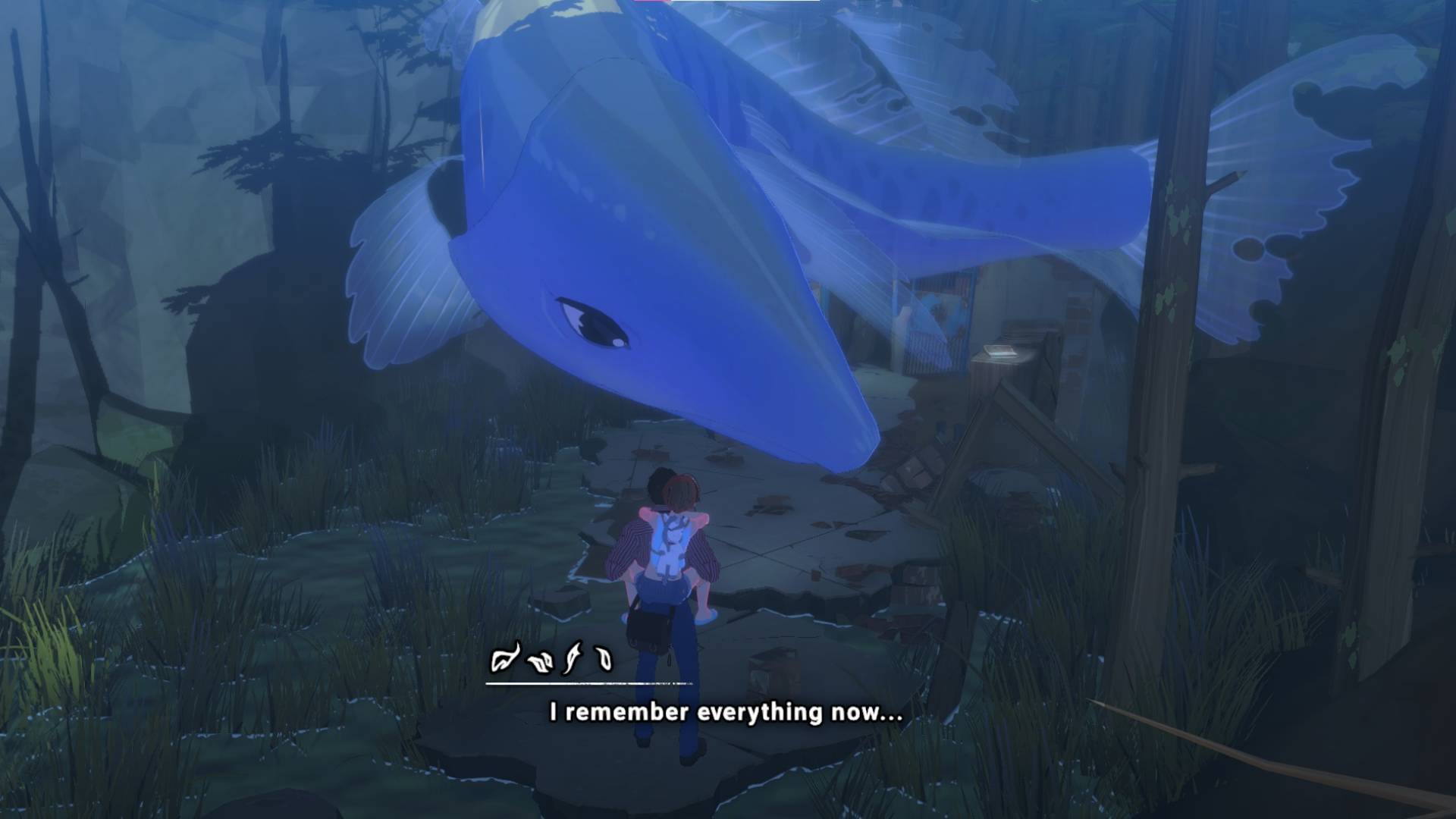
Pacing is a recurring problem. From burying your nose in menus for dozens of minutes at a time to wandering around a beautiful forest or decaying city searching for the right photo to move the story forwards, this game is meant to be sauntered through. This is at odds with the urgency of your core mission – the child you carry on your back is fading, remember? – but is also disrupted by lightning-fast endless runner sections for no discernable reason. Egregious both in terms of tone and furious pace, these are at odds with everything else the Prism Peak tries to do.
During the final act of the game, this sauntering pace slows to an unbearable crawl. You see numerous narrative false peaks as you shuffle closer to the mountaintop, each an excruciating misstep that draws you closer to the perilous cliff face of boredom. Click.
You’re near the end now. Reflecting on your journey. Despite the tedium of filling it in, your journal is a prize now, a treasure trove of memories explored and friends, family, and lovers reconnected with. You flick through your pictures, of the beautifully illustrated world and the genuine, flawed characters who inhabit it. Suddenly the intangible camera doesn’t matter. The unskippable cycling minigame is, somewhat ironically, forgotten. You see the stars, the peak, the magic of this story as if it were wrought in silver filigree and wrapped in a borealis.
Click.