The onslaught of remasters and remakes of the last decade has proved time and time again that nostalgia sells. With this wave has come a series of game developers focused not just on bringing back a specific franchise, but a period of time altogether. Along with boomer shooters and the trend of low-poly games, many studios continue to put their own spin on the survival horror genre, tracing back to the very roots of the first Resident Evil and Silent Hill games.
Ground Zero, developed by Malformation Games, isn’t coy about its influences. It introduces itself as a survival horror title that features fixed camera angles and pre-rendered backgrounds, a small inventory to shuffle and manage constantly, and an assortment of terrifying creatures to face in tight and claustrophobic corridors. While it undoubtedly sticks closely to the likes of Resident Evil, sometimes to its own detriment, it also features enough modern tweaks and customization options to stand out, offering a familiar yet more accommodating experience overall that is worth traversing through.
The story begins at the Transcontinental Union’s military briefing, with two figures stating their names: Jang Seo-Yeon and Evan Fielding. These protagonists that will overtake an important mission — with Ground Zero riffing on the alternative routes of Resident Evil 2, for example, in which you get to experience the events from the perspective of both Leon Kennedy and Claire Redfield. Here, Seo-Yeon specializes in close-quarters combat and has excellent weapons proficiency and marksmanship. Then, Evan is an expert technician, mechanic, and medic, which makes them the perfect pair for the job.
And they will need those existing skills and more for this job in particular. At 7:52 am on July 26th, a meteor with unusual signatures struck Daejeon. The mission’s breakdown goes like this: Objective one is to travel to Busan and retrieve data on the atmospheric conditions since the impact. Objective two is to travel to Daejeon and investigate the actual impact site. Then, once it’s all set and done, the last step is to await instructions on how to clear out the radiation and other contaminants, and coordinate the escape.
From the outset, however, the Transcontinental Union makes it clear that, once deployed, Seo-Yeon and Fielding are on their own. The organization has no assurances of the pair’s safety for this mission. No backup will be provided, and neither is extraction guaranteed after the objectives are complete. It’s a grim setup, and an equally grim premise.
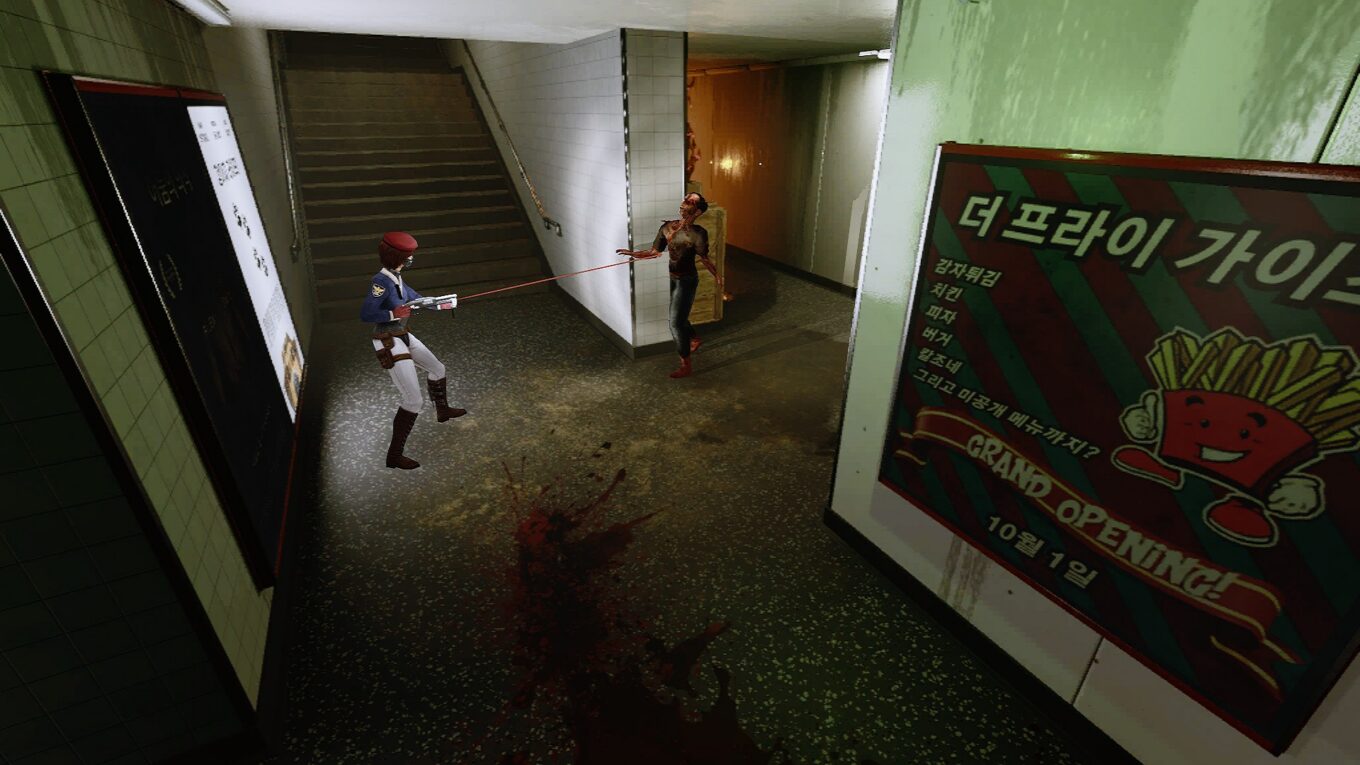
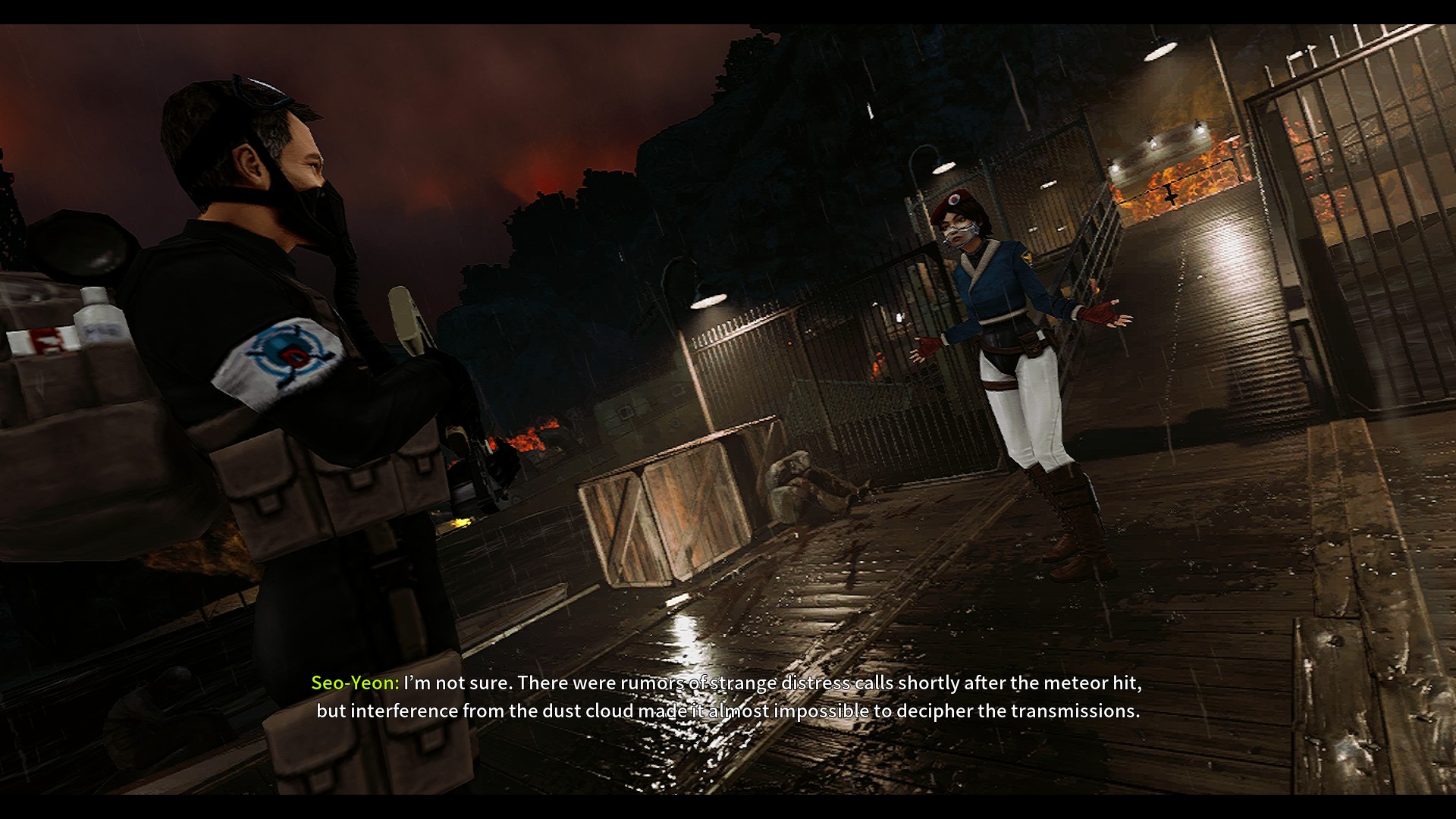
Ground Zero taking place in a post-apocalyptic South Korea makes for a welcoming change of scene. Along with a plethora of street signs and fake advertisements, Seo-Yeon also speaks in Korean at times, and her dialogue is properly translated. It makes it all feel seamless, and while it might seem small, captioning characters speaking in languages other than English is something that many other games, including giants like the Resident Evil 4 remake, can’t quite get right.
Yet, as much as the setting is substantially different, which extends to enemies and certain environments to an extent, Ground Zero is perpetually familiar. Everything from puzzles, using specific checkpoints to save your game, to the way you move and shoot at enemies all rings a familiar tune. Thankfully, there’s a tangible effort in emphasizing that this is a modern iteration on a classic genre, with some new ideas thrown in the mix.
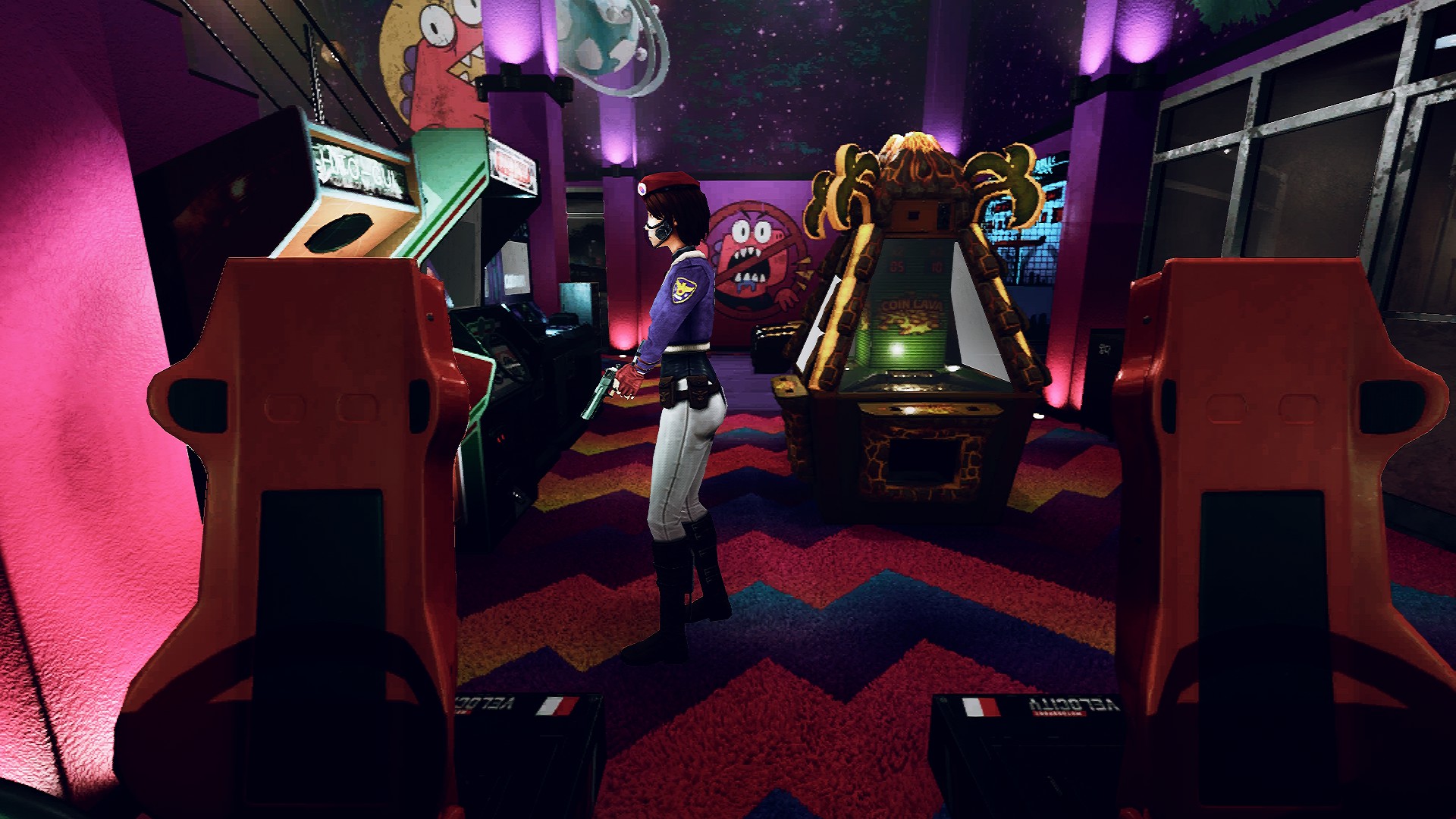

From the get-go, Ground Zero gives you two overarching options to control your character. You can opt for traditional tank controls, with your character turning relative to the direction they’re facing, or modern controls, with your character turning relative to the direction the camera is facing instead. Both feel old-school enough, thanks to the fixed camera angles and transitions happening as you explore levels, as they do in classic Resident Evil and Silent Hill games. In a similar fashion, you can pick different difficulty options for both combat and puzzles separately.
In terms of combat and exploration, you can expect the usual suspects, albeit through the lens of Ground Zero’s setting. Instead of herbs, your main tool to heal yourself is a syringe, which can hold up to three different boosters. Along with mending your wounds, you can also use it to gain resistance against certain elements, provide stamina boosts, and so on. Then, Signal Modulators are used like ink ribbons to save your progress in designated spots. Depending on your difficulty, the game also saves automatically at certain points, but this gives you more control.

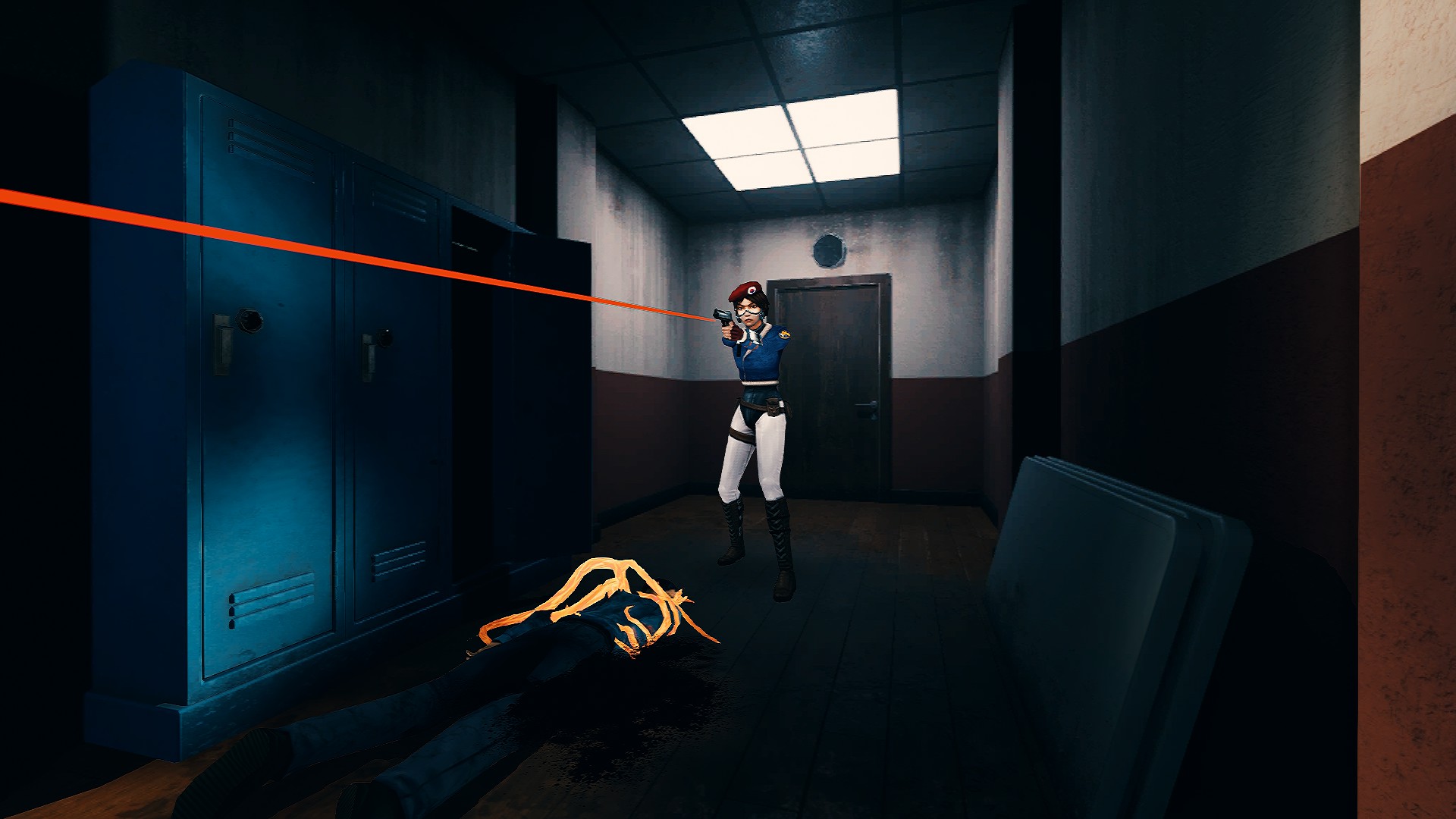
As far as standout features go, it’s also possible to parry enemy attacks. This is performed by blocking at the last second, which leaves an enemy briefly stunned and open to a follow-up attack. This won’t kill them, but it has a chance to knock them to the ground, which makes for a great opportunity to swiftly execute them. The timing is quite precise and takes practice to nail it, but it’s always satisfying and can really help in saving ammo.
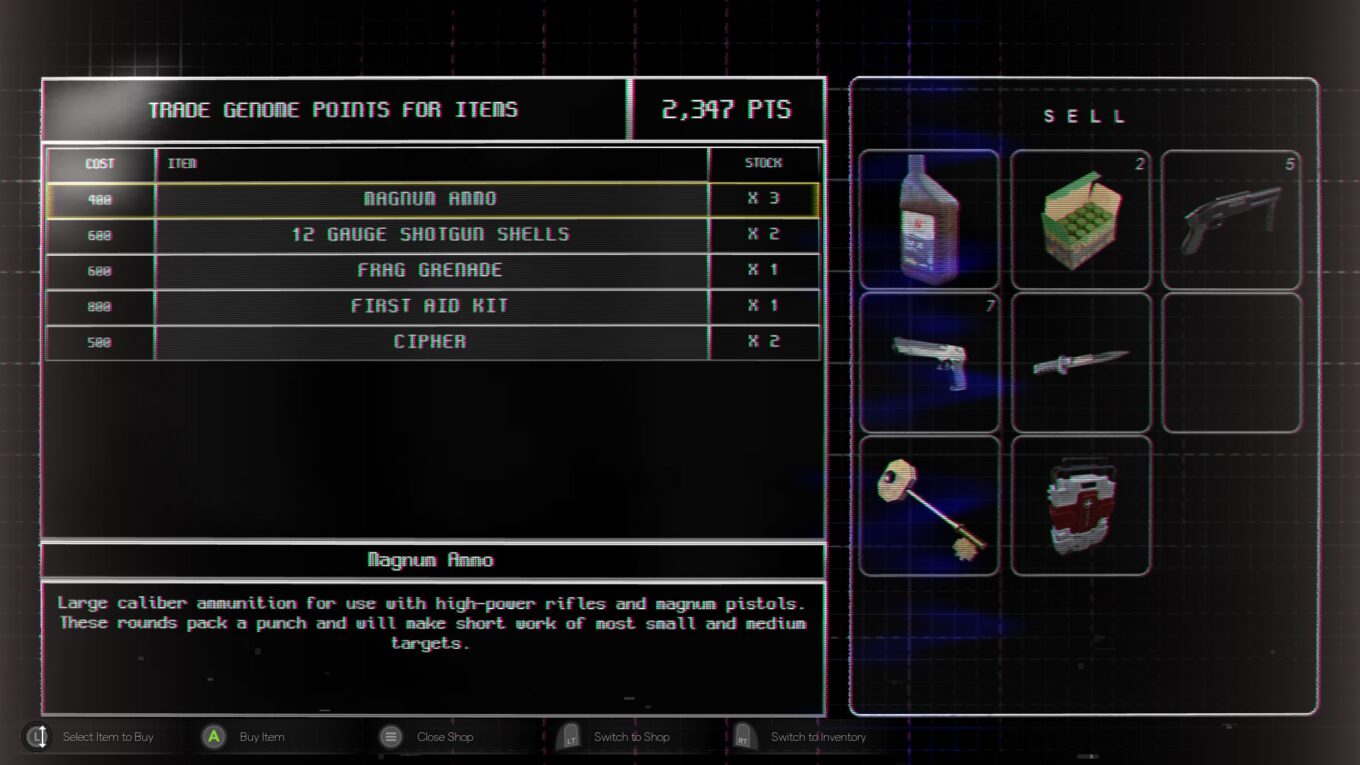
Parrying, as well as your weapon of choice, goes hand in hand with your scanner. After you defeat an enemy, you’re encouraged to scan the body for Genome Points. This material is used as a currency to purchase items and upgrades at specific terminals scattered throughout levels. An interesting aspect here is that there are different quality levels depending on how you kill an enemy. Using your knife or the aforementioned ground execution will normally yield a perfect example. Use a shotgun, and the sample will be poor, granting fewer points. Even switching from a magnum to an automatic rifle yielded different results, which adds an interesting layer to combat to consider. Over time, you can also upgrade your knife, which makes for a bigger incentive to try and approach encounters with a close-quarters combat strategy.
Inventory management is as annoying as it should be. More often than not, I’ve ended up having to destroy medkits or put boosters in the syringe only to make space. There’s a safe that is shared across all save checkpoints, which is useful — once you actually get to it, that is. Thankfully, Ground Zero takes a nod from modern survival horror games with specific icons for loot on the map, so you can always retrace your steps to gather ammo or to find your footing if you’re stuck and don’t remember where you needed to use a certain object, for example.
The flow of blockers — reaching a blocked path that requires a key code or an item to progress — strikes a good balance without ever feeling too aggressive. One time, I couldn’t find the other half of a key. I was sure that I had visited every possible dimly lit room and gritty hallway that was available to me. While on my third lap throughout the map, I noticed a whiteboard that I had completely missed, which had the door code I was looking for. There are a few environmental cues like this to follow. While some are maybe too easy to walk past without noticing them, it adds to that old school element of not wanting to hold your hand too much.
The same applies to how maps begin to interconnect with each other once you get to the other side of previously locked doors. Even if the environments themselves aren’t that visually interesting, the feeling of slowly unraveling a puzzle-box is always present. Some of Ground Zero’s best moments were when this familiarity was subverted. One time, I was stuck in an area and found myself retracing my steps. For this one specific room, I could hear someone knocking on the door from the opposite side. I went outside to grab some items that I had missed, and when I returned, an enemy slammed the door wide open, granting me passage and quite a scare simultaneously. Another time, I unlocked a door using a key — normally, when doing this, the screen fades to black, and the game transitions to the next room. This time, however, an enemy came out from inside and promptly attacked me.

Ground Zero sticks quite closely to its influences during its runtime. Again, just like Resident Evil, there are branching paths to take that become different routes, which is a good reason to revisit the game in subsequent playthroughs and experience the events from a different perspective. Compared to the likes of Signalis, this survival horror game doesn’t try to innovate in the genre, but rather caters to all the necessary elements that horror devotees have come to expect. Stay for a while, however, and its scarce but meaningful additions and tweaks will win you over.