Deckbuilding is more popular than maybe ever, but developing alongside those games is a sort of cousin: the autobattler. The genre, starting from (what else) a DOTA 2 mod, removes the immediate tactical play from strategy games of this kind. Instead, every asset you gain is set on a timer, which activates in sequence as you battle another player’s set-up. You strategize to optimize an army or a set of equipment and then watch the results. Cats in the Shell differentiates itself through two basic means: its unapologetic anime aesthetic and its fully-animated mech battles. Instead of an armory of weapons or an army of creatures, you kit out a fighting robot, swapping mobile frames, shoulder cannons, and beam sabers (not to mention cat people pilots) as you fight through battles against computer-controlled monsters and other players. As the timers go off, you watch two fully animated mechs battle, complete with flashy animations. In its current shape, Cats in the Shell feels confident, but also bare.
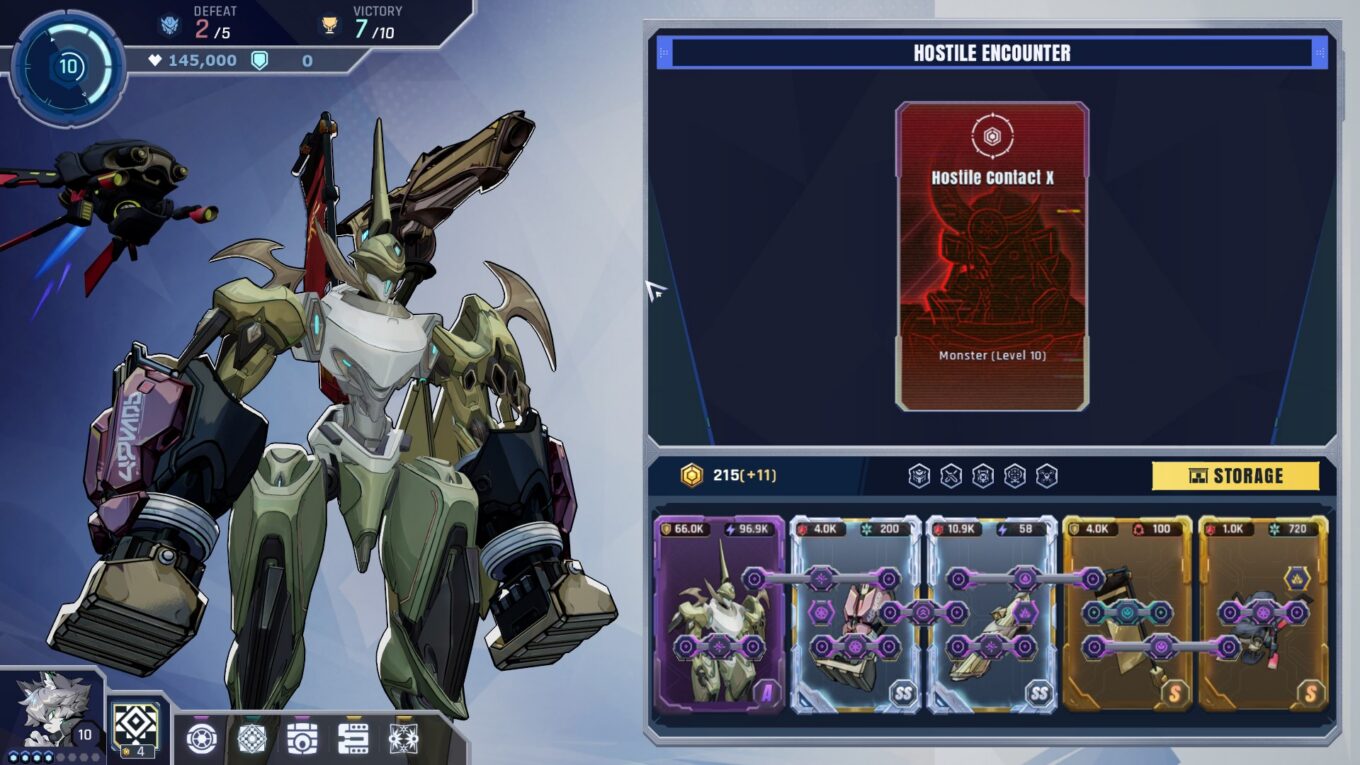
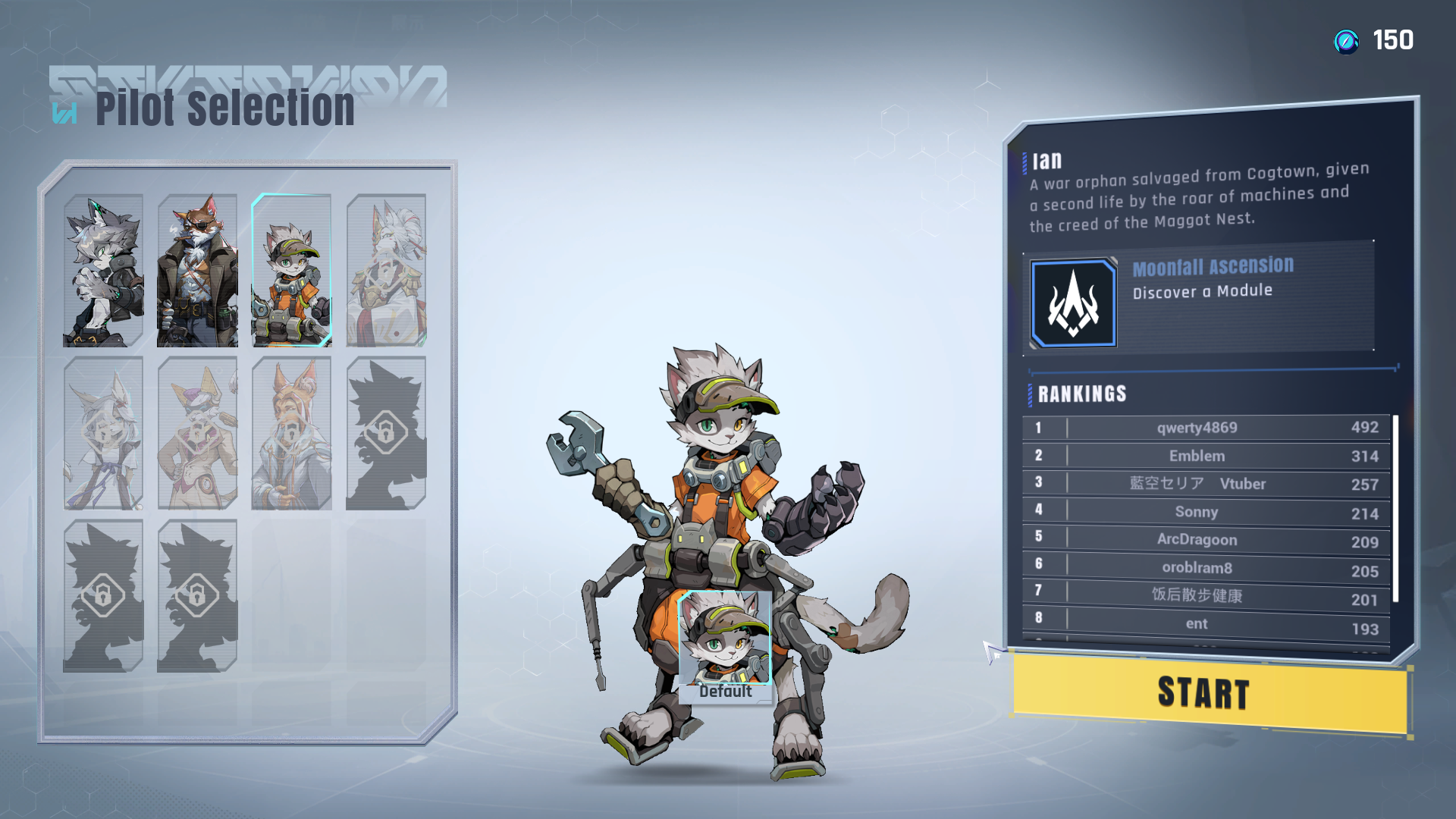
Like other autobattlers, Cats in the Shell has a broad “drafting” structure (more on this later). You’ll start by selecting a pilot, who gives you a light ability, like gaining experience or a bonus for a fee. At the start of each round, you’ll draft some equipment, go up against a computer-controlled enemy, draft more equipment, and then face off against another player’s build. Lose five times against other players, you are out. Win ten times and you’ve bested the challenge. The final game will have a story mode, but the preview (which you can download on Steam) has only an “arena” mode. For now, at least until the game’s approximate release of Q4 2026, the autobattling is pure.
If you’re interested in mech battles (or for that matter cat boys and girls), but otherwise have little experience in autobattlers, Cats in the Shell is diving into the deep end. There is a tutorial, but it is a mere powerpoint presentation of text and images. It is easy for all that to wash over you and to get lost when you have to make actual decisions. Experience, and a fair amount of reading, are the only ways to get familiar with the game. Right now, there are no shortcuts.
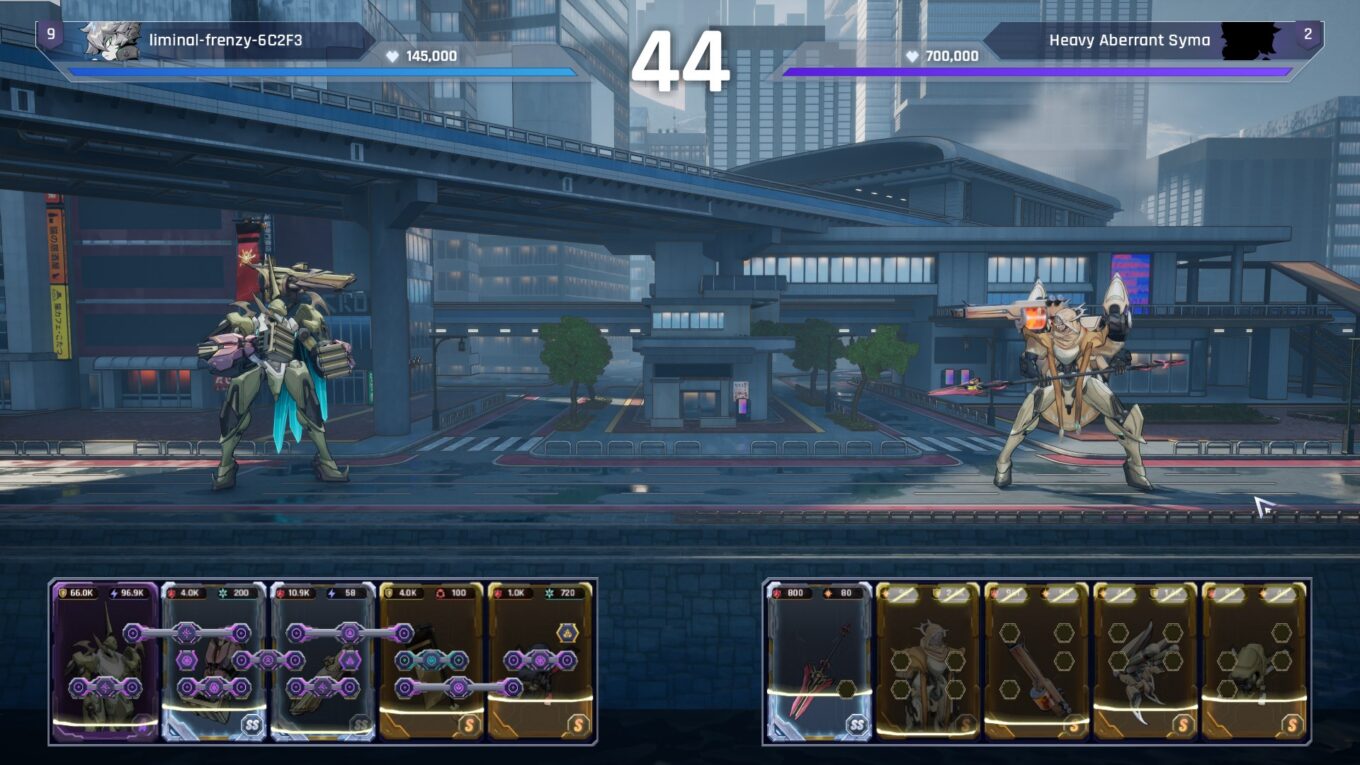
But you do get a sense of it almost right away. Each build is based around specific effects, which individual parts can cultivate. Most of these specific effects are self-explanatory, if you’ve played any RPG-tinged video games before. “Cold” slows the timers on enemy cards. “Might” increases the percentage of your damage dealt. In broad terms, structuring your mech around a specific effect is advisable. But you need to consider the problem from all angles. If your mech won’t survive long enough to activate its most powerful effect, then there’s no point. Slowing your opponents mech down or boosting your own mech’s shield is essential to staying alive.
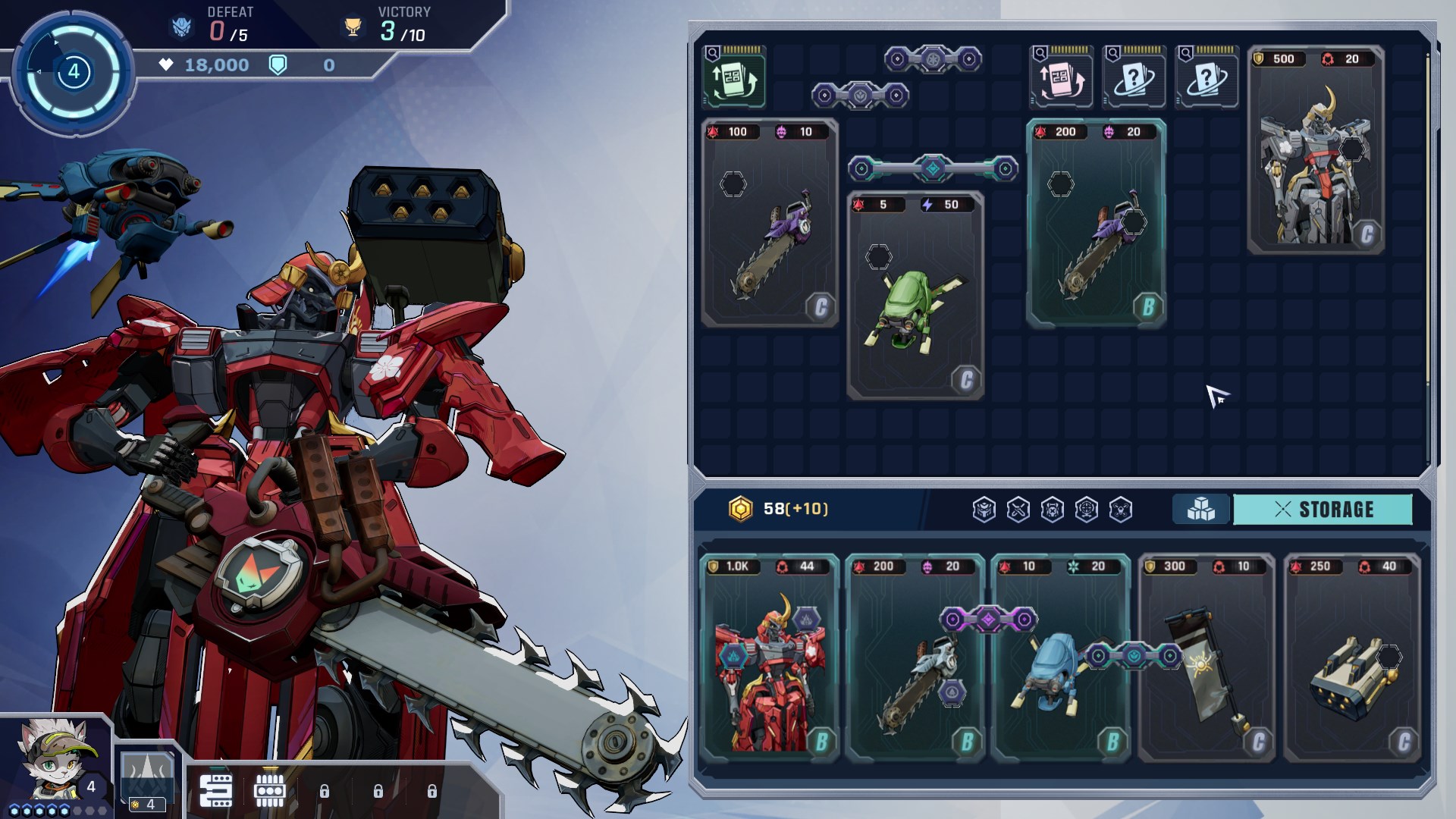
In addition to selecting your mech’s weapons, shields, and support robots, you’ll also slot “modules” into empty slots on each items’ card. This is where the synergies between abilities start to heat up. Some modules activate one effect when another is activated. Others interfere with your opponents mech every time your own mech attacks or shields itself. You can even arrange the cards on your tableau differently to open up new spots for multi-card modules. Whether this sounds appealing or soul-deadening to you is a good indicator of how much you will enjoy Cats in the Shell. Most autobattlers, this one included, are based around this sort of fussy numbers play. This one may have lavish mech battles, but don’t let that fool you. It is still a game about math.
As someone who has only dipped her toes into the vast lake of autobattlers, Cats in the Shell reminded me of drafting Magic: The Gathering. Basically, this is a trading card game format where you build a deck on the fly, selecting cards from packs which are passed around the table. Then, you play a little tournament against the rest of the players. Cats in the Shell removes the second part of the formula; it’s all drafting. Feedback is immediate and you’ll never have to suffer through playing with a poorly-constructed deck. Fights are fast and new equipment drops after every run, which you can use to totally transform your capabilities.
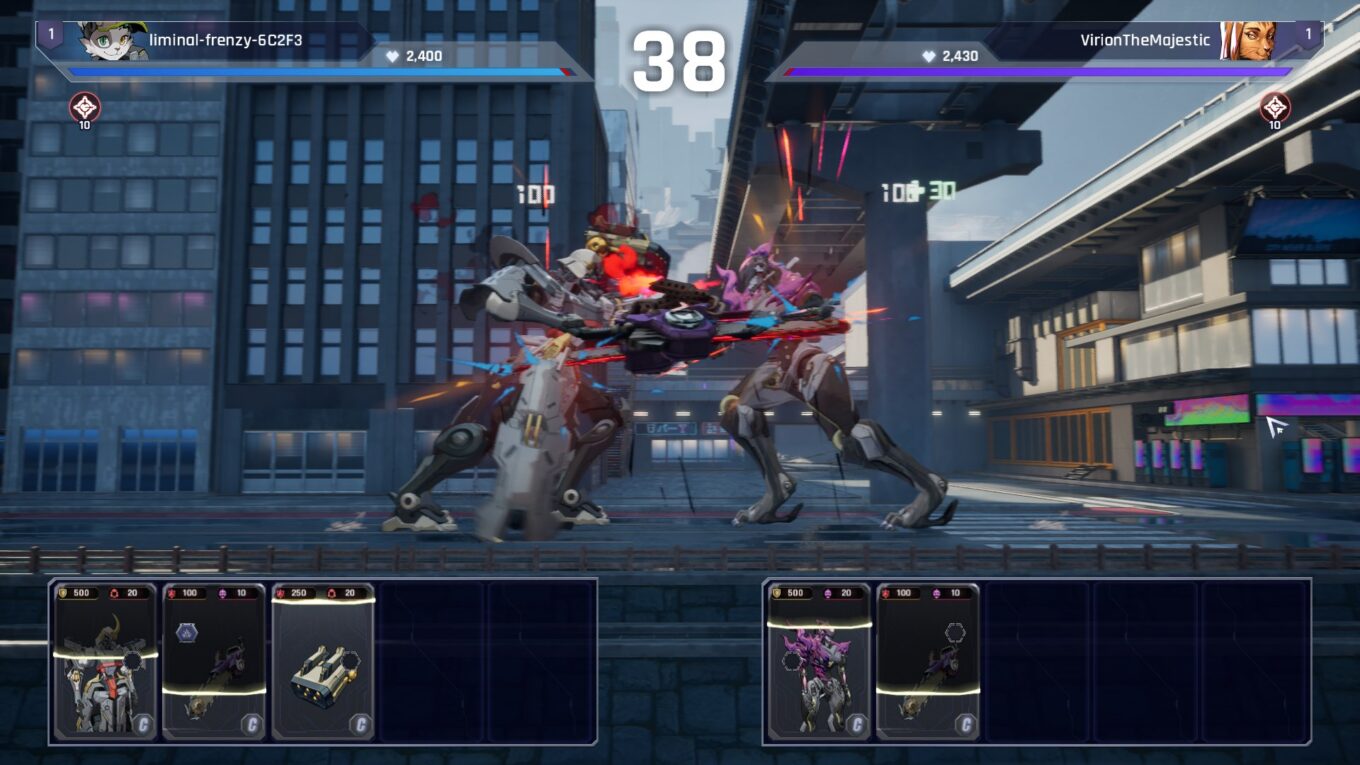
But I like the play part of drafting. In Cats in the Shell, there’s the suspense of watching your build crash against another, but not the thrill of making an unpredictable play or watching a shifting board state affect your plans. You might already have a sense of who will win just by looking at the build you are going up against. You can make no brilliant tactical moves to change that outcome. There is also less room for direct human error. I’m sure that I’ve made plenty of mistakes in selecting my mech’s parts, but those mistakes are not immediate, or especially tangible. The other players I’ve battled surely also made errors in their builds, but those mistakes were not evident to me either. Being able to pick a match apart in its aftermath is part of the fun. Cats in the Shell is so slick that it is hard to do that.
And now, a more personal grievance. A mech, from the original Mobile Suit Gundam to the Evangelion Unit-02, is a dreadful machine. Without any context to hang over Cats In The Shell, the mechs only get to be cool. And look, this is a common grievance I have with mech games. In the gachas and fighting games that can define the genre, there’s not always room for anguish or brutality. It is perhaps a bit silly to ask for it in a game like this. Maybe the story mode will provide some of it. But part of the joy of mechs is that they are both really cool and totally evil. The tension between those things is what makes the genre still compelling after decades of iterations.
Additionally, it’s a kind of juvenile, overwrought cool. Cats in the Shell’s cell-shading is a hodgepodge of anime influences. The mechs have skull faces and samurai helmets embellishments. The battle arenas are cherry blossom city streets and idol pop arenas. It’s similar to the way Big Hero Six or Overwatch depicted Japanese culture: a not-exactly offensive but ill-advised-feeling set of broad, recognizable ideas. Again, perhaps the to-be-released story mode will help flesh out this world, but what flickers of it are here do not pique my curiosity.
Cats in the Shell does exude enthusiasm. One could take the basic format of an autobattler, layer some cheap mech aesthetics over it, and call it a day, but Cats in the Shell developers Raven Studio decided to go all out. The fully animated battles are fun to watch, punchy and exciting when these games can feel quite dry. Despite my earlier gripes, the people that made this do seem to love big robots. The appeal of building one of your own and battling others is self-evident; plenty of other games have tried to capitalize on it. If you are looking for a homespun autobattler, far from the live service woes which might haunt Teamfight Tactics or The Bazaar, Cats in the Shell may have some serious appeal. But it’s hard to sell its appeal to players brand new to the genre or to argue its case for someone already entrenched in another game like it. Cats in the Shell has fighting charm and rookie potential, but elite fighters may still leave it in the dust.