
The use of elements in video games can be traced back decades. Anything from Kirby to indie darlings like Magicka and a myriad of roguelikes and RPGs all make use of them as a central mechanic. Is it a novelty? Not exactly. But the feature’s execution can make a difference – which is the case for Fading Echo.
This action-adventure RPG developed by Emeteria and published by New Tales is an amalgamation of ideas that you’ve seen before. Fire is effective against ice and vice versa. You can kick enemies off of ledges. You solve puzzles by making use of the tools and elements at your disposal. Yet, Fading Echo has a comicbook-fueled charm that pushes the experience forward, and packs it with a standout style that brings the experience together at every turn.
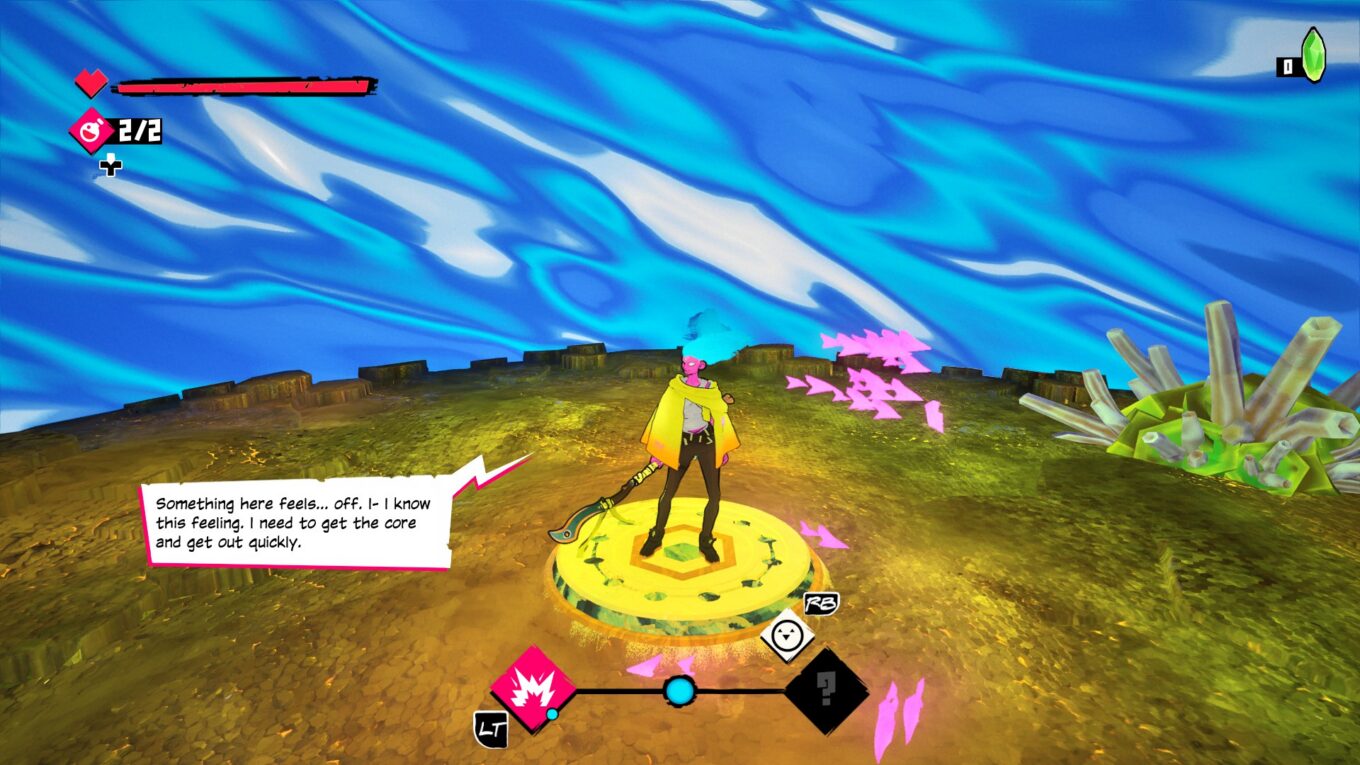
You take control of One, a young woman who is tasked with exploring and defending what at first seems like a regular desert. As you try to scavenge for water, you come across a series of glitches and anomalies. Simply put, something isn’t right. After an enemy confrontation, you’re sent through what seems to be a series of different realities, ending up on what’s called the shadow of your world – the complete opposite, but despite the differences, it also serves as a reflection.
After a first cursory search through this different yet familiar realm, Fading Echo presents you with The Bastion, the game’s main hub. In essence, One needs to explore different regions, all sprawling from this place, and search for aether. These energy sources are then used to power The Bastion, and slowly counter an infection that is corrupting every place, and one that is bound to reach every place around you and the people within it.
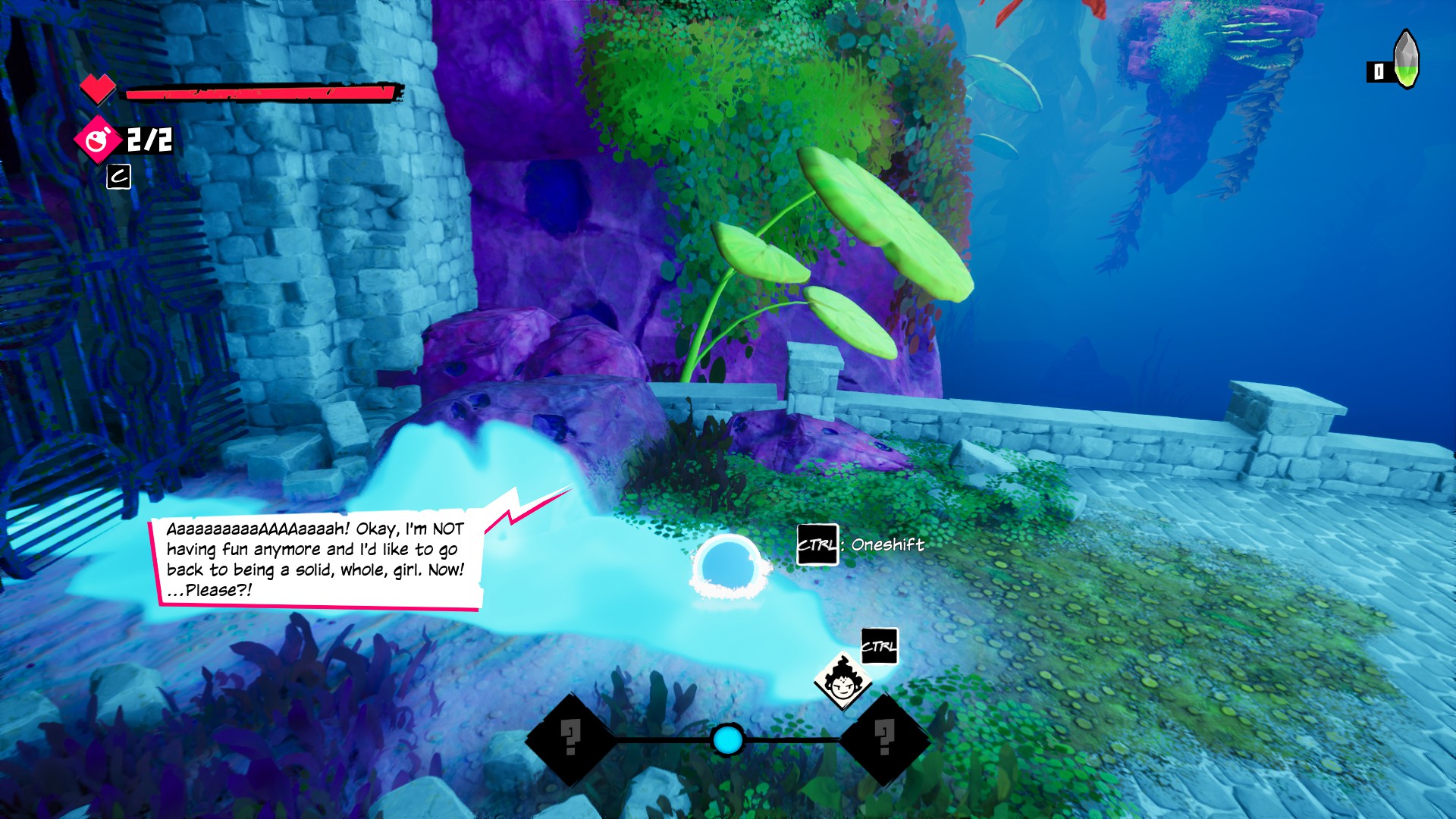
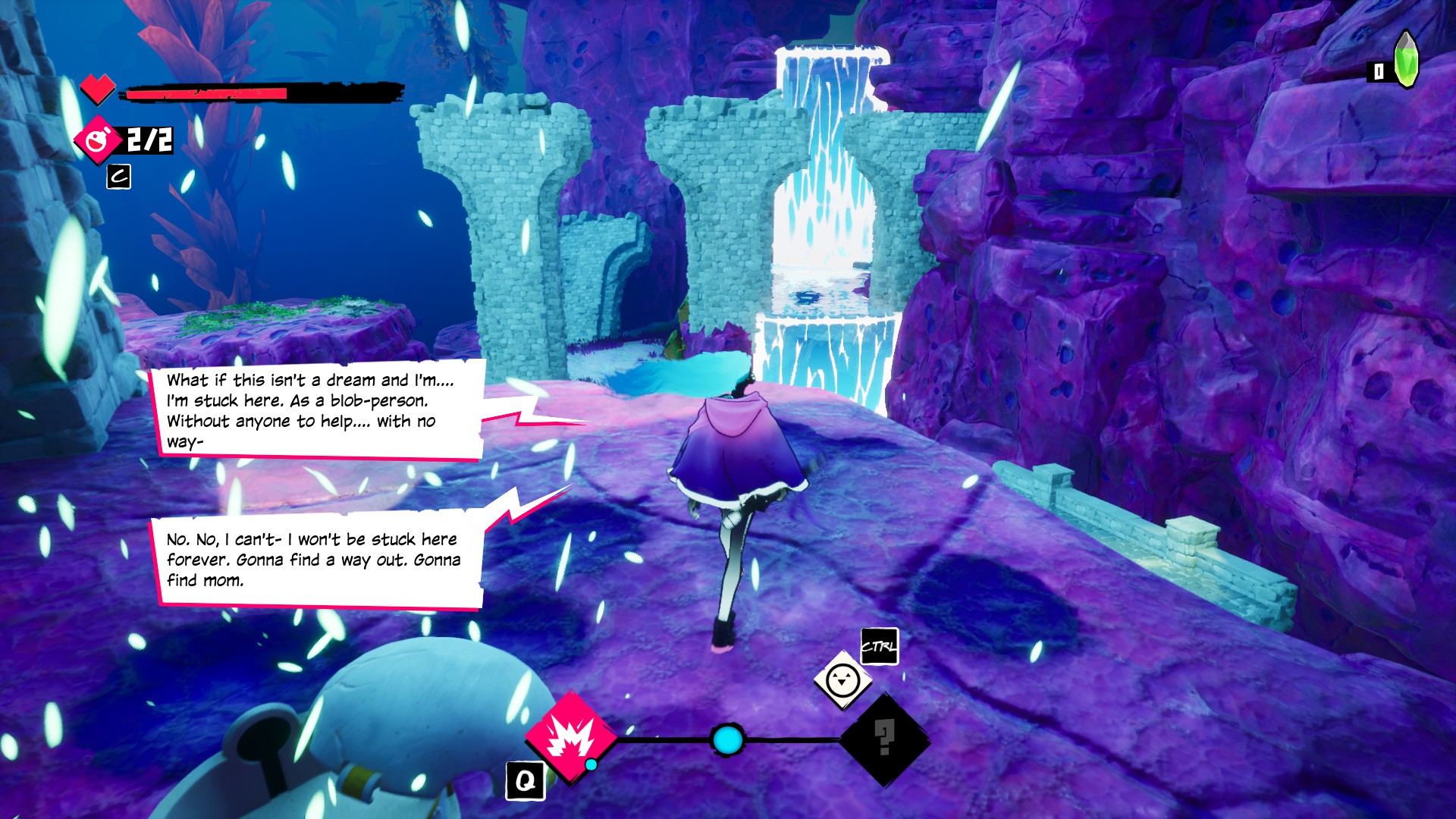
The multiple-dimension prospect is actually used as a central mechanic. With a not-so-subtle hint to Spider-Man: Into the Spider-Verse, there are multiple sections across regions where you need to visit the world’s shadow to solve puzzles, open doors, and ultimately grab the aether you need to activate a portal that will take you back to The Bastion for you to rinse and repeat. There is a lot at stake – not just reality itself, but the people close to One as well.
Action and platforming go in tandem, and it’s here that elements take the starring role. As One, you command what seems to be a regular video game protagonist. The trick is that, once she travels to the alternate dimensions for the first time, she gains the ability to essentially become an agile water blob. This form allows you to absorb elements that you come in contact with. Let’s look at combat as an example. If you’re fighting a foe engulfed in flames, jumping to the air and then using your attack to stomp the ground with force will cause a water puddle. Enemies coming into contact with it will be solidified, which means that it will only take three strikes for them to die. Do the same with acid, and they’ll be weakened. At the same time, if an enemy is engulfed in water, kicking them to the nearest fire or pool of lava will incinerate them, weakening their defenses.
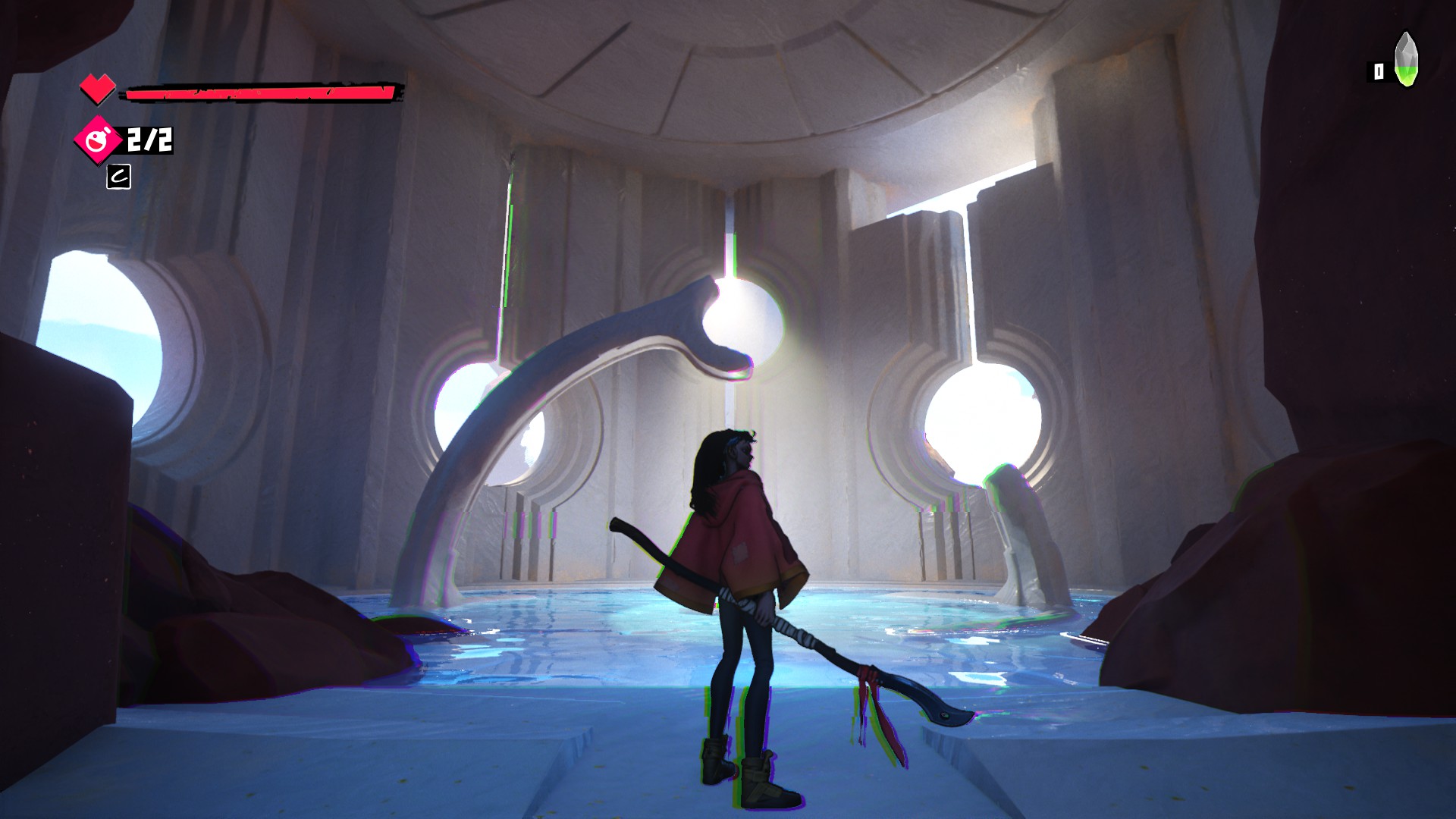
Again, this is nothing new, but I have a particular fondness for the way Fading Echo makes use of this. Your combat capabilities are rather simple, starting with just a basic combo of light attacks and the water blob ability. Yet, you can also kick enemies with enough force to push them away. Taking cues from the likes of Assassin’s Creed Valhalla, the kick is a powerful tool. Of course, its biggest utility, and the most exhilarating, is being able to literally kick enemies off of ledges, of which there are plenty during enemy encounters. But there are usually large areas of elemental remnants, either already present from the scenario itself or as leftovers of your actions, leaving puddles and stains on the ground. Time your kicks right, and you can push everybody to the nearest weakening point with ease, flipping even the hardest smackdowns to your favor.

In general, combat feels great, and the overall action is quite snappy. It’s a welcoming change of pace to play a combat-oriented game in 2026 that doesn’t rely on parrying systems. As much as I enjoy the experience of a good Soulslike, it can all start to become tiresome when plenty of studios are attempting something similar. Here, especially when fighting multiple enemies at once, all with their own attack patterns and behaviors, I felt the challenge was always keeping me on my toes without being frustrating. Choosing which ones to prioritize first, looking for opportunities to kick them off ledges, remembering who I should be pushing to lava or water, and even becoming steam to get out of a tough situation by touching fire while in water form all are actions that blend seamlessly with one another.
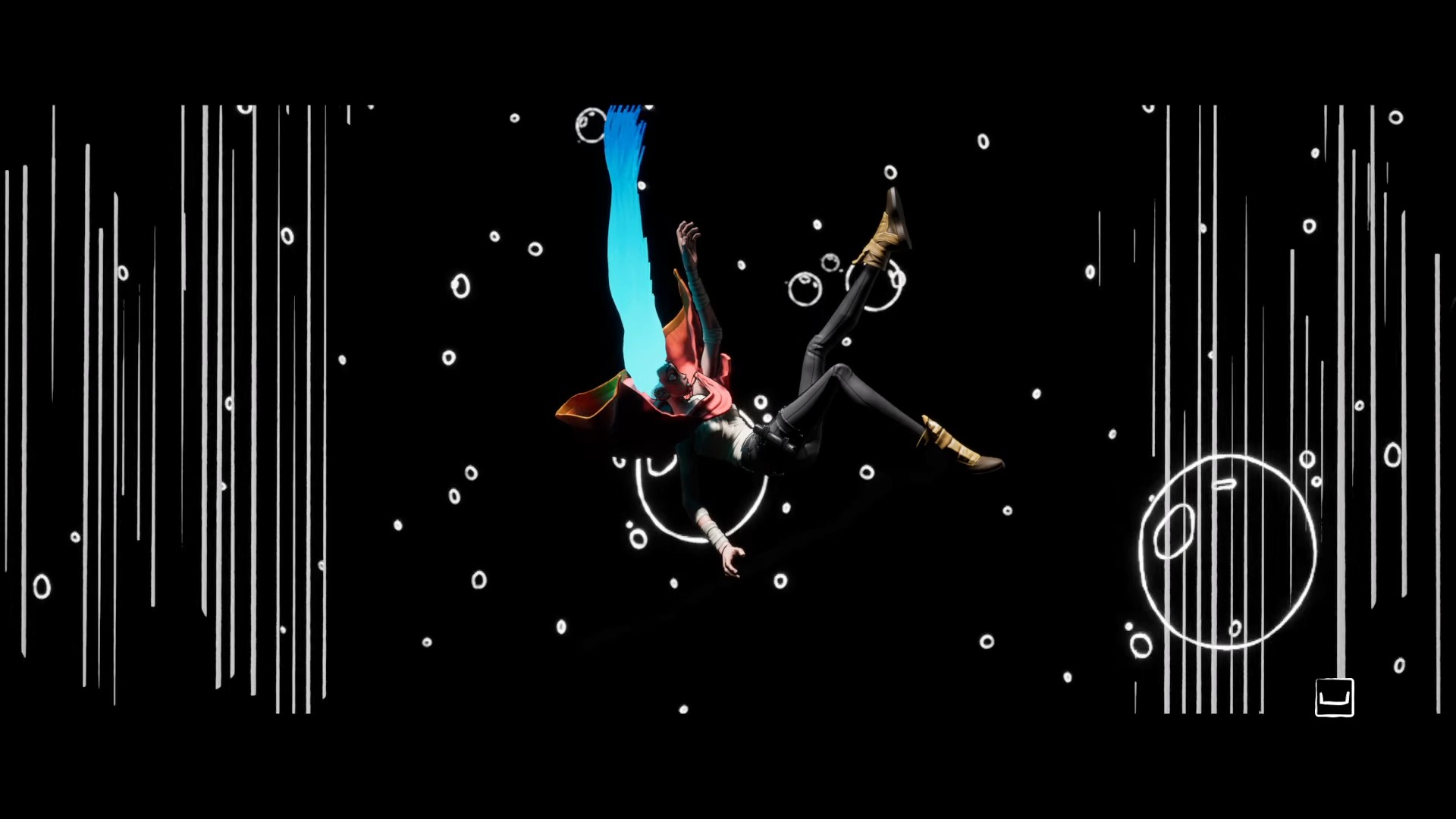

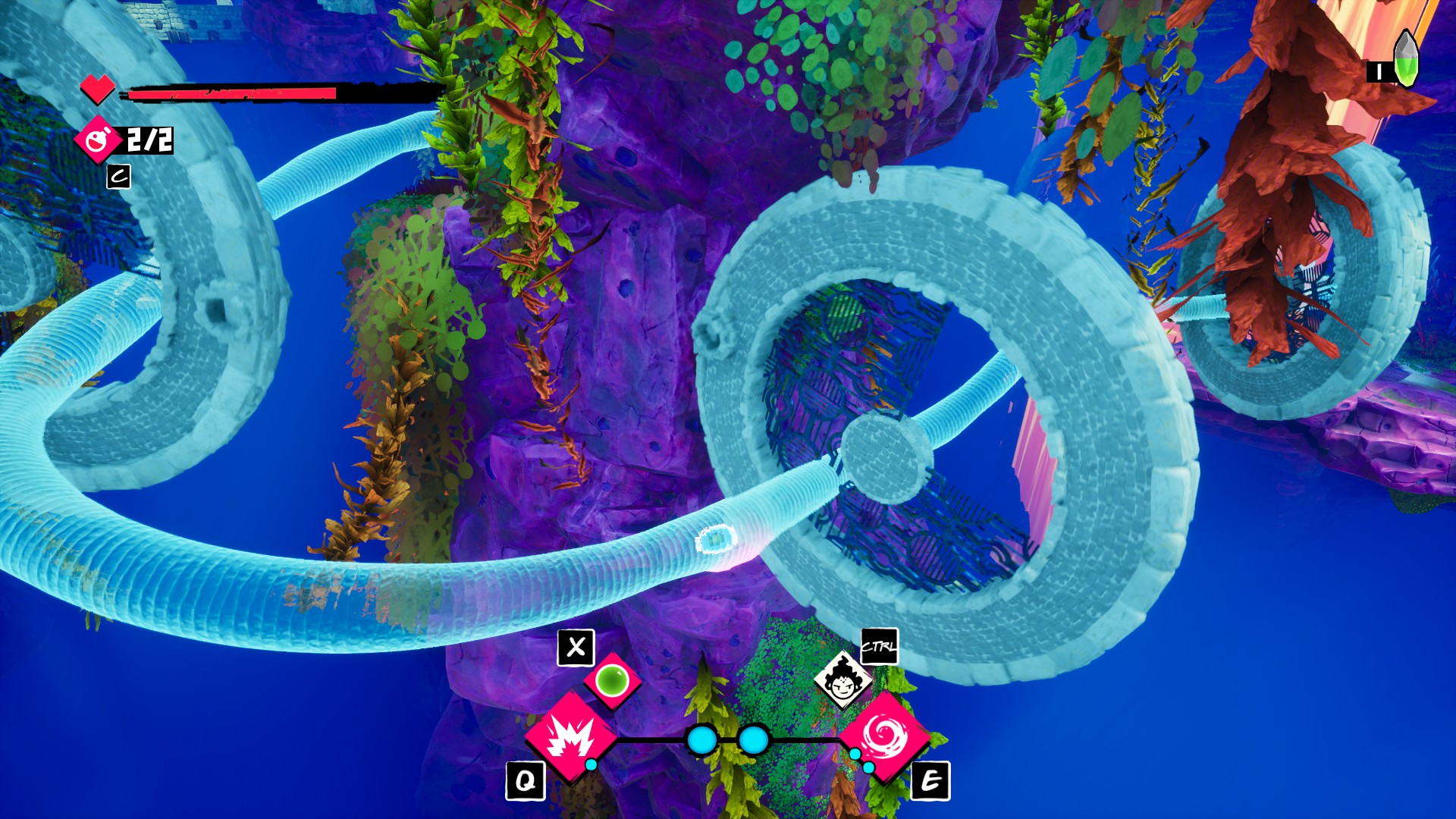
The same can be said about the platforming side of things, even if the implementation is a bit finicky at times. At first, being a water blob allows you to get through specific doors, leave water traces on the ground, and attach yourself to platforms that match your blue color. Other elements have different properties. As mentioned, if you touch fire while being in water form, you’ll turn into a steam blob. This, in turn, allows you to basically float and slowly descend toward the direction you’re moving, which is essential to traverse through large, empty patches of land from one platform to the next. If you come into contact with acid, becoming green, for example, you’ll gain a higher jump. Of course, these actions have a one-time use. While tackling puzzles, especially some that are time-based, asking you to essentially touch multiple nodes in just a few seconds to open a door, knowing exactly what each element does and how you can use them in your favor is key.
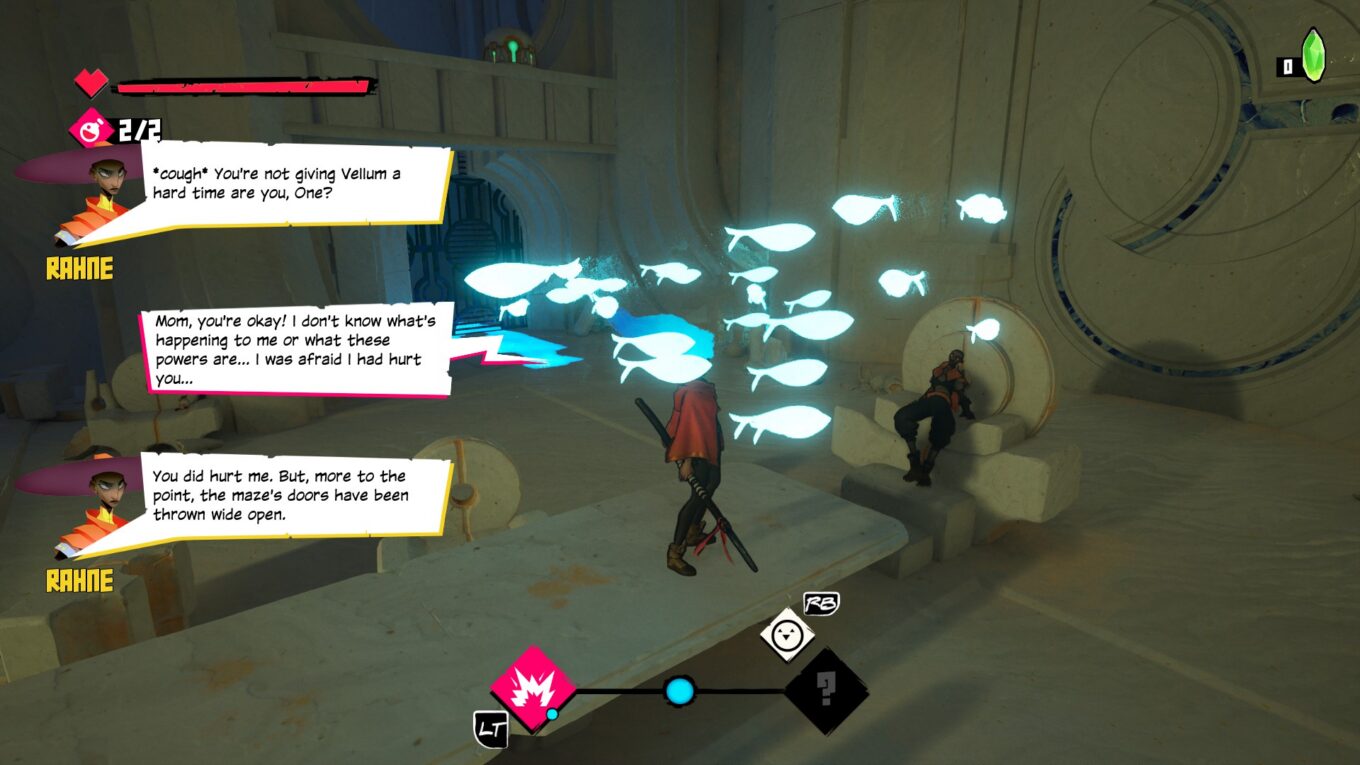
Yet, it’s in the platforming sections that the experience began to falter for me. For one, it is sometimes quite easy to get lost. Fading Echo has a guide of sorts in the shape of a school of fish, but I found it to be inconsistent after the starting areas. For the most part, I had to rely on my memory of the surroundings, since there isn’t a map, and just be on the lookout for a door left unopened or the sight of an aether up for grabs. Since the core gameplay relies on you revisiting regions a few times, it can be tough to know exactly where to look, especially when activating certain platforms or elevators makes for a confusing sight, not knowing exactly if you’re activating an escape route to use after you’re done, or a step that you must follow to get to your destination. Puzzles are perhaps the most aggravating. At times, figuring out solutions made me feel quite clever, especially when I remembered exactly what each element does and how to make use of each. Other times, however, I just felt lucky, as if I had just pushed through a puzzle until it worked. In one instance, I was able to solve a puzzle I had been stuck at for a while simply by dying in a specific spot, which respawned me exactly where I needed to be with the tool I needed to open a door. Moments like this left me with an odd feeling of dissatisfaction.
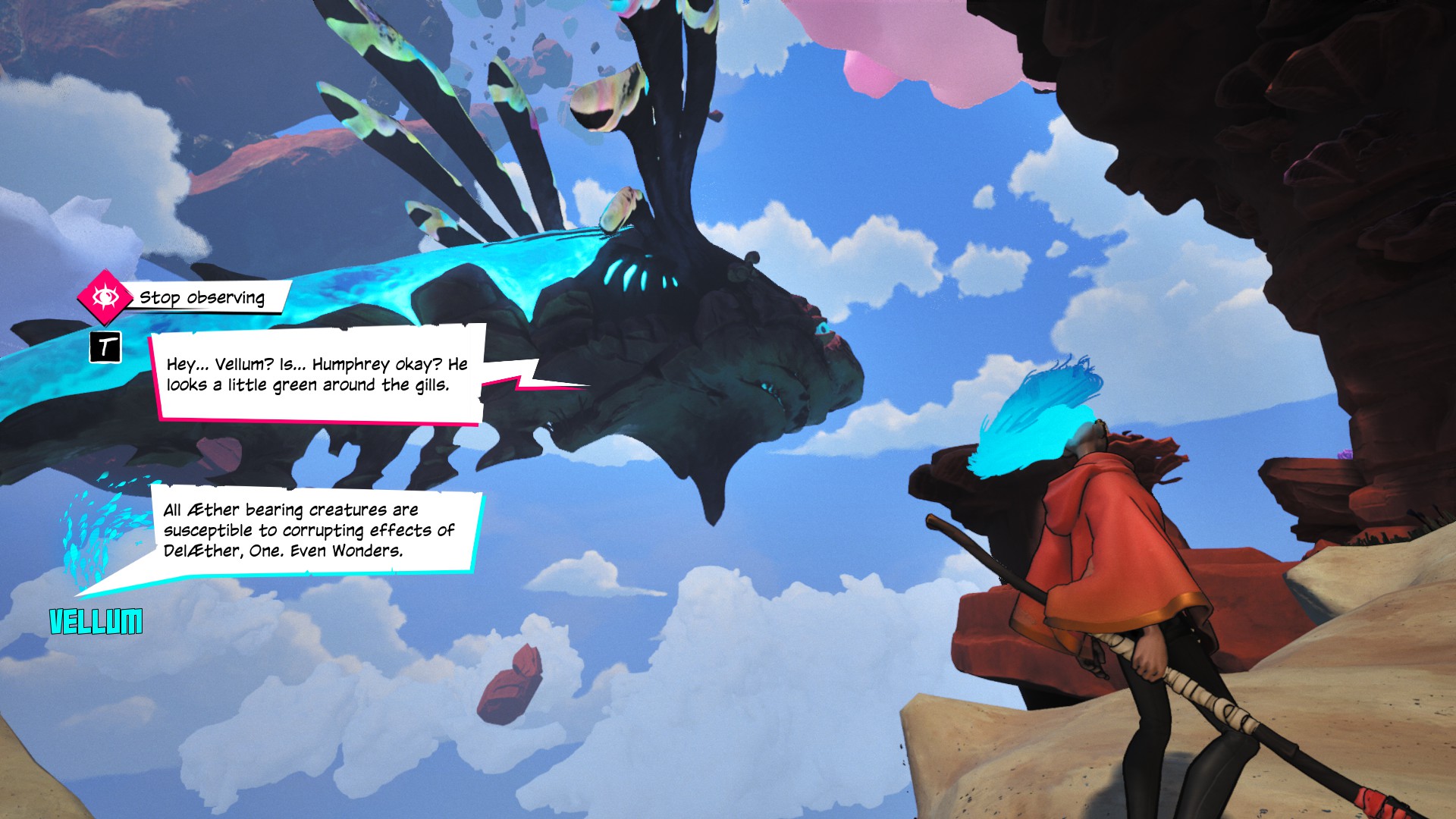
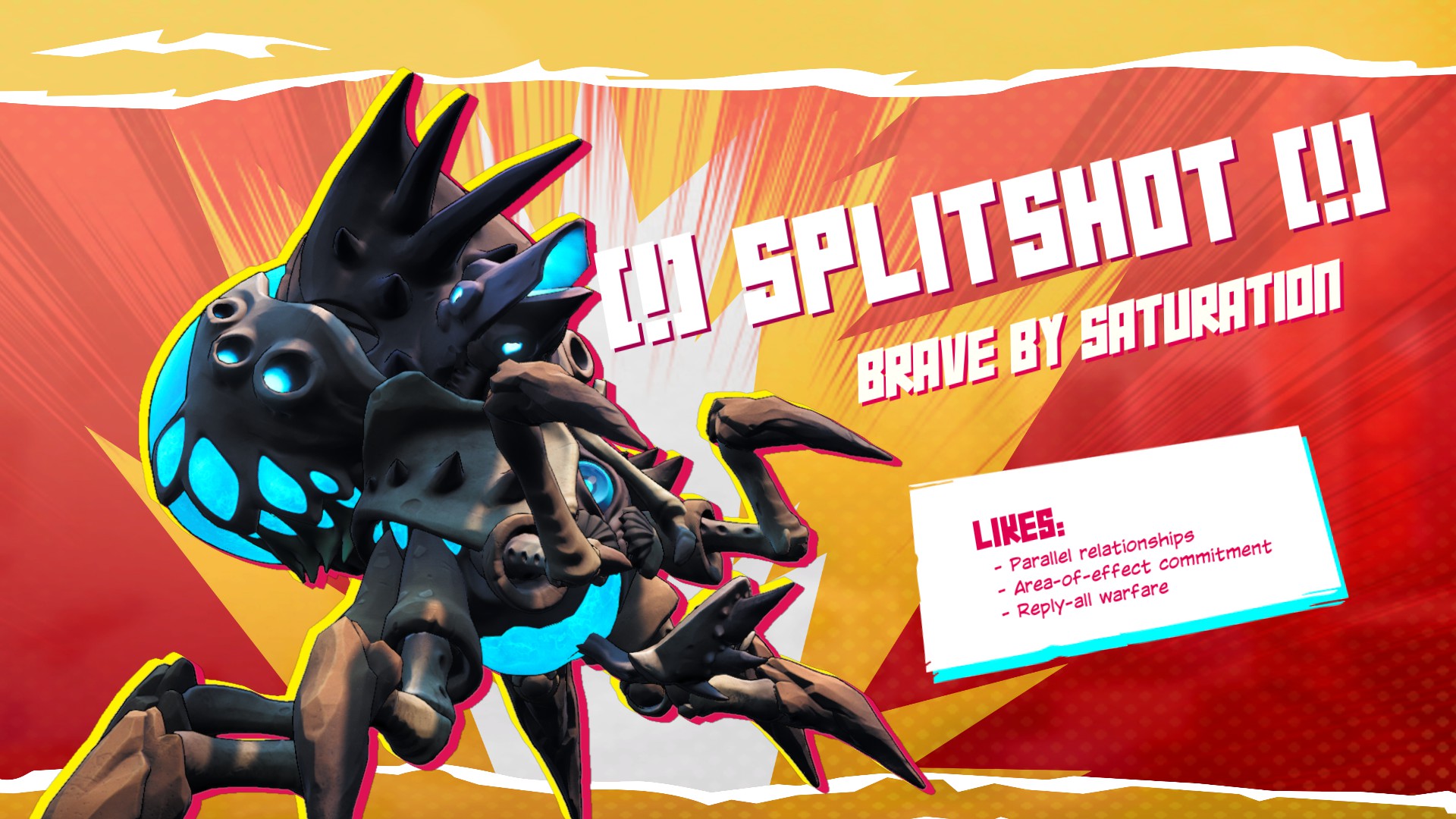
Despite my frustrations, Fading Echo remained an enjoyable experience, and one that’s definitely elevated by its personality. The comic book style and vibrant colors work in tandem, while enemy introductions, being similar to the ones in Borderlands, making a slash on screen with funny phrases attached to each, which were quite a standout. There is a lot of personality in One, in the characters around her, and the story of The Bastion and beyond. And, for the most part, you’ll be feeling quite clever when you’re unraveling it all.