Chronoscript: The Endless End’s demo is maddeningly brief, but takes up little time in the same way the outer shell of a Matryoshka doll takes up little space. The smallest of these dolls – these layered hints at mysteries and promises of a grand, strange tale – ended up being my favourite.
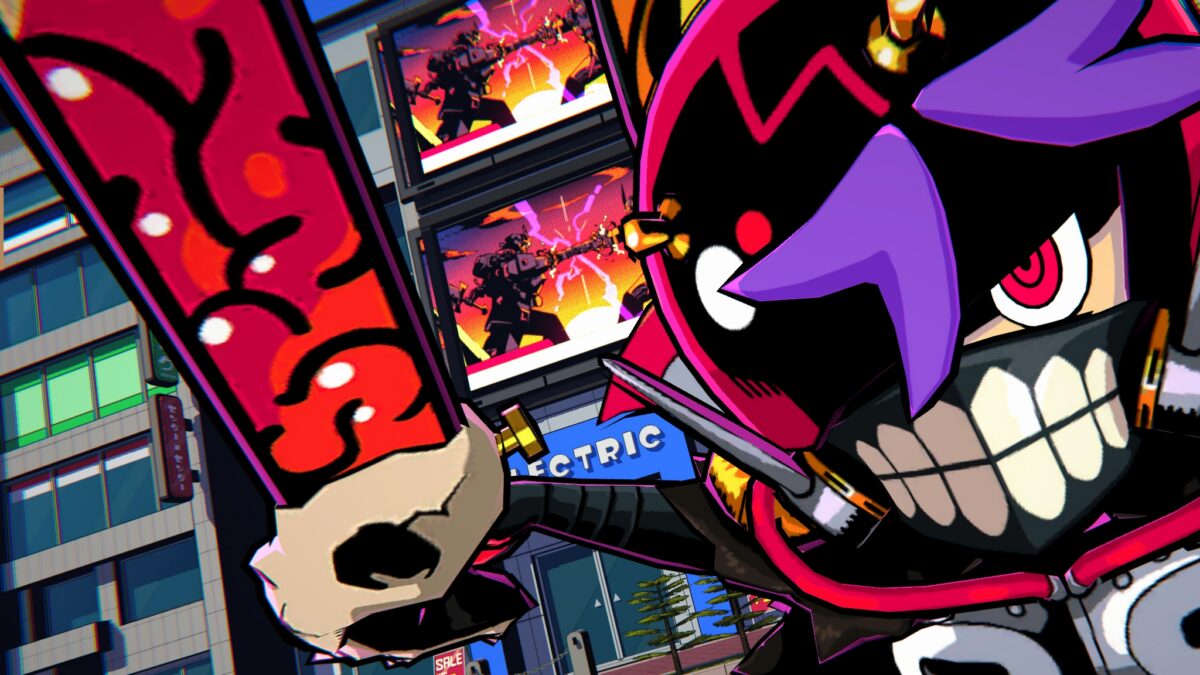
The first enemy you encounter in this 2D platformer is a four-legged bug with a bulbous, patterned shell, roughly the size of a border collie in relation to your character: a shadowy sword-wielder garbed in a red cape and a bandit mask. The bug sports a furiously determined grimace as it patrols back and forth across flat platform, is no threat unless you happen to blunder straight into it, and dies easily from a few lazy sword swipes.
The bug’s name is Merciful Eraser, the bestiary tells me after I become curious enough to search for it. “A shy girl,” reads the biography, “she wrote many letters she could not send”. Eventually, overwhelmed by pent-up emotions, she locked herself in a castle made of paper, and took her life.
And that’s what I get for scoffing at the stupid bug. A cartoon mallet made of instant traumatic melancholy. I will not stop thinking about that bug for entire demo, but let’s lay some groundwork first.
You play editor Frederick Muller, summoned to a mountainous estate to work on a mysterious manuscript. On arrival, he passes out from a mosquito bite, only to awaken inside his client’s book, The Endless End. It turns out she’s an ancient vampire named Viola who’s been penning the book for several thousand years, filling it with experiences from her long travels, and also possibly trapping cursed souls inside.
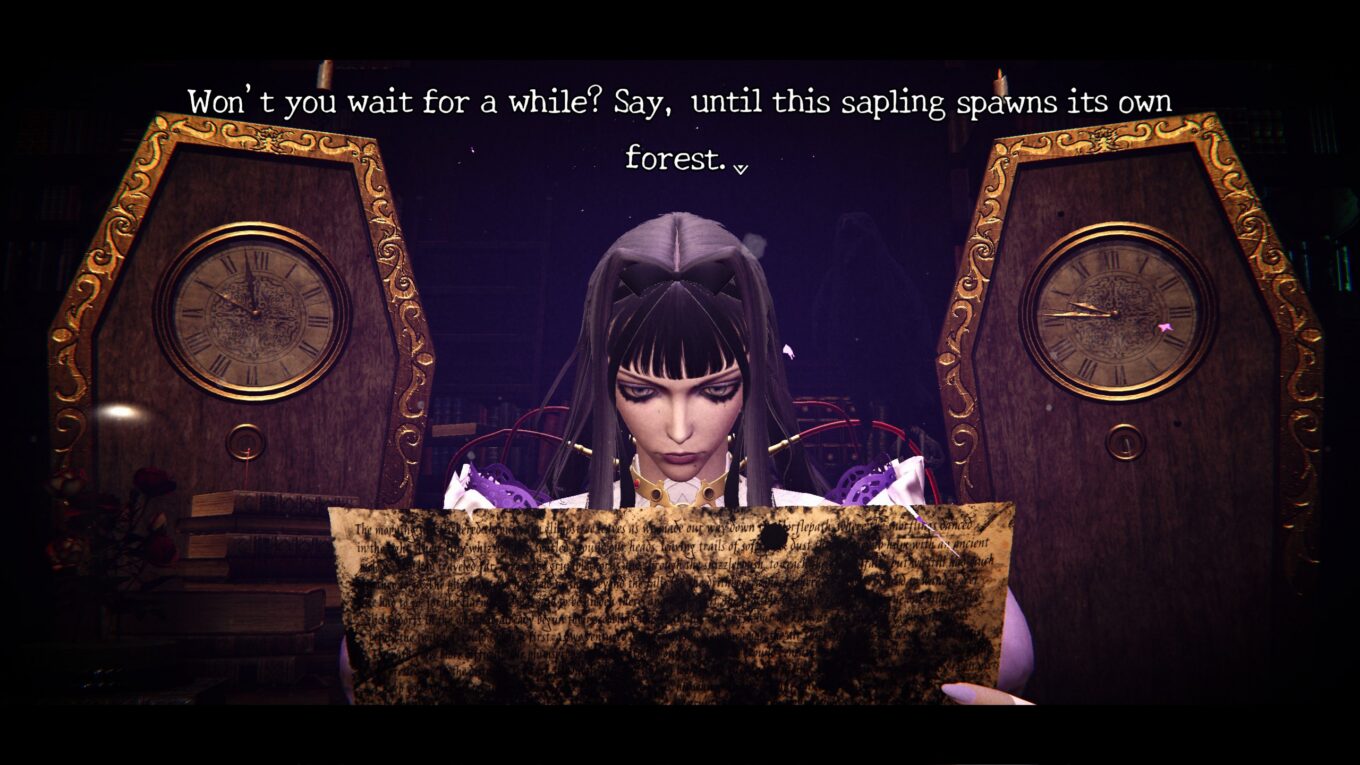
Which all raises some interesting questions about the bug. Is she a manifestation of Viola’s fiction, or did she once live? Why is she named ‘merciful eraser’? Does she want to scrub my character from this sad and strange place, with its teetering stacks of dusty hardbacks and oxidated ochre hues? Is she trying to prevent him meeting a similar end? Do all the strange creatures I’ve been hopping over and hacking away at have their own maudlin folk tales?
It turns out that they do. A hulking lizard garbed in filthy rags was an illiterate outcast. He still carries the book he was straining to understand when some awful curse took him. “Bookish child of a nobleman,” reads the entry for the tiny bats that flitter in distracting circles, splitting my attention during platforming. “He found solace in his fantasies. Passed away amidst a dream in the darkness”. Chronoscript creates a false sense of easy whimsy with Chrono Trigger composer Yasunori Mitsuda’s flighty tinkling, then gradually reveals a lingering sadness that seeps on to every page.
The evolutionary biologist J.D.S Haldane once observed that “god has an inordinate fondness for stars and beetles”. I myself have an inordinate fondness for videogame bestiaries – beetles optional, though encouraged. There’s something immensely satisfying just about filling lists and ticking boxes, obviously. If I didn’t enjoy cajoling question marks arranged in smug lists into revealing their secrets to me, I’d likely have quit videogames years ago and would right now be curing various diseases from the top of mount Everest in between working on twelve simultaneous novels, and also be the king of space.
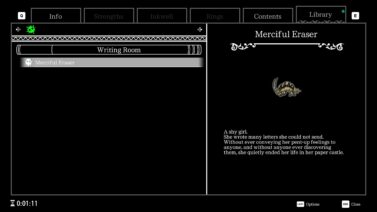
But they also scratch a story lover’s itch with tiny fictive snippets, imbuing a game world with weight and history, and if you’re really lucky, some sense of zoological coherence – while also giving writers a chance to flex with all the sort of worldbuilding detail that won’t fit into a lean central narrative. That last point feels especially potent in Chronoscript, being a story within a story that also contains all these other, smaller stories. And there’s those Matryoshka dolls again.
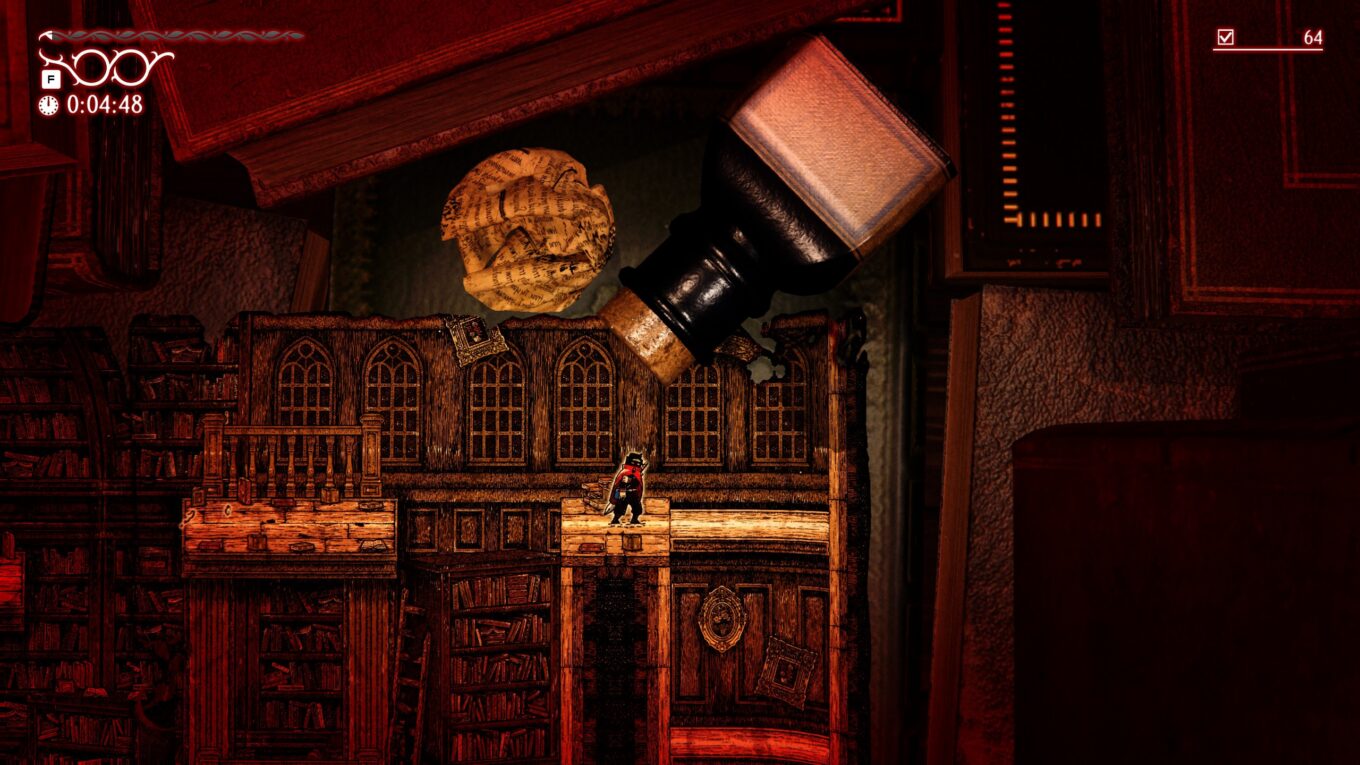
The disorientating fairytale logic you’ll find in those bestiary entires also seeps wonderfully into the rest of Chronoscript. Screens connect through page folds, and you soon get the ability to swim through streaks of ink at speed. Traversing these section reminds me of a endless runner game, though much of the platforming veers simple. The first haunt of bats I defeat causes a giant bat to land on the page and bestow me a double jump, which I completely fail to use to avoid getting crushed by a lizard. Your character clutches himself when wounded, which isn’t too novel on its own, but the hand-drawn art makes even such a small detail feel delightful.
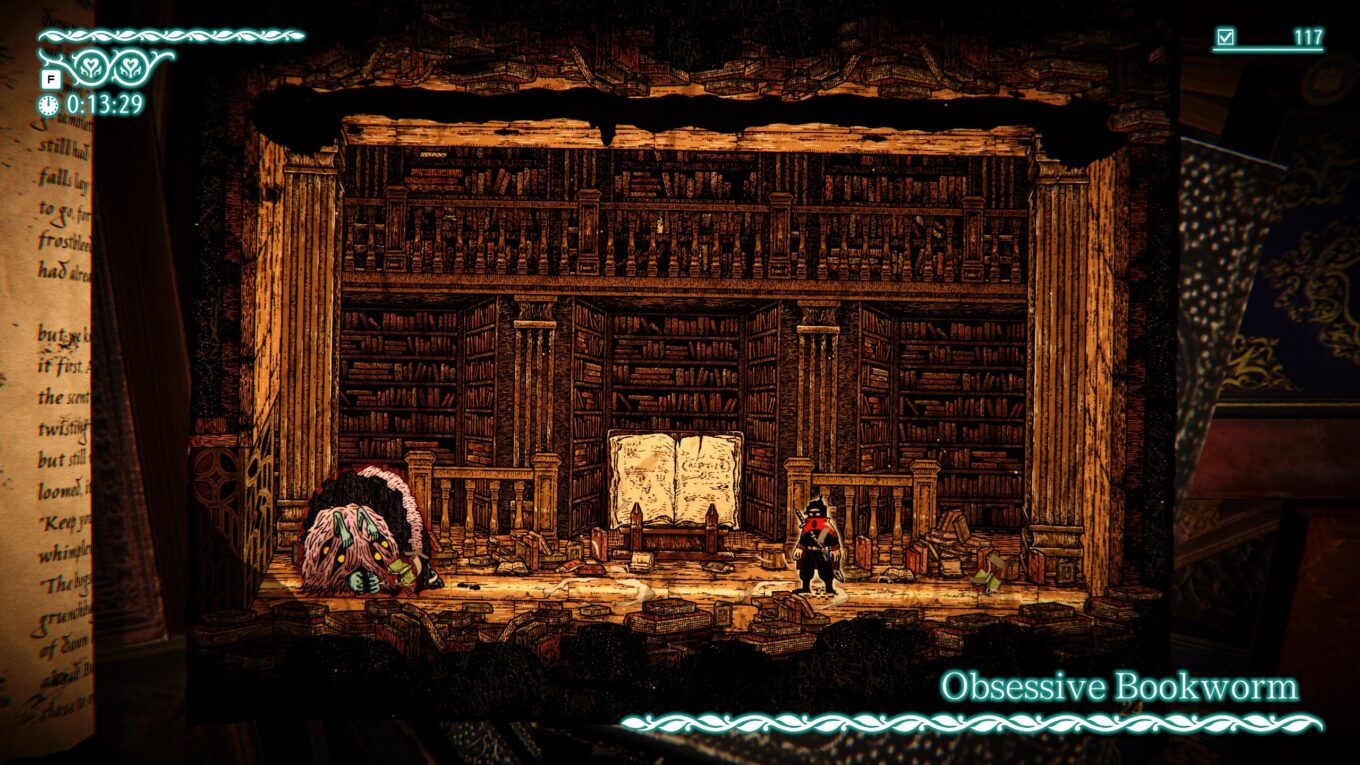
The art design here is from Okami and Bayonetta’s Mari Shimazaki, both games lineage apparent in Chronoscript dual styles. Elegantly dressed polygonal characters inhabit the uppermost metalayer of the fiction, and the gameworld is sketched with self-aware artifice in pen and ink. They contrast each other wonderfully; the ‘real’ rendered art lending the fictional world a tactility that makes it the strangely more believable of the two.
If those characterful, sad bestiary entries caught me by surprise, it’s fitting that the boss fights – the part of Chronoscript I was most interested in, given their elaborate designs – left me the most cautious. The game’s Steam page cities the “the tough, action-packed combat of classic 2D platformers” as an inspiration, but the two boss fights in the demo felt more in line with the rash of Souls-inspired 2D games we’ve seen over the past decade – Hollow Knight, Nine Sols, Blasphemous, and so on. I’ll admit that I’m personally terrible at handling difficult bosses in 2D, but I’m concerned that leaning into this masocore style is going to stop a fair few players from seeing the whole game. Their difficulty presents a roadblock, which feels rhythmically opposed to the sections of light platforming and just soaking up the world.
So, that’s the fine line that the Endless End needs to tread in its full release to make the most of its world, I think. Challenge is great, but not if it leaves me so demolarised I feel like quitting. I’ve long defended FromSoft’s games against accusations of deliberately excluding players with difficulty – their oppressive atmospheres are crucial to their worldbuilding. Here, it feels a touch antithetical – inviting easy curiosity and exploration with one hand, then demanding a tollgate fee of tears and sweat with the other. Still, they do say that writing is less inspiration than perspiration. So far, The Endless End feels very much like a book worth finishing.