Artificial intelligence is a contentious topic. The genie is very much out of the bottle at this point, but while the friendly and helpful (apart from their tendency to turn against humanity) AIs we see in science fiction are certainly appealing, we have a long old road to limp down before we get there. Right now, the tech is being built on the biggest plain-sight IP heist in history, and its strongest proponents are the kinds of men who truly believe business performance podcasts make the world a better place, and yer da in the family WhatsApp group. As far as public relations campaigns go, it’s been fairly disastrous.
But look, I’m not entirely against it as a concept – I recently used it to help me get around Rome while on holiday, and if it can cure cancer, I reckon that would be quite a good thing, actually. But while we’re waiting for that, there is Brave New Wonders.
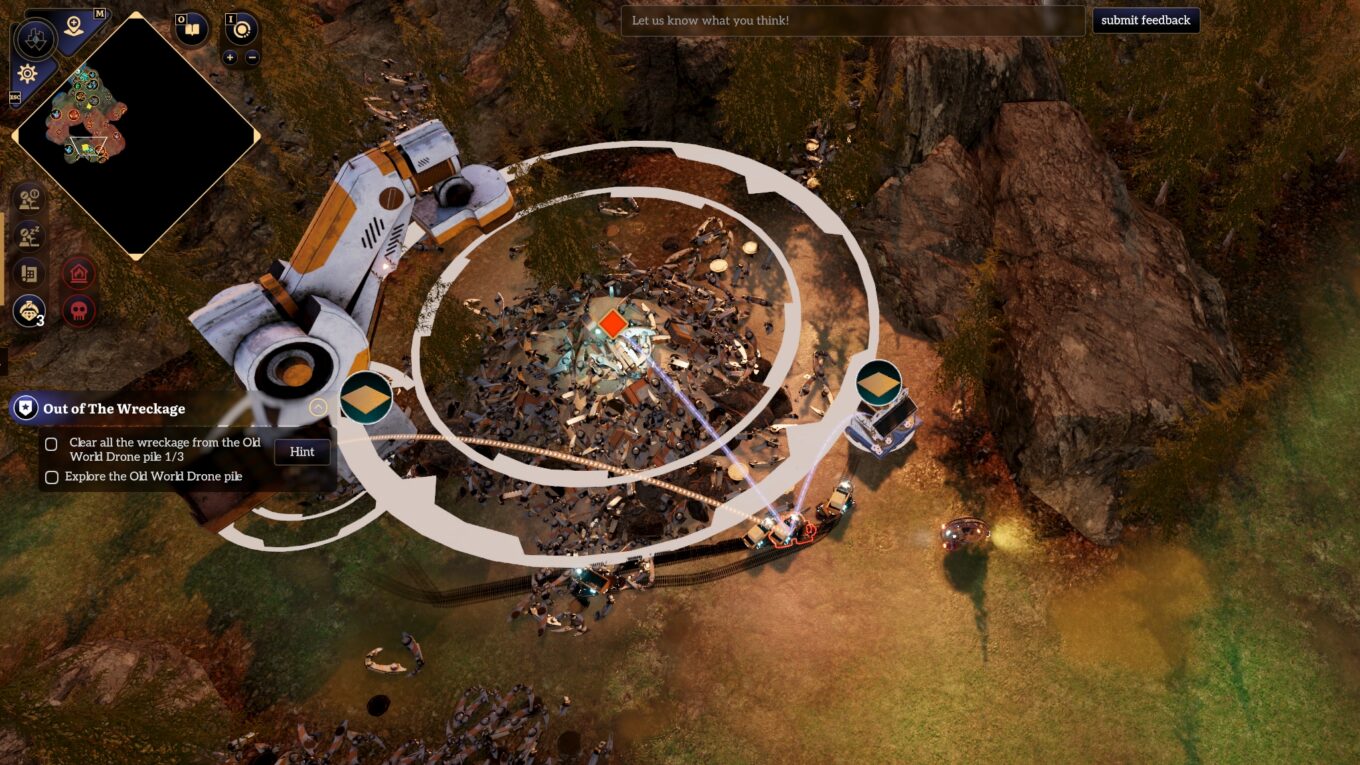
A base building and automation game in the mould of Factorio and Satisfactory, Brave New Wonders’ big innovation is to chuck out those creaky conveyor belts and replace them with programmable drones and buildings. Your grand plans aren’t limited to dragging and dropping nodes (although some simple prebuilt templates are supplied to get you rolling), but instead you’re able to vibe code your way to ever more complex production lines, using natural language to describe the process you want to set in motion.
A simple example of this would be producing metal plates, useful for all manner of more complex materials and products, including ammunition. In order to create them you first need to mine metal ore deposits, using a mining automaton which you tell to deliver its spoils to a refinery. From there, a mover automaton can carry the plates to a nearby warehouse that you’ve built, where they can sit in storage ready for other recipes. There’s a template program that lets you select the buildings, or you could type something as simple as ‘Extract ore from mine, deliver to refinery’, click a button to generate the behaviour, and then save it.
Things get slightly more complicated when you get around to manufacturing those shells for your defence turrets. For that, you’ll need a separate production line mining coal and refining it into gunpowder, and a factory that combines the gunpowder and metal plates. You’ll quickly learn that it’s useful to label key stages, rather than specify individual buildings, so that your routines can be easily cloned across multiple units, buildings, and deposits, thus avoiding the repetitive task of whipping up something bespoke for every new process.
Strap in for this bit. To make the best use of that Mover, I went with, ‘When {hub1} signal shows orange, deliver {item1} from {warehouse1}. When {hub1} signal shows blue, deliver {item2} from {warehouse2}’, and named the routine ‘Conditional delivery on hub signal [TWO ITEMS]’, after which it became available from my automaton behaviours drop-down menu. The braces (those curly brackets, if you didn’t know) create fields for you to enter values. These might be numbers representing quantities, buildings selected by clicking them or typing their names, or items picked from a menu. In this case ‘hub1’ becomes the ammunition factory, while the warehouse and item fields are assigned to the appropriate gunpowder and metal gubbins.
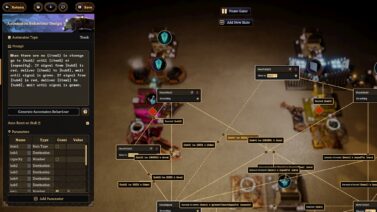
As for the signal bit, almost everything in the game can be assigned a separate signal behaviour, so in this case my mover routine interacts with one I’ve written for the factory which tells it to display those colours when its stock of ingredients drops below a certain threshold (‘If {item1} capacity less than {capacity1}, show blue. If {item2} capacity less than {capacity2}, show orange.’), and the mover only delivers ingredients when they’re needed. There are a lot of factory processes in the game that require two ingredients, so this became a bread-and-butter routine that I could roll out to dozens of mover automatons, and easily scale down to a single-ingredient routine, or up to many more. More conveniently still, it’s possible to switch to a blueprint mode and clone a unit along with its behaviour, or draw a box over multiple units and buildings and clone the whole system for duplication wherever you need.
If those past couple of paragraphs have just morphed into fizzing static for you, don’t worry – Brave New Wonders is armed with an excellent tutorial that introduces concepts clearly and patiently, and the natural-language approach means you can start with simple instructions before gradually getting to grips with more complex routines. But perhaps most excitingly, your approach might end up being entirely different to mine. There are innumerable ways to construct routines that achieve the same result, and the game gives you the freedom to figure out your own.
Brave New Wonders makes you feel like a genius, and the satisfaction of authoring a routine that automates a complex process is unlike anything the genre (or, for that matter, videogaming) has offered before. It slowly and imperceptibly gives you a broad sense of the basics of programming, and the potential for fine tuning is daunting – I regularly found myself rebuilding processes just because a better idea had occurred to me, happily getting lost in the cognitive challenge of stitching everything together with as few moving parts as possible. But even so, you may still occasionally pine for the comforting simplicity of conveyor belts.
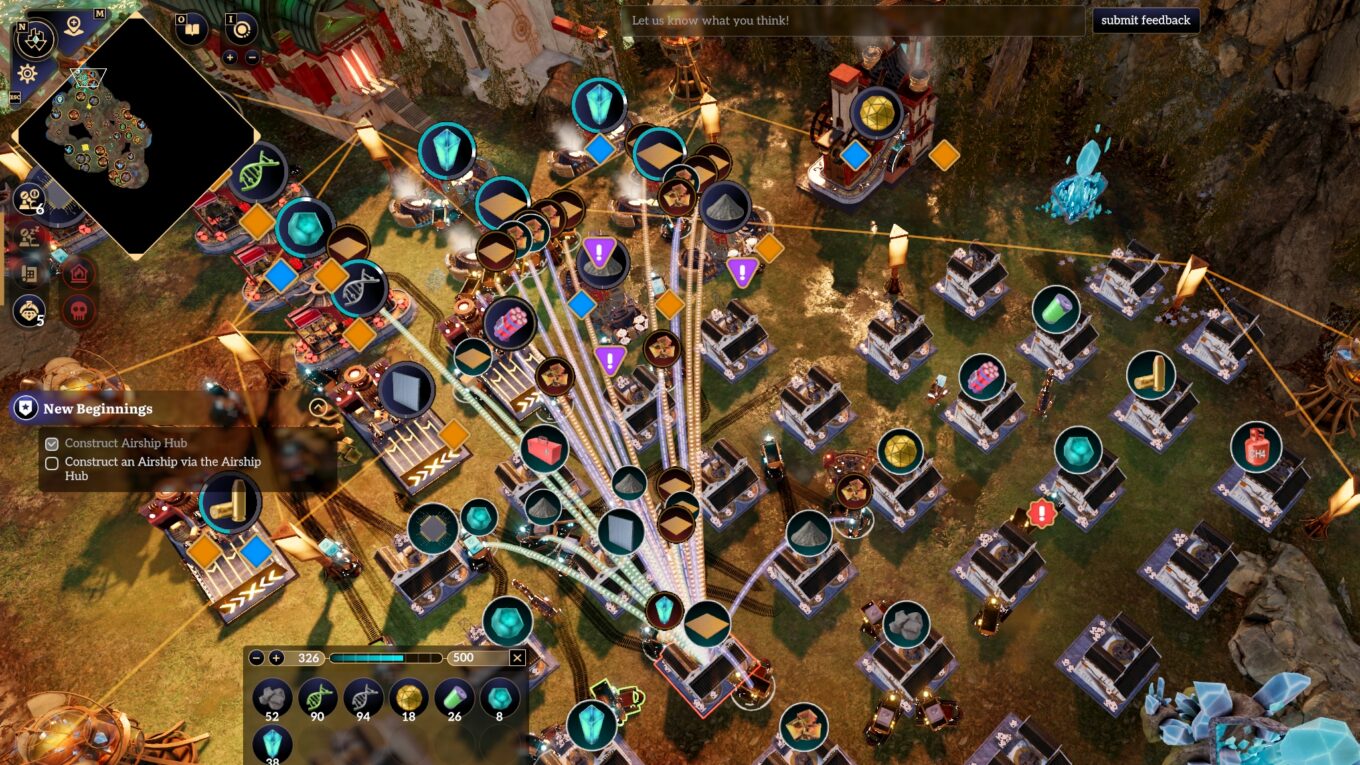
As the complexity of your constructions increases, it can be difficult to quickly parse what’s going on. Dozens of movers and other units zip around the screen, cracking on with whatever tasks you’ve given them, while trucks fly across huge stretches of wasteland, ferrying ingredients across the game’s four maps, and defense bots patrol. It looks very cool, and you can click on any given building to see what units are assigned to it, but there just isn’t the same clarity that we’ve become accustomed to in other games like this. As you play the game, you do learn to think in a different way, and the problem can be further alleviated by keeping operations somewhat separated geographically, but even so some players might not gel with the amount of information you need to keep in your head at any given moment.
Vibe coding’s inherent issues are carried over, too. A keen amateur might cobble together something impressive on the surface, but when it comes to debugging issues a lack of first-principles understanding will quickly see them come unstuck. Here, that bottleneck is further tightened by the necessary limitations of the UI; while the game generates a state machine flow chart that lights up as units execute commands, it doesn’t provide any clues as to why a unit has gotten gummed up.
It only happens occasionally, but can be maddening. I had a phalanx of movers programmed to deliver ammo to some turrets (when building in red zones on the map, you will sporadically come under attack from aggressive robots) when the turrets’ signals flagged low ammo. Key to this routine was a command to return to the warehouse in order to keep them out of danger, but on two occasions they got stuck on the return bit and then refused to move, even though all the other movers were happily getting on with it. Repositioning a turret worked in one instance, but only for a single cycle, after which I had to just recreate the mover. Given that you have to rely on automation to defend your outposts while you’re busy elsewhere, it is anxiety-inducing to know that a routine can fall on its face for no apparent reason.
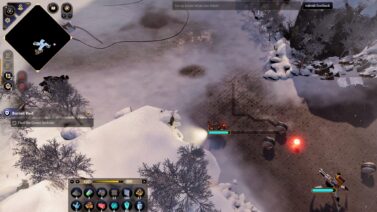
None of that ever diminished the compulsion to fettle, however, and before I’d even left the first area I was already contemplating how I’d tackle things differently on my next playthrough. Brave New Wonders takes place across four large maps, each offering a different combination of resources and environmental challenges. Your accrued knowledge is increasingly tested as the options for building become more restricted. While the first area, America, is a relatively simple foresty affair, when you reach Europe you’ll find a bitterly cold location covered in frost and snow, on which you cannot build. In Africa, you’ll encounter even trickier terrain and a need for irrigation, and then eventually have to contend with lava flows and eruptions in Asia. Each new roadblock necessitates a rethink of how you programme routines, what you prioritise, and how you organise your operation, keeping things fresh throughout.
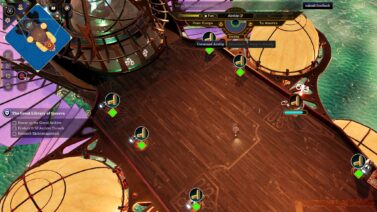
This also happens as you unlock wonders, the first of which is a colossal airship on which you can travel to different continents. But it’s not just a jumped-up loading screen – airships need fuel, which you have to manufacture and deliver to the dock, before loading it into storage or the fuel tanks on board. Or perhaps you’d prefer to ship the raw components to the dock (methane and metal), and build a natural gas processor on deck. The airship functions as a giant movable factory on which you can build any of the structures you can on land (which can’t be good for the steampunk teak decking), and command a mobile base of operations as you gradually expand your territory. You can build more than one, too, and yes, each can be programmed with behaviours or signals, allowing you to create a global shipping network.
Every new wonder that you unlock fundamentally changes the way you need to approach the game, reconfiguring your perspective and opening up new opportunities. The second wonder, for example, lurks under a frozen lake and boosts your capability for generating power by orders of magnitude.
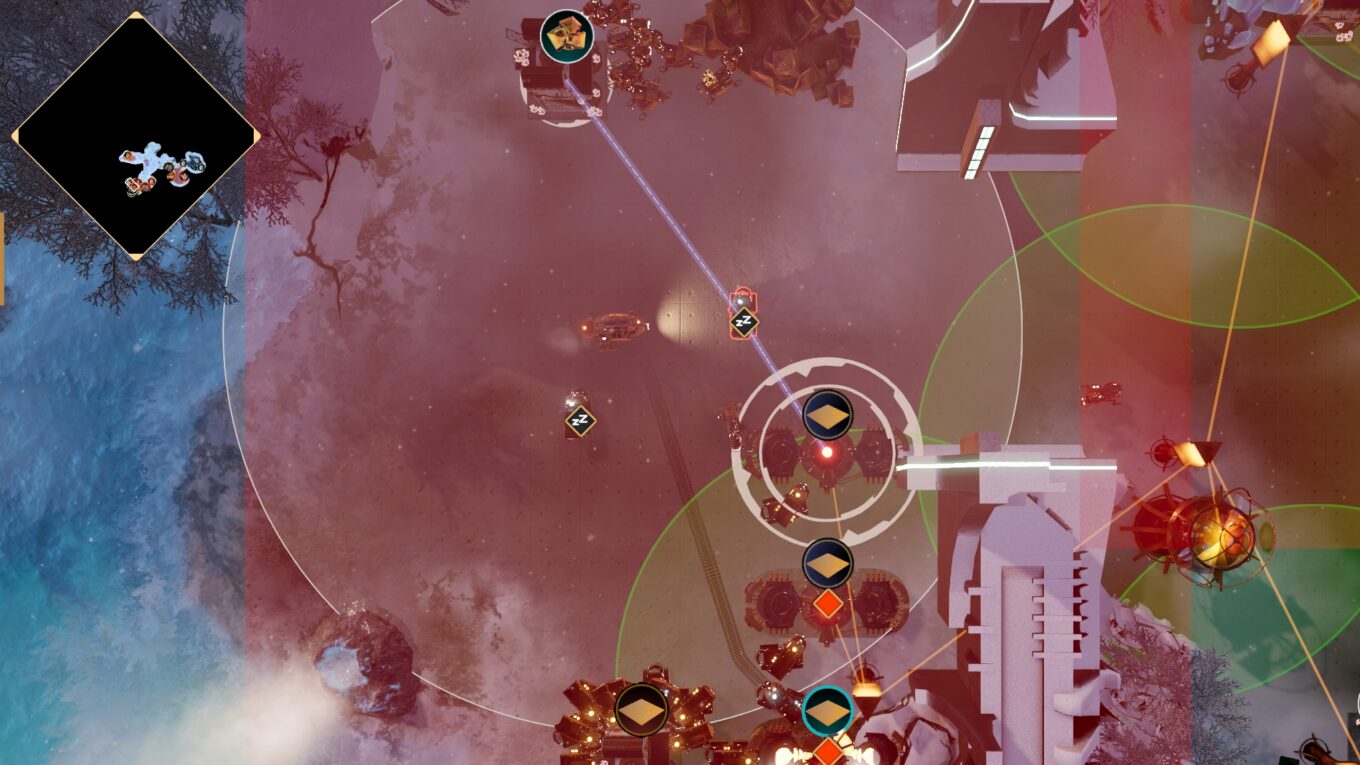
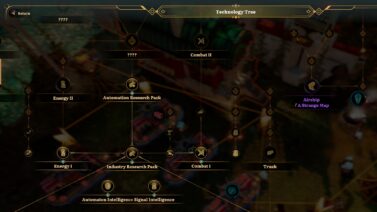
That complexity puts a lot of pressure on the UI, and developer City From Naught mostly comes through in this respect. There are certainly plenty of options. You can choose to move around the map directly by piloting your Monowheel vehicle, as well as engaging directly in combat while exploring or defending an under-construction outpost in a dangerous area. You can also right click anywhere on the map and have the Monowheel come to you. You can zip the camera about with WASD (hold shift to go faster), or simply click anywhere on the minimap or main map to immediately drop in. There’s plenty of feedback – you’ll get alerts when under attack, and you have various charts to pore over and gain insight on things like supply and demand, along with an extensive tech tree to work through. But the sheer number of units on screen can occasionally make selecting the one you want awkward, even when everything’s paused in Blueprint mode.
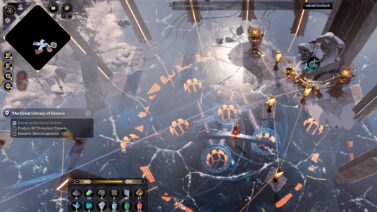
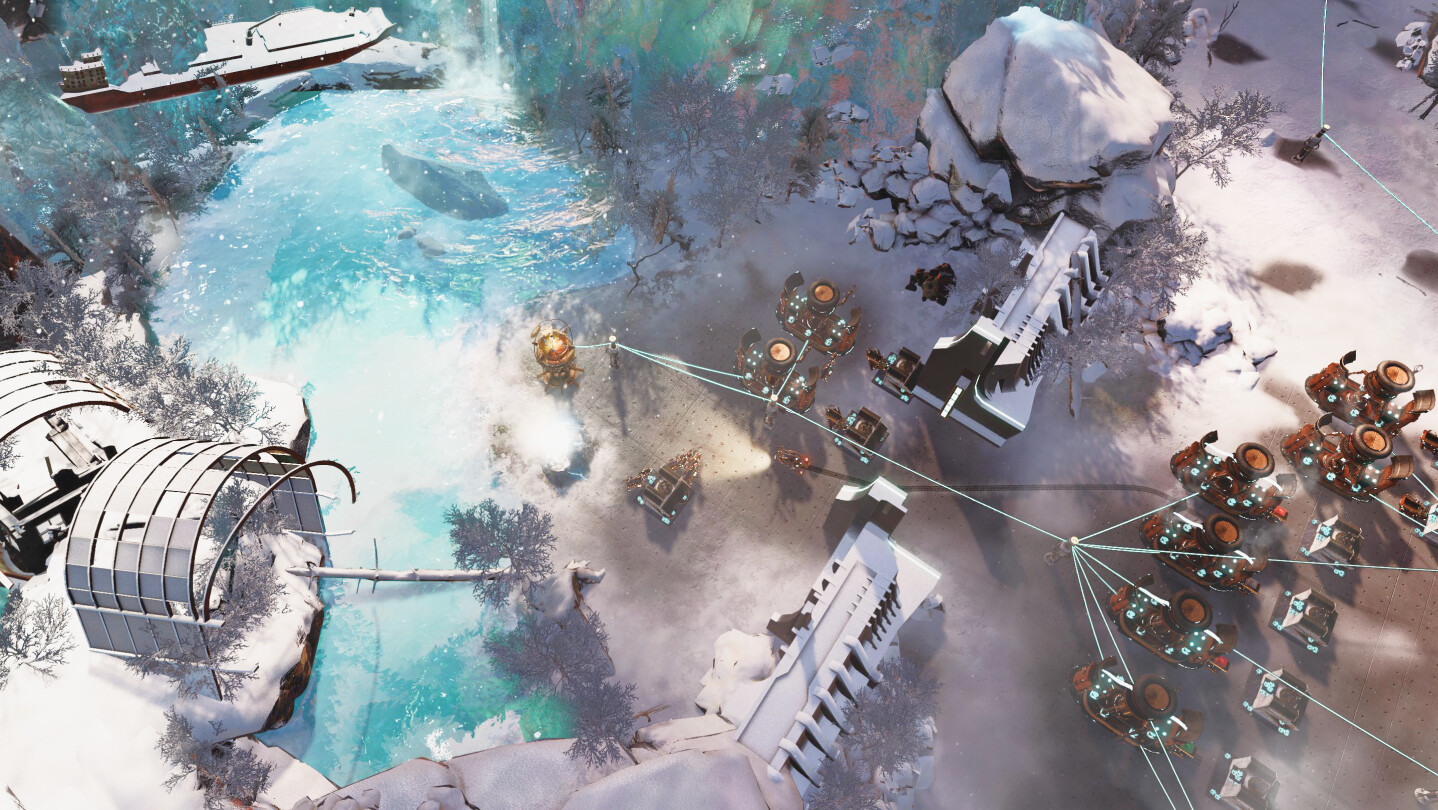
You can only build within a certain range of your Monowheel, which sometimes feels frustrating because the top-down view makes you feel like you have an overarching agency in the world. But once you get into the swing of things, it’s much less stressful to keep on top of all of this than you might imagine. The nagging worry that you’re having a harmful effect on the real environment, rather than just chopping down lumber in Warcraft III, every time your brilliant plans send out yet another query to whichever LLM the game is hooked into, is less easy to ignore. Let’s hope it’s solar powered or something.
Crucially, City From Naught prefaces the game with a forthright disclaimer: no AI has been used in the production of any art, code, or writing, and Brave New Wonders is very much a human-made game. AI is simply a toy nestled within a container made by people and contextualised by a bold new take on the automation genre. The approach won’t appeal to everyone, and I’m sure there will be some conveyor belt adherents that remain entrenched. But the sense of possibility here, in the freedom to approach every problem however you like, is remarkable. In the end, this feels like a worthwhile endeavour, and one of the most convincing cases yet for the potential of LLMs in games.