Most survival games share a common starting point. As the protagonist, you’re marooned on a mysterious island, one that always looks far from inviting. Regardless of the goal and preparations before the trip, something usually goes wrong, leaving you stranded, off the grid, and in a vulnerable state.
Inky Blinky Bob by developer Eldelic Games is the latest (but surely not the last) to join this trope. An introductory cutscene showcases a chopper flying through a storm, as a voice on the other side of the comms machine shares a cautionary tale about strange happenings in the archipelago. Immediately after, the strange factor materializes, as the plane is struck and you begin an early, more violent descent than originally expected.
I imagine that, in 2026, developing a game with survival mechanics must feel a lot like crashing onto a distant island with few clues on what to do next. The genre has been saturated for years now, with some of the biggest names in the podium (from Rust to The Forest) already having their own dedicated audiences. Inky Blinky Bob is clearly influenced by the genre, but it valiantly tries to spin things around to push for novelty instead, including a hot-air balloon as a method of transportation and a massive flying creature that is always on your tail. Unfortunately, almost every idea presented lacks polish, a stronger vision, or inventiveness. More often than not, however, it’s all three that are simultaneously lacking.
As soon as you wake up from the crash, the person who called you from the island, Ralph, drags you through the shore and toward safety. After you’re patched up, Ralph shares some insight about your mission: the archipelago consists of a handful of islands, as well as a series of Tesla Towers that need to be activated. At the heart of it all lies a dome and each tower shoots a beam that, over time, will open said dome and clear a path for a lab where you can hopefully put an end to the horrors haunting every island.
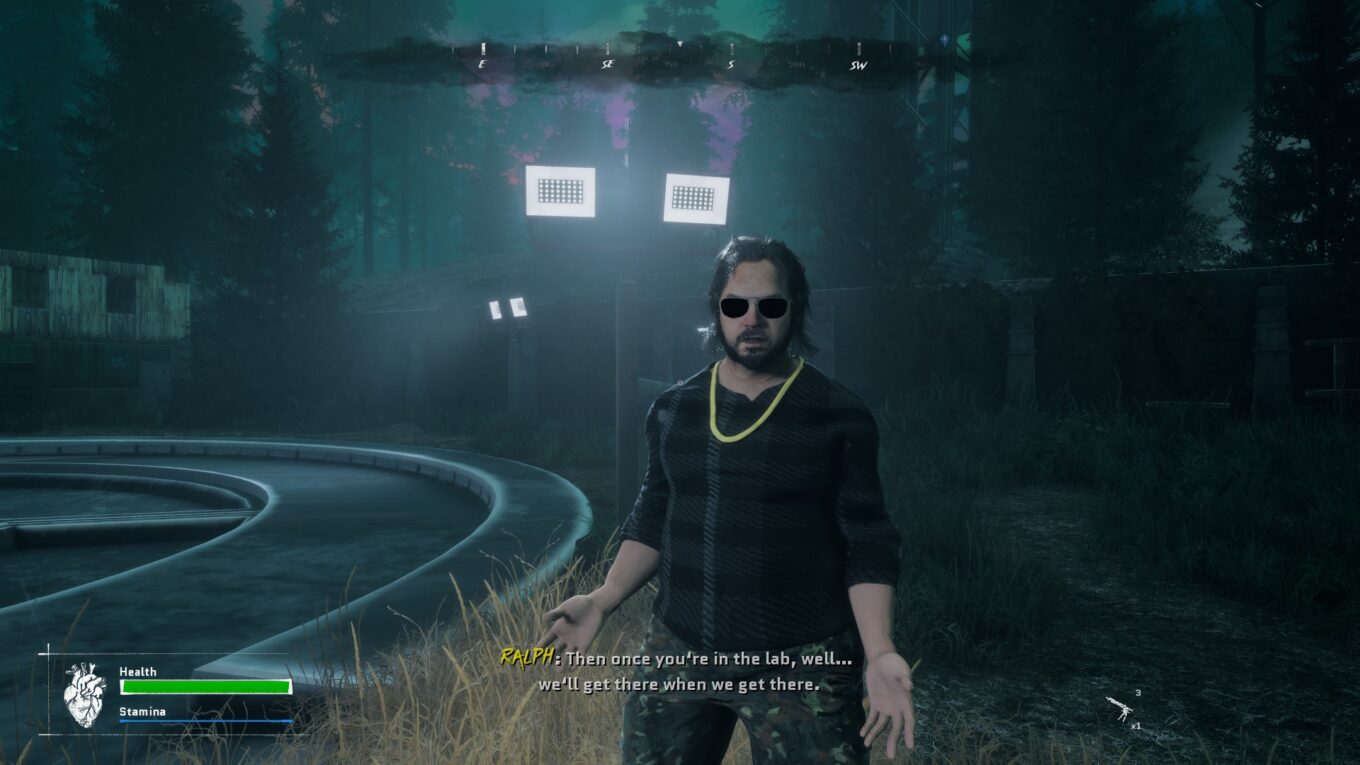
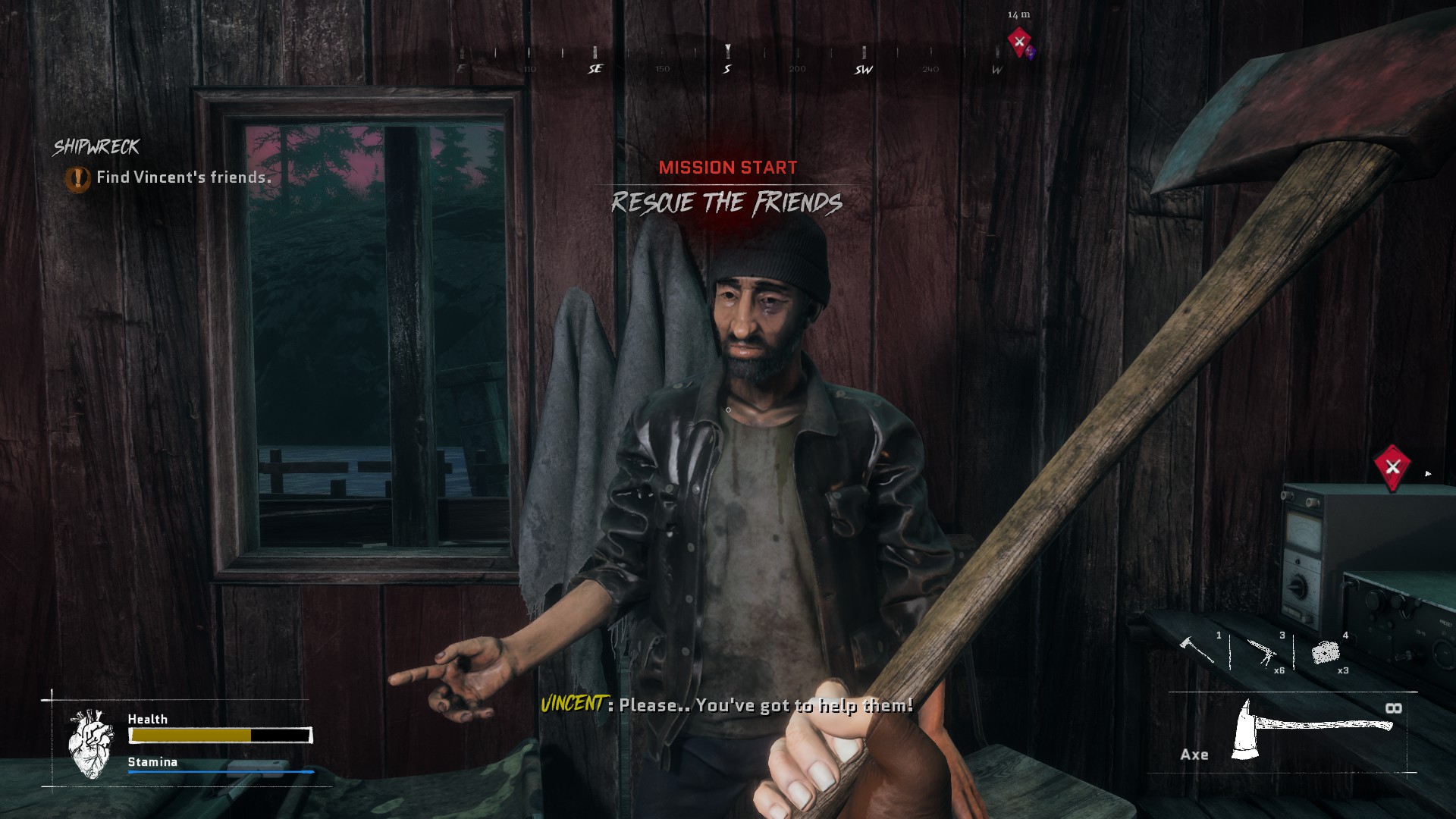
Each island hosts a number of missions to tackle. Interestingly, each task has a very specific description about what it entails, whether you need a specific item for it (which is often the case), and if it’ll actually contribute to the main story and eventual ending. For the most part, missions sound more interesting in theory than in practice, as you’re often having to defeat a few enemies in an isolated area or going from point A to B to retrieve an item. After completing a handful of missions, it was clear that the goal is to cash in your reward and keep on to the next one, rather than being invested in the characters you come across on the island.
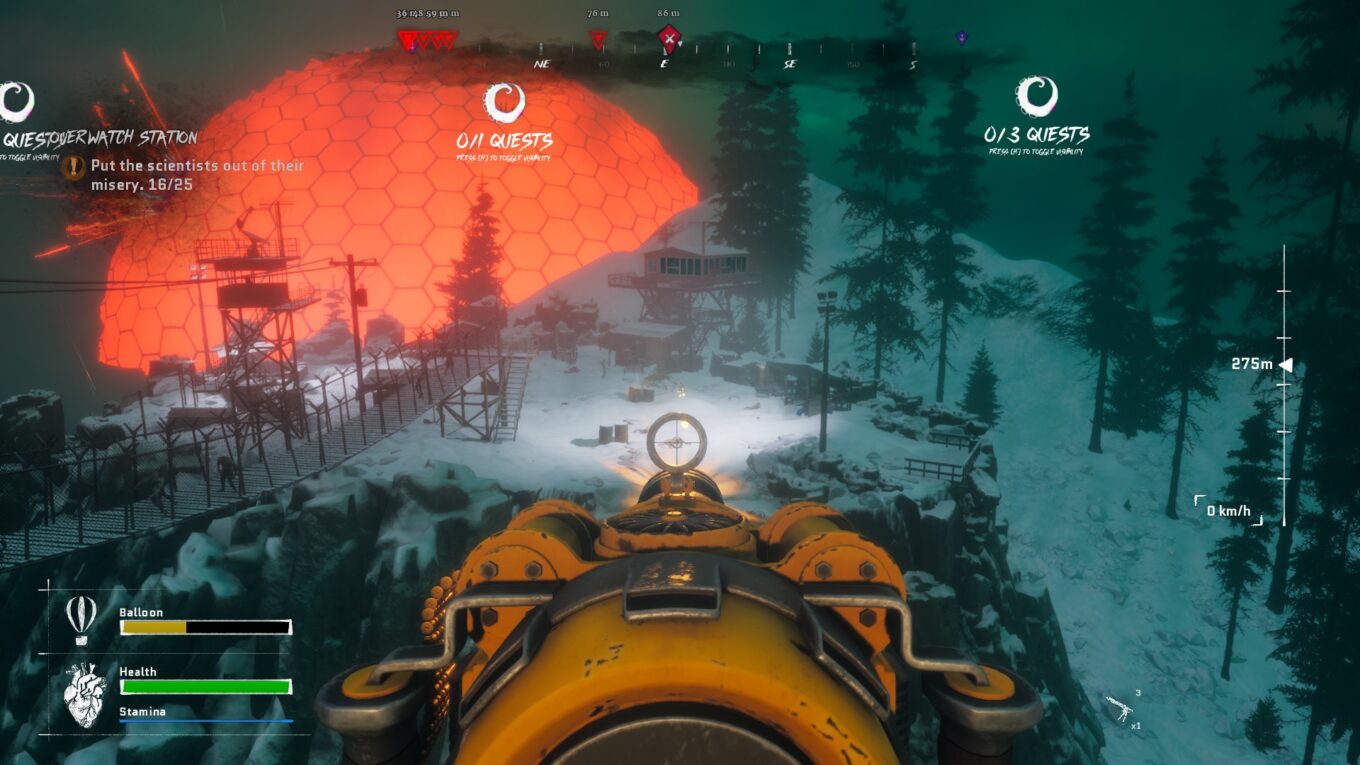
As you plunge through the archipelago, it’s always key to keep an eye on the ground and any nearby surface for materials. Inky Blinky Bob doesn’t have a robust crafting system, but you can exchange resources to upgrade your hot air balloon. Specifically, you can increase its armor, speed, and damage values. It’s also important to gather scraps to repair it, an activity I found myself doing more often than not. Considering how important the hot air balloon is to the mission, it makes sense for the experience to be centered around it.
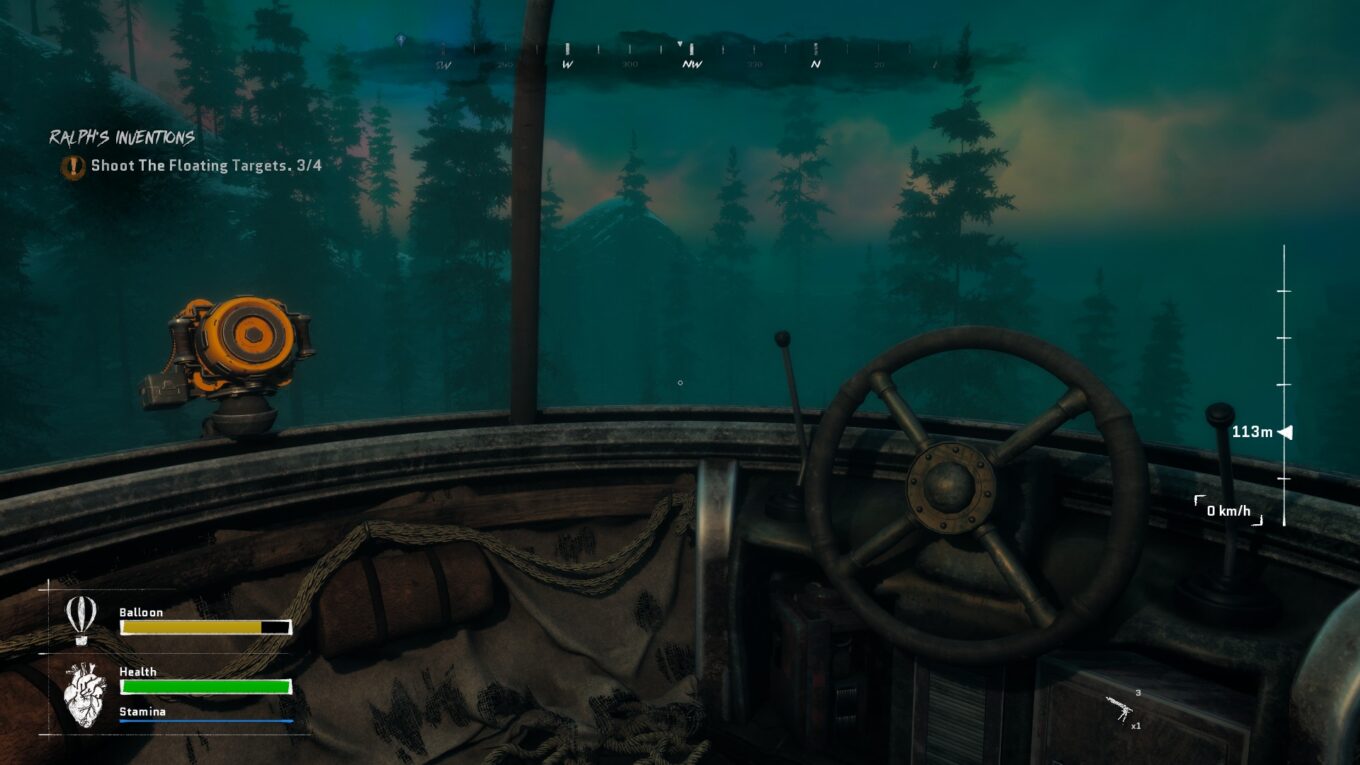
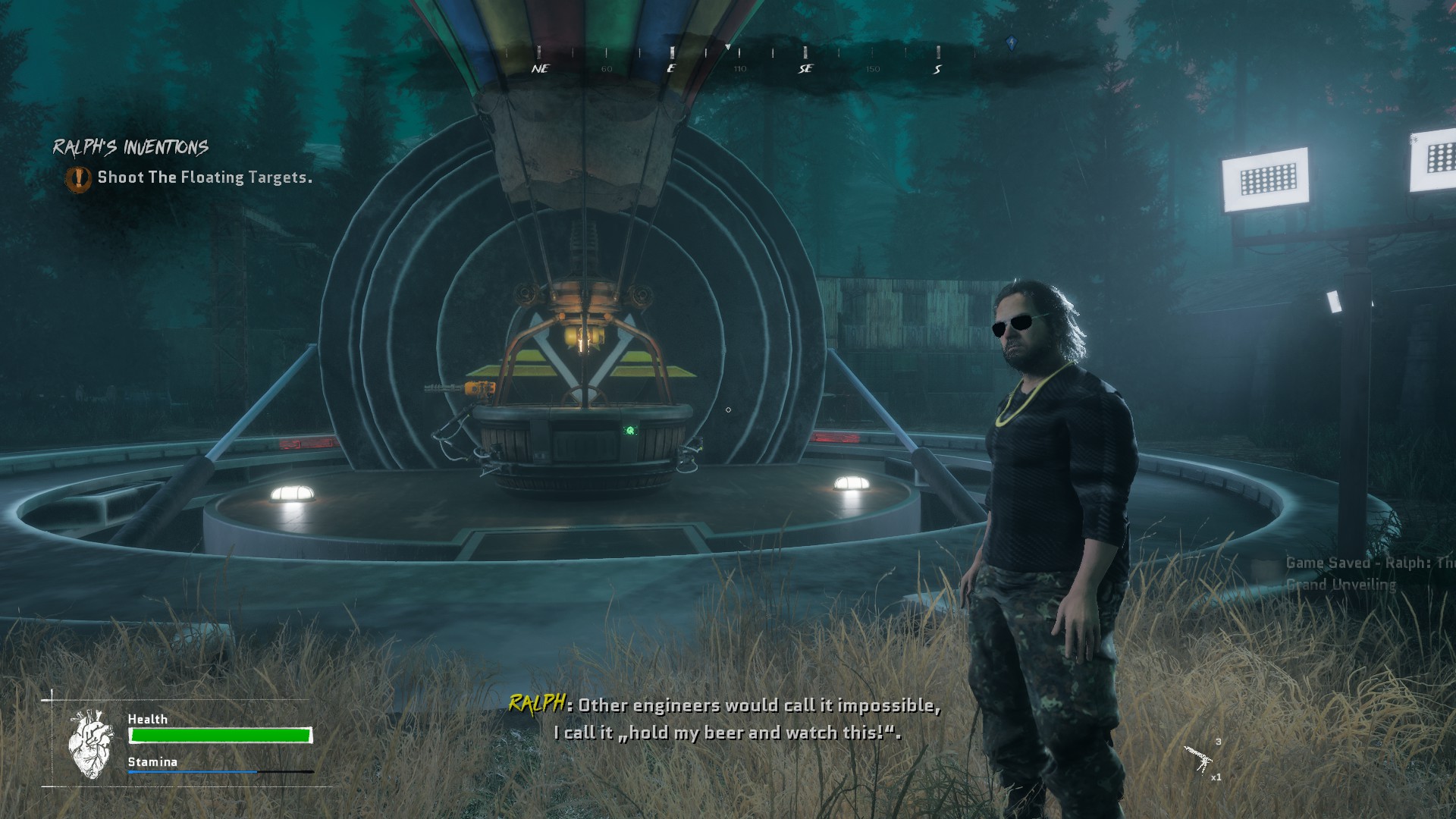
The hot air balloon is, after all, one of the biggest features in Inky Blinky Bob. “Think of it as a car with wings,” jokingly says Ralph. Once inside the balloon, you have to manually switch between controlling its movement or firing a weapon. The first is tricky and took me some time to get used to — basically, you have to use a lever to control whether it is descending, ascending, or remains still. The wheel is also used to steer it left or right. And then, you also need to control a second lever to decide how much you want to accelerate or brake on a scale of one to 100. Don’t ask me how many pine trees I’ve hit.
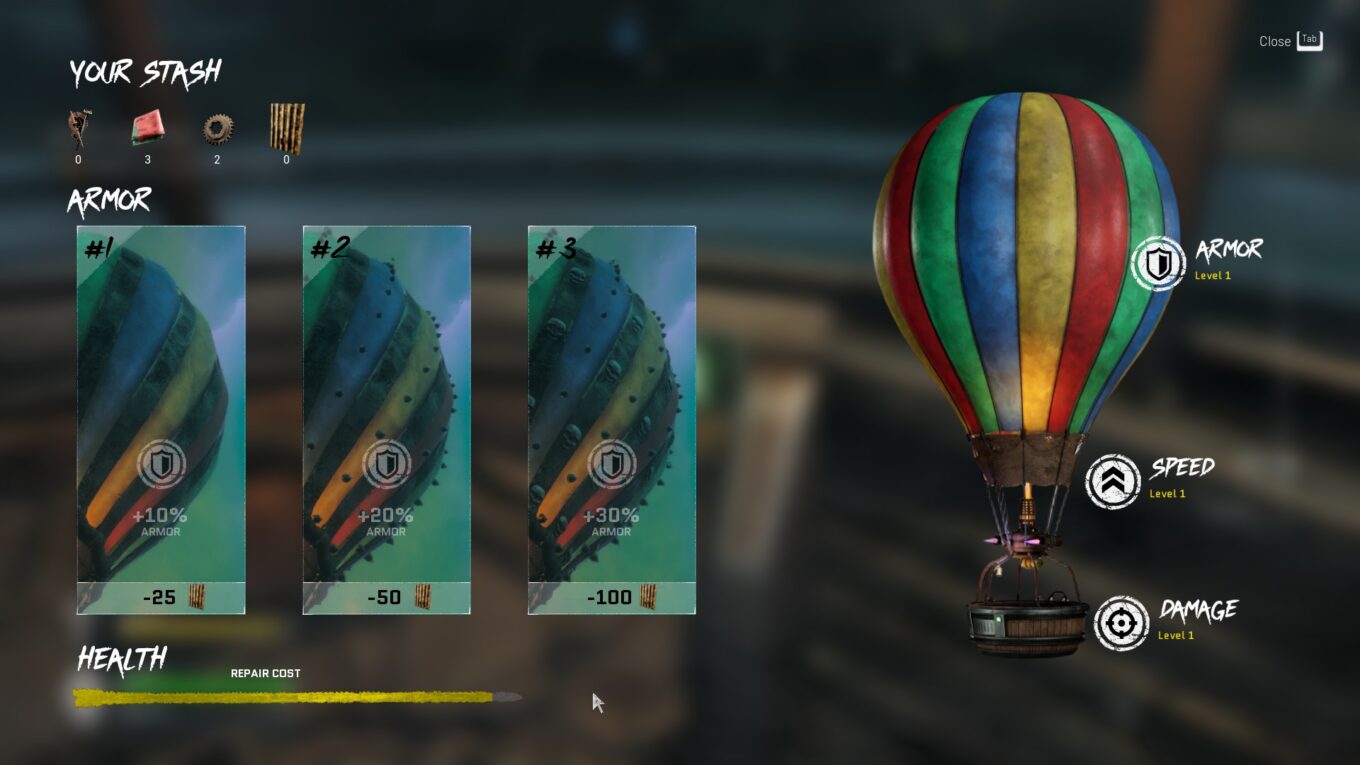
There is a compelling novelty in flying, especially once the controls click and you get the hang of pulling off tricky turns or leaving the balloon suspended in the right place to take down enemies from afar. The game, however, seems to stand in an odd in-between place for the vehicle, feeling neither too arcadey nor like an actual simulation.
During some encounters, the wheel and levers become inaccessible, and you’re left with just your weaponry. Normally, you wouldn’t be supposed to move the balloon to change the overall direction, only the aim of the weapon itself, which has its limits. But in these scenarios, I was able to safely rotate the entire balloon to either side. This removed any possible friction and greatly simplified these encounters, and I wish the developers had fully committed to one or the other instead.
The first time you set out to the skies toward a different island, Ralph warns you to proceed with caution, as you’re not the only one up in the clouds. Bob, an entity with an endearing name, is a floating cephalopod with I can only describe as a circus-themed aesthetic. Inky Blinky Bob presents this encounter in a grandiose manner, loud music blasts in the background, your hot air balloon is left suspended in the air with no way to escape, and a massive health bar appears.
Before becoming familiar with the mechanics involved, Bob took me down with ease. The monster has an array of attacks at its disposal: it can shoot goo from afar, use its multiple tentacles to cause some hefty damage to the balloon, and fly around in circles to escape your retaliation. Thankfully, it has two weak points: the heart and its eyes. The heart isn’t always exposed, and it can be tricky to land shots in the eyes. Considering that the tentacle attacks can be stopped if you shoot at a marked area for a few seconds, there is some strategy involved in fighting Bob, switching between targets while making sure that the balloon isn’t in bad shape, especially if you don’t have scraps on you to repair it.
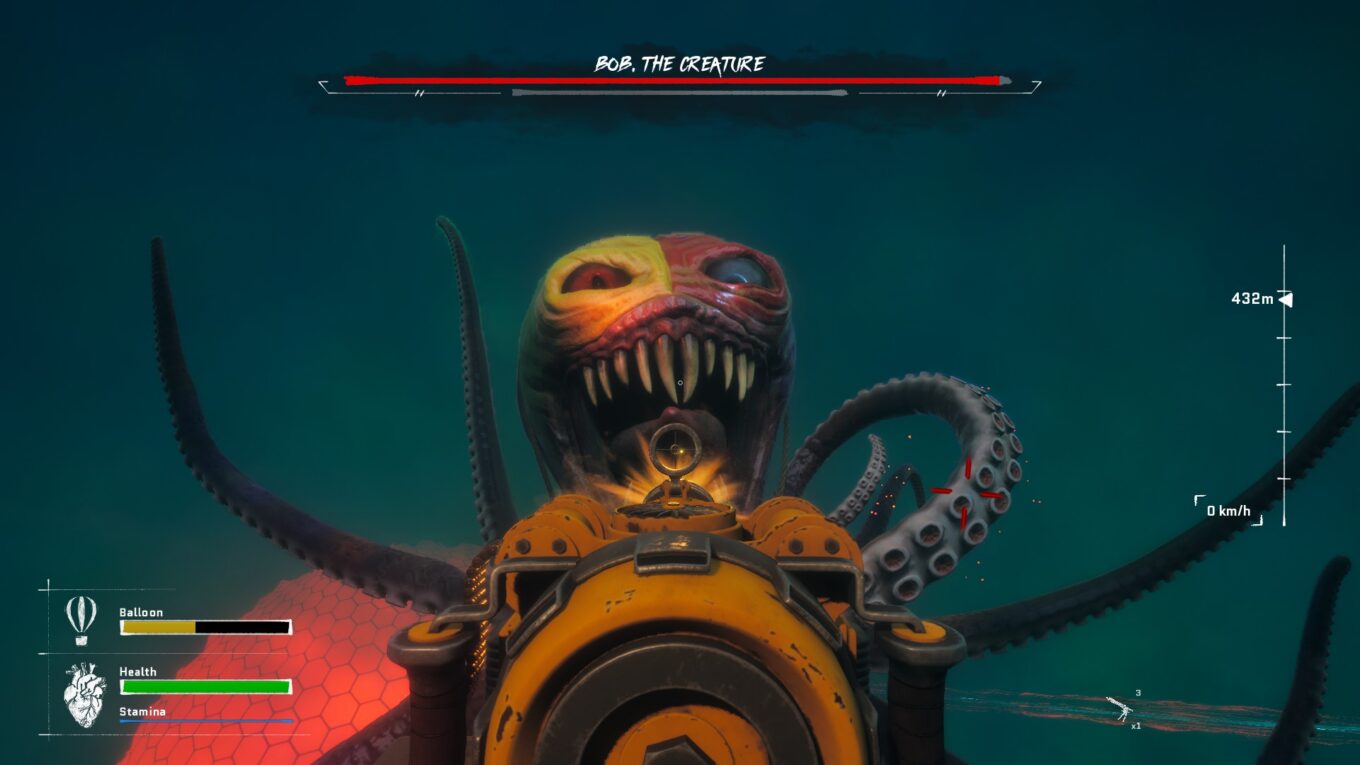
Sadly, Bob’s presence is overused, which dramatically decreases the novelty of the fight. The strategy involved in defeating the creature quickly turns monotonous, and consecutive encounters become more of a nuisance than a challenge worth contending against. It doesn’t help that you can’t manually save the game, and checkpoints can be quite arbitrary at times. This means that, if you’re unprepared, you might sail to the skies toward a specific destination, get interrupted by Bob along the way, and then be forced to reload a 20-minute-old checkpoint.
The more time I spent with Inky Blinky Bob, the more everything felt like fighting the titular creature. You get access to melee and range weapons to fight an assortment of enemies, from not-quite cockroaches to not-quite zombies and human soldiers, but movement and animations feel stiff. There is little variation between enemies, and after you’ve fought a few, you’ll know exactly how to confront the next few dozen.
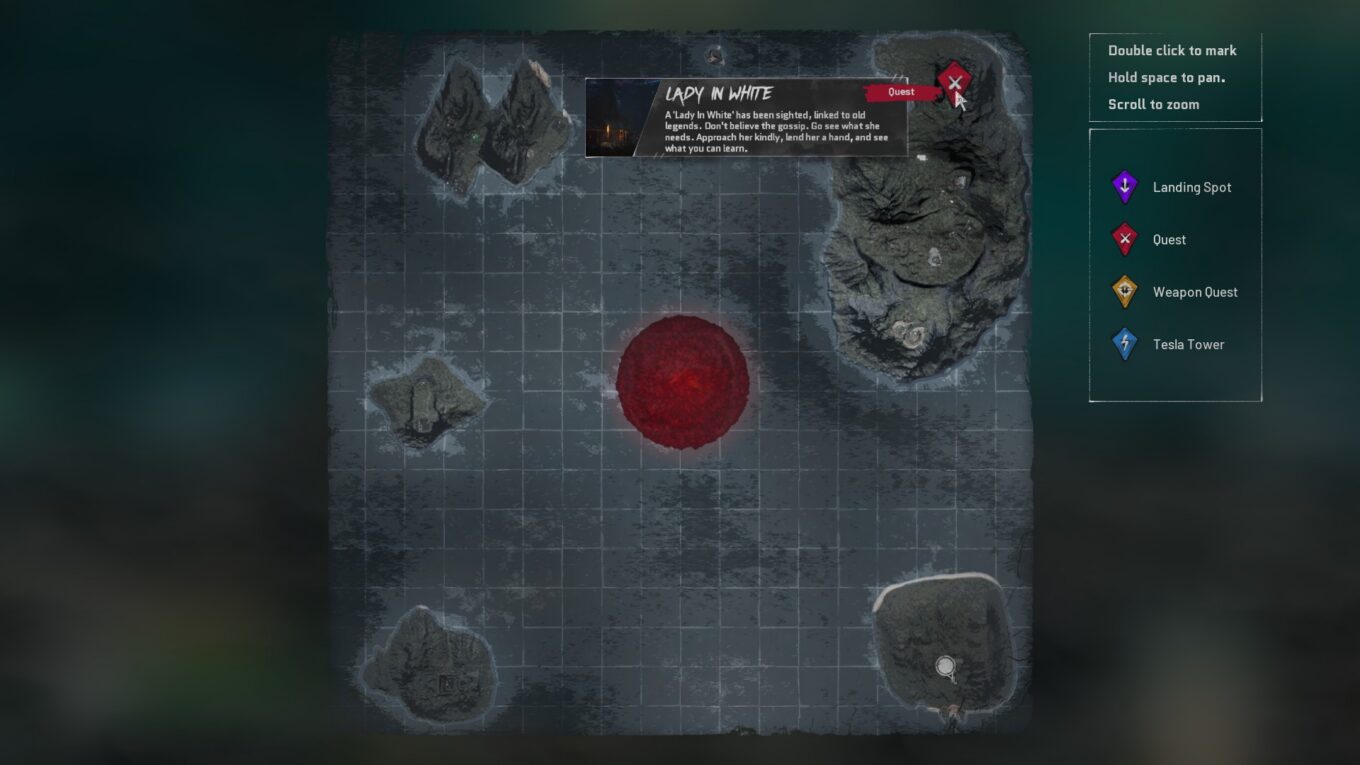
Navigating the islands is also a test of endurance and patience, and not in a fun way. After the tutorial, the entire map becomes available, and you can pick and choose which quests to do first. Yet, there is a main path of sorts, but it isn’t clearly outlined. I went to an island where I was greeted by a swarm of soldiers, even before I had at least a shovel to defend myself. Upon entering the grounds of a mission, I was hit with a game-over screen and had to redo the last 20 minutes for some unknown reason.
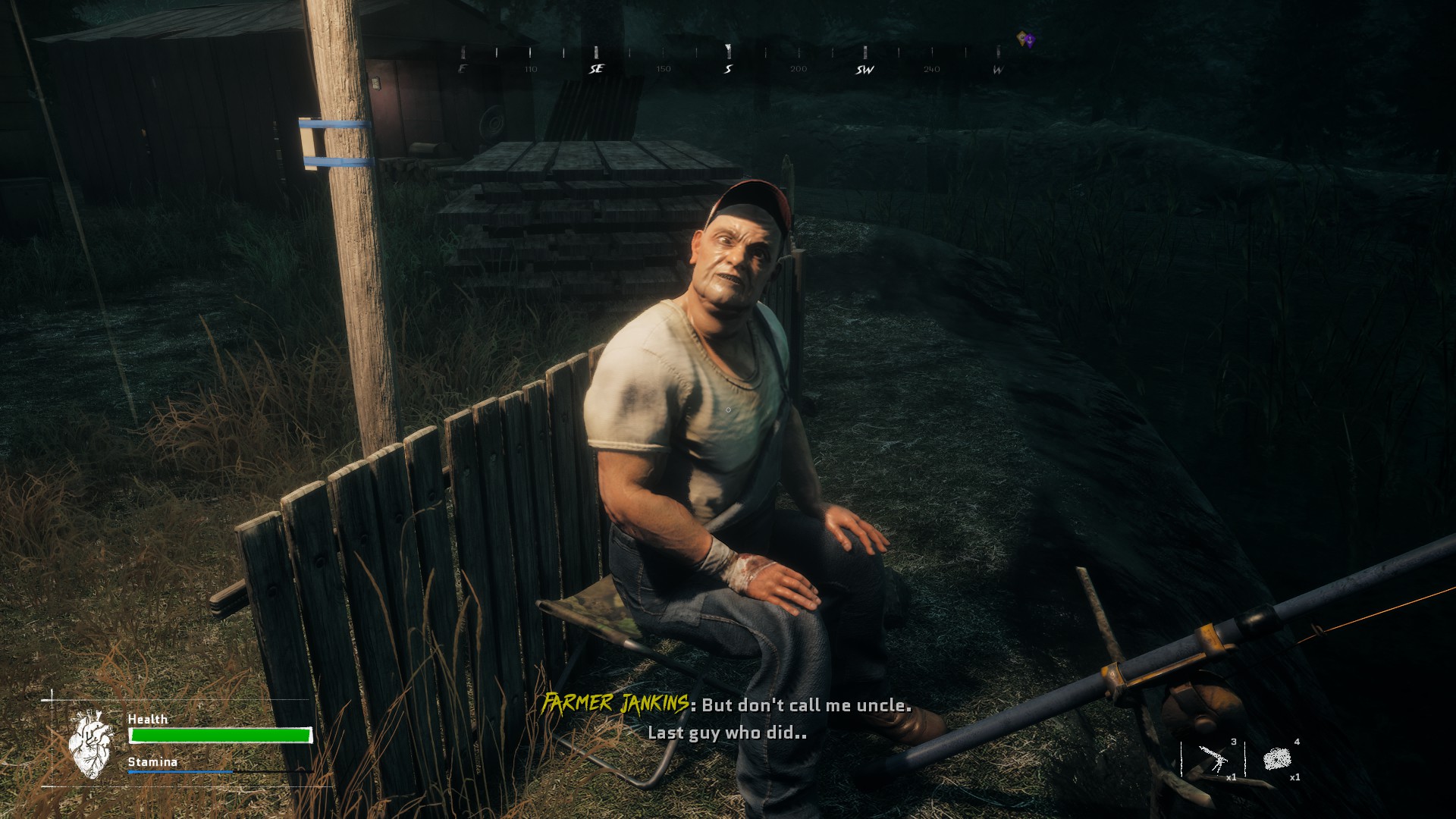
It also doesn’t help that meeting characters and helping them with their problems is a mixed experience at best. They’re all voiced, which is a standout, but the lip sync is nonexistent, rather defaulting to an off-putting animation stuck in a loop. And then there’s the writing, which ranges from cheesy lines like two soldiers saying, “bro, this view is lowkey romantic,” to frankly crass jokes that feel uninspired at best, including a running joke about Ralph putting a walkie-talkie in your pants and “nothing else” while you were asleep after the crash, or a farmer who tells you not to dispose of the body of an insect because he has “some uses for it” before throwing it away.
In survival games, you can intuitively picture what a few sticks and stones can be used for. Building an axe to chop down a tree, gathering the first few dozen piles of wood to begin building a safe house. Inky Blinky Bob feels like an amalgamation of elements that is bestowed upon you, but none of them seem intended to gel together in a meaningful way, nor can you picture a solid vision for them, no matter how much you try to meet them halfway. Despite attempting to present new ideas, almost the entire concept is best left marooned on that archipelago.