I am a difficult critic for modern video games to please. I’m weary of an industry that increasingly mistakes reference for storytelling, I grow progressively allergic to open worlds, and have far more patience for poorly-realised games that try something new than polished sprawls that rely on old tricks. Lego Batman: Legacy of the Dark Knight includes everything I dislike in modern gaming, yet it disarmed my cynicism almost from the jump.
Traveller’s Tales litters its plastic open-world Gotham with nods to Batman’s history. In one late-story mission, for instance, Joker speaks to the player through a series of mouthpieces fashioned after iterations of the character reaching back to the 1960s. But it also exhibits enough growth and offers enough charm to feel like a novel take on the Caped Crusader throughout its six chapters.
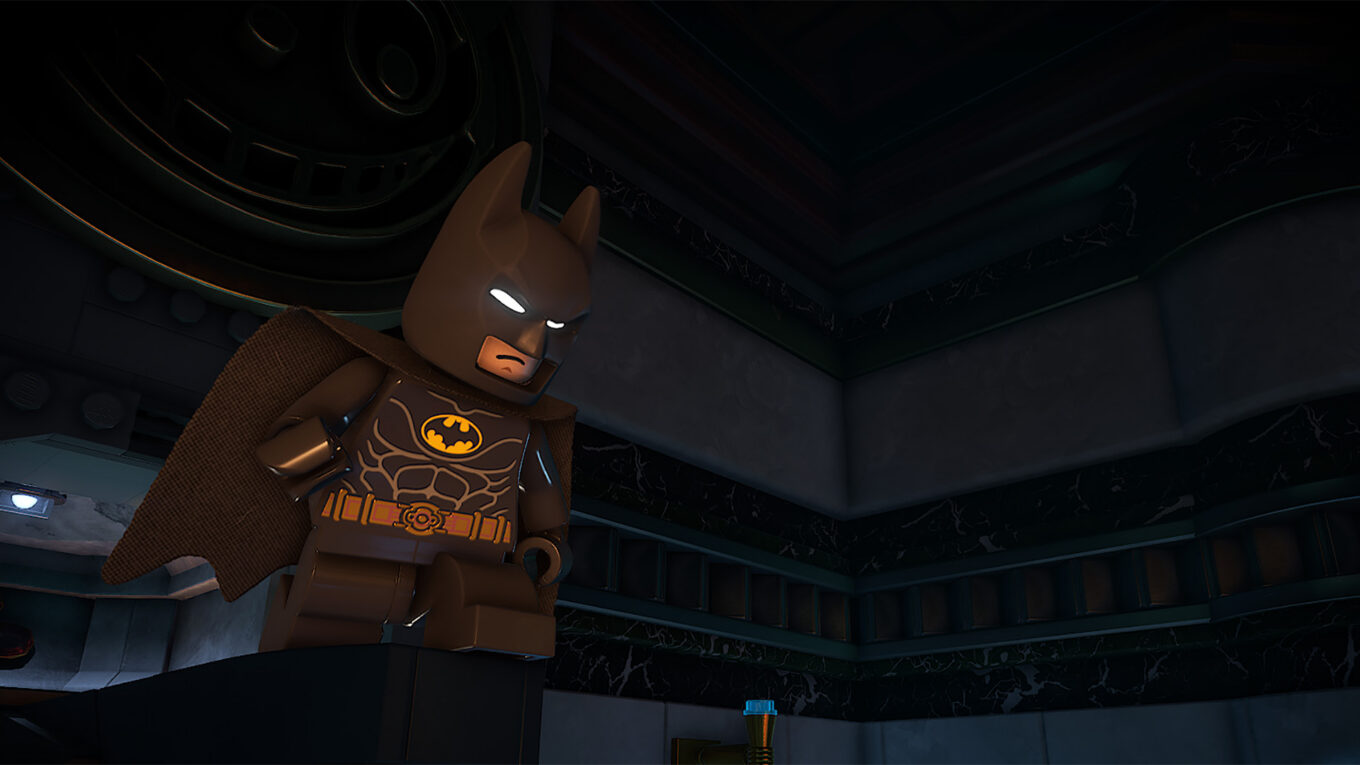
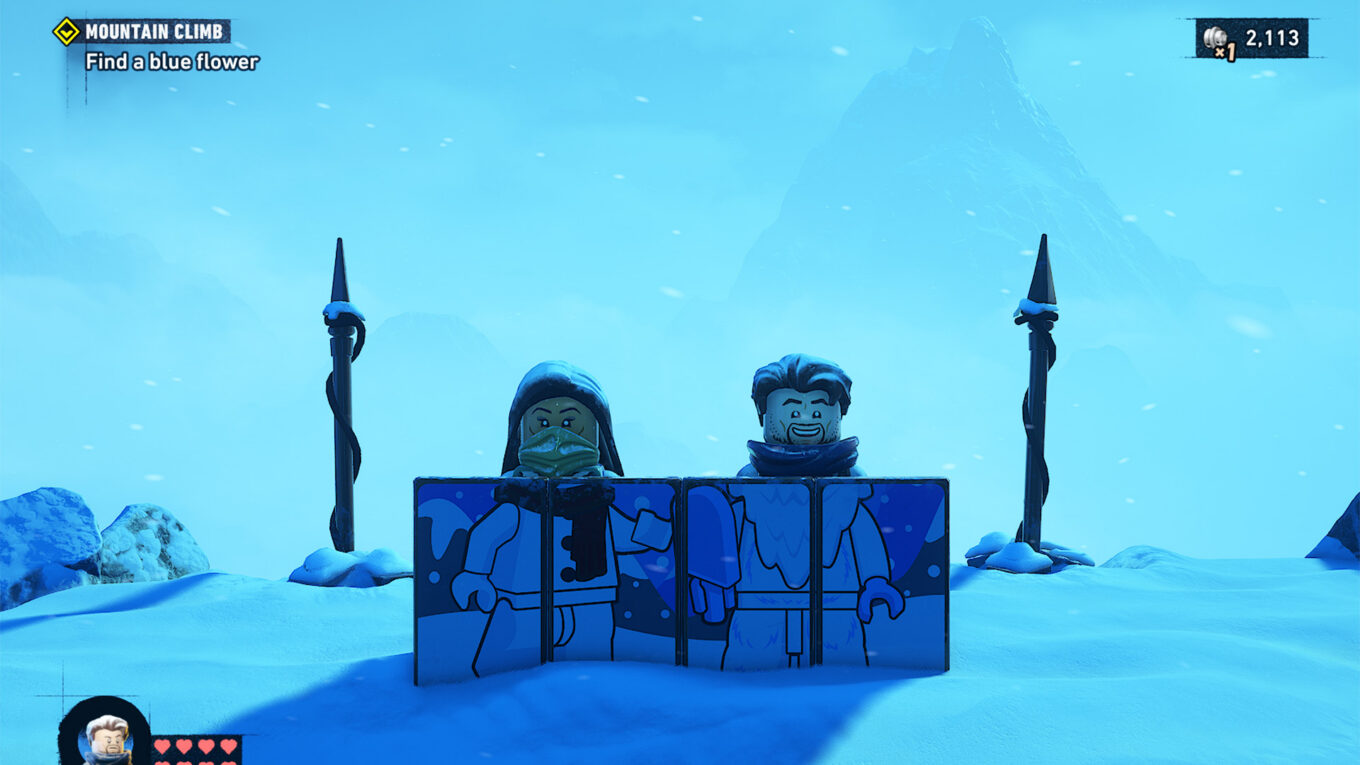
That all commences with a lengthy, linear, prologue lifted from Batman Begins. After a young Bruce Wayne witnesses his parents’ murder at the hands of Carmine Falcone and Jack Napier — complete with a passable Jack Nicholson impression — he travels to the mountain home of Ra’s al Ghul and trains with the League of Shadows.
In an early sign that Legacy of the Dark Knight is happy to mix cinematic and comic influences, he partners with Talia al Ghul to grapple across pagoda roofs, slip through low corridors to ambush goons, and dodge-roll past the attacks of rival ninjas. All in an hour-long sequence that feels less like Lego Batman than Lego Sekiro.
Under the hood, however, Legacy of the Dark Knight remains a Lego game. You repetitively punch bad guys, build puzzle solutions, and smash everything to pick up studs — which can be used to buy cosmetics. It’s an adherence to formula that may put off those who usually bounce off Lego games. But it’s also a sensible move to ground existing fans in the familiar before Legacy of the Dark Knight introduces its fresher mechanics.
Or rather, engages in some slick curation of mechanics. Throughout the tutorial, Ra’s stresses the importance of stealth. Something achieved by simply being behind enemies and peering down from high ledges. It’s not strictly necessary, but paired with combat driven by parries and dodges, Legacy of the Dark Knight evokes the long shadow of Rocksteady’s Arkham series.
That’s no accident. Rocksteady Studios provided development support for the game; though, its signature combat has been rendered more forgiving, more accessible, and more fun. Gone are the often indistinct stink-lines of Arkham, replaced by easy-to-spot prompts and indicators that only become more visible as the game travels to darker climes.
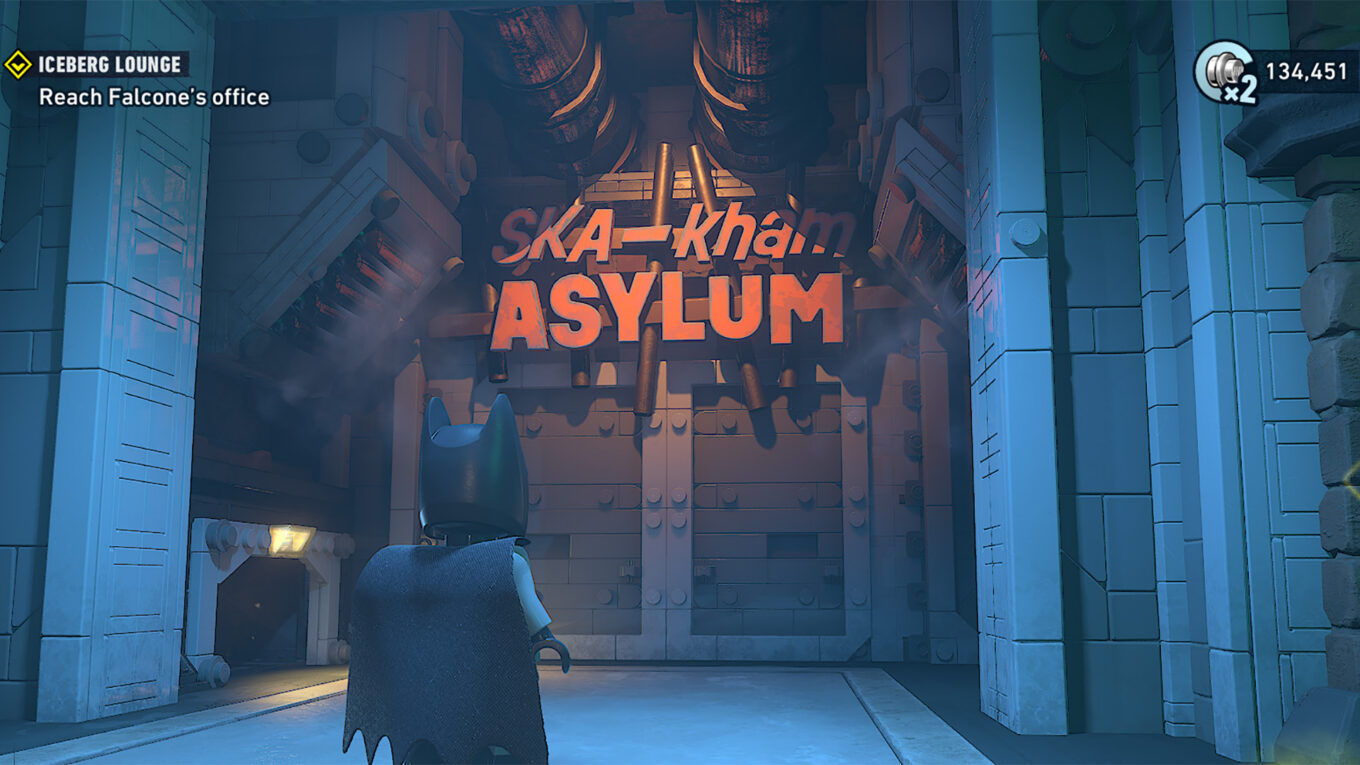
All of which is a visually arresting preamble to Wayne’s return to Gotham as Batman. First, on the trail of Falcone before shifting attention to Red Hood and an expanding rogue’s gallery. You’ll pursue all of them alongside a procession of partners. In the opening chapter, the game rotates through Alfred, Lucius Fox, and Jim Gordon. Later, Batman is joined by Catwoman, Robin, and more. All of whom bring distinct mechanics to bypass obstacles.
Gordon, for instance, comes equipped with a goop gun to jam mechanisms while Catwoman — in the rare moments she stops backflipping — can summon a feline familiar to access tight spaces. You can’t pet the cat. You can, however, pet the yaks in the prologue.
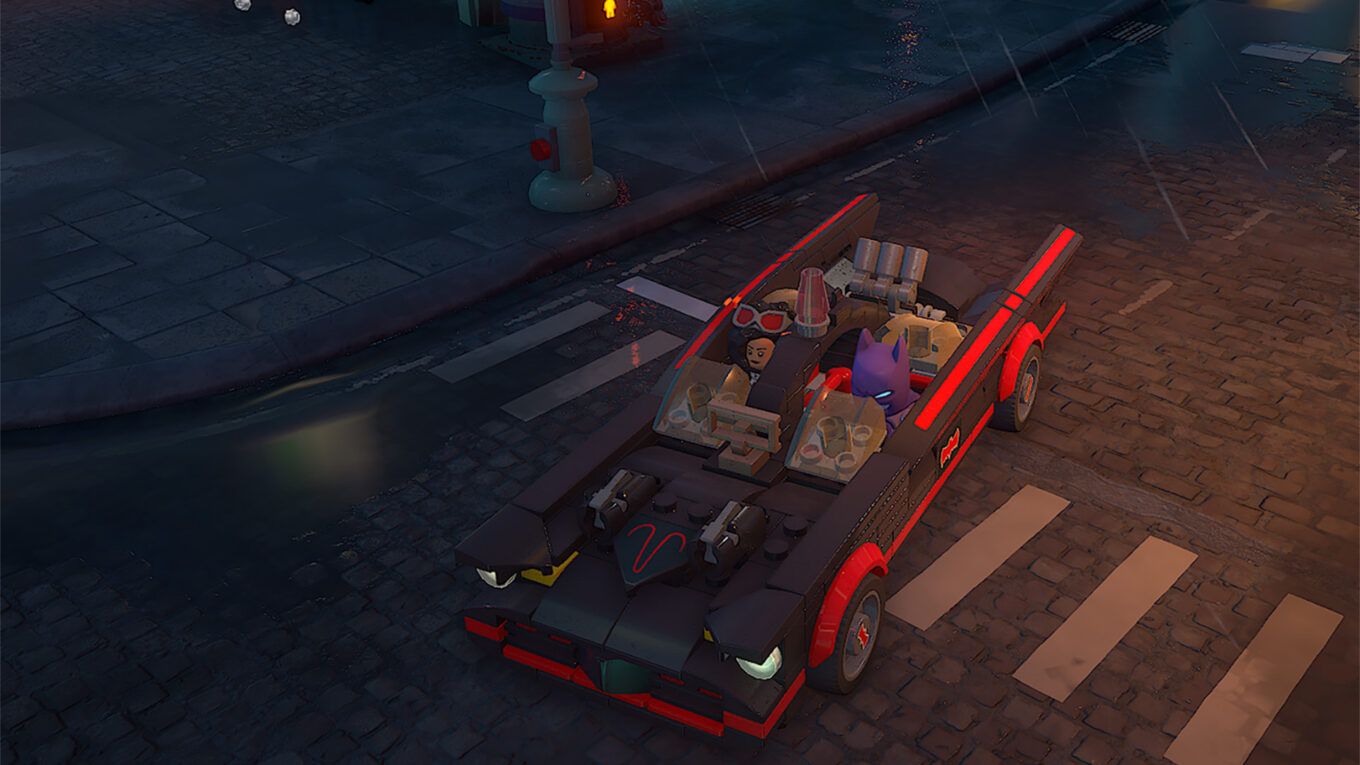
Loose in Gotham, your world opens up through a combination of gadgets and the Batmobile. In partitioning Gotham into multiple islands, however, Legacy of the Dark Knight avoids wearying players with lengthy travel, keeping each map relatively self-contained and digestible. In each of which you can hunt the game’s many collectibles, disrupt incipient street crimes, or beeline for the story’s main missions.
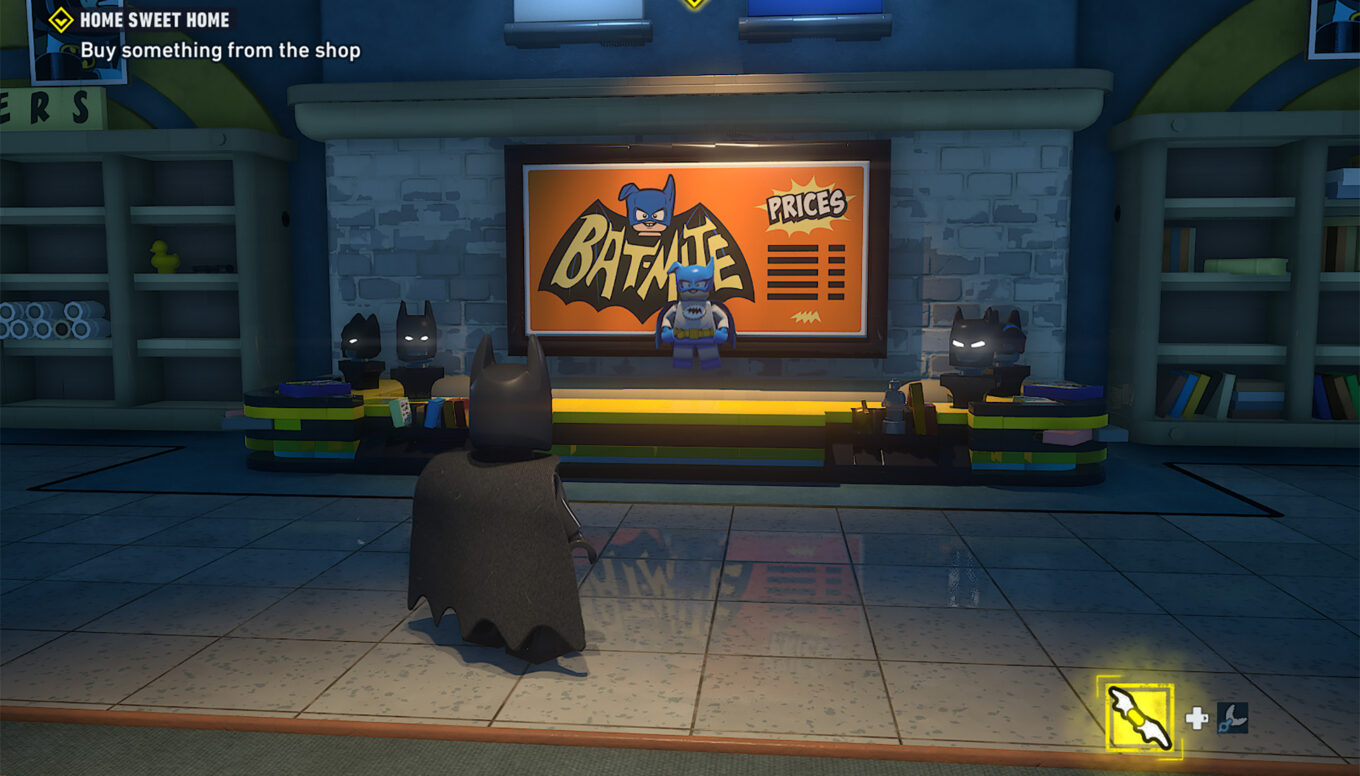
Surrendering to the main plot carries risk, however. If Batman is often beholden to the baggage of his past, limited changes cannot stop Legacy of the Dark Knight being a Lego game. It keeps its meta-narrative relatively fresh with frequent nods to American Psycho, Dirty Dancing, and more outside of DC’s canon. But the expansion of its sandbox does expose the limitations of a core vocabulary that still boils down to punching goons, breaking the environment, and solving simple puzzles ad nauseam.
Early in the first chapter, I was already growing weary of a dingy, monochrome Gotham, especially after the prologue’s grander vistas. The game is nimble enough to not lock the player into one thing too long. But Legacy of the Dark Knight cannot escape how dreary Gotham remains — even as it shifts visual tone across directors between chapters — nor that the shuffling deck of activities if offers too often settles into the same pattern.
This is mitigated by more inspired locales that allow the game’s endearing humour to assert itself. In one early sequence, Batman pursues Falcone into his nightclub in the back of which he discovers a children’s playpen — complete with elaborate obstacle course and ball pits which his goons use in lieu of health insurance. Though it’s an absurdist pivot that injects some welcome colour into the game, Legacy of the Dark Knight deploys it too sparingly across future chapters.
It remains refreshing, however, that Legacy of the Dark Knight pulls from such a broad library of sources. Particularly in its development of City Undercover’s mechanics married with a lighter interpretation of Arkham’s combat. Yes, there’s repetition, but there’s also an intention for the player to mix and match how they approach the game via exploration, combat, and alternate missions.
Crucially, nothing in the game is complex enough to stop the player moving forward. Minigames are breezy and puzzles straightforward. One example has the player matching objects in a room with what’s shown in a mirror, another simply finding a grapple point to open a path, and yet another amounts to a facile rhythm game.
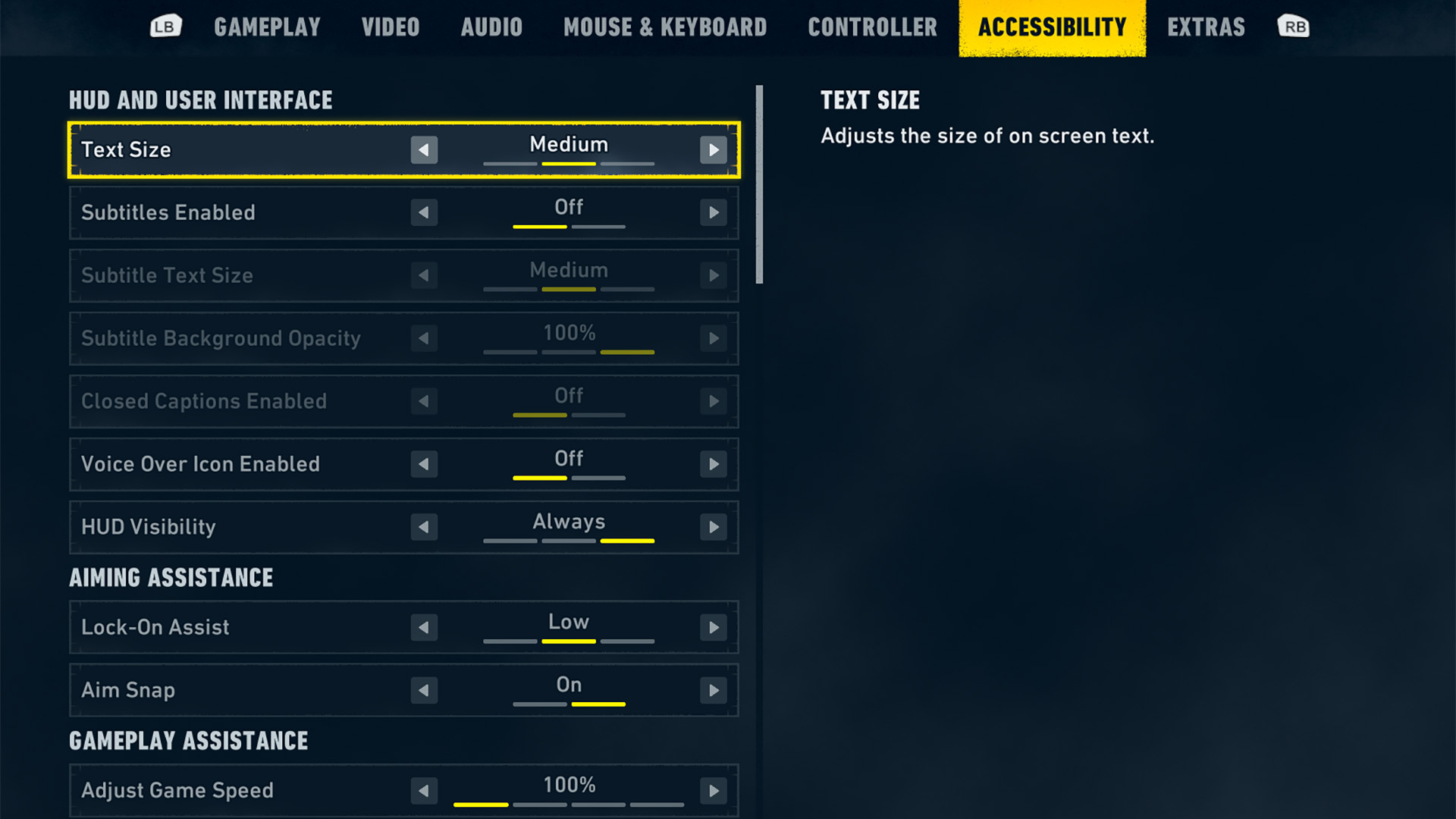
On the rare occasion a solution is not obvious, a generous baseline of cognitive accessibility makes the path forward clear. If in doubt, Legacy of the Dark Knight drills into the player early, wanton destruction is the answer. All of which is supported by an extensive suite of accessibility options. Controls can be remapped and subtitles customised. The game offers an expansive high-contrast mode, multiple ways to adjust the game’s combat difficulty, mitigations for repeated inputs and quick time events, and much more.
That’s notable on its own. But viewed holistically, it’s just one demonstration of how sincerely studied Legacy of the Dark Knight is from the ground up. References aren’t the usual list of shallow gags. Instead, Traveller’s Tales has considered how the player will interact with them, particularly in using them (and, more broadly, humour) to defuse monotony in longer missions. They still come thick and fast, they don’t always land — though I was tickled by the League of Shadows’ mountain HQ doubling as a ski resort — but nor do they punish the player for not getting them.
That attention to detail can make the game’s more desultory moments more apparent. Gliding and grappling can feel finicky, worsened by a camera that’s not always cooperative. Driving is intuitive but undermined by a city layout that leads players down frequent blind alleys that look like they should lead to an objective marker. But in a rare open world game that can reasonably be finished in under 20 hours, flaws feel more fleeting than they might elsewhere.
I’ve rarely found much to love in previous Lego titles. While those frustrations remain in Legacy of the Dark Knight, Traveller’s Tales elides them in genuine steps forward in how you play. An empathy and authenticity that translates into a visible love for the source material, and filters into mechanical refinements that elevate the game beyond a childish button-masher (it is that, and there’s nothing wrong with that) and into a charming, surprisingly humane, and, more importantly, fun ride through Batman’s history.