
I’ve forever been chasing the high of playing Metal Gear Rising: Revengeance for the first time, completely unaware of what I was about to witness. The first few moments of the hack-and-slash game start in a fairly grounded way. All of a sudden, controlling protagonist Raiden, you find yourself running at all speeds on top of a Metal Gear, performing a series of quick-time events in a flashy demonstration of action, personality, and above all else, a willingness to not take yourself too seriously to deliver ideas that, on paper, shouldn’t work as well as they do in practice.
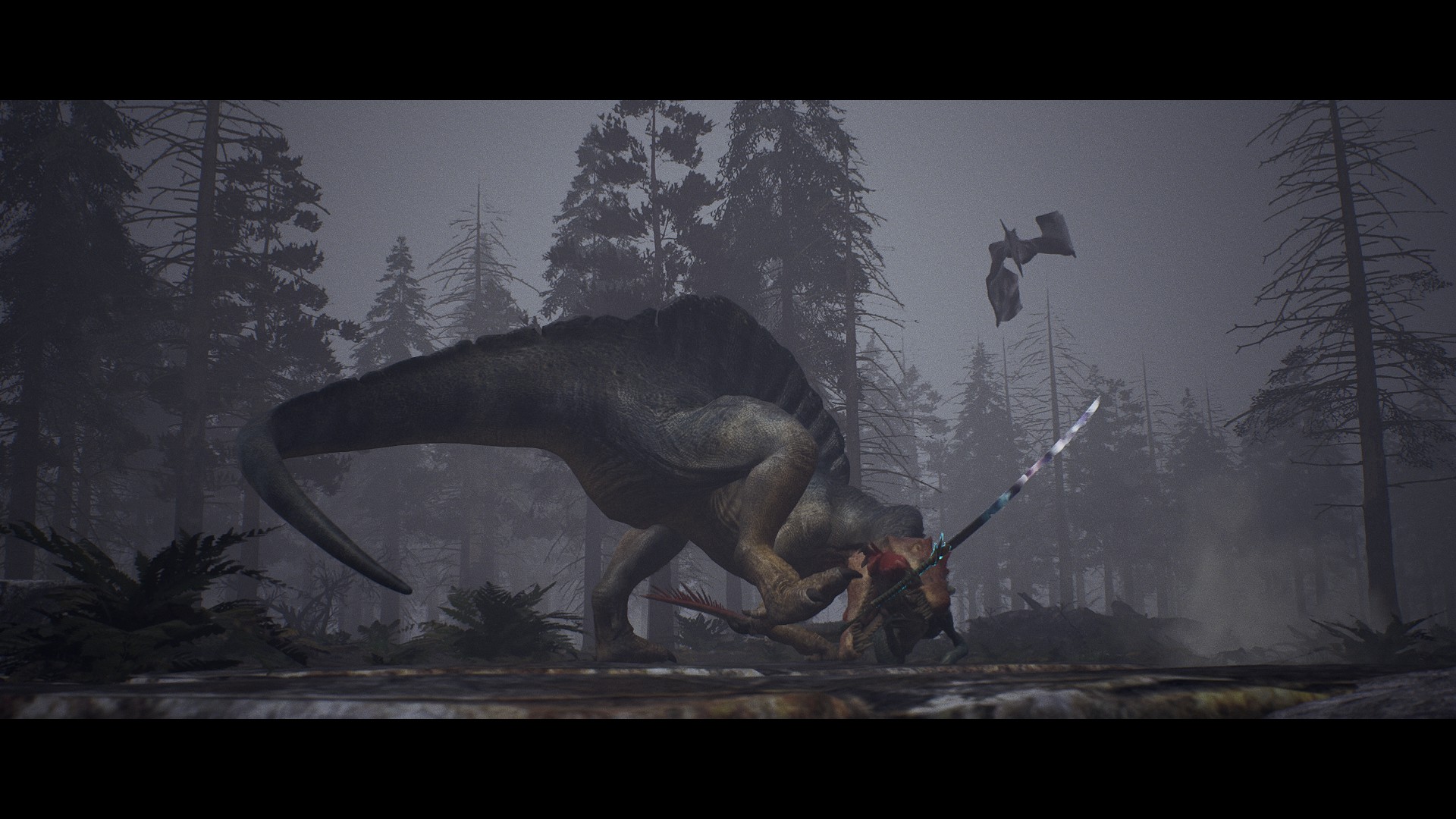
Dinoblade, developed by Team Spino and co-published with Boltray Games, is an action RPG that shares far more similarities with Soulslikes than your usual hack-and-slash or character action game. But moments like the one in Metal Gear Rising come to mind due to how unexpected they were. That same whiplash is, in a way, the very foundation of Dinoblade. As the name plainly indicates, you play as a dinosaur – a young Spinosaurus, to be exact – who clenches a blade between his teeth. There is no grand metaphor or big picture message to pass along to future generations. And yet, despite a series of rough edges, the idea’s execution is so hilarious that it manages to become an exhilarating and endearing adventure.
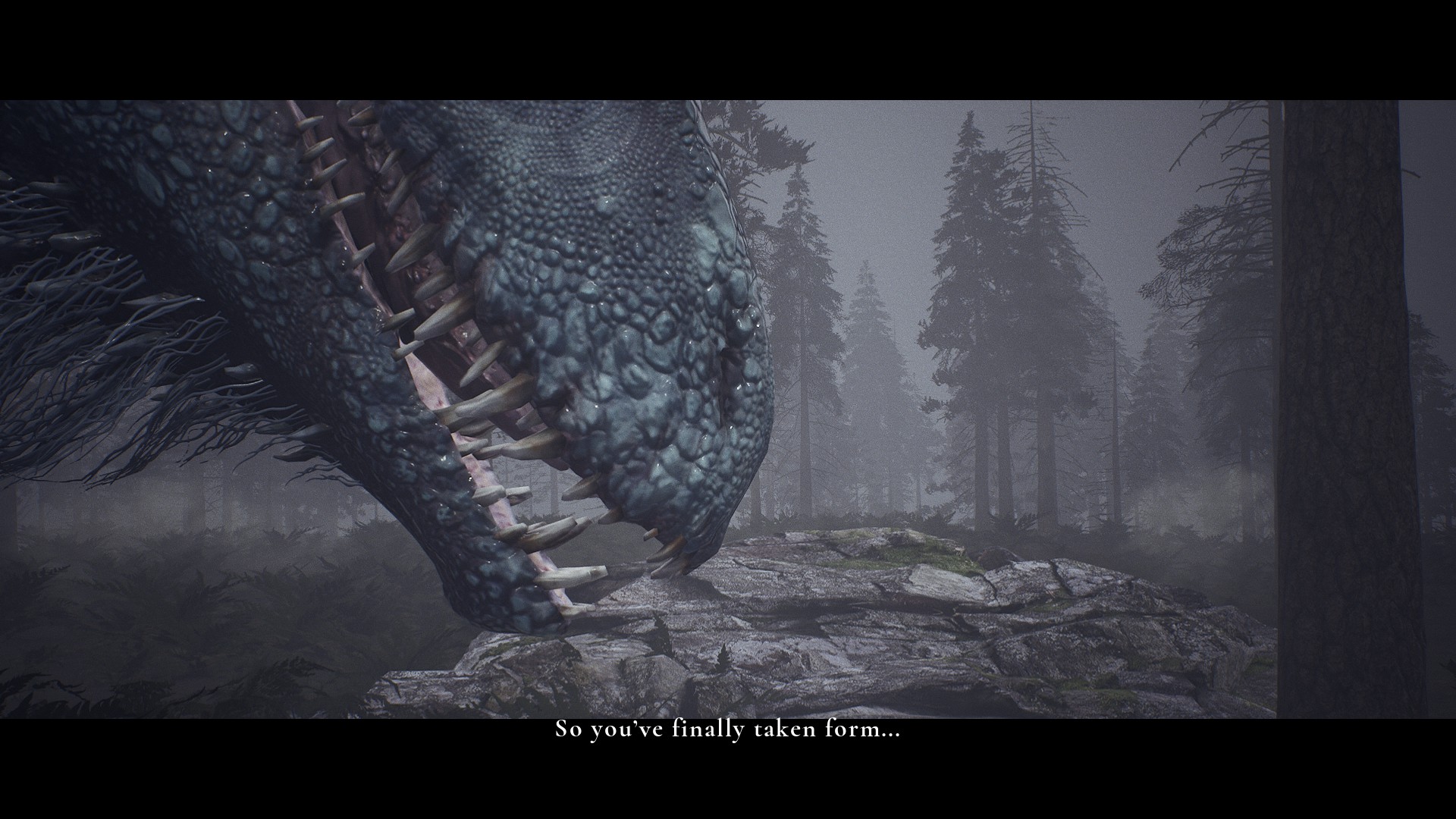
From the moment you get to the main menu, you can already tell this won’t be an experience you’ve seen before. The main song playing in the background sounds like an epic heavy metal ballad that shouldn’t go as hard as it does. The moment the double kick pedal started blasting into my ears while tinkering with the settings, I knew I was in for, at the very least, an entertaining ride. There’s zero fuss around the story’s introduction. The starring Spinosaurus is attacked by fellow sword-biting dinosaurs and falls into a cave, only to discover an ancient sword. The moment you pick it up, you come into contact with a mythical dinosaur with glowing red emblems around their body, trapped within a circle of swords. “Step forward… if you wish to live,” a deep voice tells you.
After the introduction, you can expect a few cutscenes here and there. But as you can imagine, the story isn’t exactly Dinoblade’s distinguishable feature. Nor does it need to be. As it stands, the few narrative threads present are there to add to the campiness of it all with exaggerated voice acting and killing animations that are clearly inspired by anime. It all carries an absurd nature due to, well, seeing all manner of dinosaurs being the ones in charge of these moments.
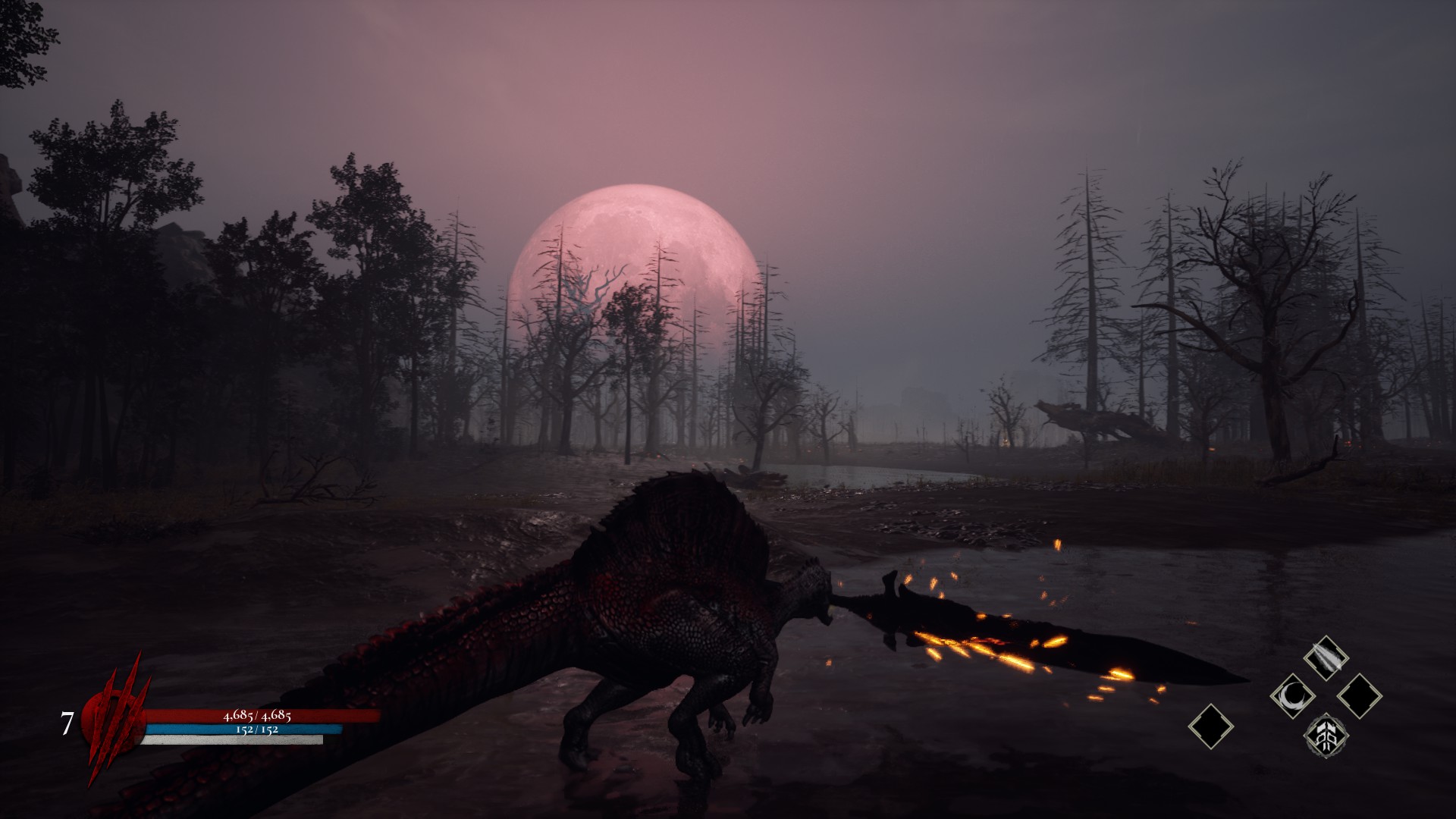
Dinoblade is structured into different areas. Some are more linear than others, but for the most part, you’re thrown into fairly sizable maps where you can take down enemies as you see fit. There are sporadic checkpoints placed around, which serve as save points that also recover your health and other attributes (the game’s equivalent to mana for special abilities as well as your stamina). These checkpoints, more often than not, double down as beacons, as it can be quite easy to get lost and be unaware of where to go. The scenarios are rather dull-looking, and with big patches of land being completely empty, it can be easy to lose track of where the next boss encounter might be. Sometimes this works in your favor, as there are hidden items to find — both new swords that have a specific trait when using them or more health flasks for you to use — but it can be rather frustrating.
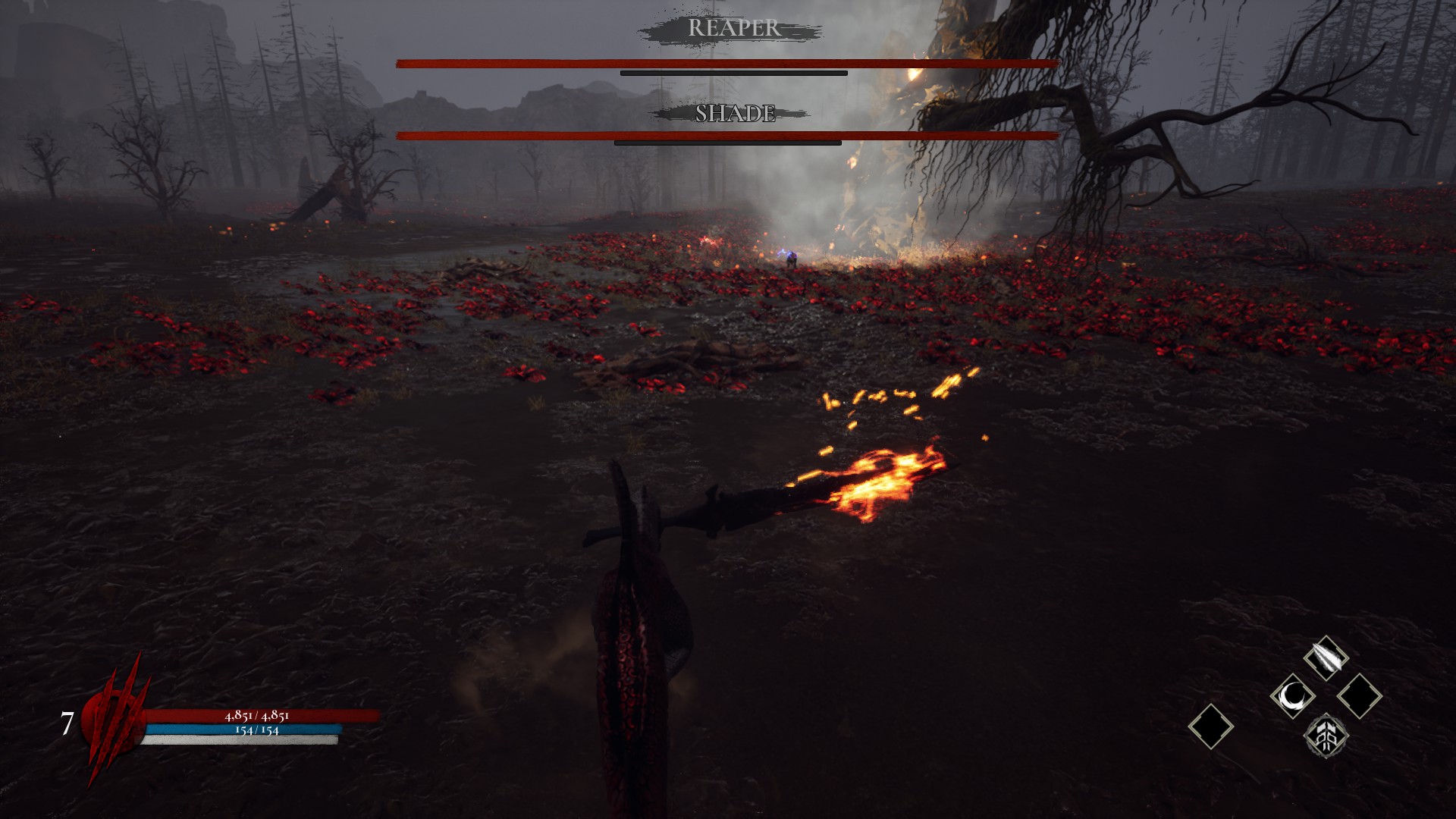
Thankfully, combat makes up for it… at least for the most part. As the esteemed Spinosaurus, you can perform a light attack combo, dash in all four directions, and block enemy attacks. If you manage to perform the latter right as the impact is about to happen, you’ll deflect instead. Taking cues from Sekiro: Shadows Die Twice, enemies have a stance bar that gets filled up with attacks and successful parries. Once it’s full, signalized by a bright orange shade, the next time you deflect, you’ll perform a special attack instead.
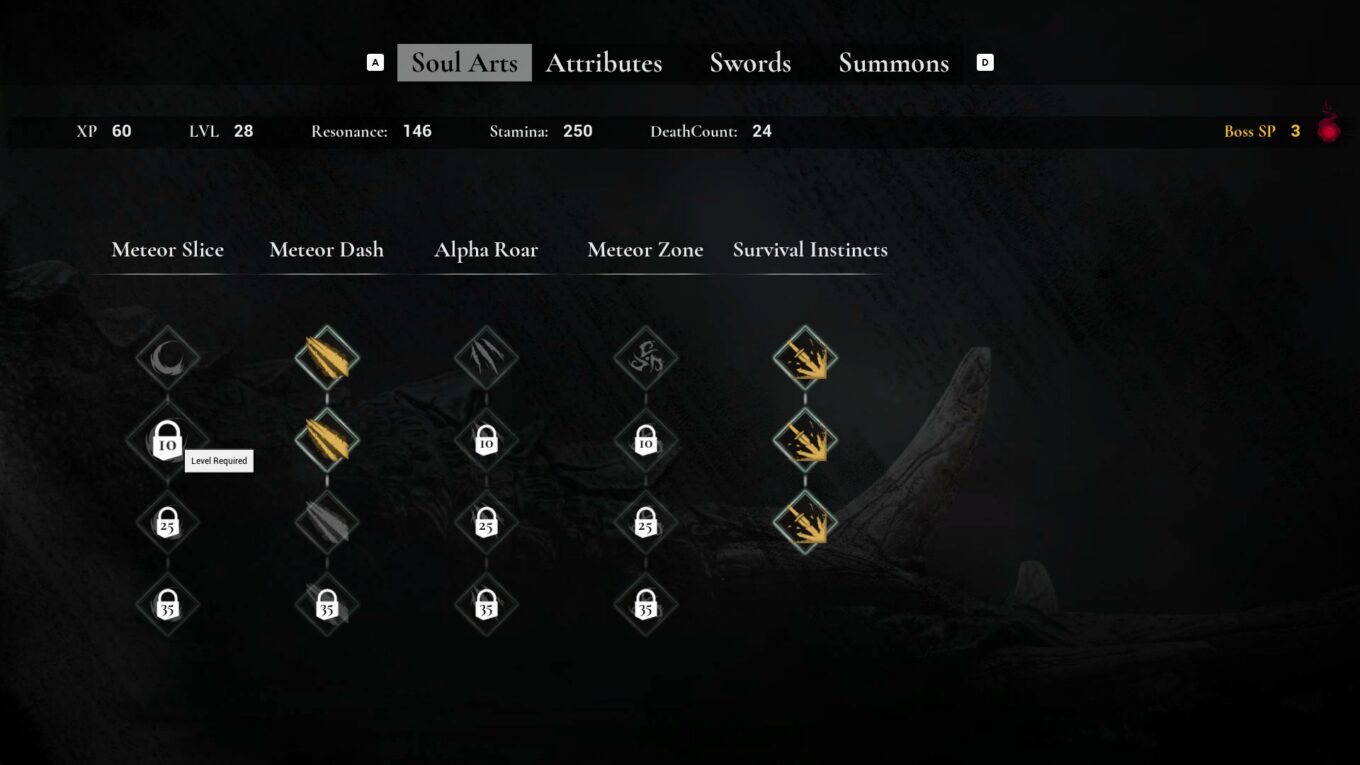
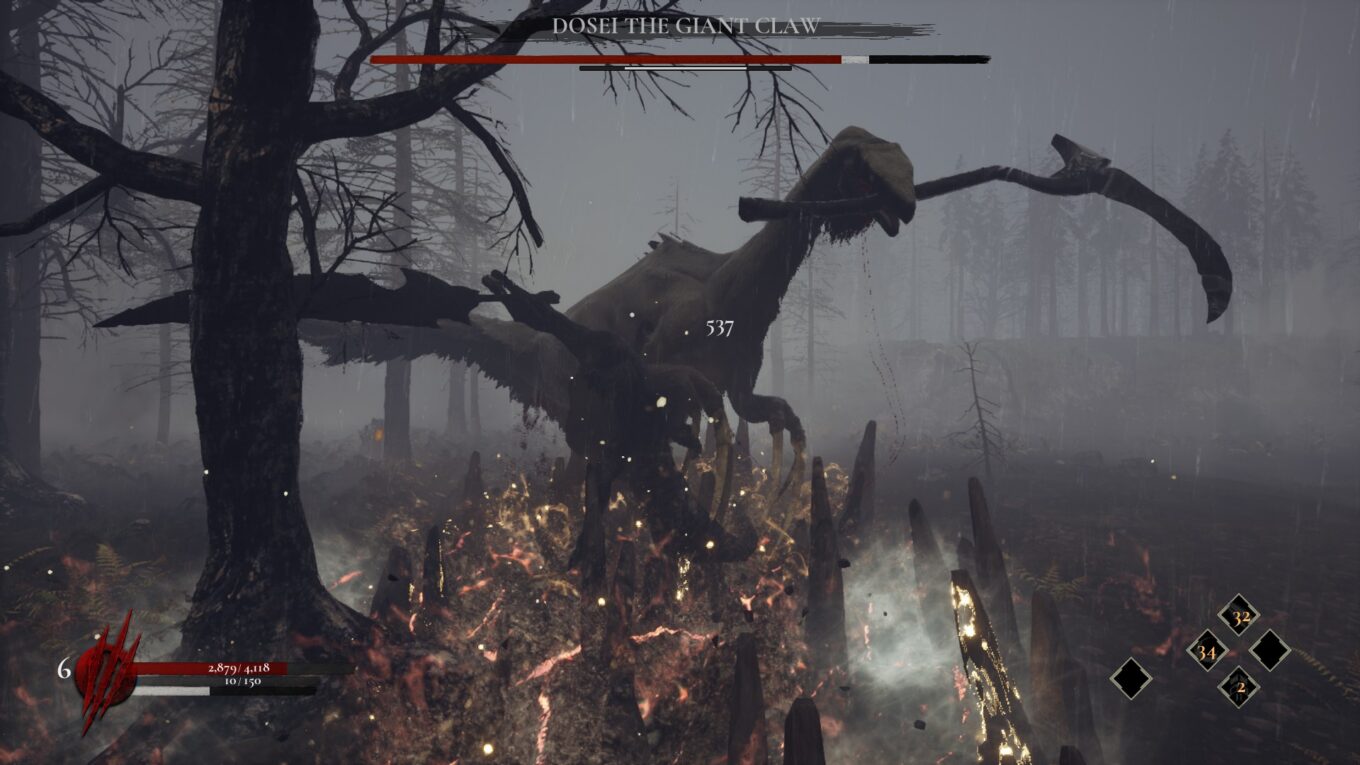
Fighting other dinosaurs is snappy and satisfying most of the time. Some are smaller than you, but may attack faster. Others double or triple you in size, especially bosses, which not only have a height advantage but can also perform all manner of moves that other enemies don’t, requiring you to learn the specific patterns to actually make it through a fight. Thankfully, you also have a few tricks up your sleeve (or, ehm, claws?). Along with the aforementioned sword abilities, there are four special attacks that you can unlock by spending points gained from defeating bosses. Speaking of which, bosses also become summons. You can only pick one at a time, which will do a specific attack when brought into the battlefield. But they also add a passive attribute, adding a small yet significant layer to whichever build you’re aiming for. The more enemies you defeat, the more points you’ll earn to increase your health, stamina, mana-equivalent, and strength. These summons, then, can further enhance your own personal dino by making it so the next attack after a successful deflect deals more damage, accelerating your combat speed altogether, and so on.
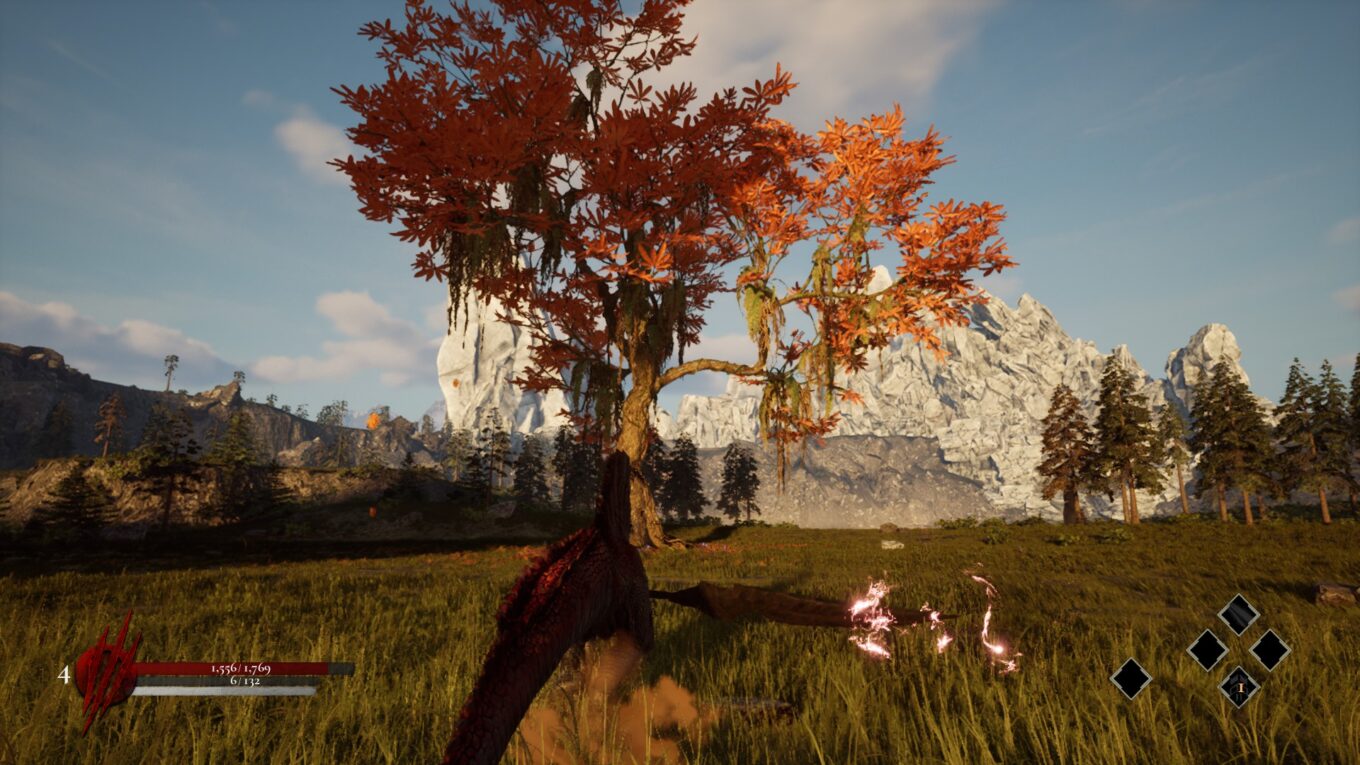
Yet, combat intersects with issues, some smaller than others. For the most part, difficulty can feel quite unbalanced. You can spend a long time clearing an entire map of enemies without much struggle, only to get killed by the next boss with just a few hits. In cases like this, I felt the influence of Elden Ring. Whenever I got really stuck and I felt that I could be doing more damage or could really use some additional health, I would exit the boss instance and return to the field to grind. Yes, it does become a numbers game rather than one of skill, but at least the option is there, and the loop of getting stronger and seeing the effects when retrying hard encounters is inherently satisfying. What I wasn’t a fan of, however, is how uneven deflecting can be. Considering that there are special enemy attacks that can’t be blocked normally, only deflected or dodged, this became quite frustrating. I’m someone who adores the parry mechanic in Sekiro: Shadows Die Twice, and that’s because it is as responsive as it gets. Whenever a game tries to mimic it but fails to achieve the same responsiveness, the whole combat can fall apart. This doesn’t mean that I wasn’t able to deflect at all, but more often than not, I’d resort to dodging instead, which is a shame.
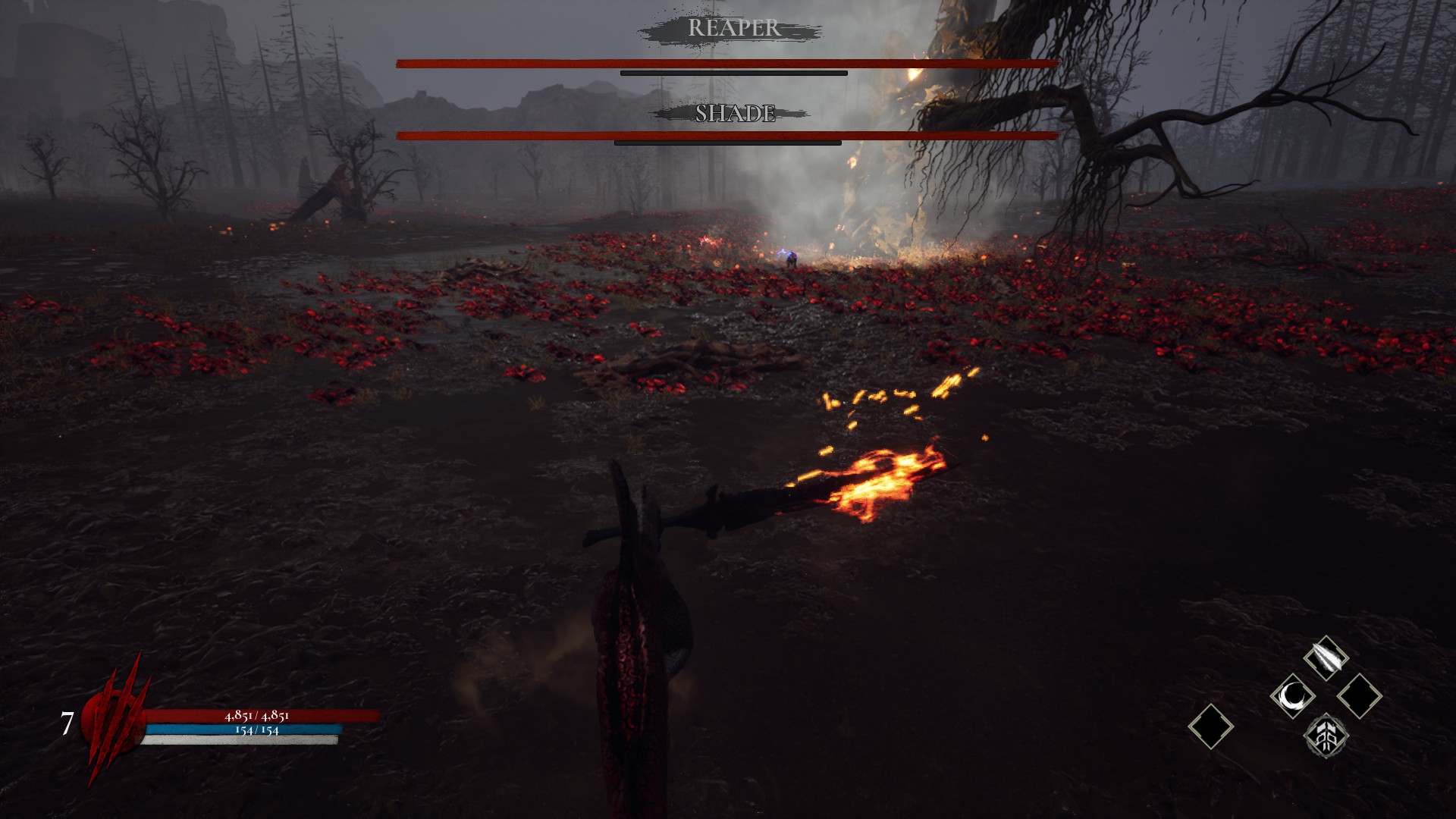
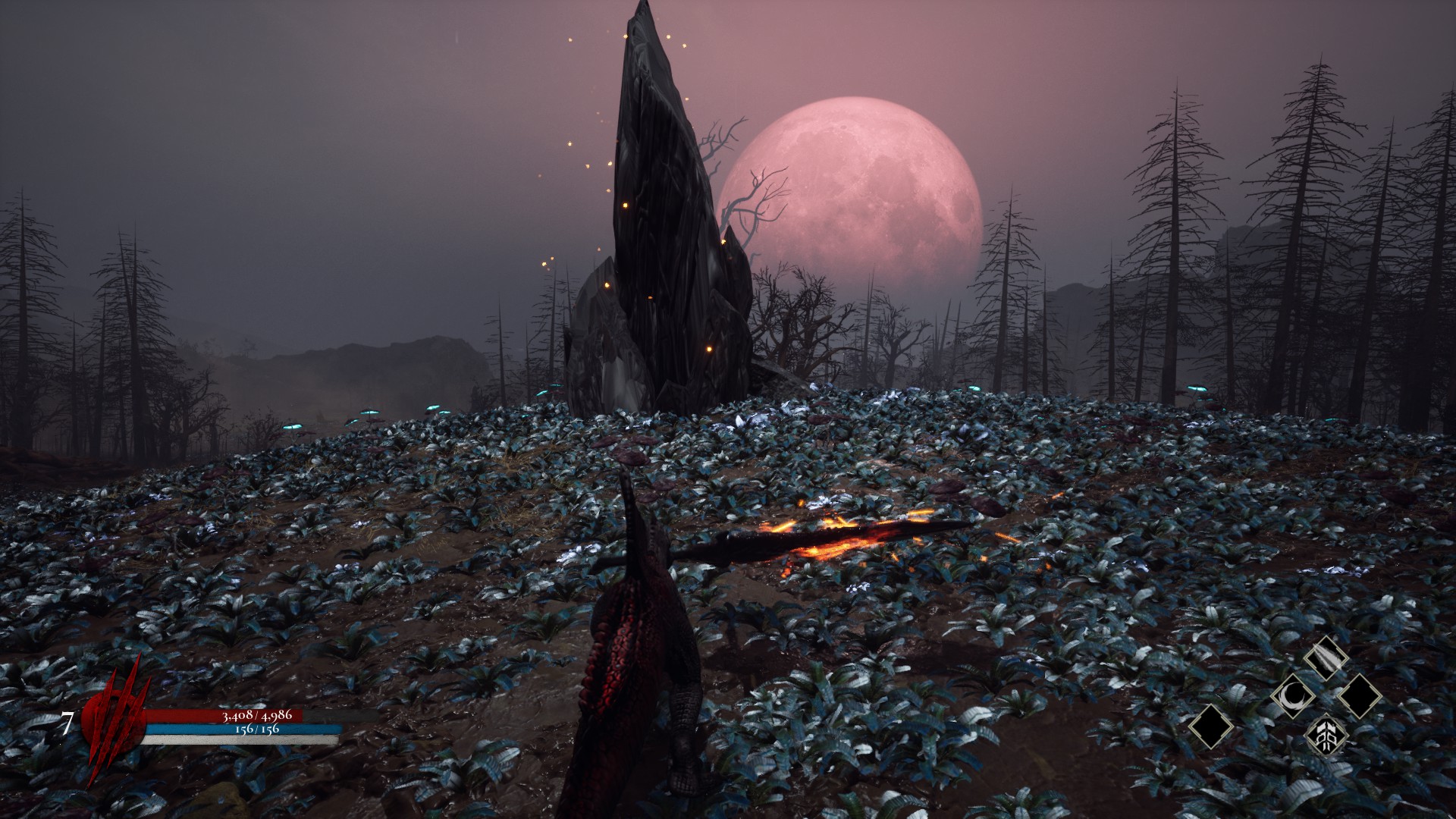
In general, while I appreciate the campiness of Dinoblade, there’s a general lack of polish that is hard to shake off. Dialogue, of which there isn’t much to begin with, can feature typos. The voice acting, as funny as it is, can be odd at times. In combat, there are several instances in which enemies just seem to stay idle and expose themselves to attacks for a couple of seconds before reacting again, at times simply standing still in place. In other instances, the lock-on seems to simply deactivate in the midst of a fight, which is not ideal, especially when fighting smaller enemies due to how the camera is positioned, as this can affect your visibility.
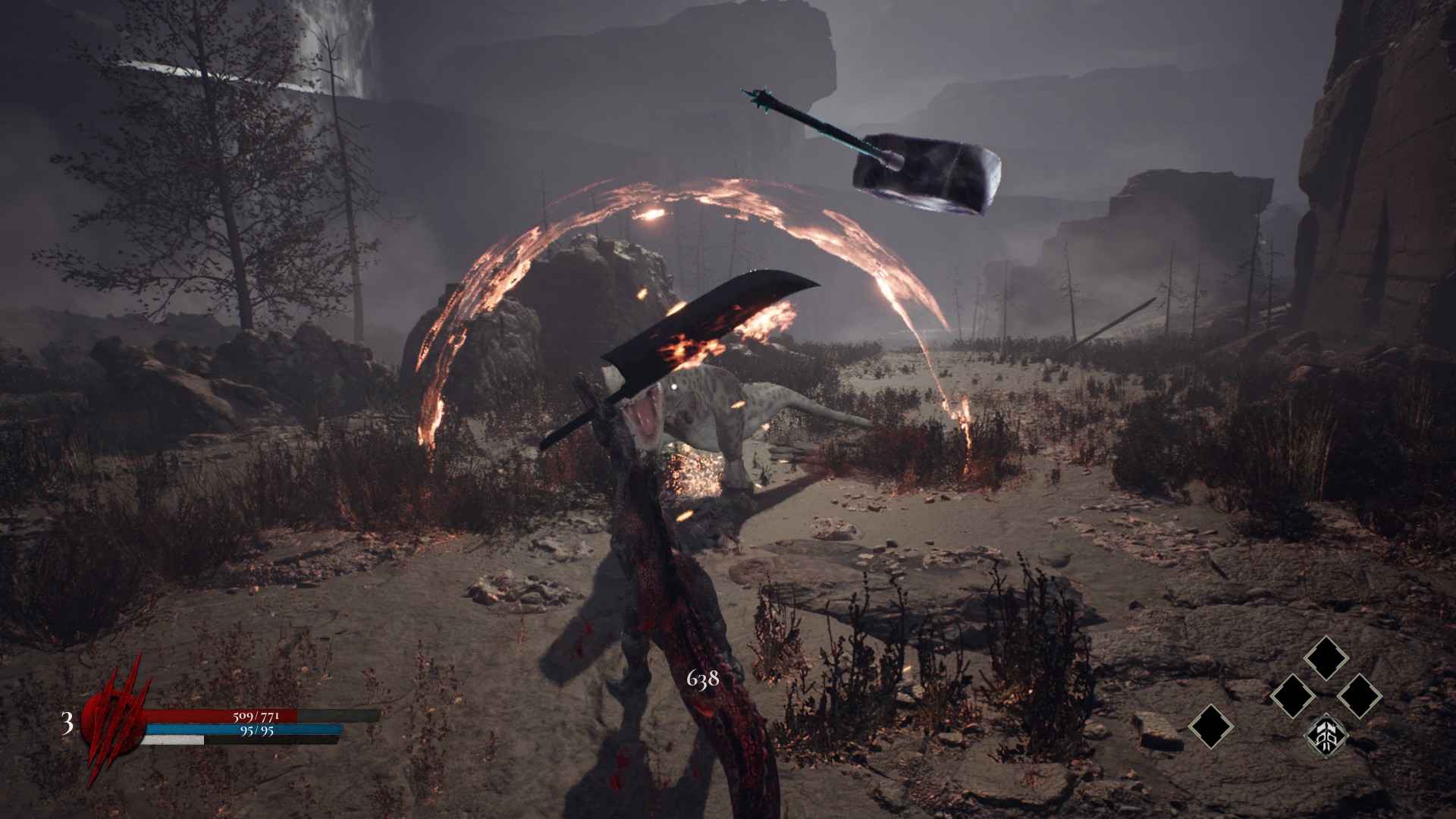
There are multiple reasons to be annoyed at Dinoblade. And believe me, I went through them all. Yet, its standout personality kept me coming back after cooling off for a while. The death counter on screen, the bold, red-letter “extinct” when you’re defeated replacing the usual “you’re dead” message, the metal music, and the absurdity of the small pockets of story are all standouts. Even if the unevenness of it all does get in the way of the experience more often than I would prefer, you’re playing as a dinosaur wielding a sword in its mouth. The image alone is worth the praise.