
I don’t think I’m made for the likes of PowerWash Simulator. Devoting my time to an experience made to emulate the act of cleaning an entire location without first cleaning the apartment I live in just feels off. I do, however, understand the appeal of podcasts or second-screen games. Those you can enjoy without paying too much attention while you do something else in parallel. I search for experiences that are a bit more involved than the trope of having Subway Surfers running on a corner of the screen, but without the nagging feeling that I should be doing literally anything else with my precious time.
Live service games like Destiny 2 used to fit this role perfectly for me. I’d often have to run and re-run the same activities in order to get a certain material to drop – either for work or just sheer leisure. Nowadays, I’ve moved away from the genre almost entirely, resorting to fidgeting with whatever item is nearest to me on my desktop while on a call with friends on Discord or catching up on a show. Yet, spending time with Boxroom before its early access launch served as a promising in-between solution that has me looking forward to seeing how it evolves over time.
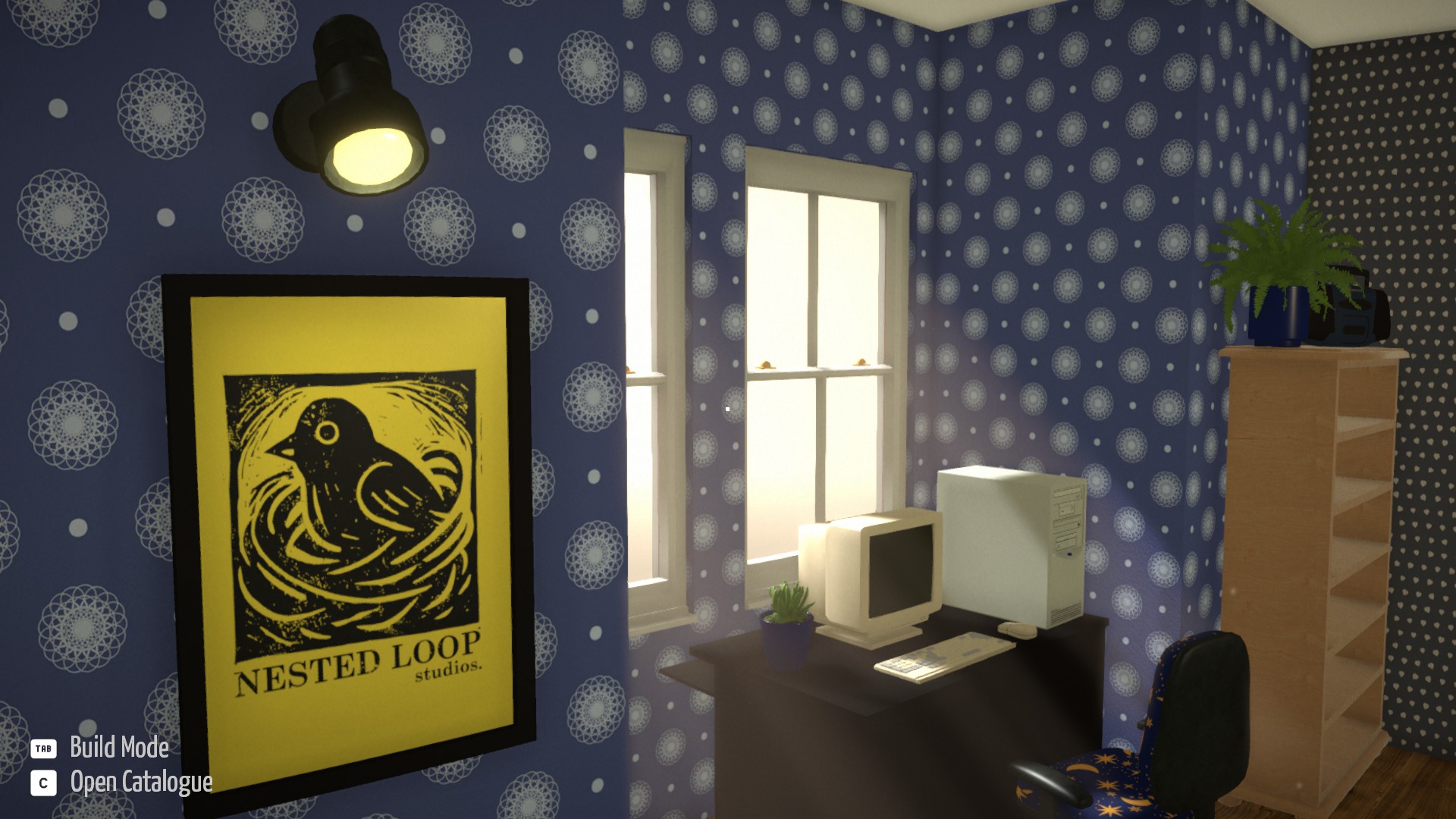
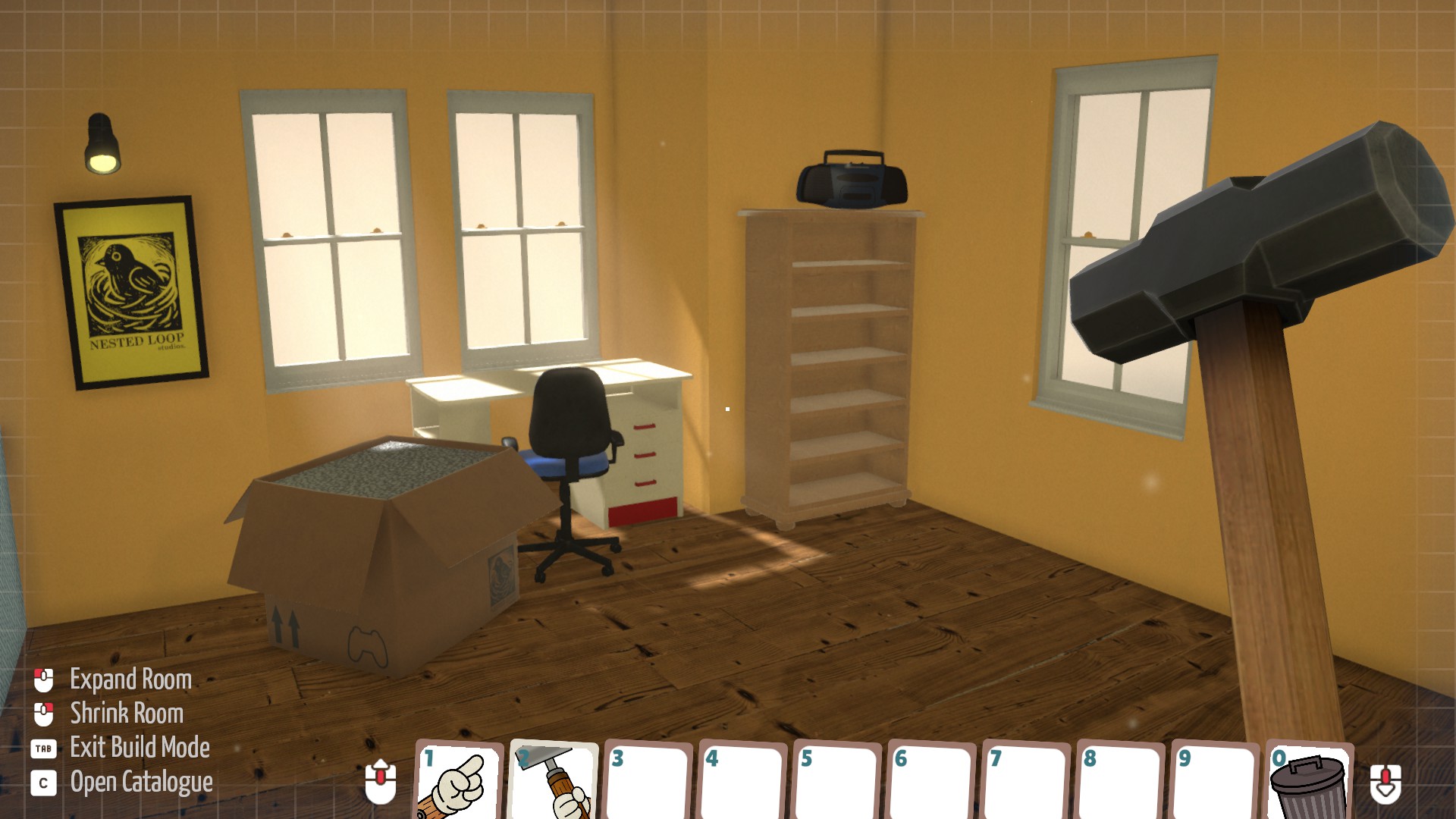
Boxroom, developed by Nested Loop Studios and published by Pantaloon, is, at least on the surface, a home decorator sim. There’s no fancy introduction here. The moment you start the game, you’re transported to an empty room with a desk, a couple of boxes on the ground, and a single window to provide some light (and the artificial promise of vitamin D). The first thing you notice is access to catalogs, from which you can select a vast assortment of items to begin decorating your room.
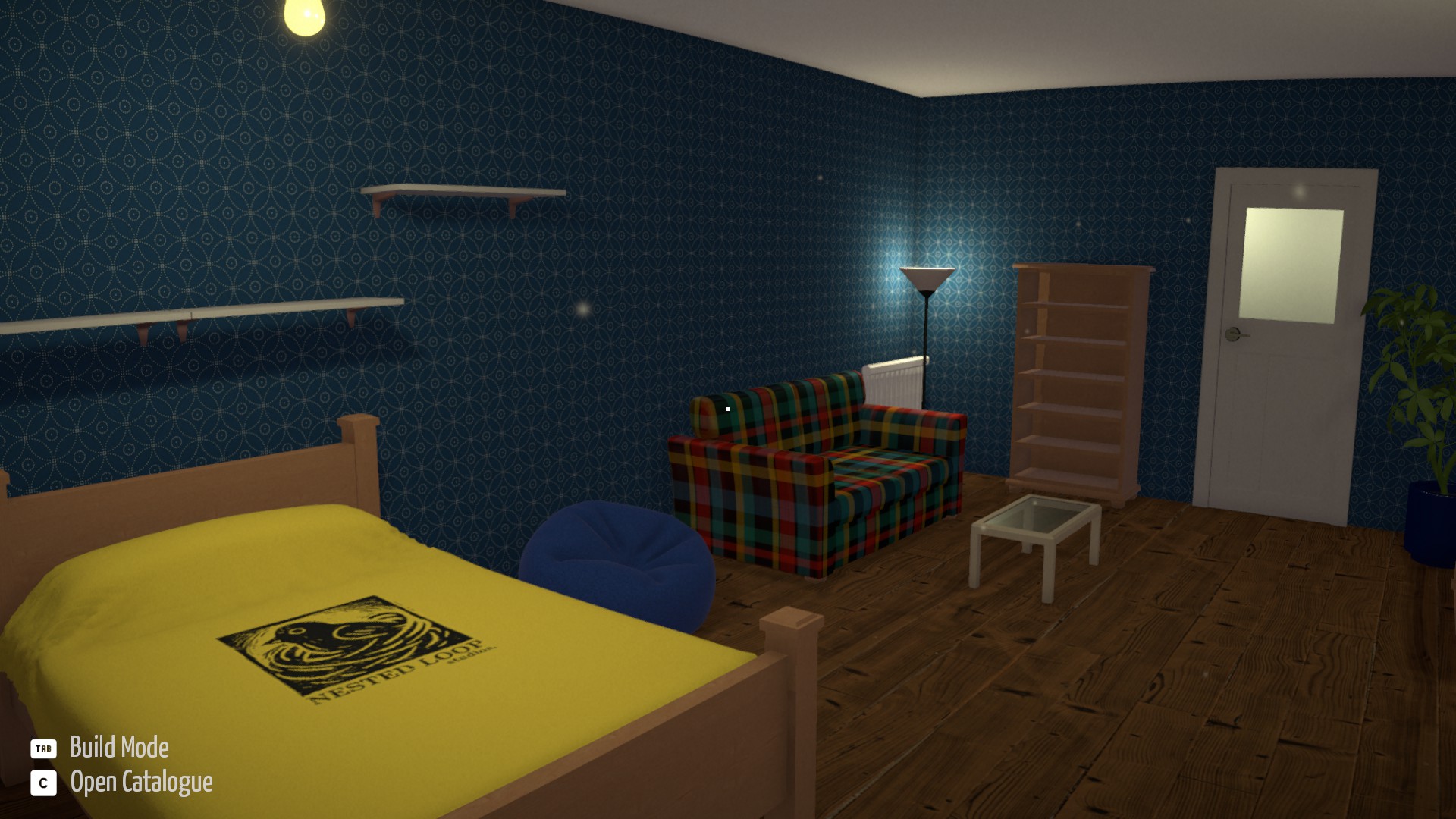
How you tackle the building itself is entirely up to you. There’s no time limit or list of objectives in place. You have a few basic tools at your disposal: placing and rotating objects, expanding or shrinking your room, and deleting anything that may not be convincing in the end. That’s pretty much it. Everything else pertains to the catalogs and what you envision your room to look like.
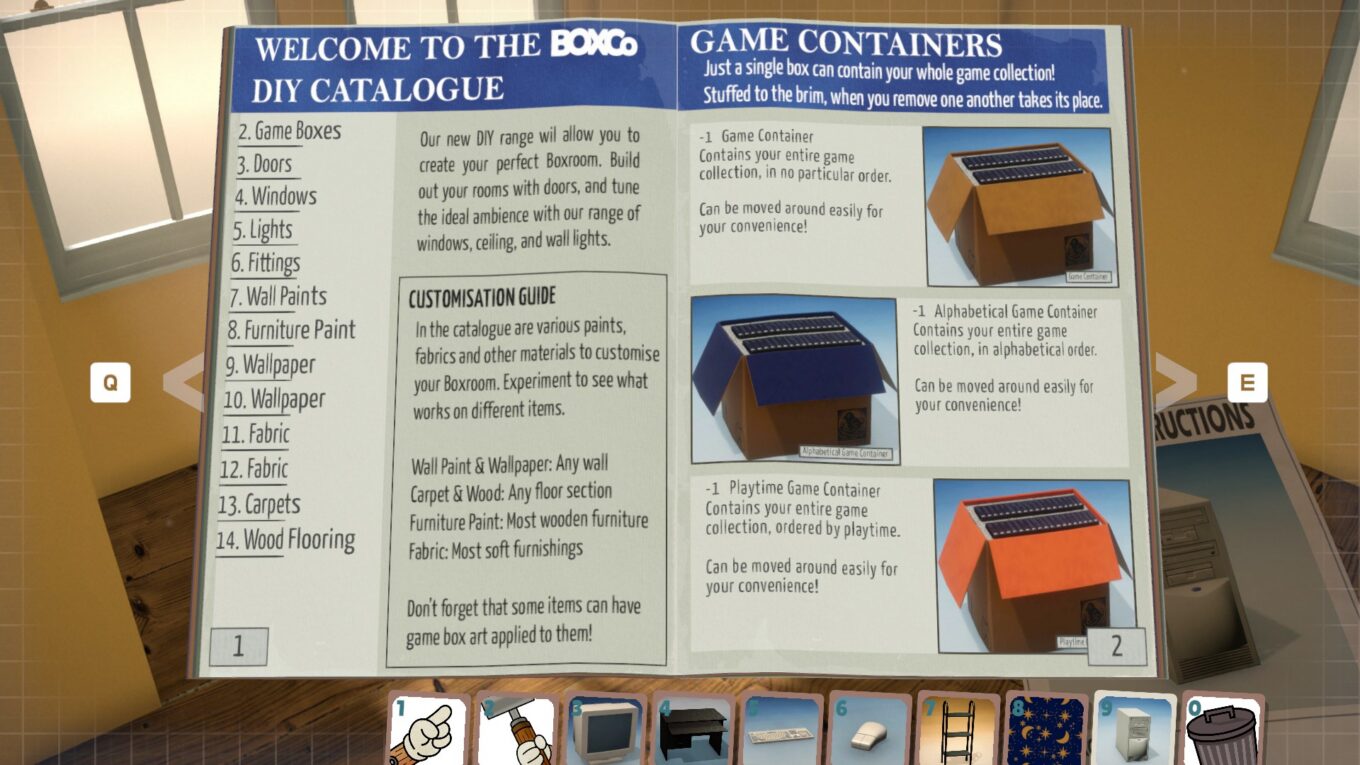
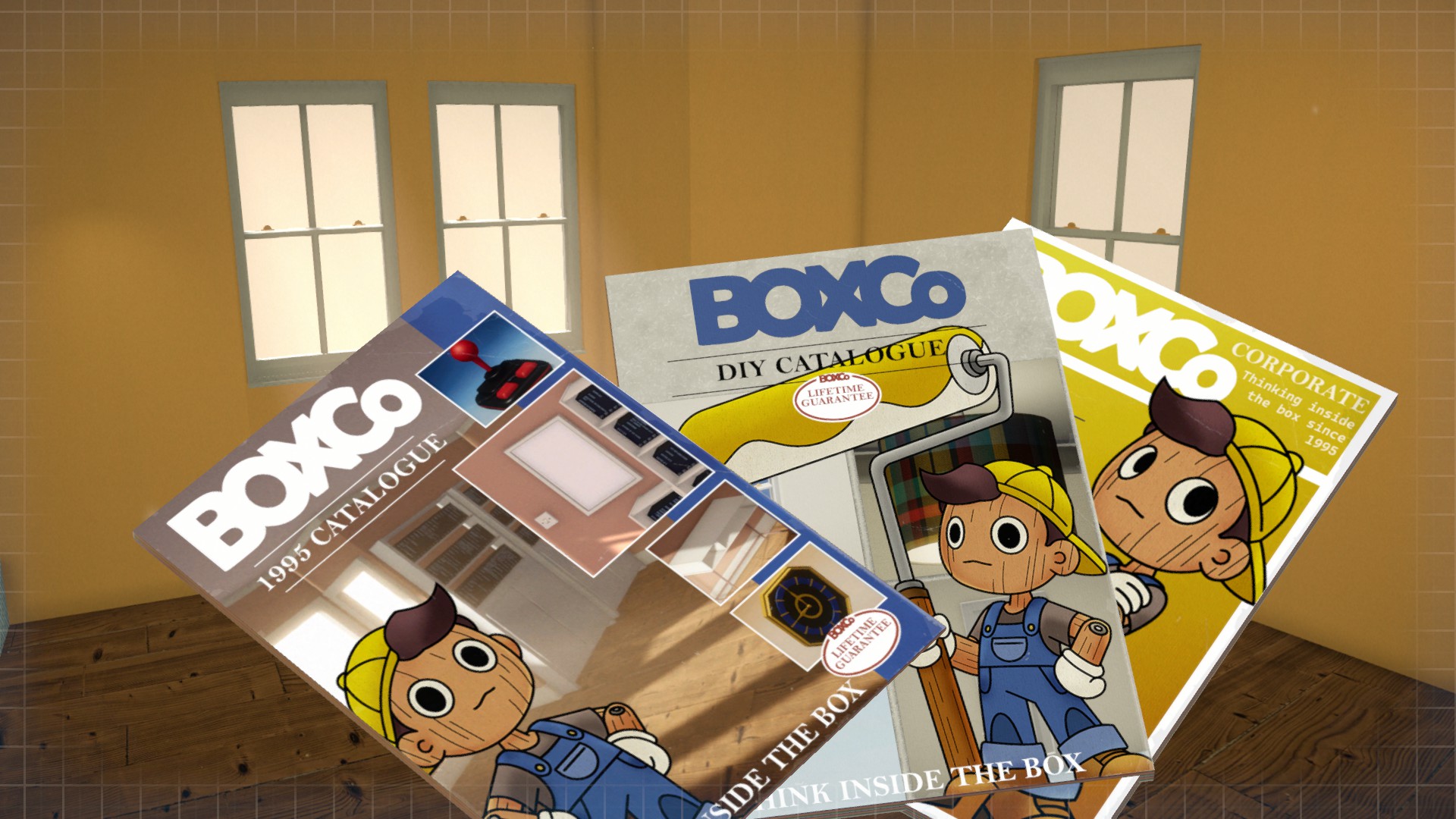
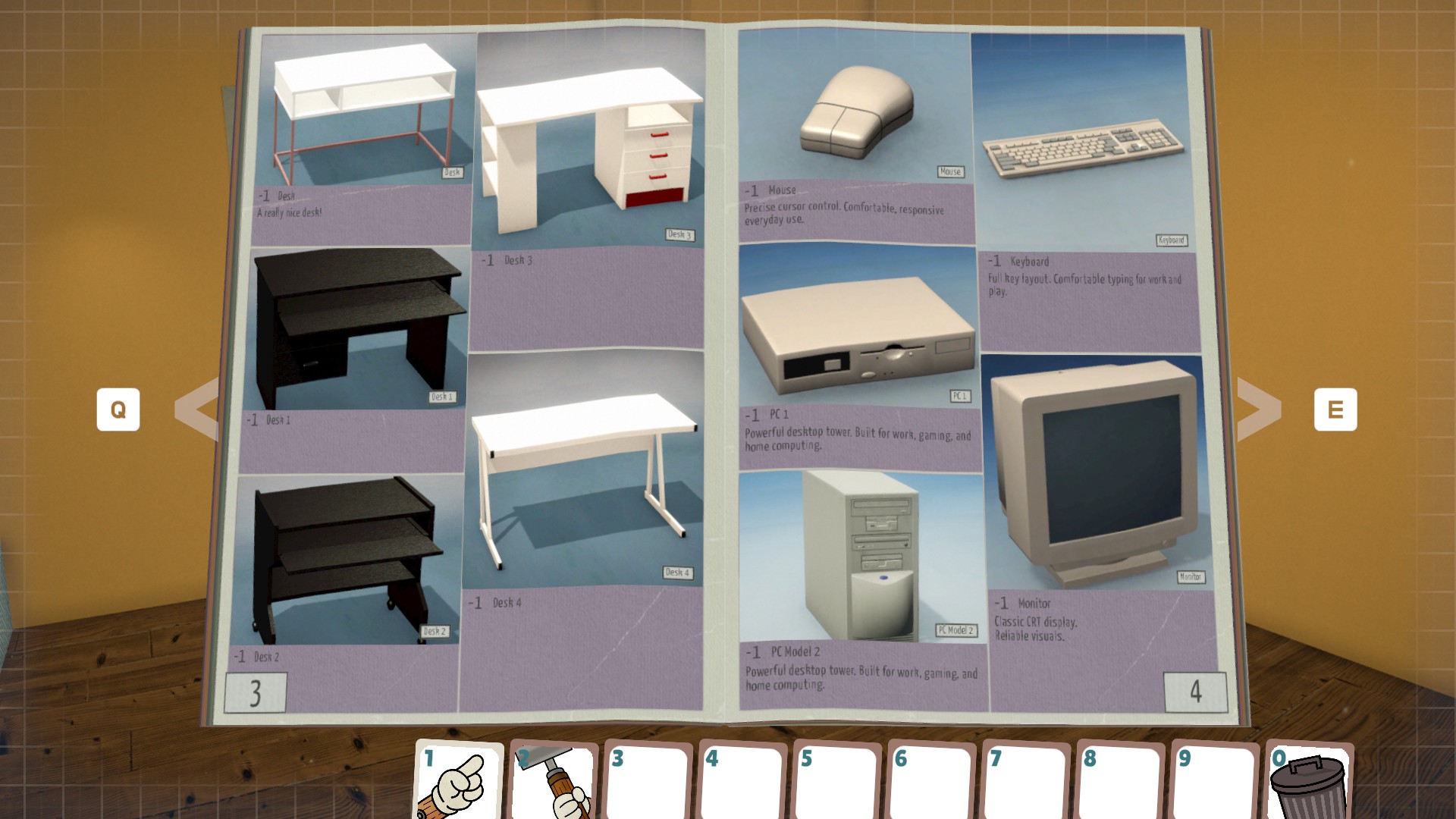
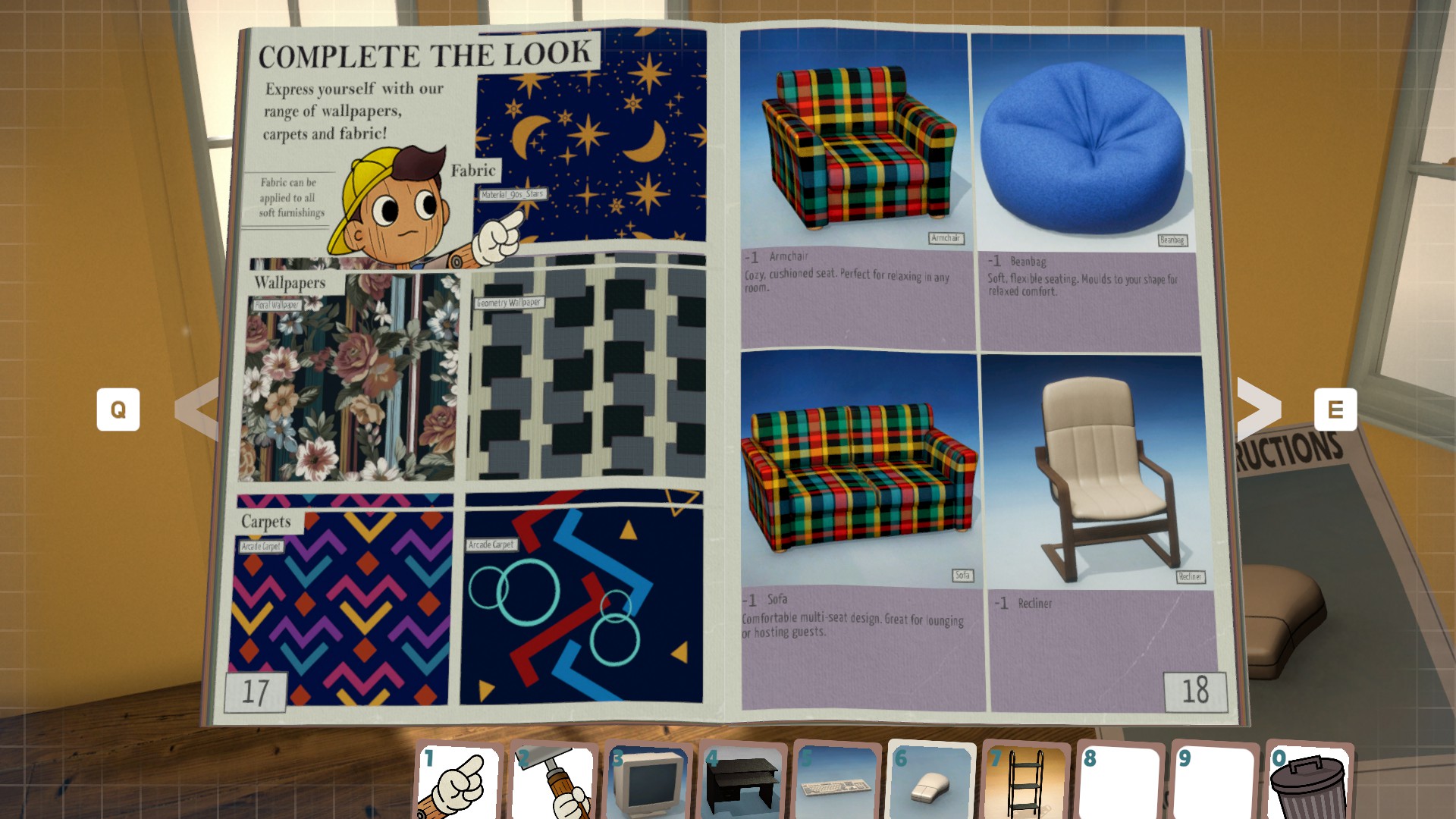
In the early access launch, there are three catalogs available, and quite a few items to browse in each. In essence, you open up virtual magazines, look for the objects on each page, and whenever one of them grabs your interest, you can simply drag it to your hotbar and place it from there. You can only hold seven objects at a time, which is somewhat limited. Yet, I appreciate that Booxroom wants you to actually take a moment to flick through each virtual catalog and carefully curate each batch of items.
By avoiding having a dropdown menu with every item at quick disposal and opting for a more manual approach, it evokes a tactile feel that is enticing. This is even more pronounced thanks to the act of placing an object having a satisfying thump to it. My one gripe is that it’d be nice if the game remembered the last page you were browsing, so as to avoid having to flick through the beginning of a catalog each time. Yet, since the selections are fairly contained, it doesn’t become too arduous.
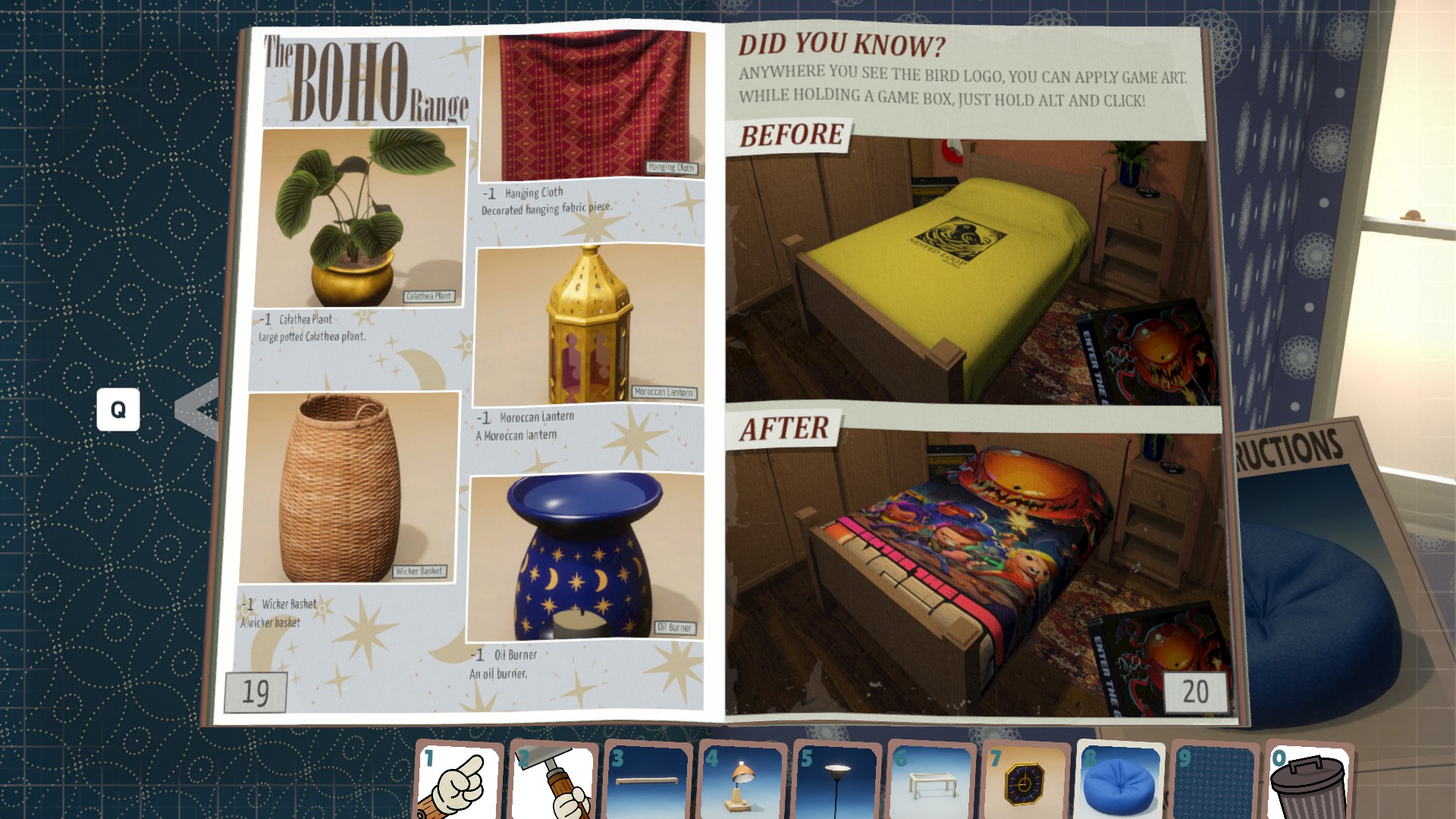
Here’s roughly what’s available. In the 1995 catalog, you can find desktop computers, somewhat cumbersome desktops, various shelvings, beds, desk lamps and uplighters, an old radio, an equally old joystick, a CRT television, coffee tables, and various frames, posters, and postcards. There are also rugs, clocks, and, of course, an electric guitar and a skateboard. Nestled within is a more specific collection, the so-called Boho Range, with a calathea plant, a hanging cloth, a wicker basket, a Moroccan lantern, and an oil burner.
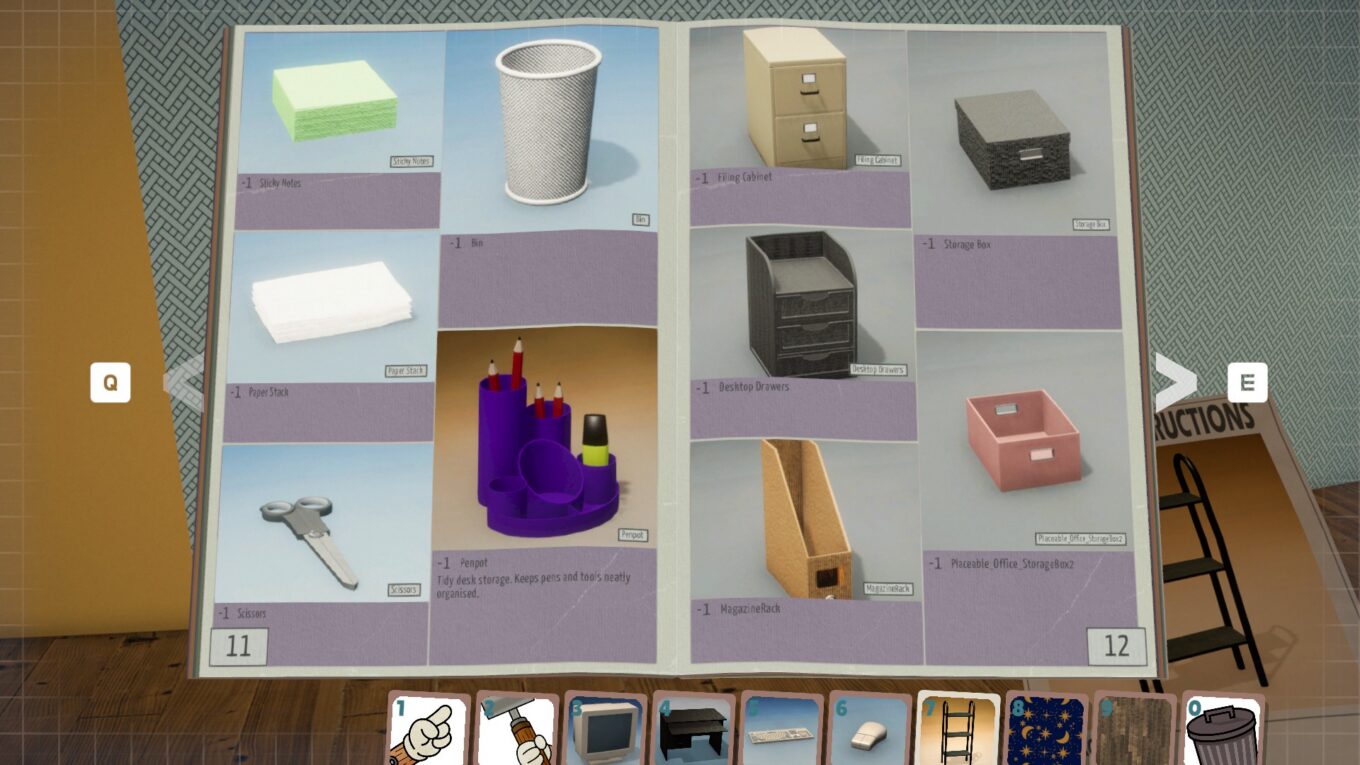
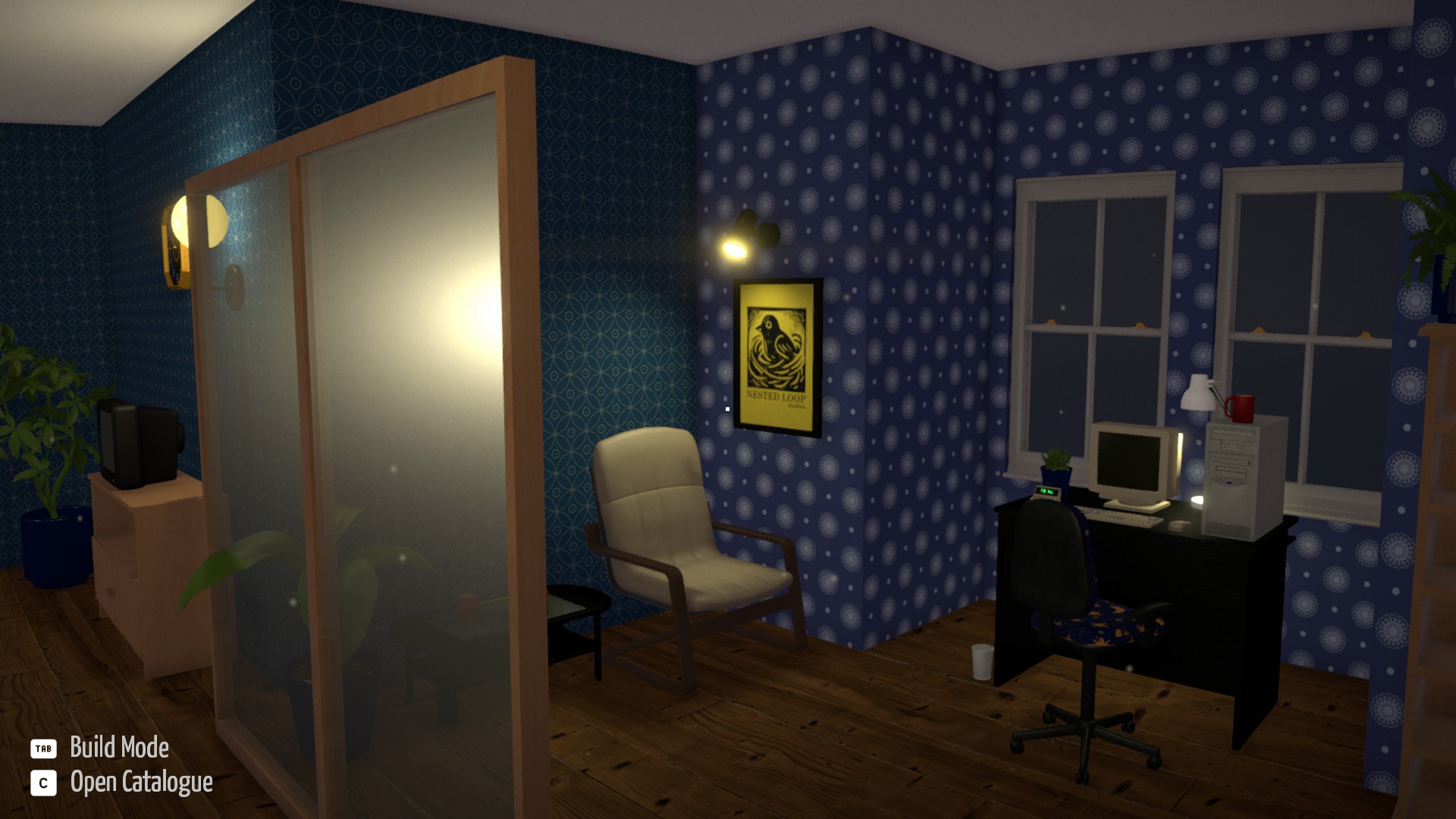
Then, there’s the DIY catalog with more rudimentary items: doors, windows, light switches, lampshades, an array of furniture paint options, wallpapers, fabric, carpets, and wood flooring. Lastly, the Boxco Corporate selection has items that amplify the selection considerably. Wall partitions, glass panels, whiteboards, a laptop, and an assortment of items that you’d normally find at an office or a kitchen. A filing cabinet, sticky notes, scissors, penpot, storage boxes, magazine racks, mugs, plants. You name it.
As it stands, Booxroom is a competent home decorator sim. Yet, it’s also introduced as a “sanctuary for your Steam library”. And it sure lives up to the premise. If you have your Steam profile set to public, specifically your game details, Booxroom will automatically detect which games you have. It feels somewhat of a celebration of the library you’ve likely accrued over the years, and a reminder that your backlog continues to grow.
The games in your Steam library will automatically become boxed copies. There are different containers that you can make use of: grouping your entire collection in any order, by alphabetical order, or delimited by playtime. From there, you can grab and place the boxes anywhere you want. Said boxes can be inspected for a closer look, with Boxroom picking up screenshots in your library as well to flesh out each box as if it had a manual. You can even launch the game from Boxroom itself. It’s an interesting synergy, and one that extends to decoration as well, applying said screenshots and the game’s key art on all sorts of objects, from frames and posters to a bed’s own duvet.
There are also secret figures, collector’s editions, and upgrades based on certain games, which the Boxroom devs are leaving up to discovery for each player. A promising component is being able to share your rooms with friends to show off your collection, which will no doubt lead to a gallery of sorts to use as inspiration for ideas to implement in your own rooms.
When it comes to the current iteration of Boxroom, there isn’t that much to do outside of displaying your Steam library. If you don’t want your Steam profile to be public, the experience may be a bit lacklustre, as your shelves will likely sit there empty. Yet, it’s intriguing to see what elements are already in place, and the ways in which the developers could shape the experience moving forward.
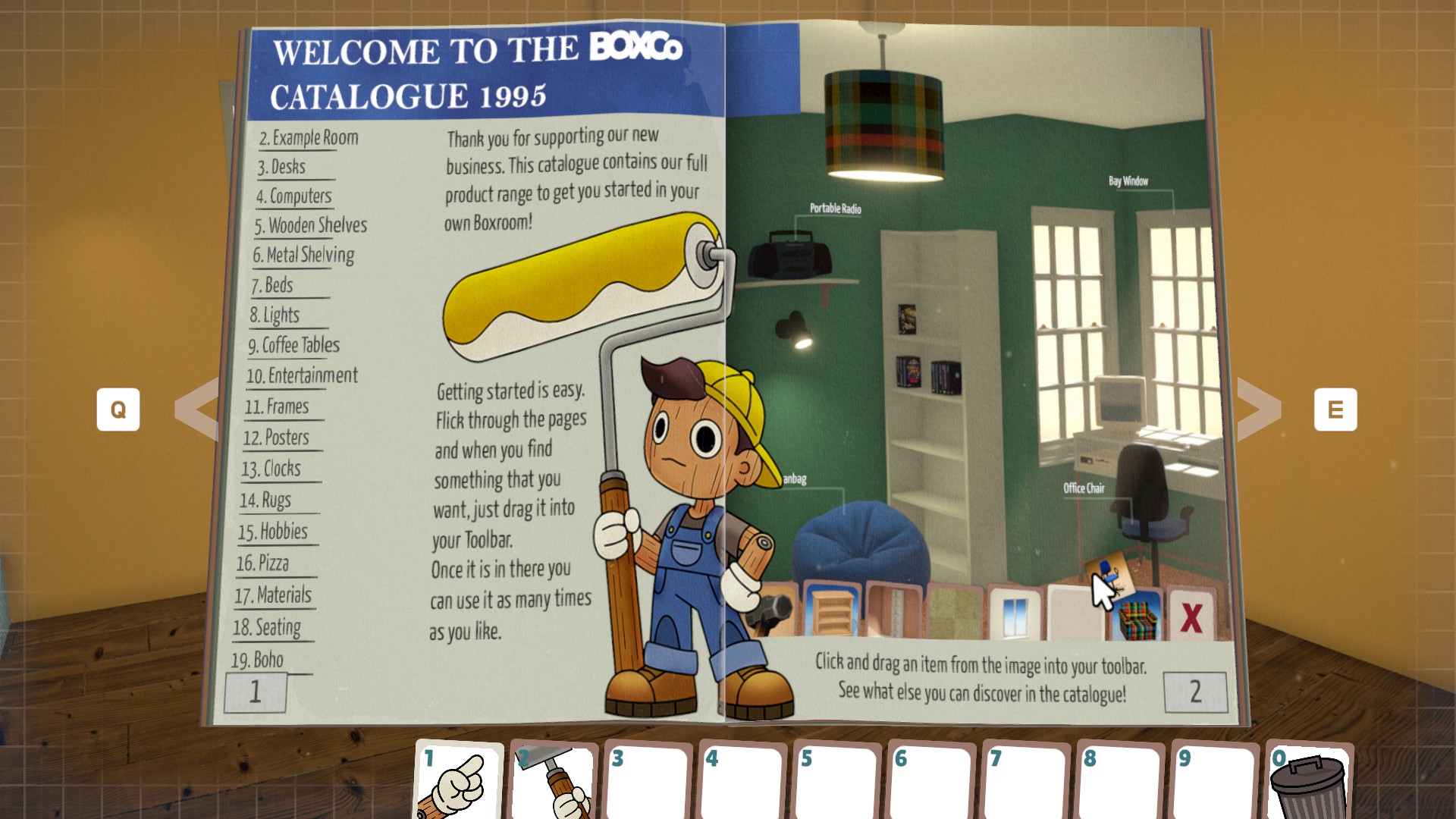
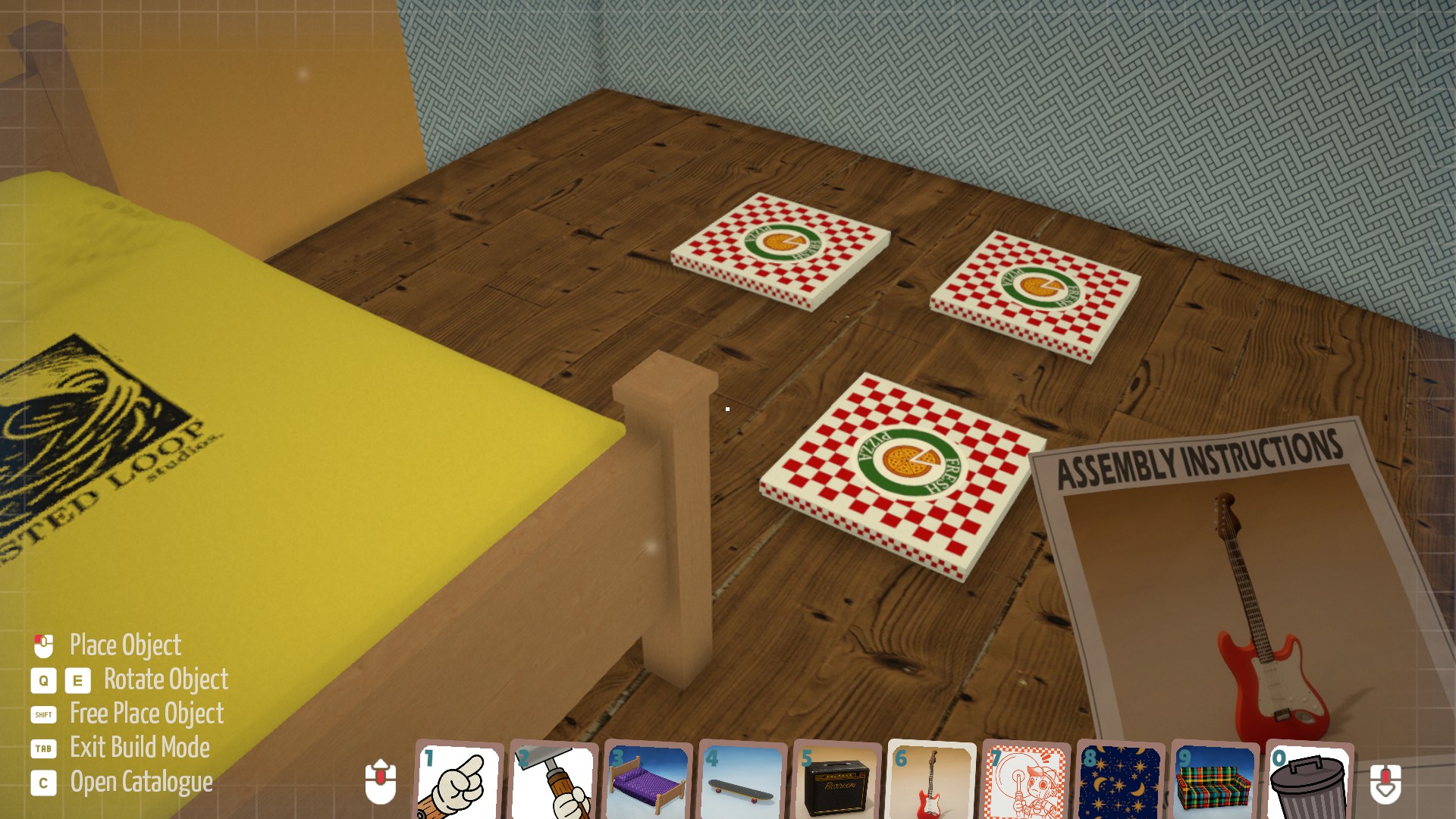
For example, one of the catalogs has an ad for pizza. While it doesn’t explicitly appear as an item, you are able to drag it to your hotbar. Use it in your room, and you’ll have boxes of fresh pizza appear out of thin air. There’s a sense of interactivity that, if further explored, could be very interesting. Interact with lightbulbs, and you’ll get to pick different dim levels. In a similar fashion, if you want to adjust the time of day, you can put on a clock and interact with it to do so.
When it comes to early access, the team says it is aiming for a six to nine-month period. Each and every month, the developers promise to have a major update planned to add a new room theme, as well as other key features. There’ll be around six times the content (furnishing) that it does at launch.
For the time being, Boxroom stands as an in-between of two different experiences. It is a fancy way of displaying your Steam library and showing it to friends or other people online, and it’s also a decent home decorator sim that could be a great one with a few more features and interesting room themes. For me, it is scratching the second-screen itch to a T, giving me something to fiddle with while also having a better understanding of the current state of my Steam library. It is as messy as you’d expect, but at least in this virtual room, I can have a semblance of order at my own pace.