How do you even begin to tackle the Grand Theft Auto-style genre? The days of games like Sleeping Dogs, Mafia, or The Godfather are long gone. Sure, the Yakuza/Like a Dragon series remains on a steady release course, especially with the forthcoming Stranger Than Heaven on the horizon, but they also differentiate themselves by focusing on their own particular tone and style. At the end of the day, the games that stand out from the crowd are the ones that take enough inspirations for their foundation, and then build something new upon it.
Such is the case of Samson, on paper, at least. Liquid Swords intended for the game to be an action RPG set in an open-world crime structure. Sadly, the studio laid off half of its team in early 2025, which led to many features getting cut, from these more robust RPG elements to shooting. Its structure, too, has changed, now presented as a roguelike of sorts.
The result makes for a premise that is almost unheard of. Protagonist Samson McCray has to use his fists, any melee weapon he can find nearby, and his car to take down enemies day after day, with each cycle getting him closer to clearing a debt that’s been penned by the worst people you know. Samson makes for an intriguing amalgamation of ideas, which, despite lacking the proper execution to truly make them shine and suffering from repetitiveness, make for quite the singular experience.

Samson McCray has seen better days. He’s a man at rock bottom who had a big score that went sideways, and to make matters worse, he almost got killed in prison. His sister managed to strike a deal to prevent his death, but that means she’s now being kept as a guarantee. Samson owes a lot of money, and now finds himself back in St. Louis trying to tackle jobs to chip away at that debt. Jobs of a violent criminal, violent type, that is.
You begin each day waking up on a couch inside an apartment in a decrepit state. It doesn’t feel like a livable space, but rather one that’s been lost to time. Yet, this is the home you got. You listen to the same couple arguing upstairs. You turn on the TV with a flickering display. You wait for the phone to ring to get out there again, or to get an update from your sister, if only to hear her voice. Then, you see the same cockroaches near the front entrance, and you hear the same loud bark when you step outside, the sun shining on your face once more.
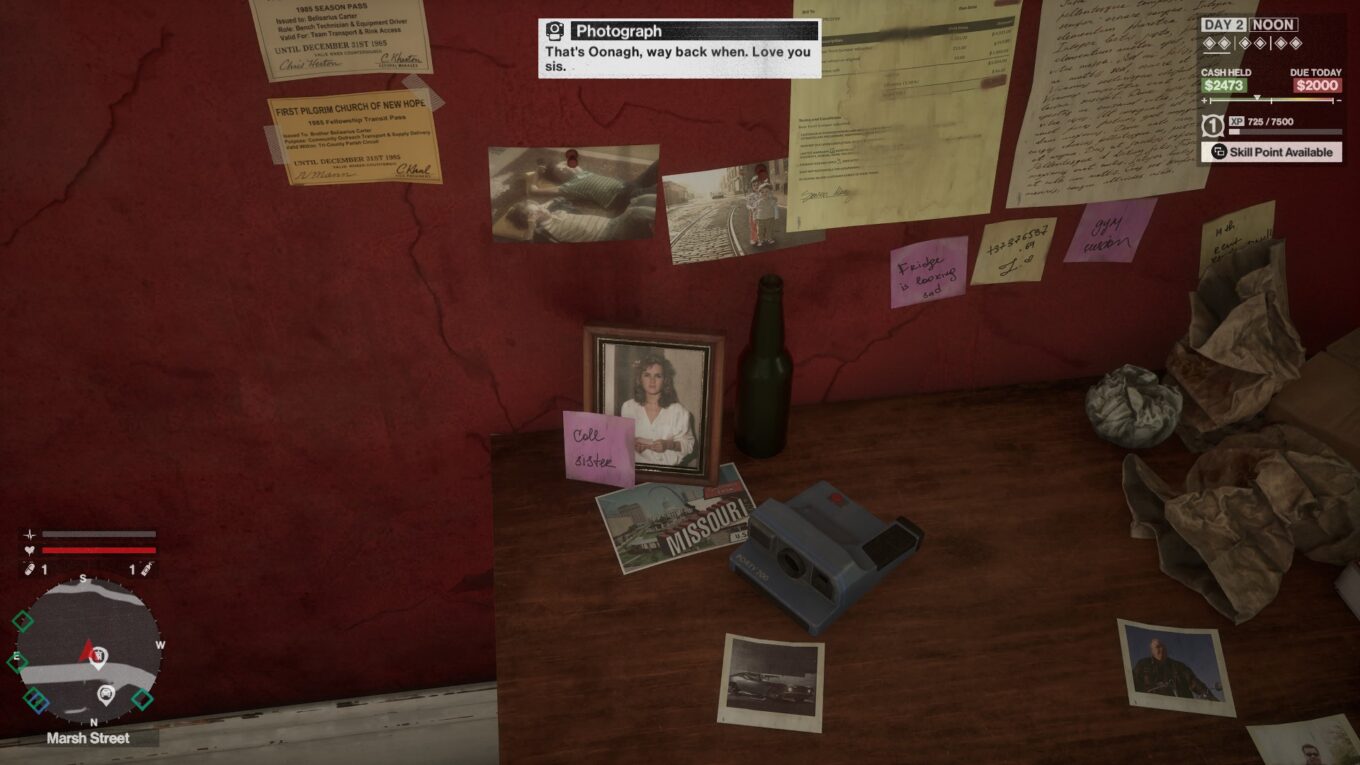
Each in-game day is comprised of morning, evening, and night cycles. The goal is to meet the minimum debt recollection sum required before you head back to sleep on your awful couch again. For this, you have to pick up missions, each having a specific cost of action points. Some will cover the morning in its entirety, while others might go over. At all times, you’re reminded of how much cash you have in your pockets, and how much is left to gather for that day. Make it through all three cycles safely, and you are likely to chip away at least a couple of grand from your total debt. Fail, and you’ll lose all your hard-earned, bloody money, forced to start over from scratch.
The loop sounds punishing, and it damn well is. It’s quite literally a grind, both mechanically and thematically. Seeing the total sum of 100,000 being reduced by 2,000 to 3,000 at a time for a long while is disheartening. As you make progress in the story, jobs start paying more. And the good news is that all surplus money you have after paying the daily due carries over. You may end up having to use it to fix your car, but it’ll remain in your pocket at least.

Thankfully, the virtual setting of St. Louis is so well realized from a visual standpoint. It looks incredible, with a never-ending amount of detail everywhere. Almost every structure you encounter is covered in graffiti. The people you come across can’t stop talking about how much they want to “leave this shithole.” It does feel somewhat empty at times, and don’t expect to be able to enter any store or building you come across or interact with NPCs that much. That being said, I constantly had to slow down while driving to let a passerby cross the street, so there’s some density.
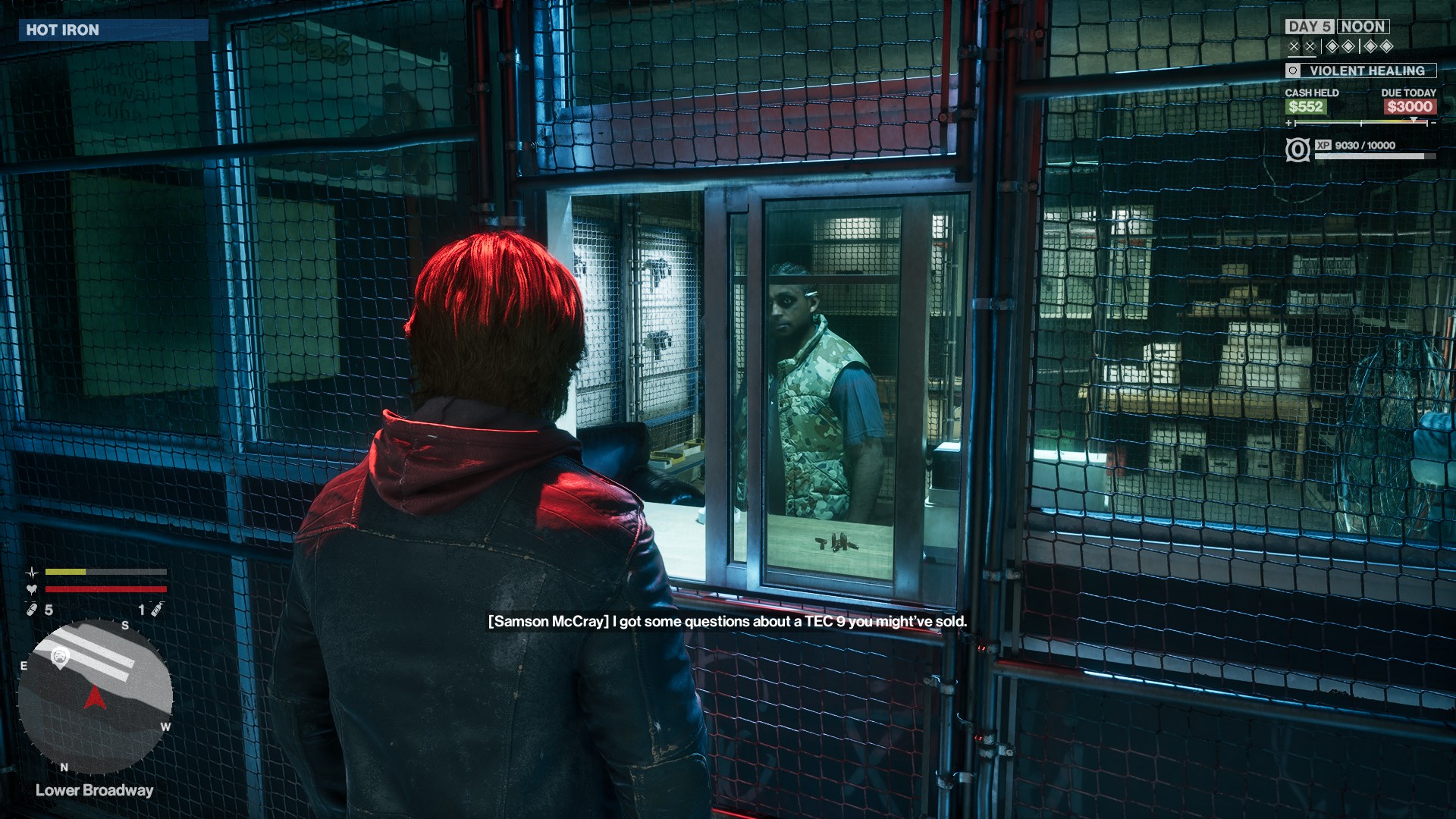
The main problem with Samson’s structure is that missions become tiring fast. Most of them play out like side quests that don’t have much to offer except for getting you closer to your goal. I lost count of how many times I was tasked to head over to X location and beat up X number of enemies. While definitely the game’s bread and butter, enemies themselves aren’t that varied, and car chases also get old fast. There are some other mission types, such as ones that involve tailing, which is an attempt at variety, even if tailing missions are inherently a chore in every game. Sadly, Samson isn’t the exception.
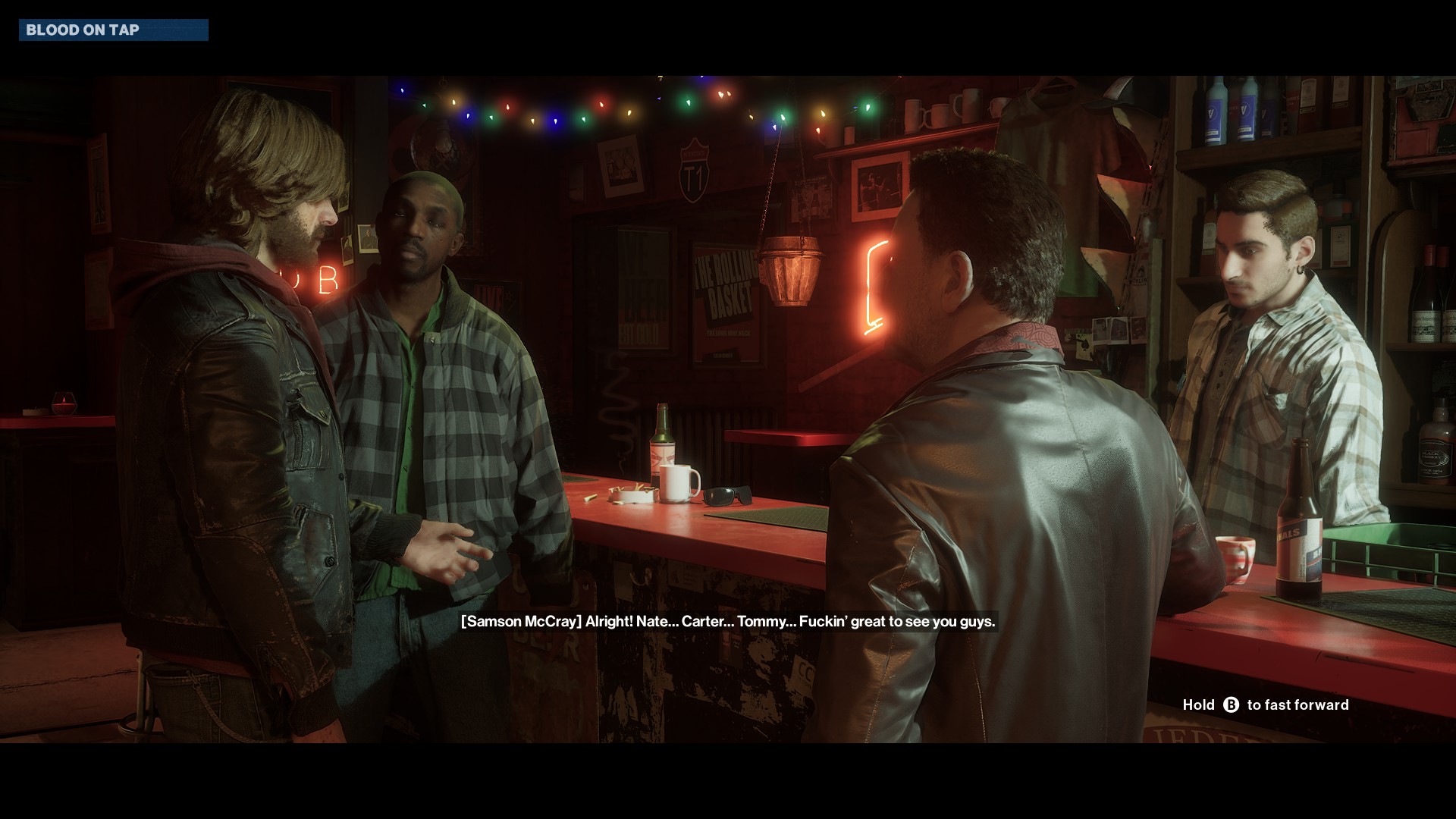
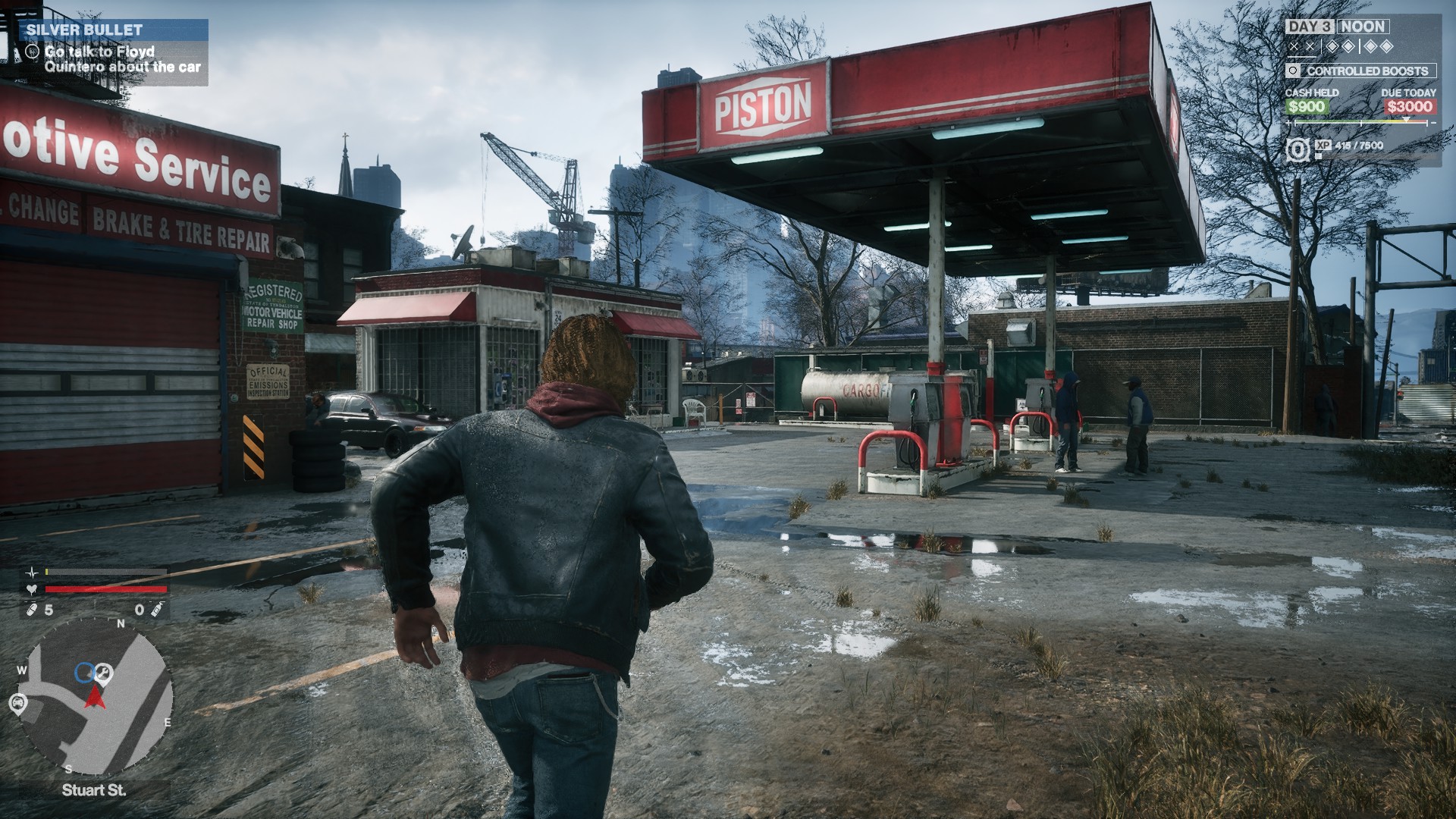
Amidst the busy work, however, there is a main story that gradually becomes available to you. These are often short burst tasks involving characters from Samson’s past. They aren’t a big standout, but they do provide an overarching goal to strive for. There’s also an interesting predicament at times. There might be days in which opting for a main story mission leaves you short-changed for the daily amount due, which led me to skip them until a more suitable day dawned.
In between all these tasks, there are smaller encounters that you can stumble upon while roaming around St. Louis. These are aptly recollected as scribbled down notes on a journal of stories. They play out as happenstances throughout the city that have you helping people, usually involving some dialogue followed by, you guessed it, more combat. Still, these stories provide some interesting context about the city itself and some of its ongoing issues, such as the presence of a drug called whisper and how everyday people are struggling to make ends meet, such as a mother who tries to sell you her kid’s ADHD meds. While I didn’t find the characters of the main story particularly enthralling, these interactions with people did leave a smaller, yet more significant mark.
Samson has potential in spades. It’s a shame, then, that so much of it is either constrained or not quite tuned enough to achieve the height it could have otherwise reached. Ever since I’ve played Condemned: Criminal Origins, I’ve always been appreciative of combat systems focused around melee fighting. Sadly, Samson’s gets old fast. There are skills to unlock which improve things a little bit, keeping it moving and making it more dynamic. But the basis is always the same.
Sometimes combat lacks weight, sometimes a punch feels right upon landing, but it doesn’t happen often. There are fights in which everything feels a bit too floaty. Sometimes during combat, some attacks don’t seem to register from either side, and then all of a sudden, it’s like they all impact seconds later, as if you were playing an online game with high latency.


These technical shortcomings are everywhere, sadly. I mistakenly entered a bar and triggered a cutscene that I shouldn’t have seen early in the game, which gave me access to chapter 14 of the main mission when I was on chapter 3. I’ve also seen no shortage of enemies clipping against environments, or not appearing where they’re supposed to, making some missions needlessly frustrating.
Some of these problems may be fixed with a patch after launch, but there are also odd design decisions. I encountered a driving mission, which always requires you to get to the spot inside a car in order to be able to start it, only for the first step to be to get into another designated car instead.
Another example is related to police chases and having a wanted level. It’s a cool mechanic that immediately resonates with that Grand Theft Auto spirit. But it’s also one that becomes annoying fast. Cops are always on your tail, and the radius in which they can detect you and resume the pursuit again is seemingly arbitrary. Then, the wait time for the police attention to cool down is eternal. During my first big chase, I had to go outside the city and on to a series of bridges and highways to finally lose them.
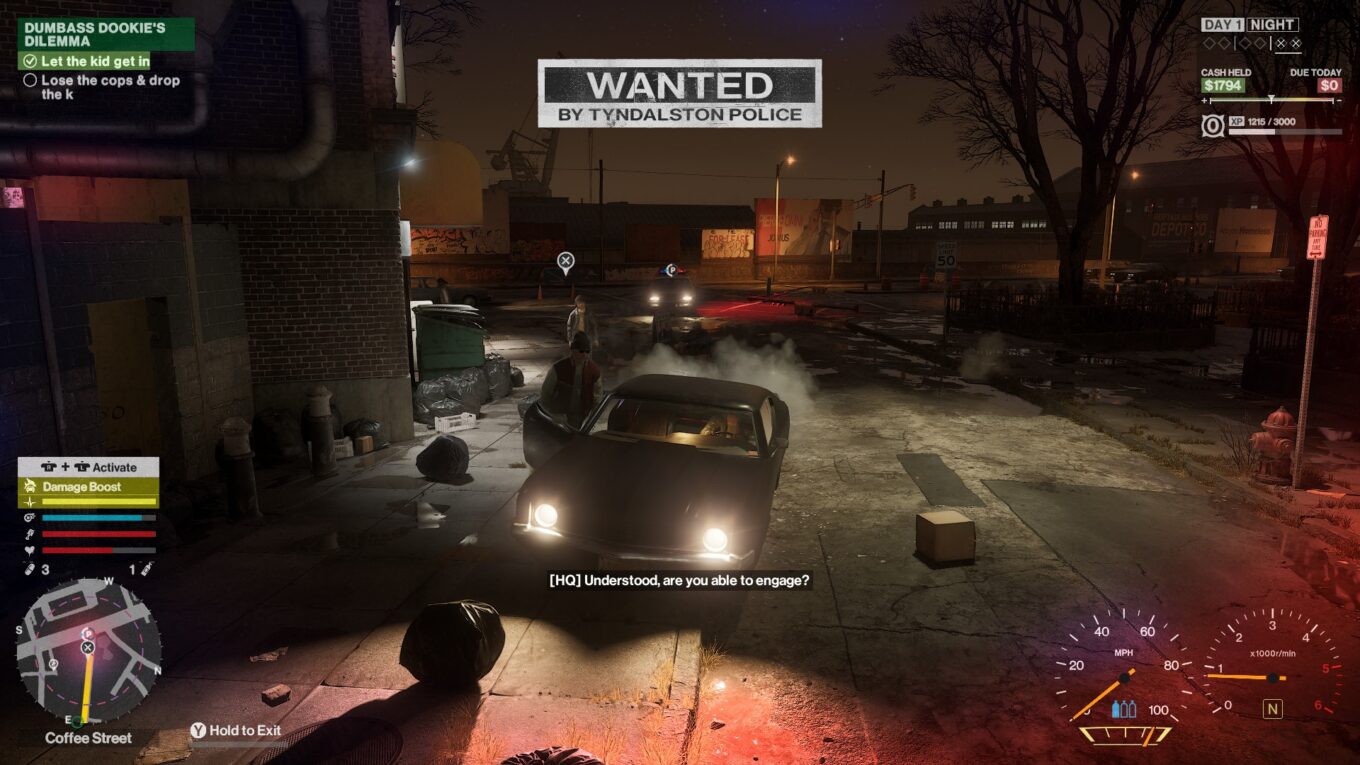
Police barricades and spike traps start to show up. There are also patrols standing on corners that will shoot your car on sight. All this can be unnerving when it’s your last job of the day, just when you’re almost done and about to get all that money back to your apartment safe and sound. But it all feels unbalanced rather than a challenge worth overcoming. There is an ability in one of the skill trees that makes it so your wanted level is reduced faster while driving, but it doesn’t outright make the mechanic more appealing. When more and more missions end with a chase like this, it adds another layer of annoyance that’s hard to gloss over.
In many ways, the limitations that sprang from that sudden change during development last year led to a much more interesting premise, challenging genre convictions in a way that hasn’t been explored before. While the overall result is uneven, Liquid Swords has a solid enough foundation to build upon with future updates. It’s a concept that deserves to be fully realized