We’ve all had one of those days. You’ve been working long hours, your colleagues are making avoidable mistakes, you’ve had to watch one too many goals fall by the wayside as a result, and you haven’t even been able to grab a coffee yet. There’s nothing for it but to throw a tantrum, then immediately begin indiscriminately attacking whoever’s closest to hand, friend or foe.
On an unrelated note, I no longer work office jobs. But I can certainly empathise with the enraged orc in my squad who has just blown a gasket and gone rogue. I’ve lost control of him, so I’m trying to keep my other squad members at a safe distance while hoping that, in the process of whaling on the remaining enemies, he doesn’t destroy too many of the resources we came here to gather. Managing your orcs’ temperament is central to Don’t Kill Them All, Fika Productions’ HR-infused spin on the turn-based tactics genre.
Intriguingly, none of your units can die. Instead, each one goes into battle with a rage meter that varies in size depending on the specific unit and any buffs you have active. Every time they get hit, they’ll gain one unit of rage (I have a similar built-in system). Similarly, a unit is added if they witness precious resources being squandered by a clumsily directed attack. There are also abilities which level up your team, allowing them to do more attack damage, for example, that can be traded for a sprinkling of additional ire.
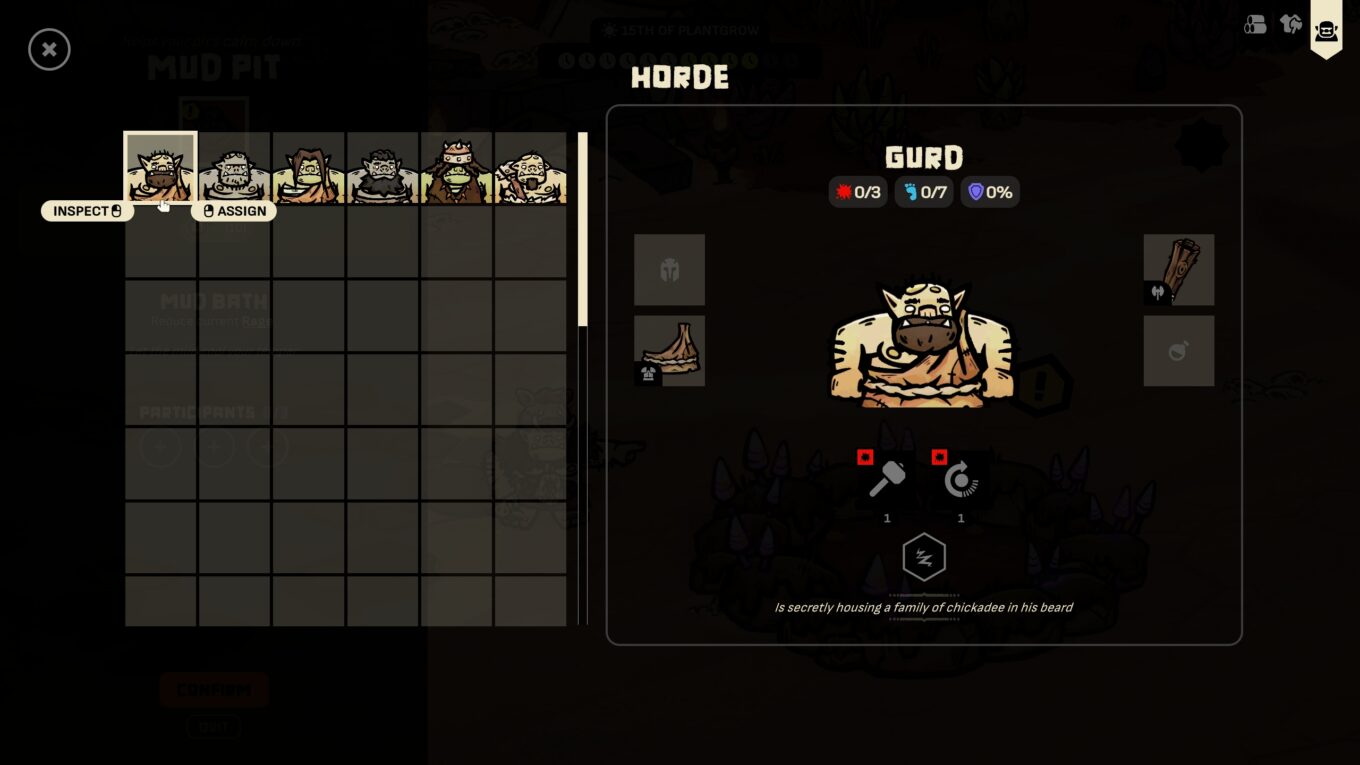
They’ll even get stroppy if they have to do too much in a single turn. Most actions in the game are ‘Enraging Actions’, and you can use them as many times as you like during a turn. But while the first one is free, any subsequent uses cost incrementally more rage. This means that the only thing limiting your actions is your orcs’ patience, and makes for an amusing risk/reward mechanic that manages to be just the right level of simple to understand but satisfyingly deep to master.
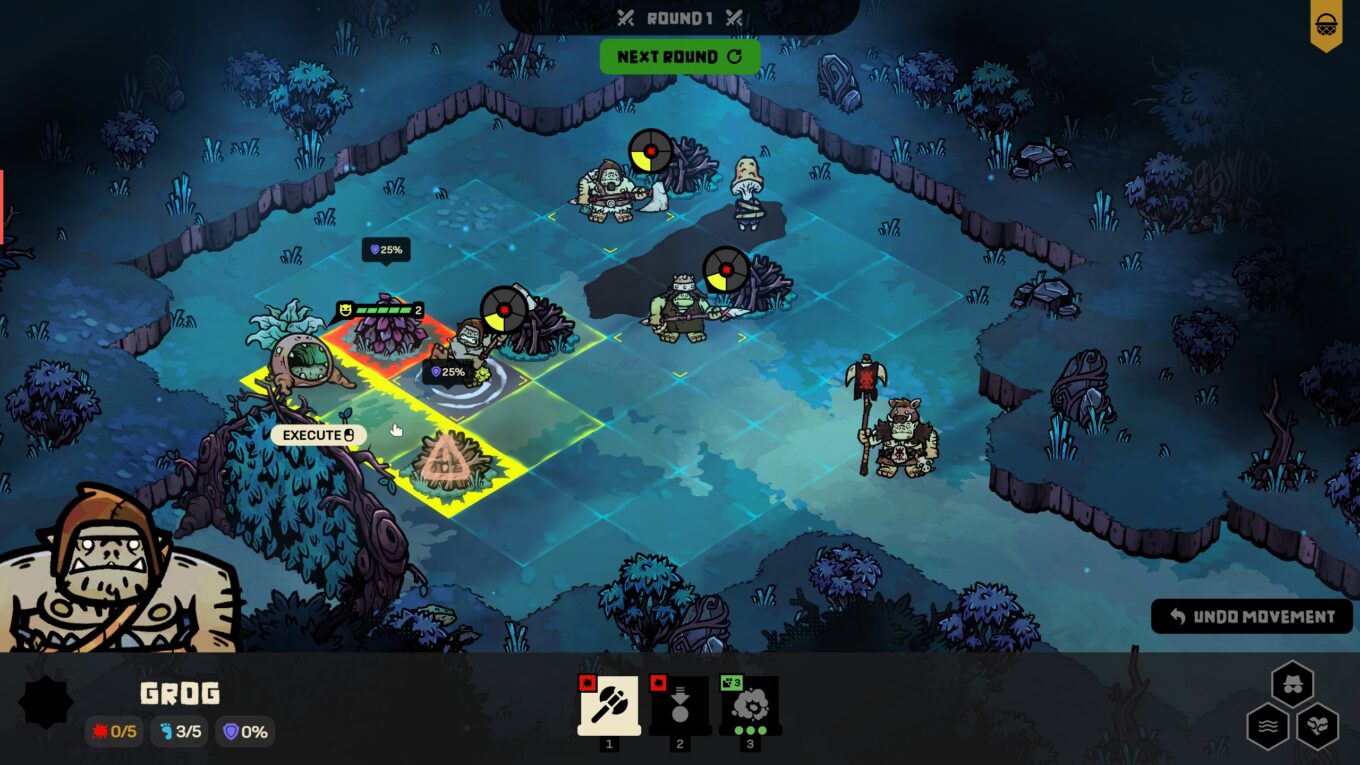
Each map is scattered with Resource Nodes which must be preserved until the end of the battle in order to reap their rewards, while every weapon has a unique attack pattern (spears inflict damage across the three grid squares directly ahead of the attacking orc, for example, but axes sweep across the perpendicular row of three in front of you). Orcs also have a variety of passive abilities and tools (some enraging, some simply finite resources) that provide additional options – pull an enemy one square towards you, leap over an obstacle, or toss a calming herbal tea at an ally who’s close to breaking point. Enemy attacks come in a variety of patterns, too, and these are flagged the round prior to the attack. If you try to move out of range, or move another orc through a planned assault, the attack will be immediately triggered.

Another strategic wrinkle is that if an enemy’s health bar is reduced to one health point, it will cease attacking and flee during the next round. Not only is this an illuminating nod to the game’s title, but it also provides a specific resource called Goodwill which you can exchange for a variety of things, including rage-reducing hot spring dips between rounds. And let’s not forget the Warchief, a fourth orc (essentially, you) who stands outside of the battle grid but can deploy a limited number of Warcries, at no rage cost, to help balance the odds by adding buffs such as increased walking range for a turn or inflicting 1HP of damage to all enemies.
The only fail state you have to worry about is maxing out all of your orcs’ rage meters, which results in a total loss of control of your party. On Easy raids it’s simple enough to get through to the end without enraging any of your units, just so long as you use every ability available to you and don’t focus only on attacking. Tougher raids throw more battles at you, however, and on bigger grids that contain more enemies to contend with, at which point things start to get significantly more challenging.
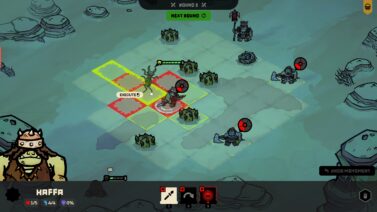
Altogether, the result is a game that can feel as much like Tetris as it does Into The Breach, requiring you to carefully plan how to fit attack shapes into the available space while minimising collateral damage and maximising enemy injuries. All of this against a backdrop of simmering chaos, which feels like it could spin out of your control at any moment.
It’s just a shame that the undeniably charismatic visuals can’t quite match the clarity of Subset Games’ masterclass, and as a result I sometimes found busy battlefields difficult to parse. There’s a lot going on, and even though your units are distinguished by their weapons and outfits, they’re still just a little too similar. Don’t Kill Them All’s core mechanics – which are smart, rewarding to experiment with, and tremendously entertaining – deserve a frictionless interface. Having to spend any time figuring out which of your units is which compromises the game’s otherwise snappy feel. Perhaps this can be adjusted before launch, or perhaps it’s just a me problem and I need more time with the finished product.


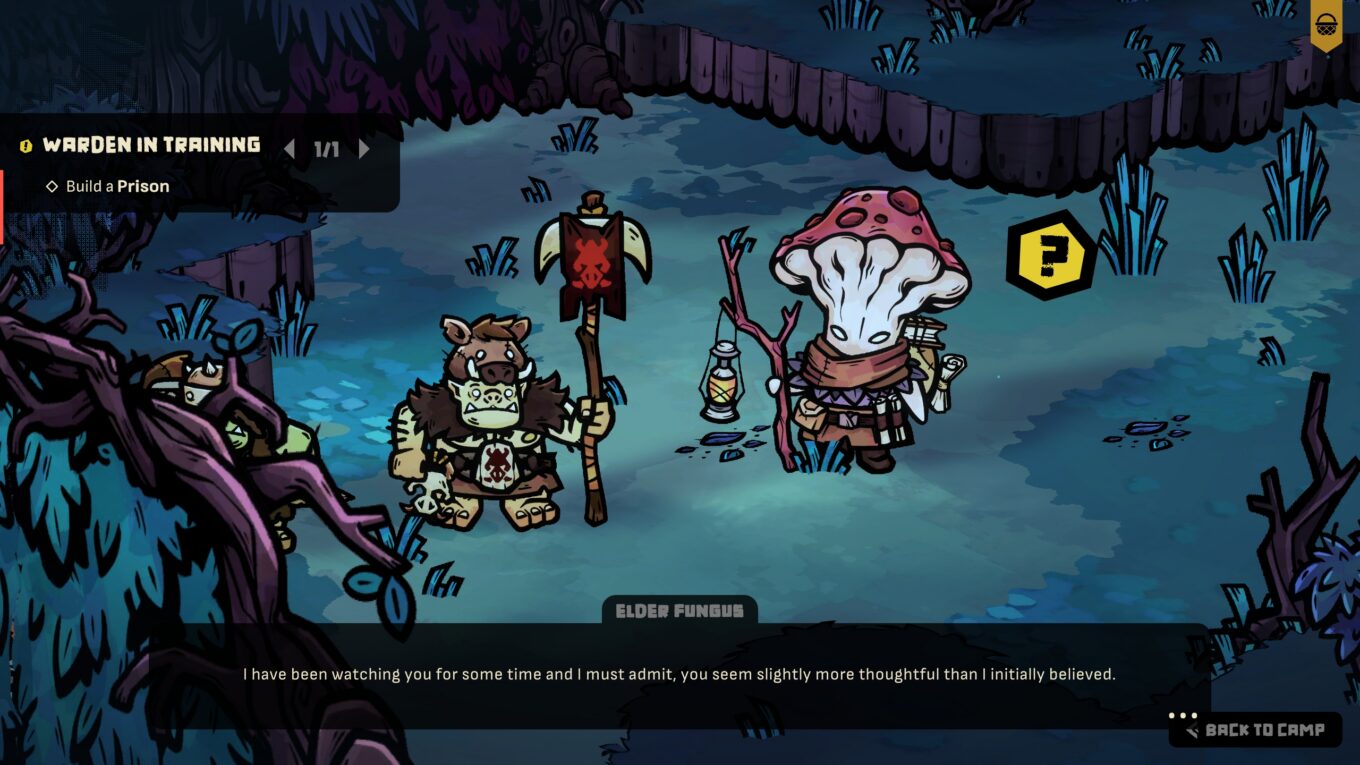
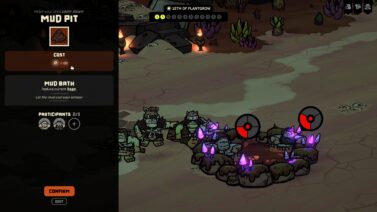
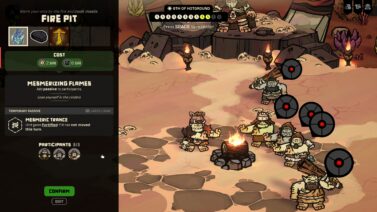
In between raids you rest/convalesce back at base camp. Here you can build a variety of crafting tables which unlock new weaponry, gear, and items, along with a range of structures that generally make the place feel a bit more like home. A tempting mud bath removes all rage, for example; resting around a campfire bolsters your Fortified status for the next raid; and you can even build a prison to hold captured enemies (err, and “non-violently” harvest them for resources). Along with resources, every action also costs time, and you have 12 hours of usable daylight each day to split between raids, camp refurbishments, and spa treatments. I’m particularly charmed by the permanent upgrade system for your essentially immortal orcs – once you’ve crafted a stone axe, equipped it, and tossed away the wooden one, that orc is immutably a little bit more fearsome than before. It’s a setup that makes grinding for resources in the game’s roguelite, procedurally generated dungeons pleasingly meaningful.
Don’t Kill Them All offers a distinctive take on a well-trodden genre, and while it doesn’t yet feel as tightly interwoven as the likes of Advance Wars or Into The Breach, I’m very much looking forward to seeing how its chaotic, interlocking systems play out in the finished game.