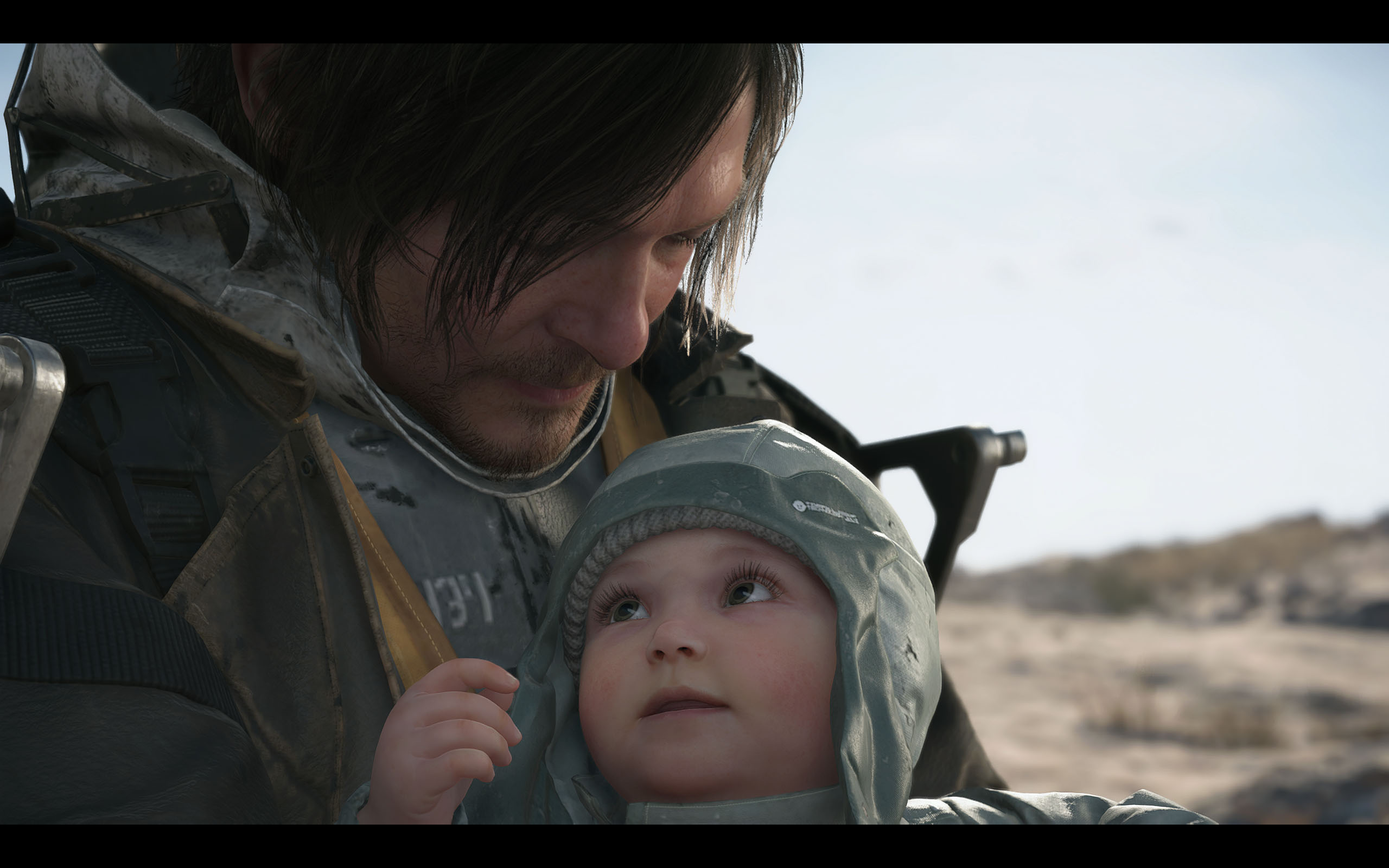

Playing Death Stranding 2 feels like discovering an entertainment media artifact from an alternate universe. A place where videogames are… different. All of the conventional wisdom about what makes a game fun are thrown out. Its rhythms are slow, its story is often puzzling, and it lavishes extraordinary care on tiny details in a way that very few games do – at least the ones without the name ‘Hideo Kojima’ in the credits. There isn’t another game to compare it to, nor a compelling argument for why it should be so enjoyable to walk for miles in near silence. It’s one of the best games of the decade.
You know all this, of course. Not only is this game a sequel to an equally slow and puzzling courier simulator first released for PlayStation 4 in 2019 and then for PC in 2020, it’s also the PC version of a game which found its way into the delighted and perplexed hands of PS5 gamers in 2025. There’s still plenty at stake: how well has the curiously prehistoric topography of DS2’s Australia been translated into the PC realm, and how does it run? Has anything been lost, or indeed gained, on the journey between platforms? This is a game about journeys, after all. All will be revealed.
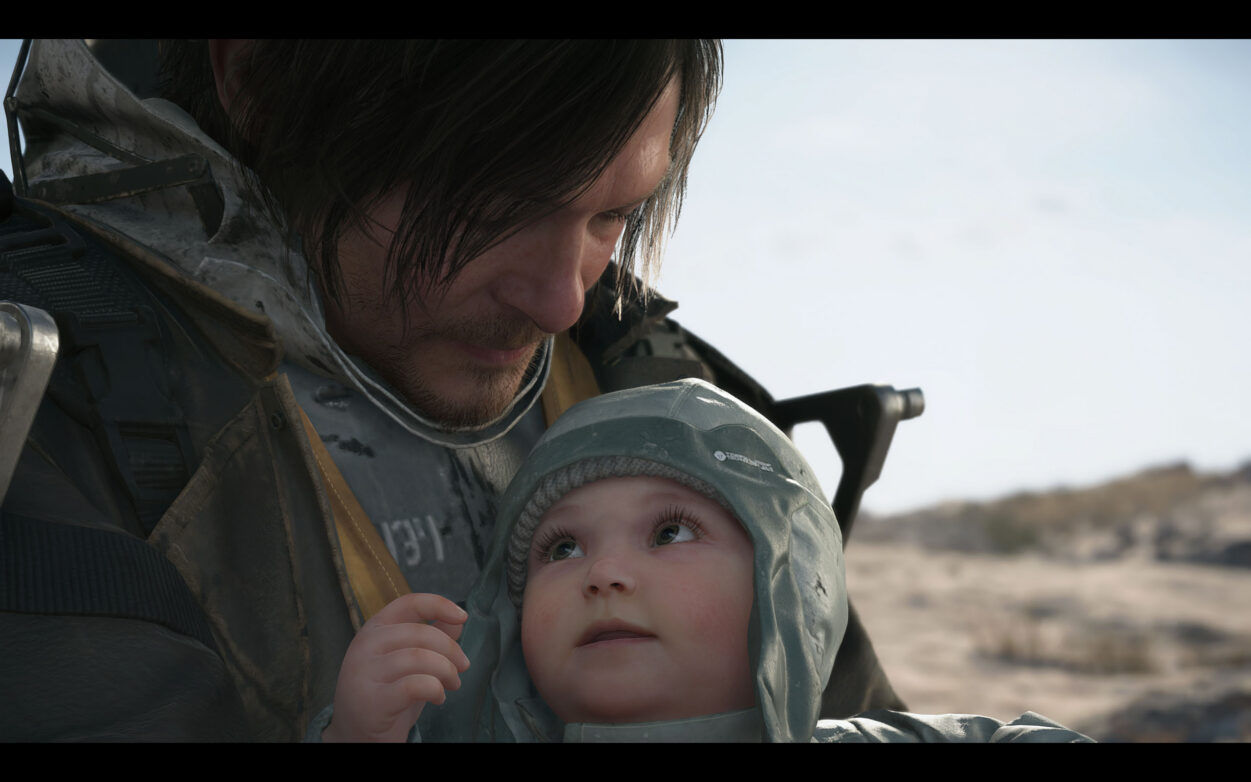
But first, the groundwork: you are Sam Porter-Bridges, a courier in a world in which humanity’s been driven underground after a cataclysmic event called the Death Stranding. Spectral ‘BT’s now roam the barren overground landscape, and those below aren’t having much fun. It’s your job to reconnect those isolated pockets of humanity together again by hooking them up to the Chiral network so they can communicate and rebuild the infrastructure on the surface which the Death Stranding destroyed.
It’s a very important job, then. Usually, when a game places you in charge of humanity’s fate, your nine-to-five involves an enormous amount of expelled bullet casings and a biblical death toll. There are explosions and things. But in this visiting piece of alt-universe entertainment media, it looks like going on very long, slow, careful walks with a giant backpack on.
The beach is back
Like its predecessor, Death Stranding 2 is a walking sim. Not an accessible, arcade walking sim like Dear Esther or What Remains of Edith Finch, in which there’s no stamina bar and you can’t even fall over. No, this is a forensic, ruthless, meticulous simulation of walking over various surfaces of the kind only Hideo Kojima could concoct. You need to measure the pace of your steps, hold on to your backpack, manage your weight both when packing your cargo and during the walk by keeping Sam centred and preventing him from tipping over. You do all this, in growing bemusement at just how little is happening during your 20-minute hikes to the next bunker of humans who’d like to be connected, many, many times.
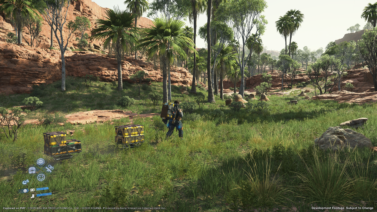
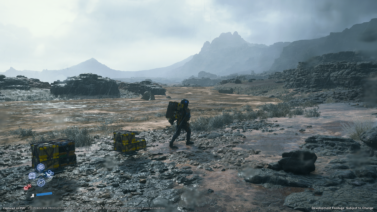
Later it’s also a driving sim, of sorts. As the chiral network grows and your resources become more plentiful, you gain access to vehicles like the Tri-Cruiser and Pickup Off-Roader, which allow for much bigger cargo loads. On foot you gain numerous upgrades too, like ladders, ropes and anchors. Suddenly, the vast distances you were once hiking are now covered by the gentle electric whir of wheels. Liberating, but still peculiarly uneventful. Sometimes even punishingly so.
In those long silences, you’re left to ponder what you just saw in the last cutscene. This being a Kojima game, those cutscenes are as frequent as they are lengthy and baffling. Here’s a game that introduces a sentient doll, tells you he’s called Dollman and asks you to keep a straight face. A game whose every character name is startlingly on the nose (guess what superpower Rainy has), and that flits between painfully emotive narrative beats, references to obscure 1970s novels and light entertainment at a dizzying tempo.
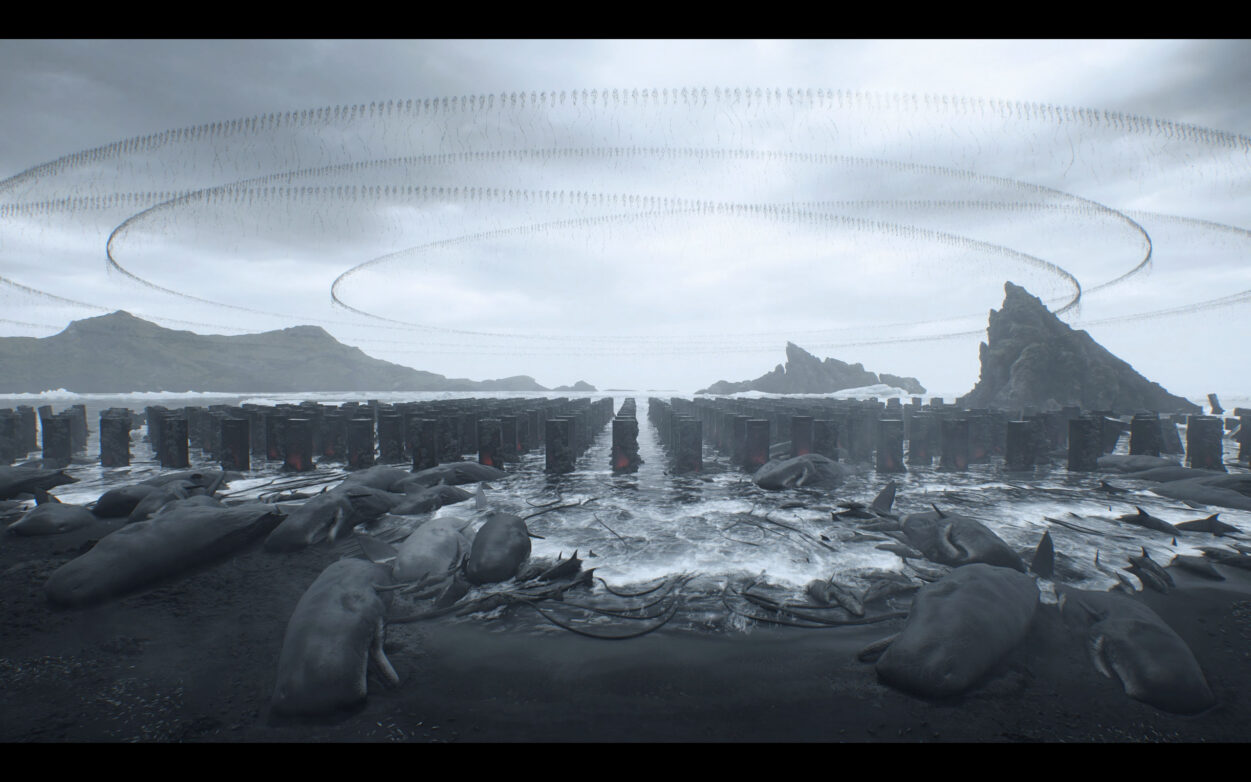
Kojima wrote and re-wrote much of Death Stranding 2 after the covid-19 pandemic, and it’s impossible not to get a sense of that as you walk between lonely humans stuck in their homes, gradually reconnecting everyone. The interactions between its principle cast – almost all performed by Hollywood A-listers, by the way – are all designed to make you think about our need for a tribe, for acceptance, for connection. That’s handled with much more subtlety and artistic flair than, well, any other game I can think of actually.
And it’s that emotional heart that keeps motoring you along. You willingly take on another trudge across the map, knowing it’ll take ages, knowing not much will happen along the way, because you care about making the world a better place. You care about Sam, and his friends Fragile, Tarman, Rainy, and Tomorrow. You care about his daughter, though her fate is kept (slightly) ambiguous through at least the first few hours of the game. So you do your duty.
And here’s the inspired bit: so does everyone else. While the experience itself is fundamentally singleplayer, the world you occupy is, in a way, shared by other players. You don’t see them, but you do see the infrastructure they’ve built. The roads, bridges, charging stations, ladders and resources, spanning the whole map, which make your life a little bit easier.
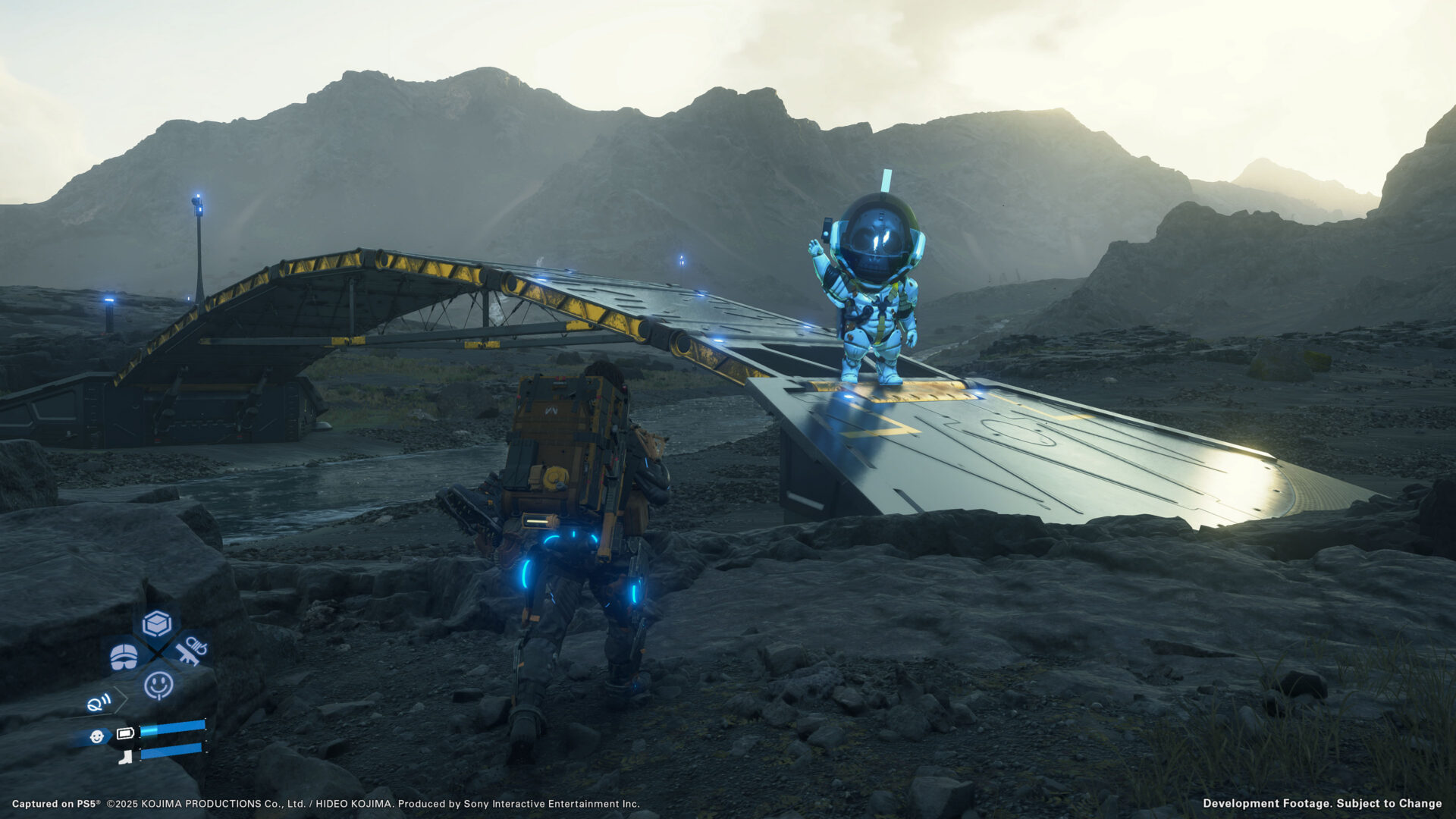
This is another thing that makes Death Stranding 2 fantastic. It’s a perfect marriage of narrative theme and game mechanic. On a mechanical level, the game tells you that you need to travel long distances to deliver things. Narratively, it’s telling you that the world has become disconnected and humanity is lonely. So when you see that other players have spent their resources and time to build things just to make your life easier, it’s genuinely touching.
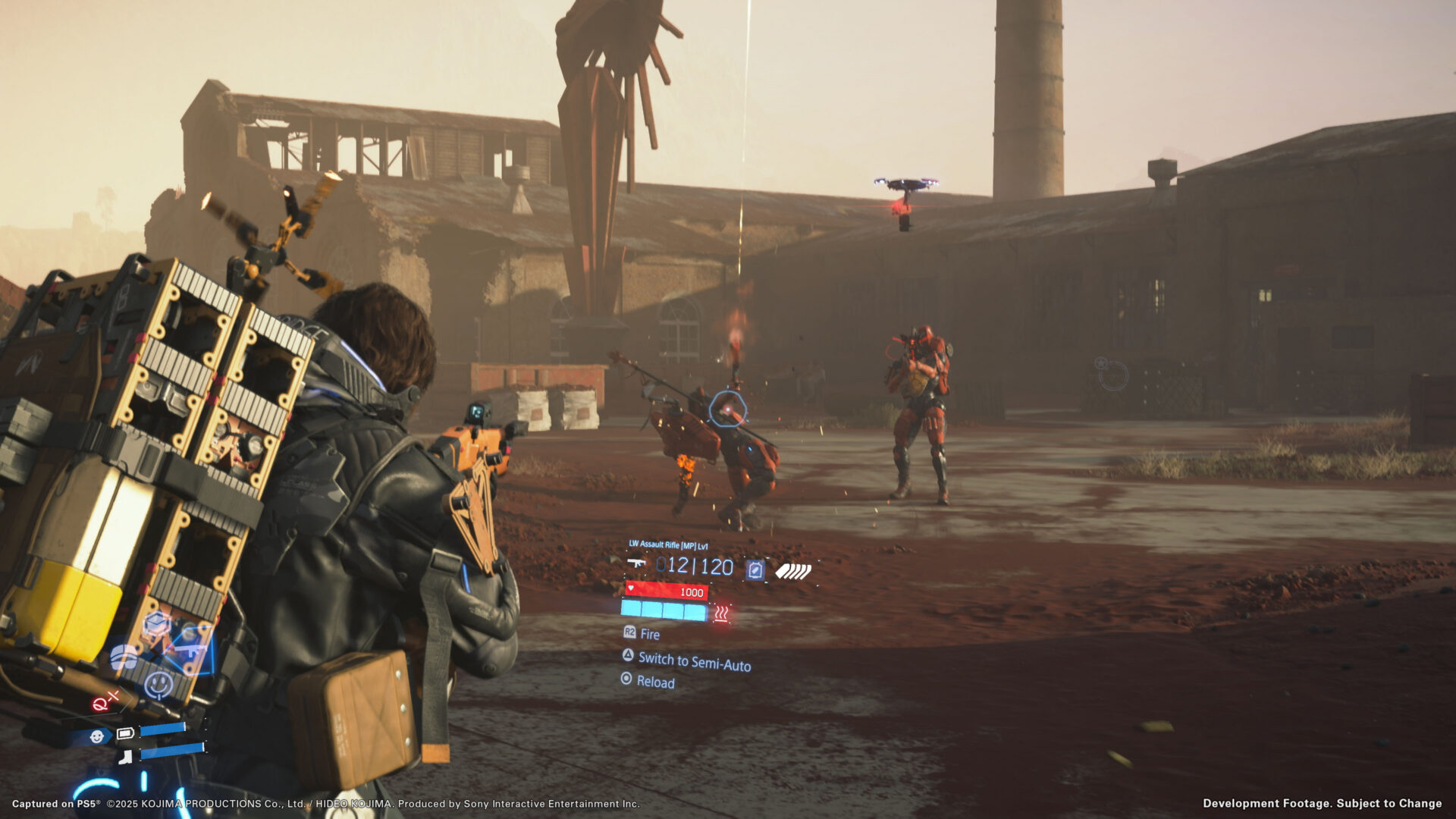
At the opposite end of the emotional spectrum, conflict does exist here. Your journeys aren’t all happy-clappy jaunts through zero threat scenery, and BTs and other, bigger horrors do lurk in the Australian hills, valleys and snowcapped mountains(!) and in this game, unlike the previous one, they have company.
Both human mercenaries and robotic enemies join their ranks, making certain areas of the map especially dangerous to inhabit. To that end, Sam has a larger arsenal of weaponry and gadgets, allowing approaches that vary from all-out ‘80s action movie assault to thoughtful late ‘90s tactical espionage action PS1 games. It’s in these moments when Sam Porter-Bridges most closely resembles Solid Snake, although they’re not so frequent that a Metal Gear Solid diehard(man) would be entirely satiated by what Death Stranding 2 has to offer.
Gear rising
On PC, it’s a typically neat and tidy port, as we’ve become accustomed to from titles that begin on PS5 and make their way over. Before launching the game, you’ve got a full suite of visual and graphics options including ultrawide aspect ratios, HDR, and a choice of multiple upsampling, frame generation and latency reduction methods from the usual suspects at AMD, Intel and, GPU permitting, Nvidia.
Particularly impressive is Guerilla’s PICO upscaler, which offers a bargainous amount of visual fidelity for very little resource cost and on my RTX 2080 TI rig generates the performance-fidelity sweet spot.
That same rig is capable of running the game at the high graphics settings preset at a locked 60 natively, and at the very high preset with some upscaling help. That speaks to a well-optimised engine that’s doing a lot of the grunt work so that your local hardware doesn’t have to.

Xbox pad controls are recognised and displayed correctly. Vibration on Xbox controllers is strong, though obviously lacks the full haptic feedback of a DualSense, which is of course also supported. Mouse and keyboard controls are fully remappable and show up in HUD prompts correctly. It’s only fitting that a game about porters should be so expertly ported to PC.
New features incoming: a new ‘To the Wilder’ difficulty setting, which functions as an ironman mode for the most hardcore of hardcore players and can’t be lowered once you start a game. New field equipment, and a VR training area with new missions. Oh, and you can take photos of the Chiral Feline now, too. All this new content is being added to the PS5 version in parallel, so know that while you’re being treated well, PC gamers, you’re not special.
Here’s the curious bit. There are good reasons to criticise, and even hate, this magnificent all-time classic game. It’s unforgivably ponderous at times. It asks you to do things that no other game would. It’s an egregious test of patience.
It also forces your TikTok-atrophied brain cells to pay a deeper kind of attention than they’re used to in order to get anything at all from its story. If you fail to do that, it’s sheer nonsense. Really long walks and then nonsense. And then a really long walk.
Unquestionably, the juice is worth the squeeze. Death Stranding 2 has so much to say, and so many interesting ways to say it, that eventually you welcome the periods of silent meditation and use them to process what’s going on in the world and in the characters’ interior worlds.