
The Despot family grows in numbers. Hull Rupture is the latest entry in the ongoing series by developer Konfa Games, introducing itself as part base management, part tower defense, with roguelite elements added into the mix. It’s an intriguing and quite ambitious genre mashup, yet it’s also one building upon a universe that has been in constant evolution for the past eight years.
Since 2018, Konfa has released three games, all spearheaded by the same foundation. Humanity is under the control of an evil AI called the Despot, which has unfortunately become the supreme ruler. Rather than going against it, however, we’re in control of the AI. In Despotism 3k, you have to manage humans in a resource management sim. In Despot’s Game: Dystopian Battle Simulator, said humans take the offensive in a roguelite tactics army battler, pitting dozens of them against all sorts of hostile and horrifying robots and creatures. Lastly, Slime 3K: Rise Against Despot riffs on Vampire Survivors while starring a massive blob.
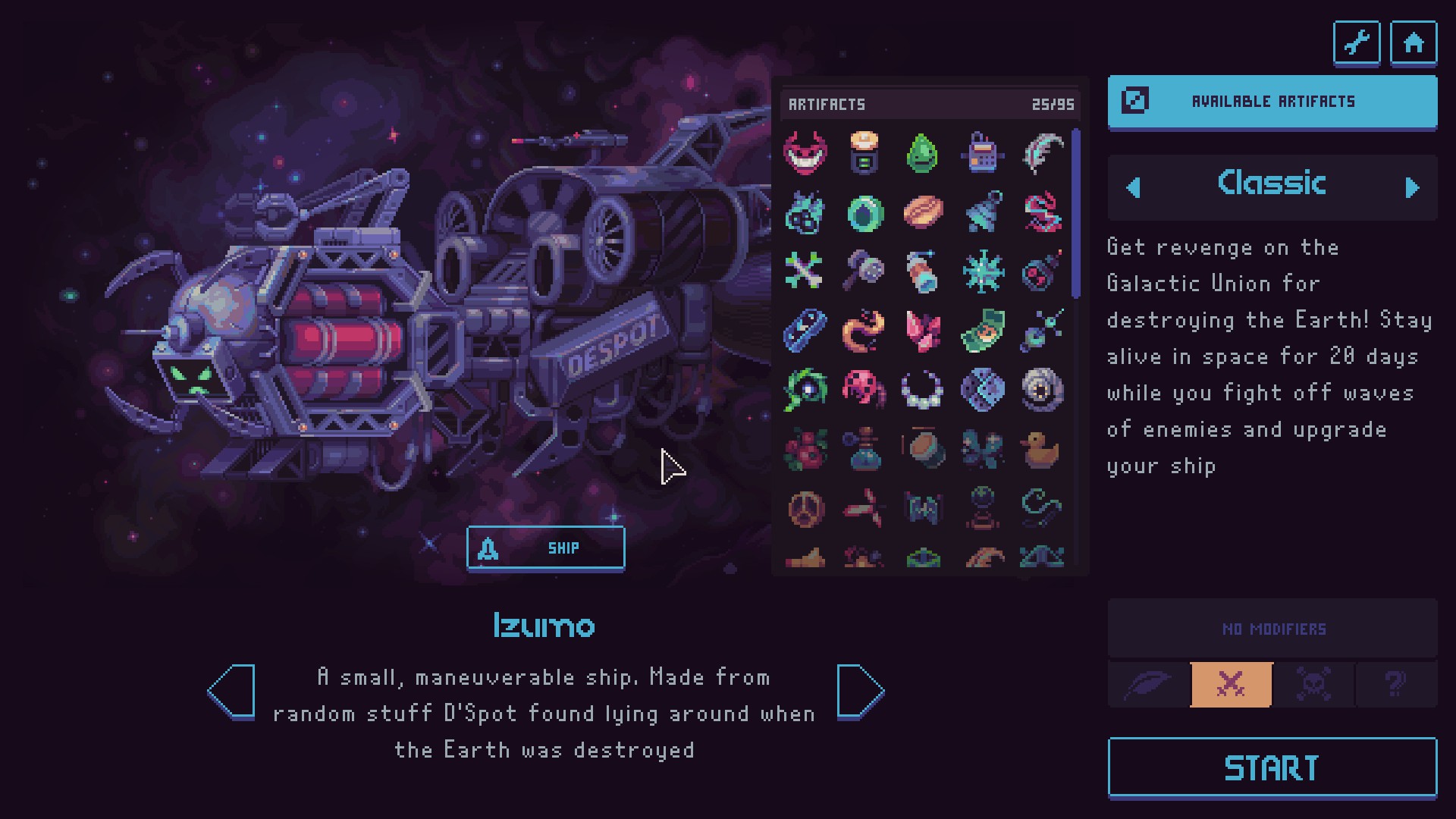
Regardless of genre, humans are always treated as completely expendable. This is also the case in Hull Rupture, where you’re using tiny people to try and survive a journey through space in which enemy presence is a constant threat. There are three ships to pick from, although the demo build for this preview only featured one, the Izumo, which is described as a small, maneuverable ship made from random stuff found lying around when the Earth was destroyed. But hey, it works.
For a roguelite, you have quite a few different modes to select before starting a run. There’s Classic, in which you have to stay alive in space for 20 days while you fight off waves of enemies and upgrade your ship. Conquest, where you capture all the outposts in the system to win, albeit with double the fighting. Cursed, where you gain no money, but you can buy anything by spending your humans as a currency instead. Uneventful, where random events are replaced with small rewards, in case you don’t want to spend too much time reading. Pure, which features less RNG and no random events. And, last but not least, Impossible, which is unlocked by completing the campaign once in another mode. Its difficulty is described as being at “the verge of madness.” Only Classic was available in the demo build, yet it made for a good introduction.
After making my selection, I got the story gist. The Earth was destroyed, but Despot managed to piece together a functioning spaceship (in just 34 minutes, it claims) and fled right before impact. Now, in exactly 20 days, the AI will finish decoding a communication system and take control of the whole galaxy. Our mission is to ensure the ship survives until then. Meanwhile, the Galactic Union is preparing wave after wave of
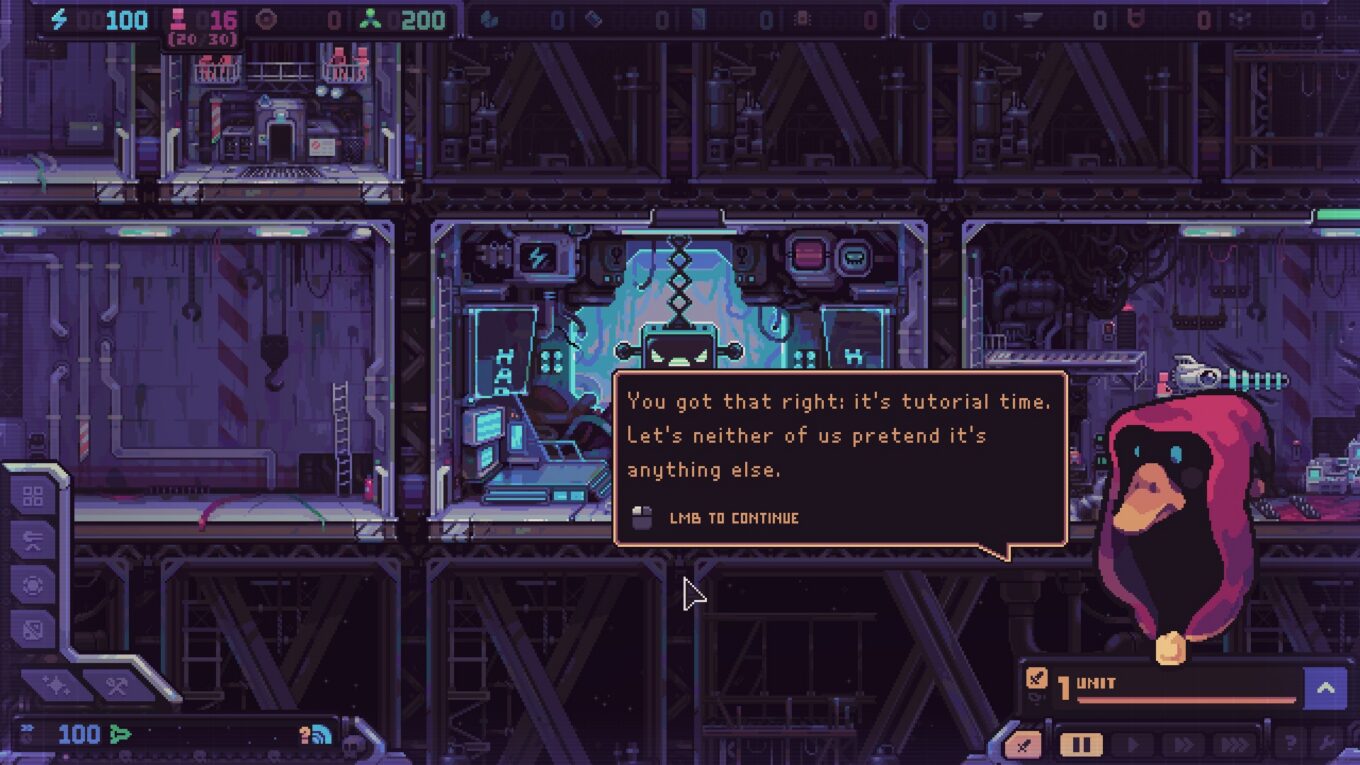
The story is told with a breezy, light-hearted comedy tone throughout. It’s clear that Hull Rupture doesn’t take itself very seriously, the tutorial is presented by the floating head of a duck wearing a hood that looks like a magician’s pajamas who utters the word “honktastic,” in case you needed a clearer example. Yet, Hull Rupture is more focused on the gameplay aspect, which starts simple on paper: in order to survive, you’ll have to build up your ship’s defenses. As it turns out, you’ll need plenty of resources to do so.

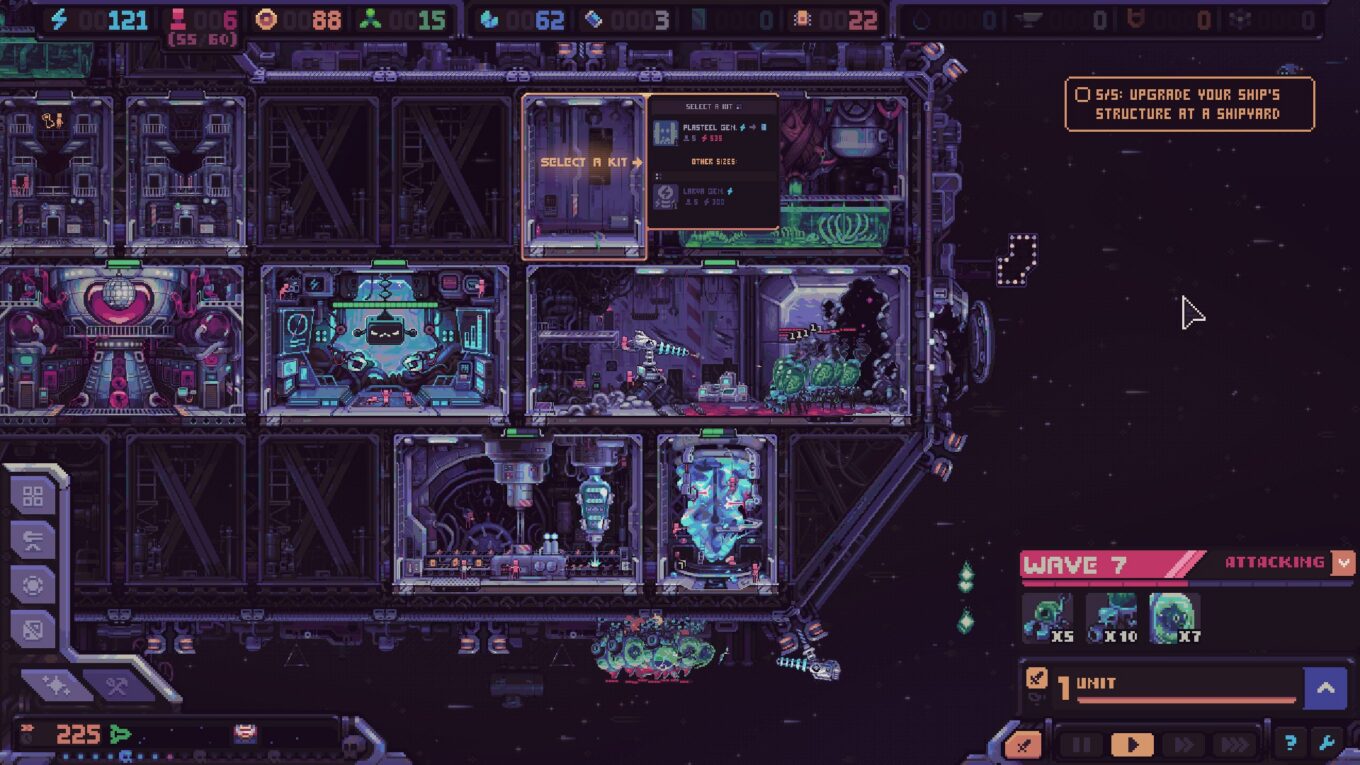
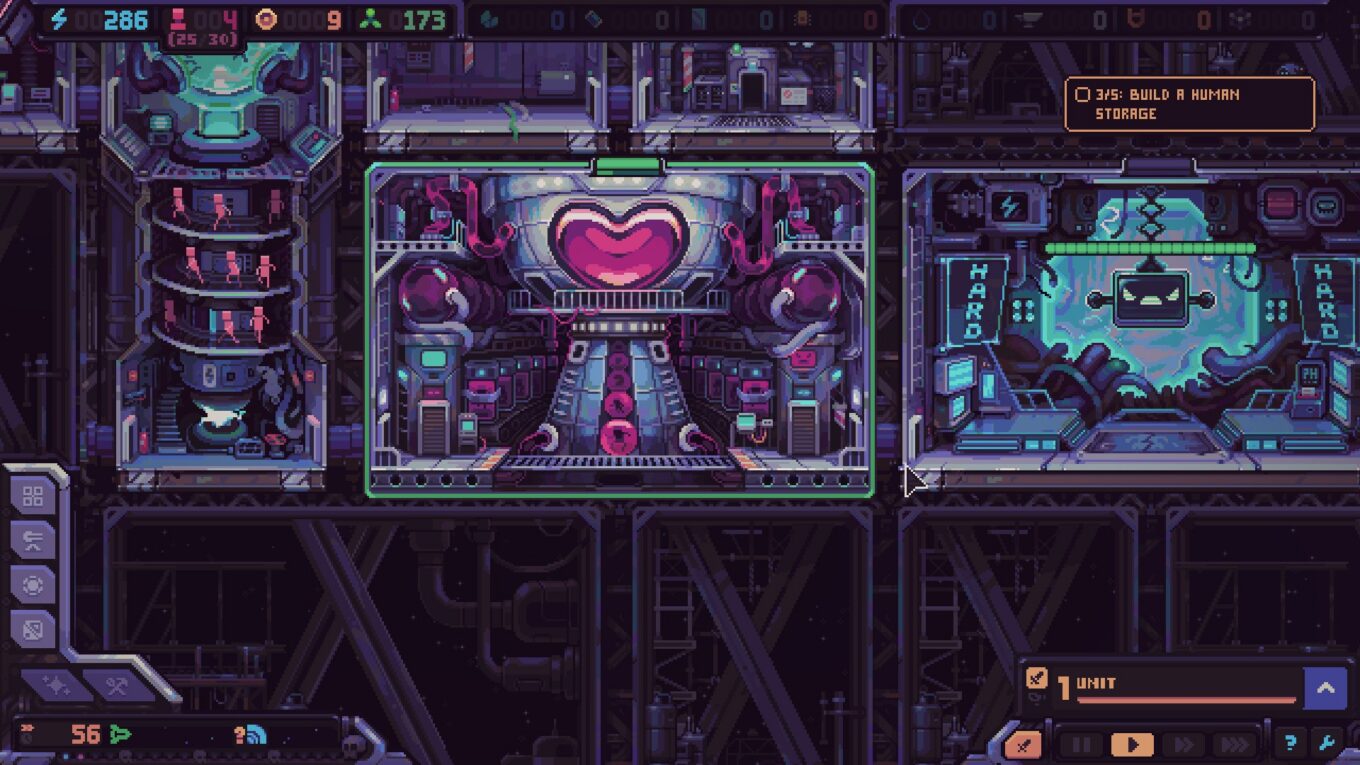
Despot is at the center of the ship, and while enemies defeating it means getting a game over screen, you can consider the energy generator to be the beating heart. It produces energy as long as humans are assigned to it. Every 20 seconds, you’ll get some energy, which is used for everything from repairing modules to creating and upgrading brand new ones. At the same time, enemies attack every three minutes, too, moving along your ship’s hull and into the airlock.
The enemy waves make for an intense rhythm that creeps in from the beginning and only gets more serious over time. It makes for an interesting tower defense structure. The ship is fairly empty at first, and the idea is to create as many modules as you can to generate resources. Humans are as important as energy, and a currency (the game’s words, not mine) that you’ll want to use and replenish constantly, especially if you need repairs or upgrades that require bigger manpower.
Learning all about resources and what each module brings to the table — from a reproducer to create more humans to a massive acid pool where said humans take a plunge into and get converted into flue — is overwhelming, as the tutorial only covers the very basics. Thankfully, there’s a quite comprehensive tutorial guide explaining everything with individual entries. If you have the patience to sit down and read through all of it, that is.

Each resource has its own consequence. After every enemy wave, you’re given access to a shop, from where you can purchase new modules and defense tools for the ship’s hull. But even if you have the cash for it, you’ll most likely need a specific resource to actually install your latest acquisition. Another example: if you don’t have enough fuel, your ship will still work without a working engine, albeit quite slowly. Moreover, the more modules you have, the slower you’ll travel in general. But a similar rule applies to humans working in your engines, making you fly faster.
The alert for an upcoming enemy wave is always terrifying. You always get a detail of how many foes there will be, as well as their type. Once they’re getting closer, you’ll know exactly where on the hull they’ll drop. Sometimes you spend effort and resources barricading the top side with turrets and rocket launchers, only for enemies to appear from the bottom as well. If they’re fast enough and you have placed all of your defenses close to one another, it will be tough to actually stop them. Simple decisions like this can have bigger impacts and decide the fate of a run, either in its favor or as a compromise that will come back to haunt you later on.
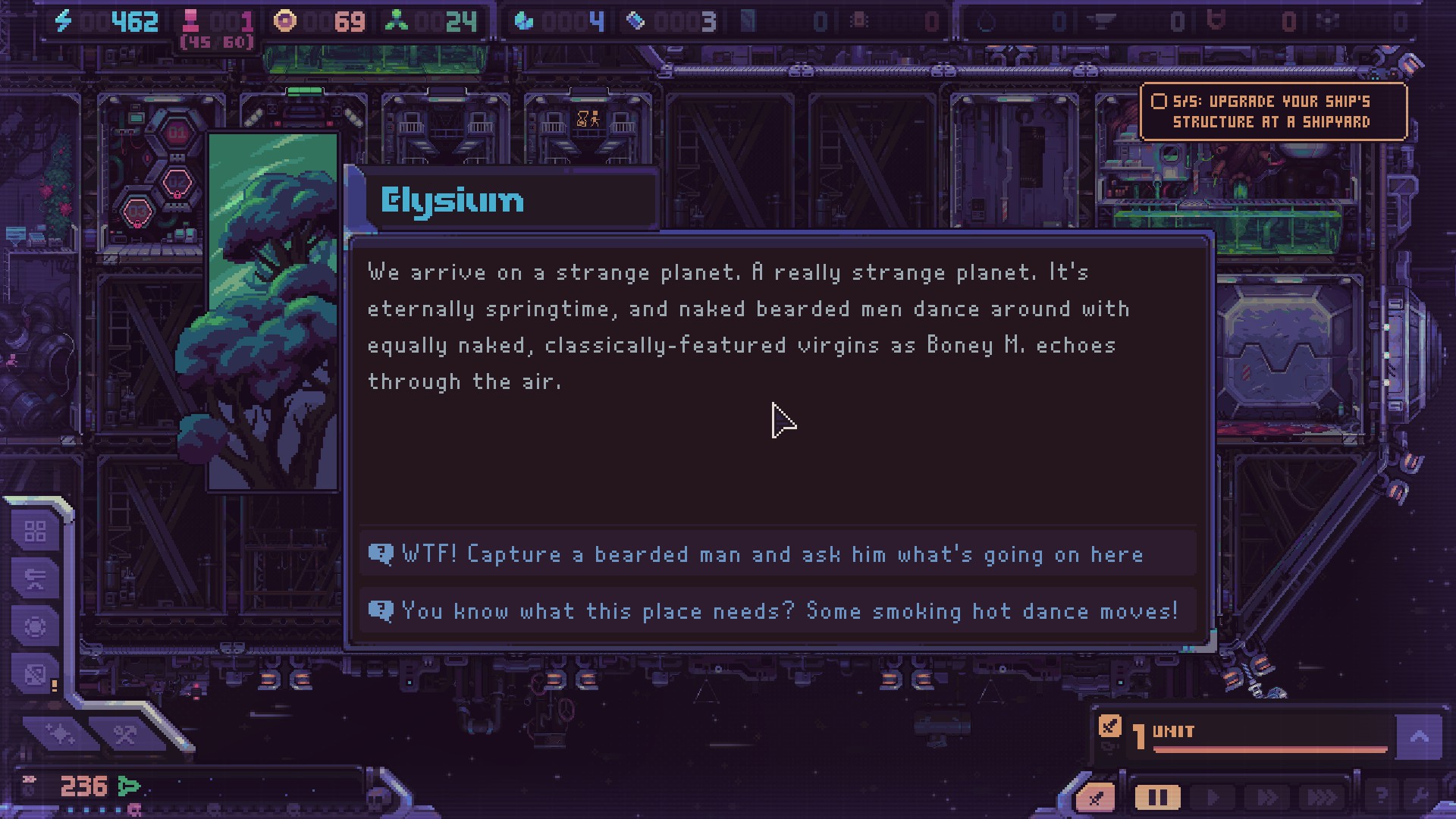
Speaking of simple decisions with unexpected effects, Hull Rupture features random events, which are one of its highlights. Taking cues from the likes of FTL: Faster Than Light, these events prevent the game from becoming too systematic, adding a bit of story into the mix while also keeping you on your toes, as they’re quite random. I got one called Mysterious Vegetation, in which the ship’s scanners showed something strange about the trees on a planet. A console allowed me to try and fix this by jumping back to the last stable release, which was 2 million years old. The trees turned into giant ferns, cool, and I got 30 biofuel. This caused some weird fruit vines to grow, which became a modifier that lasted throughout the run. Now, every time I built a 1×1 module, I gained three isotopes, yet another resource.
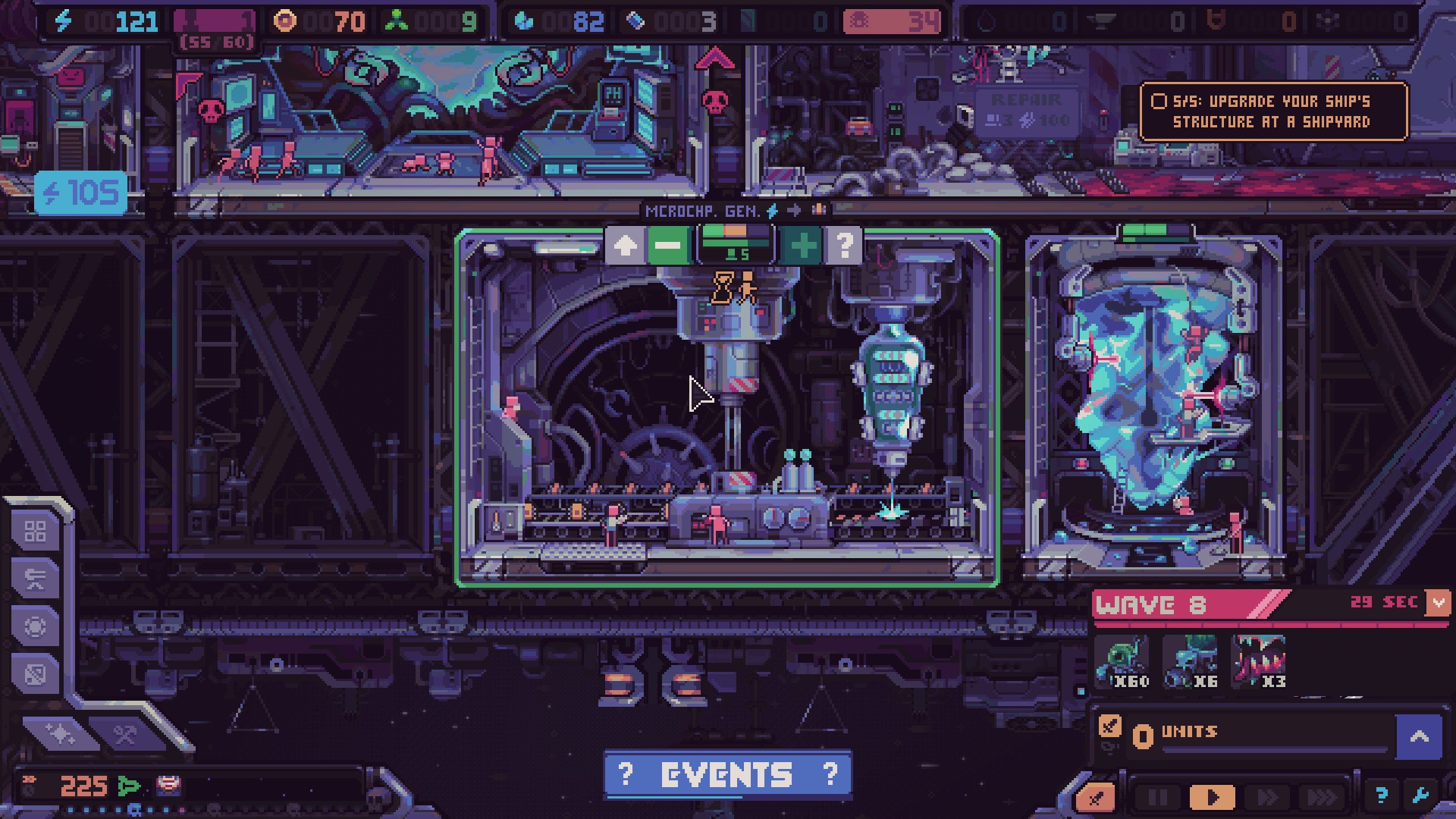
The events are hilarious, from potatoes in orbit that killed five percent of my human population because it turns out they weren’t edible anymore, and a giant TV that simply fell onto the ship and granted me microchips. The effects of these events also have a visual ramification, changing how some parts of your ship look, which is a neat detail. As is the case with previous Konfa titles, the animation work and sprite variety are a joy to witness. Humans, in particular, all have specific animations depending on the module they’re assigned to, making it feel as if you’re looking at an ant farm that oozes personality.
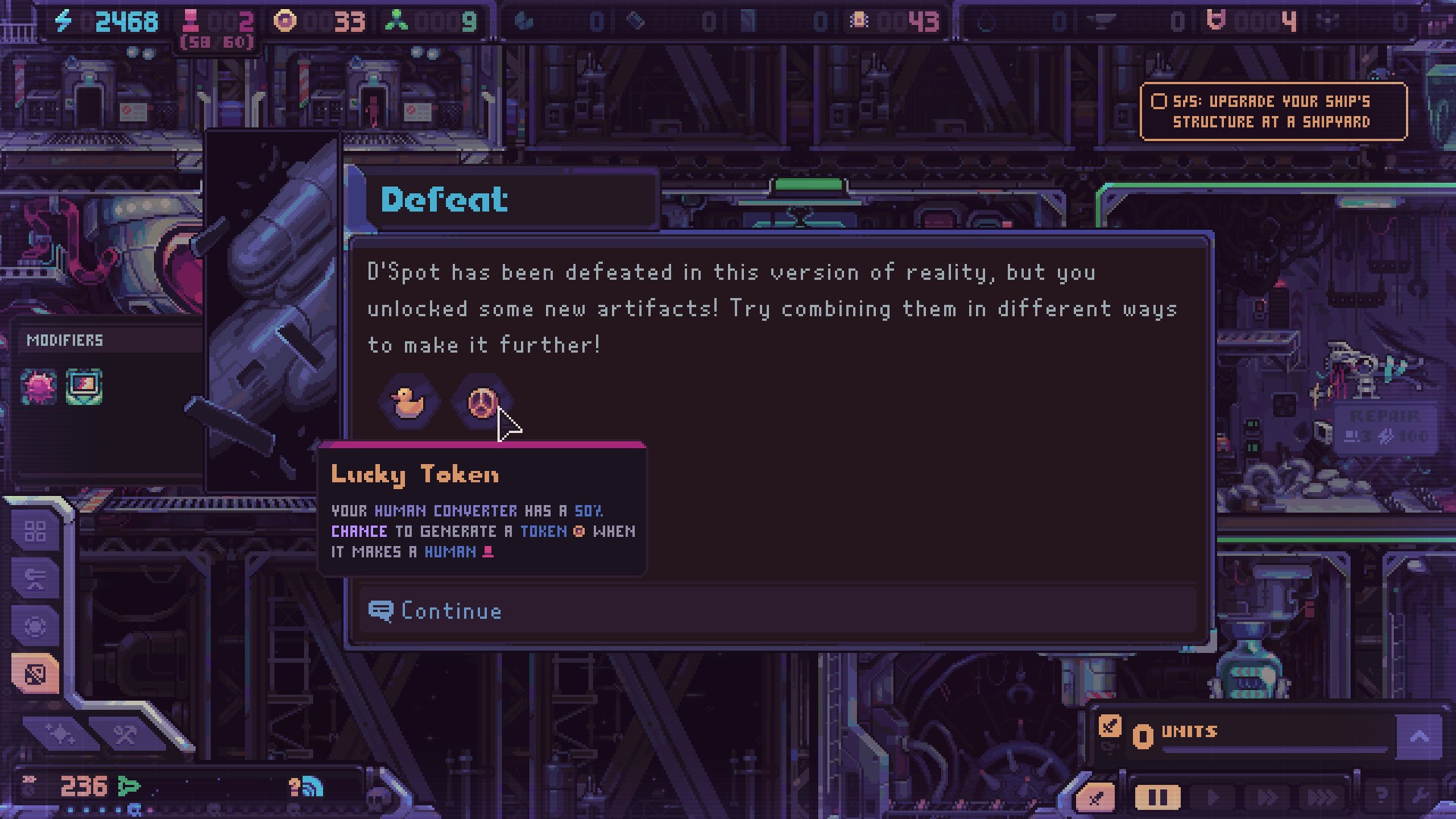
My time with Hull Rupture made for a promising start. Despite multiple attempts, I didn’t make it to the final 20 days, but each defeat rewarded me with new artifacts, which are items that gradually become available in subsequent runs and add different modifiers. Alongside the decisions you make during random events, you also need to pick from branching paths in the solar system, planning routes ahead of shops, places to upgrade your ship, and much more. As it stands, it seems Hull Rupture is Konfa’s bet on taking everything it has learned from previous games and combining it to make for a more robust and all-encompassing experience. Only time will tell if aiming for the stars will pay off.