In a way, slaying the zombies hordes in John Carpenter’s Toxic Commando is a lot like gardening. There are the tentacles, for instance; the florid appendages that burst through the ground to ensnare your wheels, wriggle about menacingly or block your path ahead. The best way to deal with them without spending bullets is to hack them with your melee weapon, and they shrink, vine-like, into the underground. The roamers—your run-of-the-mill, mindless fodder—are like unwanted infestations that you need to gradually mow away with your rifles methodically. Then there are seeds and other resources you can harvest, which are great for upgrading your weapons and levelling up. As unlikely as it sounds, there’s a zen-like rhythm to these routines, even if every conceivable surface is drenched in guts and blood and all sorts of gooey plasma.
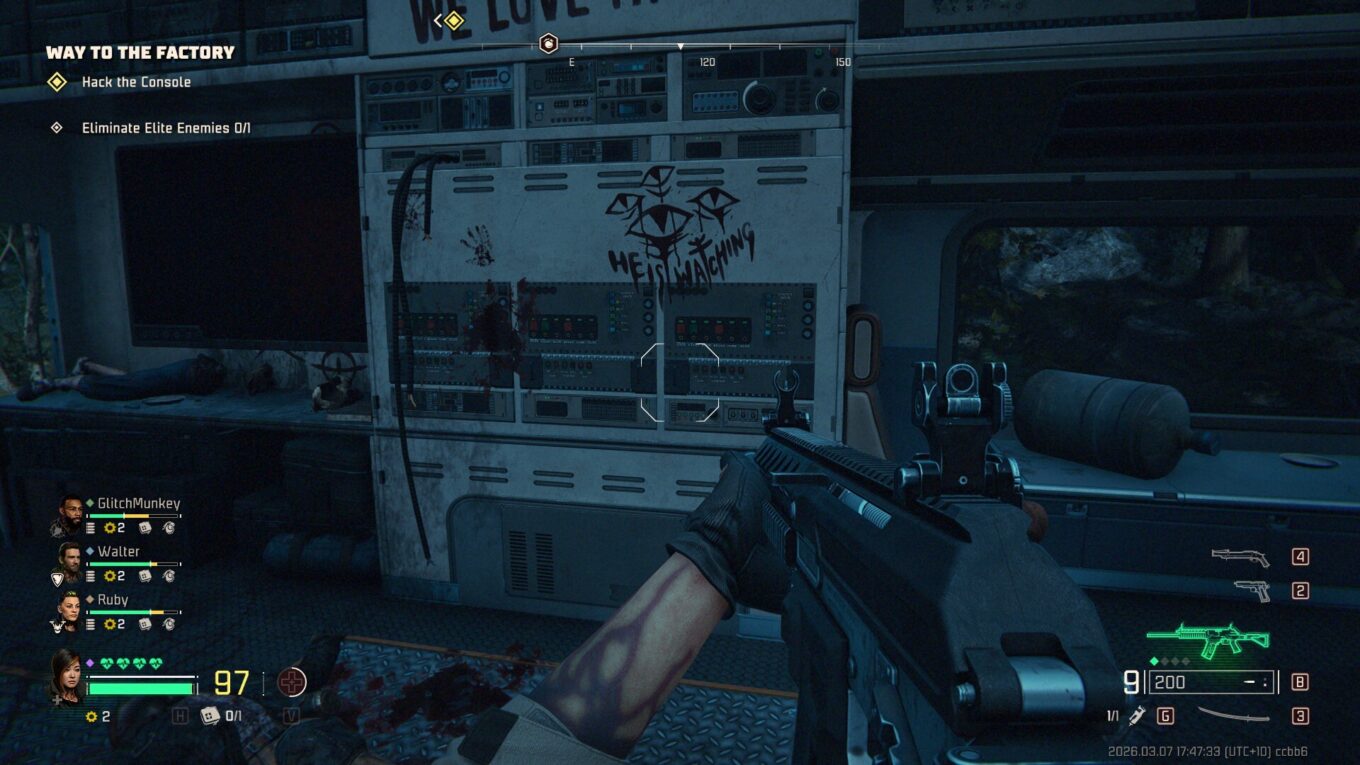
This loop is the heart of Toxic Commando: shoot, harvest, survive, and oh, make some deliveries while you’re at it. As a blood-soaked zombie shooter that takes ample inspiration from titans of the genre like Left 4 Dead and Back 4 Blood (a missed opportunity, perhaps, to name it Toxic 4 Commando instead), Toxic Commando doesn’t really break the mould, and you get the sense that it doesn’t really want to anyway. Waves of shambling undead still serve as bullet sponges, with guns that offer crunchy, resounding feedback when you empty liters of ammo into their bodies. Your teammates would fire off wisecracks like, “Ooh we have a zombie buffet over here!” in between spitting variations of “fucking hell”. Zombies come in a familiar variety, like the Blaster, which shoots lasers from far; the Nuker, which has a bulbous growth that explodes and douses its surroundings in flames; the Stalker, a battering ram of a beast that simply bulldozes everything in its path. You’ve seen them all before, probably.
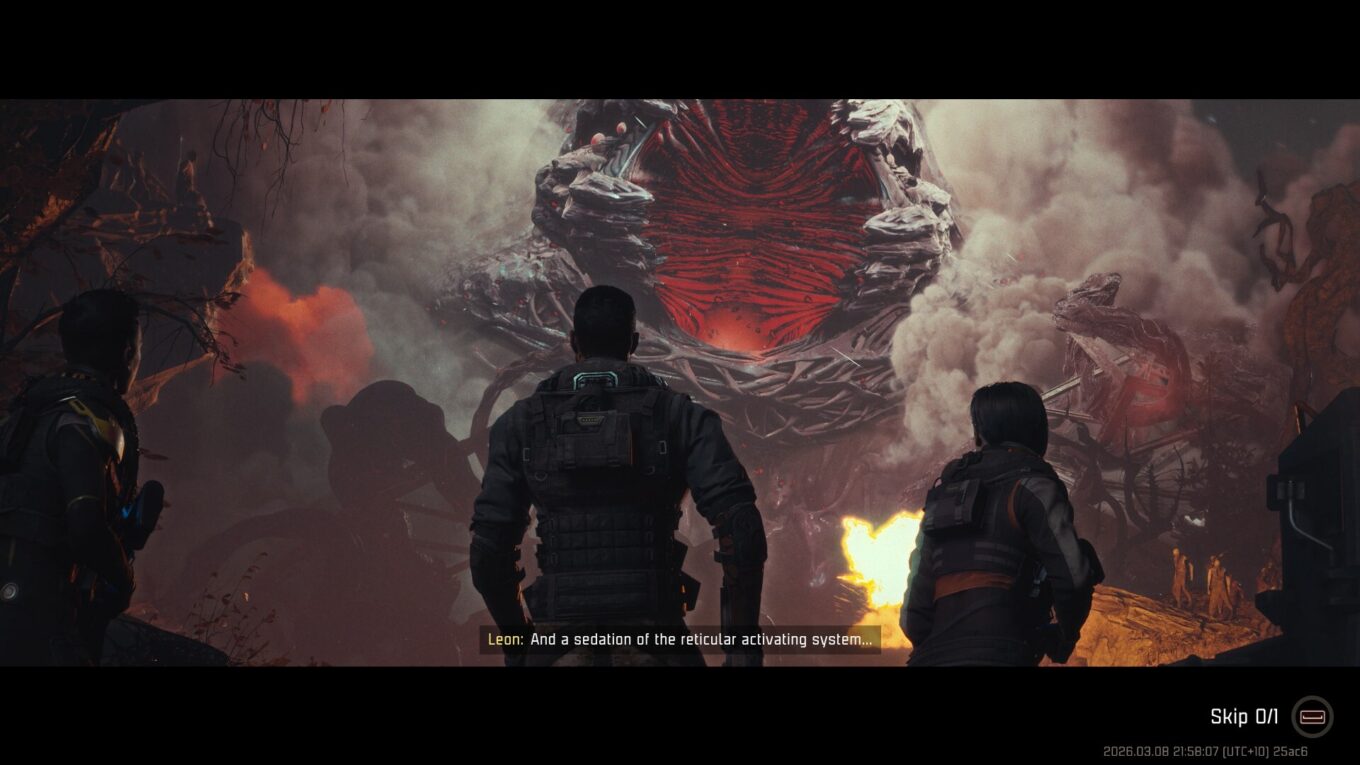
Every mission is also introduced with a little backstory which serves as window dressing, a pastiche of B-movie camp that doesn’t really leave an impression. As far as I can discern, before skipping them entirely, Toxic Commando is about a bunch of mercenaries who were infected by the very virus that’s transforming everyone into zombies. Fortunately for them, they were gifted a special vest that stops the infection from spreading, but still grants them superhuman powers. That’s really all you need to know; some brainiac named Leon would send them on missions to collect this and that, fix this tower, defend this area, and yadda yadda. Honestly, it’s the action that matters here. You’re just here to get to point A, shoot zombies, watch bodies explode into meaty bits of viscera, and move on to point B.
To be fair, the action can be unrelenting and exhilarating. There’s hardly a dull moment in Toxic Commando, and the pace of its shootouts is blistering. Zombie hordes are always nipping at your ankles, and fighting through these waves requires plenty of rapid reflexes and timely reloading of guns. These thrills are compounded by the aforementioned superhuman powers, which translates to class-specific skills for fending off zombies. The classes are pretty standard: the Strike is the damage specialist who blasts fireballs; the Medic well, heals; the Defender can conjure a dome of shield; and the Operator has a pet drone that helps to deal additional damage. At the end of your mission you can spend skill points to improve your skills’ potency, but what I appreciate is that you aren’t locked into a specific class. You’re free to be a Medic in one mission, and the Operator in the next.
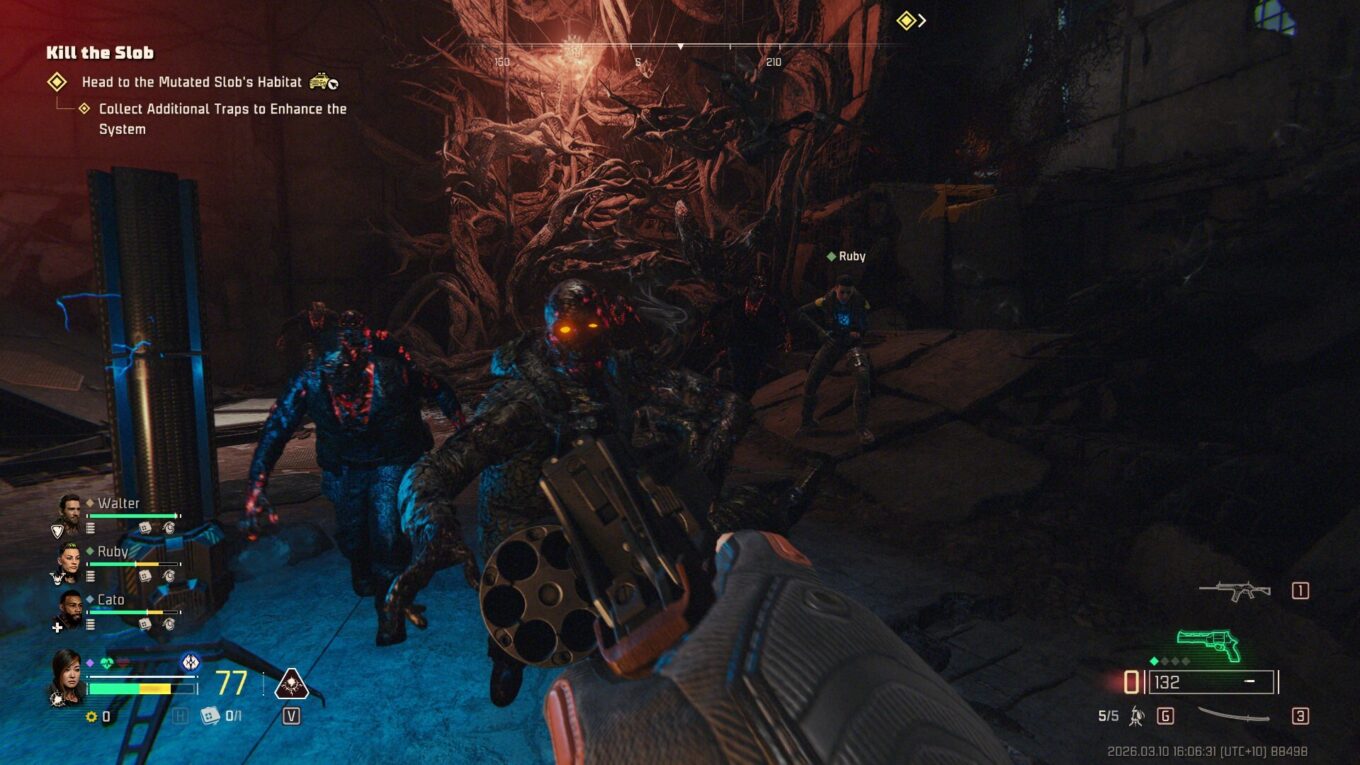
Weapons are also upgradable and, like your character class, can be leveled up, albeit through frequent use. Before the start of every mission, you can choose which guns to bring along with you—a primary weapon (either an assault rifle, shotgun or SMG), a handgun. It does incentivize you to stick to a preferred weapon as you go through the missions, even though there are minor issues. Firstly, levelling up these guns lets you modify specific components, such as the barrel, muzzle, grip and even magazine, which will improve your weapon’s performance slightly. Which is fine; I enjoy tinkering away at these upgrades, but it also largely render weapon caches that I find on the map pretty pointless.
Let’s rewind. Unlike the more linear path of other zombie shooters, Toxic Commando drops you into a map. They aren’t that massive, especially when you can drive around them on a vehicle, more on that later, but aside from just following the objective marker, there are other points of interest on the map, such as supplies, weapon caches, resources and spare parts. After you’ve decided to stick to a weapon, caches become a little less exciting to chance upon, because they’ll offer you other weapons that will inevitably be of poorer quality than your chosen boomsticks. The only things worth picking up in these caches are what I refer to as heavy weapons. These are extremely powerful guns like grenade launchers, railguns, and thumpers that you can’t bring with you before you begin your mission, and can only be found on the map. Yet these are usually locked within weapon crates that you’ll need spare parts to open with, and spare parts are not that plentiful. Without these parts in hand, I would hardly go out of my way to seek these caches out, unless they happen to be there as I make my way to the next objective.
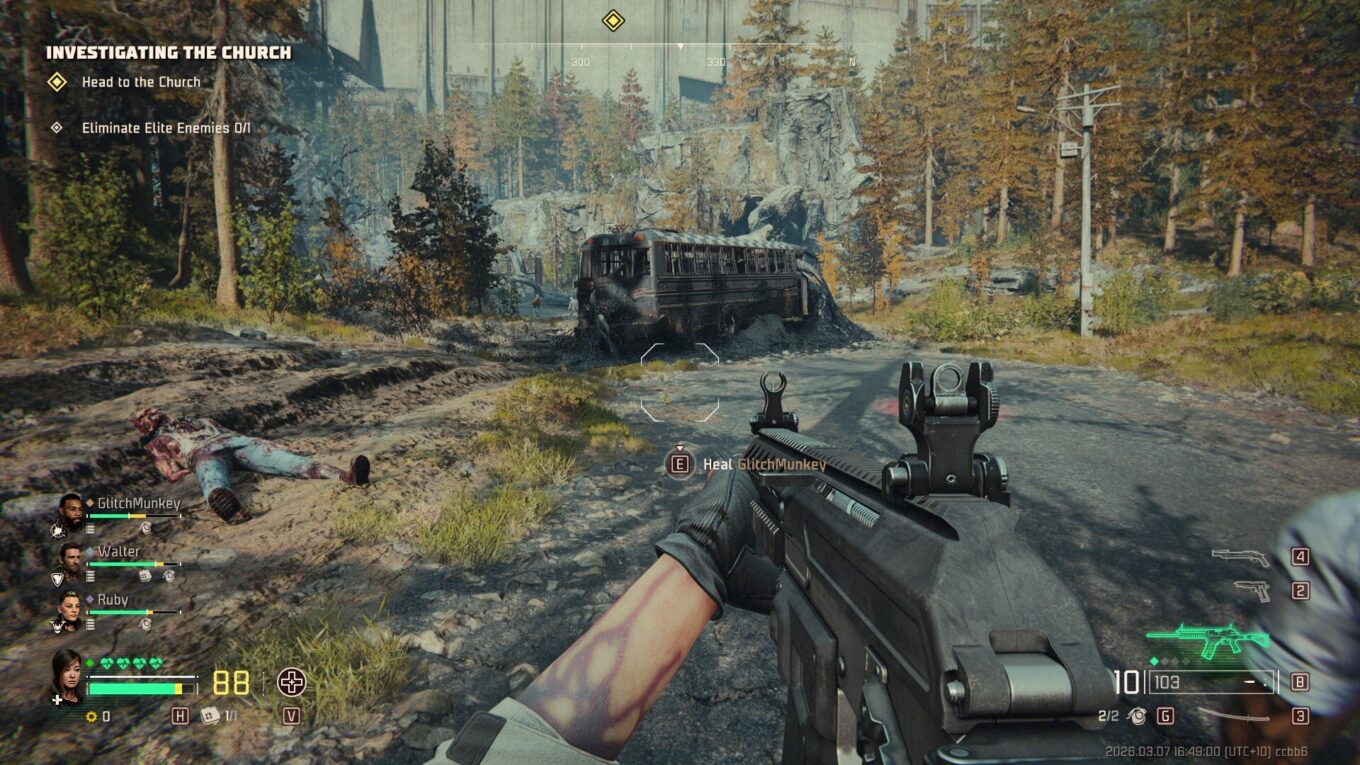
These essentially render most of Toxic Commando’s maps less than remarkable to discover and explore. The only resources that would make a marked difference in your survival are spare parts, seeds, and the in-game currencies used for upgrading weapons called sludgites. Spare parts can be used to open weapon crates that contain heavy weapons and grenades, but they can also be spent on setting up defences against zombie hordes, such as fixing electric fences, broken turrets, and barbed wires. Seeds can offer additional skill points to upgrade your classes with and, if you’re killed and can’t be healed by your teammates, can be spent to revive you. Then there’s the sludgites; these orange crystals are what you need to modify and upgrade your weapons, and they grow on little sludgite trees that are strewn across the map. There are also other currencies like residium and morite, but these are mostly used for cosmetic upgrades, like decorating your rifle with the world’s teensy-tiniest keychain. Harvest sludgites and move on.
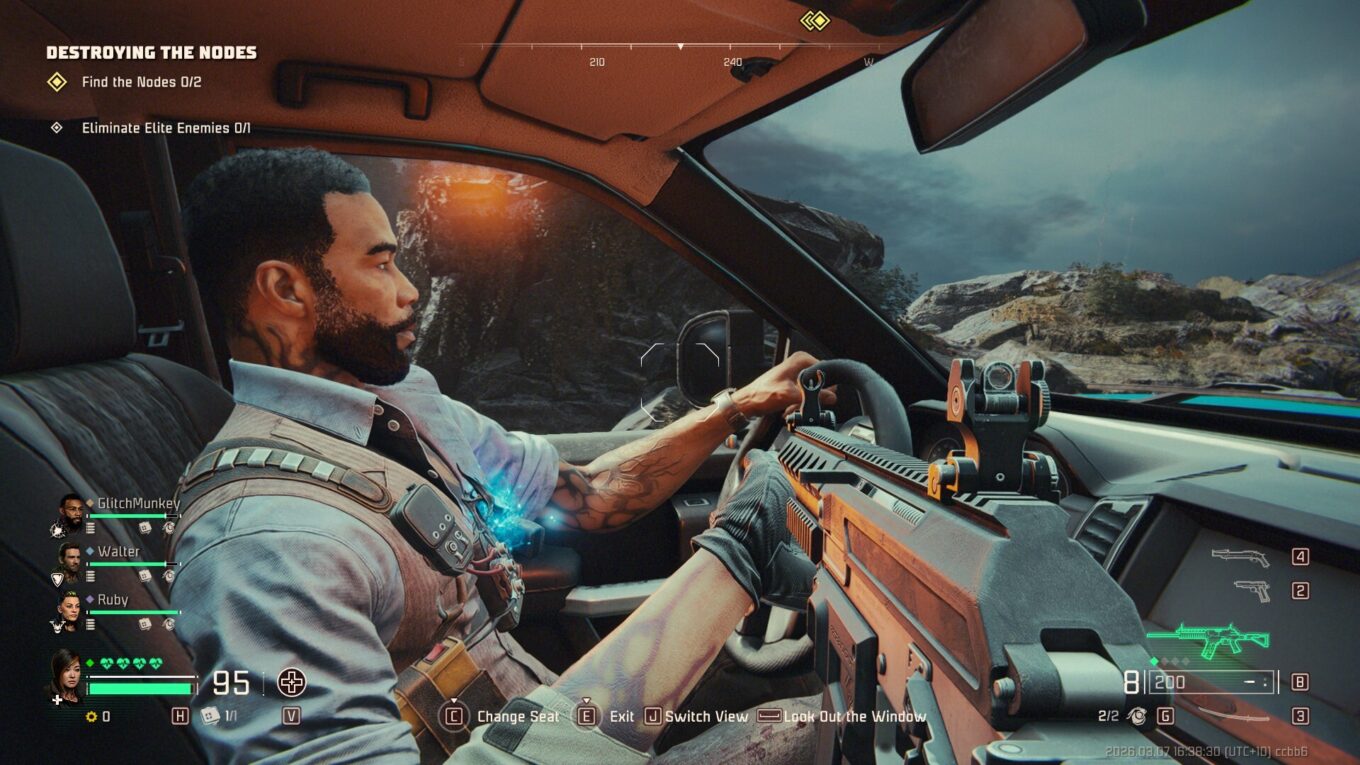
Toxic Commando seems largely content to rest on its laurels, but there’s an attempt to shake up the zombie shooter formula with its vehicles. While maps aren’t big, the terrain can be a pain to traverse without one of these hunks of metal. Grounds caked with mud and sludge can not only slow you down on foot, but can also inflict incremental damage; stay too long in the toxic sludge, and it’ll sap your health quickly. There are several vehicles you can pick up, but the difference is more than just cosmetic, with each vehicle equipped with a unique skill. The Maverick is an armored tank that is outfitted with a turret, and can send powerful blasts of EMP waves to fend off zombies; the Ambulance heals your team; and the Banshee is a regular ol’ car that self-destructs on command. There are other vehicle types to be found on the map, but the most commonly encountered vehicles are the Maverick and Ambulance, which are the only vessels you need, anyway. At times, you should also be upkeep your car with regular maintenance and fuel, but these aren’t major obstacles. Gas is shockingly plentiful in this post-apocalyptic universe, and restoring your vehicle to a polished, unblemished sheen is about playing a mini-game, of landing your pointer in a highlighted zone at the right time.
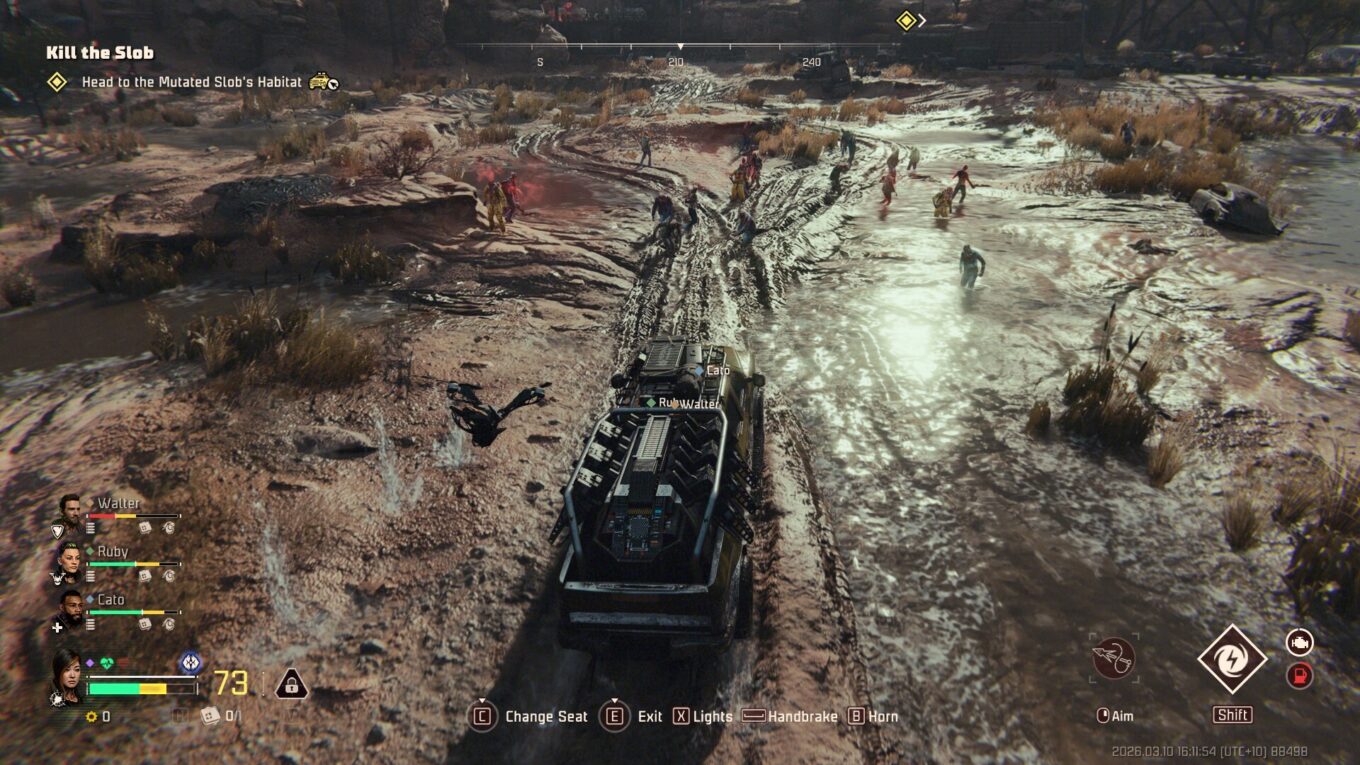
In the end, Toxic Commando becomes a repetitive routine of picking things up, finding your vehicles, looking for slugites, shooting zombies herds, and defending your team against incoming attacks. True to the camp and bombast of the B-movie schlock, as well as the zombie shooters that Toxic Commando is replicating, everything is done in service of letting you and your friends perform sensational, frantic shootouts together.
Zombies attack in growing waves, and in such huge numbers towards the end of every mission that they would clamber onto one another just to reach you or destroy a barricade. Ammunitions, fuels and weapons are readily available, and almost always within reach, even though everyone and everything is dead or dying. Cringey one-liners and action movie-style demeanor are plentiful; heroes shrug off explosions as if it’s a mere scratch and, at one point, a lady simply punched one of the characters squarely in his spheroids before shouting “Let’s fuck off!” Toxic Commando is junk entertainment that peaks your dopamine just at the right spot: great for a few rounds with friends over the weekend, but like these ultra-processed food, isn’t that nourishing. That said, no one is going to mistake Toxic Commando for high art anyway, and revelling in the game’s adrenaline-fueled absurdity is just part of the fun.