Remember Blockbuster? I hope they don’t remember me, since I still technically owe them a small fortune for the copy of Legacy Of Kain: Defiance I rented in 2003, played to death, and never returned. They’re obviously long dead now, and while I do take great pride in having won such a crushing victory over a towering retail empire, I still feel a little guilty for shortchanging them on what would end up being one of my favourite memories: sitting up for two nights straight with a friend, pausing every time Defiance dropped another story revelation to excitedly recount all the relevant lore we could remember; trying to make sense of five games worth of convoluted timelines and shifting alliances.
Unless you’re similarly nostalgic, Defiance is a tougher sell in 2026. Soul Reaver’s realm shifting, which allowed the player to step between the physical world of Nosgoth and its ghostly, distorted counterpart to solve puzzles and traverse inaccessible barriers, remains the only real gameplay innovation in a series that never found much of an interactive identity otherwise. Defiance cribs from both Tomb Raider’s puzzle platforming and Devil May Cry’s mook-juggling combat, and while there’s a vicarious satisfaction in inhabiting haughty vampire Kain and fallen wraith Raziel at the height of their powers, neither fights nor puzzles are especially distinctive. Puzzles are square-peg-square-hole shallow, even compared to Defiance’s own predecessors, and combat comes straight from the “maybe if we throw ten idiots at you, you won’t notice quite how much of an idiot each individual idiot is” school of fight choreography.
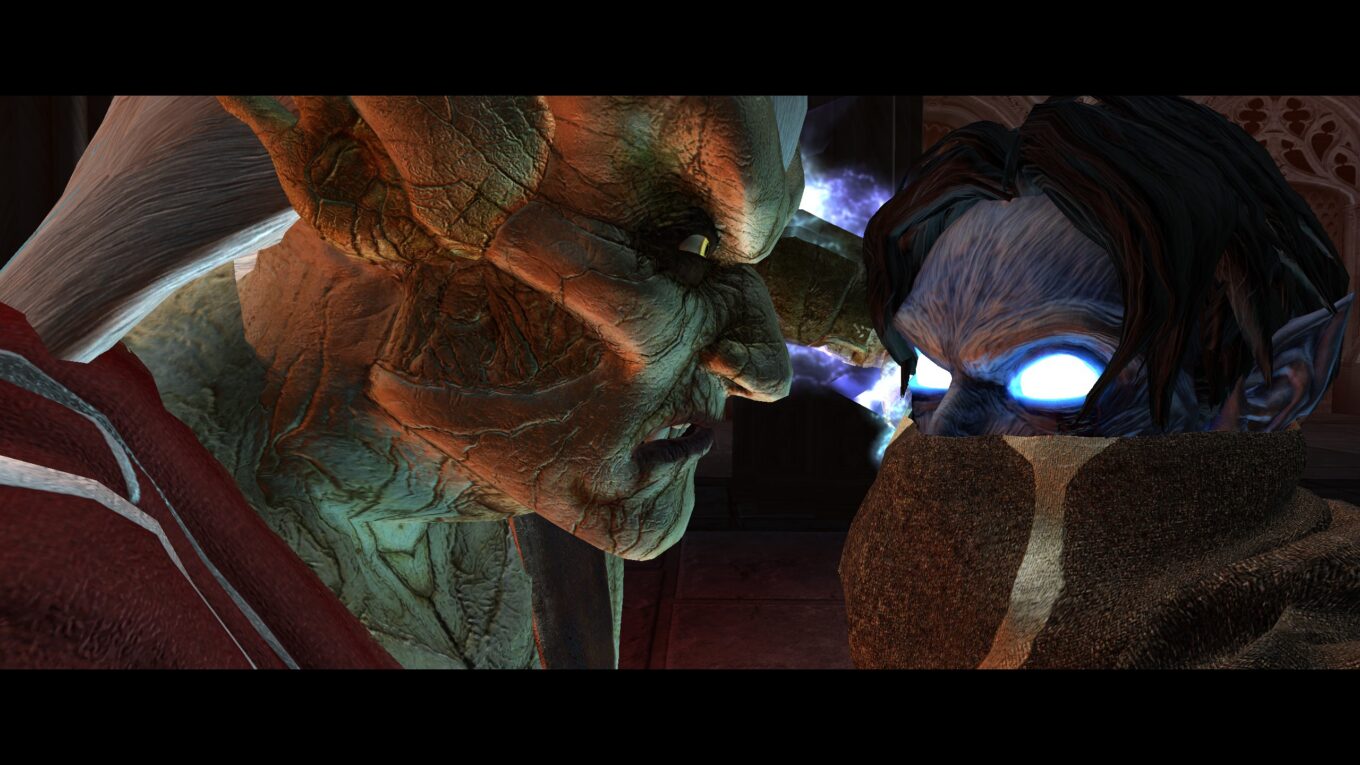
Still, this isn’t some sober reassessment armed with hindsight. Defiance always played like an unremarkable – even forgettable – early 2000s action adventure. But that wasn’t why we showed up. That’d be the ornate, overwrought dialogue. The labyrinthine plots. The full-blooded gothic grandeur enriched by an apocalyptic score and Simon Templeman, Michael Bell, and Tony Jay’s singular voice performances. I can’t remember it really ever mattering to me whether Defiance was a ‘good’ game or not. That was all irrelevant, because if you’d been following Kain and Raziel up until that point, Defiance was essential.
Alongside 2024’s remasters of the Soul Reaver titles (handled by Aspyr in collaboration with original studio Crystal Dynamics, with PlayEveryWare taking the reigns here), Defiance Remastered is the latest offering in what’s shaping up to be somewhat of tentative renaissance for the dormant series. It’s been a long time coming. Both Defiance’s intended sequel The Dark Prophecy and soft reboot Dead Sun were cancelled before they got a chance to recoil from the light of day, and short lived multiplayer offering Nosgoth landed in 2013 to an ambivalent audience still clamouring for a real sequel. Then, last month, Crystal Dynamics announced Legacy of Kain: Ascendance – the first game starring the original cast in 23 years. I was going to write “against all odds” there, but there was clearly money to be made, so the odds were actually pretty good.
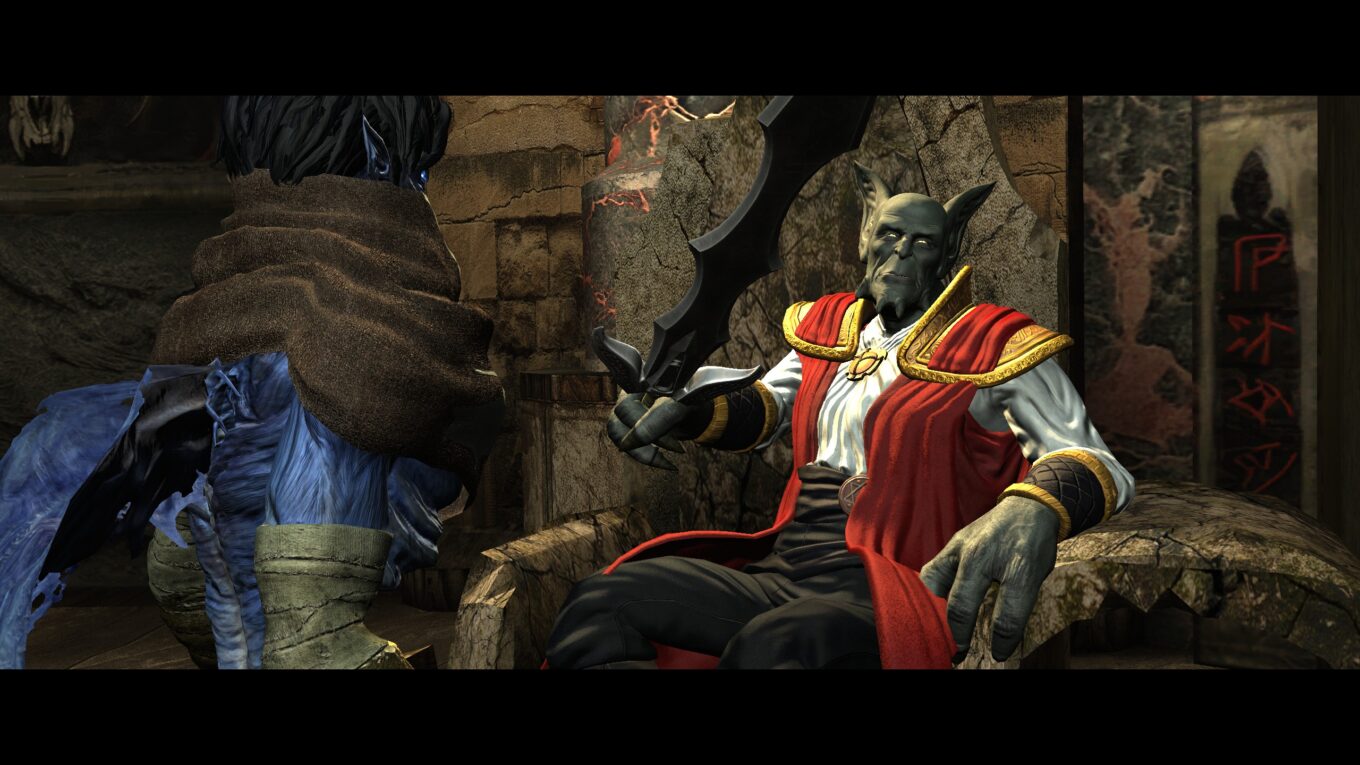
I bring this all up because I think it goes some way to explaining why Defiance Remastered sometimes feels more like a museum tour than a modernisation or preservation effort. Character skins from cancelled games and collectable concept art glow out from the alcoves of ancient shrines, and the main menu is stuffed with goodies and ephemera: lore, cancelled levels, making of clips, and a playable slice of Defiance’s cancelled sequel in the deluxe edition.
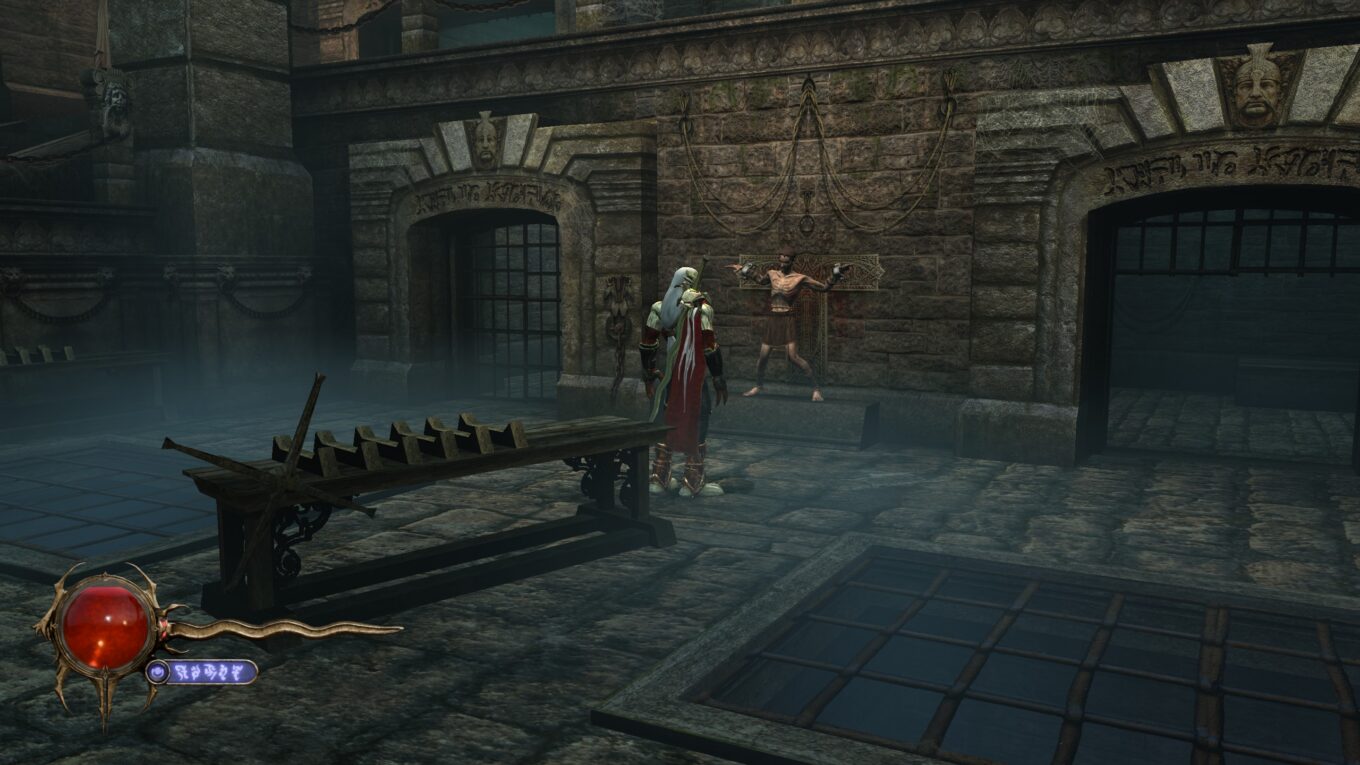
I had about as much fun browsing that menu as I did replaying the actual game. I did have a lot of fun with the menu, mind, but while PlayEveryWare have made it more convenient to play Defiance in 2026, they haven’t made it much easier to enjoy. I can’t imagine the choice between faithfulness and modernisation is ever an easy one to make, but issues linger in Defiance Remastered that make a strong case for messing with the classics. Most noticeable are the untouched sound design choices that mean combat still feels like wailing on giant gummy bears with a cricket bat. Framerate tweaks mean Raziel and Kain feel incredibly responsive to control, and a new camera sorts the classic fixed-angle issue of getting poked in the back of the head from offscreen. But combat is so prevalent here it feels like a huge oversight not to lend it a bit more juice.
It’s not like Defiance Remastered treats the original like a holy text elsewhere, either. Let’s call the visual update a mixed bag, in the sense that getting equal parts fried eggs and rat anus in your Haribo is also, technically, a mixed bag. Here is murdered spirit Ariel as she appears in classic Defiance on the left, next to Ariel in Defiance Lime Twist™:
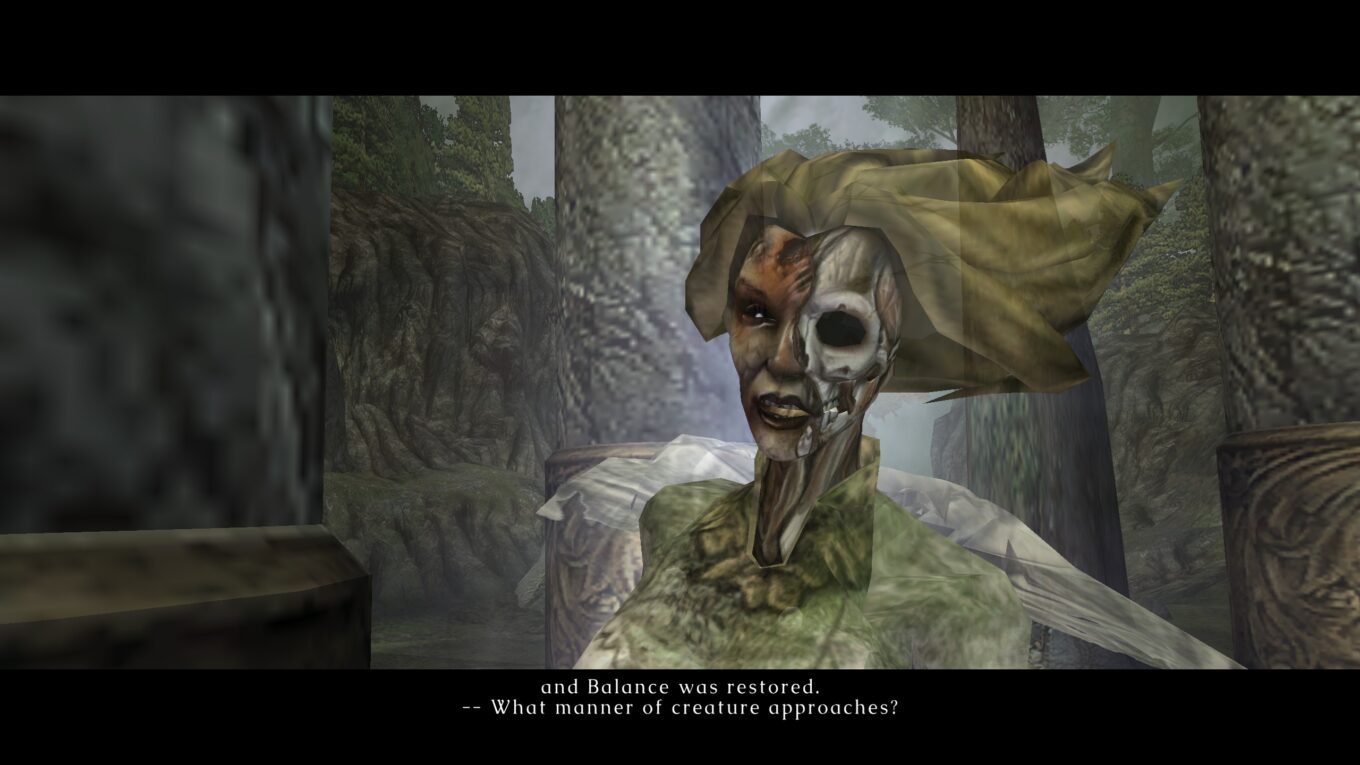
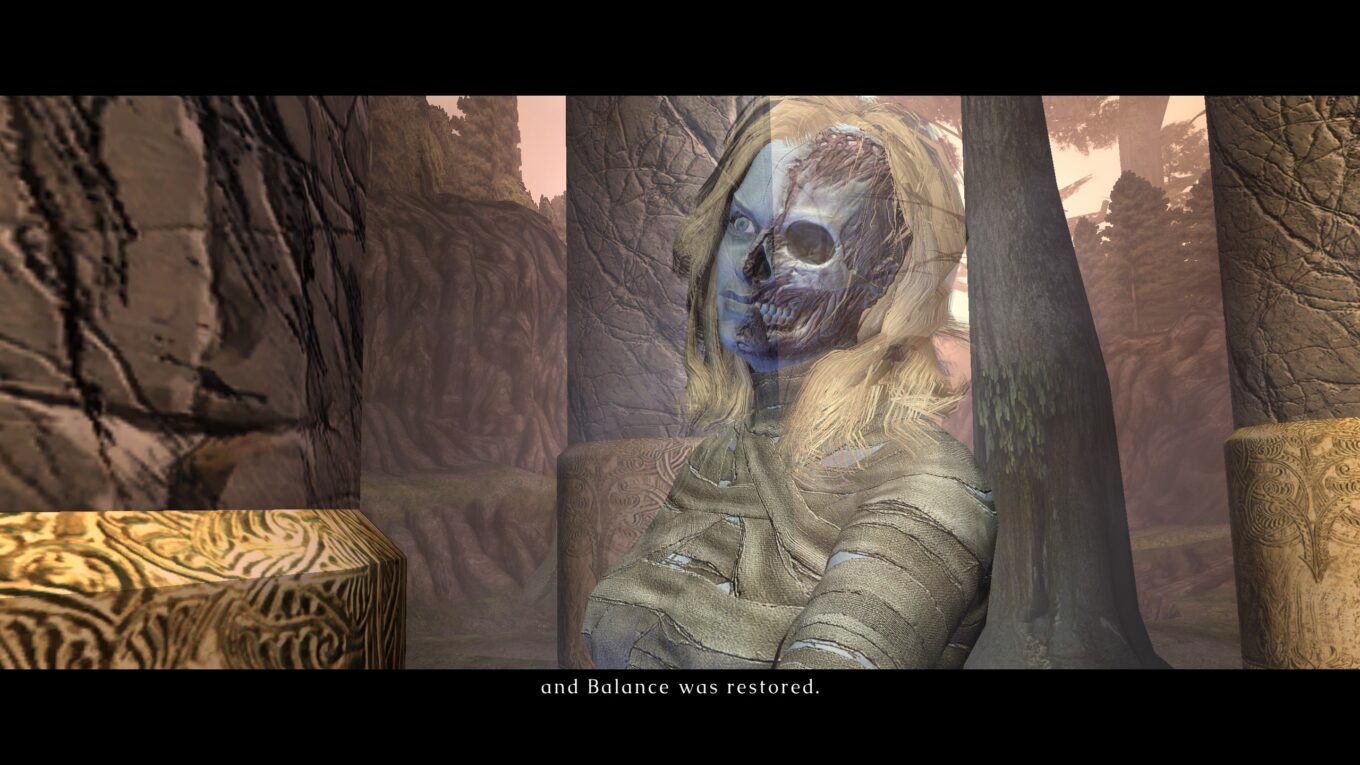
What exactly were you trying to say here, Crystal Dynamics? Why is she blue? Why does her formerly ghostly hair now look like the ‘before’ photo from a conditioner advert? Why does the look in her single eye, previously redolent with grief and mistrust built up over decades trapped as a bound spirit, now suggest a fondness for snorting crushed Adderall? Why (again) is she blue? Why has her moth-eaten and grave-stained ethereal shroud been replaced with masking tape, Crystal Dynamics? Why are all her teeth the exact same shape and size? Is is a ghost thing? Do ghost teeth do that in Nosgoth? Why, cursed to remain frozen in a fixed chronological moment as she is, do her highlights appear to be washing out? Also, I’m not sure you noticed, but she’s very blue. Why is that?
I’m aware that the answer to at least some of these questions is to bring her more in line with her appearance in the remastered Soul Reaver games, but I’m not accepting this as an explanation because she not only looks better in those games, but is also far less blue.
There’s a wonderful sense throughout Defiance of Raziel’s journey of discovery being a sort of archaeological dig as he stalks his way into ancient shrines and uncovers forgotten fragments of vampire history, and this mostly comes in the form of painted murals. With each tied to its own plot revelation, they’re memorable because of how crucial they are to the series lore, but also because of how striking they are to encounter. They look like nothing else in the world, really selling the idea of Nosgoth possessing an ancient, layered history. Here’s a comparison.
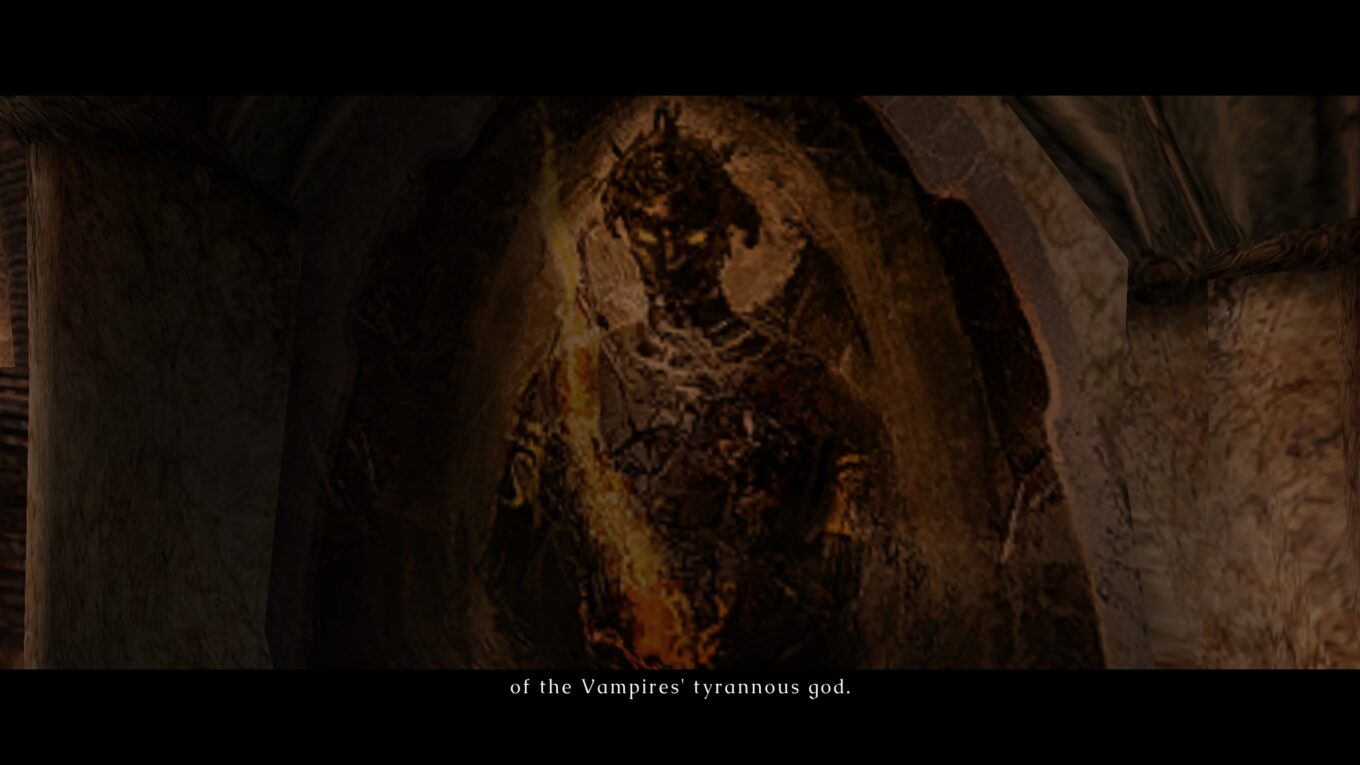
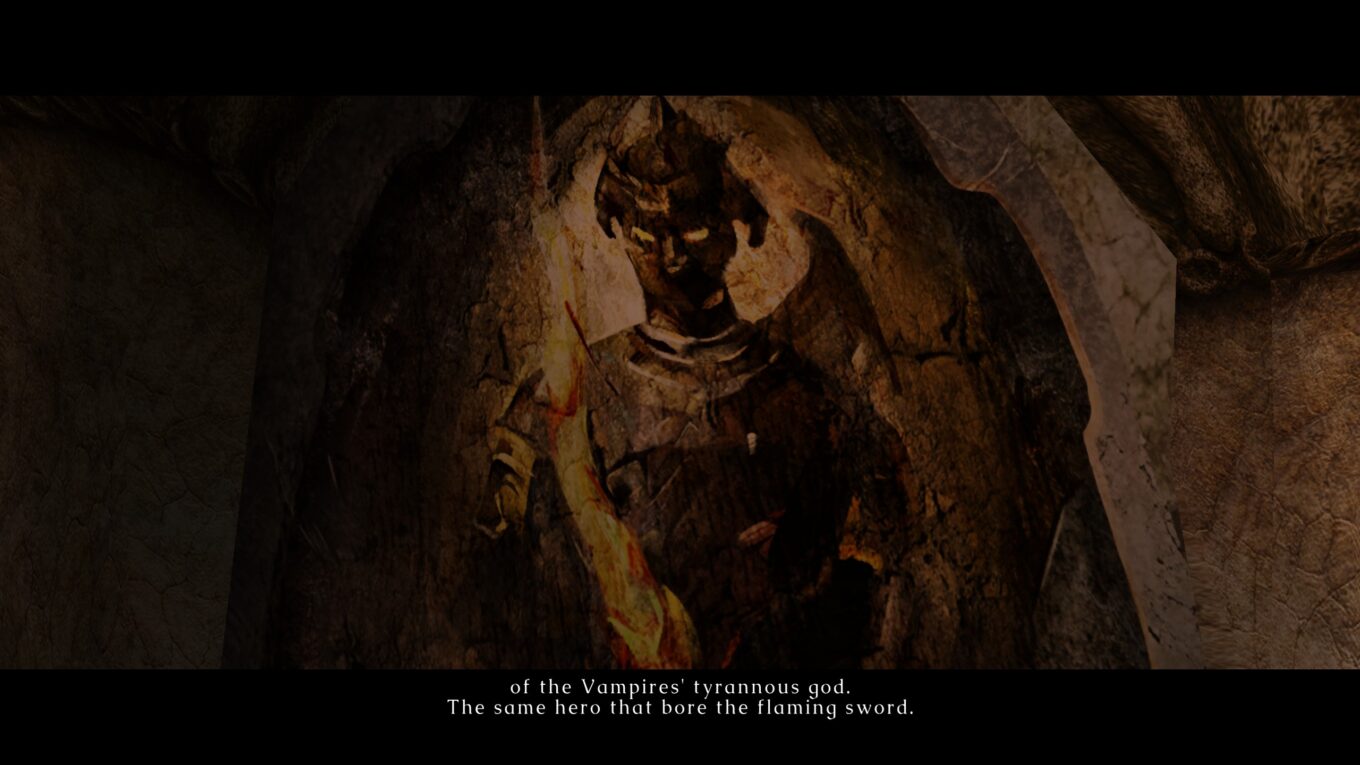
I will not go as far to say something like “this reeks of sloppy AI upscaling”, but I will point out that a.) Defiance Remaster’s Steam page disclaims that “AI-assisted tools were used to upscale and enhance some in-game textures, to help add visual detail to the original artwork” and b.) I just don’t get the same sense of intentionality from the newer version as the old. The weathering and cracks just aren’t congruent, the detailing is smudgy, and the proportions are off. It just lacks the original’s shadowy and imposing atavistic fury. It is, in a word, shit.
“All final assets were artist-reviewed and then integrated by the development team,” continues the disclaimer, and original art director Daniel Cabuco does get a mentioned in the special thanks, so perhaps I’m wrong and simply so cynicism-poisoned by our inescapable AI Pinnochio-scape that I’m smelling lies where no lies exist. I can’t say for certain, but I can say that I don’t think the new murals look as good as the old ones.
I should counterbalance these gripes by saying that the vast majority of the environmental visual overhaul is both faithful and much sharper. Where liberties have been taken, they’re often for the better. Here’s Turel as an example. Note that Raziel is wearing a collectable skin here – he doesn’t normally look like this.
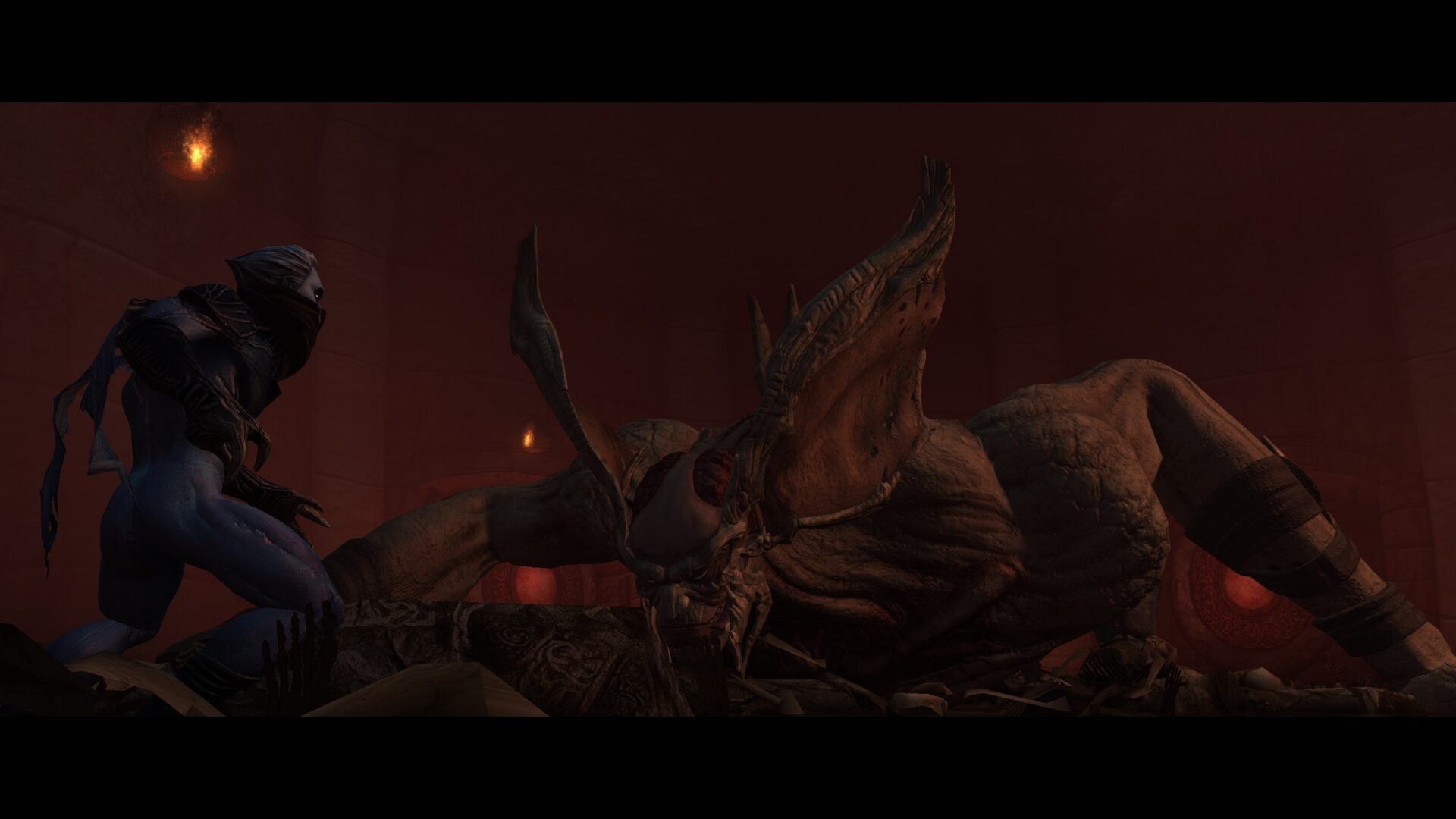
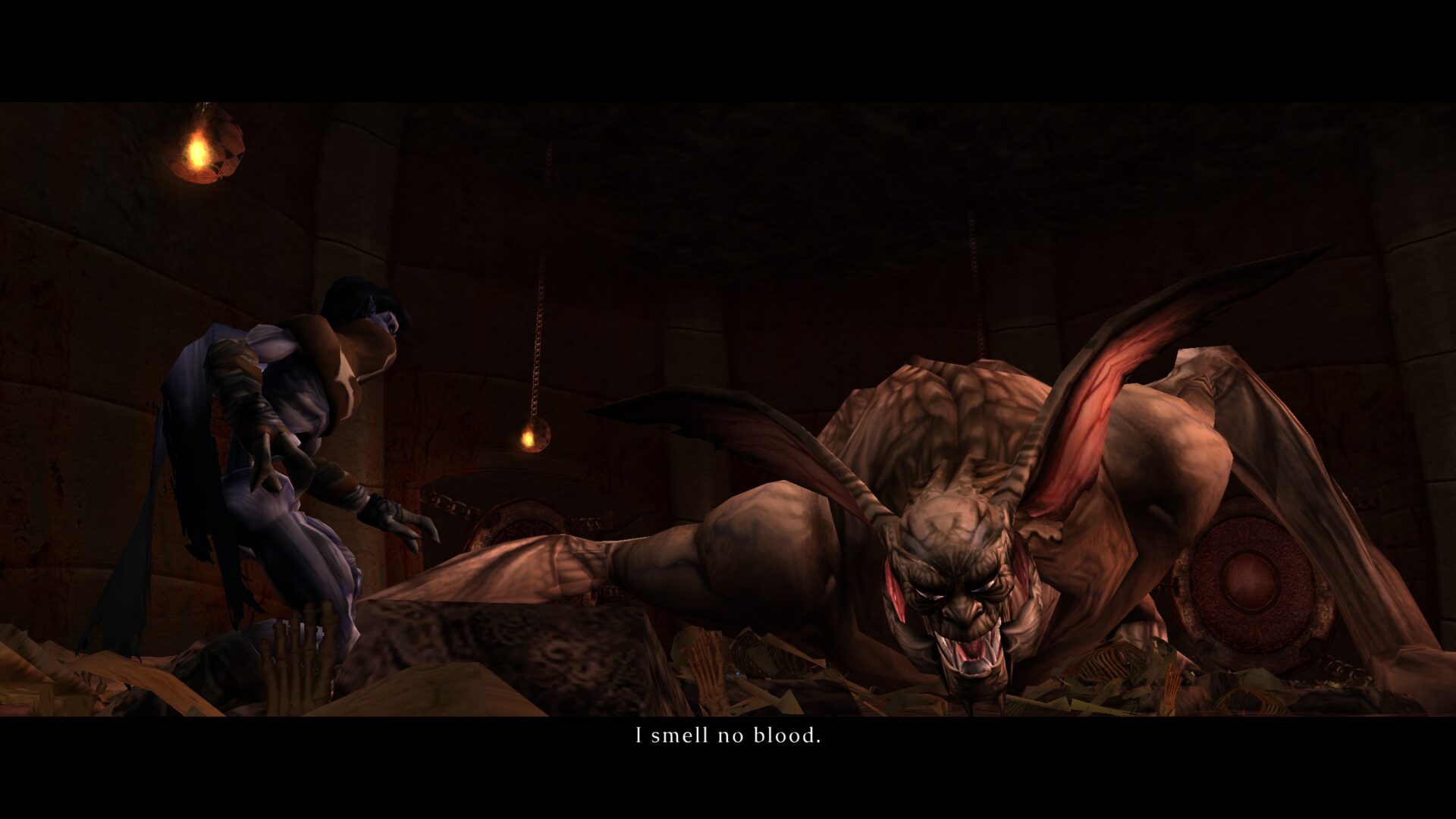
I’ve saved my most enthusiastic nugget of praise for Defiance Remastered for last: the original hasn’t been delisted on Steam. It’s about a quarter of the price, and aside from the bonus ephemera, I can’t say I got much more of the remaster than I would have just playing that version. Defiance is at its best when its reminding you of both its own unique quirks and the quirks of the era. There are hints here of fledgling big budget action adventure tropes: a creaky old setpiece in which Raziel scales platforms to escape a rising, lethal fog while tentacles try to knock him off. And Legacy Of Kain’s own tropes – the things that made this series so special in the first place – are on full display. “Below me swirled an ominous looking mist. I knew that if I fell, it would mean my peril,” says Raziel. There’s few other games that opt for rich mini-monologues in lieu of just giving you a tutorial pop-up, or simply trusting you enough to work out that you probably shouldn’t fall off the platforms into the mist. It’s superfluous as hell, but glorious for it. This remaster, though, is mainly just superfluous.