Crabs. Crabs never changes. Or at least I think that’s the quote – it’s hard to concentrate when there’s a ute-sized crustacean bearing down on you as you desperately try to load your last two shells (no, not that kind) into the emergency shotgun. To make matters worse, it’s raining pretty hard, I’m cold and tired, and the rough sea is tossing my boat around like a character arc in the hands of a Neighbours script writer. I just want to go home to my family.
Which I suppose is something that none of the more reasonably sized crabs, which I’ve been accumulating in the storage tank of this little fishing vessel, will ever get to do. Perhaps, then, my assailant’s anger is entirely justified – a position I take some time to contemplate as I switch to my axe and bury it deep in the decapod’s head. Right, back to work.
Crabmeat is the unnerving brainchild of Samurai Punk co-founder Nicholas McDonnell, and casts you as a debt-ridden citizen of the ‘Feudostate of Australia’ (not to give too much away regarding how reviews of this quality are put together, but if you go back and re-read the first paragraph you might be able to spot the subtle references I seeded to tee up this concept). In order to work off your debt you’ve been sentenced to hard labour in the form of commercial fishing – in the Antarctic, no less. The faceless authorities have provided a boat, some bait, a couple of battered old traps, and a set of basic instructions. Oh, and seven real-world hours within which to meet your quota.
Cue a high-stress task-juggling act as you try to secure your freedom. Unfortunately for you, the contract you sign at the beginning (and which hangs in your cabin throughout your community service – no screenshot here, because my signature was too mature to be shown) states that failing to meet that quota will result in death. The same is true for not returning the boat in anything other than like-for-like condition. Strewth!
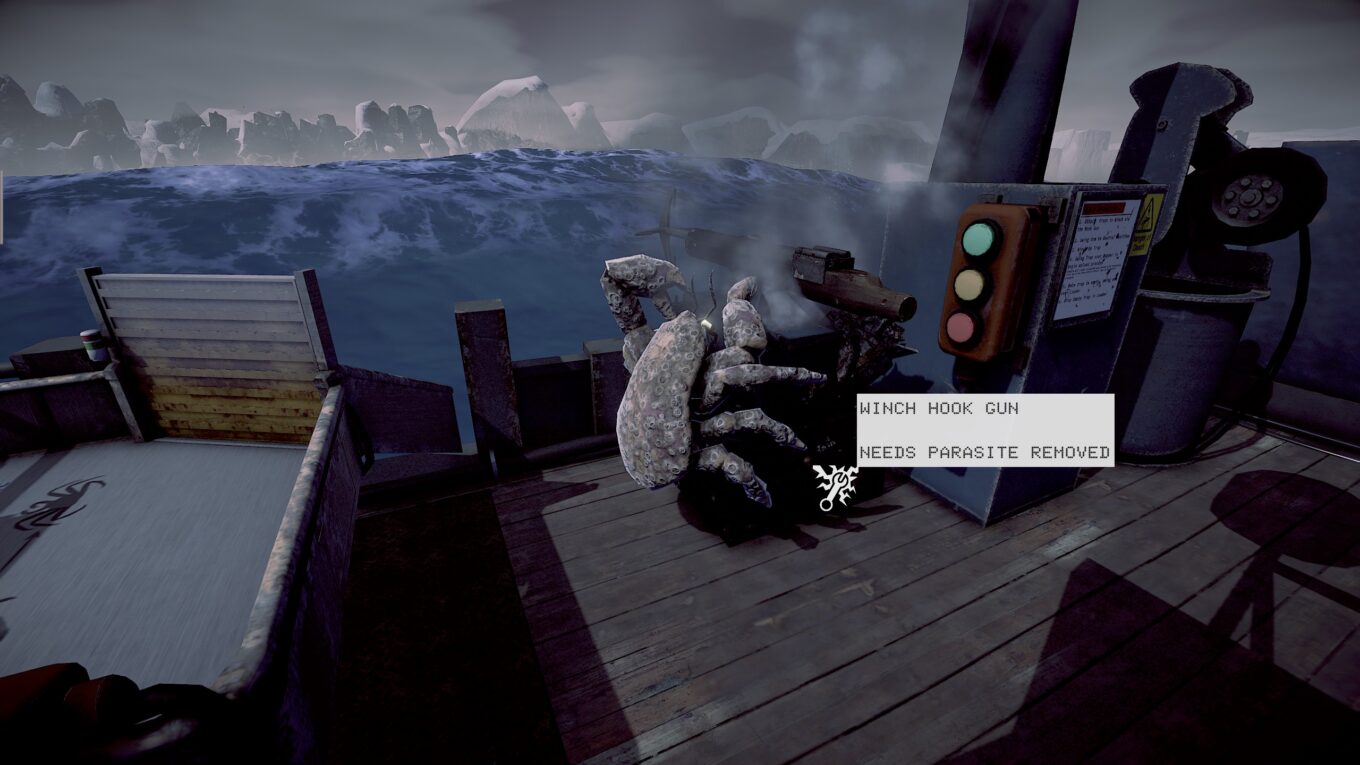
With this in mind, it’s especially important that you stay on top of maintenance. To do that you have the aforementioned axe as well as a repair gun – every so often a parasite or giant crab will scuttle onboard and attack one of the components on your boat (the engine perhaps, or your trap winch), and you must use the ship’s computer to locate the disruption and then go and deal with it. When you approach a parasite it will stop crunching away at whatever machine it’s on and watch you – if you’re indecisive at this point it’ll leap on your face, so make sure you swing the axe quickly. The giant crabs won’t give you any thinking time, however, and will happily chase you anywhere on the boat.
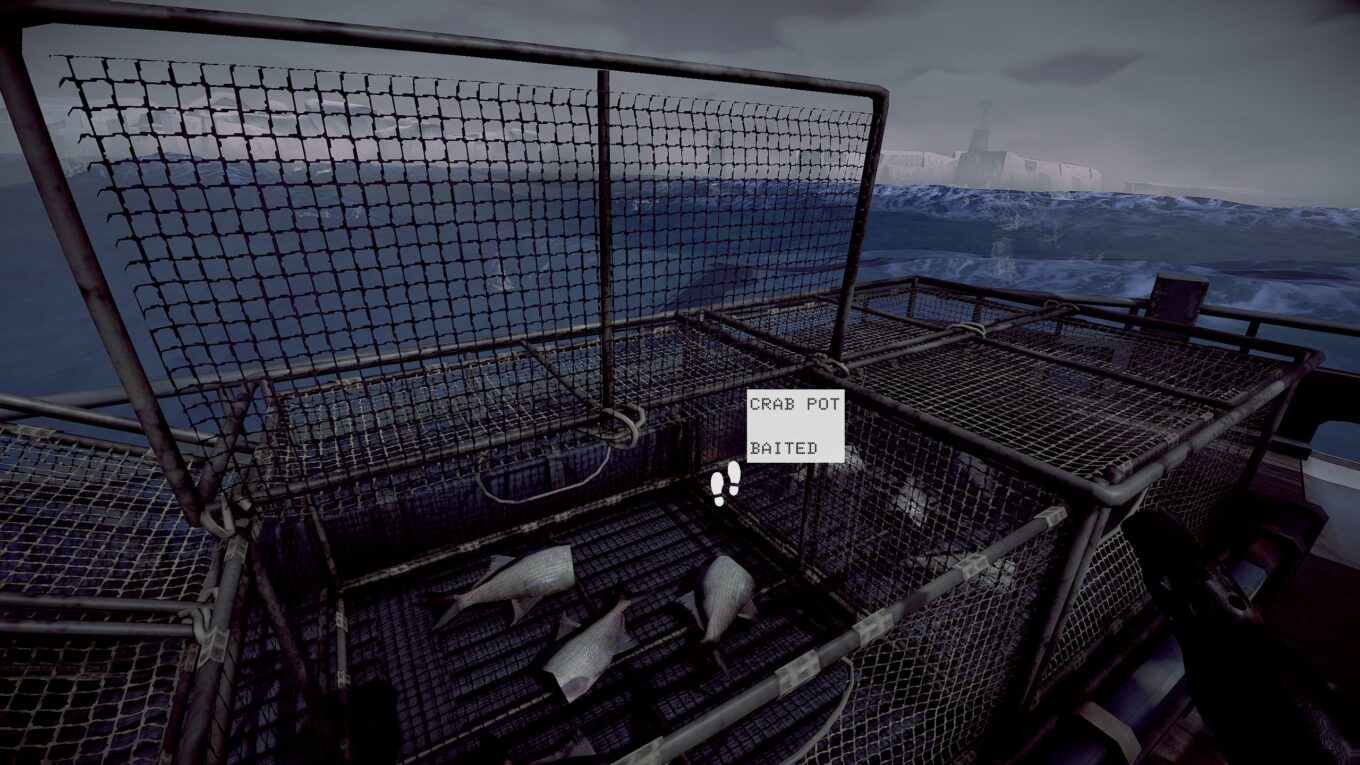
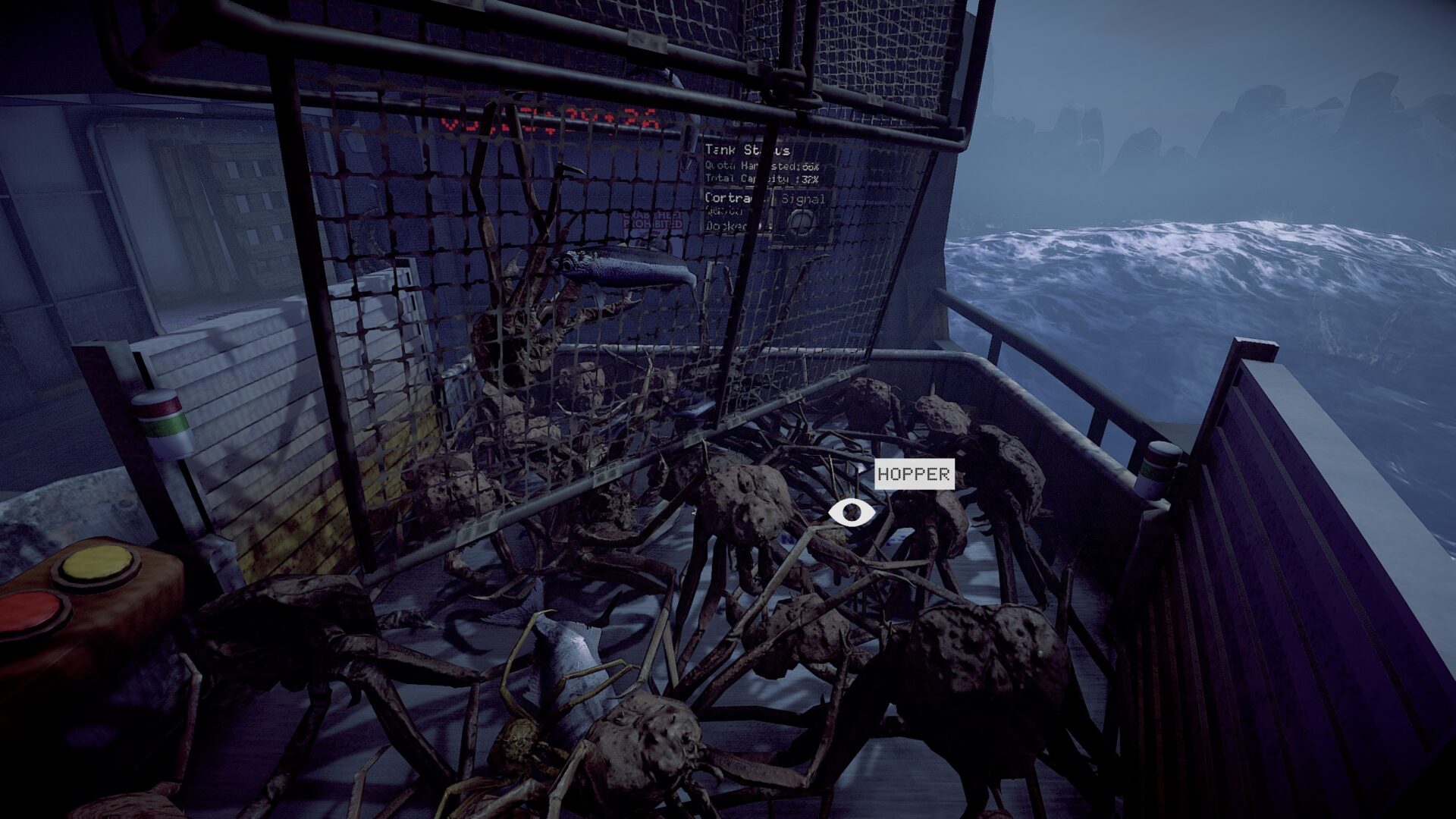
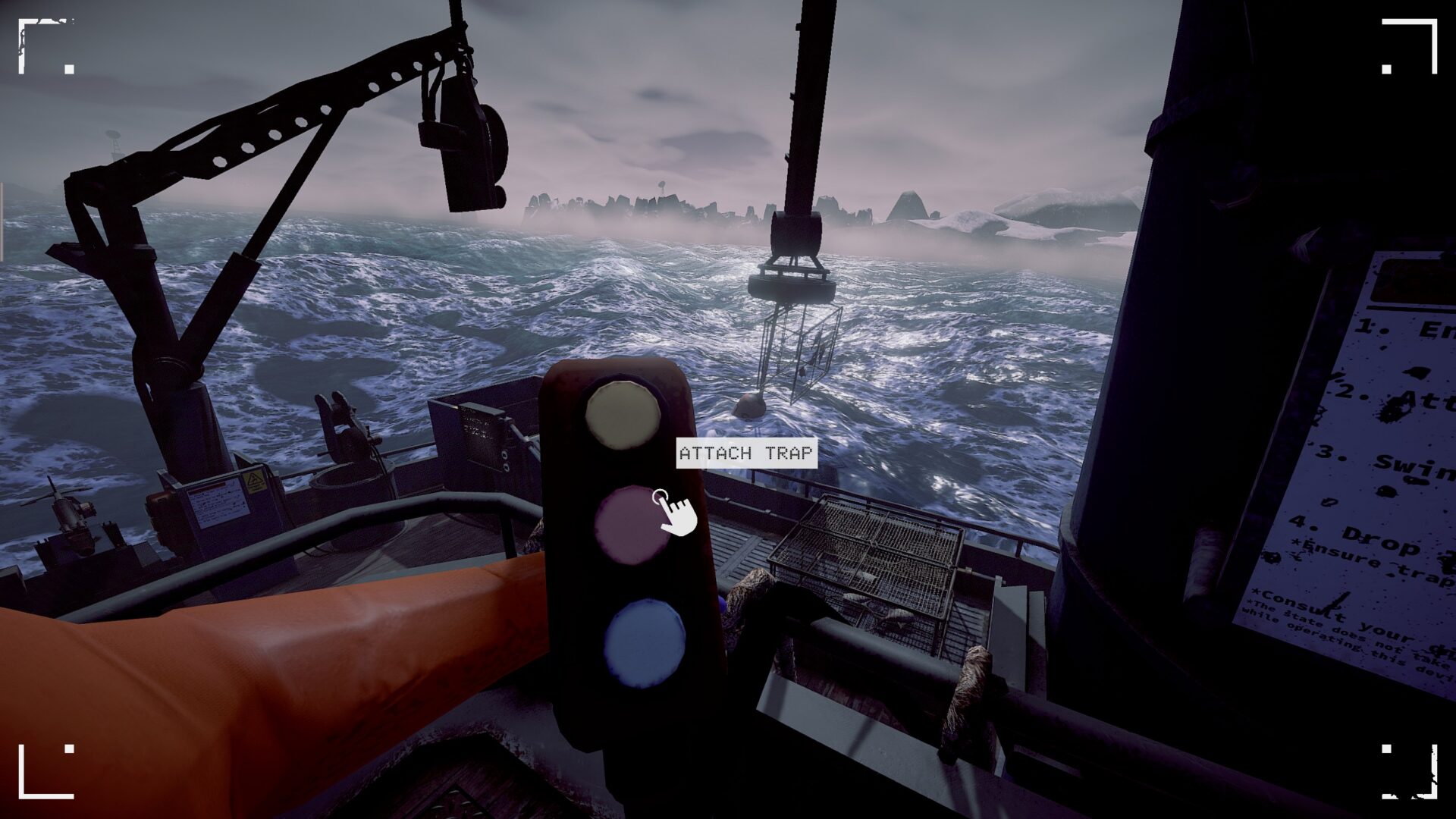
This essential, life-threatening upkeep is just one of many manual jobs that you’ll need to tackle. You’ll also need to bait the traps by equipping your trusty bucket, scooping up some fish guts from the tub, and then dumping the stinky mix into one of your crab pots (if your bait supply runs low you’ll have to head to a bait station to top up, too). To retrieve filled traps, you must navigate the boat alongside using the onboard cameras to line up, drop the anchor, then snare a trap with your harpoon and use the connected winch to bring the trap onboard, before emptying its contents into the hopper and operating the winch again to return the now empty trap to your stockpile.
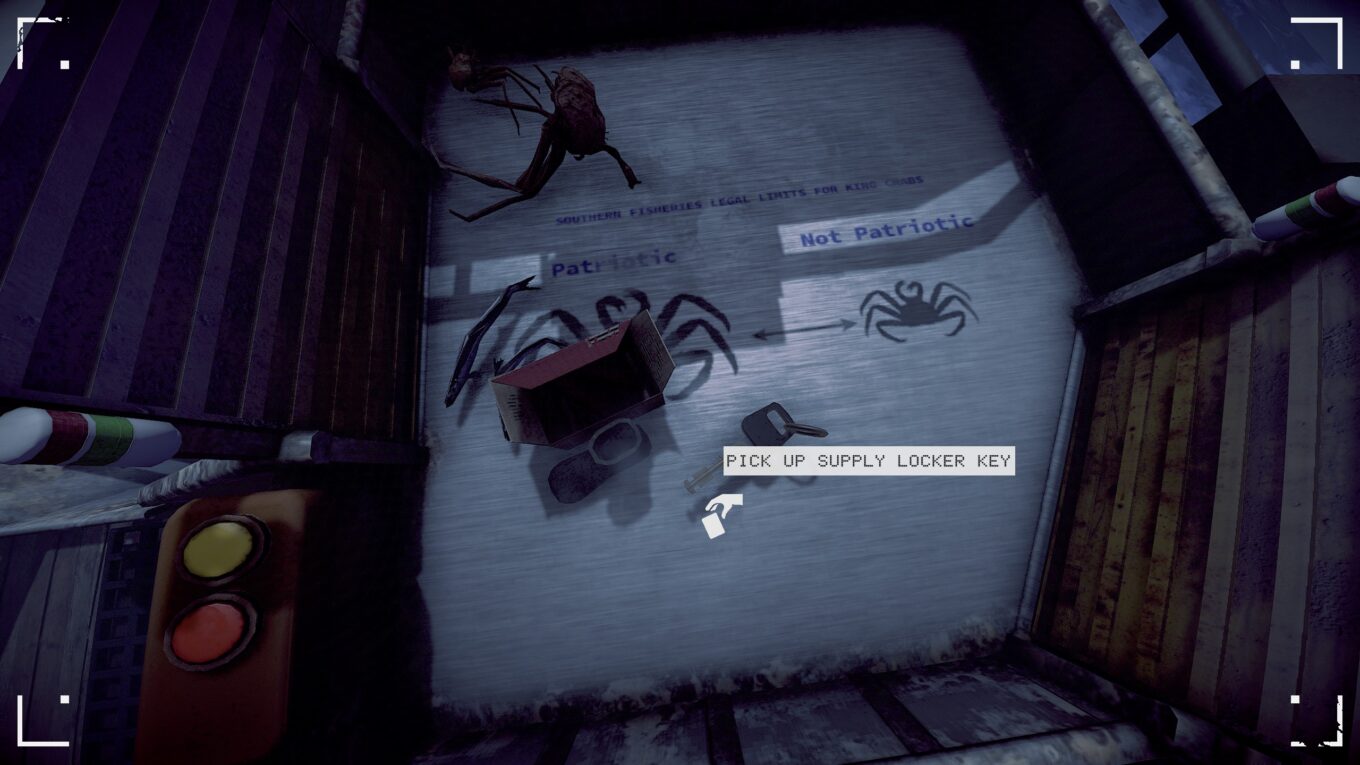
That’s not the end of it though – once you’ve done all that, you’re going to have to sort through the haul, separating the larger crabs from small ones, floundering bycatch, and any other junk. Any deemed large enough to be “patriotic” catches can be dropped into your storage tank, while everything else should be discarded. You can also find additional traps around the map left by previous detainees, and these will sometimes contain useful items such as ammo or keys for various doors on your boat, but also more worrying things like bodies and EVEN MORE GIANT CRABS.
Aside from the innumerable and constant threats of death, there’s a calming rhythm to settle into as you go about your business, checking off tasks. There’s an acute sense of satisfaction as you become more efficient at dropping traps in the marked zones, leaving them to fill while you go and explore a different area of the map or drop more, and then coming back to see what you’ve caught. Just don’t make the same mistake that I did and empty four bulging traps into your hopper at once – I felt like I’d absolutely bossed it until I realised what a nightmare it was trying to sort through the wriggling mass I’d created.

Staying on top of your responsibilities is made more difficult by the game’s awkward point-and-click control scheme. Everything is in first person, but you must click a point on the boat to walk in that direction, while a double click causes you to break into a run. Dragging the pointer to the side of the screen and clicking will turn you by 90 degrees or so, but you have enough range of movement that you can look over your shoulder and click a destination more or less behind you and keep some momentum flowing. With practice it’s possible to get around the boat quickly and accurately, but there were times where my brain insisted that I was playing with a standard WASD setup and left me flummoxed in a moment that required faster reactions.
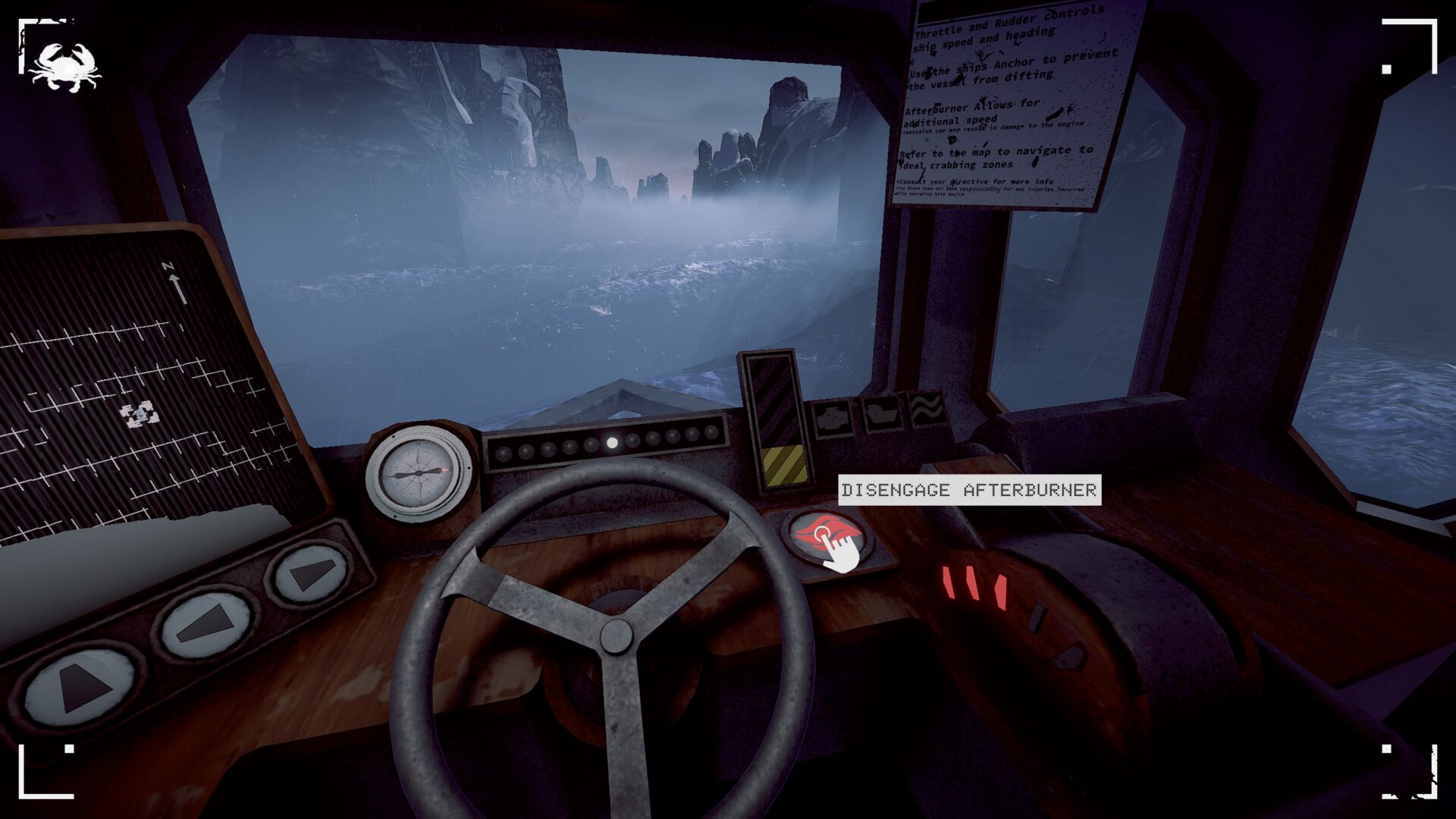
It’s all intentional, of course, serving the same purpose as the tank controls in third-person horror games in order to dial up the tension. The effect is especially potent when facing the relatively quick giant crabs, but it can also make adjusting your position awkward in less stressful situations – like repairing machinery, for instance. When you’re in a flow state, though, running a whole boat with just a series of rapid clicks, you can’t help but feel good – like a weather-beaten captain with one arm on the wheel and the other holding a steaming mug of coffee.
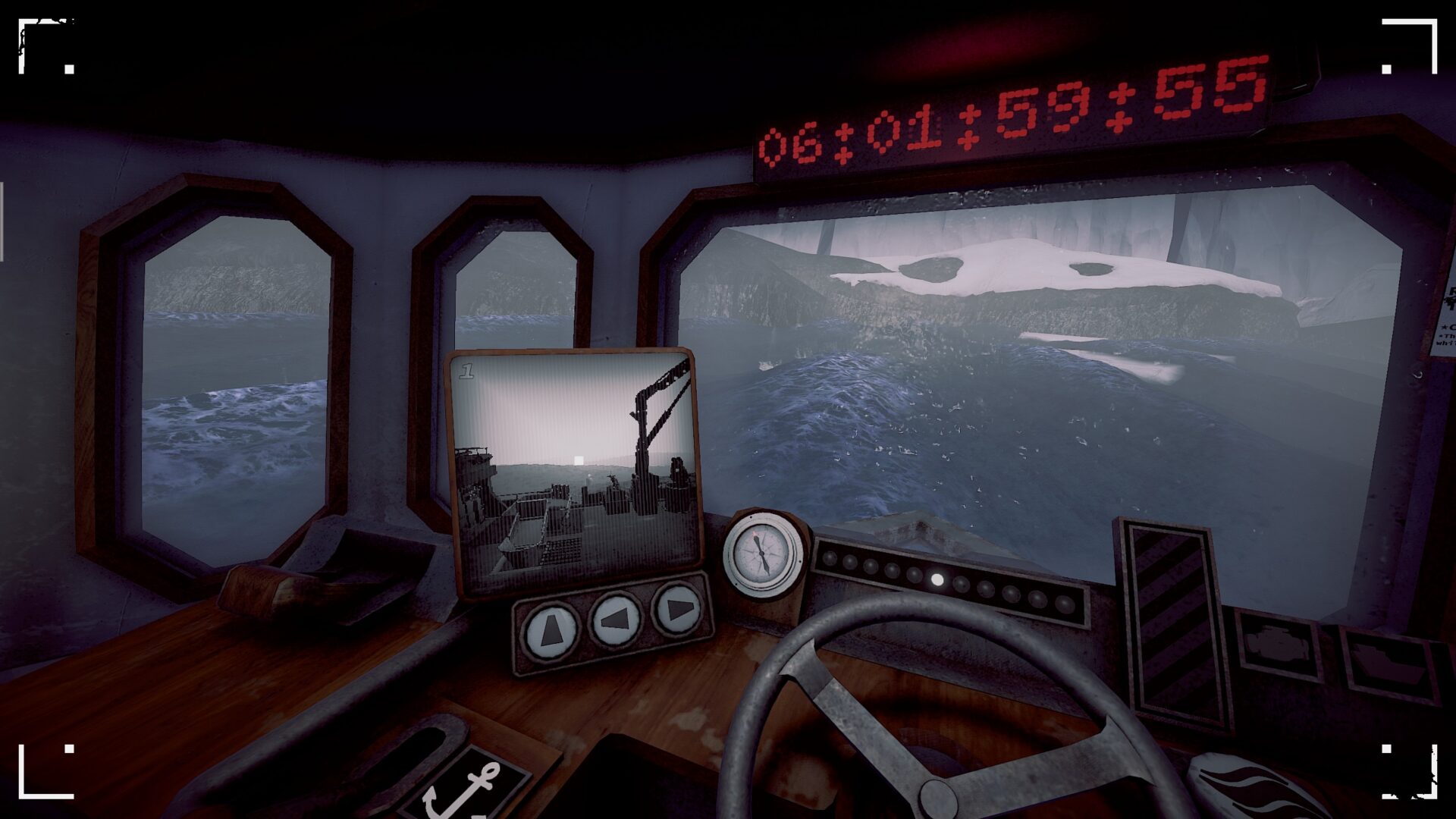
Crabmeat is a short game – despite the seven-hour timers dotted all over the boat, it’s possible to complete your quota in two or three. If you want to explore all of the map, finding all the keys and backstory notes, it’ll take maybe twice that. There are also elements of the game that simply didn’t come into play for me, such as the bilge pump which I didn’t need – my hull stayed in tip-top condition throughout, despite navigating through some pretty hairy rock formations. The locations of crabbing spots and lost traps on the map remain the same on each playthrough, too, so beyond finding everything there isn’t a huge amount of replayability on offer.
But none of that matters much given how brightly this atmospheric aquatic-horror experience burns during its short run time. While I would love to have had more reason to remain in its creepy world, there’s plenty of enjoyment to be dredged from its idiosyncratic gameplay loop and acerbic humour, and there are some lovely stormy weather effects and an amusing surprise towards the end of the game that are well worth seeking out.