The computer role-playing game is both everywhere and nowhere. Baldur’s Gate 3 was a superlative hit, but who knows when Larian’s next game, Divinity, will release. After a ten year wait, Dragon Age: The Veilguard launched, bearing the scars of its swift pivot from live service to a more traditional single-player RPG. Bioware may never make a game structured like its classic work again. Owlcat’s oeuvre, including Pathfinder: Wrath of the Righteous and Warhammer 40K: Rogue Trader, is intriguing. Yet, each of those games are so expansive and dense, that it is hard to make room for them in a busy life. In this context, Greedfall: The Dying World is in a productive gap. It takes 30 hours to complete, rather than 75-100. It has characterful role-playing which is both lean and expansive. It has a diverse cast of characters which flesh out a densely-constructed world. It’s the kind of game at the kind of scale that Bioware would have made 15 years ago. However, while Greedfall: The Dying World has the vision, it does not have the craft. It shares multitudes of features with the classic RPGs it is drawing from, but lacks their considerate, emotional force.
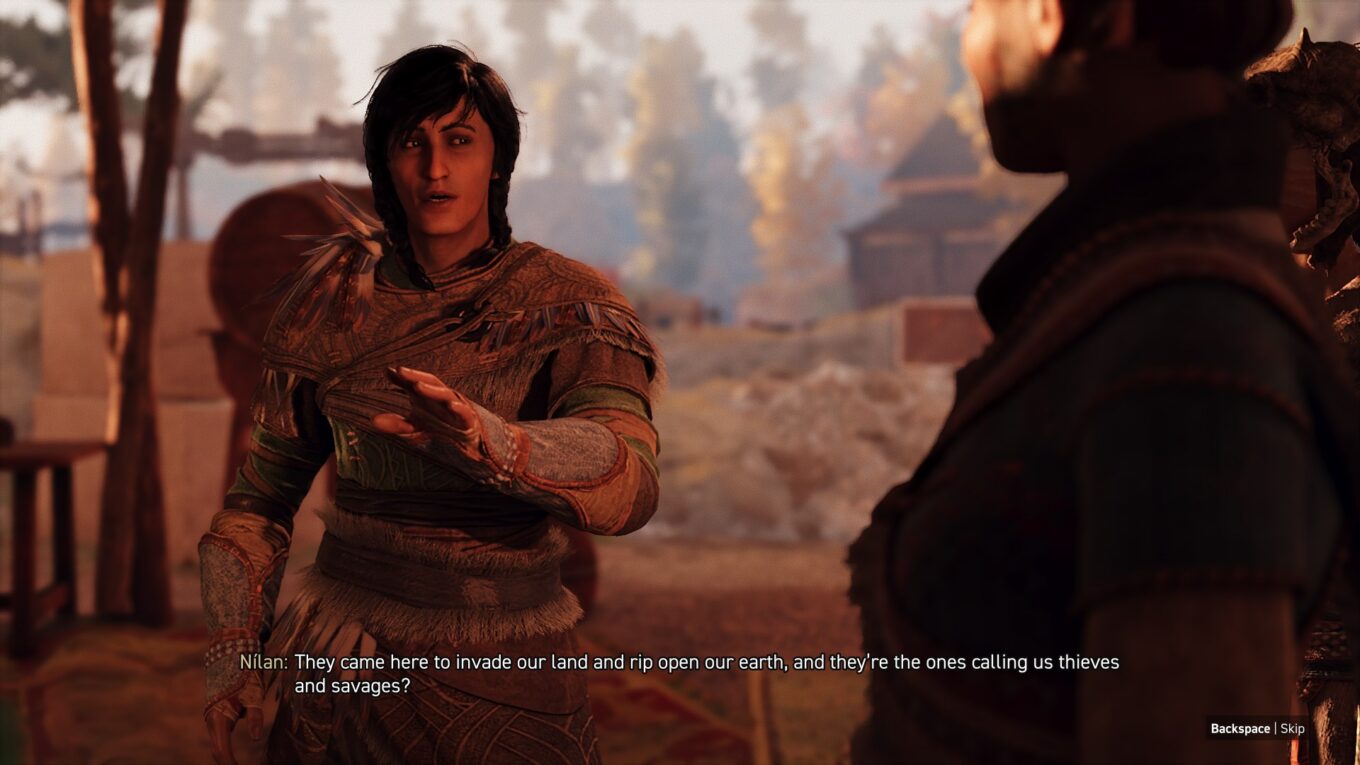
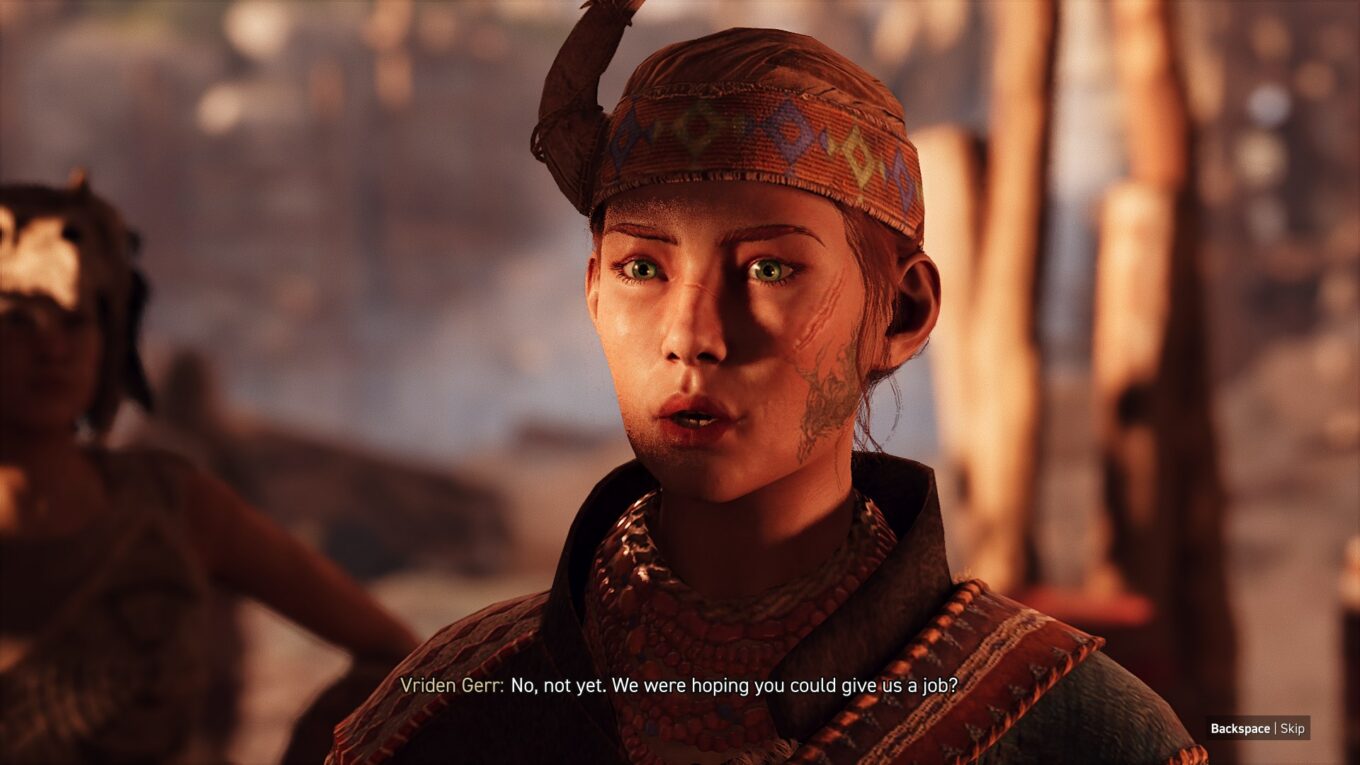
Like its influences, Greedfall: The Dying World starts intimate and grows in scale. It starts on the same island where its predecessor takes place, Teer Fradee. The isle is a broad Americas analog, with a diverse set of indigenous cultures which battle and trade with a burgeoning population of settlers. The player creates one of these native people named Vriden Gerr, meaning Rootless. They and their childhood friends, Shéda and Nílan, are set to become sages with a magical connection to the earth. As soon as they undergo the ceremony to become a sage, they and both her companions are kidnapped. A gunman murders their mentor and Shéda succumbs to illness on the way to the continent. However, one of the sailors objects to their treatment,and ropes in powerful friends to spring Vriden and Nílan from jail. The player then spends the rest of the time charting why the powerful are kidnapping the people of Teer Fradee, a journey which takes them across the continent’s many nations.
Greedfall: The Dying World tackles this structure in classic RPG fashion. There are hubs of cities and towns, with merchants and side quests aplenty. The player can follow only the main quest, as well as aid various companion characters with their own goals. In any case, the player will spend most of the game either talking or fighting.
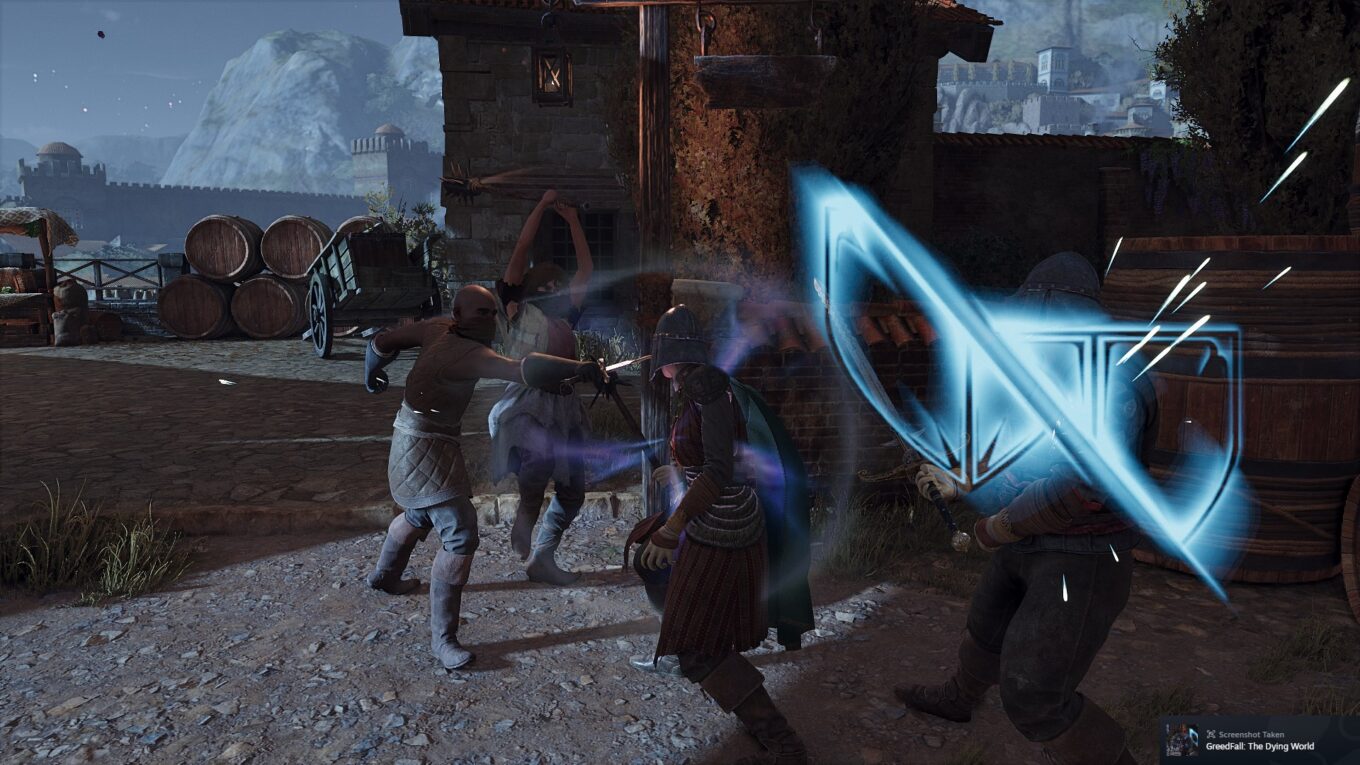
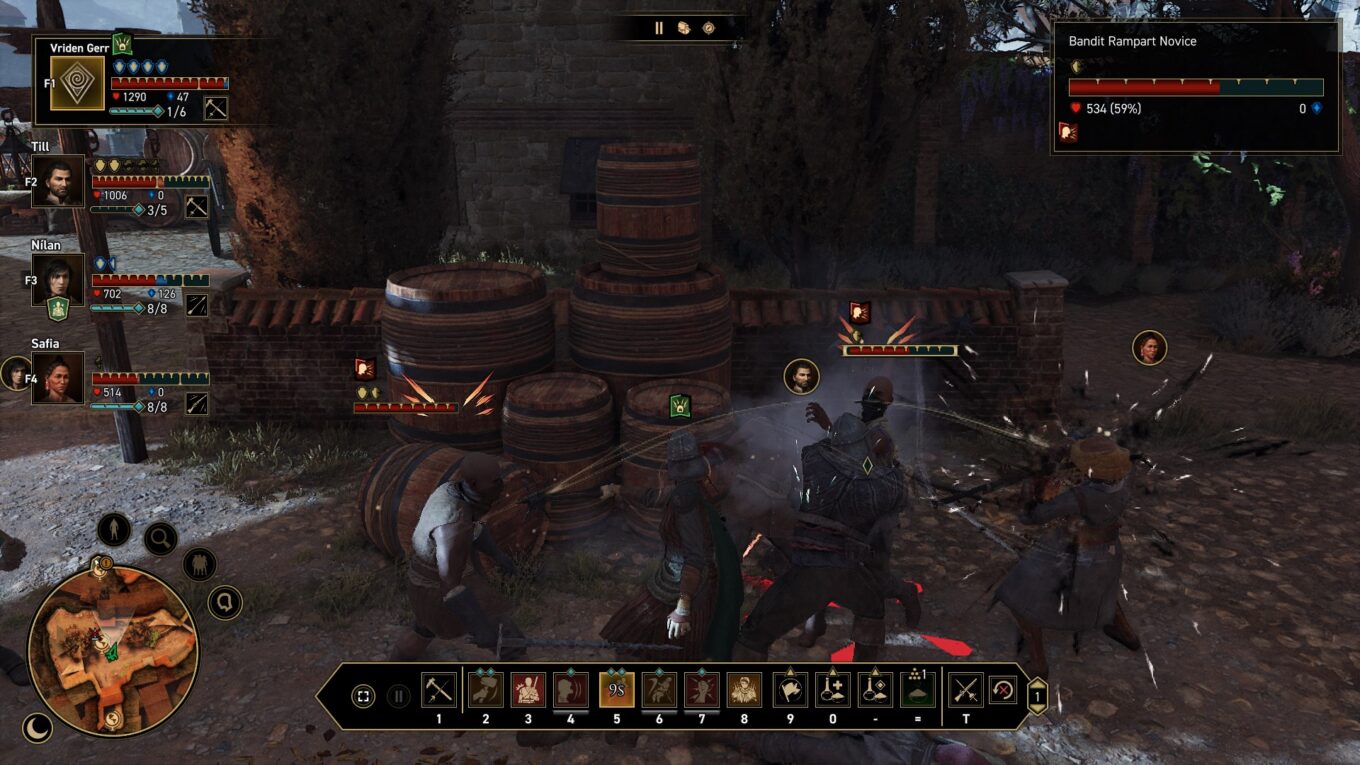
It is the fighting where Greedfall: The Dying World displays its best colors. In contrast to its predecessor, The Dying World lets the player take control of every companion character in combat. When it is humming, which is not infrequently, the combat is narrow and fulfilling. Each encounter is made up of melee fighters and ranged foes. While an enemy’s shields are up, every blow will deal only reduced damage. Each character has a set of combat abilities, many of which reduce shields, incapacitate enemies, or heal friends. The tactical considerations here are obvious. To succeed, the player will have to balance their party shrewdly, choose whom to attack and when with care, and monitor the resources of their party. Yet, there are such staples of RPG combat systems because they are effective. Brutally losing an encounter, only to clean it up when you change tactics, is as satisfying as in any other RPG. Greedfall 2 lacks the pristine and inventive encounter design of something like Baldur’s Gate 3. But the bones are good. More honed encounters could have propelled Greedfall 2 into something like greatness.
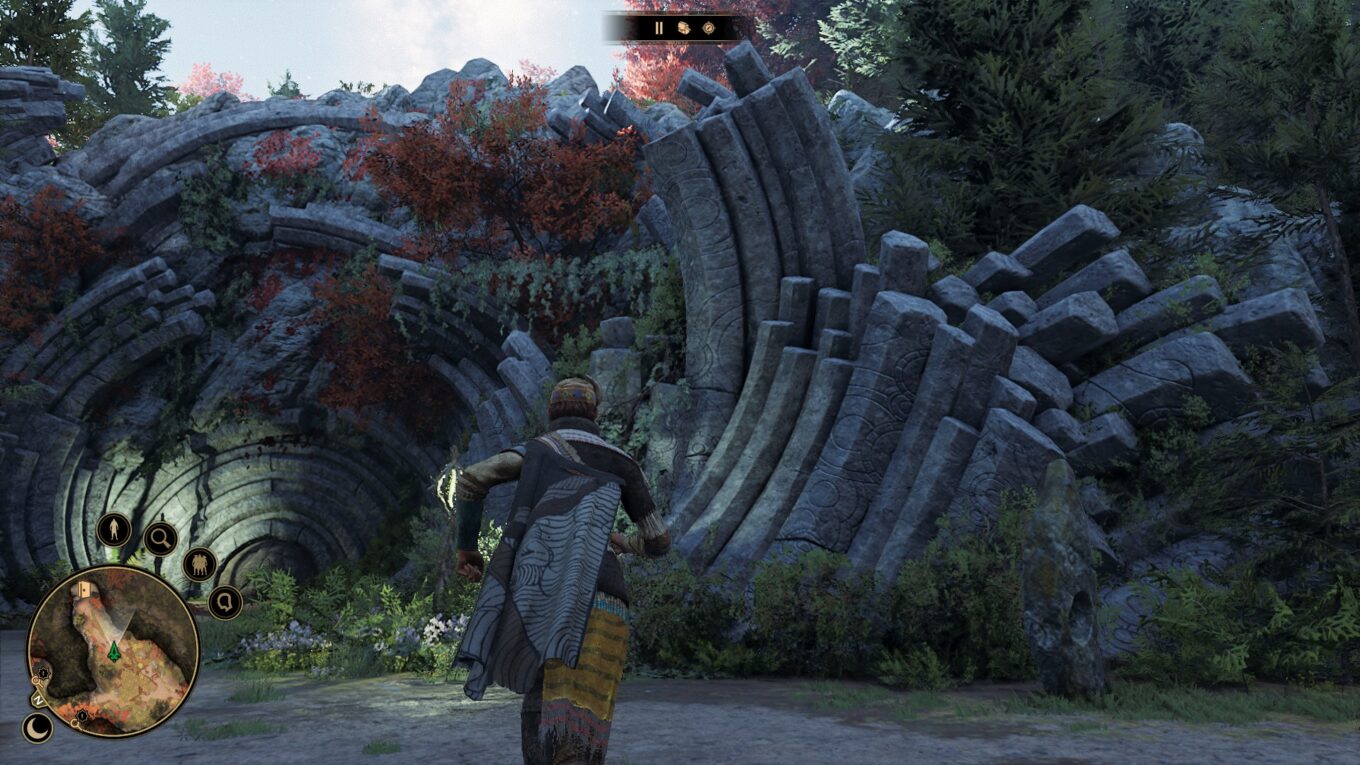
Unfortunately, the remainder of the game’s character customization is fixated on an array of superficial subsystems. In addition to leveling up combat abilities and attributes, the player can level up skills which structure play outside of combat, whether they are crafting potions and armor, wading in tall grass to evade an enemies notice, or picking a lock. Every one of these skills feels stapled on. Sure, one could spec their character to sneak through encounters, but why would they when it is way more fun and in-depth to bash heads? Crafting itself also feels unnecessary. It is complex enough that it cannot be understood at a glance, yet inessential to the point where the player doesn’t have to engage with it at all. In fact, engaging with it feels like punishment. The game’s inventory screens are not a disaster, but they are clunky and a pain to keep manageable. The player will constantly pick things up. Most of it will be no use at all. These systems feel burdensome, rather than expansive.
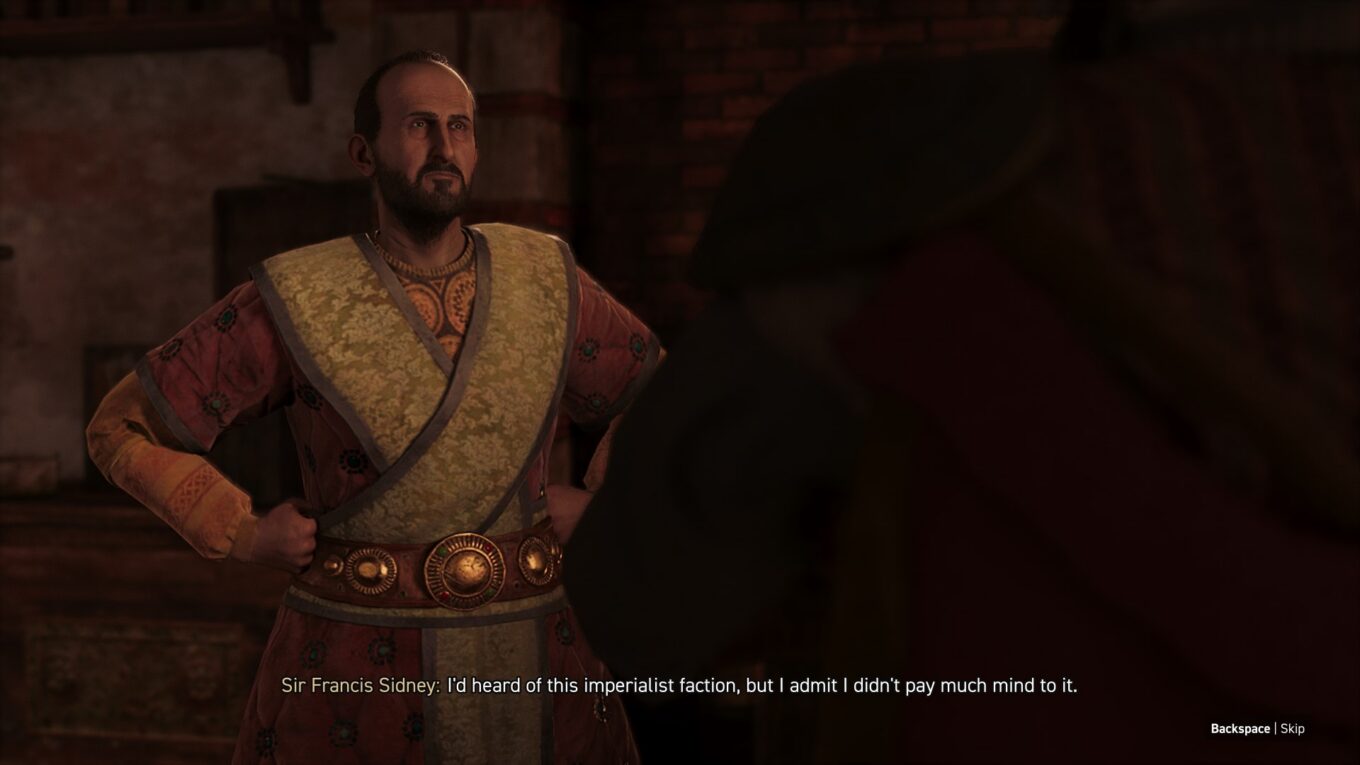
Refreshingly, Greedfall: The Dying World dives into thorny political topics without self-consciousness. The tone is earnest; it lacks the jokey, hyper-referential sensibility that Critical Role and its ilk have popularized. The straightforwardness of Greedfall: The Dying World’s ambitions is refreshing. Yet, it lacks a clear and distinctive voice. For the most part, characters enter the story and state their intentions out loud. The player’s first impression of them is likely to also be their last. The cast is broad, but not deep. Through the different ways its cast is positioned, it does manage to flesh out a history and sense of place. Yet, this world-building is often without real emotion. Vriden and Nilan express the expected sorrows and angers with clichés you’ve heard in a dozen stories like this. The characters are not quite reducable to tropes, yet they lack the real solidity of best RPG companions.
The game’s treatment of indigenous themes and characters is at once well-meaning and ill-advised. Greedfall itself was roundly criticized for its treatment of colonization. Its cover art conjures the Casper David Friedrich painting “Wanderer Over the Sea of Fog.” In both artwork, a European man stands over a vast, seemingly untouched landscape. In invoking this history, the original Greedfall positions the player character as a hero which can shape this unconquered land to their will. Without spoiling the original game’s plot, they can indeed conquer Teer Fradee and will certainly shape its destiny. It is not hard to claim this as a naked, colonial fantasy.
The sequel has taken those criticisms to heart. Its plot flips the script of the first game, allowing an indigenous character to shape the destiny of the Europe analog. Despite this shift in perspective, the natives of Teer Fradee are still more an assemblage of clichés than a serious exploration of indigenity. The problems are immediate within the first few hours. The prologue is baffling because the player character is still positioned as an outsider. They ask obvious questions, which the other villagers in Teer Fradee answer with “As you know…” The writers cannot imagine the player character being from a specific place. They can only write them as an outsider.
The problem is not so much that Greedfall: The Dying World dares to explore these themes, but that it does so in a basic, tactless way. As the player’s journey continues, the game alludes to both the Atlantic slave trade and specific tactics of the genocide of indigenious Americans. It also allows the player to subvert the course of those histories.
The history from which Greedfall draws is fascinating in part because the questions of European colonization and exploitation were not yet decided. Accounts such as The Story of Álvar Núñez Cabeza de Vaca articulate alternate perspectives, before the hard binaries of colonizer and colonized became gunsmoke and law. As much as the ensuing years made manifest destiny a divine mandate, it was no such thing. The mass atrocities of the slave trade and European colonization were not invitable. Yet, they were the result of countless mundane decisions and massive economic structures. It is valuable to consider alternative pasts in fiction (and non-fiction), because they might help articulate alternate futures. Yet, doing so runs the risk of minimizing the atrocities that really did happen, the effects of which rattle through every colonial and post-colonial society. Greedfall: The Dying World turns the cold brutality of hundreds of years of colonization into the plots of conniving fantasy villains. It’s cheap.
In fairness, Greedfall: The Dying World tries to explore real ambiguity. Only Nílan and Vriden are from Teer Fradee. The rest of the cast all hail from different places, brought together through the fates and whims of a world which is exploding into global trade (and exploitation). In immediate terms, the game is about the collision between various points of view and the powers which leverage those ideologies from thought into reality. More often than not, that collision feels sterile. Greedfall conjures hundreds of years of blood and faith and terror. Yet, it feels more like the smooth edge of pixels than the splatter of paint.
Greedfall: The Dying World does serve a real niche in the RPG space, one which used to get regular, exciting releases, but now is regulated to the occasional cult hit and the whims of major publishers. It is refreshing to play such a character-focused RPG, which approaches serious real-world themes without shame. But without the bite and blood of the history which The Dying World so freely evokes, it cannot help but feel diminished. Developers Spiders might someday make a game worthy of their inspirations. Greedfall: The Dying World is no such game.